


The resurgence of charcoal cooking in outdoor entertaining spaces represents more than nostalgia-it reflects a sophisticated appreciation for authentic flavour, artisanal technique, and the elemental ritual of live-fire cooking. A charcoal outdoor kitchen transforms this primal cooking method into a refined culinary destination, combining the unmistakable taste of charcoal-grilled cuisine with the thoughtful design, robust materials, and purposeful layout that define luxury outdoor living. For discerning homeowners seeking to elevate garden entertaining whilst honouring traditional cooking methods, understanding how to integrate charcoal cooking stations within a broader outdoor kitchen architecture proves essential.
Traditional charcoal cooking delivers flavour profiles impossible to replicate with gas or electric alternatives. The chemistry of charcoal combustion creates higher temperatures-often exceeding 700°F-whilst producing aromatic compounds that infuse meats, vegetables, and seafood with characteristic smoky depth.
Beyond taste considerations, charcoal outdoor kitchens align with the growing desire for authentic, hands-on cooking experiences. The process of preparing coals, managing airflow, and adjusting heat zones engages cooks in ways that push-button ignition cannot match. This active participation transforms meal preparation into theatre, making the charcoal outdoor kitchen a natural focal point for gatherings.
Successful charcoal outdoor kitchen design requires thoughtful spatial planning. Unlike standalone portable grills, integrated charcoal stations demand:
The physical footprint extends beyond the grill itself. Charcoal cooking necessitates nearby storage for fuel, dedicated staging areas for ash removal, and separate prep zones that remain cool during extended cooking sessions.
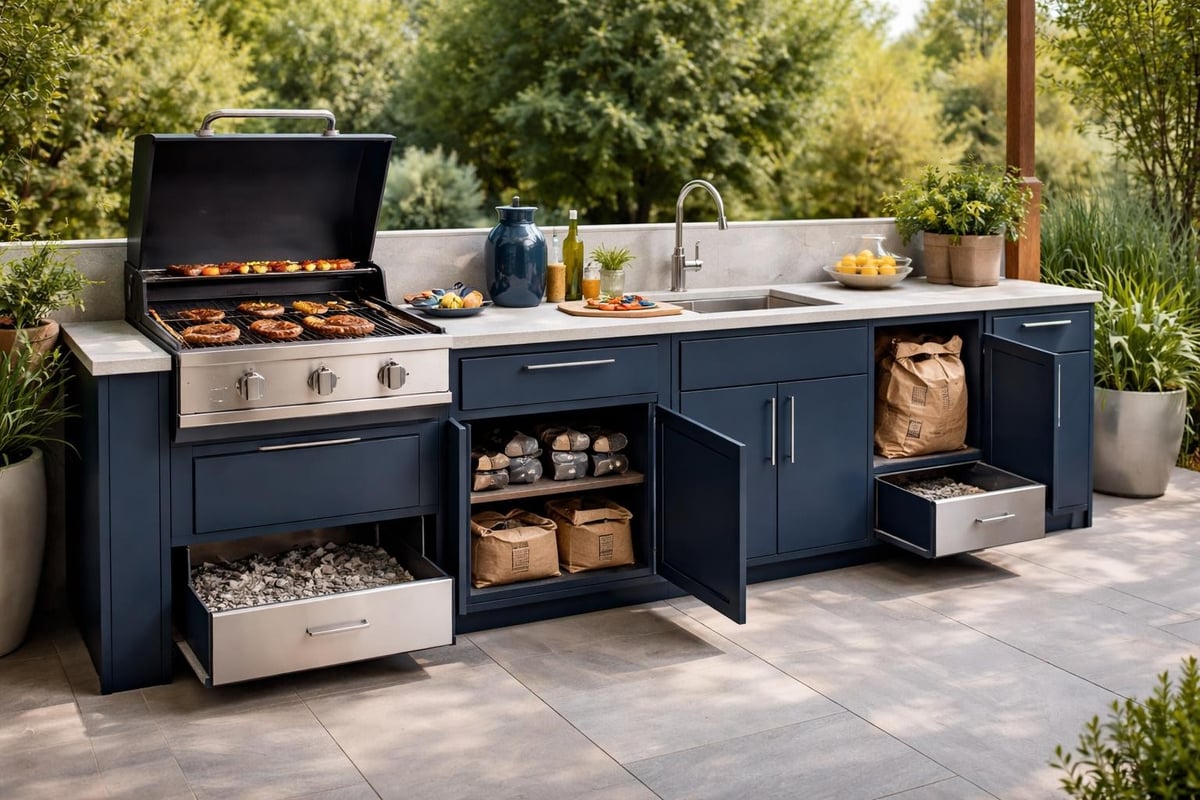
Material selection forms the foundation of durable charcoal outdoor kitchen construction. The intense, sustained heat generated by quality lump charcoal or briquettes demands surfaces engineered for thermal stability.
| Material Category | Performance Characteristics | Typical Applications |
|---|---|---|
| Stainless Steel (304/316) | Exceptional heat tolerance, corrosion resistance, low maintenance | Grill housing, countertops, cabinetry frames |
| Natural Stone (Granite/Quartzite) | Superior heat resistance, aesthetic gravitas, colour stability | Worktops, backsplashes, perimeter cladding |
| Porcelain Tiles | Weather-proof, stain-resistant, thermal shock resistant | Floor bases, integrated plinths, decorative accents |
| Refractory Concrete | Engineered for extreme temperatures, minimal expansion | Grill surrounds, structural supports |
Ergonomic design proves critical when working with charcoal systems. Standard outdoor kitchen counter heights typically range from 900mm to 950mm, though charcoal grill surfaces often sit slightly lower-approximately 850mm-to facilitate comfortable grate access and coal management.
The ideal charcoal outdoor kitchen layout incorporates distinct work triangles: a cool prep zone positioned upwind from the grill, the primary charcoal cooking station, and a separate plating area that remains accessible without crossing active fire zones. This arrangement minimises smoke exposure whilst maintaining efficient workflow during service.
Storage infrastructure requires careful specification. Charcoal and kindling storage must remain dry yet ventilated, positioned for convenient access but separated from finished food preparation areas. Many luxury installations incorporate purpose-built charcoal bins with sealed lids and drainage perforations, protecting fuel quality whilst facilitating rapid restocking during extended cooking sessions.
Not all charcoal delivers equivalent results. Understanding fuel options allows for informed specification during the design phase, ensuring storage and ventilation systems accommodate your preferred cooking style.
Lump Charcoal consists of pure carbonised hardwood, offering rapid ignition, minimal ash production, and clean-burning characteristics. Premium varieties sourced from oak, hickory, or fruit woods impart subtle flavour nuances whilst reaching cooking temperatures within 15-20 minutes. The irregular chunk sizes require larger storage volumes but deliver superior temperature responsiveness.
Briquettes provide consistent sizing, predictable burn duration, and steady heat output-advantages for extended smoking sessions or maintaining stable temperatures across multiple courses. Modern natural briquettes avoid chemical binders and fillers that compromise flavour, though ash volume exceeds lump charcoal by approximately 30-40%.
Binchotan and other white charcoals represent the apex of charcoal refinement. These Japanese oak varieties undergo extended carbonisation at temperatures exceeding 1000°C, yielding extraordinarily dense charcoal that burns longer, hotter, and cleaner than conventional alternatives. Whilst premium pricing limits everyday use, binchotan elevates special occasions within a charcoal outdoor kitchen designed for culinary excellence.
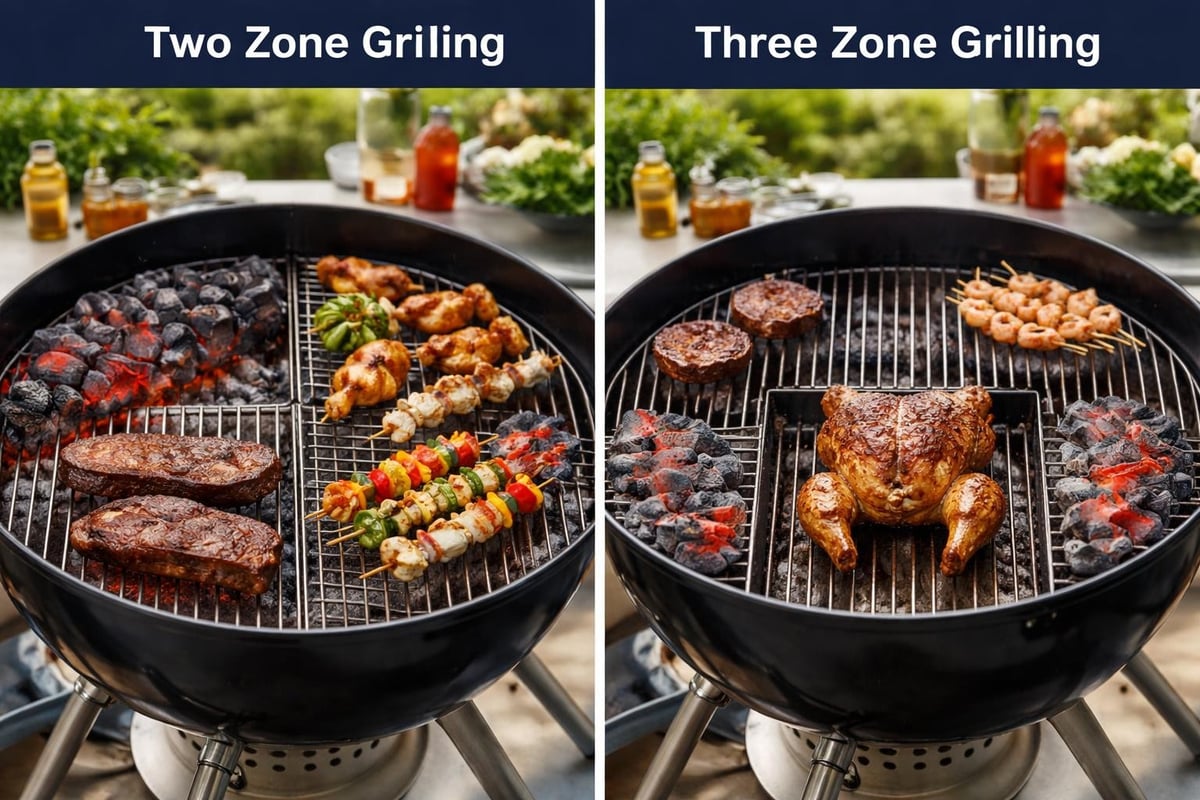
Mastering a charcoal outdoor kitchen requires understanding heat zone configuration. The two-zone method positions all coals on one side of the grill, creating direct high heat for searing alongside an indirect zone for gentle cooking and resting. Three-zone arrangements add a medium-heat section, expanding versatility for mixed-ingredient cooking.
Adjustable air vents-both beneath the charcoal bed and within the lid assembly-provide precise temperature control. Opening lower vents increases oxygen flow, intensifying combustion and raising temperatures. Top vents regulate smoke release and overall airflow, fine-tuning the cooking environment without fuel adjustments.
Charcoal combustion produces carbon monoxide-an odourless, colourless gas that poses serious health risks in enclosed or poorly ventilated spaces. Even semi-covered outdoor kitchens beneath pergolas or roof structures require exceptional airflow planning. Homes & Gardens discusses the safety aspects of charcoal grills, offering advice on proper usage, maintenance, and positioning to ensure safe grilling experiences.
The Portland Fire Department offers detailed safety recommendations for outdoor grilling, emphasizing proper placement and maintenance of charcoal grills. Key clearances include maintaining at least 3 metres from structures, overhangs, or combustible materials.
Never use petrol, paraffin, or other volatile accelerants for charcoal ignition. Chimney starters provide the safest, most reliable lighting method-newspaper or natural fire starters beneath the chimney ignite coals uniformly without chemical residues or dangerous flare-ups.
Electric charcoal starters offer convenient alternatives for built-in outdoor kitchen applications, eliminating open flames during ignition whilst providing consistent results. Integration requires proper electrical specification during construction, with weatherproof outlets positioned appropriately near the grill station.
Rockwood Charcoal outlines essential safety practices for using charcoal grills, including lighting methods and proper extinguishing techniques. Complete extinguishment demands patience-coals can remain dangerously hot for 24-48 hours following cooking. Purpose-designed ash bins with sealed metal construction prevent accidental fires from improperly disposed embers.
A comprehensive outdoor kitchen extends beyond the primary cooking station. Modular designs incorporating refrigeration, sink facilities, and integrated storage transform seasonal grilling into year-round outdoor cuisine.
Refrigeration keeps ingredients at food-safe temperatures during extended cooking sessions whilst eliminating trips indoors. Stainless steel outdoor refrigerators designed for ambient temperatures exceeding 40°C ensure reliable performance throughout British summers. Many luxury specifications include separate beverage centres and wine storage, elevating the entertaining experience.
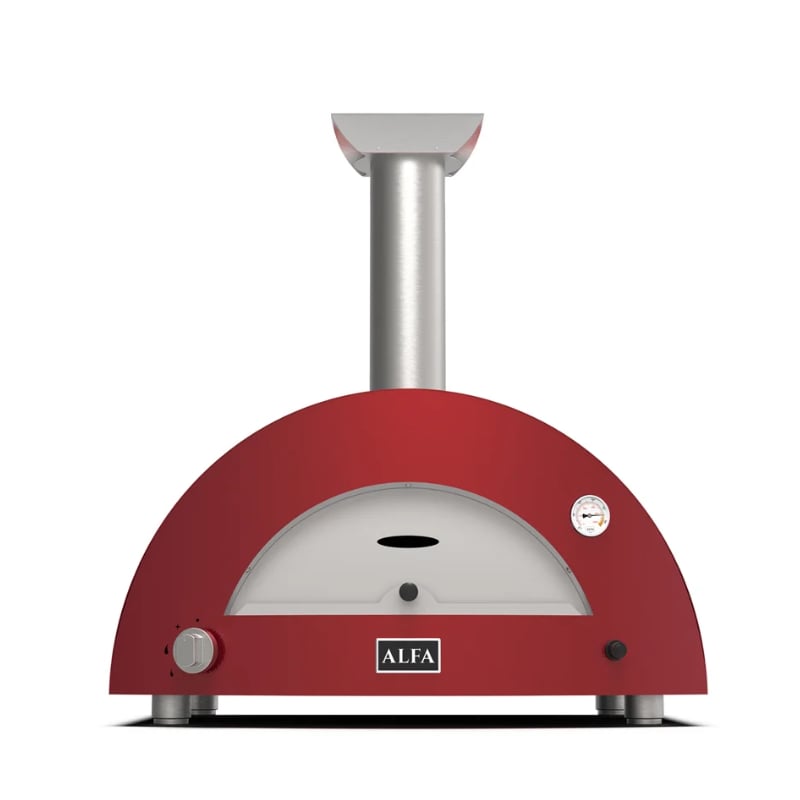
For those designing a complete outdoor cooking suite, incorporating complementary cooking methods alongside charcoal grilling expands culinary possibilities. The Alfa Forni Moderno Hybrid Pizza Oven represents this approach beautifully-handcrafted in Italy, it offers both wood-fired authenticity and gas convenience, reaching 500°C to deliver Neapolitan pizzas in 90 seconds whilst complementing rather than competing with your charcoal cooking station.
Running water proves essential for food safety, hand washing, and cleanup efficiency. Outdoor-rated sinks require frost-proof plumbing installations with proper drainage and shut-off valves accessible for winterisation. Positioning sinks between refrigeration and cooking zones optimises workflow whilst maintaining hygienic separation between raw and cooked foods.
Generous counter space surrounding the charcoal outdoor kitchen accommodates ingredient staging, serving platters, and finished dishes. Natural stone worktops provide heat-resistant surfaces suitable for hot pans whilst offering the aesthetic refinement expected in luxury outdoor spaces. The outdoor kitchen delivery and installation service ensures professional integration of these complex systems.
British weather tests outdoor kitchen materials relentlessly. Freezing winters, humid summers, and persistent rain demand construction standards exceeding indoor specifications.
Stainless steel components require grade 316 specification in coastal regions where salt air accelerates corrosion. Even inland installations benefit from 316 grade's superior resistance to atmospheric pollutants and temperature cycling. Regular cleaning with pH-neutral cleaners maintains the protective chromium oxide layer that prevents rust formation.
Natural stone countertops demand proper sealing with penetrating sealers reapplied annually. Granite and quartzite offer superior weather resistance compared to marble or limestone, maintaining structural integrity and colour stability through decades of outdoor exposure.
Cabinetry systems designed for charcoal outdoor kitchens must accommodate thermal cycling. Marine-grade plywood with exterior laminate or powder-coated aluminium frames withstand moisture and temperature fluctuations whilst maintaining dimensional stability. Soft-close hinges and drawer slides rated for outdoor applications prevent premature failure from weather exposure.
Year-round functionality requires thoughtful seasonal transitions. Autumn preparation includes:
Spring recommissioning reverses these procedures, inspecting all systems before the cooking season commences. Professional servicing ensures gas connections, electrical systems, and structural integrity meet safety standards following winter dormancy.
Successful configurations balance functionality with aesthetic harmony. Understanding common arrangements aids initial planning conversations with design consultants.
This streamlined approach positions all elements along a single axis-refrigeration, prep sink, charcoal grill, and plating counter flowing in logical sequence. Linear layouts suit narrow garden spaces or installations against existing walls, maximising functionality within constrained footprints. Minimum recommended length spans 3.5-4.5 metres to accommodate adequate work zones.
Corner configurations expand counter space whilst maintaining compact footprints. The charcoal grill typically occupies the corner position, with prep and refrigeration extending along perpendicular axes. This arrangement creates natural separation between hot and cold zones whilst facilitating conversation with guests positioned opposite the cook.
Freestanding islands deliver maximum flexibility, allowing circulation on all sides. The charcoal outdoor kitchen becomes the garden's focal point, with the cook facing guests during preparation. Islands require substantial square footage-typically 4 metres x 2.5 metres minimum-but reward spatial investment with unparalleled workflow and entertaining capacity.
| Layout Type | Minimum Footprint | Best Applications | Typical Budget Range |
|---|---|---|---|
| Linear Galley | 3.5m x 0.8m | Terraces, courtyards, narrow gardens | £8,000 - £18,000 |
| L-Shaped Corner | 3m x 3m | Medium gardens, patio corners | £12,000 - £25,000 |
| Island Configuration | 4m x 2.5m | Expansive gardens, entertaining-focused designs | £18,000 - £45,000+ |
| U-Shaped Enclosure | 4m x 3.5m | Dedicated outdoor kitchen rooms, chef-focused installations | £25,000 - £60,000+ |
Contemporary charcoal outdoor kitchens needn't sacrifice convenience for authenticity. Thoughtful integration of technology enhances rather than diminishes the traditional cooking experience.
Wireless temperature monitoring systems track grill and food temperatures remotely, allowing hosts to socialise whilst maintaining precise cooking control. Premium systems offer multiple probe capacity, monitoring several cuts simultaneously with smartphone alerts when target temperatures arrive.
Integrated lighting extends usability into evening hours. LED strip lighting beneath counters and within storage cabinets improves visibility whilst creating ambient atmosphere. Adjustable colour temperature capabilities shift from bright task lighting during preparation to warm accent lighting during dining.
Automated ventilation responds to smoke levels, activating extraction fans only when necessary rather than running continuously. This intelligent approach reduces noise during conversation whilst efficiently managing smoke during peak cooking periods.
The growing collection of outdoor cooking equipment demonstrates how traditional methods coexist with modern engineering, each enhancing the other rather than competing for dominance.
Translating charcoal outdoor kitchen aspirations into functional reality requires expertise spanning architecture, culinary arts, and landscape design. Professional consultation services guide clients through specification decisions that permanent installation demands.
Initial consultations establish usage patterns, entertaining frequency, cuisine preferences, and aesthetic aspirations. Understanding whether clients favour quick weeknight grilling or elaborate multi-course weekend entertaining fundamentally shapes design recommendations.
Site analysis evaluates existing infrastructure-gas lines, electrical capacity, water access, and drainage options. Topography, sun exposure, prevailing winds, and sight lines from indoor living areas all influence optimal positioning. The outdoor kitchen journey provided by experienced consultants ensures these variables receive proper consideration.
Detailed specifications translate conceptual designs into actionable construction documents. Material selections, appliance specifications, utility routing, and installation sequences require precise documentation ensuring seamless project execution.
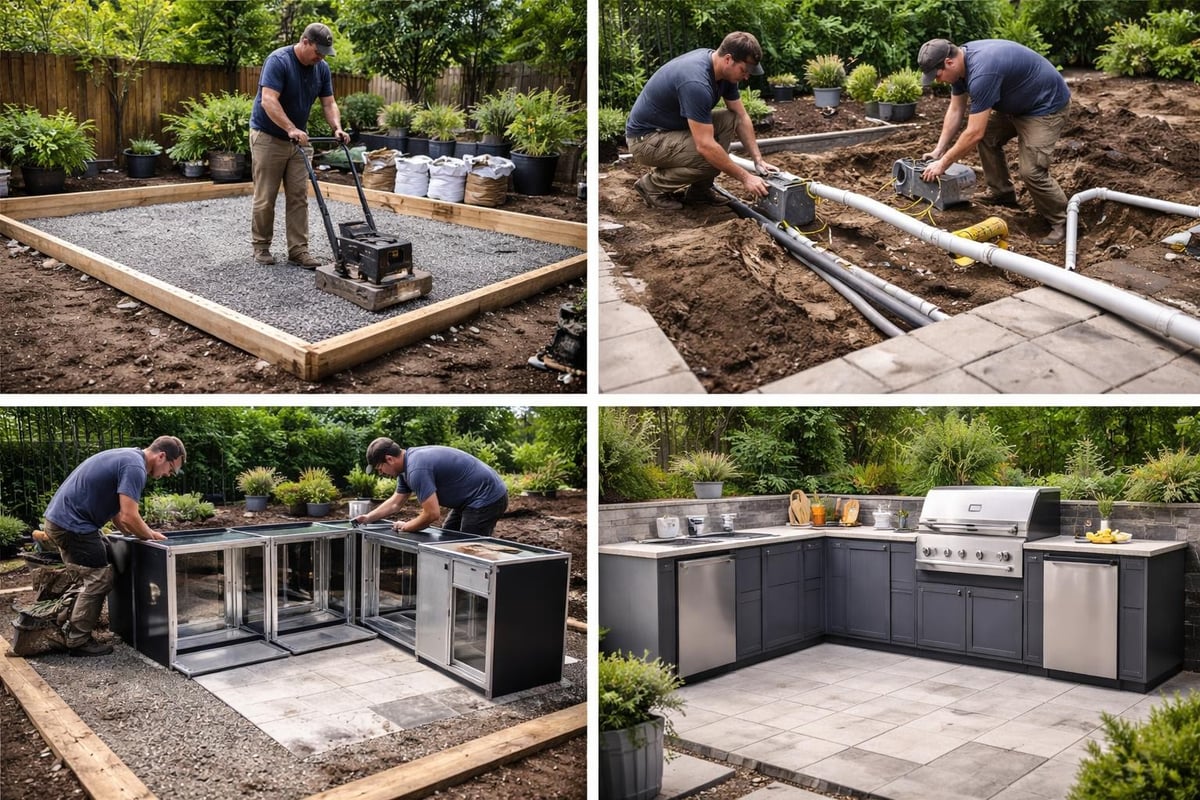
Professional installation proves particularly critical for charcoal outdoor kitchens given the fire safety and structural demands involved. Foundation requirements exceed typical patio standards-charcoal cooking stations demand reinforced bases capable of supporting substantial weight whilst remaining perfectly level.
Utility connections require certified tradespeople. Gas lines serving auxiliary appliances demand proper sizing, pressure testing, and safety shut-off integration. Electrical systems must incorporate weather-resistant components with appropriate circuit protection and grounding. Plumbing installations need frost-proof specifications and proper drainage to prevent winter damage.
Smokey Bear provides guidelines on outdoor grilling safety, focusing on preventing wildfires and ensuring safe disposal of charcoal ashes-critical considerations during the installation planning phase.
The charcoal outdoor kitchen functions as cornerstone within broader outdoor living architecture. Complementary elements extend functionality across seasons and weather conditions.
Pergola structures define spatial boundaries whilst providing measured shade and rain protection. Modern louvred systems offer adjustable coverage, opening for starlit evening dining or closing during inclement weather. Integration with retractable screens creates enclosed comfort without permanent walls.
Outdoor heating extends the season substantially. Radiant patio heaters, fire features, and built-in infrared systems maintain comfortable temperatures during spring and autumn evenings when charcoal cooking remains perfectly feasible despite ambient chill.
Ambient sound systems purpose-designed for outdoor environments enhance atmosphere without overwhelming conversation. Weather-resistant speakers integrated within landscaping or architectural features deliver refined audio quality that complements rather than dominates outdoor entertaining.
The comprehensive portfolio of curated brands available through specialist retailers ensures cohesive design across all outdoor living elements, from charcoal grilling stations to pergola systems and furniture collections.
Permanent outdoor kitchen installations may require building regulation approval or planning permission depending on size, proximity to boundaries, and local authority requirements. Structures exceeding certain dimensions or incorporating substantial roofing often trigger formal approval processes.
Building regulations govern structural stability, electrical safety, gas installations, and drainage systems. Compliance ensures not only legal operation but also protects property values and insurance coverage. Professional installers familiar with current regulations navigate these requirements efficiently.
Planning permission becomes necessary when outdoor kitchens significantly alter property appearance or impact neighbouring properties. Installations near listed buildings or within conservation areas face additional scrutiny. Early consultation with local planning authorities prevents costly redesigns or removal orders.
Fire safety regulations mandate appropriate clearances, particularly for charcoal cooking equipment generating open flames and high temperatures. The U.S. Consumer Product Safety Commission provides important tips on the safe use of charcoal grills, including warnings about carbon monoxide hazards that inform British safety standards as well.
Charcoal outdoor kitchen installations represent substantial investments, with comprehensive systems ranging from £12,000 to £60,000 depending on size, materials, and appliance selections. Understanding cost drivers aids realistic budget planning.
Material selections significantly influence total investment. Natural stone countertops cost 2-3 times more than porcelain alternatives but offer unmatched durability and aesthetic presence. Stainless steel cabinetry exceeds powder-coated aluminium pricing whilst delivering superior longevity in demanding outdoor environments.
Appliance quality spans equally broad ranges. Entry-level charcoal grills adequate for occasional use cost hundreds of pounds, whilst premium kamado-style ceramic cookers or custom-built Argentine grills reach several thousand. The cooking experience and longevity justify premium specifications for passionate outdoor chefs.
Installation complexity affects labour costs substantially. Simple linear configurations on existing patios require minimal site preparation, whilst island installations on virgin ground demand foundation construction, utility trenching, and potentially significant landscaping integration.
Property value enhancement often exceeds installation costs in desirable markets. Outdoor kitchens appeal strongly to buyers seeking turnkey entertaining spaces, with estate agents reporting premium positioning for properties featuring professionally designed outdoor cooking facilities.
Creating a charcoal outdoor kitchen blends culinary passion with architectural refinement, transforming outdoor spaces into year-round destinations for authentic cooking and memorable gatherings. From material selection and safety protocols to layout optimisation and complementary features, each decision shapes both immediate functionality and long-term satisfaction. The Cotswold Cooking Company brings decades of expertise to this specialised field, offering consultative design services, curated appliance collections, and professional installation that honours Cotswold heritage whilst delivering contemporary performance across Oxfordshire, the Cotswolds, and throughout the UK.

Leave a comment