


The evolution of outdoor cooking has brought remarkable innovation to discerning homeowners seeking both authenticity and convenience. A dual fuel pizza oven represents the pinnacle of this development, offering the flexibility to switch between traditional wood-fired cooking and the precision of gas fuel. For those creating refined outdoor culinary spaces in 2026, understanding the capabilities and considerations of these versatile appliances has become essential to achieving both performance and aesthetic excellence.
A dual fuel pizza oven combines two distinct heating methods within a single, carefully engineered appliance. This innovative design allows users to select either wood or gas fuel depending on the occasion, desired flavour profile, or time constraints.
The engineering behind these systems reflects significant advancement in outdoor cooking technology. Modern dual fuel models incorporate sophisticated combustion chambers that accommodate both fuel types without compromising thermal efficiency. The transition between fuels typically involves interchangeable burner systems or hybrid kits that slot seamlessly into the oven's architecture.
The operational mechanics vary depending on manufacturer and model design. Most premium systems feature:
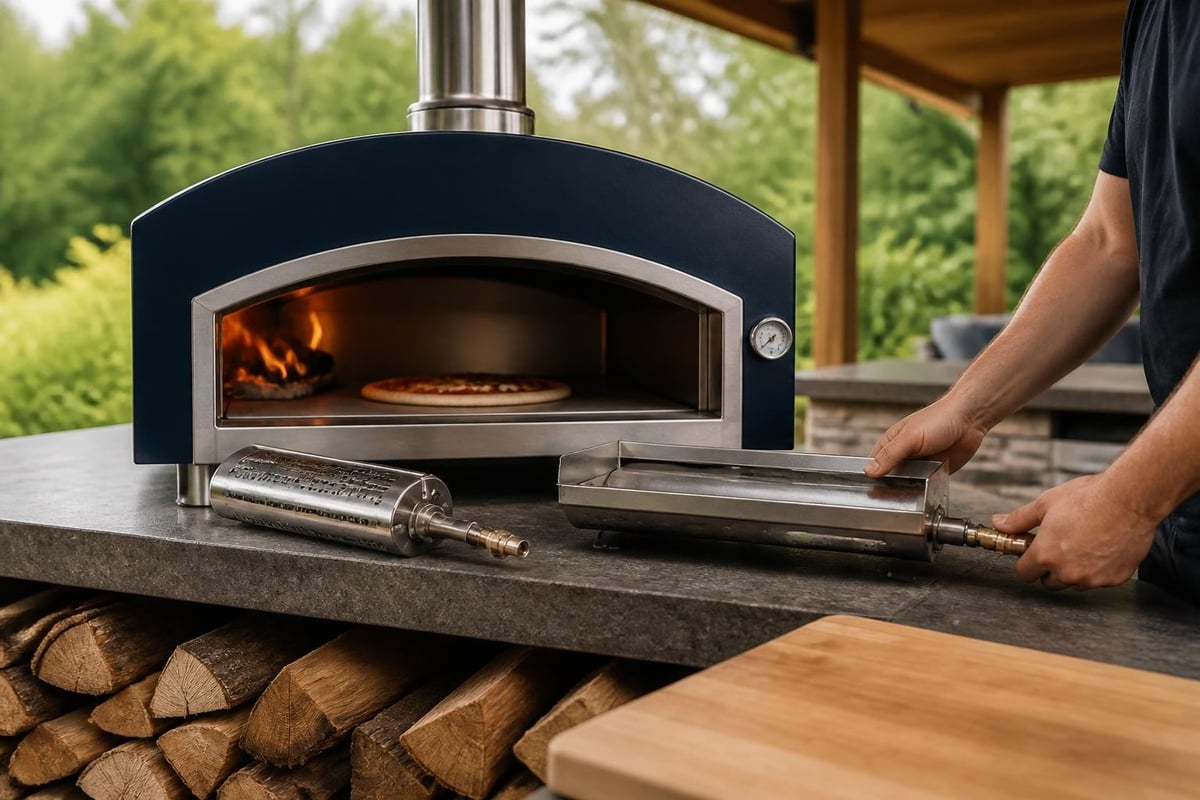
When operating on gas, these ovens provide precise temperature control through adjustable valves, reaching cooking temperatures between 350°C and 500°C within 20-30 minutes. Wood-fired operation delivers that distinctive smoky flavour whilst requiring more active fuel management and typically achieving peak temperatures slightly faster once the fire is established.
The decision to invest in dual fuel capability extends beyond simple convenience. For luxury outdoor kitchen installations, these appliances offer compelling benefits that align with both entertaining needs and culinary ambitions.
| Benefit Category | Wood Fuel | Gas Fuel | Dual Fuel Advantage |
|---|---|---|---|
| Heat-up Time | 25-40 minutes | 20-30 minutes | Choose based on schedule |
| Flavour Profile | Authentic smoky character | Clean, neutral taste | Match fuel to menu |
| Temperature Control | Manual, skill-dependent | Precise, adjustable | Flexibility for all skill levels |
| Fuel Storage | Requires dry wood storage | Compact LPG bottles | Options for space constraints |
| Maintenance | Ash removal, chimney cleaning | Minimal burner checks | Adaptable cleaning routines |
Weekend gatherings may call for the theatre and aroma of wood-fired cooking, whilst midweek family meals benefit from the swift heat-up and precise control of gas. The Delivita Flow dual-fuel pizza oven has gained recognition for precisely this versatility, allowing hosts to match their fuel choice to the occasion without maintaining multiple appliances.
Initial investment in a dual fuel pizza oven typically exceeds single-fuel alternatives by 15-30%. However, the operational costs balance favourably over time. Gas offers predictable pricing and longer burn times per pound spent, whilst wood provides an economical option for those with access to sustainable timber sources.
The fuel efficiency of modern dual fuel models has improved markedly. Premium insulation materials and optimised combustion chamber geometry mean both fuel types deliver more cooking capacity per unit consumed compared to earlier generations.
Aesthetic excellence remains paramount when specifying equipment for high-end outdoor kitchens. A dual fuel pizza oven must perform technically whilst contributing to the overall design narrative of the space.
Contemporary models available in 2026 showcase sophisticated finishes ranging from stainless steel and powder-coated colour options to ceramic and copper cladding. The physical footprint varies considerably, from compact portable units suitable for terrace settings to substantial built-in installations that become architectural focal points.
Proper placement requires consideration of:
The integration often works most successfully when the oven forms part of a comprehensive outdoor kitchen configuration. For those considering a complete outdoor cooking environment, the Cubic C1 Style Outdoor Kitchen exemplifies how modular design can accommodate pizza ovens alongside preparation zones, refrigeration, and additional cooking appliances whilst maintaining architectural coherence.
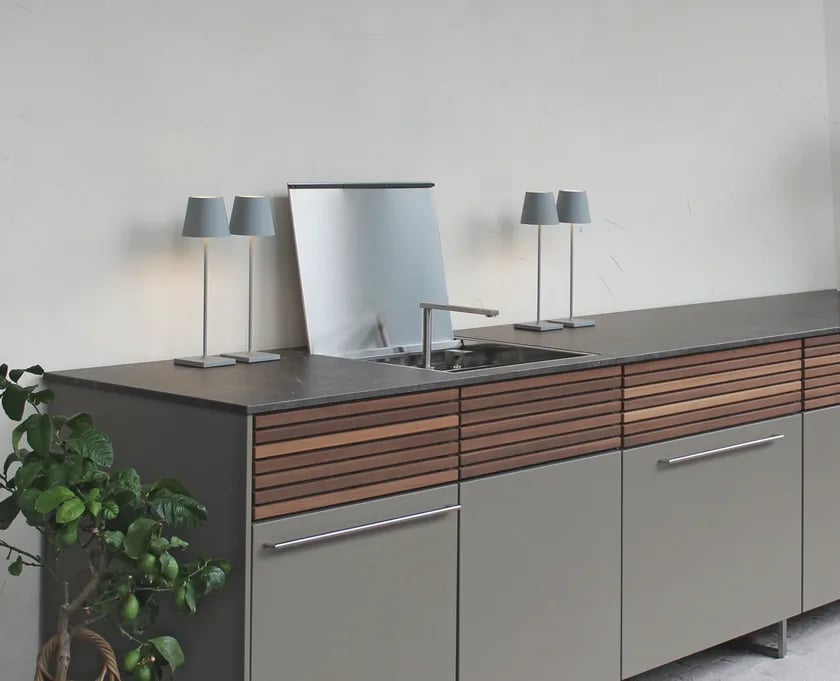
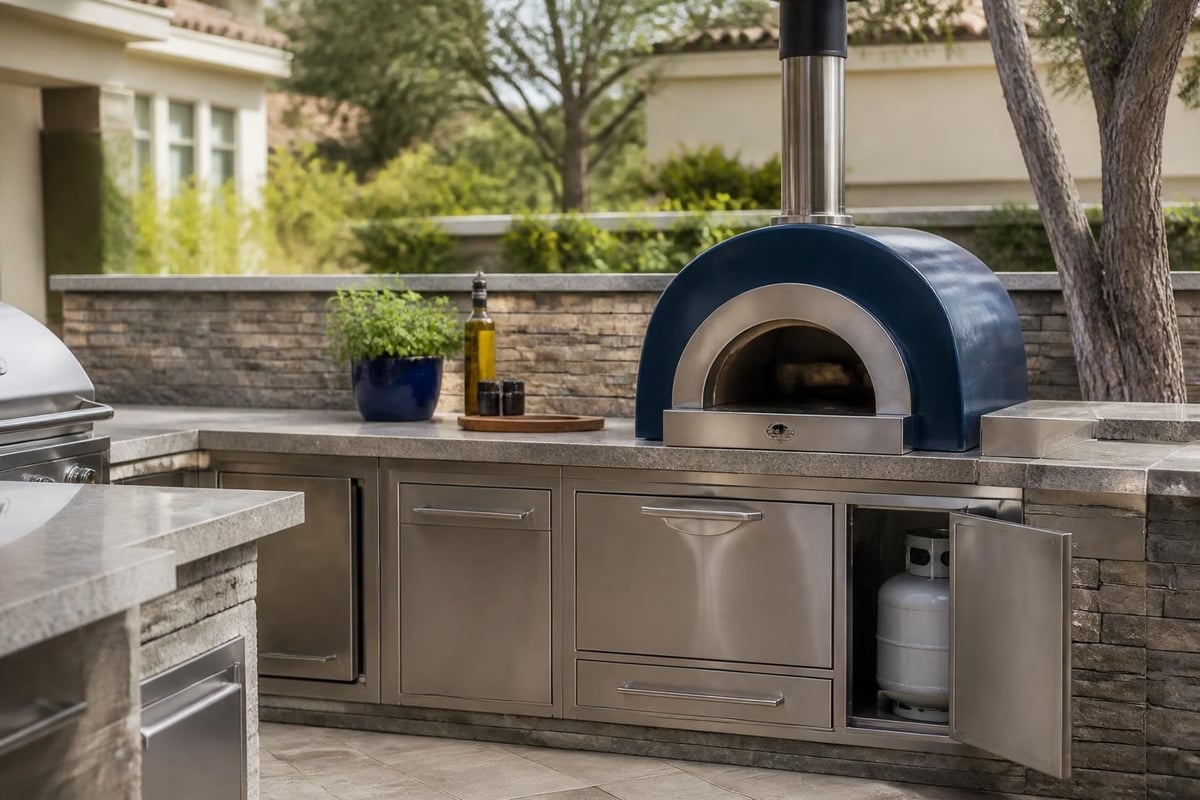
Understanding the performance characteristics that differentiate quality dual fuel pizza ovens helps ensure specification decisions align with actual cooking requirements and space constraints.
Internal cooking floor size directly impacts the number of pizzas that can be prepared simultaneously. Standard configurations include:
The dome height relative to floor width affects heat circulation patterns. Optimal ratios typically fall between 1:1.5 and 1:2 (height to width), promoting efficient heat retention whilst allowing adequate space for pizza expansion.
Peak temperature capability matters less than temperature consistency and recovery speed. Premium dual fuel pizza oven models maintain stable cooking zones between 400-450°C, the ideal range for authentic Neapolitan pizza preparation. When a pizza is inserted, quality ovens recover to cooking temperature within 90 seconds, ensuring consistent results across multiple preparations.
Gas fuel generally provides superior temperature stability, whilst wood fuel creates natural temperature variations that experienced pizzaiolos learn to utilise for different cooking styles.
The materials comprising the oven body, insulation, and cooking floor determine both performance and durability:
| Component | Premium Materials | Performance Impact |
|---|---|---|
| Cooking Floor | Cordierite stone, refractory cement | Heat retention, even cooking, thermal shock resistance |
| Dome/Chamber | Stainless steel, ceramic fibre | Structural integrity, weather resistance, heat reflection |
| Insulation | Ceramic wool, vermiculite | Fuel efficiency, external temperature safety, heat retention |
| External Cladding | Powder-coated steel, ceramic, copper | Weather protection, aesthetic appeal, heat dissipation |
| Burner System | Stainless steel (gas), cast iron (wood grate) | Longevity, corrosion resistance, heat distribution |
Maximising the potential of a dual fuel pizza oven requires understanding the distinct techniques each fuel source demands. The versatility becomes truly valuable only when operators develop competence with both systems.
Gas mode provides the most accessible entry point for those new to pizza oven cooking. The process involves:
The Gozney Roccbox demonstrates how thoughtful gas burner design can create surprisingly even heat distribution comparable to wood-fired results, challenging traditional assumptions about flavour limitations.
Wood fuel requires more active engagement but rewards practitioners with distinctive flavour and the sensory experience that defines outdoor cooking culture. Successful wood-fired operation involves:
The learning curve steepens with wood fuel, but the theatrical element enhances the outdoor entertaining experience substantially.
Protecting the investment in a dual fuel pizza oven requires understanding the maintenance protocols specific to each fuel system. The dual capability introduces some additional considerations compared to single-fuel appliances.
After each wood-fired session:
After each gas session:
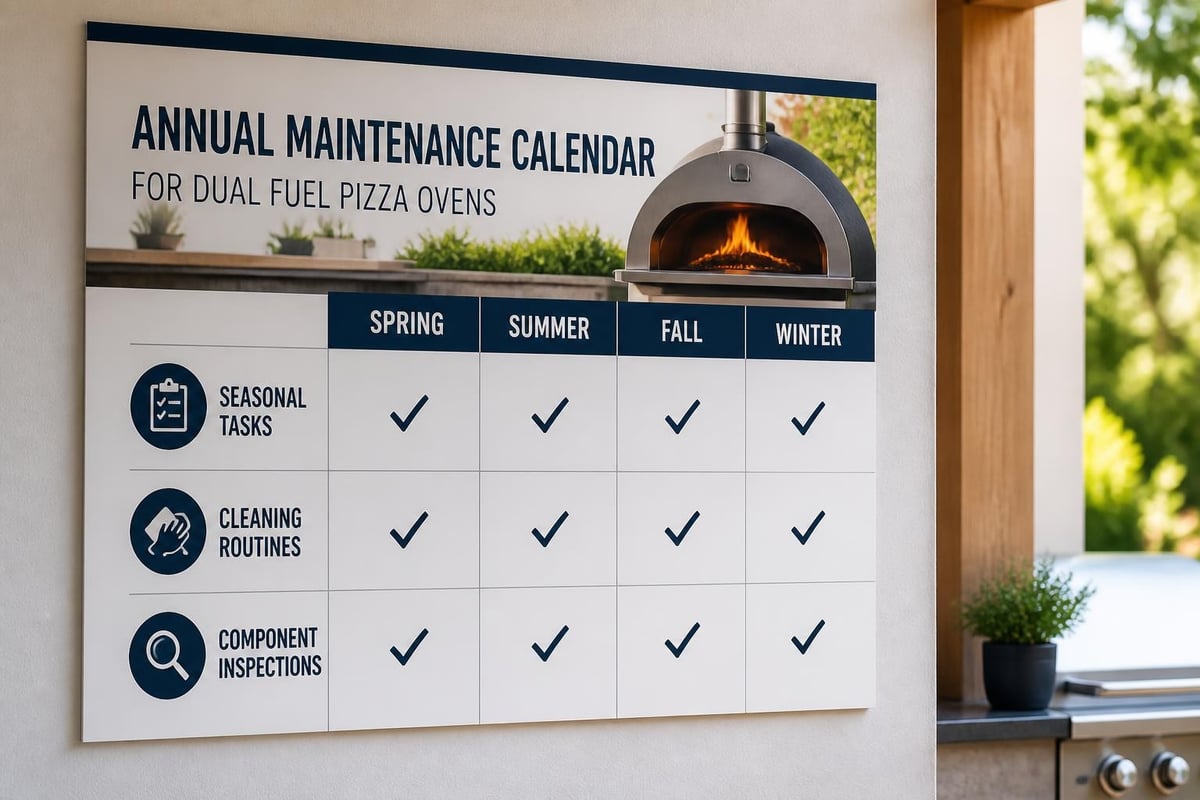
UK weather patterns demand particular attention to seasonal protection. Before winter storage or extended periods without use:
The comprehensive guides available for outdoor cooking equipment help owners develop maintenance routines that preserve both functionality and appearance across years of use.
The performance of any dual fuel pizza oven depends significantly on fuel quality. Both wood and gas require attention to sourcing and storage to achieve optimal results.
Properly seasoned hardwood makes the difference between frustrating smoke production and clean, efficient combustion. Quality wood fuel should have:
Storage requires covered, ventilated spaces that protect from moisture whilst allowing air circulation. A dedicated wood store positioned conveniently near the outdoor kitchen enhances the practical workflow.
Gas fuel offers consistency that wood cannot match. Standard propane bottles in 6kg, 13kg, or larger formats suit most domestic installations. Commercial-grade regulators and hoses designed specifically for pizza oven applications provide safety margins beyond standard barbecue equipment.
Annual inspection of gas components by qualified technicians ensures compliance with UK gas safety regulations whilst identifying potential issues before they compromise performance or safety.
Understanding how dual fuel pizza ovens compare against dedicated single-fuel alternatives helps clarify whether the additional investment delivers meaningful value for specific use patterns.
Dedicated wood-fired ovens often achieve slightly higher peak temperatures and may offer marginally superior flavour development for those who prioritise traditional methods. However, the operational convenience gap widens considerably for regular users who don't always have time for the full wood-fired ritual.
The recent reviews of premium wood-fired models highlight that single-fuel systems can offer cost savings of 20-30% whilst delivering authentic results for purists committed exclusively to traditional methods.
Gas-dedicated ovens typically feature more refined temperature control systems and slightly faster heat-up times. They eliminate the space requirements for wood storage and the associated maintenance of ash removal and chimney cleaning.
Yet they sacrifice the flavour dimension and entertaining theatre that wood-fired cooking provides. For luxury outdoor kitchens where versatility supports varied entertaining styles, this limitation becomes significant.
| Performance Metric | Wood-Only | Gas-Only | Dual Fuel |
|---|---|---|---|
| Peak Temperature | 500-550°C | 450-500°C | 450-550°C |
| Heat-up Speed | 30-45 min | 15-25 min | 15-45 min (fuel dependent) |
| Temperature Stability | Variable | Excellent | Excellent (gas) / Variable (wood) |
| Flavour Complexity | Outstanding | Good | Outstanding (wood) / Good (gas) |
| Operating Convenience | Moderate | Excellent | Excellent to Moderate |
| Annual Maintenance | Extensive | Minimal | Moderate |
Proper installation forms the foundation of long-term satisfaction with a dual fuel pizza oven. The complexity varies depending on whether the unit is freestanding, counter-mounted, or fully integrated into masonry structures.
Self-contained units on dedicated stands or carts offer maximum flexibility. These installations require:
For those investing in complete outdoor living environments, understanding outdoor kitchen delivery and installation services clarifies how professional teams approach complex installations that integrate multiple cooking appliances.
Permanent masonry or fabricated enclosures demand more extensive planning:
Professional design consultancy becomes essential for these installations, ensuring compliance with building regulations whilst achieving the desired aesthetic integration.
The 2026 market offers compelling options across price points and design philosophies. Understanding the landscape helps buyers identify models that align with their specific requirements and design visions.
The Alfa Forni Moderno Hybrid Pizza Oven exemplifies Italian craftsmanship applied to dual fuel technology. Handmade construction, reaching 500°C within 30 minutes, and authentic Neapolitan pizza capability in approximately 90 seconds demonstrate what premium engineering delivers. The included hybrid kit enables seamless switching between LPG gas and wood fuel without tools or complex conversions.
This level of refinement suits discerning homeowners who view their outdoor kitchen as a long-term investment in entertaining capability and property value. The aesthetic appeal complements contemporary and traditional architectural styles equally well.
For those seeking flexibility beyond fixed installations, portable models provide surprising capability. The latest compact dual-fuel designs demonstrate how engineering innovation has compressed professional performance into transportable formats.
These units suit smaller terraces, balconies, or situations where the oven might relocate seasonally between different areas of the property.
Hospitality applications and serious home entertaining may justify professional-grade dual fuel pizza ovens. These systems feature:
The investment escalates significantly, but the performance and durability justify the premium for appropriate use cases.
Maximising value from a dual fuel pizza oven extends beyond the purchase decision. Thoughtful accessorising and skill development transform the appliance from occasional novelty to central element of outdoor living.
Proper tools make the difference between frustrating experiences and confident cooking:
Additional beneficial items:
The learning curve varies by individual, but structured approach accelerates competence. Consider:
The guides available through specialist retailers often provide curated resources that shortcut the trial-and-error process significantly.
Beyond immediate cooking performance, a thoughtfully specified dual fuel pizza oven contributes to property value and lifestyle quality in ways that justify the initial investment.
Well-executed outdoor kitchen installations, particularly those featuring premium pizza ovens, enhance property desirability measurably. Estate agents report that luxury outdoor living spaces influence buyer decisions increasingly, particularly in premium market segments where indoor-outdoor lifestyle expectations have become standard.
The key lies in quality execution. Professional installation, aesthetic coherence with overall property design, and premium equipment selection create value. Conversely, poorly integrated or obviously budget-compromised installations may detract rather than enhance.
The intangible benefits often exceed financial considerations for those who use their outdoor spaces actively:
The comprehensive outdoor cooking solutions available through specialist consultancies demonstrate how individual appliances integrate into holistic outdoor living visions.
Modern outdoor cooking equipment increasingly reflects environmental consciousness without compromising performance. A dual fuel pizza oven presents interesting sustainability considerations worth examining.
Responsibly sourced hardwood represents a renewable, carbon-neutral fuel when harvested sustainably. Local sourcing reduces transportation impacts, whilst proper combustion in well-designed ovens minimises particulate emissions.
Certification schemes such as Grown in Britain or FSC help verify sustainable forestry practices. For those with access to estate timber or fallen wood from managed landscapes, wood fuel can approach carbon neutrality across its lifecycle.
Propane burns cleaner than many alternatives, producing minimal particulates and relatively low carbon emissions per energy unit delivered. The infrastructure for LPG distribution is well-established across the UK, and bottle deposit schemes encourage reuse rather than disposal.
However, LPG remains a fossil fuel with associated extraction and processing impacts. The dual fuel capability allows users to choose wood when environmental considerations take priority whilst retaining gas for convenience-driven occasions.
Perhaps the most significant environmental consideration involves product longevity. Premium dual fuel pizza ovens engineered for 15-20 years of regular use represent far better resource efficiency than cheaper appliances requiring replacement every 3-5 years.
The embodied energy in manufacturing, shipping, and installing outdoor cooking equipment is substantial. Maximising useful life through quality construction and proper maintenance delivers genuine environmental benefit beyond marketing claims.
The outdoor cooking industry continues evolving, with several trends likely to influence dual fuel pizza ovens over coming years.
Contemporary outdoor cooking equipment increasingly features digital temperature monitoring, automated ignition systems, and smartphone connectivity. Future dual fuel models may incorporate:
Research into sustainable fuel alternatives may introduce new options beyond traditional wood and LPG. Bioethanol, hydrogen, and advanced biomass pellets all show promise for outdoor cooking applications, potentially expanding "dual fuel" into "multi-fuel" territory.
Aesthetic trends continue pushing outdoor cooking equipment toward more architectural presentations. Expect increasingly refined finishes, customisable exterior treatments, and modular systems that allow owners to update components without replacing entire units.
The boundaries between indoor and outdoor kitchens continue blurring, with outdoor equipment matching indoor appliance quality whilst handling weather exposure. This convergence elevates expectations for dual fuel pizza ovens across performance, aesthetics, and longevity dimensions.
A dual fuel pizza oven represents a sophisticated solution for those creating luxury outdoor kitchens where versatility and performance both matter. The ability to select wood-fired authenticity or gas-powered convenience based on occasion, menu, and available time transforms outdoor cooking from occasional novelty into practical lifestyle enhancement. Whether you're planning a comprehensive outdoor kitchen installation or adding a standalone cooking feature, Cotswold Cooking Company provides consultative expertise across specification, design integration, and professional installation, ensuring your dual fuel pizza oven becomes a cherished element of your outdoor living space for years to come.

Leave a comment