


Inbuilt BBQs represent the pinnacle of sophisticated outdoor living, transforming traditional gardens into year-round culinary destinations. Unlike freestanding alternatives, these permanently installed cooking systems integrate seamlessly with bespoke cabinetry, natural stone worktops, and architectural landscaping to create cohesive outdoor kitchens that rival their indoor counterparts. For discerning homeowners across the Cotswolds, Oxfordshire, and beyond, the decision to invest in an inbuilt BBQ marks a commitment to elevated entertaining and timeless design.
An inbuilt BBQ forms the centrepiece of a professionally designed outdoor kitchen, built directly into custom cabinetry or masonry structures rather than standing as a portable unit. This permanent installation approach delivers substantial benefits that extend well beyond aesthetics.
The primary distinction of inbuilt BBQs lies in their architectural harmony with surrounding elements. These systems nestle within purpose-built enclosures crafted from materials such as granite, limestone, stainless steel, or rendered masonry, creating visual continuity across the entire outdoor space.
When specified correctly, an inbuilt BBQ becomes an extension of your home's design language. The cooking surface aligns precisely with adjacent prep areas, whilst storage compartments beneath house utensils, fuel, and accessories. This integration eliminates the visual clutter of portable equipment whilst maximising functional workspace.
Key architectural benefits include:
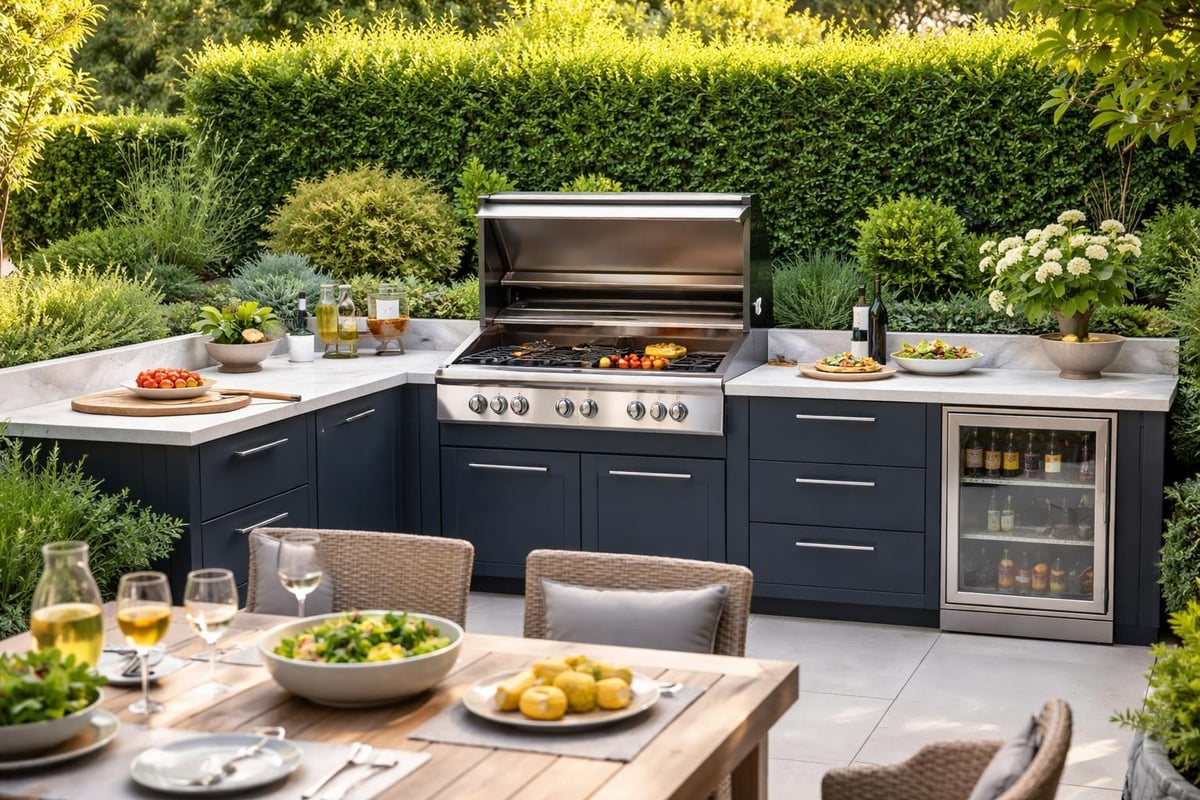
Inbuilt BBQs typically feature commercial-grade construction designed to withstand the British climate year-round. Manufacturers such as Whistler, Hestan, and other premium brands engineer these systems with marine-grade stainless steel, ceramic burners, and weather-resistant components.
| Component | Standard BBQ | Inbuilt BBQ | Performance Difference |
|---|---|---|---|
| Cooking Surface | 304 Stainless Steel | 316 Marine-Grade Steel | Enhanced corrosion resistance |
| Burner Output | 8,000-12,000 BTU | 15,000-25,000 BTU | Higher heat retention |
| Construction | Powder-coated panels | Welded stainless framework | Superior structural integrity |
| Warranty Coverage | 1-3 years | 5-15 years | Long-term investment protection |
| Temperature Range | 150-260°C | 150-370°C | Expanded cooking versatility |
The enhanced specifications of inbuilt systems translate directly to cooking performance. Higher BTU outputs deliver restaurant-quality searing, whilst precision temperature control enables techniques from slow-roasting to high-heat grilling.
Selecting the appropriate inbuilt BBQ requires careful assessment of your outdoor kitchen requirements, spatial constraints, and entertaining patterns. A consultative approach ensures optimal specification from the outset.
The choice between gas, charcoal, or hybrid systems fundamentally shapes your cooking experience and installation requirements. Understanding different fuel types influences both initial specification and long-term satisfaction.
Gas inbuilt BBQs connect to mains natural gas or LPG bottles, offering instantaneous ignition and precise temperature control. These systems suit clients prioritising convenience and consistent results, particularly for frequent entertaining. Installation requires certified gas fitting, with supply lines concealed within the outdoor kitchen structure.
Charcoal and wood-fired options deliver authentic smoke flavours that gas cannot replicate. Whilst requiring more hands-on management, these systems appeal to culinary enthusiasts seeking traditional cooking methods. Modern designs incorporate ash management systems and adjustable grate heights for enhanced control.
Hybrid configurations provide maximum versatility, enabling both gas convenience and wood-fired flavour. Some high-end systems feature dual fuel chambers within a single cooking platform, allowing simultaneous use of different heat sources.
Proper dimensioning ensures your inbuilt BBQ functions efficiently without overwhelming the outdoor kitchen footprint. Professional designers typically allocate workspace according to established ergonomic principles.
The built-in grill selection process emphasises proportional balance between cooking surface, prep areas, and circulation space. A well-specified outdoor kitchen maintains comfortable movement for both cook and guests.
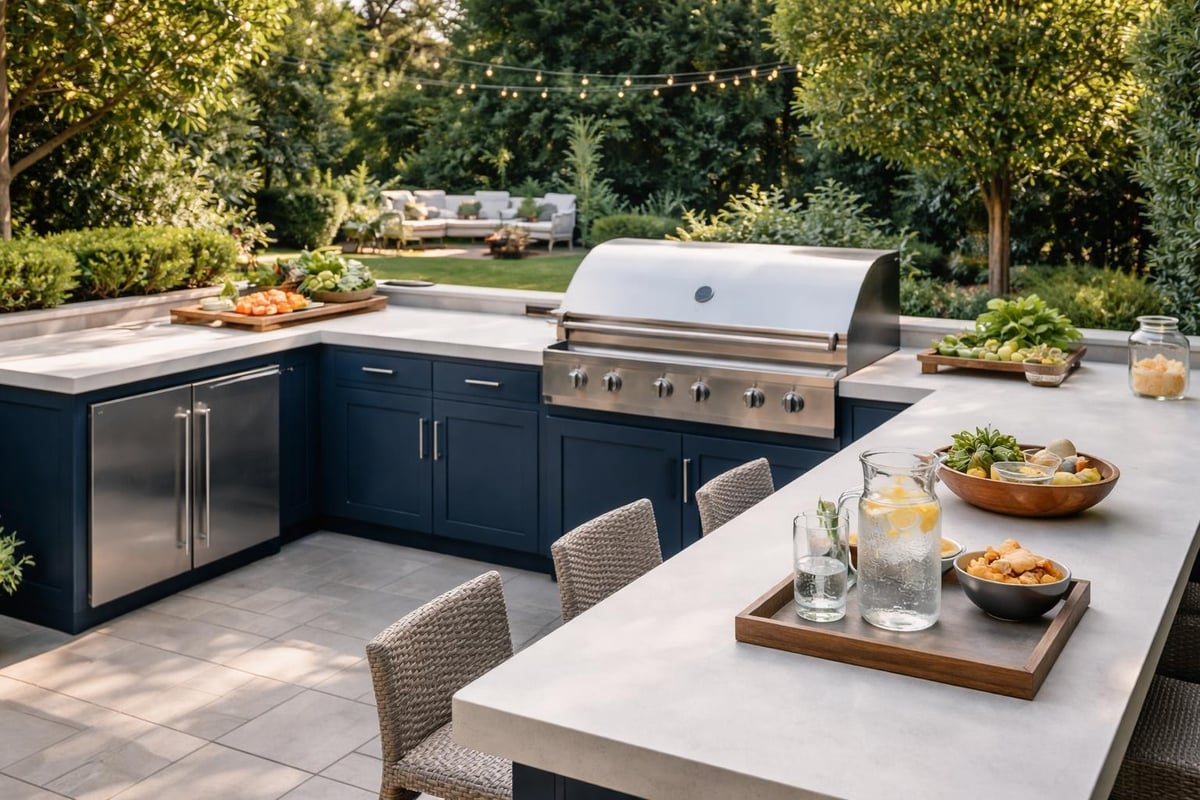
The British climate demands robust material specifications that withstand temperature fluctuations, persistent moisture, and seasonal weather patterns. Inbuilt BBQs constructed with premium materials maintain both performance and appearance across decades of use.
Marine-grade 316 stainless steel represents the gold standard for inbuilt BBQ construction, particularly in coastal regions or areas with high humidity. This alloy contains molybdenum, which significantly enhances corrosion resistance compared to standard 304 grade steel.
Premium manufacturers apply various finish treatments to enhance durability and aesthetics. Brushed finishes conceal fingerprints and minor scratching, whilst polished surfaces create striking contemporary statements. Some high-end systems feature custom powder coating in heritage colours that complement Cotswold stone or traditional brickwork.
The surfaces surrounding your inbuilt BBQ must withstand heat exposure, food preparation activities, and weather whilst maintaining visual appeal. Material selection significantly impacts both functionality and long-term maintenance requirements.
| Material | Heat Resistance | Porosity | Maintenance Level | Aesthetic Character |
|---|---|---|---|---|
| Granite | Excellent | Low | Minimal | Classic elegance |
| Limestone | Good | Medium | Moderate | Natural warmth |
| Porcelain | Excellent | Very Low | Minimal | Contemporary precision |
| Stainless Steel | Excellent | None | Easy | Industrial refinement |
| Dekton/Neolith | Exceptional | None | Minimal | Modern versatility |
Natural stone brings timeless beauty but requires periodic sealing to prevent staining from oils and acids. Engineered materials like Dekton offer superior technical performance whilst replicating natural aesthetics. Your choice should align with the broader design vision for your outdoor cooking station.
Contemporary inbuilt BBQs incorporate sophisticated features that expand culinary possibilities well beyond basic grilling. These innovations transform outdoor cooking from seasonal activity into year-round culinary exploration.
Premium inbuilt BBQs feature independently controlled cooking zones that enable simultaneous preparation of dishes requiring different temperatures. A typical configuration might include:
This zoning capability replicates professional kitchen functionality, allowing complex menus to proceed efficiently during large gatherings.
Many high-specification inbuilt BBQs incorporate dedicated smoking systems with separate wood chip compartments and controlled airflow. These features enable authentic barbecue techniques alongside conventional grilling.
Rotisserie burners mounted at the rear of the cooking chamber provide even heat circulation around slowly rotating meats. Commercial-grade motors handle substantial loads, from whole poultry to rolled joints, freeing the main cooking surface for accompaniments.
The latest inbuilt BBQ systems feature wireless temperature monitoring, automated ignition sequences, and programmable cooking profiles accessible via smartphone applications. These technologies appeal to clients seeking precision and convenience without compromising the artisanal cooking experience.
Sensors embedded in cooking grates monitor food temperature in real-time, sending alerts when targets are reached. Some systems integrate with outdoor entertainment systems, allowing recipe videos and temperature data to display on weatherproof screens near the cooking area.
Inbuilt BBQs achieve their full potential when thoughtfully integrated within comprehensive outdoor kitchen designs that balance functionality with architectural refinement. The most successful installations reflect careful consideration of sight lines, material relationships, and spatial flow.
The transition from indoor to outdoor living spaces should feel intentional and cohesive. When your inbuilt BBQ shares material palettes, finish treatments, and design details with adjacent areas, the outdoor kitchen becomes a natural extension of your home rather than an afterthought.
Consider how stainless steel appliances might echo contemporary kitchen fixtures, or how natural stone surrounds might complement existing garden walls and paving. Even subtle details like handle styles, kickboard heights, and joint widths contribute to overall visual unity.
Year-round usability demands adequate weather protection for both cook and equipment. Architectural pergolas with retractable canopies, integrated heating, and weatherproof lighting transform inbuilt BBQs from fair-weather amenities into all-season culinary spaces.
The relationship between overhead structure and cooking equipment requires careful planning. Adequate ventilation prevents smoke accumulation, whilst strategic positioning protects the cooking area from prevailing winds without creating downdrafts that affect burner performance.
For those exploring outdoor kitchen ideas, the outdoor barbecue grill designs featured across luxury installations demonstrate how cohesive planning elevates both aesthetics and functionality.
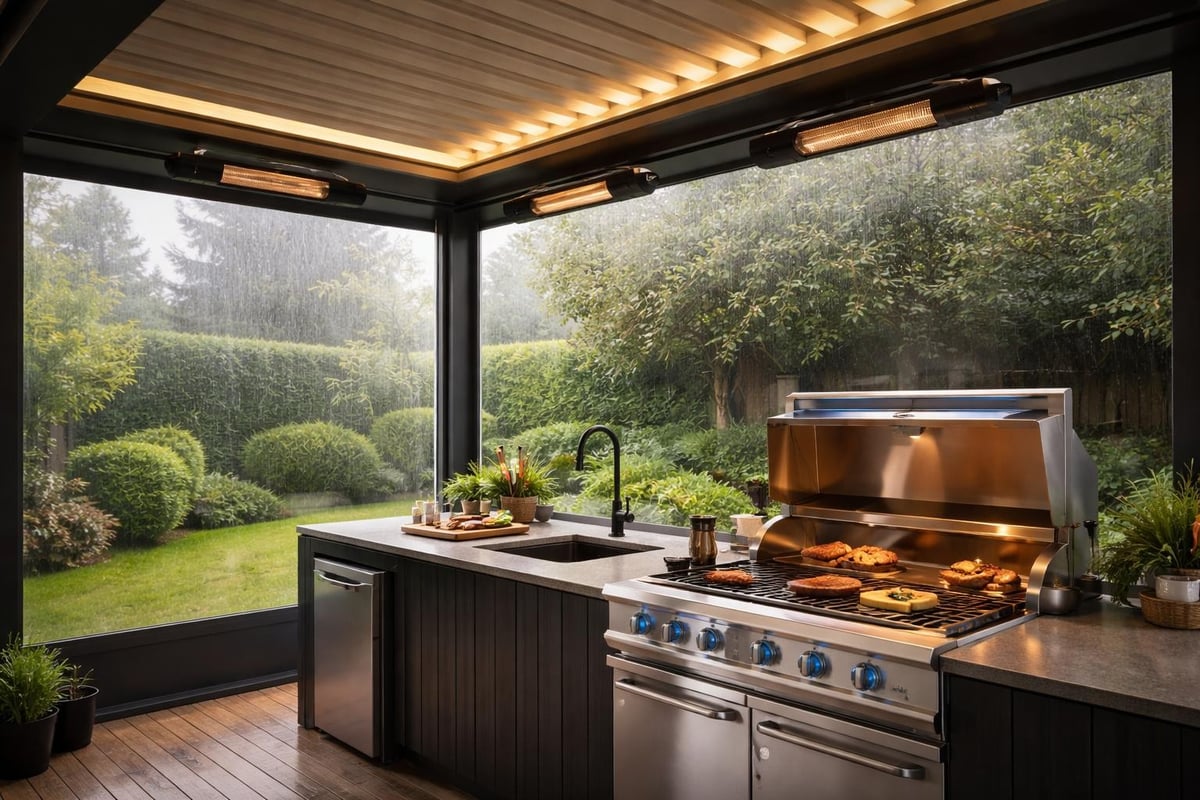
The permanent nature of inbuilt BBQs necessitates meticulous installation planning that addresses structural support, utility connections, and regulatory compliance. Professional specification ensures optimal performance whilst avoiding costly remediation.
Inbuilt BBQs and their surrounding cabinetry require stable foundations that prevent settling, which could misalign gas connections or damage integrated components. Most installations utilise reinforced concrete pads extending beyond the footprint of visible structures.
The foundation depth depends on soil conditions and total system weight. A fully specified outdoor kitchen incorporating an inbuilt BBQ, stone worktops, and masonry elements may exceed 500kg, demanding foundations similar to those supporting conservatory bases.
Gas supply lines must be installed by Gas Safe registered engineers in accordance with current British Standards. The routing should account for future maintenance access whilst remaining concealed beneath paving or within cabinet bases.
Electrical connections for lighting, ignition systems, and auxiliary equipment require weatherproof enclosures and appropriate circuit protection. Water supply for integrated sinks demands frost-proof pipework with accessible isolation valves for winter shutdown.
Whilst most inbuilt BBQ installations fall within permitted development rights, certain configurations may require building control notification, particularly when incorporating significant structural elements or permanent roofing.
Professional designers navigate these requirements as standard practice, ensuring compliant installations that protect your investment.
Inbuilt BBQs represent significant investments that reward proper maintenance with decades of reliable service. Establishing routine care protocols preserves both performance and appearance whilst preventing costly repairs.
Monthly during active use:
Quarterly throughout the year:
Annual comprehensive service:
British winters demand specific protection measures for inbuilt BBQs that will not see use during colder months. Whilst these systems withstand weather exposure better than portable alternatives, proactive winterisation extends component lifespan.
Cover exposed cooking surfaces with purpose-designed, breathable covers that prevent moisture accumulation. Disconnect and store propane bottles in well-ventilated areas away from living spaces. Apply protective coatings to stainless steel surfaces in coastal locations where salt exposure accelerates corrosion.
For systems incorporating water features or sinks, drain all pipework and purge with compressed air to prevent freeze damage. Consider installing heated cabinet bases in installations housing temperature-sensitive components.
Inbuilt BBQs represent substantial financial commitments that warrant careful evaluation of both initial expenditure and long-term value. Understanding the investment spectrum helps calibrate expectations and budget allocation.
| Price Range | Specification Level | Typical Features | Expected Lifespan |
|---|---|---|---|
| £2,000-£4,000 | Entry Premium | 2-3 burners, 304 stainless, basic controls | 8-12 years |
| £4,000-£8,000 | Mid Premium | 4-5 burners, 316 steel, zone control, rotisserie | 12-18 years |
| £8,000-£15,000 | High Premium | 5+ burners, marine grade, smart features, infrared | 18-25 years |
| £15,000+ | Ultra Premium | Bespoke configuration, commercial components, full integration | 25+ years |
These figures represent the cooking appliance itself, exclusive of installation labour, cabinetry, worktops, and ancillary equipment. Complete outdoor kitchen projects incorporating inbuilt BBQs typically range from £15,000 to £75,000 depending on size, specification, and material selection.
Quality outdoor kitchens featuring inbuilt BBQs consistently enhance property values, particularly within premium markets across the Cotswolds, Home Counties, and other affluent regions. Estate agents report that well-executed outdoor living spaces can add 5-15% to property valuations.
Beyond monetary considerations, the lifestyle benefits of sophisticated outdoor cooking facilities prove difficult to quantify. Families report increased home entertaining, enhanced quality time, and greater enjoyment of garden spaces throughout extended seasons.
The top benefits of installing an inbuilt BBQ extend beyond cooking performance to encompass social connectivity and outdoor living enhancement.
Whilst the inbuilt BBQ forms the centrepiece of outdoor cooking spaces, complementary elements elevate functionality and create complete culinary environments. A holistic approach considers all aspects of outdoor food preparation and entertaining.
Incorporating dedicated pizza ovens alongside inbuilt BBQs expands menu possibilities dramatically. Wood-fired pizza ovens reach temperatures exceeding 450°C, enabling authentic Neapolitan-style pizzas whilst the BBQ manages mains and sides simultaneously.
For clients seeking both grilling versatility and artisanal baking capabilities, hybrid configurations deliver exceptional flexibility. The Cubic C1 Style Outdoor Kitchen demonstrates how modular systems can integrate multiple cooking platforms within cohesive architectural designs, offering layouts that accommodate both inbuilt BBQs and complementary cooking appliances in weather-resistant enclosures.
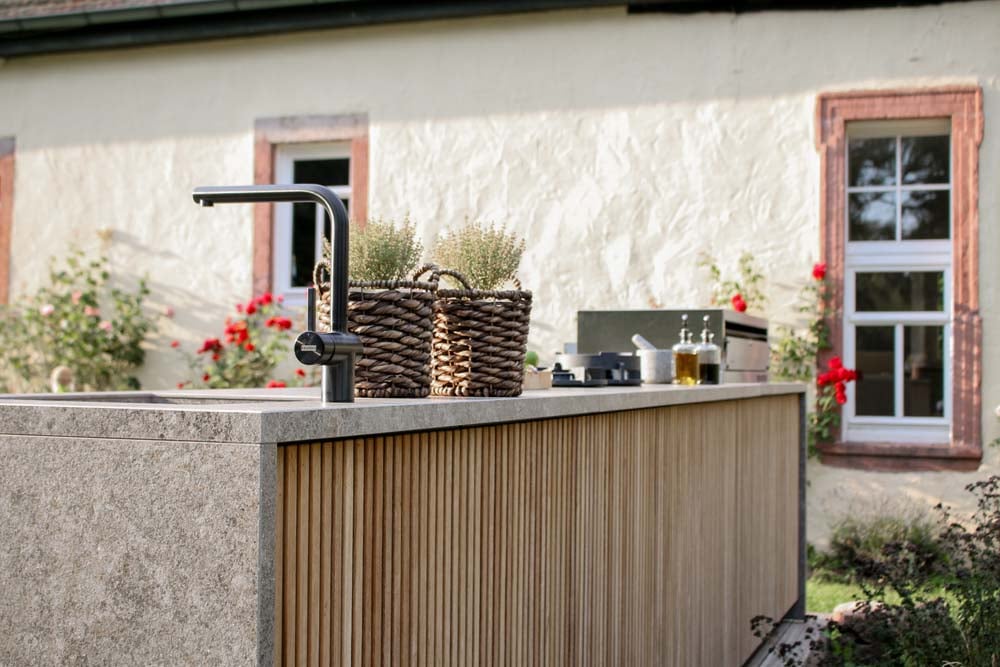
Outdoor refrigeration maintains ingredients at optimal temperatures during extended cooking sessions whilst eliminating repeated trips indoors. Purpose-built outdoor refrigerators withstand temperature fluctuations and humidity levels that would compromise domestic models.
Specification considerations include:
Integrated sinks transform outdoor kitchens into genuinely independent cooking environments. Stainless steel basin units with hot and cold water enable vegetable preparation, handwashing, and cleaning without indoor access.
Professional installations incorporate adequate drainage, either connecting to existing soil pipes or utilising purpose-built soakaways where mains drainage proves impractical. Combination units housing both sink and refrigeration maximise functionality within compact footprints.
The outdoor cooking collection showcases how integrated appliances create comprehensive outdoor culinary spaces.
The inbuilt BBQ market encompasses numerous manufacturers operating across various quality tiers and price points. Selecting established brands with proven track records ensures specification confidence and long-term support availability.
European brands typically emphasise design refinement alongside engineering excellence, appealing to clients prioritising aesthetics equally with performance. These manufacturers often offer extensive customisation options accommodating bespoke outdoor kitchen designs.
Premium European inbuilt BBQs feature welded construction, commercial-grade components, and sophisticated control systems. Warranty coverage frequently extends beyond standard industry terms, reflecting manufacturer confidence in longevity.
American manufacturers dominate the high-performance segment, with brands like Hestan, Lynx, and Twin Eagles engineering systems delivering exceptional heat output and cooking versatility. These companies developed expertise serving demanding North American markets before expanding internationally.
Specification strengths include powerful infrared burners, extensive cooking surface areas, and robust construction designed for intensive use. The aesthetic language tends towards bold, contemporary styling that suits modern architectural contexts.
Brand selection should align with your specific priorities, whether emphasising design integration, cooking performance, or budget considerations. Established retailers and design consultancies maintain relationships with multiple manufacturers, enabling objective specification advice.
Consider factors including local service availability, replacement parts accessibility, and warranty claim procedures. Premium brands typically support installations through approved dealer networks offering professional advice and after-sales service.
Understanding the global landscape of inbuilt BBQ manufacturers provides context for evaluating different brands and their market positioning.
The permanent nature of inbuilt BBQs enables extensive customisation that would prove impractical with portable equipment. Bespoke configurations address specific cooking preferences, spatial constraints, and design visions.
Leading manufacturers offer modular approaches where clients specify individual cooking modules that combine into unified systems. A typical configuration might integrate:
This modularity enables specification evolution, with additional components incorporated as requirements develop or budgets expand.
Bespoke powder coating services provide colour matching to specific architectural palettes, enabling seamless integration with existing design schemes. Textured finishes replicate natural materials whilst maintaining stainless steel's performance characteristics.
Handle styles, control panel configurations, and trim details accommodate diverse aesthetic preferences. Some manufacturers offer custom laser etching services adding personalised details or family crests to prominent surfaces.
Hospitality clients and serious culinary enthusiasts sometimes require specifications exceeding standard product offerings. Custom fabrication services deliver purpose-built inbuilt BBQs addressing specific operational requirements.
Examples include commercial-scale residential installations supporting large-scale entertaining, hybrid fuel systems combining multiple heat sources, and specialised cooking surfaces designed for particular cuisines or techniques.
Successful inbuilt BBQ installations emerge from collaborative design processes that explore client requirements, spatial opportunities, and technical constraints. Professional outdoor kitchen designers guide specifications whilst accommodating personal preferences and lifestyle patterns.
Effective projects commence with comprehensive discussions exploring how clients envision using their outdoor kitchen. Understanding entertaining frequency, typical guest numbers, and menu preferences informs specification decisions.
Spatial analysis assesses available areas, sun exposure patterns, prevailing wind directions, and relationships to indoor living spaces. These factors influence positioning, orientation, and shelter requirements.
Designers translate initial discussions into visual concepts illustrating spatial arrangements, material palettes, and equipment specifications. This stage explores various configurations, evaluating trade-offs between competing priorities.
Detailed specifications emerge covering all aspects from foundation requirements through equipment selection to finishing details. Comprehensive documentation enables accurate quotations and smooth project execution.
Professional outdoor kitchen projects involve multiple trades requiring careful coordination. Gas engineers, electricians, groundworkers, stone masons, and appliance installers must sequence activities appropriately.
Experienced project managers orchestrate these activities, ensuring quality standards whilst maintaining realistic timelines. Clients receive regular updates throughout installation, with opportunities to review progress and address any emerging considerations.
The luxury outdoor kitchens portfolio demonstrates outcomes achievable through professional design and specification processes.
Inbuilt BBQs represent transformative investments that elevate outdoor living from occasional summer activity to year-round culinary destination, blending architectural refinement with exceptional cooking performance. Whether you're envisioning a contemporary entertaining space or a traditional garden kitchen reflecting Cotswold heritage, professional specification ensures outcomes that exceed expectations whilst delivering decades of reliable service. Cotswold Cooking Company offers comprehensive design consultation, equipment specification, and project delivery services that transform outdoor spaces into bespoke culinary destinations, supported by carefully curated brands and expert installation teams dedicated to exceptional craftsmanship.

Leave a comment