


Investing in luxury cookware transforms the culinary experience, elevating everyday cooking into an art form. Whether you're designing a refined indoor kitchen or creating an outdoor culinary destination, the quality of your cooking equipment fundamentally shapes both performance and pleasure. Premium cookware combines exceptional materials, meticulous craftsmanship, and timeless design-delivering performance that justifies the investment for generations.
The distinction between standard and luxury cookware extends far beyond price points. Premium pieces incorporate superior materials, advanced manufacturing techniques, and design excellence that directly impact cooking performance.
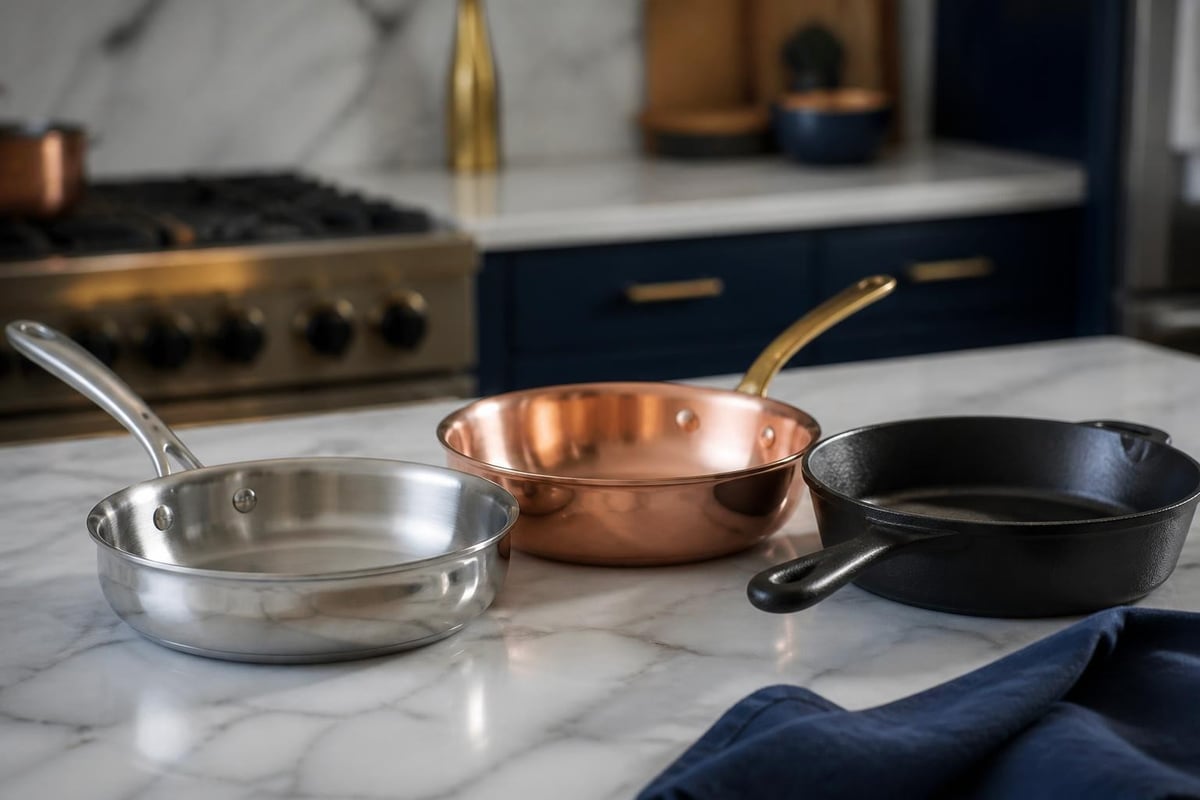
Stainless steel stands as the cornerstone of professional-grade cookware, valued by chefs for its durability, hygiene, and exceptional heat distribution. Multi-ply construction-typically featuring aluminium or copper cores bonded between stainless steel layers-ensures even heating whilst maintaining the non-reactive properties essential for delicate sauces and acidic ingredients.
Copper cookware represents the pinnacle of thermal conductivity, responding instantly to temperature adjustments. However, copper requires regular maintenance and often features stainless steel or tin linings to prevent reactions with certain foods.
Cast iron delivers unmatched heat retention and develops natural non-stick properties through proper seasoning. Enamelled cast iron variants combine traditional benefits with modern convenience, eliminating seasoning requirements whilst offering vibrant colour options.
| Material | Heat Distribution | Maintenance | Best Applications | Longevity |
|---|---|---|---|---|
| Multi-ply Stainless | Excellent | Low | Versatile, everyday use | Lifetime |
| Copper | Superior | High | Precise temperature control | Decades |
| Cast Iron | Outstanding retention | Medium | Searing, slow cooking | Generational |
| Enamelled Cast Iron | Excellent retention | Low | Braises, baking | Lifetime |
The materials that define high-end cookware directly influence performance, durability, and aesthetic appeal-fundamental considerations when specifying equipment for luxury kitchens.
Premium manufacturers employ sophisticated bonding processes to create multi-layered construction. Five-ply or seven-ply configurations optimise heat distribution whilst maintaining structural integrity. These layers extend fully across the base and sidewalls, ensuring consistent temperature throughout the cooking surface.
Handles warrant particular attention. Investment-grade cookware features cast stainless steel or riveted handles engineered for balance and comfort. Oven-safe construction allows seamless transitions from hob to oven-essential for techniques like pan-roasting.
Selecting luxury cookware requires evaluating manufacturers' reputations, warranty provisions, and compatibility with your cooking style. Understanding critical factors in premium cookware selection empowers discerning buyers to make informed decisions.
French and German manufacturers dominate the luxury cookware landscape, bringing centuries of metallurgical expertise. Brands like Cristel exemplify this tradition-the French specialist recently announced expansion of production facilities to meet surging global demand for their modular, high-end collections.
Le Creuset maintains its position as the benchmark for enamelled cast iron, with their toughened non-stick ranges proving equally capable. Italian manufacturer Smeg has relaunched its cookware range with collections that blend iconic design aesthetics with serious performance credentials.
Modern manufacturers challenge traditional hierarchies through innovation. Zwilling's cookware offerings demonstrate how German engineering principles translate into exceptional cooking performance, whilst brands focused on health-conscious design push boundaries in material science.
When specifying cookware for luxury outdoor kitchens, durability assumes paramount importance. Equipment must withstand temperature fluctuations and environmental exposure whilst maintaining performance standards.
The luxury cookware sector faces increased scrutiny regarding material safety and manufacturing transparency. Experts warn that cookware labels like "non-toxic" and "chemical-free" can mislead consumers, emphasising the importance of evaluating manufacturer transparency.
Non-stick coatings vary dramatically in quality and safety profiles. Premium PTFE-based coatings withstand higher temperatures and resist degradation when manufactured to exacting standards. Ceramic alternatives appeal to health-conscious consumers, though performance characteristics differ significantly.
Quality indicators include:
Acidic ingredients-tomatoes, wine, citrus-can react with certain metals, affecting flavour and potentially leaching unwanted compounds. Stainless steel, enamelled surfaces, and properly tin-lined copper provide non-reactive cooking environments essential for sauce work and delicate preparations.
Strategic collection development prioritises versatile foundation pieces before specialised equipment. Comparing luxury kitchenware sets reveals how material choices influence optimal configurations for different cooking styles.
A properly curated collection begins with these core items:
Once foundations are established, specialised pieces enhance culinary capabilities:
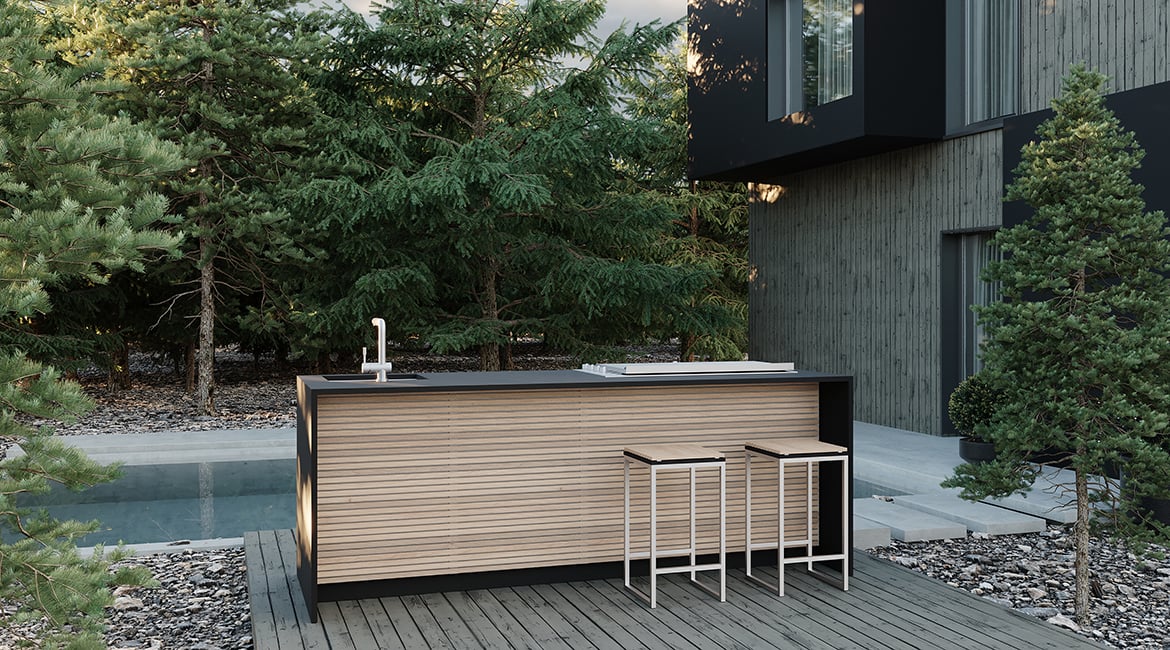
The Cubic C1 Style Outdoor Kitchen exemplifies how thoughtful equipment specification extends beyond indoor spaces. Modular configurations accommodate integrated storage for premium cookware collections, protecting investment pieces whilst ensuring accessibility during outdoor entertaining.
Luxury cookware rewards proper care with decades of reliable service. Maintenance requirements vary by material, but fundamental principles apply universally.
Stainless steel cookware:
Copper pieces:
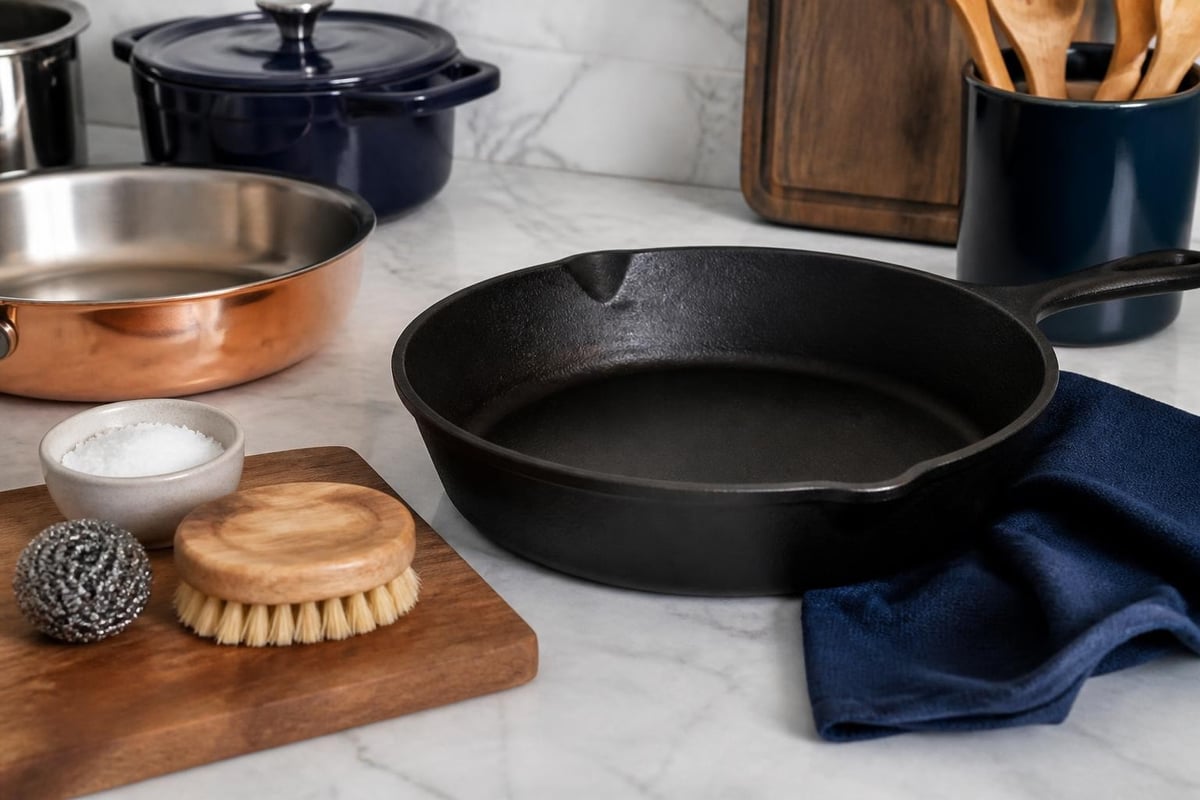
Cast iron maintenance:
| Cookware Type | Dishwasher Safe | Seasoning Required | Special Cleaning Needs | Storage Considerations |
|---|---|---|---|---|
| Stainless Steel | Yes (hand washing preferred) | No | Occasional deep cleaning | Stack with protectors |
| Copper | Never | No | Regular polishing | Hang or separate storage |
| Cast Iron | Never | Yes (uncoated only) | Immediate drying essential | Dry location only |
| Enamelled Cast Iron | Yes (hand washing better) | No | Avoid thermal shock | Stack carefully |
| Non-stick Premium | No | No | Soft utensils only | Protected stacking |
Professional-grade cookware benefits from periodic deep maintenance. Stainless steel develops a patina that many chefs prize, though it can be removed through specialised cleaning. Copper requires regular polishing to maintain lustre, whilst cast iron seasoning improves with use.
Storage considerations protect surfaces and maintain appearance. Hanging racks suit kitchens with adequate space, whilst pan protectors prevent scratching during stacked storage. Our showroom demonstrates integrated storage solutions that safeguard cookware investments whilst enhancing kitchen aesthetics.
Outdoor cooking demands equipment engineered for environmental exposure and diverse heat sources. Luxury outdoor kitchens integrate traditional cookware with specialised pieces designed for grills, wood-fired ovens, and open flames.
Wood-fired pizza ovens represent the pinnacle of outdoor cooking equipment. The Alfa Forni Moderno Hybrid Pizza Oven combines Italian craftsmanship with dual-fuel versatility, reaching 500°C for authentic Neapolitan results. Accompanying cookware-cast iron skillets, enamelled dishes, and specialised pizza peels-must withstand extreme temperatures whilst delivering exceptional performance.
Quality pizza ovens and baking equipment require complementary accessories manufactured to similar standards. Investment in premium oven-safe cookware ensures versatility across cooking methods.
Premium outdoor grilling transcends basic barbecue, demanding specialised cookware:
The gourmet cookware collection at Cotswold Cooking Company encompasses both traditional indoor pieces and outdoor-specific equipment, ensuring comprehensive specification for all-season culinary environments.
Luxury cookware functions as both tool and aesthetic element. Open shelving, hanging pot racks, and glass-fronted cabinetry transform collections into design features whilst maintaining accessibility.
Contemporary kitchen design increasingly blurs indoor-outdoor boundaries. Stainless steel cookware complements professional-grade appliances and commercial-style fixtures. Enamelled cast iron introduces colour accents that coordinate with tile selections, cabinetry finishes, and textile choices.
For outdoor kitchen specifications, weather-resistant storage protects cookware whilst maintaining visual cohesion. Stainless steel cabinets, powder-coated aluminium frames, and marine-grade hardware ensure longevity in exposed environments.
Just as premium cookware deserves thoughtful storage, complete outdoor entertaining spaces benefit from architectural weather protection. Architectural bioclimatic pergolas extend usable seasons whilst sheltering cooking equipment and dining areas from the elements.
High-end cookware performs optimally when paired with appropriate heat sources. Induction compatibility requires magnetic base materials-verify specifications before purchasing if your kitchen features induction hobs. Gas cooking suits all cookware types, whilst certain pieces excel on specific heat sources.
The professional kitchen appliances curated by specialists ensure compatibility with premium cookware collections, maximising performance across indoor and outdoor cooking environments.
Luxury bakeware reviews reveal that premium baking equipment merits the same consideration as stovetop pieces. Materials, construction, and performance characteristics distinguish investment-grade bakeware from commodity alternatives.
Complete kitchens incorporate both stovetop and oven-specific equipment:
Quality bakeware withstands repeated thermal cycling whilst maintaining dimensional stability-essential for consistent results.
Initial investment in luxury cookware generates long-term value through durability, performance consistency, and aesthetic longevity. While premium pieces command higher purchase prices, cost-per-use calculations favour quality over replacement cycles inherent to budget equipment.
Consider a premium five-ply stainless steel sauté pan at £250 versus a basic alternative at £40. The luxury piece delivers:
Amortised over decades, premium cookware costs pence per use whilst delivering consistently superior results.
Proper maintenance preserves both function and value. Many luxury manufacturers offer restoration services, replacing handles, re-tinning copper interiors, or refinishing surfaces-extending usable life indefinitely.
Warranty terms merit careful evaluation. Lifetime warranties indicate manufacturer confidence whilst protecting your investment. Registration requirements, coverage exclusions, and claim processes vary significantly between brands.
The proliferation of online marketplaces introduces counterfeit risks and grey-market products lacking manufacturer support. Authorised dealers provide purchase confidence through guaranteed authenticity, full warranty coverage, and expert consultation.
Legitimate luxury cookware features:
Suspiciously discounted prices often indicate counterfeit products or grey-market goods imported without UK warranty coverage.
Premium cookware specifications benefit from expert guidance. Professional service partners understand how individual pieces integrate within broader kitchen ecosystems, ensuring compatibility with cooking styles, appliance selections, and design aesthetics.
For comprehensive outdoor kitchen projects, the outdoor journey encompasses cookware specification alongside infrastructure development-from pergola installation to integrated storage solutions.
Luxury cookware represents one component within sophisticated culinary environments. Audio-visual integration enhances entertaining spaces, with specialists like ANR media creating custom home cinema and multi-room audio solutions that elevate outdoor living areas into complete sensory experiences.
High-end outdoor kitchens increasingly incorporate entertainment technology, allowing hosts to enjoy music, ambient lighting control, and even culinary programming whilst preparing meals. Seamless integration requires early planning and collaboration between cookware specialists, kitchen designers, and technology consultants.
Conscious consumers increasingly evaluate cookware through environmental lenses. Premium manufacturers respond through sustainable material sourcing, energy-efficient production processes, and product longevity that inherently reduces waste.
Stainless steel offers indefinite recyclability without quality degradation. End-of-life pieces return to the material stream, creating circular economy benefits.
Copper cookware similarly recycles perpetually whilst commanding scrap value that offsets replacement costs.
Cast iron represents perhaps the most sustainable option-requiring minimal processing, lasting generations, and recycling completely.
Leading brands increasingly publish sustainability reports detailing:
These disclosures empower values-aligned purchasing whilst encouraging industry-wide improvements.
The luxury cookware sector evolves through material innovation, manufacturing advancement, and changing consumer priorities. Understanding emerging trends informs strategic purchasing decisions.
Embedded temperature sensors, induction-compatible construction, and app-connected monitoring represent growth areas. However, traditional craftsmanship maintains primacy-technology enhances rather than replaces fundamental material quality and construction excellence.
Interchangeable handles, stackable designs, and universal lids optimise storage whilst maintaining individual piece performance. These systems particularly suit compact urban kitchens and outdoor cooking environments where space efficiency matters.
Material science advances deliver improved non-stick surfaces without controversial compounds. Ceramic-titanium hybrids, diamond-particle reinforcement, and plasma-spray applications represent cutting-edge developments in premium non-stick technology.
The sector's direction reflects broader luxury market trends toward sustainability, longevity, and authentic craftsmanship-values that define both premium cookware and thoughtfully designed outdoor living environments.
Investing in luxury cookware elevates culinary experiences whilst delivering decades of reliable performance. Whether specifying equipment for refined indoor kitchens or comprehensive outdoor entertaining spaces, quality fundamentals remain constant: superior materials, expert construction, and timeless design. The Cotswold Cooking Company brings consultative expertise to cookware selection alongside complete outdoor kitchen design, helping discerning homeowners create all-season culinary destinations that blend Cotswold heritage with modern performance. Discover how our curated collections and bespoke design services can transform your cooking environments at Cotswold Cooking Company.

Leave a comment