


Transforming your garden into a sophisticated culinary destination requires more than simply placing a barbecue on the patio. Outdoor BBQ kitchen units represent a fundamental shift in how discerning homeowners approach al fresco entertaining, combining professional-grade cooking equipment with weather-resistant cabinetry, integrated utilities, and architectural design elements that extend your living space seamlessly into the garden. As we move through 2026, the market for these comprehensive outdoor cooking solutions has matured considerably, offering modular configurations that rival indoor kitchens in both functionality and aesthetic refinement. Whether you're planning an intimate family cooking space or a full-service entertaining zone for larger gatherings, understanding the essential components, material specifications, and design considerations ensures your investment delivers lasting performance and visual impact throughout every season.
Outdoor BBQ kitchen units differ fundamentally from standalone grills or portable cooking equipment. These integrated systems incorporate multiple functional zones within a unified structure, typically featuring built-in cooking appliances, preparation surfaces, storage compartments, and utility connections housed within weather-resistant cabinetry.
Key components typically include:
The modular nature of contemporary outdoor BBQ kitchen units allows for extensive customisation according to your available space, cooking preferences, and entertaining requirements. Rather than purchasing individual components separately, these cohesive systems ensure aesthetic harmony whilst simplifying the installation process through coordinated dimensions and pre-planned utility routing.
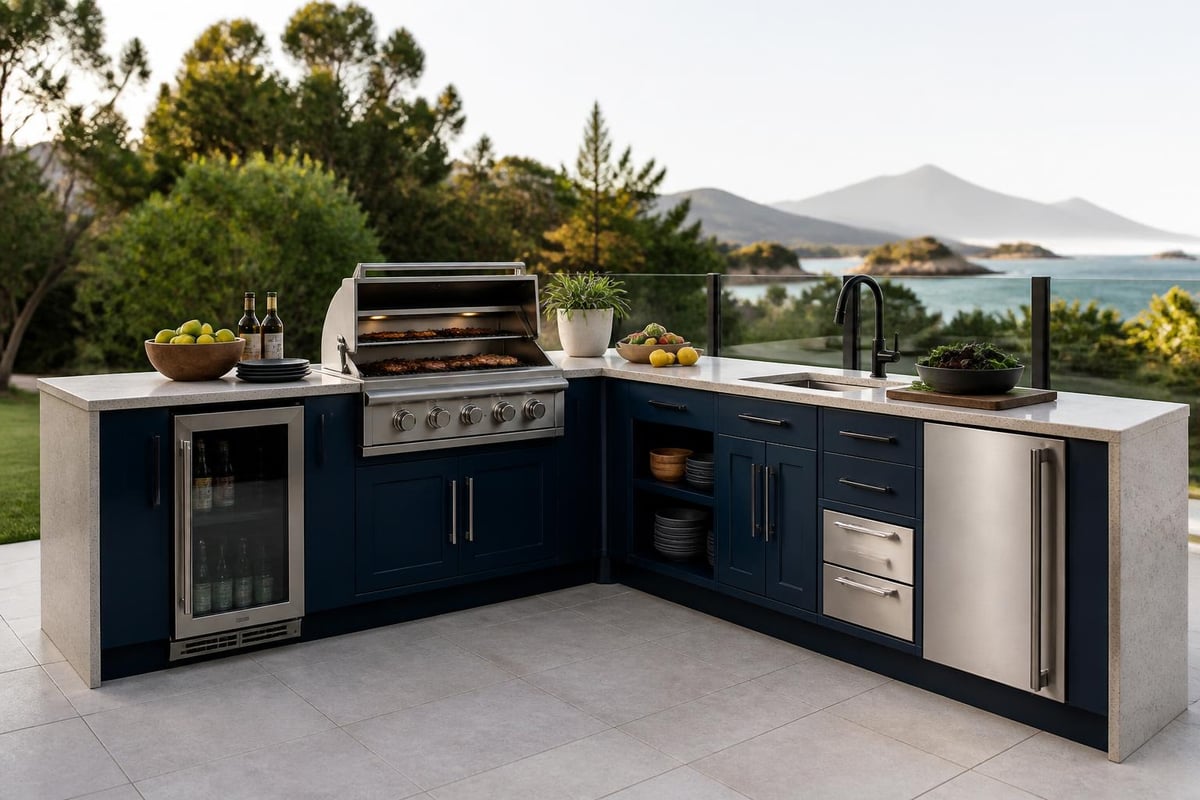
The unpredictable British climate demands exceptional material performance from outdoor BBQ kitchen units. Unlike Mediterranean installations that experience predominantly dry, warm conditions, UK outdoor kitchens must withstand frequent temperature fluctuations, persistent moisture exposure, and occasional frost events.
Premium material options include:
| Material | Weather Resistance | Maintenance Level | Aesthetic Character | Lifespan |
|---|---|---|---|---|
| Marine-grade stainless steel | Excellent | Low | Contemporary, professional | 20+ years |
| Powder-coated aluminium | Excellent | Very low | Modern, architectural | 15-25 years |
| Teak hardwood | Very good | Moderate | Traditional, organic | 15-20 years |
| Porcelain tile surfaces | Excellent | Very low | Versatile, refined | 20+ years |
| Quartzite countertops | Excellent | Low | Luxurious, natural | 25+ years |
Stainless steel remains the predominant choice for cabinetry frames and cooking surfaces, with 304-grade specification representing the minimum standard for coastal or high-moisture environments. Superior 316-grade stainless steel incorporates molybdenum for enhanced corrosion resistance, particularly valuable in areas with significant salt air exposure or industrial atmospheric contaminants.
The built-in outdoor grill ideas showcased in contemporary design publications increasingly feature powder-coated aluminium frameworks, offering exceptional durability with reduced weight compared to steel alternatives. This material choice proves especially beneficial for installations on elevated terraces or roof gardens where structural loading considerations influence specification decisions.
Successful outdoor BBQ kitchen units begin with thoughtful spatial planning that considers cooking workflow, guest interaction patterns, and integration with existing garden architecture. The fundamental design principle mirrors commercial kitchen planning: establishing distinct zones for storage, preparation, cooking, and service whilst maintaining logical progression between these areas.
Professional designers apply the classic kitchen work triangle to outdoor configurations, positioning the grill, refrigeration, and sink to form efficient movement patterns. In outdoor settings, this triangle typically expands to accommodate the social nature of garden entertaining.
Optimal zone separation distances:
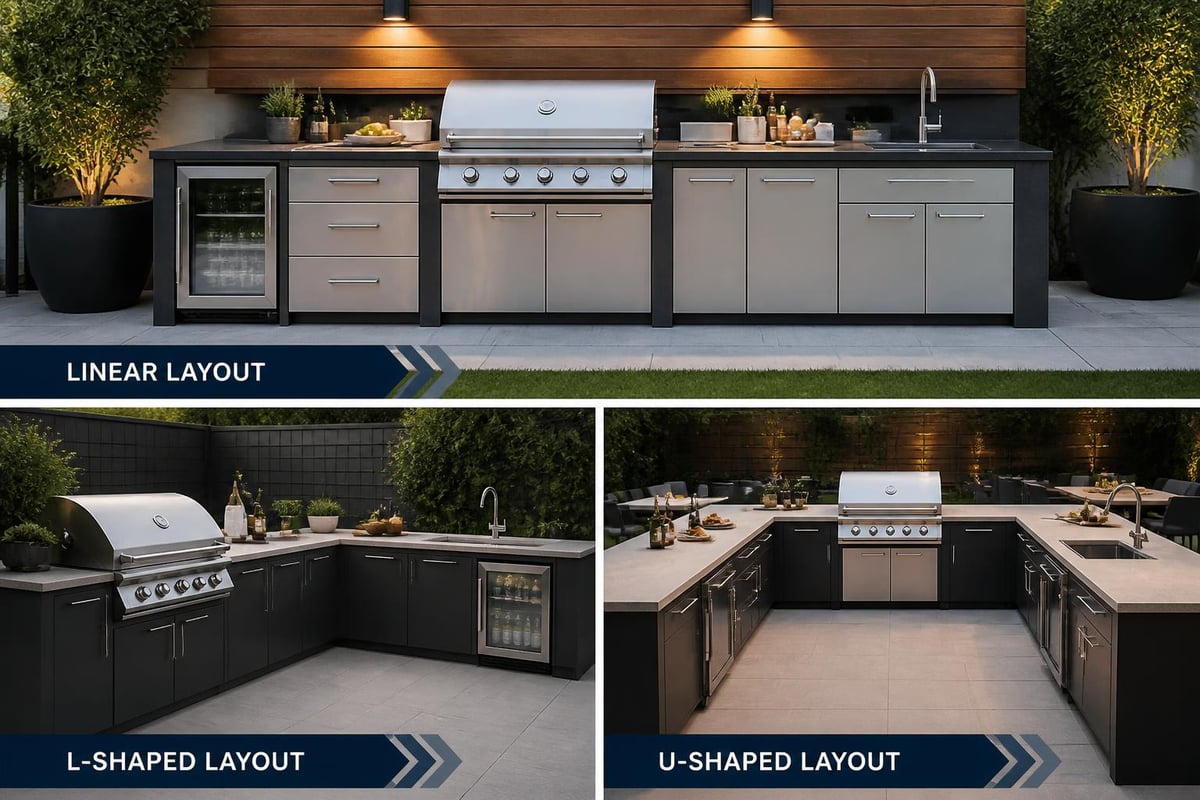
Linear configurations suit narrow spaces or boundary wall installations, placing all cooking and preparation elements along a single axis. This layout maximises space efficiency whilst providing clear sightlines across the garden, though it may limit social interaction during cooking activities.
L-shaped outdoor BBQ kitchen units offer enhanced functionality, creating a natural food preparation peninsula that encourages guest interaction whilst maintaining separation between cooking heat zones and serving areas. The corner junction typically accommodates either the primary grill position or a preparation sink, depending on your dominant cooking style and prevailing wind direction.
U-shaped configurations represent the ultimate in outdoor kitchen functionality, enclosing the chef within a comprehensive workspace equipped with multiple cooking stations, extensive preparation surfaces, and dedicated zones for different culinary tasks. These installations suit larger gardens and families who regularly host substantial gatherings, though they require minimum dimensions of approximately 3000mm x 3000mm to function effectively.
The outdoor kitchen design principles that guide professional installations emphasise the relationship between cooking zones and dining areas. Position your outdoor BBQ kitchen unit to maintain conversational proximity with seating whilst ensuring smoke and cooking aromas disperse away from dining spaces according to prevailing wind patterns.
Contemporary outdoor BBQ kitchen units accommodate diverse cooking equipment beyond traditional charcoal or gas barbecues. The integration of specialised appliances transforms these installations into genuine outdoor culinary workshops capable of sophisticated menu preparation.
Built-in gas barbecues anchor most outdoor BBQ kitchen units, offering precise temperature control and rapid heat adjustment suited to varied cooking techniques. Premium models incorporate multiple burner zones with independent controls, allowing simultaneous high-heat searing and gentle indirect roasting.
Ceramic kamado-style grills provide exceptional heat retention and versatile cooking modes ranging from low-temperature smoking to pizza baking at 400°C plus. When integrated into permanent cabinetry structures, these distinctive egg-shaped cookers require custom-sized apertures with adequate ventilation clearances and heat-resistant surround materials.
Wood-fired pizza ovens have become increasingly popular additions to luxury outdoor BBQ kitchen units, with manufacturers offering both traditional dome designs and contemporary cabinet-integrated models. The wood-fired pizza oven represents authentic artisan cooking capability, reaching temperatures exceeding 450°C for genuine Neapolitan-style results in approximately 90 seconds.
Professional outdoor cooking demands supporting equipment that extends functionality beyond basic grilling:
Electrical and plumbing installations require professional specification to meet current UK building regulations. All electrical connections must comply with BS 7671 wiring standards, with RCD protection and appropriate IP-rated enclosures for external environments. Water supply lines should incorporate frost-protection measures and isolating valves accessible for seasonal shutdown.
British weather patterns necessitate overhead protection for outdoor BBQ kitchen units intended for year-round operation. Whilst summer cooking under open skies proves delightful, extending usability into spring, autumn, and winter months requires thoughtful shelter integration that protects both equipment and users from precipitation whilst maintaining adequate ventilation.
Architectural pergolas with adjustable louvred roofs represent the most sophisticated shelter solution, offering dynamic control over sunlight penetration and rain protection. These motorised systems close completely during adverse weather whilst opening fully for clear evening cooking under starlight.
Fixed roof structures using polycarbonate panels or traditional tiles provide permanent weather protection, though they require careful ventilation design to disperse cooking smoke and heat accumulation. Building regulations may apply depending on structure size and proximity to property boundaries, making early consultation with local planning authorities advisable.
Retractable awnings offer flexible coverage, extending during cooking activities and retracting to preserve open garden views. Premium fabric specifications incorporate water-resistant coatings and UV stabilisation to withstand British weather exposure, though these systems prove less durable than rigid roof structures for intensive year-round usage.
The Cotswold outdoor kitchen trend increasingly features integrated pergola systems that unite cooking zones with adjacent dining and lounging areas beneath cohesive architectural canopies. This approach creates genuine outdoor rooms that function comfortably throughout extended seasons, protected from both rain and excessive summer sun.
Installing outdoor BBQ kitchen units involves multiple safety considerations and regulatory requirements that extend beyond basic barbecue placement. Professional specification ensures compliance whilst protecting users and property from potential hazards inherent in outdoor cooking installations.
Combustible materials must maintain minimum separation distances from heat-producing appliances. Built-in grills typically require 600mm clearance to combustible surfaces on sides and rear, with 900mm minimum overhead clearance to flammable materials. Non-combustible backsplashes using stainless steel, stone, or tile extend protection for adjacent cabinetry.
Gas bottle storage for LPG-fuelled equipment demands dedicated ventilated compartments with door openings positioned at low level to allow propane vapour escape. Storage compartments must not enclose gas bottles within sealed cabinetry, as leaked fuel accumulates in confined spaces, creating explosion hazards. The outdoor kitchen safety guide provides comprehensive protocols for gas installation and maintenance procedures.
Fire extinguishers rated for Class F (cooking oil) and Class A (ordinary combustibles) should be positioned within easy reach of cooking zones, typically mounted on adjacent wall surfaces or pergola posts. Many luxury outdoor BBQ kitchen units incorporate dedicated extinguisher brackets within the cabinetry specification.
External electrical installations must satisfy stringent safety requirements:
Professional electricians certified for external installations should complete all wiring work, with inspection and certification confirming compliance with current BS 7671 wiring regulations before energisation.
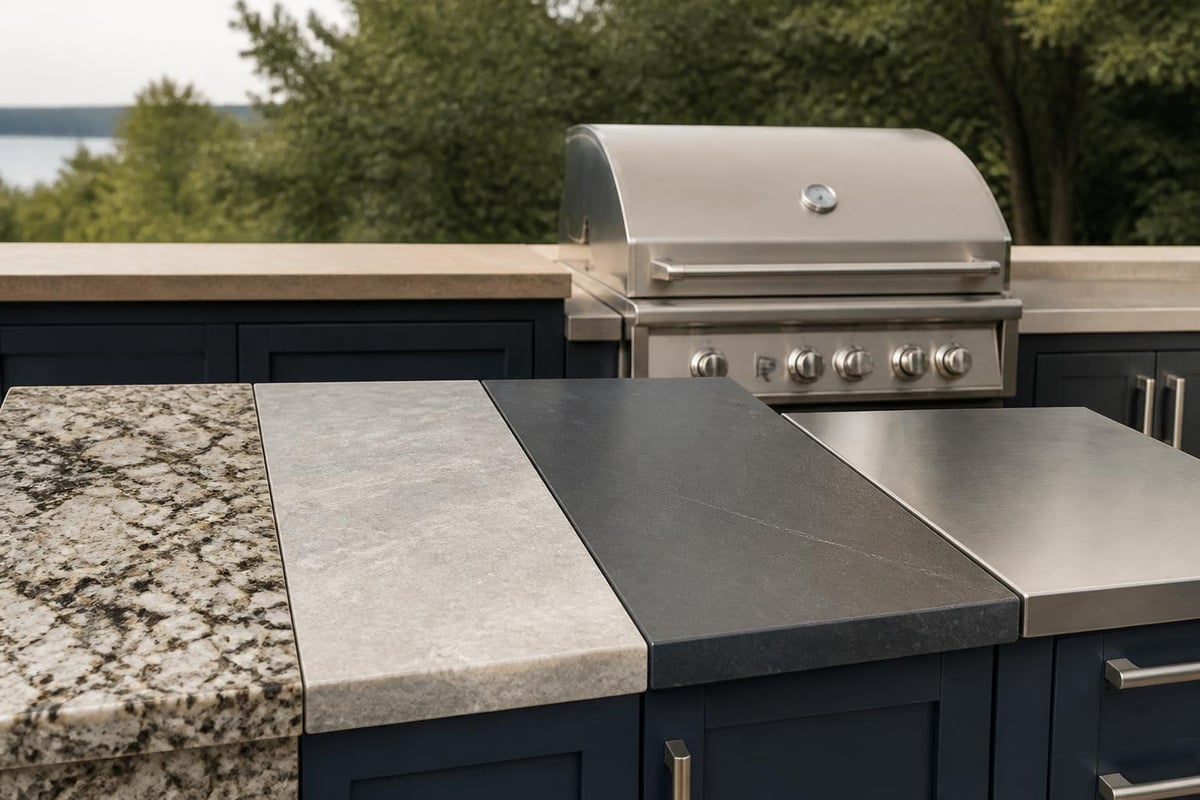
Countertop selection significantly influences both the aesthetic character and practical performance of outdoor BBQ kitchen units. Unlike indoor kitchen surfaces that primarily encounter food preparation activities, outdoor counters experience direct weather exposure, temperature extremes, and UV radiation that degrade unsuitable materials rapidly.
| Surface Material | Heat Resistance | Stain Resistance | Frost Tolerance | Maintenance | Cost Category |
|---|---|---|---|---|---|
| Granite | Excellent | Very good | Excellent | Periodic sealing | Premium |
| Quartzite | Excellent | Excellent | Excellent | Minimal | Premium |
| Porcelain tile | Excellent | Excellent | Excellent | Minimal | Moderate-Premium |
| Stainless steel | Excellent | Good | Excellent | Regular cleaning | Moderate-Premium |
| Concrete | Very good | Moderate | Good with sealing | Periodic sealing | Moderate |
| Teak | Poor | Moderate | Good | Oil treatment | Premium |
Porcelain tile surfaces have gained substantial market share within luxury outdoor BBQ kitchen units, offering exceptional durability with extensive design versatility. Large-format tiles minimise grout lines whilst contemporary manufacturing produces convincing stone, concrete, and timber visual effects that resist fading under prolonged UV exposure.
Natural stone countertops deliver unmatched organic beauty, though specification requires careful consideration of stone type and finish. Polished granite provides classic elegance but becomes slippery when wet, making honed or flamed finishes more suitable for outdoor applications. Quartzite offers superior hardness compared to granite, resisting scratching and etching whilst maintaining dimensional stability through freeze-thaw cycles.
Stainless steel preparation surfaces prove ideal for areas immediately adjacent to grills, offering hygienic food-contact surfaces that tolerate direct contact with hot cookware. Marine-grade specifications prevent rust staining whilst brushed finishes conceal minor scratching that develops through regular use.
Effective storage transforms outdoor BBQ kitchen units from simple cooking stations into fully functional culinary workspaces. Purpose-designed cabinetry addresses the unique challenges of outdoor storage whilst providing organised access to cooking equipment, utensils, and consumables.
Weather-sealed drawer systems protect contents from moisture infiltration whilst maintaining smooth operation despite temperature fluctuations. Premium installations incorporate marine-grade drawer slides with corrosion-resistant coatings and self-closing mechanisms that ensure complete sealing after each use.
Vertical storage compartments accommodate items ranging from serving platters to fuel bottles, with adjustable shelving allowing configuration changes as your equipment collection evolves. Dedicated zones for different storage categories improve operational efficiency:
Soft-close door mechanisms prevent slamming that might damage cabinet structures or disturb nearby guests during entertaining. Magnetic or roller-catch latches maintain secure closure against wind whilst permitting effortless single-handed operation when carrying food items.
Many luxury outdoor BBQ kitchen units incorporate specialised storage features such as spice racks, knife blocks, and bottle storage that mirror indoor kitchen organisation systems. These refinements elevate outdoor cooking from casual grilling to serious culinary endeavour, providing the tools and accessibility that sophisticated menu preparation demands.
The market for outdoor BBQ kitchen units encompasses diverse manufacturers offering varying quality levels, material specifications, and design philosophies. Discerning buyers prioritise brands that demonstrate engineering excellence, weather durability, and aesthetic refinement suited to luxury garden settings.
For those seeking contemporary minimalist design, modular systems blend sleek architectural lines with premium weather-resistant materials. The Cubic C1 Style Outdoor Kitchen exemplifies this approach, featuring clean geometric forms, integrated appliances, and customisable configurations that adapt to diverse spatial requirements whilst maintaining cohesive visual language throughout the installation.
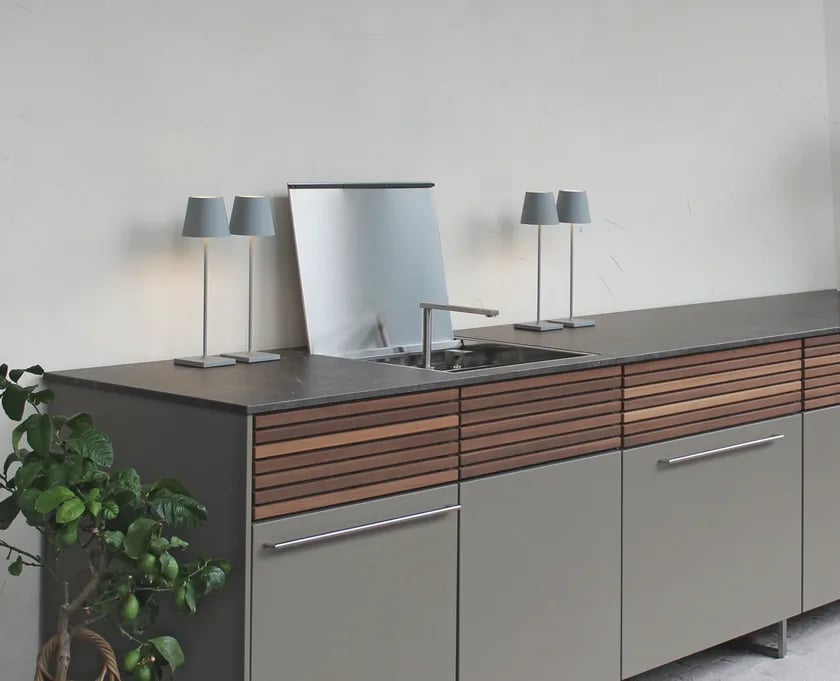
European manufacturers have established particular expertise in outdoor BBQ kitchen units engineered for northern climates, incorporating design details that address moisture management, thermal expansion, and prolonged freezing conditions. These specifications prove especially relevant for UK installations where year-round durability determines long-term value and satisfaction.
Professional installation proves essential for outdoor BBQ kitchen units, ensuring structural stability, utility connections, and regulatory compliance that DIY approaches rarely achieve satisfactorily. The complexity of these installations extends well beyond basic assembly, encompassing foundation preparation, service routing, and weatherproofing measures that protect your investment throughout decades of service.
Permanent outdoor BBQ kitchen units require substantial foundations capable of supporting significant weight whilst maintaining level stability despite ground movement and frost heave. Reinforced concrete bases represent the gold standard, typically specified at 150mm minimum thickness with steel mesh reinforcement and compacted hardcore sub-base.
Porcelain or natural stone paving provides attractive finished surfaces whilst distributing equipment loads across the foundation. Proper drainage design prevents water accumulation around cabinet bases, incorporating gentle falls towards drainage points or permeable surfaces that allow moisture dispersion.
Modular systems may offer portability advantages, though truly mobile configurations sacrifice the integrated utility connections and substantial cooking equipment that define comprehensive outdoor BBQ kitchen units. Most discerning homeowners prioritise permanent installations that deliver restaurant-quality functionality over flexibility that limits equipment choices and performance capabilities.
Gas, water, and electrical services require professional installation with appropriate materials and compliance certification:
Gas installations must satisfy Gas Safe Register standards, with rigid copper or approved flexible connections, pressure testing, and leak detection before commissioning. Underground supply routes require protective ducting and marker tape identifying service locations for future excavation activities.
Water supply lines need frost protection in exposed locations, either through burial below frost depth (typically 750mm in southern England, deeper in northern regions) or trace heating systems that prevent freezing during winter months. Isolating valves positioned in accessible, frost-free locations allow seasonal shutdown and maintenance without affecting primary household supplies.
Electrical circuits should incorporate dedicated consumer unit protection with appropriate cable sizing for anticipated loads. Outdoor sockets and switches require weatherproof enclosures with spring-loaded covers maintaining IP65 rating when closed. Lighting circuits benefit from separate switching, allowing ambient illumination independent of cooking equipment operation.
The outdoor kitchen delivery and installation process typically spans multiple days, coordinating various trade specialists and allowing proper curing times for concrete foundations and weatherproofing compounds. Reputable suppliers provide comprehensive project management, coordinating activities and ensuring quality standards throughout the installation sequence.
Premium outdoor BBQ kitchen units represent substantial investments that reward proper maintenance with decades of reliable service. Unlike neglected installations that deteriorate rapidly through weather exposure and operational wear, well-maintained systems preserve both functionality and aesthetic appeal whilst avoiding costly repairs or premature replacement.
Spring preparation following winter dormancy involves comprehensive inspection and cleaning:
Autumn winterisation prepares systems for dormant periods or reduced usage:
Regular cleaning maintains hygiene whilst preventing degradation from accumulated grease, food residues, and atmospheric contaminants. Stainless steel surfaces benefit from specialised cleaners that remove fingerprints and water spots whilst applying protective films that resist future staining.
Stone countertops require periodic sealing, with application frequency depending on stone porosity and usage intensity. Simple water droplet tests indicate when resealing becomes necessary: if water absorbs into stone rather than beading on the surface, protective sealant has degraded sufficiently to warrant renewal.
The outdoor kitchen maintenance guide emphasises proactive care that addresses minor issues before they escalate into substantial problems. Loose fittings, minor rust spots, and degraded sealant represent easily remedied concerns when caught early, but develop into expensive repairs when ignored through multiple seasons.
Outdoor BBQ kitchen units span vast price ranges, from modest modular configurations under £5,000 to bespoke architectural installations exceeding £50,000. Understanding the factors that influence pricing helps establish realistic budgets whilst identifying where investment delivers genuine value versus unnecessary luxury.
| Component Category | Budget Range (% of Total) | Considerations |
|---|---|---|
| Cabinetry and structure | 30-40% | Material quality, custom vs. modular |
| Cooking equipment | 25-35% | Appliance grade, brand, features |
| Countertop surfaces | 15-20% | Material choice, thickness, edge detail |
| Installation and utilities | 15-25% | Foundation work, service connections |
| Shelter integration | 10-30% (if included) | Pergola type, size, features |
Entry-level outdoor BBQ kitchen units typically feature powder-coated steel cabinetry, basic built-in grills, and laminate or tile countertops. These configurations provide functional cooking spaces suited to occasional entertaining, though material specifications may limit longevity in exposed British weather conditions.
Mid-range installations incorporate stainless steel cabinetry, premium gas grills with multiple burner zones, stone countertops, and basic refrigeration. Build quality proves sufficient for year-round usage with appropriate maintenance, delivering reliable performance for families who cook outdoors regularly throughout extended seasons.
Luxury specifications feature marine-grade stainless steel or powder-coated aluminium frameworks, professional-grade cooking equipment, exotic stone countertops, comprehensive appliance suites, and architectural shelter integration. These installations match indoor kitchen quality whilst providing distinctive outdoor cooking capabilities that elevate entertaining to restaurant-standard experiences.
Financing options increasingly include specialist outdoor kitchen packages offering extended payment terms that distribute investment across manageable monthly instalments. Some suppliers partner with finance providers offering interest-free promotional periods, making luxury outdoor BBQ kitchen units accessible without requiring substantial upfront capital allocation.
The modular nature of contemporary outdoor BBQ kitchen units facilitates extensive customisation that reflects individual cooking styles, entertaining preferences, and aesthetic sensibilities. Beyond selecting component configurations, buyers can specify numerous details that personalise installations whilst optimising functionality for their specific requirements.
Colour and finish selections extend far beyond basic stainless steel, with powder-coating technologies offering extensive palette choices that coordinate with existing garden architecture or create deliberate contrasts. Matte finishes prove particularly practical for outdoor applications, concealing fingerprints and water spots whilst avoiding the glare associated with high-gloss surfaces.
Countertop edge profiles range from simple eased edges to complex ogee or dupont treatments that introduce traditional detailing. Waterfall edges that continue stone surfaces down cabinet sides create striking contemporary statements, though these features significantly increase material requirements and fabrication costs.
Integrated lighting systems transform outdoor BBQ kitchen units into evening entertainment focal points. Task lighting illuminates preparation surfaces and cooking zones for safe operation after dark, whilst ambient lighting creates atmosphere for dining and socialising. LED strip lighting beneath countertop overhangs proves especially effective, providing diffuse illumination without visible fixtures that might interrupt clean design lines.
Specialised equipment integration addresses specific cooking interests:
The outdoor kitchens collection showcases the breadth of customisation possibilities, from compact single-wall configurations suited to modest gardens through to expansive U-shaped installations that function as complete outdoor culinary workshops.
Environmentally conscious buyers increasingly evaluate outdoor BBQ kitchen units according to sustainability criteria encompassing material sourcing, manufacturing processes, energy efficiency, and lifecycle environmental impact. Premium manufacturers respond through responsible material selection and engineering practices that minimise ecological footprint whilst delivering exceptional durability.
Responsibly sourced timber from FSC-certified forests ensures wooden components originate from sustainably managed forestry operations. Teak and iroko remain popular hardwood choices, though buyers should verify certification confirming legal harvest and replanting programmes that maintain forest resources.
Recycled aluminium and stainless steel reduce the environmental impact associated with primary metal production, with some manufacturers achieving 90% recycled content whilst maintaining performance specifications. The inherent recyclability of metal cabinetry means these materials re-enter manufacturing cycles at end-of-life rather than contributing to landfill waste.
Energy-efficient cooking equipment minimises fuel consumption and reduces operational environmental impact. Gas grills with efficient burner designs achieve superior temperature control whilst consuming less fuel, whilst ceramic kamado cookers provide exceptional heat retention that reduces charcoal requirements for extended cooking sessions.
Solar-powered lighting and refrigeration represent emerging technologies particularly suited to outdoor BBQ kitchen units located away from convenient electrical connection points. Photovoltaic panels integrated into pergola structures or mounted nearby generate renewable energy that powers LED lighting and supports refrigeration loads, reducing grid electricity dependence.
Water conservation features including low-flow taps and spray rinse systems reduce consumption during food preparation and cleaning activities. Some installations incorporate grey water collection systems that capture sink drainage for garden irrigation, closing resource loops and minimising waste.
Well-designed outdoor BBQ kitchen units contribute substantially to property values, particularly within areas where outdoor entertaining represents an established lifestyle preference. Estate agents consistently report that quality outdoor cooking facilities attract buyer interest and support premium pricing during property marketing.
The return on investment varies according to installation quality, aesthetic integration, and local market characteristics. Premium installations in affluent postcodes typically recover 60-80% of installation costs through increased property valuations, whilst exceptional examples that create genuine outdoor living rooms may exceed 100% return in competitive markets.
Buyers particularly value outdoor BBQ kitchen units that demonstrate thoughtful design integration with existing architecture, professional installation quality, and comprehensive functionality that eliminates the need for further investment. Installations that appear as afterthoughts or feature mismatched components attract less buyer enthusiasm, regardless of individual equipment quality.
Permanence signals quality to prospective buyers. Substantial foundations, integrated utilities, and cohesive architectural relationships with the principal dwelling suggest professional specification and proper installation, contrasting favourably with portable equipment that implies temporary solutions and limited commitment to outdoor living.
Photography quality significantly influences buyer perception during property marketing. Professional images captured during golden hour lighting, ideally showing the outdoor BBQ kitchen unit during entertaining scenarios with attractive food presentation, communicate lifestyle benefits that static daytime documentation cannot convey effectively. Estate agents increasingly invest in professional photography for properties featuring luxury outdoor amenities, recognising these images generate substantially higher enquiry volumes compared to amateur documentation.
The outdoor BBQ kitchen unit market continues evolving, incorporating emerging technologies and responding to shifting lifestyle preferences that influence design directions. Understanding these trends helps buyers make forward-looking specification decisions that maintain relevance throughout extended ownership periods.
Smart home integration brings outdoor cooking into connected home ecosystems. WiFi-enabled grills offer remote temperature monitoring and control via smartphone applications, whilst integrated speakers provide music streaming throughout the cooking and dining experience. Some manufacturers develop proprietary applications offering guided cooking programmes with step-by-step instructions and automatic temperature adjustments.
Induction cooking technology traditionally confined to indoor kitchens now appears in weather-resistant outdoor specifications. These systems offer precise temperature control, energy efficiency, and safety advantages compared to gas alternatives, though they require robust electrical infrastructure and represent higher initial investment.
Modular flexibility increasingly characterises premium outdoor BBQ kitchen units, with component systems that permit configuration changes as requirements evolve. Standardised cabinet dimensions and universal utility connections allow equipment swaps and layout modifications without replacing entire installations, protecting long-term investment value.
Sustainable fuel sources including bioethanol burners and electric heating elements appeal to environmentally conscious buyers seeking alternatives to natural gas and LPG. Whilst these technologies currently occupy niche positions, improving performance and reducing costs may drive broader adoption throughout coming years.
The outdoor living design trends explored by contemporary designers increasingly blur boundaries between indoor and outdoor spaces, creating seamless transitions that encourage year-round outdoor engagement. Outdoor BBQ kitchen units positioned adjacent to large sliding or folding door systems extend indoor entertaining spaces, with consistent flooring materials and coordinated design languages reinforcing spatial continuity.
Outdoor BBQ kitchen units represent transformative investments for homeowners committed to elevated outdoor entertaining and year-round garden enjoyment. By carefully considering design configurations, material specifications, equipment integration, and professional installation, you create outdoor culinary destinations that deliver lasting performance and aesthetic pleasure throughout decades of service. Whether you envision intimate family cooking spaces or comprehensive entertaining zones rivalling professional kitchens, Cotswold Cooking Company provides the expertise, curated brand selection, and consultative support necessary to transform your outdoor living ambitions into refined reality.

Comments
Leave a comment