


Creating a luxury outdoor kitchen requires thoughtful integration of essential components that transform your garden into a sophisticated culinary space. An outdoor grill with sink represents the foundation of any serious outdoor cooking setup, combining the primary heat source with critical water access for food preparation and cleaning. This pairing goes beyond mere convenience, establishing a functional workflow that mirrors professional kitchen design whilst embracing the unique challenges of outdoor environments. For discerning homeowners investing in premium outdoor living spaces, understanding how to configure, specify, and maintain these core elements ensures decades of reliable performance and elevated entertaining experiences.
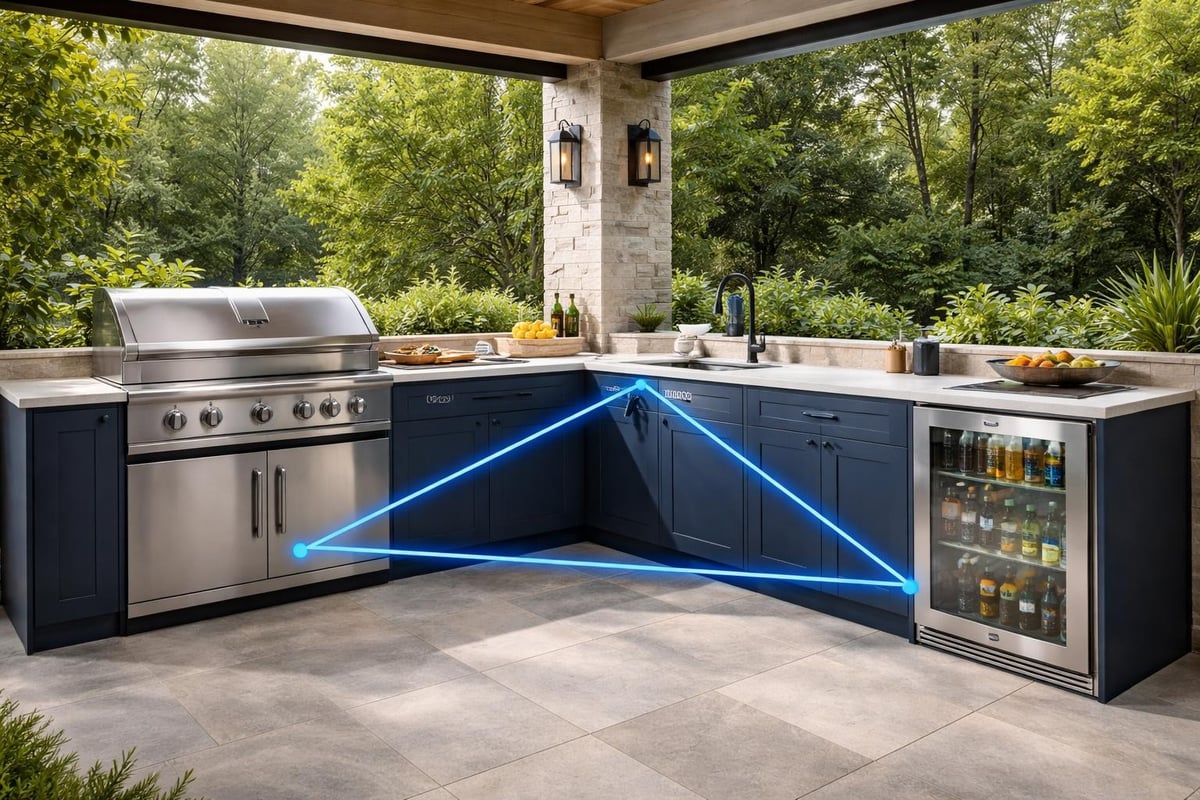
The relationship between your grill and sink dictates the efficiency of your entire outdoor kitchen. Professional designers emphasise the working triangle concept, positioning the grill, sink, and refrigeration in a triangular formation that minimizes unnecessary movement whilst cooking.
Optimal spacing considerations include:
The planning principles for outdoor kitchens emphasize creating distinct zones for cooking, cleaning, and entertaining. Your outdoor grill with sink configuration should anchor the cooking zone, with counter space flowing naturally between these two workhorses.
Weather protection represents another critical consideration. Whilst standalone configurations offer flexibility, integrated designs within covered structures or beneath pergolas extend usability throughout the British climate. This protection shields both equipment and chef from rain whilst reducing sun exposure during summer cooking sessions.
Standard outdoor kitchen counters typically measure 90-95cm in height, matching indoor kitchen dimensions. However, bespoke installations can adjust these measurements to suit the primary cook's stature and preferences.
| Element | Standard Height | Bespoke Range |
|---|---|---|
| Main Counter | 90-95cm | 85-100cm |
| Grill Surface | 90-95cm | 85-100cm |
| Sink Basin Depth | 18-23cm | 15-30cm |
| Bar Counter | 105-110cm | 100-115cm |
The sink depth requires particular attention. Shallow basins (15-18cm) facilitate rinsing but struggle with large pots, whilst deeper options (25-30cm) accommodate substantial cookware but may create ergonomic strain during extended preparation sessions.
Installing an outdoor grill with sink demands comprehensive infrastructure planning well before the first stone is laid. Unlike simple standalone grills, integrated installations require coordinated plumbing, gas, electrical, and drainage systems.
Water supply considerations prove particularly complex in outdoor environments. Most installations require:
Understanding outdoor kitchen installation requirements early in the planning process prevents costly modifications later. Professional installation ensures compliance with Building Regulations whilst protecting your investment against weather-related damage.
Gas connections for built-in grills typically utilize natural gas or LPG supplies. Natural gas offers convenience and continuous supply, requiring professional connection to your property's mains supply. LPG systems provide flexibility for remote locations, though they necessitate bottle storage and periodic replacement.
The sink drainage system deserves equal attention to supply lines. Three primary approaches serve outdoor kitchen installations:
Direct connection to mains drainage: Ideal for kitchens positioned near existing property drainage, offering the most permanent and trouble-free solution. This approach requires trenching and professional installation but eliminates water disposal concerns.
Greywater recycling systems: Environmentally conscious installations can direct sink water toward garden irrigation. This approach requires filtration to remove food particles and consideration of detergent impact on plantings.
Self-contained drainage: Remote installations may employ holding tanks requiring periodic emptying. Whilst less convenient, this solution enables outdoor grill with sink installations in locations where permanent drainage proves impractical.
The harsh outdoor environment demands materials that withstand temperature extremes, moisture exposure, and ultraviolet degradation whilst maintaining aesthetic appeal. Your outdoor grill with sink investment deserves specification that ensures decades of reliable performance.
Premium outdoor grills employ robust construction that resists corrosion and thermal stress:
Specialist outdoor cooking collections curate brands that prioritize construction quality, with manufacturers like Hestan and Alfresco Chef engineering products specifically for permanent outdoor installation.
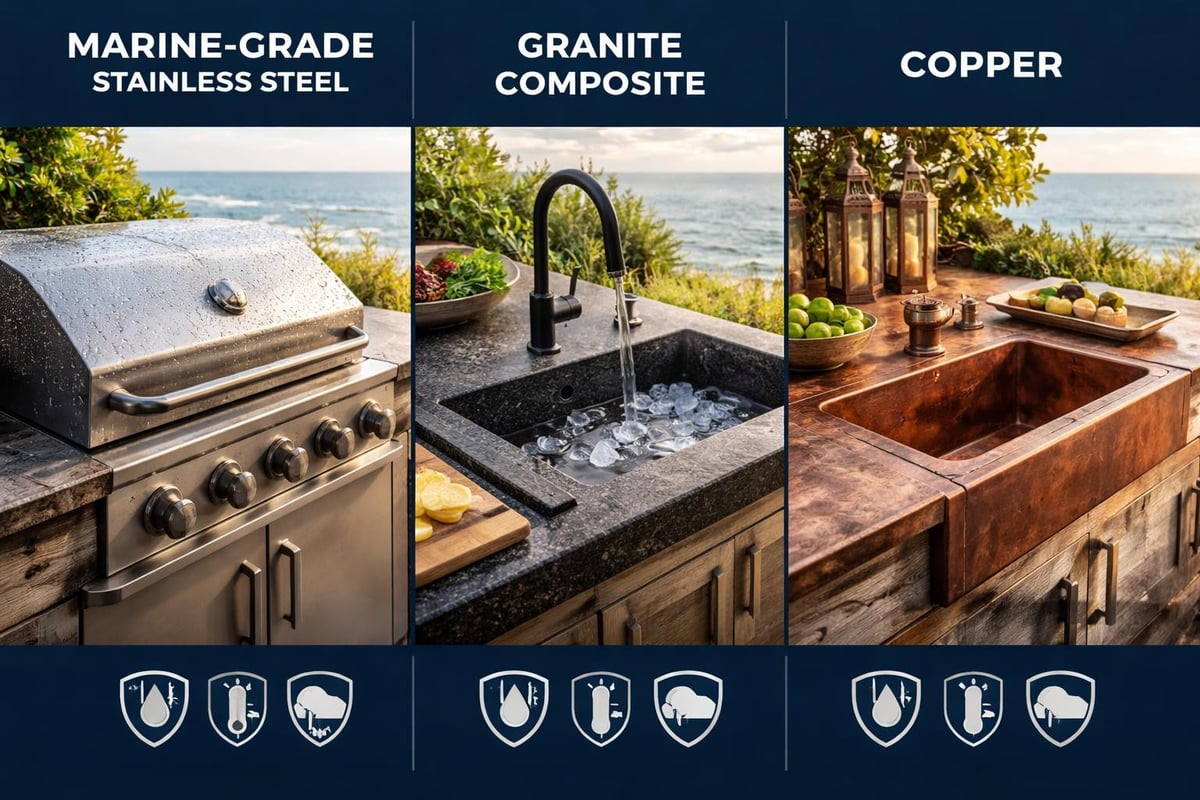
Outdoor sink basins face constant moisture exposure combined with potential freezing conditions during winter months. Material selection proves critical:
| Material | Advantages | Considerations |
|---|---|---|
| Stainless Steel | Corrosion-resistant, easy cleaning, professional appearance | Can show water spots, may scratch over time |
| Granite Composite | Scratch-resistant, heat-tolerant, contemporary aesthetics | Requires sealing, higher initial investment |
| Copper | Antimicrobial properties, develops attractive patina | Ongoing maintenance, premium pricing |
| Cast Iron Enamel | Classic appearance, chip-resistant when properly maintained | Heavy, enamel can crack if impacted |
Stainless steel dominates luxury outdoor installations, with 316-grade material offering optimal performance. Undermount installations create seamless counter surfaces that simplify cleaning, though they demand precise fabrication and robust support structures.
The countertop material surrounding your outdoor grill with sink must complement the basin whilst providing heat-resistant, stain-resistant surfaces for food preparation. Granite, quartzite, and porcelain tiles deliver exceptional performance, with porcelain tiling creating durable bases that resist moisture penetration and thermal shock.
Modern outdoor grill with sink configurations extend far beyond basic cooking and cleaning functions. Integrated accessories transform these foundations into comprehensive outdoor culinary workstations.
Essential integrated features include:
Contemporary built-in grill designs increasingly incorporate side burners, warming drawers, and rotisserie systems that expand cooking capabilities whilst maintaining cohesive aesthetics. These additions demand additional space allocation and utility connections but dramatically enhance functionality.
Evening entertaining requires thoughtful illumination that enhances both functionality and ambiance. Task lighting above the grill and sink ensures safe food preparation after sunset, whilst accent lighting showcases architectural features and creates atmosphere.
LED strip lighting beneath countertop overhangs provides shadow-free illumination for detailed preparation tasks. Weatherproof electrical outlets positioned strategically throughout the outdoor kitchen support small appliances, phone charging, and seasonal decorative elements.
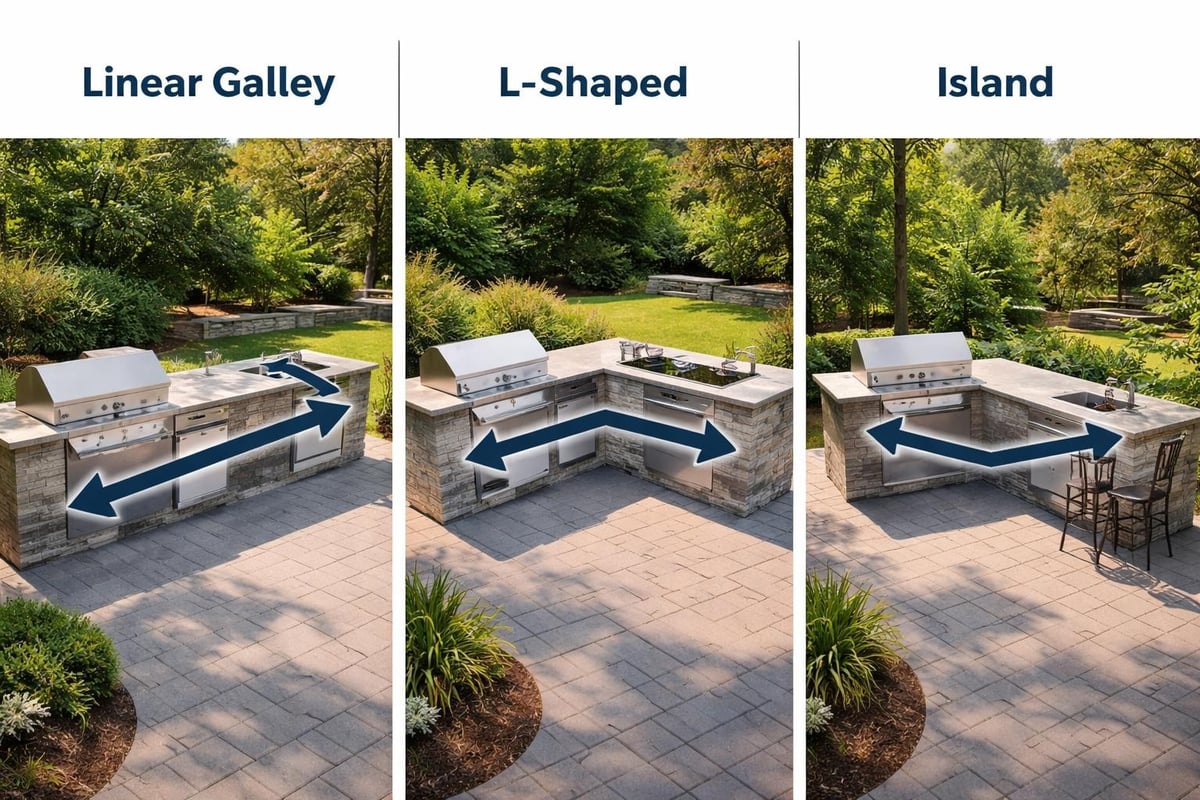
The physical arrangement of your outdoor grill with sink profoundly impacts both functionality and aesthetic integration within your garden design. Several established configurations serve different spatial constraints and entertaining styles.
The straight-line configuration positions the grill and sink along a single axis, ideal for narrow spaces or installations against property walls. This layout:
Counter depth typically extends 60-75cm from the wall, accommodating standard grill depths whilst providing adequate preparation surface.
The L-shaped outdoor kitchen wraps around a corner, offering expanded counter space and natural traffic flow separation. This popular arrangement:
This configuration particularly suits corner locations or installations that define outdoor room boundaries.
Freestanding island kitchens position the outdoor grill with sink as a central feature, accessible from multiple sides. Premium island installations offer:
Island configurations demand substantial square footage and careful utility routing but create statement outdoor living environments. Professional delivery and installation services ensure these complex configurations meet structural and functional requirements.
British weather patterns demand year-round planning for outdoor kitchen installations. Your outdoor grill with sink requires protection and maintenance protocols that address freezing temperatures, heavy precipitation, and seasonal usage fluctuations.
For grills:
For plumbing systems:
Covered installations beneath all-season pergolas extend usability throughout winter months whilst providing essential weather protection. These structures combine retractable roofing systems with integrated heating and lighting, transforming outdoor kitchens into true four-season spaces.
Regular maintenance preserves performance and appearance across decades of use:
| Task | Frequency | Key Actions |
|---|---|---|
| Grill Cleaning | After each use | Brush grates, empty grease traps, wipe surfaces |
| Deep Clean | Monthly | Degrease burners, check gas connections, inspect seals |
| Sink Sanitization | Weekly | Descale faucets, clean drain, sanitize basin |
| Seasonal Service | Annually | Professional inspection, seal replacement, system testing |
Premium brands featured in curated outdoor kitchen collections provide comprehensive maintenance guidance and replacement part availability, ensuring long-term serviceability of your investment.
Whilst standardized modules offer convenience, truly exceptional outdoor kitchens embrace bespoke design that reflects individual cooking styles, aesthetic preferences, and spatial constraints. Custom outdoor grill with sink installations begin with detailed consultation exploring usage patterns and entertaining requirements.
The consultative design process examines factors including:
Bespoke fabrication enables precise dimensional matching to available space whilst accommodating unique requirements such as left-handed workflow optimization, accessibility modifications, or integration of specialized cooking equipment.
The outdoor kitchen market offers bewildering choice across price points and performance levels. Working with specialists who represent carefully curated brand portfolios simplifies specification whilst ensuring compatibility between components.
Premium manufacturers engineer complete outdoor kitchen systems with coordinated aesthetics and integrated functionality. Brands like Sunstone and Grandhall design modular components that share common styling elements, creating cohesive installations even when mixing grills, sinks, storage units, and refrigeration.
When evaluating outdoor grill with sink specifications, prioritize:
Appointment-based consultations provide opportunity to examine material quality, operate equipment, and understand construction differences that justify premium pricing.
Outdoor kitchen investments span enormous price ranges, from basic DIY installations costing several thousand pounds to comprehensive luxury installations exceeding £50,000. Your outdoor grill with sink forms the financial foundation of these projects, typically representing 30-40% of total equipment expenditure.
Understanding expense categories enables realistic budget allocation:
Equipment costs:
Infrastructure expenses:
Finishing materials:
For those exploring DIY outdoor kitchen construction, careful planning and skilled execution can reduce labour costs substantially, though professional installation ensures code compliance and warranty protection.
Outdoor kitchen installations must satisfy Building Regulations, gas safety requirements, and electrical standards that protect occupants and property. Professional installation ensures compliance whilst avoiding potentially dangerous shortcuts.
Critical safety considerations include:
The outdoor grill with sink combination introduces fire risk adjacent to water systems, demanding careful electrical isolation and component selection rated for moisture exposure. All electrical components must carry appropriate IP (Ingress Protection) ratings, typically IP44 minimum for sheltered locations and IP65 for exposed installations.
Creating the perfect outdoor grill with sink configuration requires balancing functional requirements, aesthetic preferences, spatial constraints, and long-term durability considerations. From initial infrastructure planning through material selection and seasonal maintenance protocols, every decision impacts your outdoor kitchen's performance and longevity. Whether you're envisioning a compact grilling station or a comprehensive outdoor culinary destination, Cotswold Cooking Company brings decades of expertise in designing, specifying, and installing luxury outdoor kitchens that transform British gardens into sophisticated all-season entertaining spaces. Our consultative approach ensures your investment delivers exceptional performance and timeless appeal for generations to come.

Leave a comment