


Selecting the right outdoor kitchen barbecue grills transforms your garden from a simple patio into a sophisticated culinary destination. Whether you're designing a complete alfresco cooking suite or upgrading an existing outdoor space, the barbecue grill serves as the centrepiece around which everything else revolves. For discerning homeowners across the Cotswolds and beyond, the decision extends far beyond choosing between gas and charcoal. It encompasses considerations of craftsmanship, performance, aesthetic harmony, and how the grill integrates into your broader vision for outdoor entertaining. This guide explores the nuances of specifying and designing around premium outdoor kitchen barbecue grills, helping you create a space that balances functionality with refined elegance.
The landscape of outdoor kitchen barbecue grills has evolved considerably, with manufacturers now offering solutions that rival professional kitchen equipment in both performance and build quality. Understanding the fundamental categories helps inform your selection process.
Gas-fuelled grills dominate the luxury outdoor kitchen segment, offering instant ignition, precise temperature control, and minimal maintenance requirements. Premium models feature multiple burner zones, infrared searing stations, and rotisserie capabilities that expand your culinary repertoire beyond simple grilling.
High-end gas grills incorporate commercial-grade stainless steel construction, typically 304 or 316 grade, which withstands the British climate whilst maintaining their aesthetic appeal for decades. The best examples feature seamless welding, robust cast brass burners, and ignition systems designed for reliable performance even in damp conditions.
Key advantages of premium gas grills:
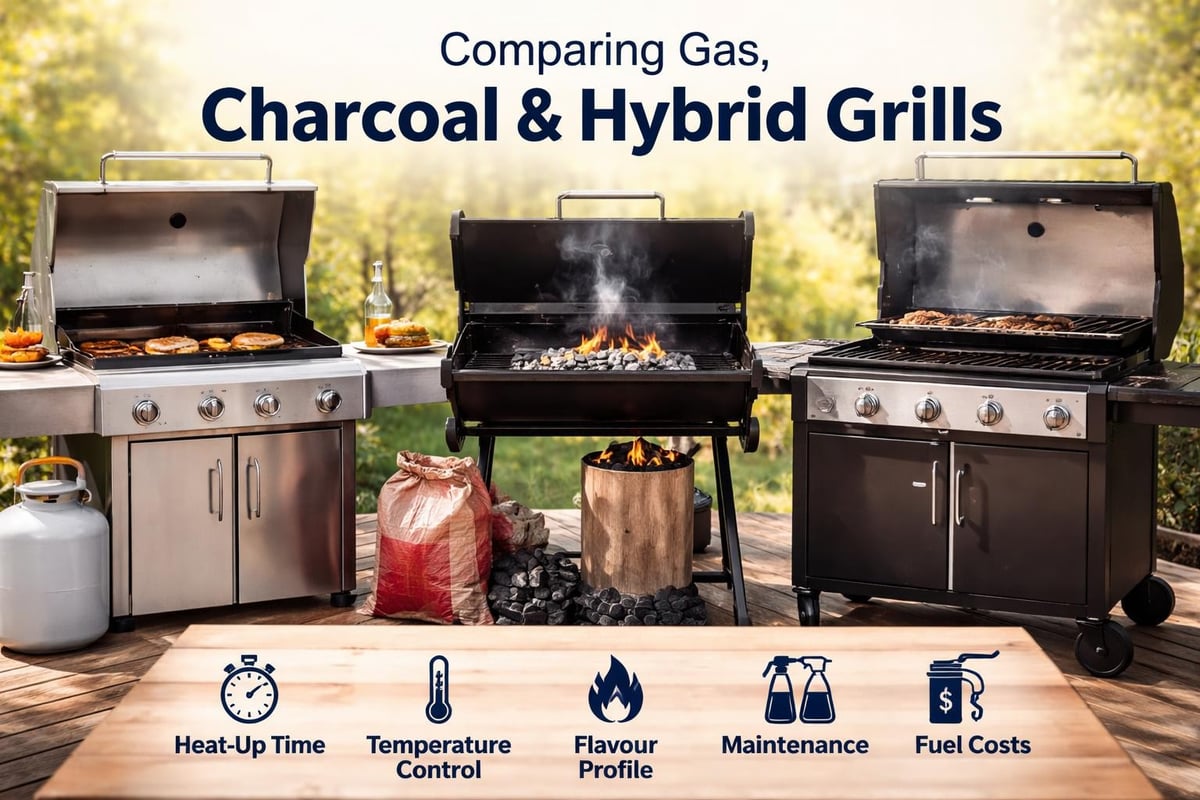
For those who prioritise flavour complexity and traditional cooking methods, charcoal grills and hybrid systems offer compelling alternatives. Modern charcoal grills designed for built-in installations feature sophisticated airflow management, allowing precise temperature control previously only possible with gas.
Hybrid systems represent the pinnacle of versatility, combining gas convenience with charcoal flavour profiles. These sophisticated units typically incorporate separate cooking chambers or convertible fuel systems, allowing you to switch between fuel sources based on your culinary objectives.
Successful outdoor kitchen design positions the barbecue grill within an efficient workflow that mirrors professional kitchen principles whilst accommodating the unique requirements of alfresco entertaining.
Adapting the classic kitchen work triangle to outdoor spaces ensures your barbecue grill functions as part of a cohesive cooking environment. Position your grill between food preparation surfaces and serving areas, maintaining distances of 1.2 to 2.7 metres between each zone.
This arrangement minimises unnecessary movement whilst keeping the chef engaged with guests. In luxury installations, consider incorporating multiple work triangles if your outdoor kitchen serves both casual family meals and formal entertaining. For comprehensive planning guidance, explore our outdoor cooking station ideas article.
| Design Element | Recommended Specification | Rationale |
|---|---|---|
| Counter height | 900-920mm | Matches indoor standards for ergonomic comfort |
| Landing space | 300-600mm each side | Provides safe plate-up zones adjacent to grill |
| Minimum grill clearance | 900mm rear, 600mm sides | Ensures adequate ventilation and safety |
| Overhead clearance | 1200mm minimum | Prevents heat damage to pergolas or canopies |
Outdoor kitchen barbecue grills generate substantial heat and combustion byproducts, making proper ventilation essential even in open-air settings. Position grills away from prevailing winds that might interfere with burner performance, yet ensure adequate cross-ventilation to disperse smoke and heat.
When incorporating grills beneath pergolas or covered outdoor rooms, specify extraction systems designed for outdoor use. These systems must handle higher temperatures and moisture levels than indoor equivalents whilst integrating seamlessly with your architectural vision.
The longevity and performance of outdoor kitchen barbecue grills correlate directly with material quality and engineering precision. Understanding these specifications helps differentiate between superficially similar products.
Premium outdoor grills utilise marine-grade stainless steel (316 grade) for components exposed to the elements, offering superior corrosion resistance compared to standard 304 grade. Examine welding quality, particularly around burner housings and control panel assemblies, where moisture ingress typically initiates deterioration.
Double-walled construction with insulated fireboxes retains heat more efficiently, reducing fuel consumption whilst protecting surrounding cabinetry from thermal damage. This feature proves particularly valuable in British climates where ambient temperatures vary considerably.
Critical construction elements to specify:
The cooking grid represents your primary interface with the grill, making material selection crucial for both performance and maintenance. Cast stainless steel grids retain heat more effectively than rod-style grates, creating superior sear marks and more consistent cooking results.
Premium manufacturers engineer heat distribution systems that eliminate hot spots, typically through flame tamers, radiant trays, or ceramic briquette systems. These components also protect burners from grease drippings, extending service life and reducing flare-ups. Understanding barbecue grill components helps inform these technical specifications.
The outdoor kitchen barbecue grill market encompasses numerous manufacturers, each with distinct design philosophies and performance characteristics. Selecting brands that align with your aesthetic vision and culinary ambitions ensures long-term satisfaction.
European manufacturers typically emphasise compact efficiency and refined aesthetics, creating grills that integrate seamlessly into architecturally sophisticated outdoor kitchens. These units often feature cleaner lines, flush-mounted controls, and finishes that complement contemporary garden design.
American brands traditionally prioritise cooking capacity and feature density, offering larger cooking surfaces and extensive integrated accessories. Both approaches deliver exceptional results when properly specified for your specific requirements and entertaining patterns.
Premium brands curated by specialists like those featured at Cotswold Cooking Company ensure you're selecting from manufacturers with proven track records in the luxury outdoor living sector. These relationships also facilitate access to extended warranties, spare parts, and technical support throughout the product lifecycle.
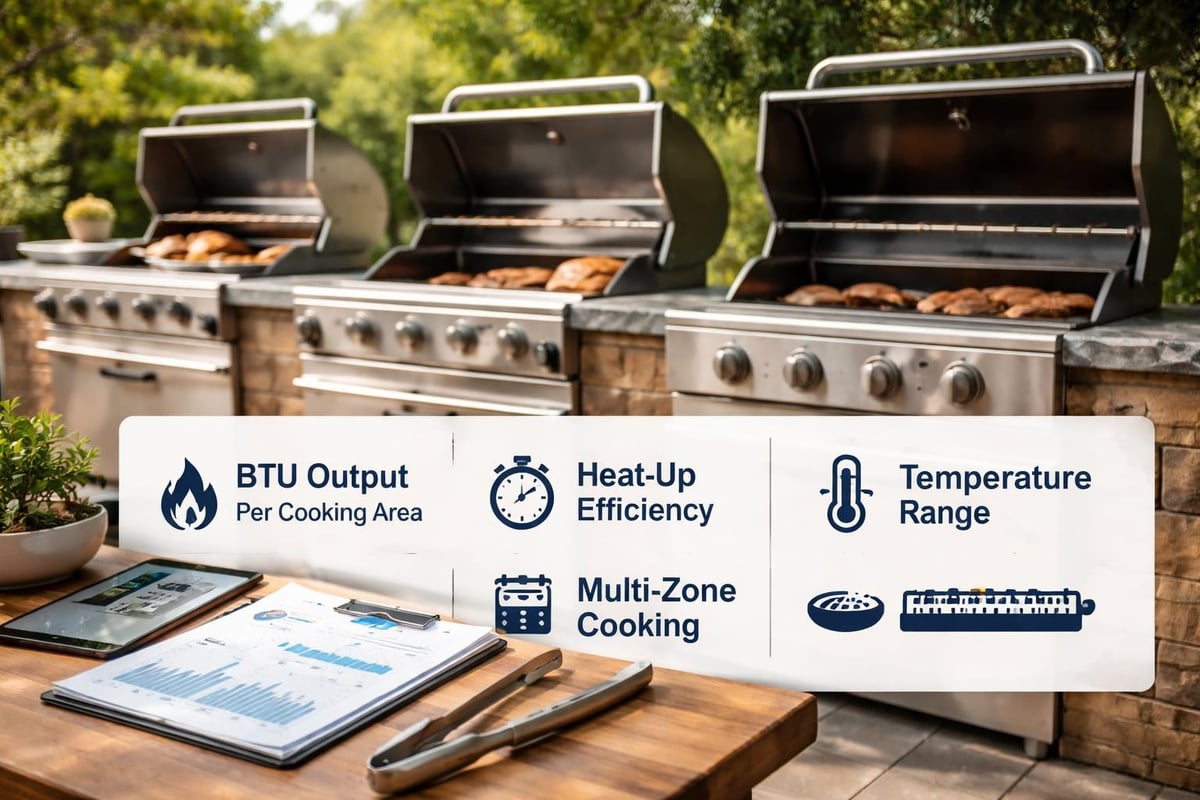
Professional installation of outdoor kitchen barbecue grills involves substantial infrastructure planning, particularly for built-in configurations that integrate with masonry or modular cabinetry systems.
Natural gas installations require certified professionals to extend supply lines from your home's main gas supply or install dedicated LPG tank systems. Specify regulators appropriate for outdoor use, with weather-resistant housings and accessible shut-off valves for maintenance and seasonal winterisation.
Electrical requirements extend beyond simple ignition systems in premium installations. Consider dedicated circuits for rotisserie motors, internal lighting, and integrated ventilation systems. All electrical components must meet IP ratings suitable for outdoor exposure, typically IP44 minimum for protected locations.
Built-in outdoor kitchen barbecue grills demand robust structural support, particularly for heavy cast stainless steel or ceramic models. Masonry installations require reinforced foundations capable of supporting combined weight loads exceeding 200 kilograms once you account for the grill, surround materials, and stored fuel.
Modular outdoor kitchen systems like the Cubic C1 Style Outdoor Kitchen offer engineered solutions that eliminate structural guesswork whilst providing design flexibility. These systems incorporate purpose-designed grill cutouts, ventilation pathways, and utility routing that simplifies installation considerably.
The Cubic range exemplifies how contemporary modular design accommodates premium grills within weather-resistant frameworks, creating cohesive outdoor kitchens that perform reliably throughout the seasons. Their powder-coated aluminium construction withstands British weather whilst maintaining crisp architectural lines.
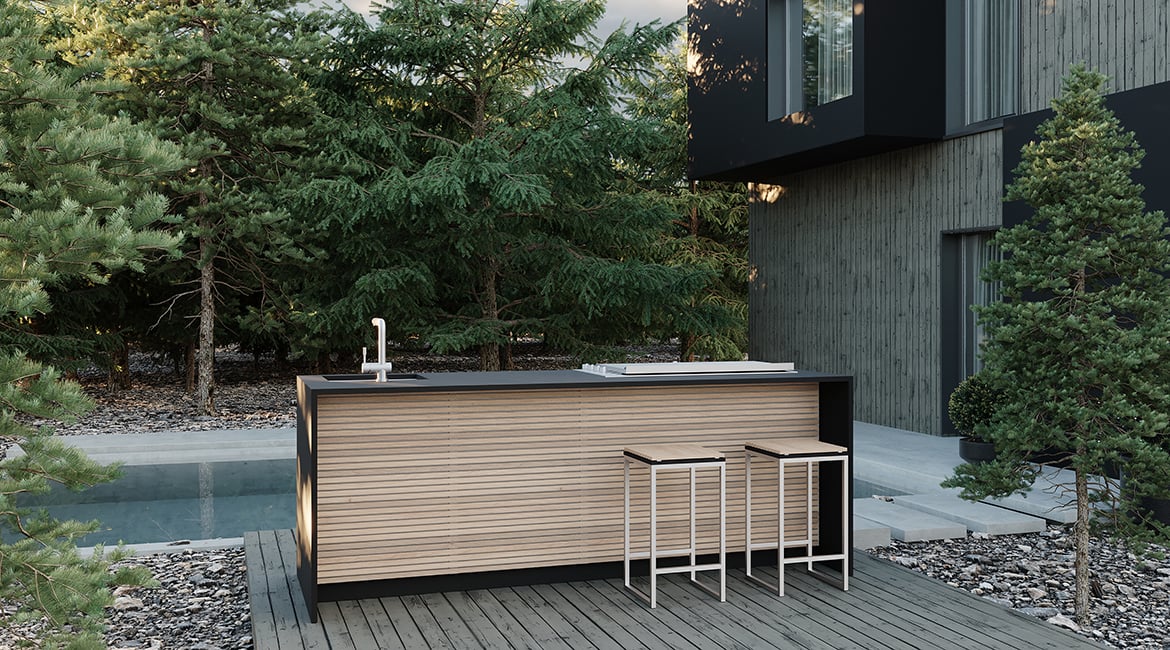
Surfaces surrounding outdoor kitchen barbecue grills endure thermal stress, moisture exposure, and potential grease splatter. Specify materials that withstand these challenges whilst complementing your aesthetic vision.
Porcelain slabs rated for outdoor use offer exceptional durability with minimal maintenance requirements. Their non-porous surfaces resist staining and can be cleaned with simple soap and water, maintaining their appearance despite intensive use. Natural stone alternatives like granite or quartzite provide timeless elegance, though they require periodic sealing to maintain stain resistance.
Premium outdoor kitchen barbecue grills represent significant investments that reward proper maintenance with decades of reliable service. Establishing care routines protects your investment whilst ensuring optimal cooking performance.
Implement post-cooking cleaning protocols that address grease accumulation before it carbonises onto surfaces. Premium grills feature removable drip trays and grease management systems that simplify this process, though regular attention prevents buildup in burner assemblies and venturi tubes.
Seasonal deep cleaning should address components beyond daily maintenance routines. Inspect burner ports for blockages, verify ignition electrode gaps, and confirm gas connections remain leak-free using appropriate safety inspection methods. These procedures, detailed in comprehensive barbecue maintenance guides, prevent performance degradation and safety hazards.
Seasonal maintenance checklist:
British winters demand protective measures even for premium stainless steel grills. Whilst quality materials resist corrosion, prolonged exposure to freeze-thaw cycles and winter moisture accelerates wear on mechanical components.
Invest in purpose-designed grill covers manufactured from breathable, UV-resistant fabrics. Avoid waterproof covers that trap condensation, as moisture accumulation promotes corrosion more aggressively than direct rain exposure. For built-in installations, consider retractable covers or integrated roller shutters that protect cooking surfaces whilst maintaining aesthetic continuity.
Contemporary outdoor kitchen barbecue grills incorporate technologies that enhance cooking precision whilst simplifying operation, bridging the gap between outdoor grilling and professional culinary equipment.
Premium grills now feature multi-probe digital thermometers that monitor both chamber temperature and internal food temperature simultaneously. These systems eliminate guesswork, particularly for large roasts or whole birds where internal temperature accuracy determines success.
Some manufacturers offer smartphone connectivity, allowing remote monitoring and temperature alerts. Whilst these features appeal to technology enthusiasts, assess whether they genuinely enhance your cooking experience or introduce unnecessary complexity and potential failure points.
Infrared burners generate intense radiant heat that sears proteins rapidly, creating restaurant-quality crusts whilst maintaining interior moisture. These specialised zones typically occupy dedicated sections of premium grills, complementing conventional burners for versatility.
Ceramic burner systems distribute heat more evenly than traditional stainless steel burners, creating consistent cooking zones that rival professional kitchen equipment. Their thermal mass also maintains stable temperatures when you open the lid to check cooking progress.
| Feature | Benefit | Ideal Applications |
|---|---|---|
| Rotisserie burner | Even indirect heat for whole birds and roasts | Sunday roasts, whole chickens, leg of lamb |
| Infrared searing zone | Extreme high heat (700°C+) for rapid searing | Steaks, chops, tuna steaks |
| Smoker box integration | Wood chip smoking without charcoal conversion | Brisket, pulled pork, smoked salmon |
| Side burner stations | Auxiliary cooking without entering indoor kitchen | Sauces, side dishes, soup warming |
Outdoor kitchen barbecue grills function optimally within broader equipment ecosystems that support diverse cooking methods and entertaining scenarios. Planning these elements cohesively creates more capable and satisfying outdoor living spaces.
Wood-fired pizza ovens represent popular companions to barbecue grills, offering complementary cooking methods that expand your alfresco culinary repertoire. Position these elements to share preparation surfaces whilst maintaining adequate clearances for simultaneous operation.
Consider how different cooking appliances sequence throughout meals. Pizza ovens excel at high-temperature cooking early in gatherings, followed by grilled proteins as the oven temperature moderates. This orchestration maximises efficiency whilst keeping guests engaged throughout extended entertainment periods. For inspiration on integrating diverse cooking methods, review our outdoor barbecue grill designs showcase.
Adequate storage adjacent to outdoor kitchen barbecue grills streamlines cooking workflows and protects equipment from weather exposure. Specify weather-resistant cabinetry with stainless steel or marine-grade components, incorporating dedicated storage for:
Preparation surfaces should accommodate ingredient staging, plate assembly, and temporary equipment placement. Specify depths of 600-750mm for comfortable working areas that don't intrude excessively into circulation spaces.
British weather presents unique challenges for outdoor cooking, making climate adaptability essential for maximising your investment in outdoor kitchen barbecue grills throughout the year.
Integrating barbecue grills beneath pergolas, verandas, or dedicated outdoor room structures extends usability dramatically. Modern architectural pergola systems with retractable louvre roofs allow you to grill in light rain whilst opening completely during fair weather.
Specify adequate clearances between grill surfaces and overhead structures, accounting for heat rise and potential flame height. Most manufacturers recommend minimum 1200mm clearances, though verify specific requirements in your grill's installation documentation. Understanding global outdoor cooking adaptations provides perspective on climate-responsive design strategies.
Extending outdoor cooking seasons beyond summer months requires thoughtful integration of heating elements that maintain comfort without interfering with cooking operations. Radiant patio heaters positioned away from food preparation zones provide warmth without creating uncomfortable hot spots near the grill.
Infrared heating panels mounted within pergola structures or outdoor room ceilings distribute heat more efficiently than traditional mushroom heaters, consuming less energy whilst maintaining broader comfort zones. Combined with wind protection and strategic lighting, these elements transform outdoor kitchens into genuine year-round destinations rather than seasonal amenities.
Outdoor kitchen barbecue grills involve open flames, high temperatures, and pressurised fuel systems, making comprehensive safety planning non-negotiable in professionally designed installations.
Position fire extinguishers rated for grease and gas fires within easy reach but away from potential ignition sources. Specify extinguishers appropriate for outdoor exposure, with weather-resistant housings and annual inspection schedules to ensure readiness.
Maintain clearances from combustible materials including wooden fencing, synthetic decking, and dried plantings. British building regulations don't specifically govern outdoor kitchen placement in residential settings, though prudent design maintains minimum 900mm clearances from property boundaries and combustible structures.
Essential safety specifications:
Premium outdoor kitchen barbecue grills reach surface temperatures exceeding 200°C during operation, creating burn hazards for children and pets. Design circulation patterns that prevent accidental contact, potentially incorporating decorative barriers or planting schemes that create psychological boundaries without obstructing supervision sightlines.
Touch-sensitive lid handles and cool-touch exterior panels reduce surface temperatures on premium models, though these features never eliminate burn risk entirely. Consider lockable gas valves and removable control knobs for households with young children, preventing unauthorised operation.
Premium outdoor kitchen barbecue grills represent significant investments, with built-in installations including infrastructure, installation, and landscaping integration typically exceeding £8,000-£25,000 depending on specification complexity and brand selection.
Whilst grill acquisition represents the most visible cost component, comprehensive project budgets must account for numerous supporting elements. Professional delivery and installation services ensure proper setup whilst protecting manufacturer warranties that often require certified installation.
Infrastructure costs including gas line extensions, electrical circuits, and structural foundations vary considerably based on site conditions. Properties with existing outdoor utilities near proposed kitchen locations realise significant savings compared to remote garden installations requiring extensive service runs.
| Cost Component | Budget Range | Key Variables |
|---|---|---|
| Premium built-in grill | £3,500-£12,000 | Brand, size, features, material grade |
| Gas infrastructure | £800-£2,500 | Distance from supply, LPG vs natural gas |
| Electrical installation | £500-£1,500 | Circuit quantity, distance, weatherproofing |
| Modular cabinetry system | £4,000-£15,000 | Configuration, finish, integrated features |
| Countertop surfaces | £1,200-£4,000 | Material selection, fabrication complexity |
| Installation labour | £1,500-£4,000 | Site access, groundwork requirements |
Quality outdoor kitchen barbecue grills from established manufacturers deliver decades of service when properly maintained, making lifecycle cost analysis more relevant than initial purchase price. Premium grills typically feature readily available spare parts and manufacturer support that extends functional life considerably beyond budget alternatives.
Property value enhancement represents an additional consideration for homeowners viewing outdoor kitchens as permanent landscape improvements rather than temporary amenities. Well-designed outdoor cooking spaces appeal strongly to buyers seeking move-in-ready entertaining capabilities, particularly in premium property segments where outdoor living drives purchasing decisions.
Specifying and integrating outdoor kitchen barbecue grills within cohesive outdoor living environments benefits enormously from professional design consultation that coordinates aesthetic, functional, and technical considerations.
Working with specialists who understand both culinary requirements and architectural integration ensures your outdoor kitchen functions as a unified environment rather than a collection of disparate components. This consultative approach typically begins with understanding your entertaining patterns, cooking preferences, and aesthetic vision before progressing to specific product recommendations.
Design professionals coordinate numerous disciplines including landscape architecture, utilities installation, and custom fabrication, managing complexity that overwhelms many homeowners attempting independent projects. Their experience navigating product specifications, installation requirements, and potential compatibility issues prevents costly mistakes whilst accelerating project timelines.
Appointment-based consultations allow dedicated time to explore options without sales pressure, examining material samples, reviewing case studies, and discussing technical requirements specific to your property. These sessions, available through showroom appointments, transform abstract ideas into concrete specifications ready for implementation.
Outdoor kitchen barbecue grills anchor sophisticated alfresco cooking environments that extend your home's living space into the garden, creating venues for memorable entertaining throughout the seasons. From fuel selection and material specifications to spatial planning and complementary equipment, each decision shapes your outdoor kitchen's functionality and aesthetic impact. Cotswold Cooking Company brings decades of expertise in curating and installing premium outdoor kitchens for discerning clients across the UK, offering consultative design services that transform your vision into refined culinary destinations. Explore our curated collection of luxury outdoor cooking equipment and book a consultation to begin your outdoor living journey.

Leave a comment