


Patio gazebos represent far more than simple garden structures - they serve as architectural anchors that transform outdoor spaces into refined year-round living destinations. Whether you're seeking shelter for alfresco dining, a dedicated space for outdoor cooking, or an elegant focal point that elevates your garden's design narrative, understanding the nuances of patio gazebos ensures you make an investment that complements both your property and lifestyle. In 2026, the landscape of outdoor architecture has evolved beyond basic functionality, with homeowners increasingly demanding structures that blend Cotswold heritage with contemporary performance, weather resilience with aesthetic refinement.
Patio gazebos occupy a unique position within the spectrum of garden structures, distinguished from pergolas by their fully enclosed roof systems and from traditional garden pavilions by their integration with patio zones. The architectural history and practical applications of gazebos reveal centuries of evolution, yet their fundamental purpose remains consistent: creating defined outdoor rooms that extend living space beyond the home's walls.
The anatomy of a well-designed patio gazebo comprises several critical components that work in harmony:
Modern interpretations increasingly incorporate bioclimatic features, allowing adjustable ventilation and light control whilst maintaining the protective benefits that define gazebos.
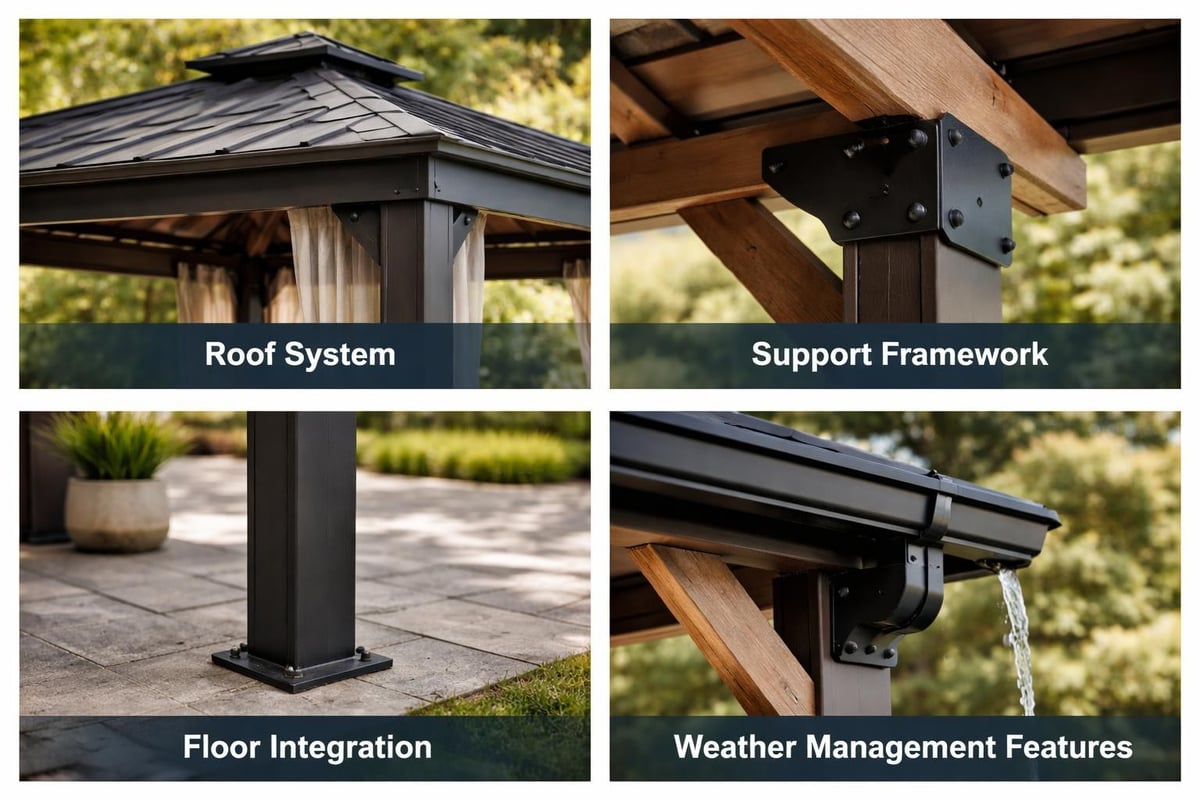
The materials you select determine not only aesthetic character but also longevity, maintenance requirements, and year-round performance. Premium patio gazebos demand materials that withstand Britain's variable climate whilst retaining visual appeal through seasons.
| Material | Longevity | Maintenance | Aesthetic Character |
|---|---|---|---|
| Powder-Coated Aluminium | 25+ years | Minimal - occasional cleaning | Contemporary, sleek lines |
| Hardwood (Oak, Iroko) | 20-30 years | Annual treatment required | Traditional, warm, natural |
| Steel (Galvanised/Painted) | 15-25 years | Moderate - rust prevention | Industrial, architectural |
| Composite Materials | 20+ years | Very low maintenance | Versatile, modern |
Aluminium frameworks increasingly dominate the luxury segment due to their exceptional strength-to-weight ratio and corrosion resistance. When combined with powder-coating in heritage colours - Cotswold stone grey, charcoal, or bronze - they deliver contemporary performance within traditional design vocabularies.
Beyond the framework, roof material selection proves equally critical. Options range from polycarbonate panels offering diffused light transmission to solid insulated systems that enable true all-season use:
Polycarbonate and Glass: Maintain luminosity whilst providing weather protection, ideal for spaces requiring natural light.
Solid Insulated Panels: Superior thermal performance, enabling heated outdoor rooms for winter use.
Standing Seam Metal: Architectural detailing with exceptional longevity and clean aesthetic lines.
Natural Materials: Slate or tile for period properties requiring sympathetic additions.
Successful patio gazebos don't exist as isolated additions - they form cohesive elements within comprehensive outdoor design schemes. Consider how your structure relates to existing architecture, garden boundaries, and functional zones.
Strategic placement maximises utility whilst enhancing visual flow. Key considerations include:
Exploring diverse patio and gazebo design approaches reveals how thoughtful positioning transforms functional structures into experiential destinations.
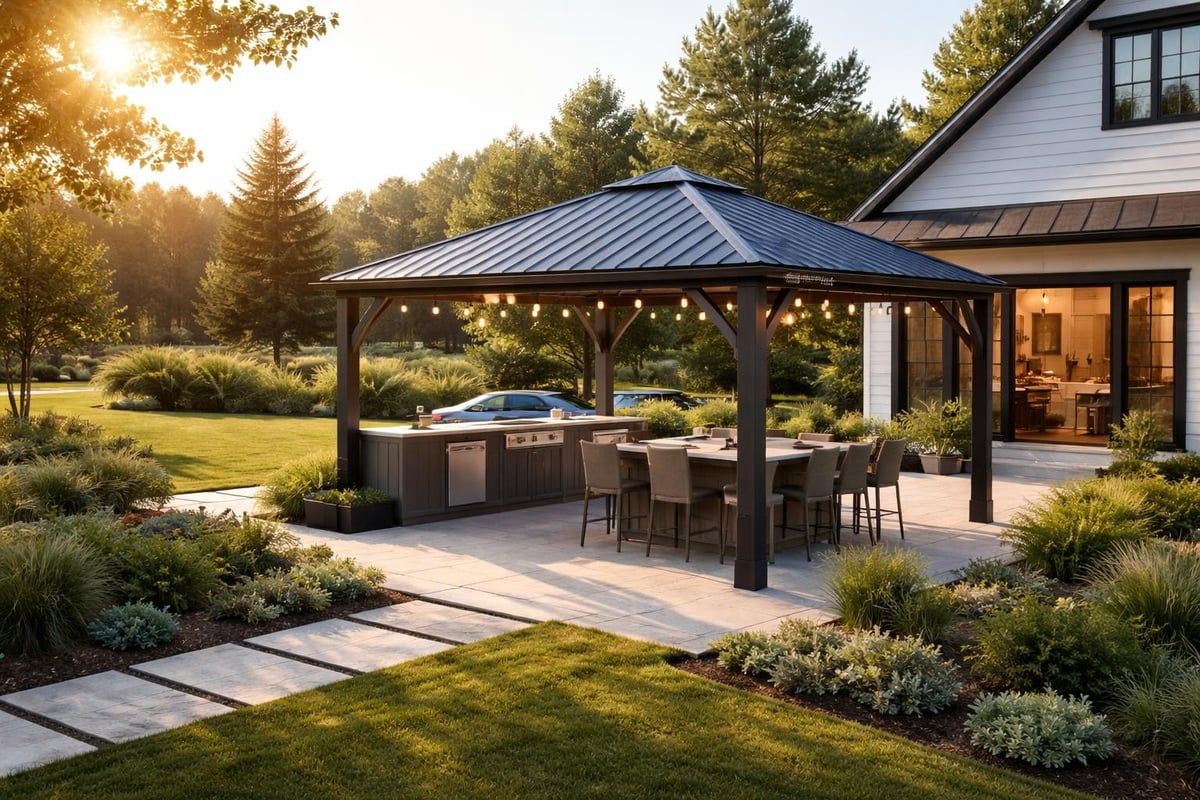
Patio gazebos should echo your property's architectural language whilst introducing their own character. For Cotswold stone properties, consider structures that reference traditional forms through contemporary interpretation - clean lines in heritage materials, sympathetic proportions, and restrained detailing.
Modern homes benefit from minimalist frameworks with expansive glazing or sophisticated bioclimatic louvres that adjust to conditions. Contemporary patio shade solutions demonstrate how innovative design transcends traditional gazebo forms whilst maintaining core functionality.
The intersection of patio gazebos with outdoor cooking represents a particularly refined application. Dedicated cooking pavilions protect premium equipment, provide comfortable chef zones, and create defined entertaining spaces that function throughout the year.
When designing gazebos to shelter outdoor cooking equipment, specific technical requirements demand attention:
Integrating outdoor kitchens beneath patio gazebos elevates functionality, enabling serious culinary pursuits regardless of weather conditions. The protection afforded by a quality gazebo extends equipment lifespan whilst creating comfortable cooking environments.
Beyond cooking, patio gazebos define dining zones that transform meals into occasions. Consider incorporating:
The most successful outdoor dining gazebos blur seasonal boundaries, remaining inviting from spring through autumn and, with appropriate heating, well into winter months.
The vanguard of patio gazebo design incorporates bioclimatic principles, creating structures that respond to environmental conditions. Adjustable louvre roofs represent the pinnacle of this approach, offering unprecedented control over light, ventilation, and weather protection.
Bioclimatic patio gazebos feature rotating roof blades that adjust from fully closed to completely open positions. This technology delivers:
Rain protection when closed, with integrated drainage channels directing water away from the structure.
Ventilation control through partial opening, allowing heat escape whilst maintaining partial shade.
Full sky access when opened completely, transforming the gazebo into an open pergola experience.
Automated response via weather sensors that close louvers when rain detected.
The Tarasola Technic bioclimatic pergola exemplifies this category, combining architectural refinement with sophisticated environmental control. These systems particularly suit UK climates, where conditions can shift dramatically within single afternoons, demanding adaptable shelter solutions.
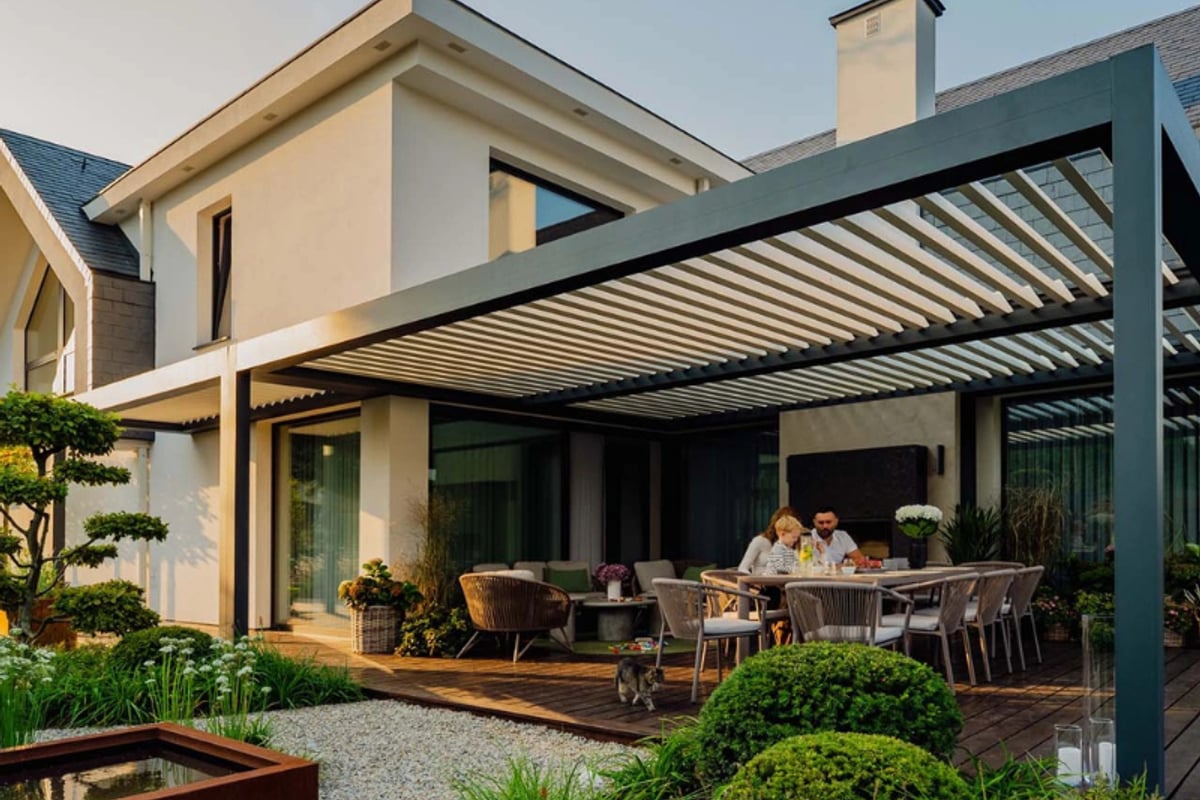
Britain's famously variable weather makes bioclimatic patio gazebos particularly valuable. Unlike fixed-roof structures that create permanently shaded spaces or traditional pergolas offering minimal weather protection, adjustable systems optimise conditions moment by moment.
During unpredictable spring days, louvers can track sun movement, providing shade during bright spells whilst opening for cloud cover. Summer evenings benefit from ventilation that prevents heat buildup beneath solid roofs. Autumn use extends as closed louvers shelter from increasing rainfall whilst retaining outdoor ambiance.
Selecting appropriate dimensions ensures your patio gazebo enhances rather than overwhelms outdoor space. Both undersized structures that fail to provide adequate shelter and oversized pavilions that dominate gardens represent common pitfalls.
| Use Case | Minimum Footprint | Comfortable Dimensions | Luxury Specification |
|---|---|---|---|
| Intimate Dining (4-6) | 3m × 3m | 3.5m × 3.5m | 4m × 4m |
| Family Dining (6-8) | 3.5m × 4m | 4m × 5m | 5m × 6m |
| Cooking Pavilion | 3m × 4m | 4m × 5m | 5m × 7m |
| Entertaining Hub | 4m × 6m | 5m × 7m | 6m × 8m+ |
Height proves equally important, with ceiling clearances affecting spatial perception and functionality. Standard patio gazebos typically measure 2.4-2.7m at the eaves, providing comfortable headroom whilst maintaining proportional relationships. Cooking pavilions benefit from additional height (3m+) to accommodate ventilation requirements and create comfortable chef zones.
Generous dimensions enable comfortable furniture arrangements with circulation space, yet structures must remain proportional to available patio area and overall garden scale. A useful guideline suggests the gazebo footprint should occupy no more than 30-40% of the total patio surface, preserving open areas that prevent spatial claustrophobia.
UK regulations governing patio gazebos balance homeowner freedom with planning considerations. Understanding these requirements prevents costly modifications and ensures compliant installations.
Most patio gazebos qualify as permitted development, exempt from planning permission provided they meet specific criteria:
Conservation areas, listed buildings, and certain designations impose additional restrictions. Always verify local authority requirements before proceeding.
Whilst planning permission may not apply, Building Regulations can govern certain aspects, particularly for permanent structures with foundations, integrated utilities, or significant electrical installations. Considerations include:
Professional design services navigate these requirements, ensuring compliant installations that avoid future complications.
Basic shelter represents merely the foundation. Thoughtfully integrated features transform patio gazebos into comprehensive outdoor living environments that rival interior spaces for comfort and utility.
Layered lighting schemes create atmosphere whilst ensuring functionality:
Modern LED technology enables energy-efficient solutions with exceptional longevity, crucial for installations requiring weatherproof fixtures.
Extending seasonal use demands thoughtful climate management. Options include:
Heating solutions ranging from wall-mounted infrared panels to integrated radiant systems and stylish gas patio heaters.
Cooling strategies through ceiling fans, misting systems, or simply the ventilation capabilities of bioclimatic louvers.
Screen systems providing insect protection, privacy enhancement, or additional weather sealing through retractable mesh, glass panels, or transparent PVC curtains.
Premium patio gazebos represent significant investments demanding protective maintenance regimes that preserve appearance and structural integrity. Requirements vary substantially based on material selection.
Aluminium structures demand minimal intervention - periodic cleaning with mild detergent solutions and occasional inspection of fixings typically suffice. Powder-coated finishes resist corrosion and maintain colour integrity for decades.
Timber gazebos require annual treatment with appropriate oils or stains, inspection for moisture ingress or insect activity, and replacement of degraded fasteners. Quality hardwoods like oak develop attractive patina when allowed to weather naturally, though protective treatments extend service life.
Composite materials occupy a middle ground, requiring occasional cleaning but resisting rot, fade, and structural degradation that affects natural timber.
Regardless of material, establish maintenance routines that address:
Biannual inspections identify developing issues before they escalate, whilst post-storm checks ensure wind-related damage receives prompt attention.
Patio gazebo pricing spans enormous ranges, from budget-conscious pergola-gazebo hybrids starting around £2,000 to bespoke architectural pavilions exceeding £40,000. Understanding cost drivers enables informed decisions aligned with budget realities and quality expectations.
Several variables influence investment levels:
Size and complexity: Larger footprints, custom dimensions, and architectural detailing increase costs proportionally.
Material quality: Premium aluminium systems, sustainably sourced hardwoods, and advanced composites command higher prices than basic materials.
Roof technology: Fixed solid roofs represent mid-range options; bioclimatic louvered systems occupy premium territory.
Integrated features: Lighting, heating, screens, and automated controls add incremental costs.
Installation complexity: Groundwork requirements, utility integration, and site access affect labour components.
Brand and warranty: Established European manufacturers with comprehensive guarantees justify premium positioning.
Comprehensive gazebo buying guidance explores these considerations across market segments.
Initial purchase price represents merely one dimension of total ownership cost. Factor in:
Premium patio gazebos from established manufacturers deliver superior cost-per-year value through extended service lives, minimal maintenance demands, and enduring aesthetic appeal that resists obsolescence.
Patio gazebos rarely exist in isolation - they form nodes within comprehensive outdoor living ecosystems. Thoughtful integration with luxury outdoor furniture, cooking equipment, and landscape elements creates cohesive environments.
When combining gazebos with dedicated cooking zones, coordination ensures optimal functionality. Consider how the structure shelters equipment whilst maintaining proper ventilation, how work zones flow into dining areas, and how services route efficiently.
The most successful installations position cooking equipment along one edge of the gazebo, preserving central space for dining whilst ensuring chefs remain part of social interaction. Adjacent preparation counters, integrated storage, and convenient access to ingredients complete the equation.
Patio gazebos benefit from sympathetic planting that softens architectural edges whilst enhancing privacy and seasonal interest. Climbing plants on support posts - jasmine, clematis, or wisteria - introduce vertical greening without compromising structural integrity.
Perimeter planting creates graduated transitions from lawn or garden to paved patio to sheltered gazebo space, establishing visual coherence. Container planting within the gazebo itself introduces flexibility, enabling seasonal variation and moveable screening.
Britain's diverse microclimates demand regional considerations when specifying patio gazebos. Coastal locations face salt exposure and wind loading; exposed upland sites encounter extreme weather; sheltered urban gardens present different challenges.
Exposed sites require robust engineering with appropriate foundation systems, reinforced frameworks, and wind-rated fixings. Manufacturers specify maximum wind speeds for their systems - crucial data for elevated or coastal locations.
Solid-roof gazebos present larger wind loads than open structures. Bioclimatic systems offer advantages through louvered roofs that can open during high winds, reducing loading whilst maintaining structural integrity.
Western regions experiencing higher rainfall demand particular attention to drainage capacity. Ensure gutter and downpipe sizing accommodates expected flow rates, with overflow provisions preventing water damage during extreme events.
Integrated drainage channels within louvered roofs require regular maintenance to prevent blockages that compromise weather protection. Quality systems incorporate debris guards and accessible cleanout points.
The evolution of outdoor living spaces continues apace, with several emerging trends shaping patio gazebo development. Understanding these trajectories informs forward-looking specifications that remain relevant as preferences evolve.
Connected home technology increasingly extends to outdoor spaces. Contemporary patio gazebos incorporate:
These features transition outdoor spaces from occasional-use areas to genuine extensions of interior living environments.
Conscious consumers increasingly prioritise environmental considerations. Patio gazebo manufacturers respond through:
Green credentials complement aesthetic and functional priorities, particularly for environmentally conscious homeowners.
Rather than fixed permanent structures, emerging designs emphasise adaptability. Modular frameworks enable seasonal reconfiguration, adjustable dimensions accommodate changing needs, and interchangeable infill panels allow aesthetic updates without complete replacement.
This flexibility appeals to homeowners seeking longevity through evolution rather than static installations that may feel dated as preferences shift.
Patio gazebos represent transformative additions that elevate outdoor living from occasional summer use to year-round culinary and entertaining destinations. By carefully considering materials, positioning, integrated features, and climate responsiveness, you create outdoor rooms that rival interior spaces for comfort and utility. Whether your vision encompasses intimate dining pavilions, comprehensive outdoor cooking stations, or flexible entertaining hubs, the right patio gazebo anchors these aspirations within refined architectural form. Cotswold Cooking Company brings decades of expertise in luxury outdoor living design, curating premium structures, outdoor kitchens, and integrated systems that transform gardens into all-season culinary destinations - explore our consultative approach to creating bespoke outdoor environments tailored to your property and lifestyle.

Leave a comment