


Creating a patio kitchen transforms your outdoor space into a sophisticated culinary destination that extends your home's living area into the garden. Whether you're planning intimate family dinners or hosting elegant gatherings, a thoughtfully designed patio kitchen combines functionality with refined aesthetics, allowing you to cook, dine and entertain in the fresh air throughout the year. This comprehensive guide explores the essential considerations for designing a luxury outdoor cooking space that reflects your lifestyle whilst enhancing your property's value and appeal.
The foundation of any successful patio kitchen begins with strategic spatial planning. Your layout should balance cooking efficiency with entertainment flow, ensuring adequate space for food preparation, cooking zones and guest interaction.
A well-designed patio kitchen incorporates distinct functional zones that mirror the workflow of indoor culinary spaces. The primary work triangle connects your preparation area, cooking stations and cleaning facilities, maintaining ergonomic distances that prevent unnecessary movement whilst cooking.
Consider these fundamental spacing requirements:
When planning your layout, account for prevailing wind direction to prevent smoke from drifting toward dining areas or neighbouring properties. Positioning your cooking stations with weather patterns in mind ensures comfortable operation regardless of seasonal conditions.
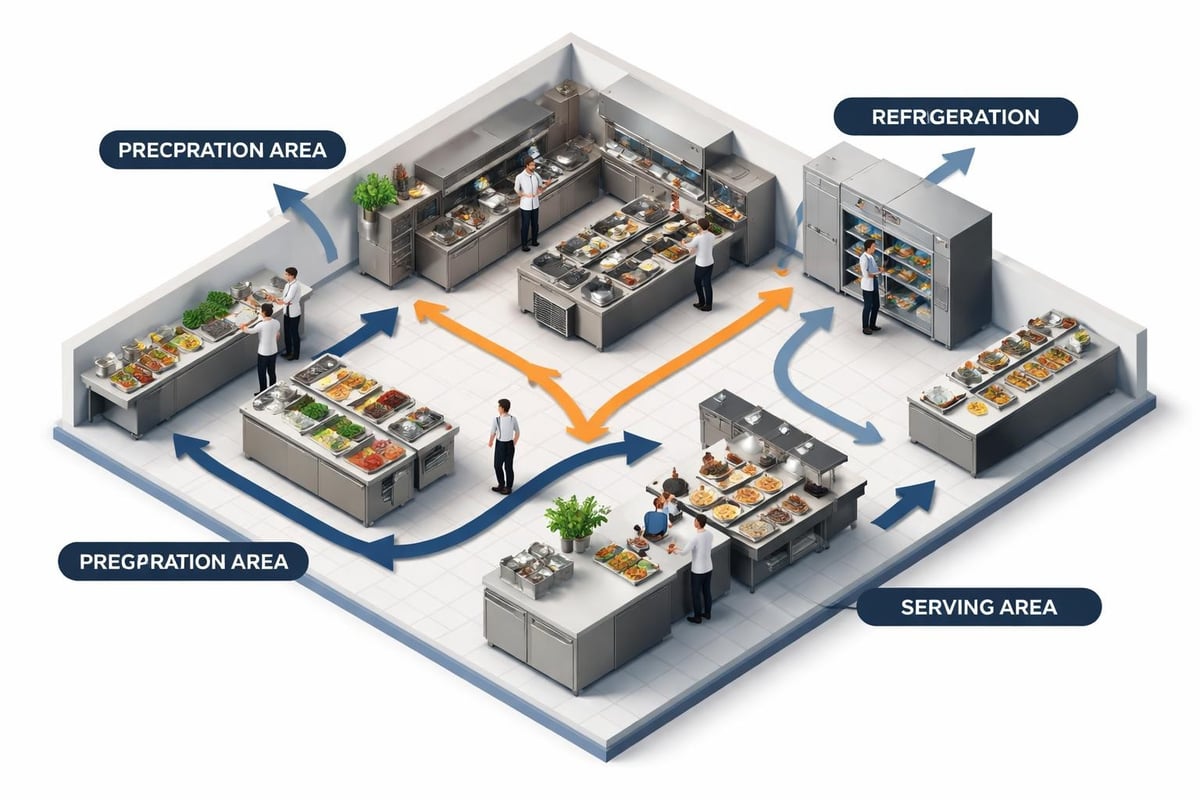
Safety remains paramount when determining your patio kitchen's position relative to your main dwelling. Maintaining appropriate distances from the house protects both structures whilst creating a distinct outdoor entertaining environment.
Industry guidelines recommend positioning your patio kitchen between 3-6 metres from your home's exterior walls. This distance provides several advantages:
Proximity Benefits:
Safety Advantages:
Choosing weather-resistant materials ensures your investment withstands the British climate whilst maintaining its refined appearance for decades. Premium materials offer superior durability and require minimal maintenance compared to budget alternatives.
| Material Type | Durability Rating | Maintenance Level | Aesthetic Appeal | Climate Suitability |
|---|---|---|---|---|
| Stainless Steel | Excellent | Low | Modern/Industrial | All Seasons |
| Natural Stone | Excellent | Medium | Traditional/Luxury | All Seasons |
| Porcelain Tile | Excellent | Very Low | Versatile | All Seasons |
| Hardwood | Good | High | Warm/Classic | Covered Areas |
| Engineered Quartz | Excellent | Very Low | Contemporary | All Seasons |
Worktop selection significantly impacts both functionality and visual appeal. Natural stone surfaces like granite or quartzite deliver exceptional heat resistance and timeless elegance, perfectly suited to the Cotswolds aesthetic. These materials withstand direct contact with hot cookware and resist staining when properly sealed.
Engineered surfaces provide contemporary alternatives with consistent patterning and colours. Porcelain slabs offer remarkable durability with minimal porosity, preventing water absorption and bacterial growth whilst resisting temperature extremes.
Quality outdoor cabinetry construction employs marine-grade stainless steel or powder-coated aluminium frameworks with weather-resistant polymer panels. These materials prevent warping, rust and deterioration whilst providing secure storage for cooking equipment and tableware.
Integrated drainage systems within cabinet bases prevent water accumulation, protecting stored items from moisture damage. Soft-close mechanisms and sealed edges further enhance longevity whilst maintaining smooth operation through seasonal temperature fluctuations.
Your patio kitchen's functionality centres upon carefully selected cooking equipment that matches your culinary ambitions and entertaining style. Outdoor cooking appliances should deliver professional performance whilst enduring exposure to the elements.
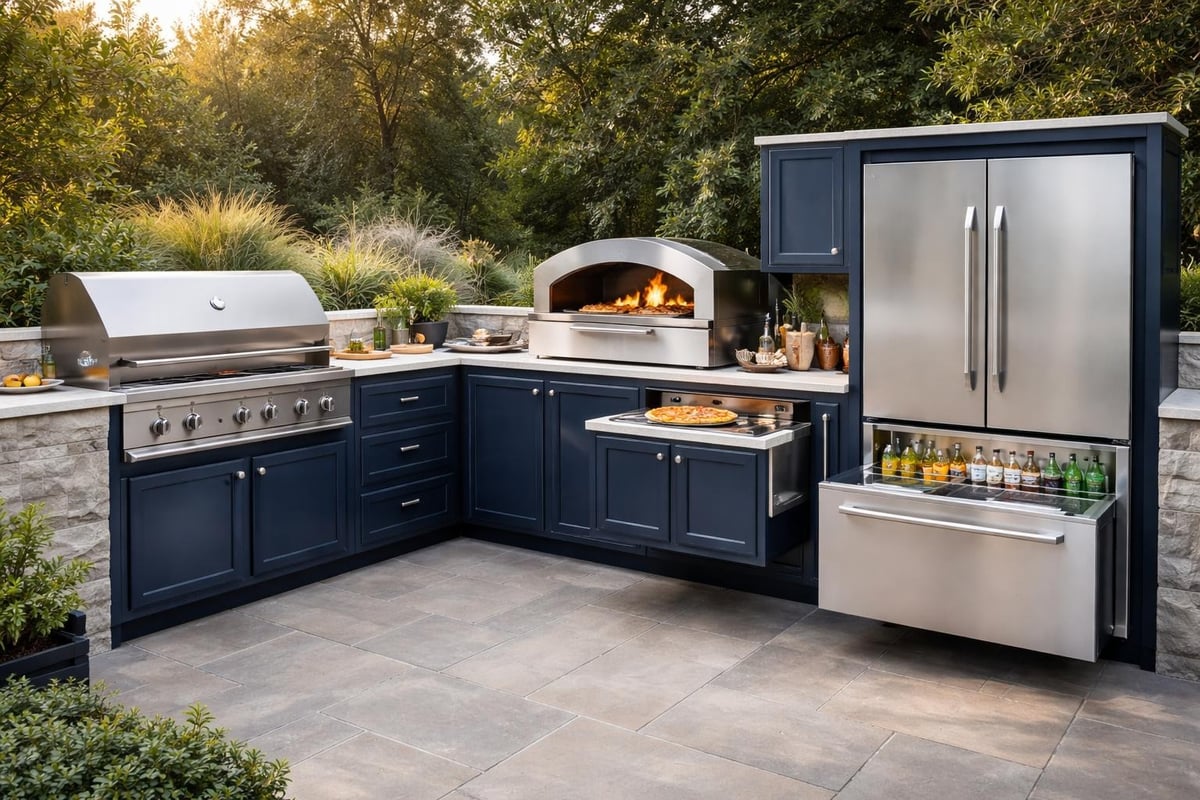
Built-in Grills and BBQs: Modern luxury grills feature multiple burner configurations, infrared searing zones and rotisserie systems that expand your cooking repertoire beyond simple grilling. Stainless steel construction with heavy-gauge grates ensures even heat distribution and decades of reliable service.
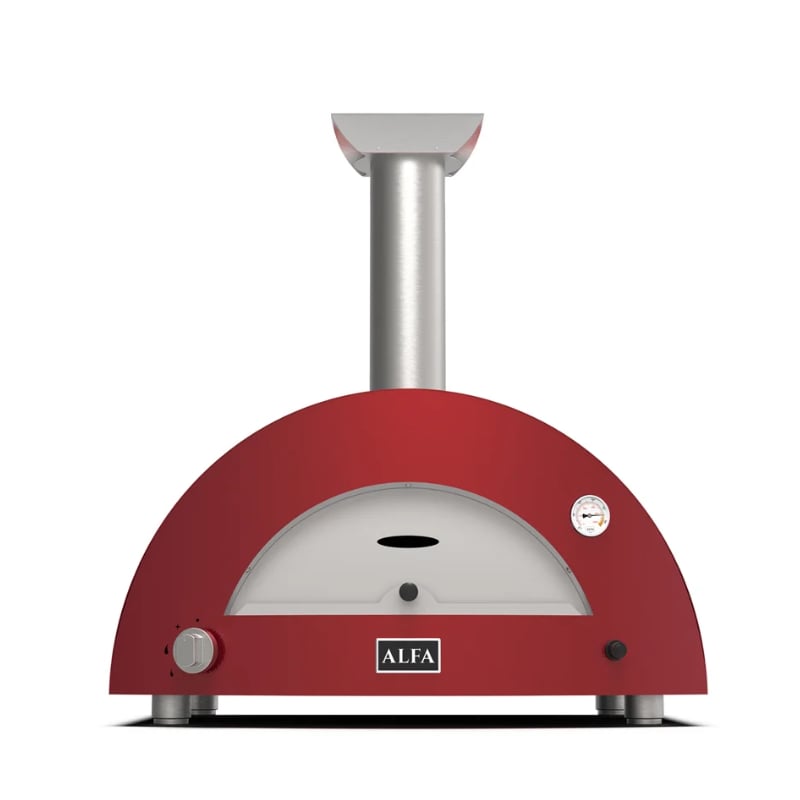
Pizza Ovens: Wood-fired or hybrid pizza ovens create authentic culinary experiences whilst serving as striking architectural features. For those seeking versatility, the Alfa Forni Moderno Hybrid Pizza Oven combines traditional wood-fired flavour with convenient gas operation, reaching optimal cooking temperatures within 30 minutes and delivering restaurant-quality pizzas in approximately 90 seconds.
Speciality Cooking Stations: Side burners, teppanyaki plates and plancha griddles provide supplementary cooking methods that complement your primary grill. These additions enable simultaneous preparation of multiple dishes, streamlining service during larger gatherings.
Dedicated outdoor refrigeration maintains ingredients at safe temperatures throughout your cooking sessions. Under-counter units with stainless steel interiors resist corrosion whilst providing convenient access to beverages, condiments and perishable items.
Wine refrigerators with dual-zone temperature control preserve both red and white vintages at optimal serving conditions. Ice makers ensure constant supply for cocktails and chilled drinks without repeated trips indoors.
Successful patio kitchen installation requires comprehensive utility planning before construction begins. Professional tradespeople should handle gas, electrical and plumbing connections to ensure safety compliance and reliable operation.
Natural gas connections provide economical, continuous fuel supply for grills, burners and heating elements. Underground piping requires professional installation with proper pressure regulation and emergency shut-off valves positioned for easy access.
LPG bottles offer flexibility for locations without mains gas access. Built-in bottle storage compartments with ventilation prevent gas accumulation whilst keeping cylinders accessible for replacement.
Outdoor electrical systems demand weatherproof outlets with ground fault circuit protection, safeguarding against moisture-related hazards. Dedicated circuits prevent overloading when operating multiple appliances simultaneously.
Task lighting illuminates work surfaces for evening cooking sessions, whilst ambient illumination creates inviting atmosphere for extended outdoor entertaining. LED systems offer energy efficiency with minimal heat generation.
Integrated sinks with hot and cold supply facilitate food preparation and cleaning without indoor trips. Frost-proof outdoor taps prevent winter pipe damage in exposed locations.
Proper drainage prevents standing water around your patio kitchen, protecting cabinetry and flooring from moisture damage. Grease traps and interceptors may be required depending upon your local authority's regulations.
Extending your outdoor season requires thoughtful shelter solutions that protect against rain, wind and temperature extremes whilst maintaining open-air ambience. Architectural pergolas with adjustable louvre roofs provide versatile protection, allowing sunlight during pleasant weather and complete coverage when conditions deteriorate.
Retractable awnings offer temporary shelter for unexpected weather changes, retracting to maximise sunlight exposure during clear conditions. Fabric selections should prioritise UV resistance and water repellency for longevity.
Permanent roof structures with proper pitch and guttering systems channel rainwater away from cooking and dining areas. Integrated lighting and heating elements within overhead beams enhance comfort during evening entertainment.
Strategic placement of screens, walls or hedging creates sheltered microclimates that reduce wind chill and increase usable days throughout the year. Glass panels maintain views whilst blocking prevailing winds, particularly effective in exposed garden positions.
Retractable side screens offer flexible protection, allowing complete opening during calm conditions and quick closure when breezes intensify. Clear vinyl options maintain visibility whilst blocking wind and light precipitation.
Operating a patio kitchen safely requires awareness of potential hazards and implementation of preventative measures. Understanding outdoor kitchen safety risks helps prevent accidents and ensures enjoyable outdoor cooking experiences.
Maintain clear zones around cooking equipment, keeping combustible materials, foliage and furniture at safe distances. Proper BBQ placement requires minimum clearances from overhangs, fences and structures to prevent ignition risks.
Essential safety equipment includes:
Maintaining food safety standards outdoors requires additional vigilance compared to indoor cooking. Temperature control becomes critical, particularly during warmer months when bacterial growth accelerates.
Refrigerate perishable ingredients until immediately before cooking, minimising time in the temperature danger zone between 5°C and 60°C. Separate raw and cooked foods using dedicated cutting boards, utensils and serving platters to prevent cross-contamination.
Covered food storage protects against insects, dust and wildlife whilst maintaining appropriate temperatures. Regular cleaning of surfaces and equipment prevents bacterial accumulation that could compromise food safety.
Your patio kitchen should harmonise with your home's architectural character whilst reflecting your personal aesthetic preferences. Cohesive design creates seamless indoor-outdoor transitions that enhance your property's overall appeal.
Natural stone construction, timber accents and classic proportions complement period properties throughout the Cotswolds region. Honey-coloured limestone or reclaimed brick facing integrates outdoor kitchens with existing garden walls and pathways.
Copper accents, aged bronze fixtures and handcrafted ironwork add authentic period details that elevate traditional designs beyond standard outdoor cooking spaces. These thoughtful touches demonstrate attention to heritage whilst incorporating modern functionality.
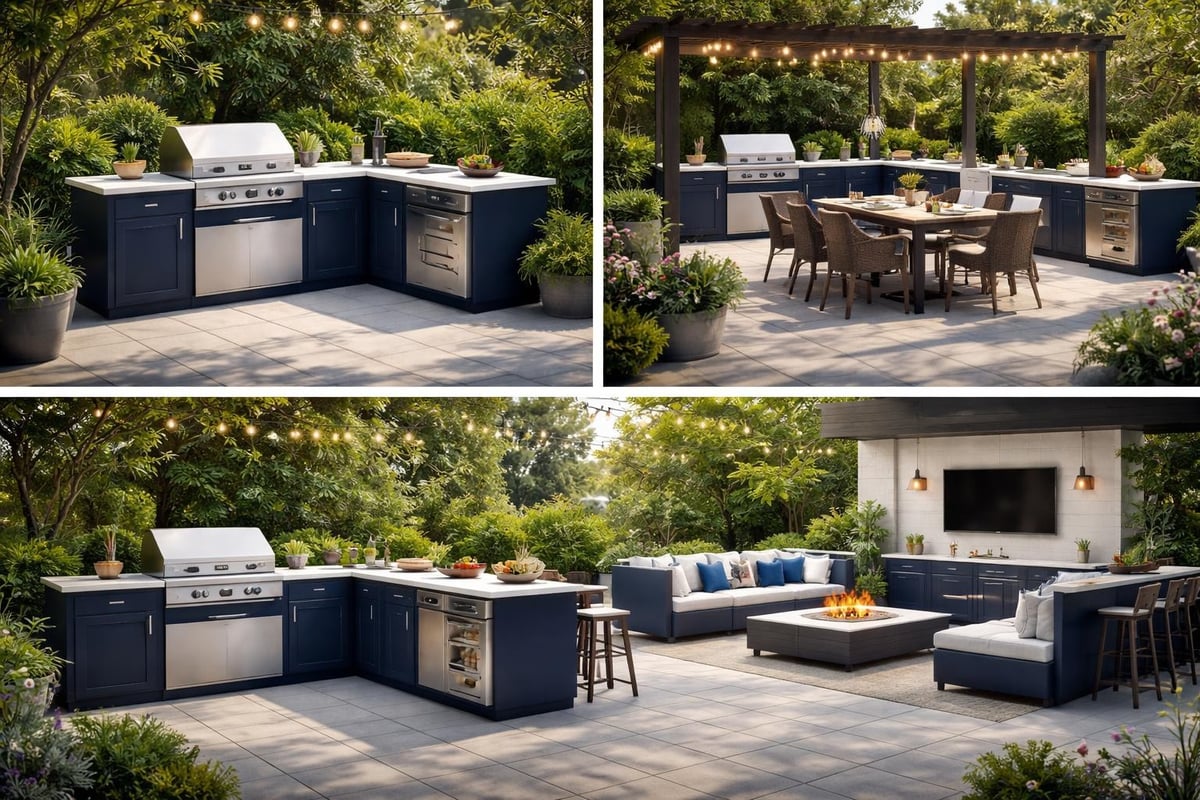
Clean lines, monochromatic palettes and seamless surfaces define modern patio kitchen design. The Cubic C1 Style Outdoor Kitchen exemplifies this approach, featuring sleek modular configurations with integrated appliances that create sophisticated outdoor living environments suited to contemporary properties.
Handleless cabinetry, flush-mounted equipment and concealed lighting maintain uncluttered aesthetics whilst providing comprehensive functionality. Premium materials like brushed stainless steel and honed stone deliver understated luxury through quality rather than ornamentation.
| Design Style | Key Characteristics | Suitable Properties | Maintenance Requirements |
|---|---|---|---|
| Traditional Cotswold | Natural stone, timber, classical details | Period homes, rural settings | Medium to High |
| Contemporary | Clean lines, minimal detail, integrated appliances | Modern builds, urban gardens | Low to Medium |
| Transitional | Blended elements, neutral palette | Varied architecture | Medium |
| Mediterranean | Terracotta, arched elements, warm tones | Character properties | Medium |
Even well-intentioned patio kitchen projects encounter pitfalls that compromise functionality or longevity. Avoiding common outdoor kitchen mistakes ensures your investment delivers lasting satisfaction.
Underestimating storage requirements creates cluttered work surfaces and inconvenient cooking experiences. Calculate your storage needs based upon typical entertaining scenarios, then increase capacity by 30% to accommodate growth and seasonal items.
Dedicated zones for different equipment types streamline workflow. Separate areas for cooking utensils, serving pieces, tableware and cleaning supplies prevent searching during food preparation.
Adequate illumination proves essential for safe food preparation and extended evening use. Layer multiple light sources including task lighting above work surfaces, ambient lighting for dining areas and accent lighting highlighting architectural features.
Dimming controls adjust intensity for different occasions, creating intimate dining atmosphere or bright working conditions as needed. Weather-resistant fixtures with appropriate IP ratings ensure reliable operation throughout the year.
Static designs limit adaptation as your needs evolve. Modular layouts accommodate future additions without requiring complete reconstruction. Oversized utility connections and spare circuits simplify equipment upgrades or capacity increases.
Consider potential expansions during initial planning, reserving adjacent space for possible additions. This foresight prevents costly modifications when you eventually decide to enhance your outdoor kitchen's capabilities.
Complex patio kitchen installations benefit from professional expertise, particularly regarding utility connections, structural work and compliance with building regulations. Experienced installers ensure proper equipment integration, weatherproofing and safety measures that DIY approaches might overlook.
Gas connections, electrical work and structural modifications legally require certified tradespeople in most UK jurisdictions. Beyond regulatory compliance, professional installation provides warranty protection, insurance coverage and guaranteed workmanship.
Comprehensive projects incorporating multiple appliances, custom cabinetry and architectural elements justify professional design services. Consultative approaches from specialists like Cotswold Cooking Company ensure cohesive solutions that maximise your investment whilst avoiding costly mistakes.
Decorative enhancements, furnishing placement and minor customisation offer opportunities for personal involvement without compromising safety or quality. Installing lighting fixtures (following professional electrical rough-in), arranging accessories and seasonal styling allow creative expression within professionally installed frameworks.
Ongoing maintenance including cleaning, seasonal preparation and minor adjustments suit homeowner capabilities, preserving your patio kitchen's appearance and functionality between professional service intervals.
Patio kitchen costs vary dramatically based upon size, equipment selection and material quality. Establishing realistic budgets aligned with your expectations prevents disappointment whilst ensuring adequate resources for essential features.
Industry guidelines suggest the following distribution for comprehensive projects:
Premium equipment and materials command higher initial costs but deliver superior longevity and performance, reducing lifetime ownership expenses through minimal replacement requirements and lower maintenance demands.
Quality patio kitchens enhance property values whilst providing immediate lifestyle benefits. Estate agents report outdoor living spaces attract premium buyer interest, particularly within affluent markets where sophisticated amenities differentiate properties.
Beyond financial returns, patio kitchens deliver intangible value through enhanced entertaining capabilities, increased property enjoyment and expanded functional living space without interior renovations.
Preserving your patio kitchen's appearance and functionality requires regular maintenance adapted to seasonal conditions. Proactive care prevents deterioration whilst identifying potential issues before they require expensive repairs.
Post-winter inspection identifies any damage from freezing temperatures or moisture accumulation. Clean all surfaces thoroughly, removing debris and checking for signs of corrosion or wear. Test all appliances, verifying proper ignition, temperature control and safety features.
Service gas connections, checking for leaks and ensuring secure fittings. Replace worn seals, clean burners and verify proper ventilation before resuming regular use.
As temperatures decline, protect your investment against freezing damage. Drain water lines, disconnect and store removable components, and cover equipment with breathable, weatherproof protection.
Clean thoroughly before covering to prevent mildew growth during storage periods. Apply protective treatments to natural stone surfaces and metal components as recommended by manufacturers.
Designing a luxury patio kitchen requires careful planning across multiple dimensions, from spatial layout and material selection through to appliance integration and safety protocols. By addressing each element thoughtfully and prioritising quality throughout, you create an outdoor culinary destination that enhances your lifestyle whilst adding lasting value to your property. The Cotswold Cooking Company brings decades of expertise in luxury outdoor kitchen design, offering consultative services from initial concept through installation, helping discerning homeowners across the UK transform their outdoor spaces into refined, all-season entertaining destinations that blend Cotswold heritage with modern performance.

Leave a comment