


Creating exceptional outdoor living spaces requires thoughtful integration of architectural elements that extend your home's footprint whilst enhancing its aesthetic appeal. Patios and pergolas represent two foundational structures that transform gardens into sophisticated, year-round destinations for dining, entertaining, and relaxation. When designed with precision and constructed using premium materials, these elements create seamless transitions between interior comfort and exterior elegance, establishing outdoor rooms that rival their indoor counterparts in both functionality and refinement.
Patios serve as the foundation layer of outdoor living design, providing stable, weather-resistant surfaces that define entertainment zones, dining areas, and relaxation spaces. These ground-level platforms create the essential footprint upon which entire outdoor rooms are built.
Pergolas, conversely, establish the architectural ceiling plane that defines spatial boundaries, provides shade management, and creates visual interest through structural rhythm and material texture. Together, these elements form a three-dimensional outdoor room that balances openness with definition.
Before specifying materials or engaging designers, discerning homeowners must articulate their vision for outdoor space functionality:
Understanding these priorities ensures your patios and pergolas serve both immediate functional needs and long-term lifestyle aspirations.
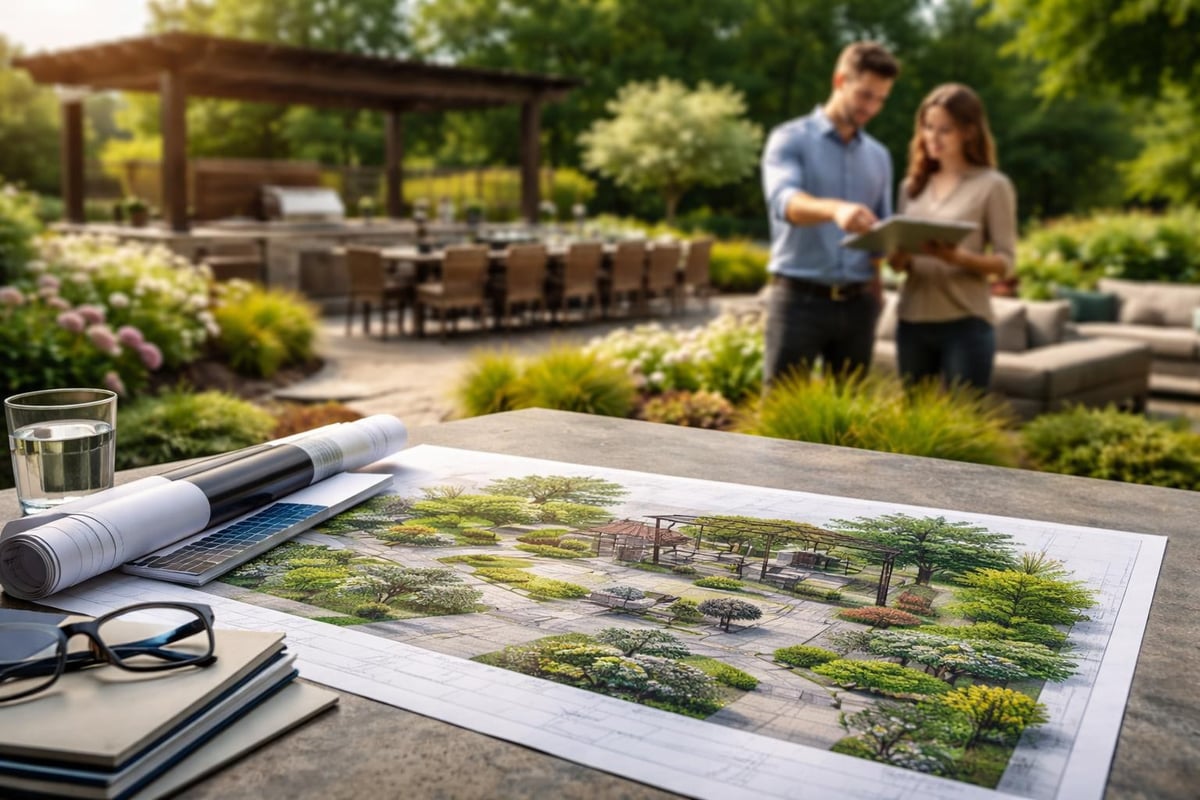
The materials you specify for patios and pergolas establish durability benchmarks, maintenance expectations, and aesthetic character that will define your outdoor space for decades.
| Material | Longevity | Aesthetic Quality | Maintenance Level | Climate Suitability |
|---|---|---|---|---|
| Natural Stone (York, Cotswold) | 50+ years | Exceptional heritage character | Low (periodic sealing) | Excellent UK performance |
| Porcelain Pavers | 40+ years | Contemporary precision | Minimal | Outstanding frost resistance |
| Engineered Composite | 25-30 years | Modern uniformity | Very low | Moderate drainage required |
| Hardwood Decking (Iroko, Teak) | 30-40 years | Warm, organic texture | Medium (annual treatment) | Good with proper drainage |
Natural stone selections particularly complement Cotswold properties, establishing material continuity with regional architectural heritage whilst providing exceptional durability in variable UK weather conditions.
Timber pergolas crafted from sustainably sourced hardwoods or pressure-treated softwoods offer traditional warmth and can be custom-milled to precise specifications. Wooden porches and pergolas showcase how quality timber construction creates enduring structures with natural elegance.
Aluminium and powder-coated steel frameworks deliver contemporary aesthetic precision with virtually maintenance-free performance. These materials accommodate integrated lighting, heating, and automated louvre systems that transform static structures into responsive outdoor environments.
Composite materials blend timber aesthetics with enhanced weather resistance, though authentic hardwood or architectural metal typically provides superior longevity and refinement for luxury installations.
Effective patios and pergolas must address Britain's variable climate whilst creating comfortable outdoor environments across multiple seasons. This requires thoughtful attention to orientation, drainage, and weather protection systems.
North-facing pergolas receive limited direct sunlight, making them ideal for hot summer days but potentially cool during spring and autumn entertaining. South-facing installations capture maximum solar gain, extending comfortable use periods but requiring adjustable shade solutions.
East-facing orientations provide pleasant morning light for breakfast settings, whilst west-facing structures capture evening sun ideal for aperitivo hours and sunset dining. Many discerning clients specify dual-zone designs that accommodate both morning coffee rituals and evening entertainment.
Proper drainage prevents water pooling, material degradation, and structural complications:
The City of Joondalup provides detailed technical guidance on structural requirements, though UK installations must conform to local building regulations and British Standards.
Modern pergola designs incorporate sophisticated weather management:
These technologies transform pergolas from decorative elements into functional architectural systems supporting genuine year-round outdoor living.
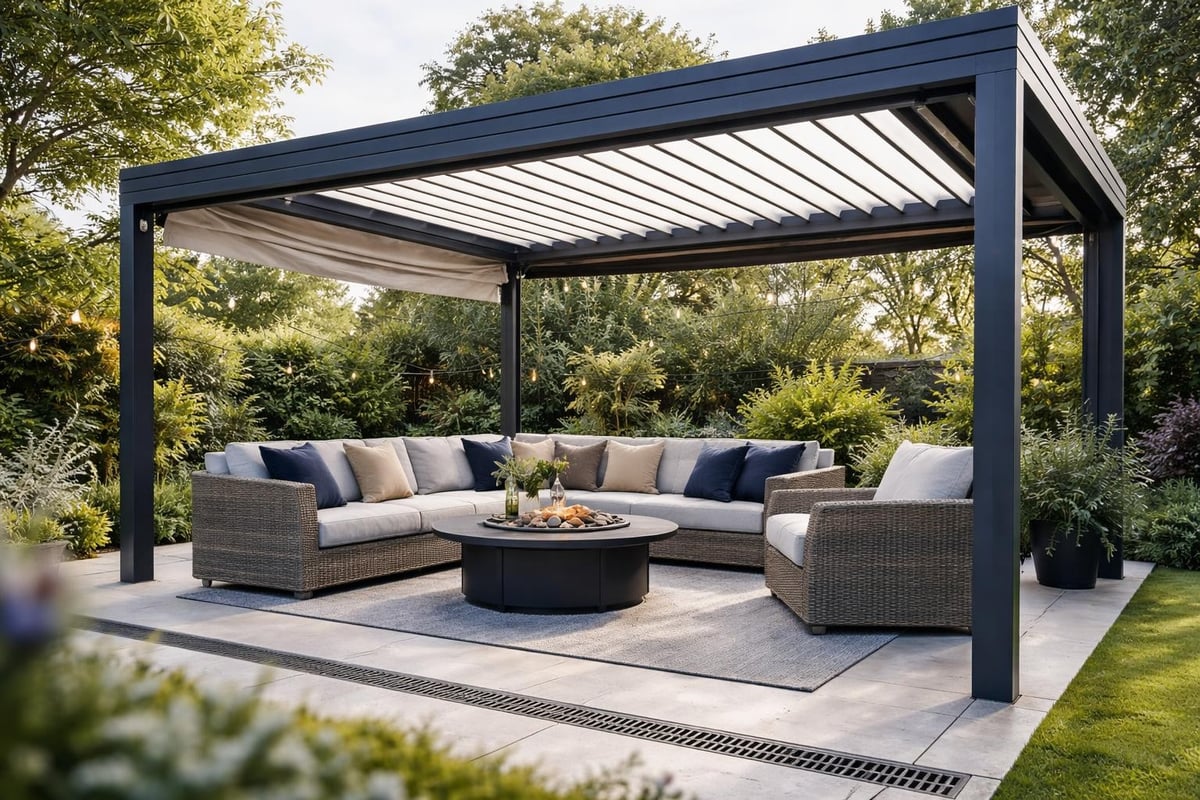
The most sophisticated outdoor living spaces unite culinary functionality with architectural definition, creating seamless entertaining environments that rival interior kitchen-dining rooms in capability and comfort.
Effective integration requires dedicated zones within your patio footprint:
Cooking Zone: Position grills, pizza ovens, and primary cooking appliances within easy reach of prep surfaces whilst maintaining appropriate clearances from pergola roofing structures. Most building regulations require minimum 2.4-metre clearances above heat-producing appliances.
Preparation Zone: Allocate minimum 1.2 metres of continuous counter space adjacent to cooking appliances, incorporating sinks, refrigeration, and storage within ergonomic reach. Metal outdoor kitchen cabinets provide weather-resistant storage solutions maintaining pristine condition across seasons.
Service and Dining Zone: Position dining areas within comfortable serving distance from cooking zones, typically 2-4 metres, creating natural flow without disrupting chef workspace.
Modular outdoor kitchen systems designed specifically for pergola integration deliver exceptional results. The Cubic C1 Style Outdoor Kitchen exemplifies this approach, offering sleek contemporary lines and fully customisable configurations that integrate seamlessly beneath pergola structures whilst providing dedicated zones for grilling, preparation, and storage.
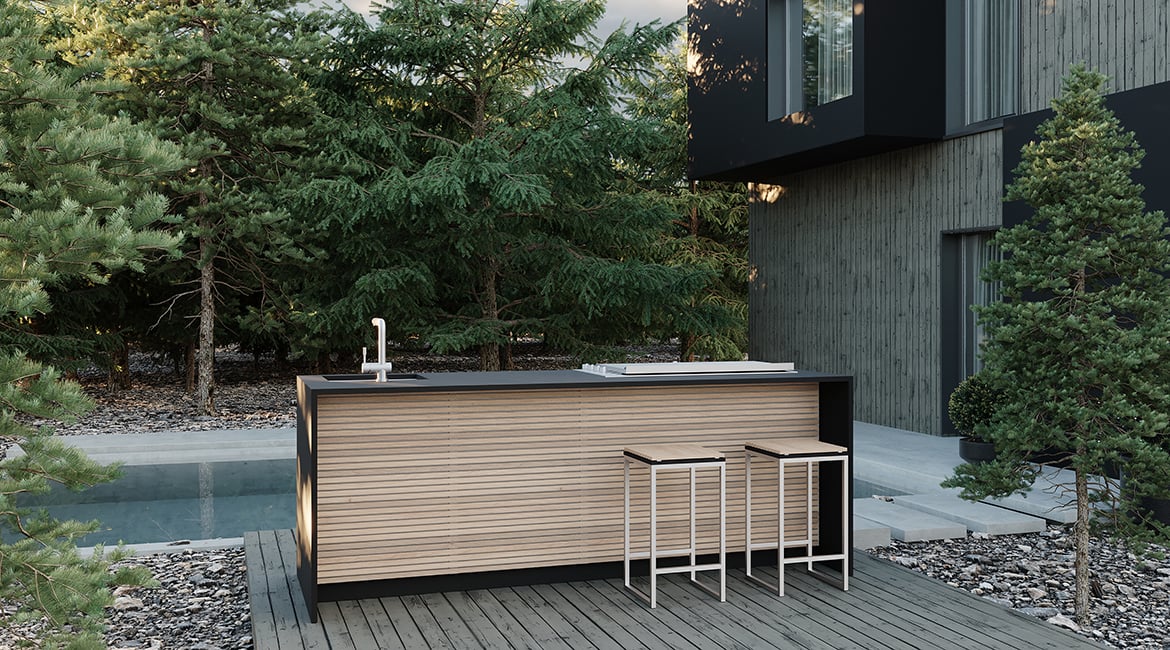
These purpose-engineered systems eliminate the spatial conflicts and maintenance challenges that arise when attempting to retrofit domestic kitchen cabinetry for outdoor use, whilst their modular nature accommodates future expansion as entertaining ambitions evolve.
Thoughtful illumination transforms patios and pergolas from daylight-dependent spaces into enchanting evening destinations. Sophisticated lighting schemes layer multiple sources creating depth, atmosphere, and practical task lighting.
Architectural Lighting: Integrate linear LED strips within pergola beams and rafters, creating subtle uplighting that emphasises structural rhythm whilst providing gentle ambient illumination.
Task Lighting: Position focused downlights above cooking zones, preparation surfaces, and dining tables, ensuring adequate illumination for culinary tasks and evening dining without harsh glare.
Accent Lighting: Employ uplighters, spike lights, and wall washers highlighting garden features, specimen plants, and architectural details visible from your outdoor room.
Decorative Lighting: Suspend statement pendants, festoon lighting, or bespoke chandeliers creating focal points and establishing design personality.
Specify warm colour temperatures (2700-3000K) for residential installations, maintaining the intimate character essential for relaxed entertaining whilst providing sufficient illumination for safe navigation and food preparation.
British weather demands proactive heating strategies that extend comfortable outdoor living beyond summer months into spring, autumn, and even mild winter evenings.
| Heating Type | Heat Distribution | Energy Efficiency | Installation Complexity | Aesthetic Impact |
|---|---|---|---|---|
| Infrared Panel Heaters | Direct radiant warmth | Excellent (targeted heating) | Low (wall or ceiling mount) | Minimal (slim profiles) |
| Gas Patio Heaters | Radial convection | Moderate (heat rises) | Low (portable or fixed) | High (visible units) |
| Outdoor Fireplaces | Radiant + atmospheric | Variable (open fires inefficient) | High (structural integration) | Significant (focal feature) |
| Underfloor Heating | Even floor-level warmth | Good (large area coverage) | Very high (patio construction) | None (concealed system) |
Infrared technology delivers the most efficient performance for pergola-covered spaces, heating people and surfaces directly rather than wasting energy warming air. Solar Patios & Pergolas demonstrates innovative approaches incorporating renewable energy solutions into outdoor heating systems.
Patios and pergolas should connect harmoniously with surrounding garden landscapes rather than appearing as isolated architectural insertions. Strategic planting softens structural edges whilst pergola frameworks provide vertical growing opportunities.
Wisteria sinensis: Delivers spectacular late spring blooms with cascading racemes creating romantic overhead canopies. Requires robust pergola construction due to substantial mature weight.
Trachelospermum jasminoides (Star Jasmine): Provides evergreen coverage with intensely fragrant white flowers throughout summer months, thriving in sunny, sheltered positions.
Rosa (Climbing Roses): Heritage varieties complement Cotswold aesthetic whilst modern repeat-flowering cultivars extend seasonal interest. Select disease-resistant varieties minimising maintenance requirements.
Vitis vinifera (Grape Vines): Combines edible harvest with attractive foliage and excellent shade provision, though requires annual pruning discipline.
Establish planting beds immediately adjacent to pergola posts, incorporating generous soil volumes and irrigation systems ensuring consistent moisture during establishment and drought periods.
Understanding UK regulatory frameworks prevents costly modifications and project delays. Whilst many patios and pergolas qualify as permitted development, specific circumstances trigger planning requirements.
Ground-level patios typically require no planning permission provided they don't exceed 0.3 metres above natural ground level and don't involve significant excavation or retaining structures.
Pergolas generally fall under permitted development when:
Structural calculations may be required for larger pergolas, particularly those incorporating heavy roofing materials, integrated glazing, or supporting significant climber loads. Detailed technical specifications outline engineering considerations for various pergola roofing systems.
Electrical installations must comply with BS 7671 wiring regulations, with RCD protection mandatory for outdoor circuits. Gas connections serving outdoor kitchens require Gas Safe registered engineers and appropriate certification.
The outdoor living sector continues evolving with innovations addressing sustainability, technology integration, and wellness priorities that discerning homeowners increasingly value.
Modern patios and pergolas emphasise nature connection through:
Automated systems transform static structures into responsive environments:
Outdoor spaces increasingly accommodate health and wellness activities beyond traditional entertaining:
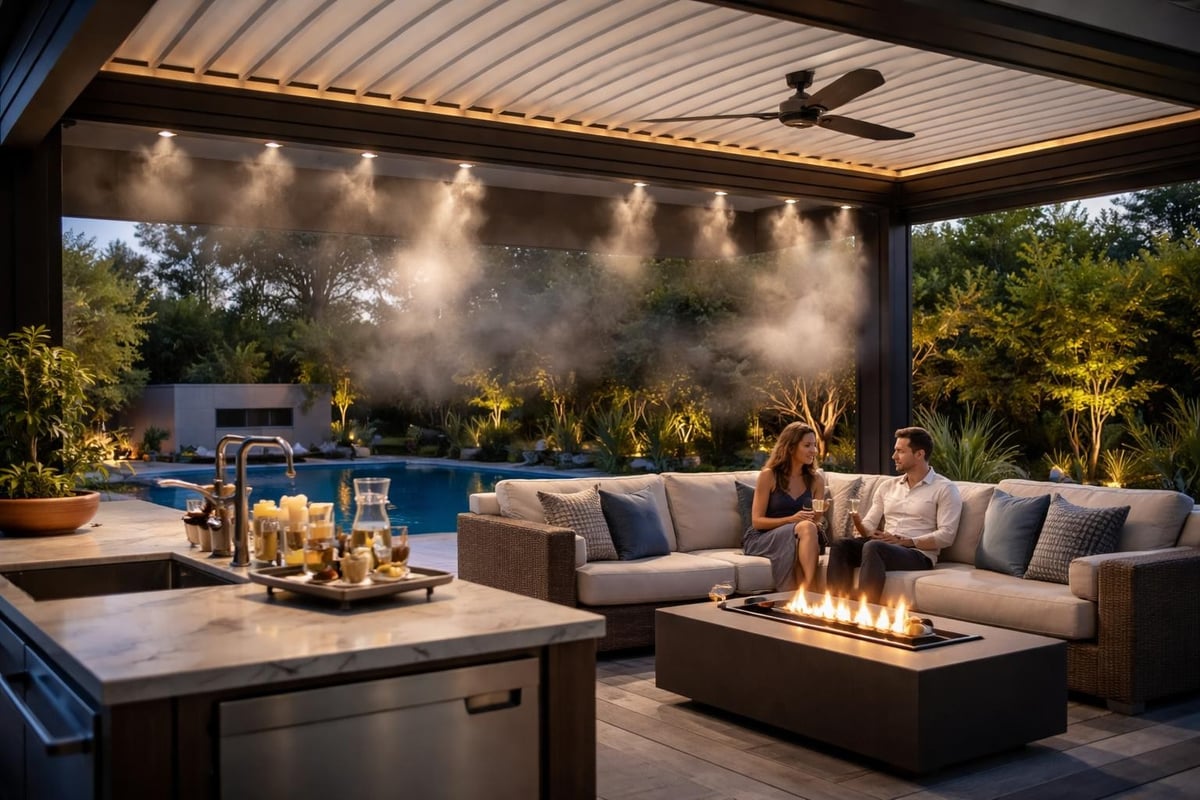
Quality patios and pergolas represent significant property investments that enhance both lifestyle quality and estate value when specified and constructed to appropriate standards.
Essential Infrastructure (40-50%): Foundations, structural framework, drainage, and base patio surfacing establishing long-term performance.
Finishing Materials (25-30%): Premium surfacing, architectural details, integrated lighting, and decorative elements defining aesthetic quality.
Integrated Systems (15-20%): Outdoor kitchens, heating, automated louvres, and audio-visual technology supporting functional objectives.
Landscaping Integration (10-15%): Planting, edging, furniture, and decorative elements completing the outdoor room environment.
Research indicates well-designed outdoor living spaces deliver 60-80% return on investment when properties are marketed, with luxury installations often exceeding 100% returns in premium postcodes where outdoor entertaining capability represents a significant purchasing criterion.
Beyond financial metrics, quality patios and pergolas dramatically enhance daily living experiences, effectively extending usable home square footage at a fraction of interior extension costs whilst maintaining garden openness and natural light.
Establishing appropriate maintenance routines preserves material condition, structural integrity, and aesthetic appeal across decades of use.
Spring: Inspect structural connections, clean drainage channels, service automated systems, apply protective treatments to timber elements, and refresh planting beds.
Summer: Monitor irrigation systems, maintain climbing plants with appropriate pruning, clean surfacing materials, and inspect electrical connections.
Autumn: Clear fallen leaves from drainage systems, apply winter protection to sensitive plants, service heating systems before winter use, and check pergola connections before winter storms.
Winter: Remove snow accumulation from pergola roofs, inspect for weather damage after storms, maintain heating systems, and plan any renovations during quiet months.
Annual inspections by qualified professionals ensure:
The complexity of integrating patios and pergolas with outdoor kitchens, utilities, and landscaping demands experienced professionals who understand both architectural principles and practical construction realities.
Seek designers and installers demonstrating:
Keathley Landscaping's expansion of covered patio services illustrates growing professional specialisation in this sector, though UK clients should prioritise firms with British climate experience and regulatory knowledge.
Premium installations follow structured design development:
This methodical approach ensures your patios and pergolas fulfil both aesthetic aspirations and functional requirements whilst avoiding costly modifications addressing overlooked details.
The most successful outdoor living spaces accommodate diverse activities throughout days and seasons, adapting to changing weather, occasions, and household needs.
Divide larger patio areas into distinct zones supporting specific activities:
Active Entertaining Zone: Position outdoor kitchens with adjacent dining for 8-12 guests, incorporating heating and overhead coverage ensuring comfort during extended evening gatherings.
Intimate Conversation Zone: Create smaller seating clusters distanced from cooking activity, perhaps incorporating outdoor fire pits as atmospheric focal points.
Quiet Retreat Zone: Establish contemplative spaces at garden edges with comfortable seating, perhaps beneath lighter pergola coverage allowing dappled sunlight and garden views.
Specify outdoor furniture balancing aesthetic refinement with practical durability:
Quality outdoor furniture represents a significant investment but transforms architectural structures into genuinely liveable rooms supporting daily use across seasons.
Properties throughout Oxfordshire and the wider Cotswolds present unique opportunities and constraints when specifying patios and pergolas, requiring sensitivity to local character whilst incorporating modern performance.
The region's distinctive honey-coloured limestone establishes an aesthetic baseline that outdoor structures should respect:
Many Cotswold properties fall within Areas of Outstanding Natural Beauty (AONB) or conservation areas where permitted development rights may be restricted. Early consultation with local planning authorities prevents specification conflicts and identifies any additional approval requirements.
Listed building consent may be required where patios and pergolas attach to protected structures or occupy locations visible from principal elevations. Professional heritage consultants can navigate these processes efficiently whilst maintaining project timelines.
Thoughtful initial specification accommodates evolving needs and emerging technologies without requiring substantial reconstruction.
Utility Infrastructure: Install conduits and service routes supporting future appliance additions, upgraded lighting systems, or technology integration without excavating completed patios.
Modular Kitchen Systems: Specify outdoor kitchen frameworks accommodating component upgrades as cooking preferences evolve or appliance technology advances.
Expandable Pergola Frameworks: Design structural systems permitting future extensions or coverage modifications responding to changed entertaining patterns.
Irrigation Systems: Incorporate automated watering infrastructure supporting enhanced planting schemes as landscaping matures.
Specify sustainable materials and systems minimising environmental impact:
These provisions enhance long-term value whilst aligning with increasingly important environmental stewardship expectations.
Exceptional patios and pergolas represent far more than structural additions; they fundamentally transform how discerning homeowners experience their properties, creating refined outdoor destinations that enhance daily living and memorable entertaining. Whether you're envisioning an intimate courtyard retreat or an expansive culinary pavilion, the expertise to realise your vision exists within reach. Cotswold Cooking Company combines deep understanding of luxury outdoor living with access to premium materials and systems, delivering fully consultative design services that transform gardens into sophisticated all-season destinations worthy of your home's architectural heritage and your lifestyle aspirations.

Leave a comment