


A pergola attached to house structures represents one of the most elegant and functional ways to extend your living space whilst creating a seamless transition between indoor and outdoor environments. Whether you're envisioning a covered dining area, a sheltered outdoor kitchen, or a sophisticated entertaining space, an attached pergola offers architectural cohesion that freestanding structures simply cannot match. For discerning homeowners across the UK, particularly in the Cotswolds and surrounding regions, the integration of a well-designed attached pergola elevates both property value and lifestyle quality.
Integrating a pergola directly onto your home's exterior wall delivers distinct advantages over standalone garden structures. The architectural continuity creates visual harmony, with the pergola becoming an extension of your property's existing design language rather than an isolated feature.
An attached pergola benefits from the stability of your home's existing structure, requiring fewer supporting posts and creating a more open, spacious feel beneath. This configuration typically proves more cost-effective than freestanding alternatives, as you're essentially building half a structure rather than a complete four-sided frame.
The connection to your house also facilitates practical considerations such as:
Weather protection becomes significantly more effective when one side of your pergola connects to the house wall. This configuration naturally shields the space from wind and rain coming from that direction, whilst the overhead structure provides dappled shade and partial cover.
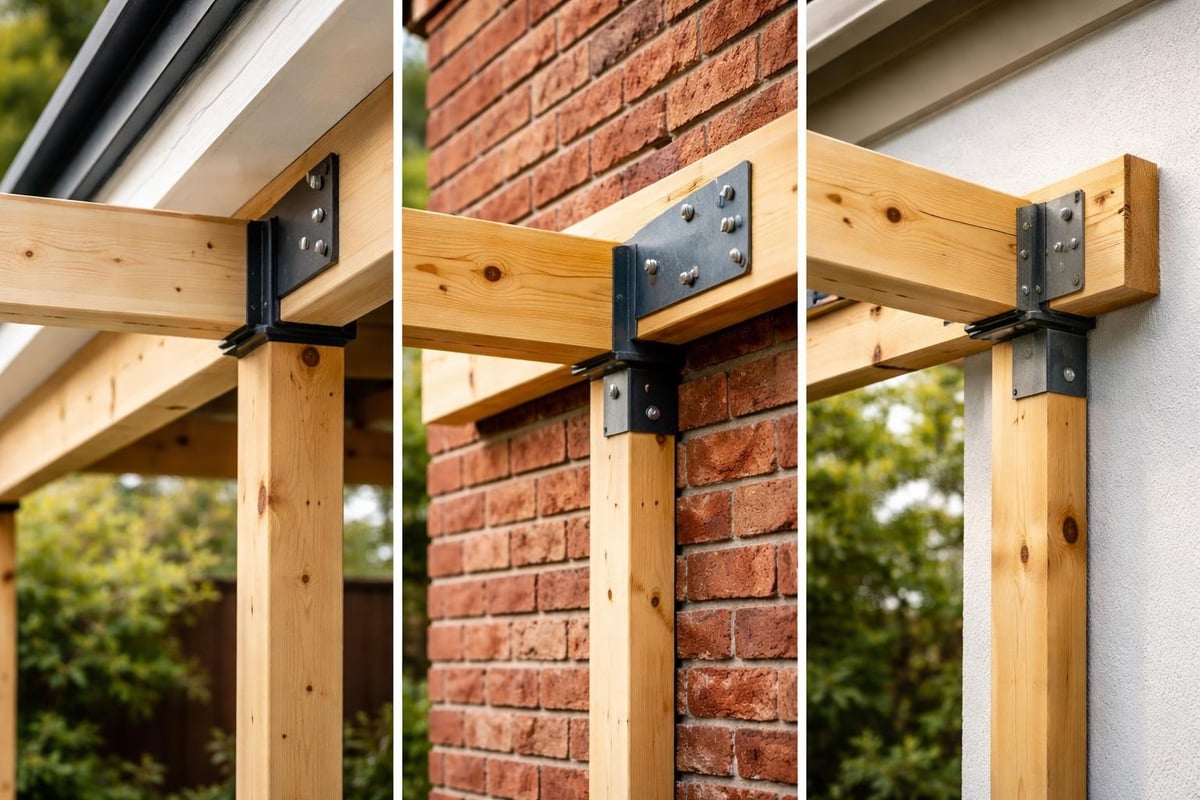
When planning a pergola attached to house structures, architectural harmony should guide every decision. The pergola's style, materials, and proportions must complement your home's existing character.
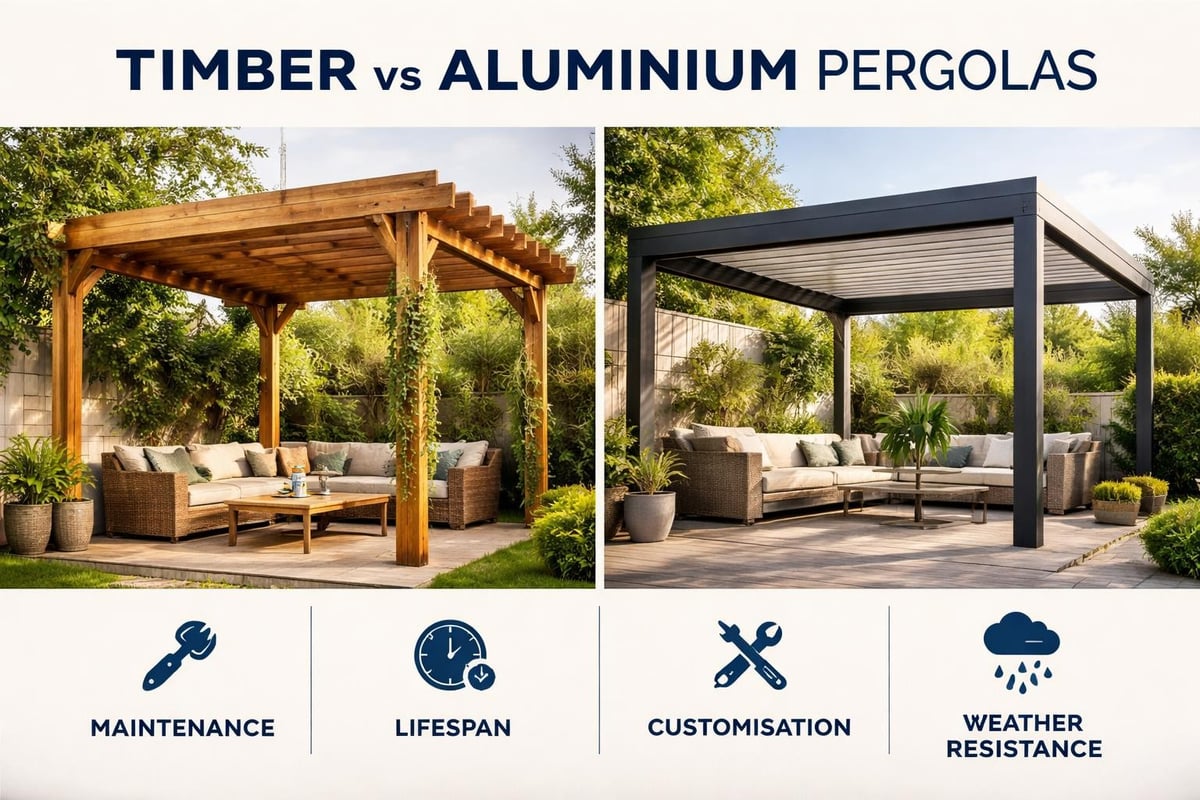
For traditional Cotswold stone properties, oak timber pergolas with substantial beams echo the vernacular architecture whilst providing longevity and natural beauty. Modern homes benefit from sleek aluminium structures with clean lines and integrated louvred roofing systems that offer adjustable shade and weather protection.
| Design Element | Traditional Homes | Contemporary Homes | Universal Considerations |
|---|---|---|---|
| Material | Oak, cedar, pressure-treated softwood | Powder-coated aluminium, steel | Weather resistance, maintenance requirements |
| Colour Palette | Natural wood tones, sage green, heritage colours | Anthracite grey, white, black, bronze | Matching or complementing existing exterior |
| Roof Style | Open rafters, pitched to match house | Flat louvres, retractable canopy | Drainage away from house wall |
| Proportions | Substantial beams (200mm+), generous spacing | Slimline profiles, minimal visual weight | Scale appropriate to house size |
Understanding the legal requirements for a pergola attached to house structures proves essential before commencing any project. In the UK, planning permission considerations vary based on several factors including size, height, and proximity to boundaries.
Most attached pergolas fall under permitted development rights, allowing construction without formal planning permission. However, specific circumstances trigger the need for approval:
Building regulations typically apply when the attached pergola becomes substantially enclosed or incorporates fixed roofing that creates habitable space. Permit requirements should always be verified with your local planning authority before proceeding.
The integrity of the attachment point demands careful evaluation. Your house wall must possess sufficient strength to support the pergola's weight and withstand additional loading from wind, snow, and any integrated features such as outdoor cooking equipment.
Professional assessment becomes particularly important for:
A structural engineer can specify appropriate fixing methods and load distribution requirements, ensuring your anchoring approach meets Building Regulations standards whilst protecting your home's fabric.
The materials you select for your pergola attached to house structures fundamentally impact longevity, maintenance requirements, and aesthetic appeal. Each option presents distinct characteristics suited to different architectural styles and practical needs.
Natural wood remains the traditional choice, offering warmth, character, and versatility. Oak stands as the premium option for UK climates, developing a beautiful silver-grey patina whilst resisting decay for decades. Cedar provides natural rot resistance with lighter weight and distinctive aromatic properties.
Pressure-treated softwood offers budget-friendly durability, though it requires more frequent maintenance and lacks the structural integrity of hardwoods for larger spans. When selecting timber for an attached pergola, ensure all fixings use stainless steel or galvanised hardware to prevent rust staining and premature failure.
Modern aluminium pergolas deliver exceptional weather resistance with minimal maintenance demands. Powder-coated finishes provide decades of protection whilst offering extensive colour options to complement any architectural style.
Premium systems from manufacturers like Renson incorporate bioclimatic louvre roofing, integrated LED lighting, and automated rain sensors. These luxury outdoor living solutions transform a simple pergola into a year-round outdoor room with climate control rivalling interior spaces.
Proper installation of a pergola attached to house structures demands meticulous attention to waterproofing, load distribution, and structural integrity. The attachment method varies based on your wall construction and the pergola system selected.
The ledger board forms the critical connection between your pergola and house wall, supporting the full weight of the structure on that side. This horizontal beam must be securely fastened and properly flashed to prevent water infiltration.
Installation steps include:
For brick or stone walls, detailed attachment guidance recommends drilling into mortar joints rather than masonry faces where possible, reducing the risk of brick damage whilst achieving secure anchorage.
The external posts supporting the front of your attached pergola require substantial foundations to prevent settlement and maintain level. Concrete footings should extend below frost depth (minimum 450mm in the UK) with post bases elevated above ground level to prevent moisture wicking.
Spacing between posts typically ranges from 2.4 to 4 metres, with closer spacing required for heavier roof systems or integrated features. For outdoor kitchen applications, additional structural support may be necessary to accommodate equipment weight and usage loading.
A pergola attached to house structures creates the ideal framework for luxury outdoor cooking spaces. The proximity to interior kitchens simplifies service runs whilst the overhead structure provides essential weather protection for equipment and diners.
When planning an outdoor kitchen beneath your attached pergola, spatial planning must accommodate workflow, equipment clearances, and social interaction. The classic work triangle principle applies outdoors just as it does inside, with preparation, cooking, and serving zones positioned for efficient movement.
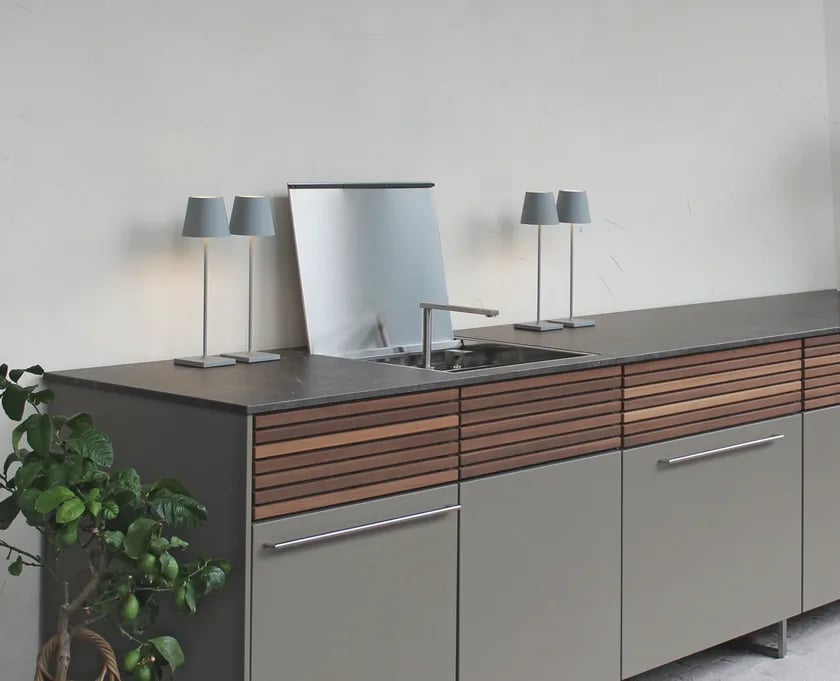
Modern modular outdoor kitchen systems like the Cubic C1 Style Outdoor Kitchen offer weatherproof construction with integrated BBQs, storage, and prep areas that complement attached pergola environments. These premium units feature sleek minimalist aesthetics that harmonise with contemporary pergola designs whilst providing professional-grade cooking capabilities.
Essential elements include:
The attached pergola structure facilitates these integrations whilst maintaining aesthetic cohesion. Services can be discreetly routed along the house wall or beneath decking, with electrical installations meeting outdoor IP rating requirements.
Transforming your attached pergola into a year-round outdoor cooking lifestyle space requires considered climate control. Louvred roofing systems provide adjustable protection from sun and rain, with motorised operation allowing instant response to changing conditions.
Glass or polycarbonate side screens convert open pergolas into semi-enclosed rooms, blocking wind whilst maintaining views. Infrared heating panels mounted to pergola beams deliver targeted warmth without consuming space, enabling comfortable outdoor dining even during cooler months.
A pergola attached to house structures offers numerous opportunities for personalisation and aesthetic refinement. These finishing details transform functional architecture into distinctive outdoor living environments.
Strategic planting softens the pergola's architectural lines whilst providing natural shade and seasonal interest. For UK climates, consider:
Training systems using stainless steel cables or timber trellis panels should be incorporated during construction rather than retrofitted, ensuring structural adequacy and visual integration.
Carefully planned illumination extends the usability of your attached pergola whilst creating ambience for evening entertaining. Layered lighting approaches combine:
| Lighting Type | Purpose | Typical Placement | Control Options |
|---|---|---|---|
| Task Lighting | Food preparation, cooking | Above work surfaces, directional spotlights | Switched circuits |
| Ambient Lighting | General illumination, safety | Pergola beam undersides, post capitals | Dimmable zones |
| Accent Lighting | Highlighting features, planting | Low-level uplighters, feature spots | Separate circuits |
| Decorative Lighting | Atmosphere, visual interest | String lights, lanterns, LED strips | Dimmer or smart control |
LED technology offers energy efficiency with minimal heat generation, important considerations for timber pergolas and outdoor kitchen environments. Integration during construction allows concealed wiring and professional finishes that enhance rather than compromise the structure's appearance.
Ensuring your pergola attached to house structures remains structurally sound and visually appealing requires regular maintenance tailored to the materials and environment.
Natural wood pergolas demand periodic inspection and treatment to resist the UK's challenging weather. Annual checks should assess:
Premium hardwoods like oak require minimal treatment, often left to weather naturally. Softwoods benefit from biennial application of quality wood preservatives or exterior stains to maintain protection and appearance.
Powder-coated aluminium pergolas require significantly less maintenance whilst delivering superior longevity. Routine care involves:
Professional servicing of automated systems maintains optimal performance, with annual inspections recommended for motorised louvres, integrated lighting, and climate control features.
Budgeting for a pergola attached to house structures involves evaluating both immediate construction costs and long-term value enhancement. UK market prices in 2026 vary substantially based on materials, size, and specification.
Basic timber pergolas attached to house walls start from £2,500 to £4,000 for DIY-friendly kits spanning 3m x 3m. Professional installation adds £1,500 to £3,000 depending on site complexity and fixing requirements.
Mid-range options incorporating premium hardwoods or powder-coated aluminium with standard features typically range from £8,000 to £15,000 installed for a 4m x 4m structure. These systems offer enhanced durability and aesthetic refinement suitable for most residential applications.
Premium bioclimatic pergolas with louvred roofing, integrated lighting, heating, and automation occupy the £20,000 to £40,000+ bracket. These investment-grade installations deliver year-round functionality and architectural distinction that significantly enhances property value.
Well-executed attached pergolas typically return 60% to 80% of their cost in added property value, with premium installations in desirable locations potentially recovering full investment. The outdoor living trend continues strengthening across the UK, with buyers increasingly prioritising homes offering sophisticated outdoor entertaining capabilities.
Beyond monetary value, the lifestyle enhancement proves difficult to quantify. Extended useable space, improved entertaining capacity, and the creation of distinct outdoor rooms fundamentally transform how homeowners enjoy their properties throughout the year.
Whilst competent DIY enthusiasts can successfully construct basic timber pergolas, professional installation ensures structural integrity, weatherproofing, and aesthetic refinement that DIY approaches rarely match.
Expert installers bring invaluable knowledge of building regulations, structural requirements, and site-specific challenges. Their experience navigating planning and installation complexities prevents costly mistakes whilst ensuring compliance with all relevant standards.
Professional services typically include:
For projects incorporating outdoor kitchens, integrated services covering both pergola and culinary equipment installation deliver cohesive results. Specialists like Cotswold Cooking Company offer end-to-end consultation from design through to completion, ensuring every element works harmoniously.
When selecting installation professionals for your pergola attached to house project, verify:
Requesting detailed quotations from multiple contractors allows meaningful comparison beyond headline prices, revealing differences in materials, methodologies, and included services that significantly impact final outcomes.
Understanding potential complications before commencing your pergola attached to house project enables proactive planning and risk mitigation.
One of the most critical considerations involves managing water runoff. Attached pergolas must not direct water against the house wall or create ponding that accelerates material degradation.
Solutions include:
Particular attention proves necessary where the pergola joins the house wall. Properly installed flashing creates a weathertight seal whilst allowing any moisture to escape rather than tracking into the building fabric.
House walls rarely present blank canvases. Windows, vents, exterior lighting, and utility meters require accommodation within the pergola design.
Careful measurement and planning prevent conflicts, with adjustments potentially including:
Professional design consultation identifies these challenges early, developing solutions that maintain functionality without compromising aesthetics.
Creating a sophisticated pergola attached to house structures delivers transformational outdoor living potential whilst enhancing your property's architectural character and value. From material selection through to integration with luxury outdoor kitchens, every decision contributes to the cohesive, functional space you'll enjoy for decades. Cotswold Cooking Company brings comprehensive expertise in pergola design, outdoor kitchen specification, and complete installation services, guiding discerning homeowners through every stage of creating their ideal outdoor culinary destination across the Cotswolds and throughout the UK.

Leave a comment