


A wooden outdoor kitchen represents the perfect marriage of natural aesthetics and culinary functionality, transforming gardens and terraces into sophisticated cooking destinations. Wood brings warmth, character, and timeless appeal to outdoor spaces, creating environments that feel both refined and welcoming. For discerning homeowners seeking to elevate their outdoor entertaining capabilities, understanding how to specify, design, and maintain wood elements within a luxury outdoor kitchen is essential to achieving lasting beauty and performance.
Wood has remained a cornerstone material in high-end outdoor kitchen design for compelling reasons. Its natural grain patterns, varied tonal qualities, and tactile warmth create visual interest that synthetic materials simply cannot replicate. When properly selected and treated, timber components bring an organic elegance that complements both traditional Cotswold properties and contemporary architectural styles.
The versatility of wood allows designers to achieve remarkably different aesthetics. Light oak or ash creates Scandinavian-inspired minimalism, whilst rich teak or iroko evokes colonial sophistication. Reclaimed timber introduces heritage character, perfect for properties where historical continuity matters. Homes & Gardens explores wooden kitchen ideas that demonstrate wood's ability to pair beautifully with materials like marble, concrete, and stainless steel.
Not all timber species perform equally in British weather conditions. Hardwoods with natural oil content resist moisture penetration and dimensional movement far better than softwoods. Teak remains the gold standard for outdoor applications, offering exceptional weather resistance and requiring minimal maintenance. Iroko, often called African teak, provides similar durability at a more accessible price point.
European oak, when properly treated, delivers traditional aesthetic appeal whilst withstanding the elements. Cedar contains natural preservatives that deter insect damage and resist rot. For budget-conscious projects, pressure-treated softwoods can perform adequately when regularly maintained, though they lack the longevity and refinement of premium hardwoods.
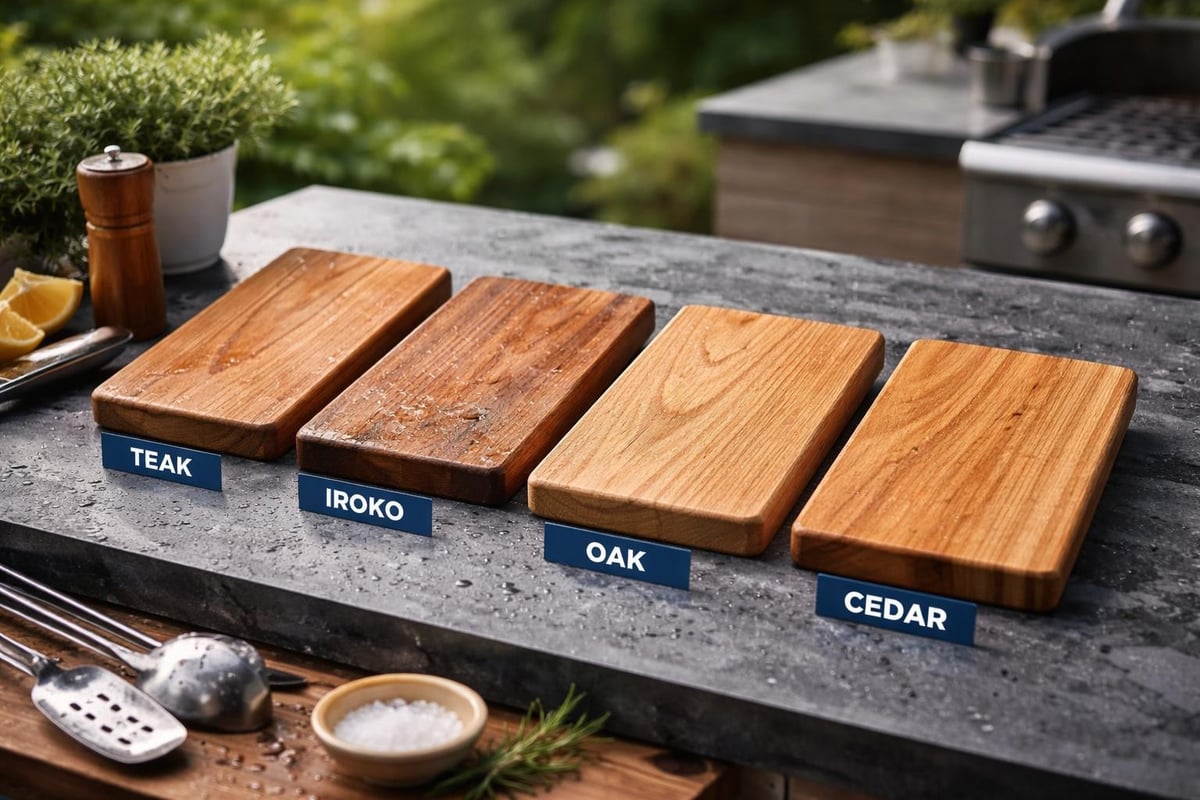
| Timber Species | Weather Resistance | Maintenance Level | Aesthetic Character | Approximate Lifespan |
|---|---|---|---|---|
| Teak | Excellent | Low | Rich golden-brown | 25+ years |
| Iroko | Excellent | Low to Medium | Warm honey tones | 20+ years |
| European Oak | Good | Medium | Traditional grain | 15-20 years |
| Cedar | Good | Medium | Rustic red-brown | 15-18 years |
| Treated Softwood | Fair | High | Variable | 10-15 years |
A successful wooden outdoor kitchen begins with thoughtful spatial planning that considers cooking workflows, guest circulation, and visual sightlines. Professional design consultancy ensures that timber elements enhance rather than compromise functionality. The kitchen should form a natural extension of indoor living spaces whilst maintaining its own distinct character.
Consider the relationship between preparation zones, cooking stations, and serving areas. Wood naturally defines these spaces through cabinetry, countertop supports, and overhead structures. Pergolas constructed from substantial timber beams create architectural definition whilst providing shade and weather protection. LivingHours showcases outdoor kitchen designs that demonstrate how wooden structures frame cooking zones effectively.
The juxtaposition of natural wood and precision-engineered cooking equipment creates compelling visual drama. Stainless steel grills, professional-grade burners, and artisan pizza ovens gain additional presence when framed by warm timber cabinetry. This contrast between organic and industrial elements defines contemporary luxury outdoor kitchen design.
When specifying a wooden outdoor kitchen, ensure adequate clearance between timber surfaces and heat-generating appliances. Non-combustible materials like granite, concrete, or stainless steel should separate wood from direct flame exposure. Ventilation requirements must be addressed to prevent heat and smoke damage to overhead timber structures.
The Cubic C1 Style Outdoor Kitchen exemplifies how modular configurations allow seamless integration of cooking equipment within weather-resistant frameworks. Its contemporary lines complement timber pergolas and wooden accent pieces whilst delivering the durability required for year-round outdoor use.
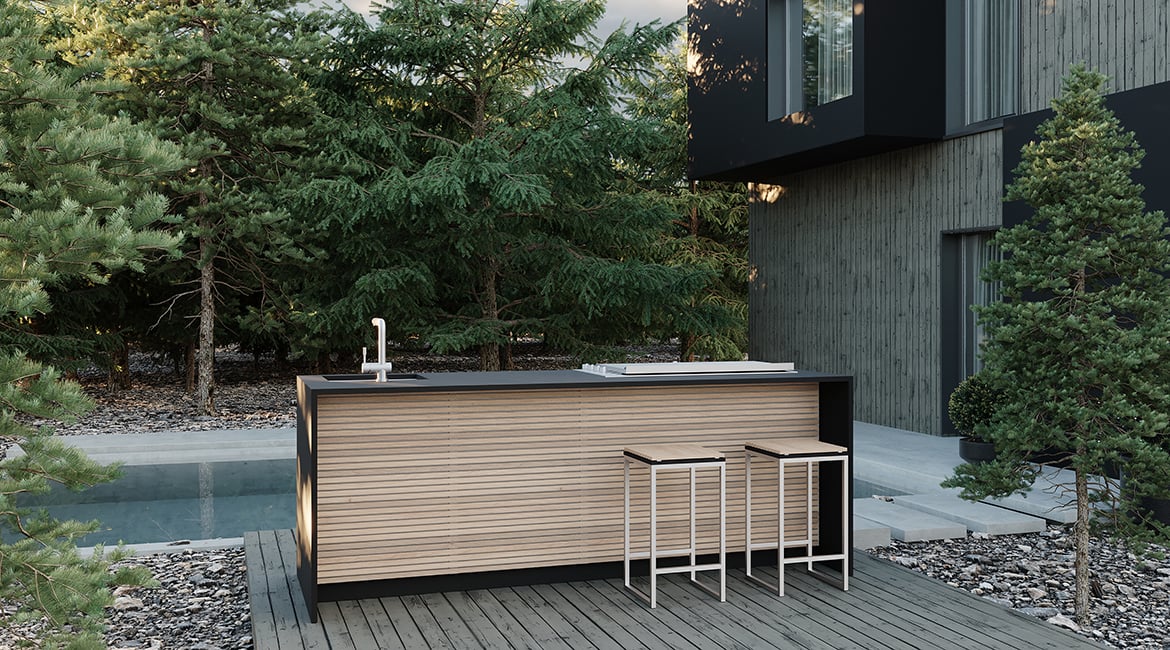
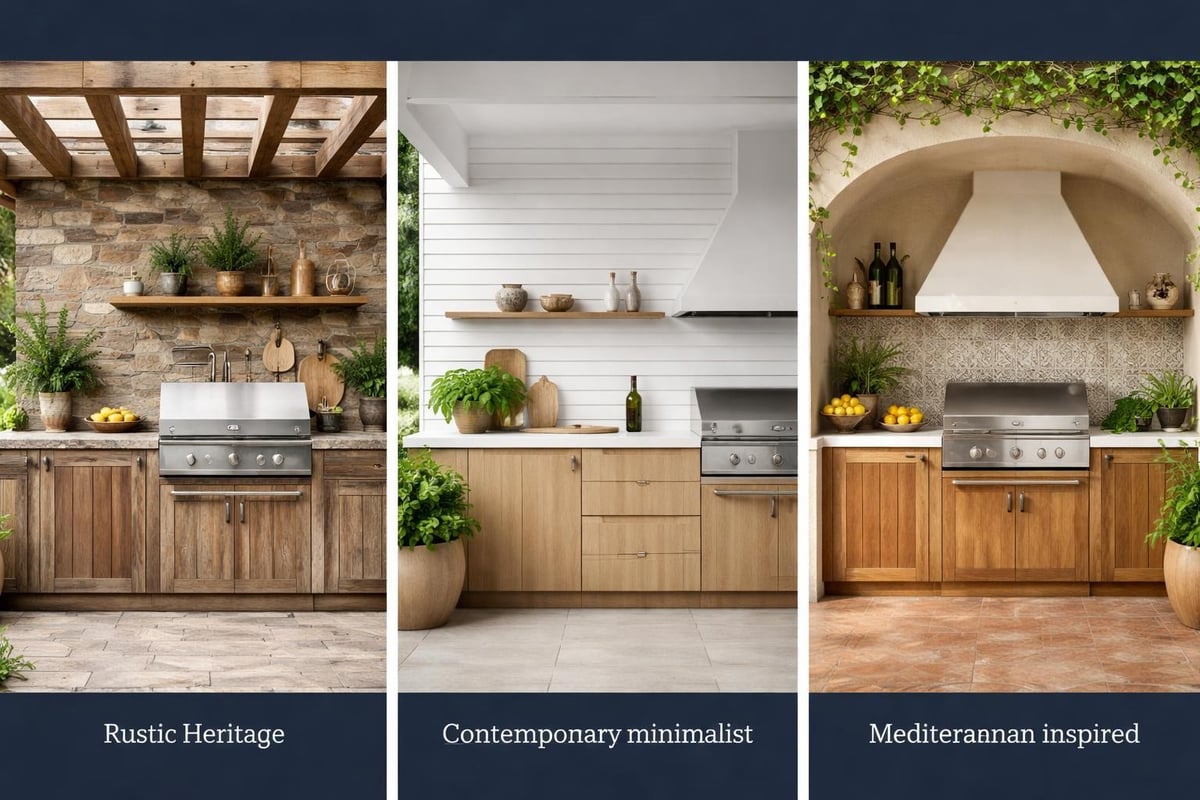
Wooden outdoor kitchens adapt beautifully to diverse design philosophies. Understanding these aesthetic directions helps homeowners articulate their vision during consultative design sessions.
Reclaimed timber, visible joinery, and chunky proportions characterise the rustic approach. Weathered oak beams, vintage hardware, and natural stone countertops create spaces that feel established and timeless. This style suits traditional Cotswold properties where historical continuity enhances architectural harmony.
Distressed finishes and hand-hewn details add character. Exposed mortise-and-tenon joints celebrate traditional craftsmanship. Open shelving displays artisan cookware and serving pieces, reinforcing the organic, lived-in atmosphere.
Clean lines, concealed fixings, and monochromatic palettes define modern wooden outdoor kitchen design. Ipe or teak with minimal visible grain creates sleek, sophisticated surfaces. Integrated lighting, push-to-open cabinetry, and handleless doors maintain visual simplicity.
This approach works exceptionally well when paired with architectural pergolas and frameless glass screens. The wood provides warmth within an otherwise austere material palette of concrete, steel, and glass. Archeworks presents outdoor kitchen ideas that blend natural materials with modern design principles effectively.
Honey-toned timber, terracotta accents, and Mediterranean tiles create inviting, sun-drenched spaces. Open framework pergolas draped with climbing vines provide dappled shade. Wood-fired pizza ovens become focal points, surrounded by timber prep surfaces and rustic cabinetry.
This style emphasises outdoor living and al fresco dining. Extended counters accommodate casual dining, whilst integrated wine storage and beverage stations support extended entertaining sessions. The aesthetic celebrates outdoor cooking traditions whilst incorporating modern convenience.
British weather presents particular challenges for outdoor kitchen longevity. Rain, humidity fluctuations, and occasional frost require robust protective strategies. Simply applying exterior varnish to untreated timber proves inadequate for premium installations.
Professional-grade wood treatments penetrate deeply, protecting from within rather than merely coating surfaces. Microporous finishes allow timber to breathe whilst repelling water, preventing the moisture entrapment that causes rot and dimensional instability.
Oil-based treatments enhance natural grain whilst providing protection. They require reapplication every 12-24 months but remain easy to maintain without professional intervention. For darker finishes, UV-resistant stains prevent greying and colour fade whilst offering extended protection intervals.
Clear marine-grade varnishes deliver maximum protection for frequently exposed surfaces. Though more demanding to apply initially, they extend maintenance intervals to 2-3 years. Whatever finish you select, ensure compatibility with your chosen timber species and anticipated exposure levels.
Pergolas and roof structures dramatically extend wooden component lifespan by limiting direct weather exposure. Louvred roof systems allow airflow whilst deflecting rain. Retractable canopies provide flexibility, offering protection when needed and openness during pleasant weather.
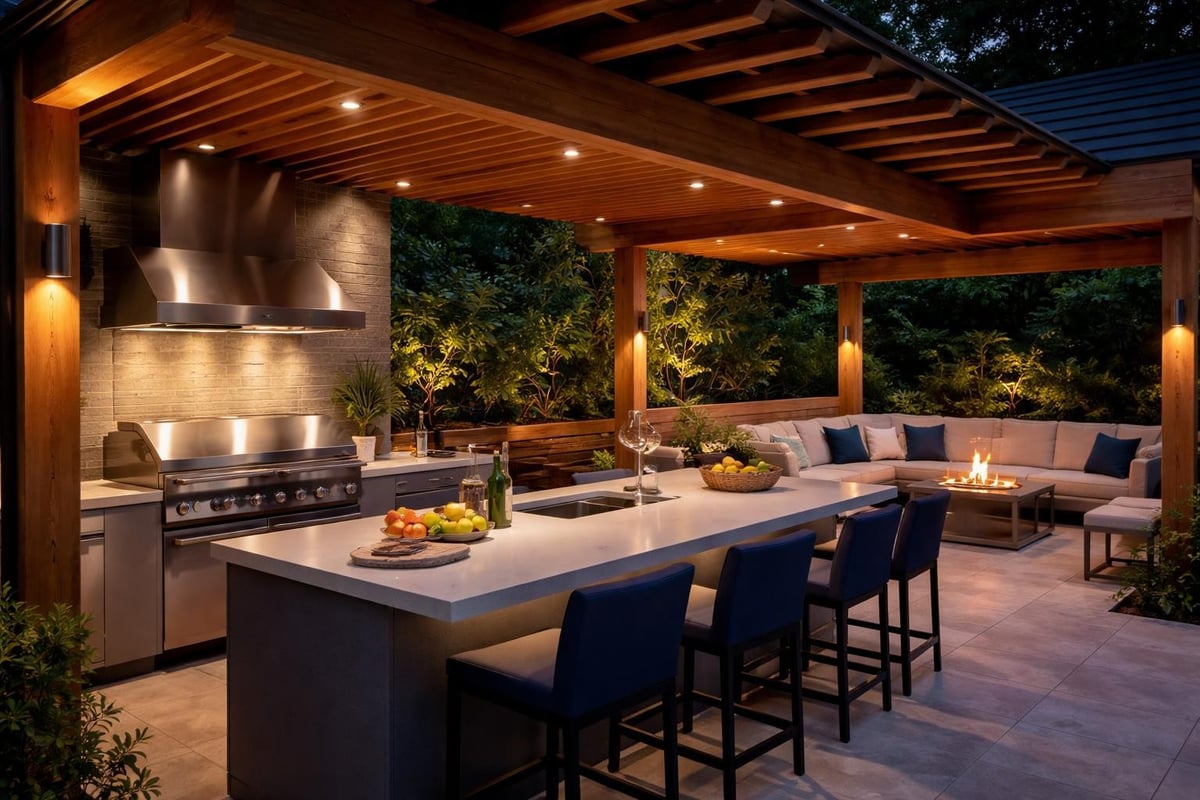
Consider integrating heating elements and lighting within overhead structures. Infrared heaters extend usability into cooler months, whilst integrated LED strips create ambience for evening entertaining. These elements transform the wooden outdoor kitchen into a genuine year-round destination rather than seasonal feature.
Even premium timber requires regular maintenance to preserve appearance and structural integrity. Establishing systematic care routines prevents minor issues from developing into costly repairs. TimberFlare provides cleaning and maintenance guidance specific to outdoor wooden kitchen components.
British seasonal extremes require specific preparation. Before winter, thoroughly clean all timber surfaces, repair any finish damage, and apply additional protective coatings to vulnerable areas. C&W Appliance Service highlights the importance of covering appliances and protecting wooden components during harsh weather.
Custom-fitted covers protect cabinetry and countertops during extended periods of disuse. Breathable materials prevent condensation whilst blocking rain and debris. Remove covers periodically during winter to allow air circulation and prevent moisture accumulation.
Spring preparation involves comprehensive cleaning, finish restoration, and structural checks. Address any winter damage promptly before regular use resumes. This proactive approach maintains the refined appearance expected in luxury outdoor spaces.
Beyond aesthetic appeal, a wooden outdoor kitchen must deliver exceptional functionality. Thoughtful zoning creates efficient workflows whilst timber cabinetry provides ample storage for cooking equipment, serving ware, and entertaining essentials.
Apply classic kitchen planning principles to outdoor spaces. Position preparation, cooking, and cleaning zones in triangular configuration to minimise movement and maximise efficiency. Timber cabinetry naturally defines these zones whilst providing the storage each requires.
Preparation zones need substantial counter space, integrated bins, and utensil storage. Hardwood butcher-block surfaces provide durable cutting areas that develop attractive patina over time. Drawers with custom dividers organise knives, tools, and small equipment accessibly.
Cooking zones integrate grills, burners, and ovens with surrounding heat-resistant surfaces. Wood elements frame these high-performance appliances rather than directly adjoining them. Side tables and equipment storage keep essentials within arm's reach.
Cleaning and service zones incorporate sinks, dishwashers, and waste management. Waterproof cabinetry below sinks prevents moisture damage. Timber-fronted appliance panels maintain aesthetic consistency whilst concealing functional equipment.
Luxury outdoor kitchens benefit from purpose-designed storage solutions. Wine refrigeration units, spice pullouts, and vertical tray dividers demonstrate the same organisational sophistication expected indoors. Open shelving crafted from matching timber displays artisan cookware and creates visual interest.
Consider storage for seasonal equipment, entertaining accessories, and outdoor dining essentials. Deep drawers accommodate serving platters, whilst tall cabinets store rarely-used equipment. Integrated lighting within cabinetry enhances evening usability whilst showcasing displayed items beautifully.
| Storage Type | Typical Dimensions | Ideal Contents | Design Considerations |
|---|---|---|---|
| Base Cabinets | 600-900mm wide, 850mm high | Heavy equipment, bulk storage | Full-extension runners, soft-close mechanisms |
| Drawer Units | 400-600mm wide, 150-250mm high | Utensils, tools, small items | Custom dividers, weatherproof liners |
| Tall Cabinets | 600mm wide, 1800-2000mm high | Vertical storage, appliances | Adjustable shelving, full-height access |
| Open Shelving | 400-1200mm wide, 300-400mm deep | Display items, frequently-used equipment | Weather-resistant mounting, adequate depth |
Properly designed lighting transforms a wooden outdoor kitchen from daytime cooking space into evening entertainment destination. Layered lighting approaches combine task illumination, ambient glow, and accent highlighting to create sophisticated atmospheres.
Preparation and cooking zones require bright, shadow-free illumination. LED strips mounted beneath overhead cabinetry or pergola beams provide direct downlighting without glare. Adjustable spotlights allow focused illumination on specific work surfaces or cooking equipment.
Select fixtures with appropriate ingress protection ratings for outdoor exposure. Warm colour temperatures (2700-3000K) complement timber tones whilst providing accurate colour rendering for food preparation. Dimming capability allows adjustment based on task requirements and desired ambience.
Indirect lighting creates welcoming atmosphere for entertaining. LED strips integrated within timber structures provide gentle uplighting that highlights architectural features whilst creating soft background illumination. Pendant fixtures above dining areas define social zones whilst contributing task lighting for serving and dining.
Accent lighting draws attention to focal features. Illuminate the pizza oven facade, highlight interesting timber grain patterns, or backlight translucent panels for dramatic effect. Programmable systems allow scene-setting for different occasions, from bright working light to intimate dining ambience.
The beauty of a wooden outdoor kitchen lies partly in opportunities for personalisation. Bespoke cabinetry, custom-milled timber pieces, and unique architectural details create spaces that reflect individual taste and complement specific properties.
Consider incorporating hand-carved details, custom hardware, or unique joinery techniques that celebrate traditional craftsmanship. These elements distinguish luxury installations from standard configurations. Local artisans can create bespoke pieces that reference regional heritage or architectural motifs present in the main residence.
Inlaid designs using contrasting timber species add visual interest to cabinet doors or countertop edges. Curved elements, whether gentle arcs or dramatic sweeps, soften the rectilinear geometry typical of kitchen layouts. These organic forms complement wood's natural character beautifully.
Contemporary wooden outdoor kitchens seamlessly incorporate technology without compromising aesthetic purity. Weatherproof audio systems, integrated refrigeration, and smart lighting controls enhance functionality discreetly. Charging stations for devices and connectivity for outdoor televisions support modern entertaining expectations.
Automated pergola systems, motorised screens, and app-controlled heating allow environmental adjustment without leaving the cooking zone. These technologies integrate invisibly within timber structures, maintaining the natural material focus whilst delivering sophisticated performance.
Discerning clients increasingly prioritise environmental responsibility alongside luxury and performance. A wooden outdoor kitchen can exemplify sustainable design when materials, treatments, and construction methods are thoughtfully selected.
Specify FSC-certified or PEFC-certified timber from sustainably managed forests. These certifications ensure responsible harvesting practices that maintain forest ecosystems. Reclaimed timber offers another sustainable option, giving historic materials new life whilst preventing unnecessary virgin timber consumption.
Local sourcing reduces transportation impacts whilst supporting regional economies. British-grown oak and other native species offer excellent performance characteristics whilst minimising environmental footprint. Homestyler offers guidance on creating wooden outdoor kitchens with various sustainable design approaches.
The most sustainable outdoor kitchen is one that lasts decades rather than requiring replacement. Premium timber species, professional installation, and diligent maintenance create enduring value. This longevity reduces lifecycle environmental impact dramatically compared to cheaper alternatives requiring frequent replacement.
Design for adaptability allows configuration changes without complete reconstruction. Modular cabinetry systems accommodate evolving needs, whilst quality finishes permit refinishing rather than replacement. This forward-thinking approach aligns luxury with environmental responsibility.
British weather patterns and regional architectural traditions influence optimal wooden outdoor kitchen design. Understanding these geographical factors ensures installations perform beautifully whilst complementing their surroundings.
Properties in the Cotswolds and similar heritage regions benefit from designs that acknowledge local building traditions. Honey-coloured oak complements Cotswold stone beautifully, creating harmonious transitions between historic architecture and contemporary outdoor living spaces. Timber sections and proportions that reference traditional agricultural buildings ground modern installations in regional context.
Consider prevailing wind directions when orienting cooking zones and positioning screening elements. Southwestern exposure maximises afternoon and evening sun whilst timber pergolas provide necessary shade during peak summer months. Book a consultation to discuss site-specific design considerations for your property.
London properties and modern architectural contexts call for sleeker, more minimalist approaches. Dark-stained timber or naturally dark species like ipe create sophisticated backdrops for stainless steel equipment and contemporary entertaining. Vertical elements and space-efficient layouts maximise functionality within constrained urban gardens.
Noise considerations and privacy requirements influence design decisions. Solid timber screens provide visual separation whilst timber-clad walls reduce sound transmission. Integrated planters soften hard architectural lines whilst providing sensory interest through seasonal planting schemes.
A properly specified wooden outdoor kitchen represents significant investment that enhances property value whilst transforming lifestyle. Understanding cost drivers and value factors helps clients make informed decisions during the design process.
Timber selection significantly impacts overall investment. Premium hardwoods command higher initial costs but deliver superior longevity and reduced maintenance expenses. Professional design consultation, whilst adding upfront cost, prevents expensive mistakes and ensures optimal functionality.
High-performance cooking equipment from respected manufacturers like those featured in our curated brand collection justifies investment through reliability and culinary performance. Integrated appliances and custom cabinetry cost more than freestanding alternatives but create the refined, cohesive aesthetic expected in luxury installations.
Estate agents confirm that exceptional outdoor living spaces increase property values, particularly in premium markets. A beautifully executed wooden outdoor kitchen becomes a key selling feature, distinguishing properties in competitive markets. Beyond monetary value, the lifestyle enhancement and entertaining capability justify investment for long-term homeowners.
Professional delivery and installation services ensure proper execution, protecting your investment through expert craftsmanship. Comprehensive warranties on materials and equipment provide additional security, whilst ongoing maintenance support preserves appearance and performance over decades.
Creating an exceptional wooden outdoor kitchen requires expertise spanning architecture, materials science, culinary equipment, and outdoor living design. Professional consultancy transforms aspirations into reality through systematic design development and expert specification.
The consultative journey begins with understanding your property, lifestyle, and entertaining patterns. Site analysis considers orientation, existing architecture, and environmental factors. Discussion of aesthetic preferences, functional requirements, and budget parameters establishes project scope and priorities.
Detailed design development includes space planning, material selection, equipment specification, and finishes coordination. Three-dimensional visualisations help clients understand proposed designs before construction begins. Technical drawings ensure builders and installers execute designs precisely according to specification.
Equipment selection benefits from expert guidance through the extensive range of outdoor cooking options available. Understanding performance characteristics, installation requirements, and ongoing maintenance needs ensures optimal choices for your specific situation.
A wooden outdoor kitchen combines natural beauty with culinary performance, creating spaces that enhance both property value and quality of life. Through thoughtful material selection, expert design, and proper maintenance, timber elements deliver decades of refined outdoor entertaining capability. Whether your vision embraces rustic heritage, contemporary minimalism, or Mediterranean warmth, professional guidance ensures exceptional results. Cotswold Cooking Company provides comprehensive design consultancy, premium equipment curation, and expert installation services, transforming outdoor spaces into sophisticated year-round culinary destinations that celebrate the finest in British craftsmanship and international design excellence.

Leave a comment