


The alfresco outdoor kitchen has evolved from a simple barbecue station into a sophisticated culinary environment that rivals indoor counterparts in functionality, aesthetics, and performance. For discerning homeowners across the UK, particularly in regions like the Cotswolds and Oxfordshire, these outdoor cooking spaces represent an investment in lifestyle, property value, and year-round entertaining capability. As we move through 2026, the demand for expertly designed outdoor kitchens continues to surge, driven by our collective desire for seamless indoor-outdoor living and the elevated dining experiences that only purpose-built outdoor spaces can deliver.
An alfresco outdoor kitchen transcends the traditional patio setup by creating a fully integrated cooking environment that functions independently of the main house. This dedicated space combines professional-grade appliances, weather-resistant cabinetry, ample preparation surfaces, and thoughtfully planned workflow zones.
The term "alfresco" itself derives from Italian, meaning "in the fresh air", yet modern interpretations extend far beyond open-air cooking. Today's luxury installations incorporate architectural pergolas, retractable roofing systems, and strategic shelter elements that enable use throughout the British seasons.
Every successful alfresco outdoor kitchen installation requires careful consideration of several fundamental elements:
The spatial relationship between these components determines both the functionality and the visual harmony of the finished space. Professional design consultancy ensures optimal workflow whilst maintaining the aesthetic refinement expected in luxury outdoor living environments.
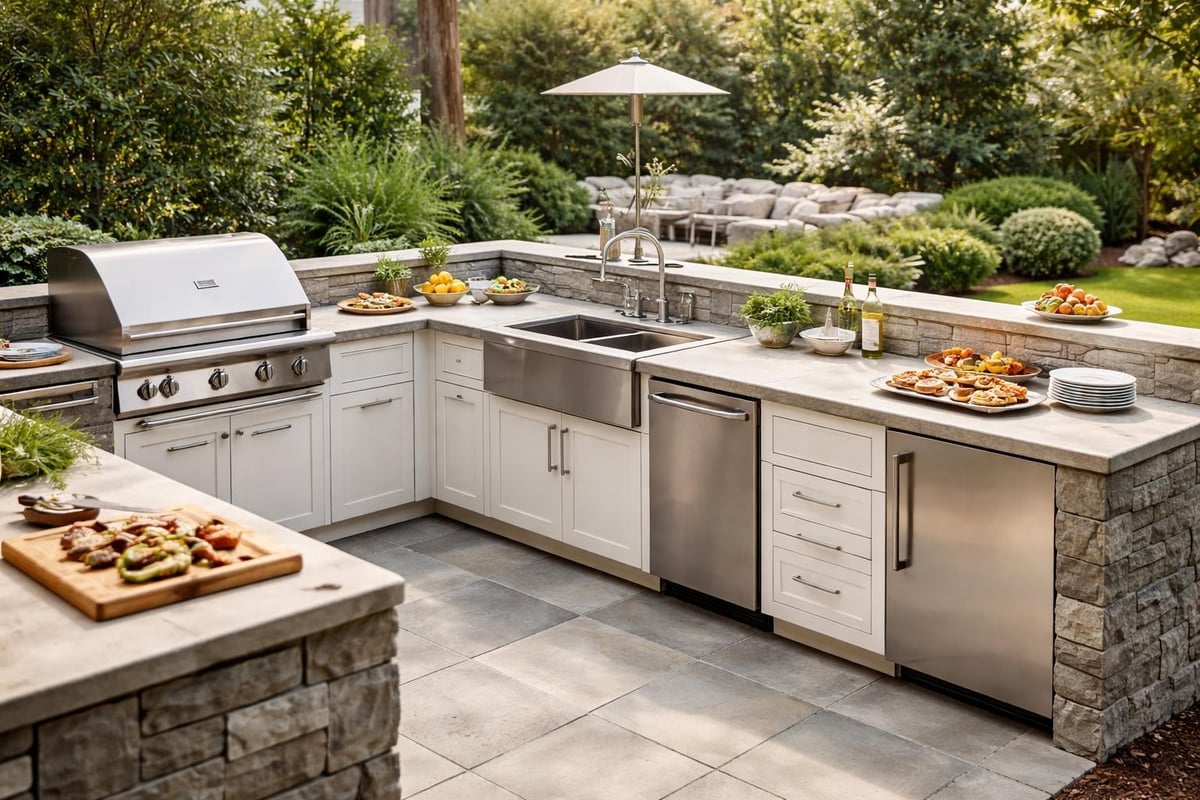
British weather presents unique challenges that demand thoughtful planning. An alfresco outdoor kitchen designed for the UK market must accommodate temperature fluctuations, moisture exposure, and seasonal usage patterns whilst maintaining premium performance standards.
Weather resistance forms the foundation of durability in outdoor kitchen design. Premium installations utilise materials engineered specifically for exterior environments, ensuring longevity and minimal maintenance requirements.
| Material Category | Best Applications | Weather Resistance | Maintenance Level |
|---|---|---|---|
| Stainless Steel 316-grade | Appliances, worktops, cabinets | Excellent | Low |
| Granite & Engineered Stone | Countertops, cladding | Excellent | Very Low |
| Marine-grade Aluminium | Cabinet frames, structural supports | Outstanding | Minimal |
| Porcelain Tiles | Backsplashes, flooring | Excellent | Low |
| Toughened Glass | Doors, protective panels | Good | Moderate |
When selecting outdoor cooking equipment and cabinetry, specification matters enormously. Marine-grade stainless steel resists corrosion from moisture and temperature extremes, whilst powder-coated aluminium frameworks provide structural integrity without the weight penalties of traditional materials.
The most successful alfresco outdoor kitchen designs respond to the existing architecture of both the property and the garden landscape. Whether positioned adjacent to the main residence or created as a standalone pavilion, the kitchen should feel intentional rather than added as an afterthought.
Consider sightlines from interior living spaces. The outdoor kitchen often becomes a visual focal point, visible through glazed doors and windows throughout the year. Premium installations align aesthetically with the property's existing material palette, roofline characteristics, and architectural detailing.
Spatial planning extends beyond the cooking zone itself. Adequate circulation space, comfortable dining areas, and thoughtful transitions between covered and open sections create a cohesive outdoor room rather than merely a cooking station.
The appliance selection defines the culinary capabilities of your alfresco outdoor kitchen. Professional-grade equipment designed for outdoor use delivers superior performance whilst withstanding environmental exposure that would compromise standard indoor appliances.
Built-in grills form the centrepiece of most outdoor kitchen designs. Premium models feature heavy-gauge stainless steel construction, multiple burner zones with independent temperature control, and infrared searing capabilities that rival commercial kitchens.
Beyond the primary grill, consider these specialist cooking options:
The Cubic C1 Style Outdoor Kitchen exemplifies modern modular design, allowing homeowners to configure cooking zones, storage, and preparation areas according to their specific requirements. Its sleek minimalist aesthetic suits contemporary properties whilst offering the flexibility to incorporate multiple cooking methods within a cohesive framework.
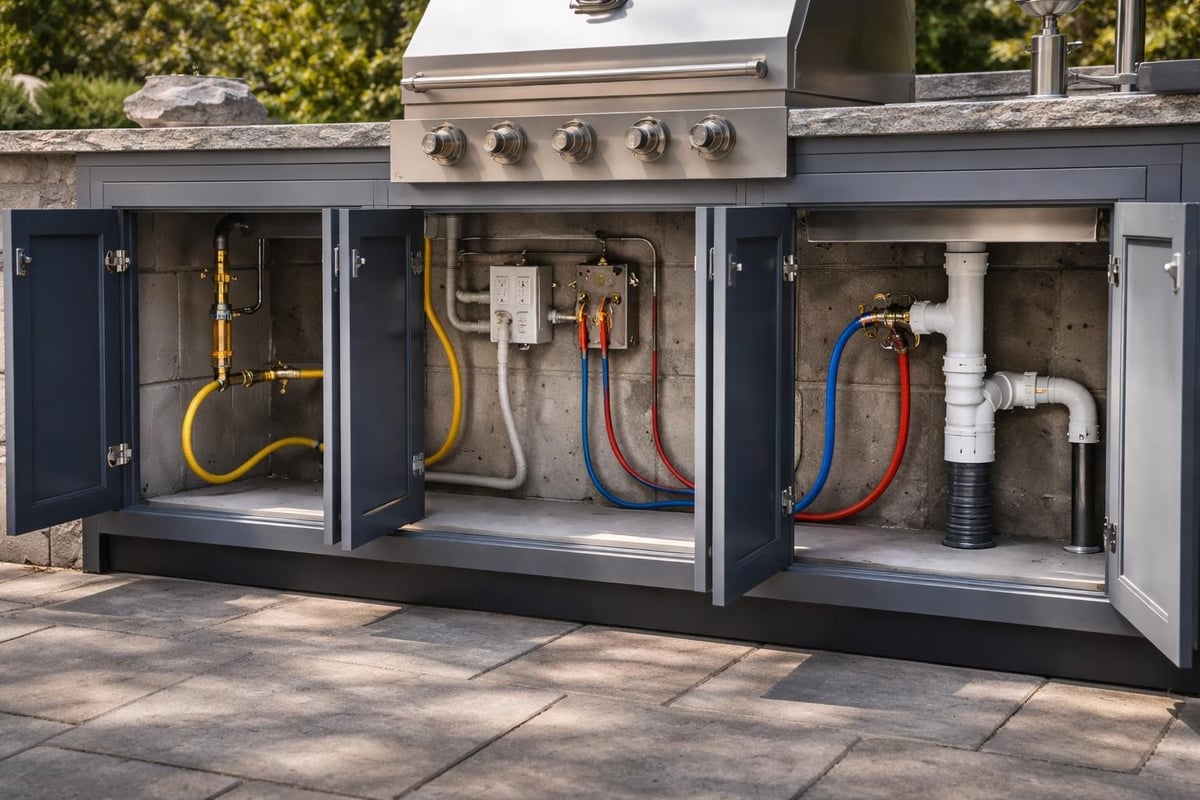
Professional outdoor kitchen installations require robust utility connections that often exceed the capacity of standard garden circuits. Gas supply lines, electrical circuits rated for outdoor use, and plumbed water connections demand qualified installation to meet building regulations and safety standards.
Drainage solutions prove particularly crucial in the UK climate. Integrated sinks require proper waste connections, and the overall installation benefits from subtle grading that directs rainwater away from cabinetry and appliance housings.
Even the finest appliances and materials benefit from architectural protection. Integrated shelter transforms an outdoor cooking space into a genuine year-round destination rather than a fair-weather amenity.
Modern pergola systems employ rotating louvres that provide variable weather protection. In open configuration, they admit natural light and air circulation. When closed, the interlocking louvres create a watertight barrier against rain whilst maintaining the architectural elegance of an open structure.
Premium bioclimatic pergolas incorporate integrated guttering, LED lighting systems, and optional side glazing or retractable screens. These features extend usability across seasons, protecting against wind, rain, and temperature extremes.
The investment in quality shelter pays dividends through extended seasonal use. What might otherwise function for three or four months becomes a twelve-month culinary destination with appropriate weather protection.
Radiant heating panels mounted within pergola structures or positioned strategically around the cooking zone extend comfortable use well into cooler months. Modern infrared heaters provide targeted warmth without the inefficiency of attempting to heat open air.
Lighting design deserves equal consideration to daytime functionality. Layered illumination combining task lighting for preparation areas, ambient lighting for dining zones, and accent lighting for architectural features creates atmosphere whilst ensuring safe food handling after dark.
| Heating Solution | Coverage Area | Energy Efficiency | Installation Complexity |
|---|---|---|---|
| Infrared Panels | Targeted zones | High | Moderate |
| Gas Patio Heaters | Broad radius | Moderate | Low |
| Underfloor Heating | Defined flooring area | Very High | High |
| Fire Features | Ambient warmth | Low | Variable |
An alfresco outdoor kitchen requires thoughtful storage for cookware, utensils, serving pieces, and consumables. Metal outdoor kitchen cabinets engineered specifically for exterior use provide weather-sealed compartments that protect contents from moisture and temperature fluctuation.
Drawer systems prove more practical than door-front cabinets for frequently accessed items. Soft-close mechanisms designed for outdoor environments resist binding from moisture whilst maintaining smooth operation across temperature ranges.
Dedicated storage zones should accommodate:
Vertical storage solutions maximise limited footprint whilst maintaining easy access. Pull-out shelving, hanging rail systems, and custom-sized compartments ensure every item has a designated location.
Built-in outdoor refrigeration maintains ingredients at proper temperatures without requiring trips to the indoor kitchen. Premium outdoor refrigerators feature robust compressors designed for ambient temperature variations and insulation systems that perform efficiently even during summer heat.
Consider both standard refrigeration and specialist cool storage such as wine refrigerators with dual-temperature zones or beverage centres with rapid-chill capabilities. For serious entertainers, integrated ice makers eliminate the constant resupply challenge during gatherings.
Generous preparation surfaces distinguish professional-calibre outdoor kitchens from basic grilling stations. Adequate worktop space transforms outdoor cooking from a constrained activity into the relaxed, social experience that defines alfresco dining.
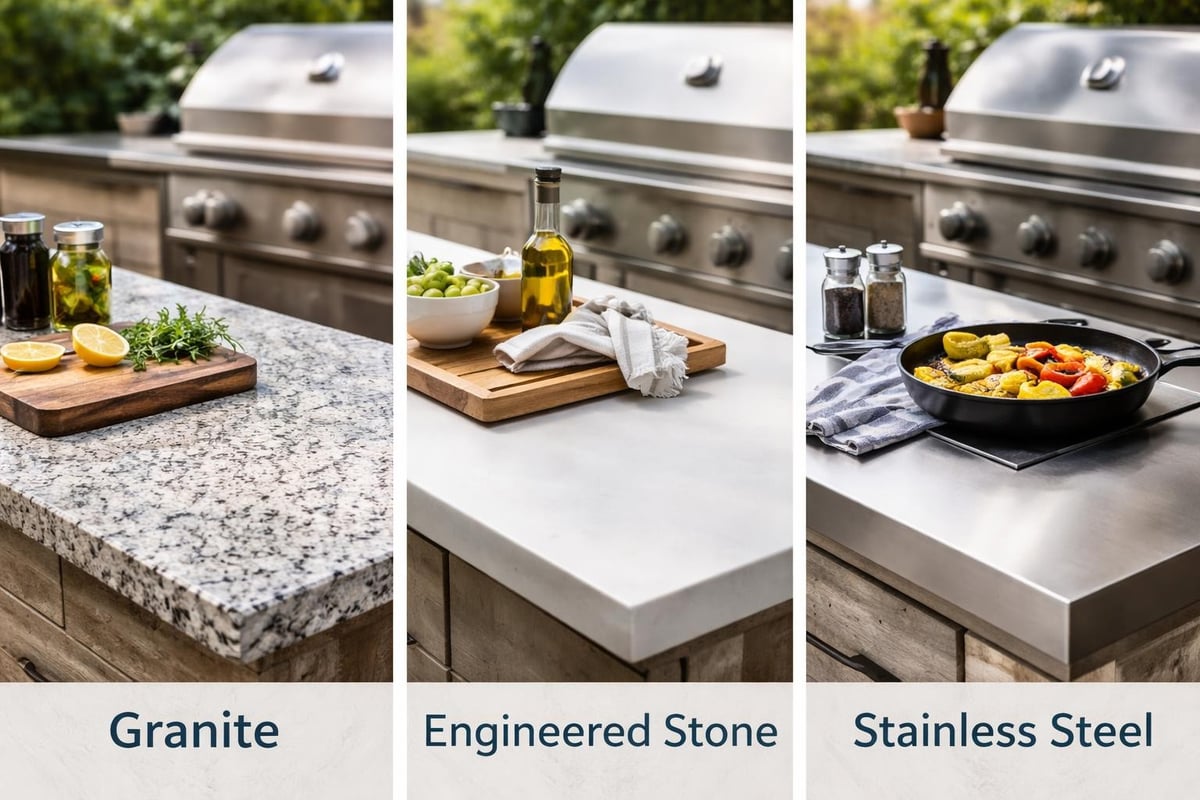
Granite remains popular for its natural beauty and exceptional durability, whilst engineered quartz offers consistency of pattern and non-porous performance that resists staining. Stainless steel worktops provide seamless integration with appliances and unmatched hygiene for serious food preparation.
Each material presents distinct characteristics:
Granite countertops bring natural variation and timeless appeal. Sealed properly, they resist moisture penetration and maintain their appearance across decades. The thermal mass helps regulate temperature, remaining cool during food preparation even in direct sunlight.
Engineered stone delivers uniform appearance and slightly superior stain resistance compared to natural granite. The manufacturing process creates a denser material with minimal porosity, reducing maintenance requirements.
Stainless steel surfaces suit professional-style installations where hygiene and durability outweigh aesthetic warmth. The material withstands direct heat from pans, cleans effortlessly, and develops a lived-in patina that many find appealing.
The cooking zone represents only one element of comprehensive outdoor living design. Thoughtful integration with dining areas, lounging spaces, and circulation paths creates cohesive environments that rival interior rooms in comfort and functionality.
Position the alfresco outdoor kitchen to facilitate easy service to dining areas without creating traffic conflicts. The cook should maintain visual connection with guests, enabling conversation whilst preparing meals rather than disappearing to a separate space.
Consider the full journey from food preparation through cooking, plating, serving, dining, and clearing. Each stage requires adequate space and logical progression. Professional design consultancy identifies potential bottlenecks before installation, ensuring smooth operational flow.
Outdoor dining furniture should complement the kitchen's aesthetic whilst providing comfortable seating for the anticipated guest count. Fixed seating built into the surrounding structure suits small gardens where space efficiency matters, whilst freestanding furniture offers flexibility for larger properties.
Strategic use of partial walls, planting, level changes, and overhead structures divides larger gardens into distinct zones without complete separation. The outdoor kitchen might anchor one end of a covered terrace, with dining occupying the central area and a lounging zone positioned to capture afternoon sun or evening views.
Material transitions help define these zones. Flooring changes from sealed concrete in the cooking area to porcelain paving in the dining zone, then perhaps to natural stone or decking in lounging spaces. These subtle cues create psychological boundaries whilst maintaining visual connection across the full outdoor environment.
British homeowners rightly question whether an alfresco outdoor kitchen will see sufficient use to justify the investment. Proper design maximises seasonal usability, transforming what might be a summer-only amenity into a genuine year-round asset.
Modular furniture systems and removable components allow configuration changes between seasons. Summer setups might emphasise open, airy arrangements, whilst autumn and winter configurations draw everything closer to heating sources and beneath shelter.
Weatherproof storage accommodates cushions, textiles, and accessories during wet periods. Quick-dry fabrics and materials specifically engineered for outdoor use extend the practical season whilst reducing maintenance burden.
Consider how the space functions when not actively cooking. Does it offer comfortable seating for morning coffee? Can it serve as a covered workspace during mild weather? Premium outdoor kitchen designs consider these secondary uses, ensuring the investment delivers value beyond mealtime.
Even weather-resistant materials benefit from basic maintenance protocols. Regular cleaning prevents buildup that can compromise seals and finishes. Purpose-designed covers protect appliances during extended periods of non-use, particularly through winter months.
Seasonal maintenance checklist for alfresco outdoor kitchens:
Professional installation typically includes guidance on maintenance requirements specific to the selected materials and appliances. Following manufacturer recommendations preserves warranties whilst ensuring optimal long-term performance.
An alfresco outdoor kitchen represents significant financial commitment, yet the value extends beyond mere pounds spent. Property value enhancement, lifestyle improvement, and entertainment capability all factor into the overall return on investment.
Entry-level installations beginning around £8,000-£12,000 provide basic functionality with quality appliances and simple cabinetry. Mid-range projects in the £20,000-£40,000 bracket incorporate premium materials, integrated shelter, and expanded appliance selections.
Luxury installations exceeding £50,000 deliver bespoke design, top-tier appliances from specialists like Whistler Grills, comprehensive shelter systems, and meticulous attention to every detail. At this level, the outdoor kitchen genuinely rivals indoor spaces in capability and finish quality.
| Budget Range | Typical Features | Appliance Quality | Installation Scope |
|---|---|---|---|
| £8,000-£15,000 | Basic built-in grill, simple cabinets | Good | Standard installation |
| £15,000-£30,000 | Multiple cooking methods, stone counters | Premium | Enhanced features |
| £30,000-£50,000 | Comprehensive appliances, quality shelter | Professional-grade | Full integration |
| £50,000+ | Bespoke design, top appliances, architectural shelter | Ultra-premium | Complete transformation |
Budget-conscious homeowners might consider phased implementation. Initial installation focuses on essential infrastructure (utilities, structural framework, primary cooking appliance) with subsequent phases adding enhanced features, expanded appliance selection, or upgraded shelter systems.
This approach spreads investment whilst ensuring proper foundational work. The critical element involves planning the full vision from the outset, even if execution occurs across multiple stages. Retrofit additions prove more expensive than integrated installation, making comprehensive initial planning valuable regardless of construction timeline.
The complexity of modern outdoor kitchen installations demands specialist expertise. Utility connections require qualified tradespeople, structural work must meet building regulations, and appliance integration needs precise specification to ensure compatibility and performance.
Professional outdoor kitchen design begins with understanding how you intend to use the space. Entertaining style, cooking preferences, guest capacity, and aesthetic expectations all inform the design direction. A truly consultative approach explores these factors before suggesting solutions.
Site assessment identifies opportunities and constraints. Sun path, prevailing wind direction, existing utilities, access for installation, and relationship to neighbouring properties all influence the optimal configuration. Experienced designers anticipate challenges whilst identifying possibilities you might not have considered.
Three-dimensional visualisation helps clarify the proposed design before construction begins. Modern rendering technology creates photorealistic representations of the finished space, allowing refinement of every detail from material selection through appliance placement and lighting position.
Expert installation protects your investment whilst ensuring safety and regulatory compliance. Gas connections require Gas Safe registered engineers. Electrical work must meet current wiring regulations. Structural elements demand proper foundations and weatherproofing.
The installation timeline varies with project scope. Simple additions might complete within days, whilst comprehensive installations incorporating custom cabinetry, extensive utility work, and architectural shelter may span several weeks. Professional project management coordinates trades, manages materials procurement, and ensures quality throughout the process.
Beyond the core installation, thoughtful accessories elevate the outdoor cooking experience. Outdoor cooking accessories extend capabilities whilst adding convenience and enjoyment to meal preparation.
Temperature management tools including wireless thermometers with multiple probes allow monitoring several items simultaneously without constant attention. This technology proves particularly valuable for low-and-slow cooking where maintaining consistent temperature over hours determines success.
Speciality cookware designed for outdoor use includes cast iron griddles that develop superior seasoning, perforated grill baskets that prevent small items falling through grates, and pizza peels that facilitate safe oven loading.
Luxury touches might include:
These enhancements transform functional cooking spaces into comprehensive entertainment environments where every detail receives attention.
Creating the perfect alfresco outdoor kitchen requires balancing aesthetic vision with practical functionality, selecting materials and appliances that withstand British weather whilst delivering exceptional performance year-round. Whether you're planning a compact cooking station or a comprehensive outdoor culinary destination, expert guidance ensures your investment delivers lasting value and enjoyment. Cotswold Cooking Company brings together decades of experience, carefully curated premium brands, and a truly consultative approach to help you design and install an outdoor kitchen that transforms how you live, cook, and entertain throughout the seasons.

Leave a comment