


A well-appointed outdoor kitchen represents far more than a simple grilling station. It embodies a lifestyle choice that extends culinary capabilities beyond interior walls, creating an all-season entertaining space where food, family, and fresh air converge. At the heart of this transformation sits an often-overlooked component: the barbecue fridge. This specialized refrigeration unit serves as the cornerstone of efficient outdoor food preparation, ensuring ingredients remain fresh, beverages stay chilled, and your outdoor culinary experience matches the sophistication of your indoor kitchen. Unlike standard household refrigerators, a barbecue fridge is engineered specifically to withstand temperature fluctuations, humidity, and exposure to the elements whilst maintaining consistent cooling performance throughout the year.
The term "barbecue fridge" encompasses a diverse category of outdoor-rated refrigeration appliances designed specifically for integration into exterior cooking environments. These units differ fundamentally from their indoor counterparts through enhanced construction methods, weather-resistant materials, and specialized ventilation systems.
Conventional kitchen refrigerators operate within controlled temperature ranges, typically performing optimally between 10°C and 32°C ambient conditions. When exposed to direct sunlight, rain, or freezing winter temperatures, these units experience compressor strain, seal deterioration, and eventual system failure.
A purpose-built barbecue fridge addresses these challenges through:
The investment in a proper outdoor refrigeration solution protects both your food safety standards and long-term equipment costs. Standard refrigerators placed outdoors typically fail within 12-18 months, whilst a quality barbecue fridge delivers 15-20 years of reliable service.
Selecting the appropriate refrigeration for your outdoor kitchen requires understanding which features deliver genuine value versus marketing embellishments. After working with hundreds of clients across the UK through our outdoor kitchen design services, we've identified the characteristics that separate exceptional barbecue fridges from mediocre options.
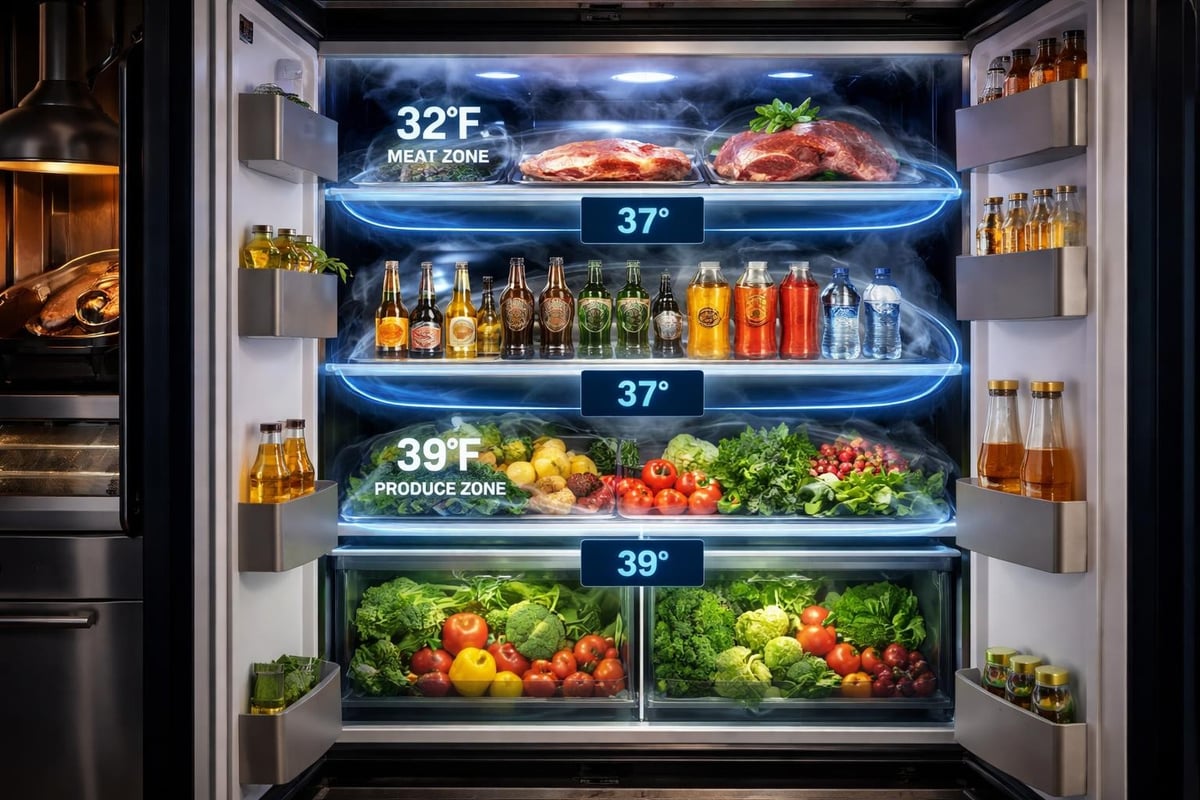
Premium outdoor refrigeration units feature 304-grade stainless steel construction as standard, with top-tier models utilizing 316-grade marine steel for coastal installations. The material choice directly impacts longevity, particularly in regions experiencing high humidity or salt air exposure.
| Feature | Standard Indoor Fridge | Entry-Level Barbecue Fridge | Premium Barbecue Fridge |
|---|---|---|---|
| Exterior Material | Painted steel/plastic | 304 stainless steel | 316 marine-grade steel |
| Insulation Thickness | 25-35mm | 40-50mm | 60-75mm |
| Temperature Range | 10-32°C ambient | -5 to 40°C ambient | -15 to 45°C ambient |
| Weather Rating | None | IPX4 (splash resistant) | IPX6 (jet spray resistant) |
| Warranty Period | 1-2 years | 3-5 years | 7-10 years |
The difference between adequate and exceptional becomes apparent during Britain's unpredictable weather patterns. A barbecue fridge rated for extreme temperature ranges continues functioning during July heatwaves and January cold snaps alike.
Refrigeration capacity requires careful consideration based on your entertaining patterns and household size. Undercounter barbecue fridges typically range from 60 to 200 litres, whilst full-height outdoor refrigerators extend to 400 litres or beyond.
Capacity guidelines for different usage patterns:
Consider how Sub-Zero and Wolf outdoor refrigerators offer modular configurations, allowing you to combine drawer units, beverage centres, and full refrigerators within a cohesive design framework.
Proper installation determines whether your barbecue fridge delivers decades of reliable service or becomes a costly maintenance burden. The unique challenges of outdoor environments demand meticulous attention to ventilation, drainage, and power supply configurations.
Compressor-based refrigeration generates substantial heat during operation. Inadequate ventilation creates a thermal feedback loop where the unit works progressively harder to maintain temperature, accelerating wear and increasing energy consumption.
Critical ventilation specifications:
Built-in barbecue fridges feature front-venting designs that exhaust heat through the toe kick area beneath the unit. This configuration permits flush installation within cabinetry without compromising cooling efficiency. Freestanding models, conversely, require side and rear clearances that make them unsuitable for tight enclosures.
Outdoor electrical installations demand rigorous safety protocols beyond standard indoor requirements. Your barbecue fridge requires a dedicated circuit protected by an RCD (Residual Current Device) rated for outdoor use, with all connections meeting IP65 weatherproofing standards minimum.
Working with qualified electricians familiar with outdoor kitchen installations ensures compliance with current wiring regulations whilst protecting against moisture ingress and electrical faults. Never extend standard indoor power leads outdoors, as this creates serious safety hazards and invalidates equipment warranties.
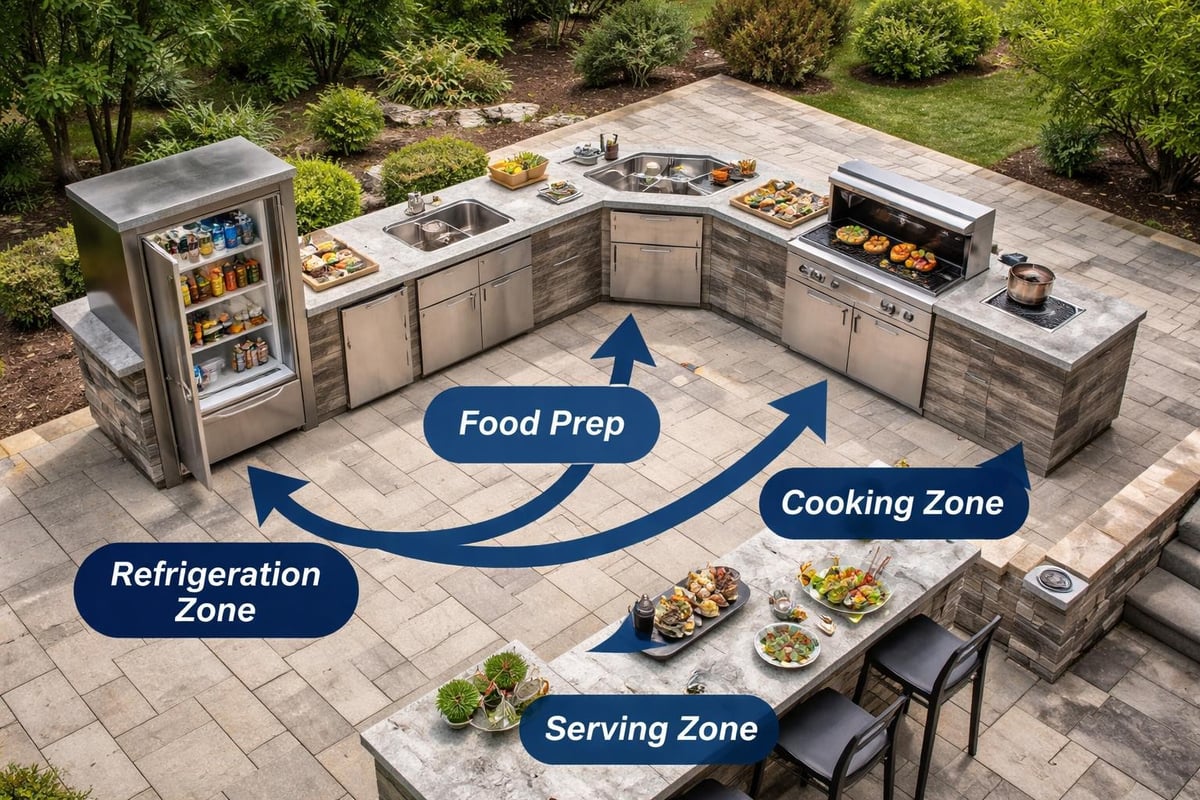
Strategic refrigerator placement enhances workflow efficiency whilst protecting your investment from environmental stress. The classic kitchen work triangle principle applies equally to outdoor spaces, positioning your barbecue fridge within comfortable reach of both preparation surfaces and cooking zones.
Professional kitchen designers employ the work triangle concept, positioning refrigeration, preparation, and cooking stations at optimal distances. For outdoor kitchens, this translates to:
This configuration minimizes unnecessary movement whilst maintaining adequate space for multiple cooks to work simultaneously. Position your barbecue fridge away from direct heat sources, maintaining at least 600mm separation from grills, pizza ovens, or side burners.
Even weather-rated barbecue fridges benefit from strategic protection against direct weather exposure. Whilst these units withstand rain and temperature extremes, extended UV exposure and constant moisture contact accelerate wear on seals and exterior finishes.
Optimal protection strategies:
The combination of quality equipment and thoughtful placement maximizes longevity. We've observed barbecue fridges installed under protective structures delivering 25+ years of service, whilst fully exposed units require replacement within 12-15 years despite identical build quality.
Maintaining proper food safety standards outdoors presents unique challenges compared to climate-controlled indoor environments. Your barbecue fridge must consistently hold temperatures between 1-4°C to prevent bacterial growth, regardless of external conditions reaching 35°C or dropping below freezing.
Modern barbecue fridges incorporate digital temperature displays and precision thermostats, moving beyond the ambiguous dial controls of earlier generations. Premium models offer smartphone connectivity, sending alerts when temperatures deviate from safe ranges.
The CASO Design BBQ Deluxe-L Smart exemplifies this technological evolution, providing Wi-Fi control and real-time monitoring through dedicated mobile applications. For serious outdoor entertainers, this connectivity offers peace of mind during extended events when door openings might compromise internal temperatures.
Sophisticated barbecue fridges feature multiple temperature zones, allowing simultaneous storage of items requiring different conditions. Meat storage demands consistent 1-2°C temperatures, whilst vegetables perform better at 3-4°C, and beverages achieve optimal serving temperature at 4-6°C.
| Storage Zone | Optimal Temperature | Ideal Contents | Common Mistakes |
|---|---|---|---|
| Lower shelves | 1-2°C | Raw meats, fish, seafood | Storing above cooked items |
| Middle shelves | 2-3°C | Dairy, prepared foods | Overcrowding airflow |
| Upper shelves | 3-4°C | Vegetables, fruits | Mixing ethylene producers |
| Door compartments | 4-6°C | Condiments, beverages | Storing perishables here |
| Crisper drawers | 3-4°C with humidity control | Salad items, herbs | Inadequate humidity settings |
Understanding these temperature requirements transforms your barbecue fridge from simple cold storage into a sophisticated food preservation system supporting diverse menu preparations.
The outdoor refrigeration market features dozens of manufacturers, with quality and durability varying dramatically across price points. Selecting brands with proven outdoor performance records protects your investment whilst ensuring consistent operation.
Manufacturers specializing exclusively in outdoor appliances bring focused expertise to refrigeration challenges. Companies like KoKoMo Grills and Fire Magic dedicate their entire research and development efforts toward outdoor performance, resulting in purpose-built solutions rather than adapted indoor designs.
These specialist brands typically offer:
Contrast this with general appliance manufacturers offering "outdoor" versions of indoor models, which often feature minimal weatherproofing modifications whilst commanding premium pricing.
When assessing barbecue fridge options, specific construction details reveal overall quality levels. Examine these critical components during your selection process:
Door construction quality markers:
Cabinet and insulation indicators:
Premium barbecue fridges from manufacturers like Outeriors demonstrate these quality markers consistently, justifying higher initial investment through extended service life and reduced maintenance requirements.
A barbecue fridge functions as one component within a comprehensive outdoor culinary environment. Thoughtful integration with complementary appliances, storage solutions, and preparation surfaces creates cohesive functionality matching indoor kitchen capabilities.
Modern outdoor kitchens increasingly feature full appliance suites matching indoor convenience. Your barbecue fridge should coordinate aesthetically and functionally with surrounding equipment, creating unified visual appeal and operational efficiency.
Common outdoor appliance combinations:
When designing your complete outdoor kitchen, consider how refrigeration interfaces with other elements. Positioning your barbecue fridge adjacent to sink stations facilitates food washing and preparation workflows, whilst beverage refrigeration near seating areas improves guest service.
Visual cohesion elevates outdoor kitchen design from functional to exceptional. Your barbecue fridge should complement surrounding materials, hardware finishes, and architectural elements present in both your outdoor space and adjacent interior areas.
Stainless steel remains the dominant finish choice for outdoor appliances, though variations exist. Brushed finishes conceal fingerprints and minor scratches better than polished surfaces, whilst textured stainless options add visual interest and further minimize visible wear.
Finish coordination considerations:
Panel-ready barbecue fridges offer maximum design flexibility, accepting custom wood, stone, or composite panels that blend seamlessly with surrounding cabinetry. This approach works particularly well when creating discrete refrigeration that doesn't dominate the visual landscape.
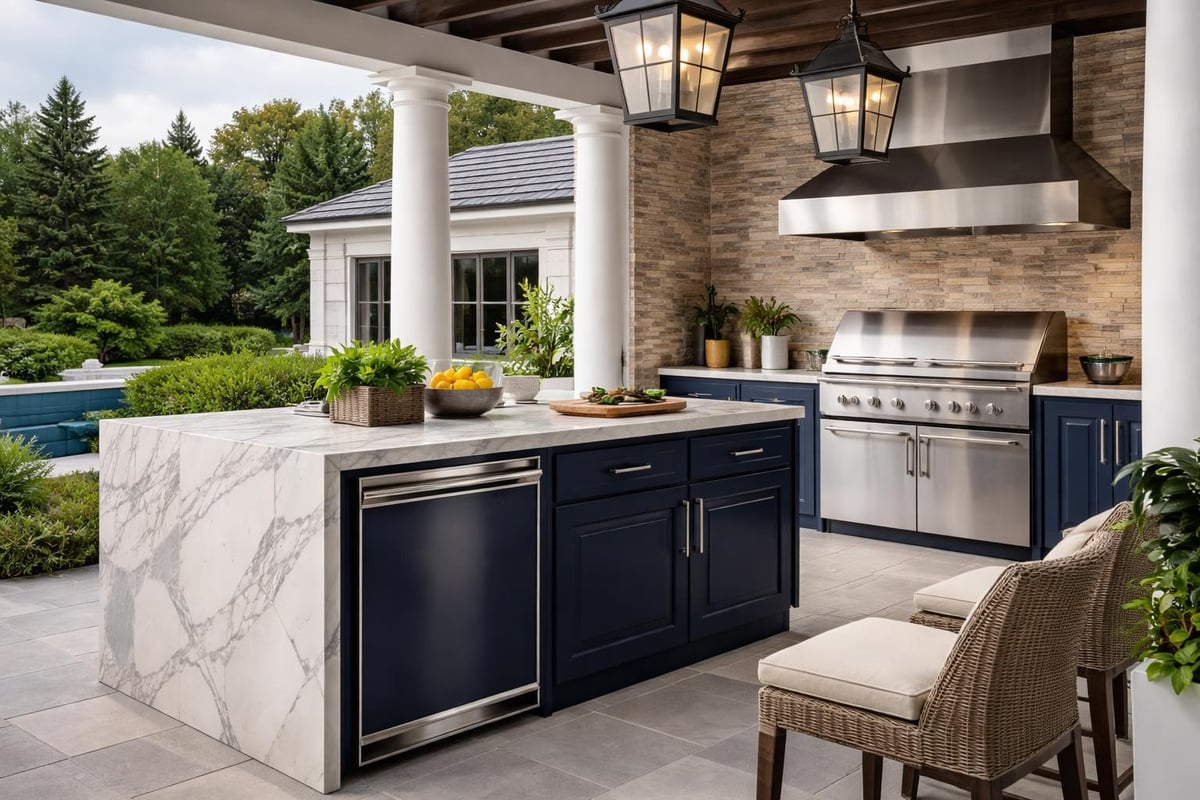
Outdoor kitchen dimensions vary dramatically based on available space, budget parameters, and intended usage patterns. Your barbecue fridge selection must balance capacity requirements against physical constraints and proportional aesthetics within the overall design.
Urban gardens, balconies, and smaller patios demand space-efficient refrigeration without sacrificing essential functionality. Compact barbecue fridges measuring 450-600mm width provide meaningful cold storage within constrained footprints.
Space-saving refrigeration approaches:
Cozze's 60-liter outdoor refrigerator demonstrates how thoughtful engineering delivers adequate capacity within remarkably compact dimensions, suitable for integration into space-conscious outdoor kitchen designs.
Properties hosting regular large gatherings or operating semi-commercial outdoor dining facilities require substantial refrigeration capacity. Full-height outdoor refrigerators and multiple-unit configurations address these demanding requirements.
For hospitality-focused outdoor kitchens, consider these capacity expansion strategies:
When planning extensive outdoor cooking facilities, the brands we curate offer scalable solutions accommodating both current requirements and future expansion possibilities.
Unlike indoor appliances operating in stable environments, barbecue fridges endure challenging conditions demanding proactive maintenance protocols. Regular care extends equipment lifespan whilst maintaining optimal performance throughout seasonal variations.
Establishing regular maintenance schedules prevents minor issues escalating into costly repairs. Your barbecue fridge requires attention across multiple systems and components, each contributing to overall reliability.
Quarterly maintenance checklist:
Professional service appointments annually or bi-annually provide deeper system inspection, refrigerant level verification, and compressor efficiency testing. These preventive measures identify developing problems before component failure occurs.
For outdoor kitchens experiencing extended periods of non-use during winter months, proper winterization protects your barbecue fridge investment. The approach depends on whether the unit remains powered throughout winter or enters dormant storage.
Winterization protocol for unpowered storage:
For regions experiencing moderate winters where outdoor cooking continues year-round, maintaining power to your barbecue fridge proves more practical than seasonal winterization. These units are specifically designed for continuous outdoor operation across temperature extremes.
Operating a barbecue fridge introduces additional energy consumption beyond indoor refrigeration, though modern units incorporate efficiency technologies minimizing this impact. Understanding energy implications informs both equipment selection and budget planning.
Outdoor refrigerator energy usage varies based on ambient temperature, door opening frequency, internal loading patterns, and inherent unit efficiency. A typical barbecue fridge consumes 300-500 kWh annually under normal UK operating conditions.
Factors influencing energy consumption:
Premium barbecue fridges incorporate variable-speed compressors that adjust output matching cooling demand, rather than simple on/off cycling. This technology reduces energy consumption by 30-50% compared to conventional systems whilst extending compressor lifespan through reduced operational stress.
While quality barbecue fridges command premium pricing compared to standard refrigerators, lifetime cost analysis reveals the true economic picture. Consider total ownership costs across expected service life rather than initial purchase price alone.
| Cost Factor | Standard Fridge Outdoors | Budget Barbecue Fridge | Premium Barbecue Fridge |
|---|---|---|---|
| Purchase price | £400 | £1,200 | £2,800 |
| Expected lifespan | 18 months | 8 years | 18 years |
| Replacements over 18 years | 11 units (£4,400) | 2 units (£2,400) | 0 replacements |
| Annual energy cost | £95 | £72 | £52 |
| 18-year energy total | £1,710 | £1,296 | £936 |
| Installation costs | £150 × 12 (£1,800) | £200 × 3 (£600) | £200 × 1 (£200) |
| Total 18-year cost | £7,910 | £4,296 | £3,936 |
This analysis demonstrates how premium barbecue fridges deliver superior value despite higher initial investment. The combination of extended lifespan, improved efficiency, and reduced replacement frequency creates meaningful long-term savings.
The outdoor appliance sector increasingly embraces smart technology, transforming barbecue fridges from passive storage into interactive components within connected home ecosystems. These innovations enhance convenience whilst providing operational insights previously unavailable.
Contemporary barbecue fridges offer smartphone integration enabling remote temperature monitoring, adjustment, and diagnostic information access. This connectivity proves particularly valuable during extended entertaining events when monitoring multiple cooking processes simultaneously.
Practical smart refrigeration capabilities:
Before dismissing smart features as unnecessary complexity, consider the practical benefits for serious outdoor entertainers. The ability to verify refrigeration performance without leaving guests, or receive immediate alerts about temperature deviations, provides genuine value beyond technology novelty.
While advanced features offer convenience, prioritize fundamental refrigeration performance over technological sophistication. The most connected barbecue fridge delivers no value if core cooling capabilities prove inadequate or reliability suffers.
Evaluate smart features as enhancements to proven refrigeration engineering rather than replacements for quality construction. Manufacturers demonstrating decades of outdoor appliance expertise who subsequently integrate thoughtful technology typically deliver superior results compared to technology companies entering outdoor refrigeration markets.
Installing a barbecue fridge involves electrical connections, potential gas line work for outdoor kitchen integration, and precise fitting within cabinetry or outdoor structures. The decision between professional installation and DIY approaches depends on technical capabilities, regulatory requirements, and warranty implications.
Certain barbecue fridge installations demand qualified professional involvement, both for safety compliance and warranty protection. Complex scenarios requiring specialist expertise include:
Many premium manufacturers require professional installation documentation for warranty validation. Our delivery and installation services ensure all work meets manufacturer specifications whilst complying with current building regulations and electrical safety standards.
For experienced DIYers with appropriate technical knowledge, some barbecue fridge installations present manageable projects. Freestanding units with existing outdoor electrical supply offer straightforward placement requiring minimal technical intervention.
DIY installation prerequisites:
Even when completing installation personally, having qualified electricians verify electrical connections ensures safety compliance and provides professional certification supporting insurance and warranty requirements.
The outdoor refrigeration market spans vast price ranges, from £500 entry-level units to £5,000+ professional-grade installations. Understanding what differentiates these tiers helps align budget constraints with realistic performance expectations.
Budget-conscious barbecue fridges serve occasional outdoor entertainers adequately, though compromises exist compared to premium alternatives. These units typically feature thinner insulation, basic temperature controls, and limited weather resistance beyond splash protection.
Expect 5-8 year service life from quality entry-level models when properly maintained and provided reasonable weather protection. They suit covered outdoor kitchen installations in temperate climates with moderate usage patterns.
Entry-level barbecue fridge characteristics:
These models function perfectly well for weekend barbecues and seasonal entertaining, providing essential refrigeration without premium features commanding higher price points.
The £1,500-£2,500 barbecue fridge segment delivers optimal performance-to-value ratios for serious outdoor cooking enthusiasts. These units incorporate meaningful quality improvements over entry options whilst remaining accessible for most luxury outdoor kitchen budgets.
Mid-tier models feature enhanced insulation, improved compressor efficiency, better door seals, and refined temperature control systems. Expected service life extends to 12-15 years, making them sound long-term investments.
Top-tier barbecue fridges commanding £3,000-£5,000+ pricing target discerning homeowners and commercial applications demanding absolute reliability and performance. These investments deliver measurable advantages across multiple parameters.
Premium barbecue fridge distinctions:
For properties hosting frequent large gatherings or operating outdoor hospitality services, premium barbecue fridges justify their pricing through uncompromising reliability and professional-grade capabilities. Resources like this comprehensive outdoor refrigerator guide provide additional perspective on specification differences across quality tiers.
Even quality outdoor refrigeration encounters occasional issues requiring troubleshooting and resolution. Understanding common challenges and their remedies empowers proactive problem management before minor concerns escalate.
Fluctuating internal temperatures represent the most frequent barbecue fridge complaint. Multiple factors contribute to this problem, ranging from simple user error to mechanical failures requiring professional service.
Temperature consistency troubleshooting sequence:
Persistent temperature problems despite these interventions suggest compressor issues or refrigerant loss requiring qualified technician diagnosis. Never attempt refrigerant system repairs without proper certification, as incorrect service causes permanent damage whilst creating environmental hazards.
Outdoor humidity combined with cold internal temperatures inevitably produces condensation. While some moisture accumulation remains normal, excessive condensation indicates drainage problems or seal failures.
Barbecue fridges incorporate drainage systems channeling condensation away from interior compartments. These drains occasionally block with debris, causing water accumulation and potential mold development. Regular cleaning prevents blockages whilst annual professional service includes comprehensive drainage system inspection.
Outdoor environments typically tolerate more operational noise than indoor spaces, though excessive barbecue fridge noise suggests developing problems. Modern units operate surprisingly quietly through vibration isolation and refined compressor technology.
Normal versus problematic noise levels:
| Sound Type | Normal Operation | Investigate Further |
|---|---|---|
| Gentle humming | Continuous low hum during compressor operation | Sudden volume increases |
| Clicking | Occasional thermostat cycling | Rapid repeated clicking |
| Vibration | Minimal during operation | Noticeable shaking or rattling |
| Fan noise | Quiet airflow sound | Loud grinding or scraping |
Unusual sounds often indicate loose components, failing fans, or compressor issues. Addressing these promptly prevents catastrophic failures requiring complete unit replacement.
Strategic practices extend your barbecue fridge service life whilst optimizing performance throughout its operational period. These approaches require minimal effort whilst delivering measurable benefits.
How you stock your barbecue fridge directly impacts cooling efficiency, food safety, and overall functionality. Thoughtful organization maximizes capacity whilst maintaining proper air circulation essential for consistent temperature maintenance.
Effective refrigerator loading principles:
Dense refrigerator loading actually improves temperature stability once items reach desired temperature, as the thermal mass resists temperature fluctuations from door openings. However, initial cooling of heavily loaded units requires extended compressor operation.
Adapting barbecue fridge operation to seasonal demands improves efficiency whilst meeting changing requirements throughout the year. British weather patterns create distinct usage profiles across seasons, each benefiting from tailored approaches.
During summer months when outdoor entertaining peaks, maintain lower temperature settings accounting for increased door opening frequency and higher ambient temperatures. Winter usage often permits slightly higher settings as reduced usage frequency and cooler ambient temperatures naturally support refrigeration.
For year-round outdoor cooking enthusiasts, consistent temperature maintenance throughout seasons ensures readiness whenever culinary inspiration strikes, regardless of weather conditions.
Selecting and integrating a barbecue fridge transforms outdoor cooking from simple grilling into comprehensive culinary capability matching indoor kitchen convenience. The combination of purpose-built construction, thoughtful placement, and proper maintenance creates reliable refrigeration supporting sophisticated outdoor entertaining throughout the year. Whether you're designing a compact urban balcony cooking space or an extensive estate outdoor kitchen, Cotswold Cooking Company provides expert guidance selecting refrigeration and complementary equipment perfectly suited to your vision, backed by comprehensive installation services ensuring flawless integration within your outdoor living environment.

Comments
Leave a comment