


The evolution of outdoor living has reached new heights in 2026, with discerning homeowners increasingly seeking to extend their culinary capabilities beyond traditional indoor boundaries. A custom made outdoor kitchen represents far more than a simple barbecue station-it embodies a thoughtfully designed extension of your living space that combines functionality, aesthetics, and year-round usability. This comprehensive approach to outdoor cooking environments allows for personalized solutions that reflect individual lifestyle requirements, architectural harmony, and long-term investment value. Understanding the intricate considerations involved in creating these sophisticated outdoor culinary destinations ensures that your project delivers both immediate enjoyment and lasting satisfaction.
Creating a successful custom made outdoor kitchen begins with comprehensive planning that addresses spatial constraints, usage patterns, and environmental factors. The location selection process requires careful evaluation of prevailing wind directions, sun exposure throughout the day, proximity to indoor facilities, and integration with existing landscape features. These foundational decisions influence everything from appliance selection to material specifications.
Professional consultation becomes invaluable during the initial stages, as experienced designers can identify opportunities and challenges that may not be immediately apparent. The outdoor kitchen planning guide from Kalamazoo provides comprehensive insights into these critical early-stage considerations, emphasizing the importance of thinking through workflows and utility connections before construction begins.
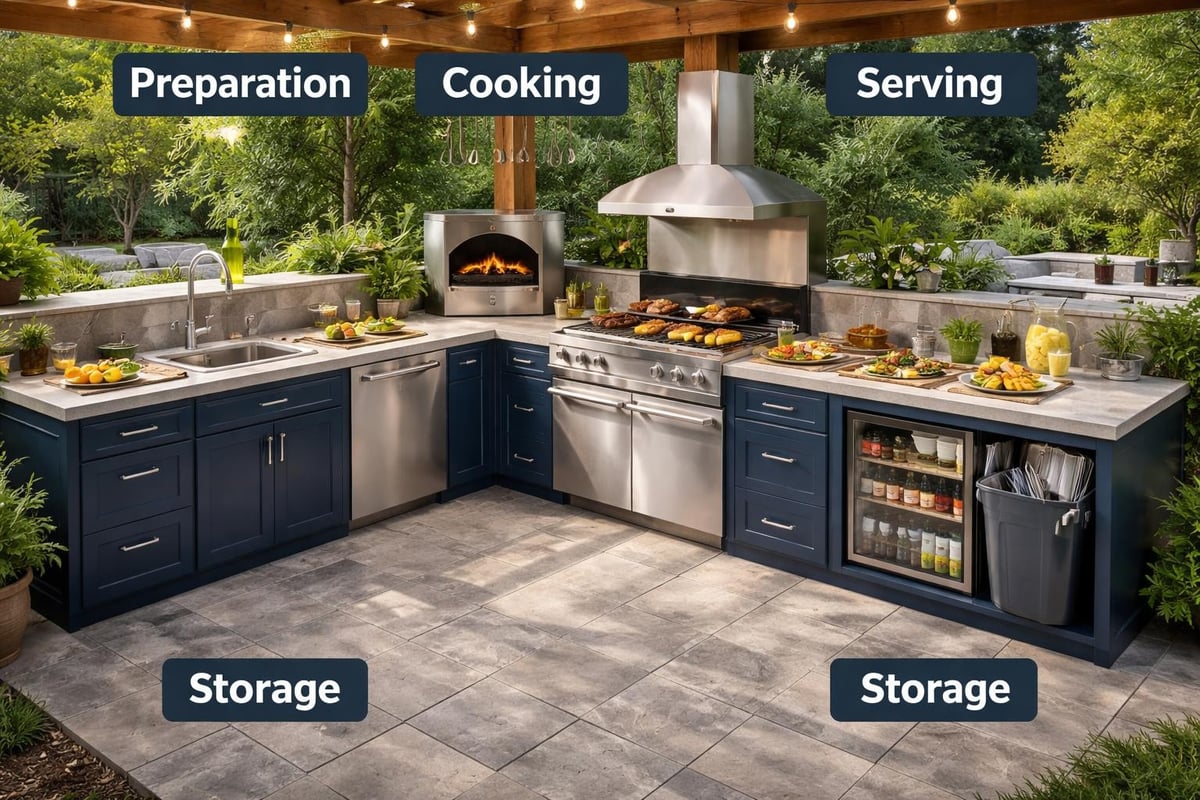
Efficient outdoor cooking requires thoughtful spatial organization that mirrors professional kitchen principles while accommodating the unique aspects of outdoor environments:
The triangle concept that governs indoor kitchen design translates effectively to outdoor spaces, ensuring that refrigeration, preparation surfaces, and primary cooking equipment maintain optimal proximity. However, a custom made outdoor kitchen offers greater flexibility to expand beyond these constraints when space permits.
Material choices fundamentally determine the longevity, maintenance requirements, and aesthetic character of your outdoor cooking environment. Unlike indoor installations, these surfaces must withstand temperature extremes, moisture exposure, UV radiation, and seasonal weather variations while maintaining structural integrity and visual appeal.
| Material Category | Premium Options | Key Benefits | Maintenance Level |
|---|---|---|---|
| Countertops | Granite, Porcelain, Concrete | Heat resistance, durability, stain resistance | Low to moderate |
| Cabinetry | Marine-grade stainless steel, Powder-coated aluminum | Weather resistance, corrosion protection | Low |
| Flooring | Natural stone, Porcelain tile, Concrete pavers | Slip resistance, durability, aesthetic variety | Moderate |
| Framework | Welded aluminum, Stainless steel | Structural integrity, corrosion resistance | Minimal |
The investment in superior materials pays dividends through reduced replacement costs and sustained aesthetic appeal. Florida Design Works emphasizes the importance of climate-appropriate material selection, a principle equally relevant to the UK's variable weather patterns where moisture management and freeze-thaw resistance prove critical.
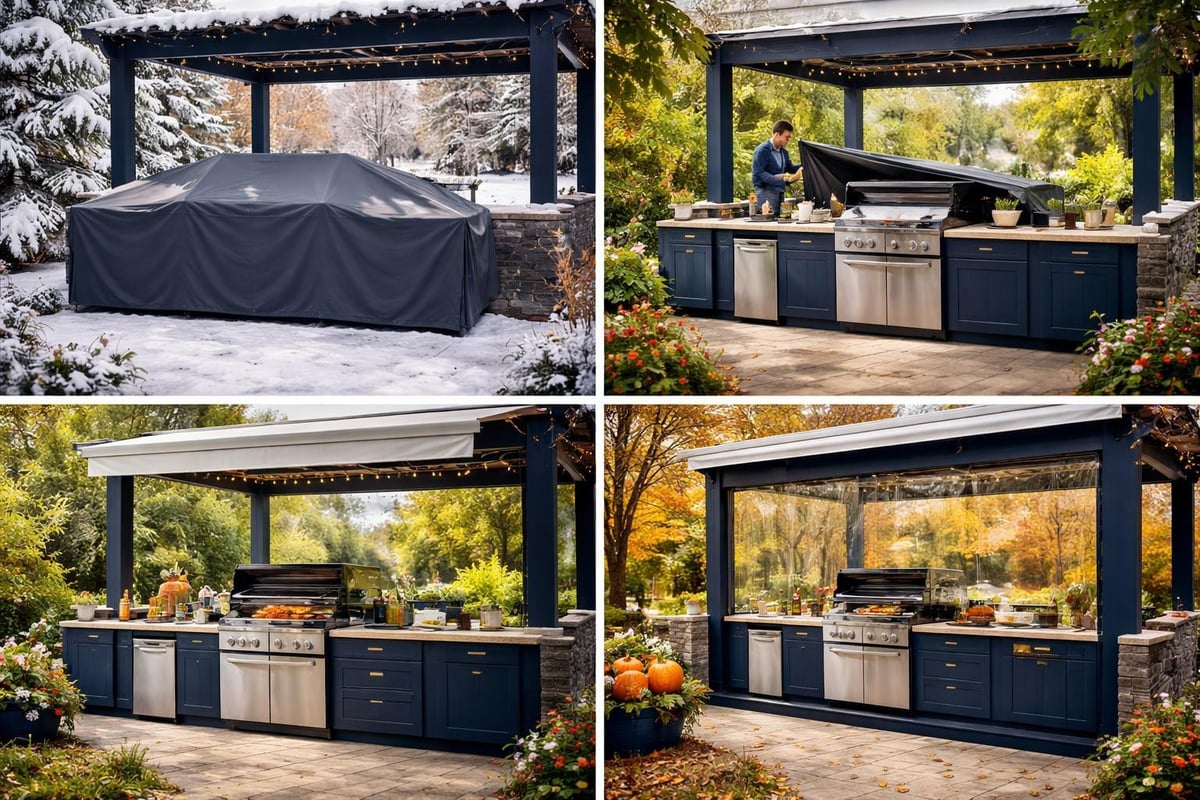
British weather demands robust protection strategies that extend beyond material selection alone. Integrated design solutions include pergola structures with retractable roofing systems, strategic placement of equipment to minimize direct exposure, and comprehensive drainage planning that prevents water accumulation. The custom made outdoor kitchen approach allows for these protective elements to be incorporated seamlessly rather than added as afterthoughts.
High-quality marine-grade stainless steel cabinetry provides exceptional resistance to the humid conditions common in the UK, while powder-coated finishes on aluminum frameworks offer both corrosion protection and aesthetic versatility. These specifications ensure that your installation maintains its appearance and functionality through countless seasons of use.
The equipment selection process represents one of the most significant decisions in creating a custom made outdoor kitchen. Today's outdoor appliances offer performance capabilities that rival or exceed their indoor counterparts, with engineering specifically designed for external environments. The curated selection available through specialist retailers ensures access to proven, weather-resistant equipment rather than compromised adaptations of indoor models.
Modern outdoor cooking installations typically incorporate multiple specialized appliances that expand culinary possibilities:
The extensive pizza oven collection available demonstrates the sophisticated equipment options now accessible to residential installations. These professional-grade appliances transform outdoor cooking from basic grilling to comprehensive culinary exploration.
Brand selection carries long-term implications for performance reliability, parts availability, and service support. Established manufacturers with proven outdoor-specific engineering provide greater assurance than general-purpose equipment adapted for external use. The custom made outdoor kitchen approach facilitates integration of best-in-class appliances rather than forcing compromises based on standardized cabinetry dimensions.
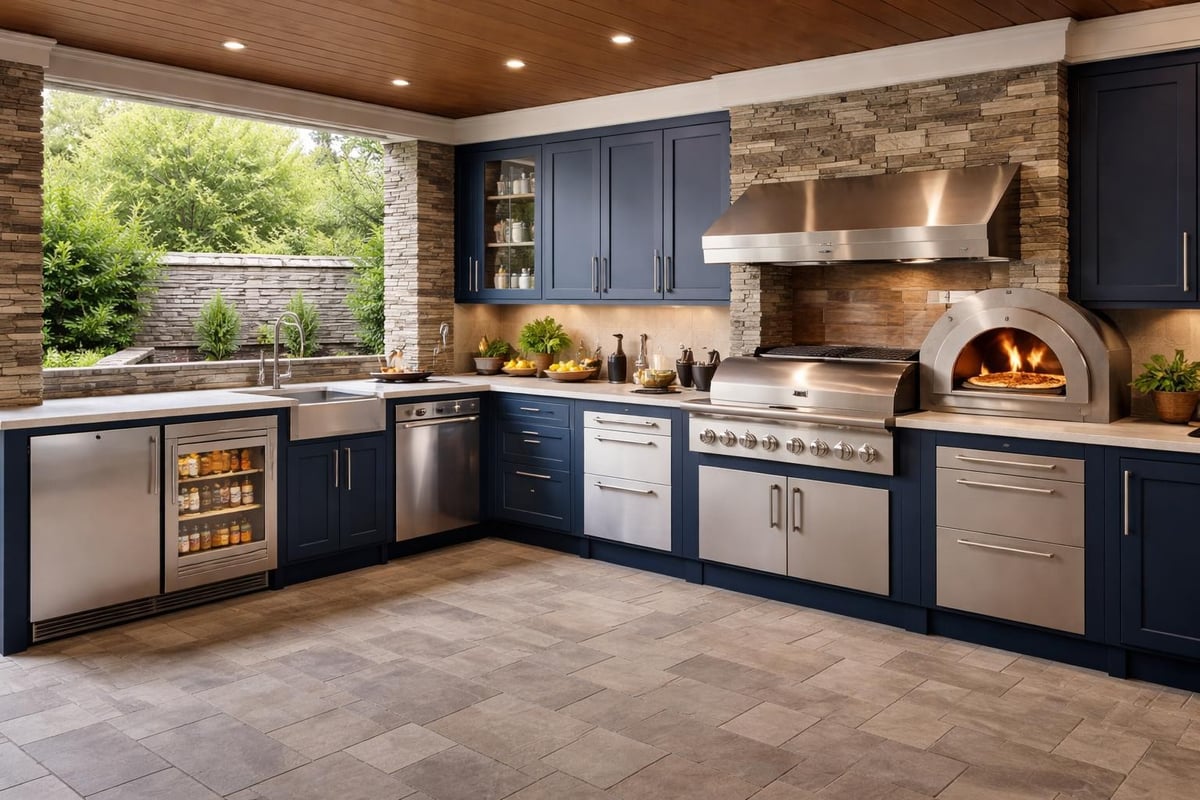
Visual integration with existing architecture and landscape design distinguishes exceptional outdoor kitchens from merely functional installations. A custom made outdoor kitchen should appear as an intentional extension of your property rather than an addition that competes with or contradicts the established aesthetic language.
Contemporary outdoor kitchen design encompasses diverse aesthetic approaches:
The flexibility inherent in custom design allows these stylistic directions to be refined and personalized rather than selected from predetermined templates. This Old House explores various design approaches across different budget levels, demonstrating how aesthetic ambitions can be achieved through thoughtful specification rather than unlimited expenditure.
Color palettes, material textures, and finish selections should reference existing architectural elements while establishing a distinct identity for the outdoor cooking space. Professional designers develop these cohesive schemes through careful analysis of existing conditions and client preferences, ensuring that the completed installation enhances overall property value.
Behind every successful custom made outdoor kitchen lies comprehensive utility planning that addresses electrical power, gas supply, water delivery, drainage, and lighting systems. These technical requirements often represent significant portions of project budgets, yet prove essential for full functionality and code compliance.
| Utility System | Key Requirements | Professional Considerations |
|---|---|---|
| Electrical | Dedicated circuits, GFCI protection, weatherproof outlets | Licensed electrician, local code compliance |
| Gas | Proper line sizing, approved fittings, leak detection | Gas Safe registered installer, pressure testing |
| Water | Freeze-resistant supply, backflow prevention, shut-off valves | Professional plumber, seasonal winterization |
| Drainage | Adequate slope, trapped connections, grease management | Building regulations, environmental compliance |
| Lighting | Task illumination, ambient lighting, automated controls | IP-rated fixtures, integrated switching |
The complexity of these systems reinforces the value of working with experienced outdoor kitchen specialists who understand the interconnected nature of these requirements. Homestead Structures highlights how premium materials and professional installation combine to create durable, code-compliant installations that perform reliably for decades.
Sophisticated lighting transforms outdoor kitchens from daylight-only facilities into versatile evening entertainment spaces. A comprehensive lighting strategy incorporates multiple layers:
Modern LED technology provides energy-efficient solutions with exceptional longevity and color rendering accuracy. Integration with smart home systems enables automated scheduling, scene programming, and remote control capabilities that enhance usability and convenience.
British climate variability presents both challenges and opportunities for outdoor cooking enthusiasts. A properly designed custom made outdoor kitchen addresses seasonal considerations through strategic equipment selection, protective structures, and adaptable configurations that extend usability beyond summer months.
Creating comfortable outdoor cooking environments throughout the year requires comprehensive environmental control:
The outdoor kitchens resource explores approaches for maximizing year-round functionality in the UK climate. These strategies transform outdoor kitchens from seasonal amenities into true four-season cooking destinations.
Premium equipment manufacturers increasingly design products with extended-season use in mind, incorporating features like double-wall construction, enhanced insulation, and weather-resistant control systems that maintain performance in challenging conditions. Selecting these purpose-built products during the specification phase proves more effective than attempting to retrofit seasonal protection after installation.
Modern outdoor kitchens function as social hubs rather than isolated cooking stations. The custom design process should address entertainment requirements, guest flow patterns, and the integration of dining and relaxation zones that complement cooking capabilities. This holistic approach creates cohesive outdoor living environments that encourage gathering and interaction.
Successful entertainment spaces balance multiple functional requirements:
The distinction between cooking and entertaining zones should feel natural rather than rigidly compartmentalized. Generous counter overhangs create casual seating opportunities at the kitchen perimeter, while strategic appliance placement allows hosts to remain engaged with guests throughout meal preparation.
A custom made outdoor kitchen represents significant financial commitment, yet delivers substantial returns through enhanced property value, lifestyle improvement, and reduced hospitality costs. Understanding these value propositions helps justify the investment and guides specification decisions that optimize return on expenditure.
Project budgets typically distribute across several major categories:
These ranges vary based on project complexity, equipment selection, and site-specific requirements. JT Masonry provides insights into the construction considerations that influence overall project costs, emphasizing the value of comprehensive planning in controlling expenses.
Premium appliances command higher initial investment but deliver superior performance, enhanced durability, and lower long-term operating costs. The custom made outdoor kitchen approach allows budget allocation based on individual priorities rather than package compromises that force unwanted trade-offs.
The complexity of modern outdoor kitchen projects extends beyond typical DIY capabilities, making professional design and installation services valuable investments rather than optional luxuries. Experienced specialists bring technical expertise, product knowledge, and project management capabilities that ensure successful outcomes while minimizing costly mistakes.
Professional outdoor kitchen design typically progresses through structured phases:
This comprehensive approach addresses the interconnected decisions required for successful outdoor kitchen creation. Artisan Outdoor Living details their systematic process for developing custom solutions, demonstrating how professional methodology translates client vision into functional reality.
The investment in professional services typically represents a modest percentage of total project cost while providing substantial risk mitigation and quality assurance. Experienced designers navigate building regulations, coordinate utility installations, and specify appropriate products based on proven performance rather than marketing claims.
Protecting your custom made outdoor kitchen investment requires understanding appropriate maintenance protocols for various materials and equipment. While quality construction minimizes upkeep demands, periodic attention ensures sustained performance and appearance throughout the installation's service life.
Systematic care routines preserve outdoor kitchen condition:
Spring preparation includes deep cleaning of all surfaces, inspection of gas connections, testing of water systems, verification of electrical function, and restocking of essential supplies.
Summer upkeep focuses on regular surface cleaning, grease management, appliance performance monitoring, and immediate attention to any functional issues.
Autumn preparation addresses weatherproofing requirements, equipment winterization for unused appliances, protective covering installation, and final deep cleaning before reduced usage periods.
Winter protection may include periodic inspections, snow removal from covered areas, and verification that protective measures remain effective throughout harsh weather periods.
| Component | Cleaning Frequency | Specific Requirements | Products to Avoid |
|---|---|---|---|
| Stainless steel surfaces | Weekly | Grain-direction cleaning, specialized cleaner | Abrasive pads, chloride cleaners |
| Stone countertops | After each use | pH-neutral cleaner, sealer annually | Acidic cleaners, harsh chemicals |
| Grills and cooking surfaces | After each use | Proper temperature burn-off, brush cleaning | Excessive water on hot surfaces |
| Cabinetry and storage | Monthly | Mild soap solution, thorough drying | Pressure washers, abrasive chemicals |
Equipment manufacturers provide specific maintenance guidelines that should be followed to preserve warranty coverage and optimal performance. Premium outdoor kitchen features often include design elements that simplify cleaning and maintenance, demonstrating how thoughtful specification reduces long-term care requirements.
Beyond core appliances and structural elements, carefully selected accessories expand capabilities and improve user experience. These supplementary components transform basic outdoor kitchens into comprehensive culinary workstations that support diverse cooking techniques and entertaining styles.
Functional enhancements worth considering include:
These additions accumulate over time as usage patterns emerge and specific needs become apparent. The flexibility of custom design accommodates future enhancements without requiring structural modifications or compromising existing functionality.
Creating a custom made outdoor kitchen represents a significant lifestyle enhancement that combines culinary capability, entertainment functionality, and property value appreciation. The journey from initial concept to completed installation requires careful planning, quality materials, professional expertise, and attention to countless details that collectively determine long-term satisfaction. Whether you envision intimate family dining or large-scale entertaining, a thoughtfully designed outdoor cooking environment delivers enduring enjoyment and practical utility. Cotswold Cooking Company specializes in guiding discerning clients through every stage of this transformative process, from initial consultation through final installation, ensuring that your outdoor kitchen vision becomes a refined reality that exceeds expectations for years to come.

Leave a comment