


The relationship between a bbq and sink represents the functional heart of any well-designed outdoor kitchen. These two essential elements form the foundation of an efficient outdoor culinary workspace, enabling everything from food preparation and cooking to cleaning and entertaining. When thoughtfully integrated, a bbq and sink combination transforms a simple garden space into a sophisticated all-season cooking destination that rivals the functionality of indoor kitchens whilst celebrating the unique pleasures of outdoor living. Understanding how to position, specify, and connect these elements requires careful consideration of workflow, utilities, materials, and design aesthetics.
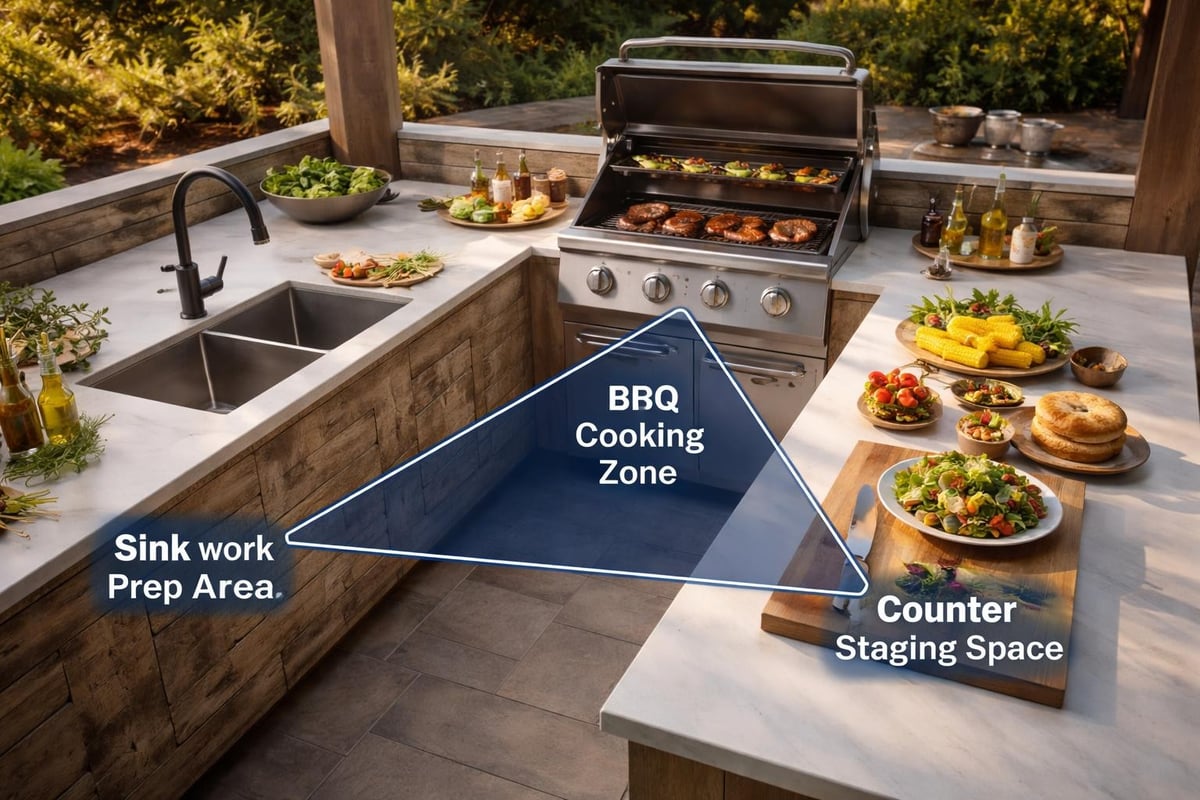
A bbq and sink pairing creates what designers call the outdoor kitchen work triangle, adapted from traditional indoor kitchen layouts. This configuration ensures efficient movement between preparation, cooking, and cleaning zones, minimising unnecessary steps whilst maximising productivity during meal preparation.
The sink serves multiple critical functions beyond simple dishwashing. It provides a dedicated space for rinsing vegetables, filling pots, cleaning utensils mid-cook, and maintaining hygiene throughout the cooking process. Meanwhile, the BBQ acts as the primary heat source, whether for direct grilling, smoking, or indirect roasting. Together, these elements enable complete meal preparation outdoors without constant trips back to the house.
Positioning your bbq and sink requires careful spatial planning. Industry best practice suggests maintaining between 900mm and 1200mm of worktop space between these two zones. This creates adequate preparation area whilst preventing water splashes from reaching hot cooking surfaces.
Consider the natural flow of cooking activities:
The sink should ideally be positioned upwind of the BBQ to prevent smoke and cooking odours from affecting the washing area. This subtle detail significantly enhances the user experience, particularly during extended cooking sessions when multiple dishes are being prepared simultaneously.
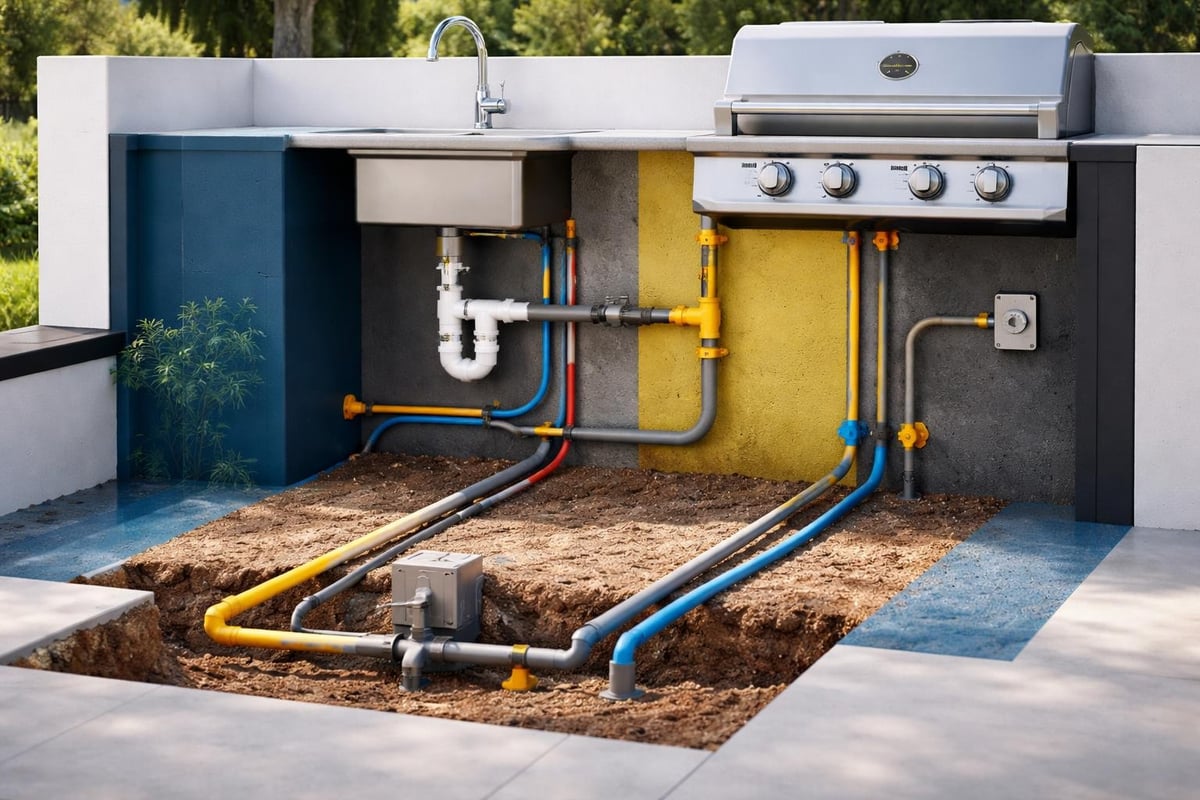
Installing a sink in an outdoor kitchen environment presents unique technical challenges compared to indoor installations. Proper plumbing infrastructure must account for weather exposure, freeze protection, and compliance with UK building regulations.
Your outdoor sink requires both hot and cold water supply lines, ideally branching from your main household system. Copper or PEX piping represents the most durable options for exterior installations, with proper insulation protecting against winter freezing. Many luxury installations incorporate recirculating hot water systems, ensuring immediate access to hot water without wasteful running whilst waiting for temperature.
For year-round functionality, consider these essential elements:
Effective drainage proves equally critical to supply. Your sink's waste pipe must connect to either your main household drainage system or a dedicated soakaway, depending on local authority requirements. The waste pipe requires a minimum fall of 1:40 to ensure proper drainage, with accessible rodding points for maintenance.
| Drainage Option | Best For | Considerations |
|---|---|---|
| Mains Connection | Permanent installations | Requires building control notification |
| Soakaway System | Garden locations | Needs adequate drainage area |
| Greywater Recycling | Eco-conscious designs | Additional filtration equipment |
Modern luxury BBQs demand substantial utility connections to deliver professional-grade performance. Whether selecting gas, charcoal, or hybrid systems, understanding these requirements ensures your installation performs reliably whilst meeting safety standards.
Gas-fired BBQs offer convenience and precise temperature control, making them increasingly popular in luxury outdoor kitchen designs. Natural gas connections provide unlimited fuel supply, whilst LPG installations offer flexibility for locations without mains gas access.
Professional gas installations must comply with current Gas Safe regulations. This requires qualified engineers to specify appropriate pipe sizing, install emergency shut-off valves, and test all connections for leaks. The gas supply should incorporate an isolation valve positioned within easy reach but safely distant from the BBQ itself.
Contemporary BBQs frequently incorporate electronic ignition systems, rotisserie motors, lighting, and digital temperature controls. These features necessitate weatherproof electrical supplies, typically requiring dedicated circuits protected by RCD devices.
Your electrical infrastructure should include:
The materials chosen for your bbq and sink installation fundamentally impact longevity, maintenance requirements, and aesthetic cohesion. Outdoor environments demand materials that withstand temperature extremes, moisture exposure, and UV radiation whilst maintaining their appearance.
Stainless steel dominates outdoor sink specifications, offering exceptional durability and corrosion resistance. Grade 304 stainless steel represents the minimum standard, whilst Grade 316 provides superior protection in coastal environments where salt air accelerates corrosion.
Consider these premium alternatives for distinctive aesthetics:
The worktop material bridging your bbq and sink must resist heat, stains, scratching, and weather exposure. Outdoor cooking station designs increasingly favour porcelain, granite, and engineered quartz for their exceptional performance characteristics.
Porcelain offers particular advantages for outdoor applications. Its non-porous surface resists staining and bacterial growth, whilst its UV stability prevents the fading common with some natural stones. Additionally, porcelain withstands direct contact with hot pans and dramatic temperature changes without cracking.
Beyond functional requirements, successful bbq and sink integration demands thoughtful aesthetic planning that harmonises with your broader garden design and architectural context. Contemporary outdoor kitchen ideas demonstrate how these elements can elevate rather than dominate outdoor spaces.
The visual weight of your BBQ should balance appropriately with surrounding elements. Oversized commercial-style BBQs can overwhelm modest gardens, whilst compact units may appear lost in expansive terraces. Similarly, sink sizing should reflect intended usage patterns, with larger preparation sinks complementing ambitious outdoor cooking programmes.
Counter heights typically match indoor standards at 900mm, though bespoke heights accommodate individual preferences and ergonomic requirements. Consistent height across all zones creates visual harmony whilst enabling flexible workspace utilisation.
Establishing material relationships between your bbq and sink integration strengthens design cohesion. This might involve:
The Cubic C1 Style Outdoor Kitchen exemplifies this integrated approach, offering modular configurations where BBQ, sink, and storage components share consistent design language whilst maintaining individual functionality. Its weather-resistant construction ensures year-round performance, with sleek minimalist aesthetics that complement both traditional and contemporary settings.
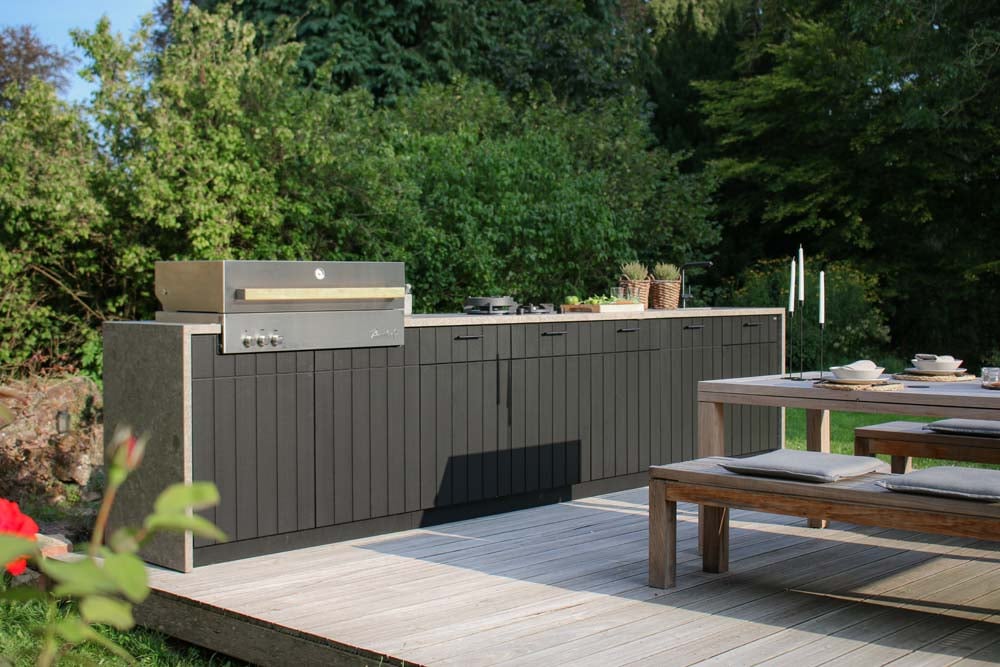
Space constraints and garden geometry significantly influence how effectively you can integrate a bbq and sink. Understanding standard configuration types helps optimise layouts for your specific circumstances.
Straight-line layouts suit narrow terraces and wall-adjacent installations. This arrangement positions the BBQ and sink along a single axis, with preparation counters between and beside these anchor points. Linear designs maximise efficiency in compact spaces whilst simplifying utility connections.
| Layout Type | Minimum Length | Ideal For | Key Features |
|---|---|---|---|
| Compact Linear | 2.4m | Small patios | BBQ + sink + minimal prep |
| Standard Linear | 3.6m | Medium terraces | Adequate prep space both sides |
| Extended Linear | 4.8m+ | Large gardens | Multiple work zones, additional appliances |
L-shaped designs provide expanded counter space whilst maintaining efficient work triangles. This layout typically positions the BBQ on one leg and sink on the other, with the corner providing prime preparation area. Planning outdoor kitchens using L-configurations enables natural traffic flow around rather than through the workspace.
Freestanding islands centralise the bbq and sink within open gardens, creating social cooking environments where the chef remains engaged with guests. This layout demands substantial space but delivers exceptional functionality, often incorporating storage underneath and seating areas opposite the cooking zones.
Optimising your bbq and sink installation extends beyond the primary fixtures to encompass thoughtful accessory integration and storage planning. These elements transform basic functionality into refined culinary experiences.
Dedicated storage for BBQ tools, cleaning supplies, and cooking utensils keeps essentials within arm's reach whilst maintaining organised appearances. Weather-resistant cabinetry should incorporate:
Consider vertical storage solutions like magnetic knife strips, hanging rail systems, and mounted paper towel holders that preserve valuable counter space around your bbq and sink.
Purpose-designed accessories elevate everyday convenience. Cutting boards sized to span sink basins create additional preparation surfaces whilst facilitating easy waste disposal. Integrated colanders and drying racks streamline post-cooking cleanup. Soap dispensers, towel rings, and integrated lighting complete the functional package, ensuring your outdoor kitchen operates as efficiently as its indoor counterpart.
British weather patterns necessitate designing bbq and sink installations that perform reliably across seasons. Creating year-round outdoor cooking lifestyles requires protective infrastructure and winterisation strategies.
Permanent or retractable overhead structures shelter your bbq and sink from precipitation whilst extending usable seasons. Pergolas with adjustable louvred roofs provide particular versatility, offering shade during summer whilst protecting equipment during winter. Solid roofing alternatives completely waterproof the cooking zone, though they require adequate ventilation to disperse cooking smoke and moisture.
Windbreak solutions prove equally important. Strategic positioning relative to existing structures, supplemented by glass screens or planted hedging, creates comfortable microclimates that enable cooking even during breezy conditions.
Protecting your outdoor sink through winter requires systematic winterisation:
BBQ winterisation varies by fuel type. Gas lines should be isolated and purged, whilst charcoal units simply require thorough cleaning and protective covering. Regular maintenance extends equipment lifespan whilst ensuring reliable spring reactivation.
Whilst DIY enthusiasts may tackle certain aspects of bbq and sink installation, comprehensive projects benefit significantly from professional expertise. Outdoor kitchen delivery and installation services ensure compliance, safety, and optimal performance.
UK building regulations govern various installation aspects. Gas connections require Gas Safe registered engineers. Electrical work must comply with Part P building regulations, typically necessitating qualified electricians. Drainage connections may require building control notification, particularly when connecting to mains sewers.
Professional installers navigate these requirements efficiently whilst ensuring installations meet warranty conditions and insurance requirements.
Proper foundations prove critical for permanent outdoor kitchen installations. The base must provide level, stable support capable of bearing substantial weight whilst facilitating drainage. Poured concrete slabs represent the gold standard, though engineered paving systems offer adequate alternatives when properly prepared.
Consider these site preparation essentials:
Preserving your bbq and sink investment requires consistent maintenance tailored to outdoor exposure conditions. Establishing routine cleaning schedules and preventative maintenance habits ensures decades of reliable service.
After each cooking session, wipe down all surfaces around your bbq and sink, removing food residue, grease, and moisture. This simple habit prevents staining and bacterial growth whilst identifying emerging issues before they escalate.
Weekly deep cleaning should address:
Quarterly inspections should examine all utility connections, searching for leaks, corrosion, or degradation. Reseal joints showing wear, tighten loose connections, and replace worn seals proactively. Gas connections warrant particular attention, with annual professional inspections recommended for safety assurance.
Stainless steel components benefit from specialised cleaning products that remove water spotting and restore lustre. Natural stone requires appropriate pH-balanced cleaners that won't damage sealers or etch surfaces.
Specifying a luxury bbq and sink installation represents significant investment, with costs varying dramatically based on equipment quality, materials selection, and installation complexity. Understanding cost structures enables informed decision-making aligned with long-term value rather than initial pricing alone.
| Element | Entry Level | Mid-Range | Premium |
|---|---|---|---|
| BBQ Unit | £800-£1,500 | £2,000-£5,000 | £6,000+ |
| Sink & Tap | £200-£400 | £500-£1,200 | £1,500+ |
| Worktops (per metre) | £150-£300 | £400-£800 | £1,000+ |
| Cabinetry (per unit) | £300-£600 | £800-£1,500 | £2,000+ |
| Installation | £1,500-£3,000 | £3,500-£6,000 | £7,000+ |
These figures represent typical UK pricing in 2026, though bespoke specifications and regional variations influence final costs. Premium brands and complex installations command higher investment whilst delivering superior performance, durability, and aesthetic refinement.
Maximising return on investment doesn't necessarily require top-tier specifications across all elements. Strategic allocation focuses premium investment where it delivers greatest impact:
Quality installations appreciate property values, with well-designed outdoor kitchens consistently ranking among top features sought by discerning buyers. Research from design authorities confirms outdoor cooking facilities enhance both lifestyle enjoyment and resale potential.
Contemporary bbq and sink designs reflect evolving lifestyle preferences and technological capabilities. Staying informed about emerging trends ensures installations remain relevant and functional for years ahead.
Connected appliances increasingly feature in luxury outdoor kitchens. Smart BBQs offer remote temperature monitoring, automated cooking programmes, and integration with recipe apps. Voice-activated controls enable hands-free operation when managing multiple dishes simultaneously.
Sensor-activated taps reduce water waste whilst maintaining hygiene, particularly valuable when handling raw proteins. LED lighting systems adjust colour temperature and intensity according to time of day and activity, creating appropriate ambience for both cooking and entertaining.
Environmental consciousness influences contemporary specifications. Water-efficient taps reduce consumption without compromising functionality. Greywater recycling systems capture sink water for garden irrigation. Solar panels power electrical requirements, whilst bioethanol supplementary heating extends season usability with minimal environmental impact.
Material selection increasingly favours recycled content and local sourcing, reducing transportation emissions whilst supporting regional craftsmanship. These principles align perfectly with Cotswold values of heritage, quality, and environmental stewardship.
Modern installations blur traditional distinctions between cooking, dining, and relaxation zones. Bbq and sink configurations incorporate flexible elements like:
Equipment compatibility ensures all components within your bbq and sink installation work harmoniously together. Curated brand selections eliminate guesswork, providing confidence that aesthetic styles, technical specifications, and quality standards align throughout the project.
Premium manufacturers engineer products specifically for outdoor environments, incorporating weather resistance, UV stability, and corrosion protection from initial design stages. This purpose-built approach dramatically outperforms adapted indoor equipment in longevity and performance.
Consider these selection criteria when evaluating options:
Established brands bring proven track records and refined manufacturing processes that deliver consistent quality. Whilst initial costs may exceed budget alternatives, lifecycle costs favour premium equipment through reduced maintenance, longer service life, and sustained performance.
Thoughtfully integrating a bbq and sink creates the foundation for exceptional outdoor living experiences that extend far beyond simple al fresco dining. By carefully considering workflow efficiency, utility requirements, material durability, and design aesthetics, you craft outdoor culinary spaces that rival indoor kitchens whilst celebrating the distinctive pleasures of cooking in nature. The Cotswold Cooking Company brings decades of expertise to every project, guiding discerning clients through design, specification, and installation to create bespoke outdoor kitchens that transform gardens into year-round entertaining destinations. Discover how our consultative approach and curated brand partnerships can elevate your outdoor living vision at Cotswold Cooking Company.

Leave a comment