


The allure of outdoor dining has evolved beyond seasonal gatherings into a sophisticated, year-round lifestyle choice. Outdoor covered kitchens represent the pinnacle of this transformation, blending architectural integrity with culinary functionality to create spaces that withstand British weather whilst delivering exceptional entertaining experiences. These permanent structures extend living spaces into the garden, offering protection from rain and sun whilst maintaining the connection to nature that makes alfresco cooking so appealing. For discerning homeowners across the Cotswolds and beyond, a thoughtfully designed covered outdoor kitchen becomes a defining feature of the property, elevating both lifestyle and value.
Weather protection stands as the primary advantage of covered configurations. British gardens demand resilience, and overhead shelter ensures your investment remains functional throughout unpredictable seasons. Rain, morning dew, and intense summer sun all compromise unprotected equipment and surfaces, whilst covered structures maintain consistent usability.
The extended cooking season transforms how families engage with their gardens. Rather than limiting outdoor meals to July and August, a properly sheltered kitchen enables entertaining from early spring through late autumn. This longevity justifies the initial investment and maximises return on space.
Equipment preservation becomes significantly easier under permanent cover. Premium grills, pizza ovens, and integrated appliances maintain their performance and aesthetic appeal when shielded from direct weather exposure. Maintenance requirements decrease, and the lifespan of high-end cooking equipment extends considerably.
Key benefits of covered outdoor kitchens include:
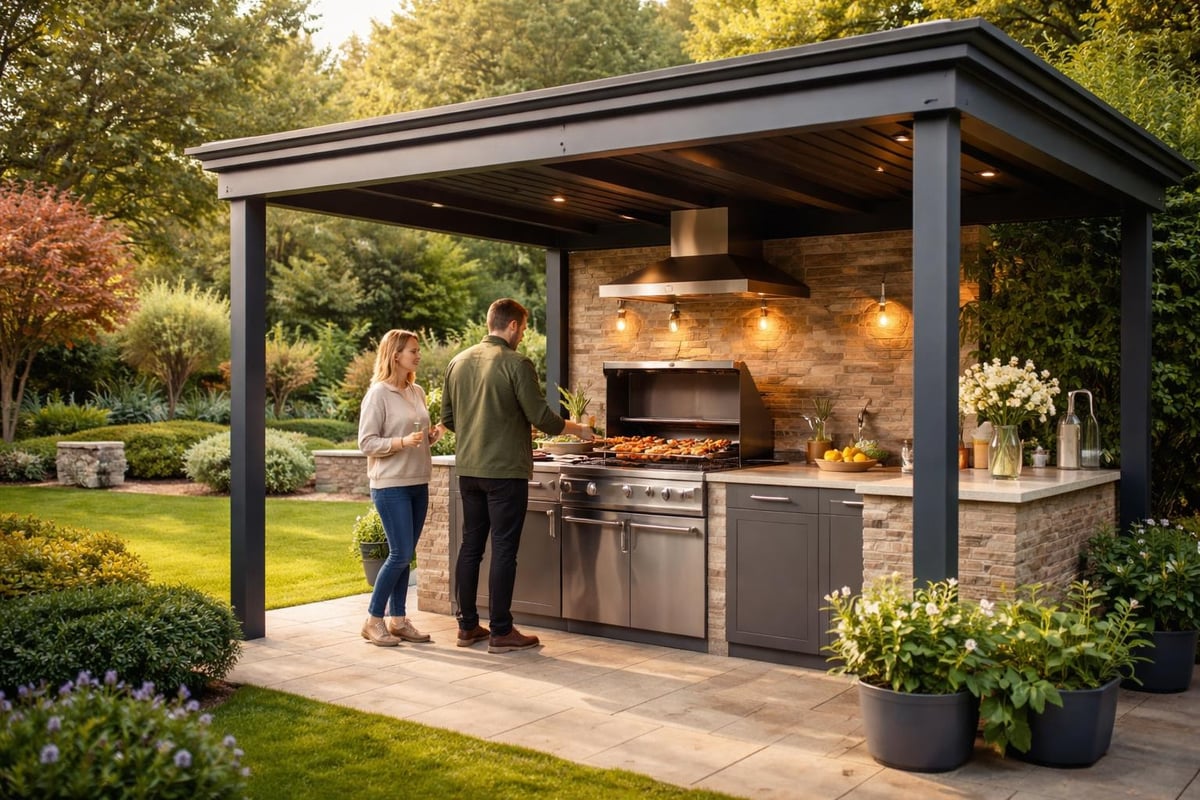
Traditional pergola designs offer timeless elegance that complements Cotswold stone properties and period homes. These open-beam structures provide partial coverage whilst maintaining airflow and creating dappled shade. When combined with retractable canopies or polycarbonate roofing, pergolas deliver weather protection without sacrificing the outdoor atmosphere that makes alfresco dining special.
Modern flat-roof canopies suit contemporary architecture and minimalist garden designs. Clean lines and concealed drainage systems create sleek profiles that integrate seamlessly with modern extensions. These structures often incorporate LED lighting strips and heated panels, extending usability into evening hours and cooler months.
Pavilion-style covered kitchens create distinct garden rooms with defined boundaries and substantial presence. Four-post designs with solid roofing establish dedicated cooking and dining zones that feel like permanent outdoor rooms. This approach works particularly well for larger gardens where the structure becomes a focal point visible from the main residence.
| Architectural Style | Best Suited For | Weather Protection | Aesthetic Impact |
|---|---|---|---|
| Traditional Pergola | Period properties, cottage gardens | Moderate (with additions) | Timeless, blends with landscape |
| Modern Canopy | Contemporary homes, minimalist spaces | Excellent | Sleek, architectural statement |
| Full Pavilion | Large gardens, estate properties | Superior | Substantial, creates distinct room |
| Lean-to Design | Attached to house, smaller gardens | Very good | Integrated, space-efficient |
Lean-to configurations attach directly to the home, creating seamless transitions between indoor and outdoor spaces. This approach maximises efficiency for smaller gardens whilst providing excellent weather protection. The shared wall often allows for utilities integration, simplifying plumbing and electrical installations.
Cooking zones require careful positioning to manage heat, smoke, and workflow efficiency. Primary cooking equipment-whether gas grills, charcoal systems, or hybrid pizza ovens-should occupy the most ventilated positions within the covered structure. Adequate clearance from roofing materials prevents heat damage and ensures smoke dispersal.
Preparation areas demand weather-resistant surfaces positioned at ergonomic heights. Natural stone, porcelain, or marine-grade stainless steel provide durability whilst maintaining luxury aesthetics. These zones benefit from proximity to both cooking equipment and refrigeration, minimising movement during meal preparation.
Built-in cabinetry protects utensils, servingware, and ingredients from moisture whilst keeping essentials immediately accessible. Marine-grade stainless steel or powder-coated aluminium cabinets withstand humidity and temperature fluctuations better than traditional kitchen materials. Soft-close mechanisms and sealed edges prevent water ingress during heavy rain.
Refrigeration integration transforms covered kitchens from occasional-use spaces into fully functional cooking environments. Outdoor-rated refrigerators and beverage centres maintain consistent temperatures whilst withstanding exposure. Under-counter configurations preserve counter space whilst keeping ingredients and drinks at optimal temperatures.
The successful integration of multiple cooking methods-grilling, smoking, pizza making, and traditional cooking-creates versatility that justifies the investment. Many homeowners discover that outdoor cooking stations become their preferred venue even for everyday meals once properly equipped.
Roofing materials must balance weather resistance, aesthetic appeal, and structural requirements. Slate and clay tiles suit traditional properties, offering exceptional durability and period-appropriate character. These natural materials age gracefully, developing patina that enhances rather than detracts from appearance.
Polycarbonate panels provide transparent or translucent coverage that maintains natural light whilst blocking rain and UV radiation. Modern systems incorporate aluminium frames with integrated drainage, creating clean profiles that suit contemporary designs. These materials prove particularly effective for pergola-style structures where maintaining openness remains important.
Countertop materials comparison:
Cabinetry construction determines long-term satisfaction and maintenance requirements. Marine-grade stainless steel remains the premium choice, offering complete weather resistance and professional aesthetics. Powder-coated aluminium provides excellent durability at lower cost, whilst treated timber brings warmth and character when properly sealed and maintained.
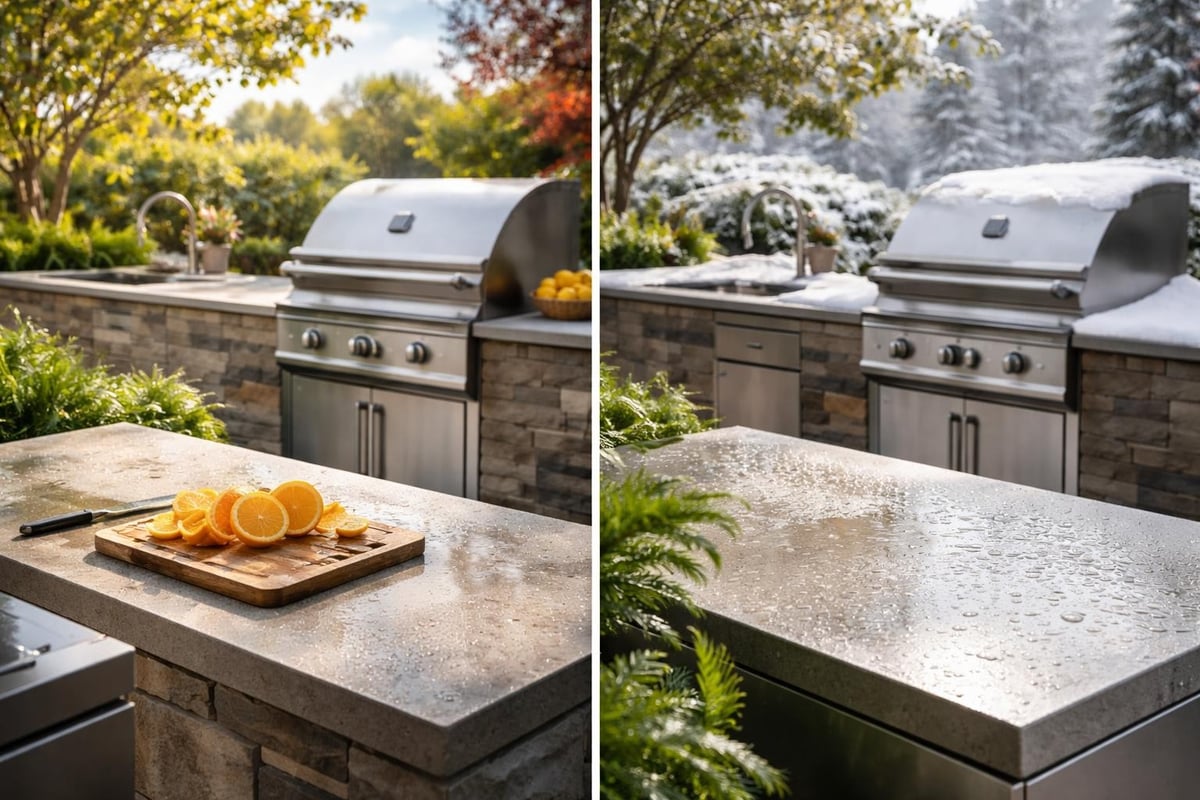
Electrical installations require compliance with outdoor wiring standards and weatherproof specifications. Dedicated circuits for high-draw appliances prevent overloading, whilst GFCI protection ensures safety near water sources. Professional installation by qualified electricians remains essential, particularly for integrated lighting systems and appliance connections.
Plumbing considerations vary based on proximity to existing utilities and local climate conditions. Cold water lines require insulation and drainage provisions to prevent freezing damage during winter months. Hot water access elevates functionality significantly, though it necessitates additional infrastructure for heating and delivery.
Gas supply options include natural gas extensions from the main residence or dedicated LPG installations. Natural gas provides unlimited supply and eliminates bottle changes, making it ideal for frequent entertaining. LPG offers flexibility for remote locations whilst delivering equivalent performance. Both systems require professional installation and periodic safety inspections.
Lighting transforms covered kitchens into evening entertainment venues. Task lighting above preparation and cooking zones ensures safety and precision, whilst ambient lighting creates atmosphere for dining. LED systems offer energy efficiency and longevity, with dimming capabilities that adjust mood throughout the evening. Many designers now incorporate outdoor cooking equipment with integrated lighting for cohesive aesthetics.
Heating solutions extend the practical season well into autumn and enable comfortable use during cooler spring evenings. Infrared heaters provide targeted warmth without consuming oxygen or requiring ventilation, making them ideal for covered structures. Radiant panel systems integrate cleanly into roofing designs, delivering invisible comfort.
Side panels and screening systems offer flexible weather protection that adapts to conditions. Retractable glass panels create enclosed rooms during inclement weather whilst opening completely for summer entertaining. These systems prove particularly valuable in British climates where conditions change rapidly throughout the day.
Year-round usability features:
Wind protection requires strategic positioning and appropriate screening. Prevailing wind direction influences optimal orientation, whilst strategic landscaping or permanent screens create sheltered zones. Glass panels provide visibility whilst blocking wind, maintaining the open feel that distinguishes outdoor kitchens from conventional rooms.
Matching architectural language ensures covered kitchens enhance rather than compete with the main residence. Period properties benefit from traditional materials and proportions that echo existing structures, whilst contemporary homes accommodate bolder, more experimental designs. Ideas for outdoor barbecue grills often spark broader design concepts that maintain visual cohesion.
Colour palettes should complement the home's exterior whilst considering how materials weather over time. Natural stone develops patina gracefully, whilst painted surfaces require maintenance commitments. Stainless steel and powder-coated metals maintain consistent appearance with minimal intervention.
Structure size must balance functionality with garden proportions. Oversized installations overwhelm modest gardens, whilst undersized structures fail to deliver adequate working space or weather protection. Professional design consultations ensure appropriate scaling based on site conditions, intended use, and aesthetic goals.
Ceiling heights influence both comfort and functionality. Higher clearances improve smoke dispersal and reduce heat accumulation, particularly important for charcoal grills or wood-fired pizza ovens. However, excessive height compromises weather protection and heating efficiency. Most covered kitchens perform optimally with ceiling heights between 2.4 and 3 metres.
Sightlines from principal rooms ensure visual connection between indoor and outdoor spaces. Positioning the covered kitchen within view of kitchen or living areas encourages use whilst allowing hosts to engage with guests throughout entertaining. This connection proves particularly valuable during meal preparation when cooks often feel isolated in remote garden locations.
Built-in grills deliver professional performance and seamless integration within custom cabinetry. Premium manufacturers engineer these appliances specifically for outdoor installation, with weather-resistant components and superior heat retention. Stainless steel construction ensures longevity, whilst features like infrared burners and rotisseries expand culinary possibilities.
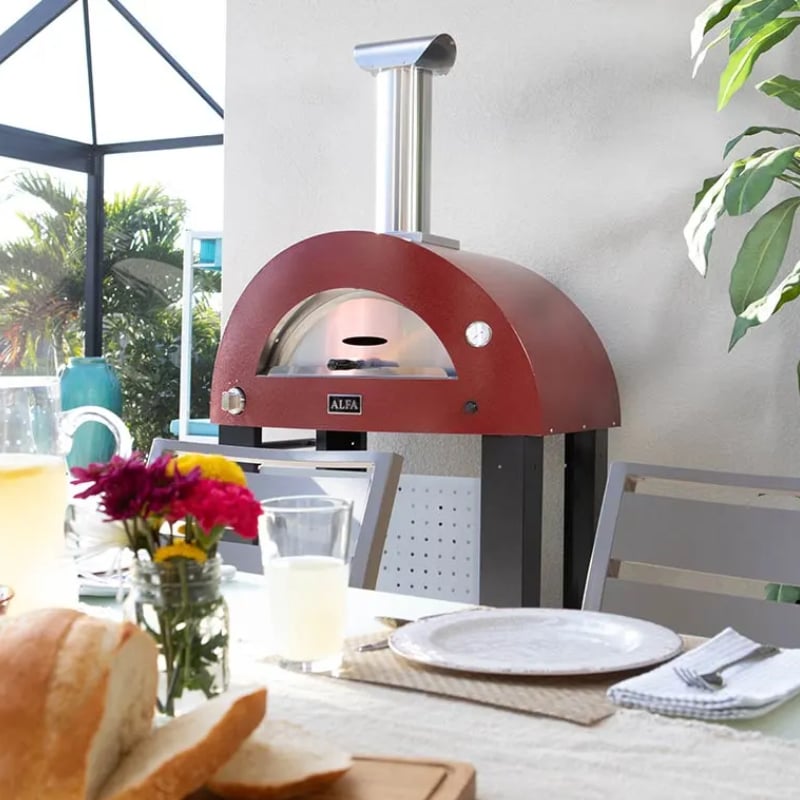
Pizza ovens have become defining features of luxury outdoor kitchens, transforming casual gatherings into authentic culinary experiences. For those seeking the perfect balance of convenience and traditional flavour, the Alfa Forni Moderno Hybrid Pizza Oven offers exceptional versatility, allowing cooking with either LPG gas or wood fuel whilst reaching the 500°C temperatures essential for authentic Neapolitan results in approximately 90 seconds.
Refrigeration systems rated for outdoor use withstand temperature fluctuations and humidity that would compromise residential models. Sealed compressor compartments, weatherproof exteriors, and enhanced insulation maintain consistent performance. Under-counter configurations preserve valuable workspace whilst keeping ingredients optimally chilled.
| Equipment Category | Essential Features | Premium Additions | Installation Considerations |
|---|---|---|---|
| Built-in Grills | Stainless construction, multiple burners | Infrared zones, rotisserie, smoker box | Ventilation clearance, gas supply |
| Pizza Ovens | High heat retention, authentic cooking | Hybrid fuel options, integrated stands | Heat shielding, sufficient clearance |
| Refrigeration | Outdoor-rated, sealed components | Glass doors, dual zones, ice makers | Electrical supply, drainage |
| Sinks & Prep | Stainless steel, weatherproof taps | Hot water, disposal units | Plumbing access, drainage slope |
Sink installations require careful planning for drainage and water supply. Stainless steel models withstand weather exposure whilst complementing professional-grade equipment. Hot water access proves particularly valuable for cleaning and food preparation, though it necessitates additional infrastructure for heating.
Pathways connecting the covered kitchen to the main residence require all-weather surfacing and adequate width for service and entertaining. Natural stone, porcelain pavers, or resin-bound aggregates provide durability whilst maintaining aesthetic coherence. Lighting along paths ensures safe navigation during evening use.
Planting schemes soften architectural structures whilst providing privacy and sensory enhancement. Aromatic herbs positioned near preparation zones offer fresh ingredients and pleasant fragrance. Climbing plants trained along pergola beams create natural shading whilst maintaining airflow.
Dining zones benefit from proximity to cooking areas whilst maintaining sufficient separation to protect guests from heat and smoke. Covered dining spaces create cohesive outdoor rooms, though many homeowners prefer flexible arrangements that adapt to group sizes and weather conditions. Luxury outdoor furniture completes the space with weather-resistant elegance.
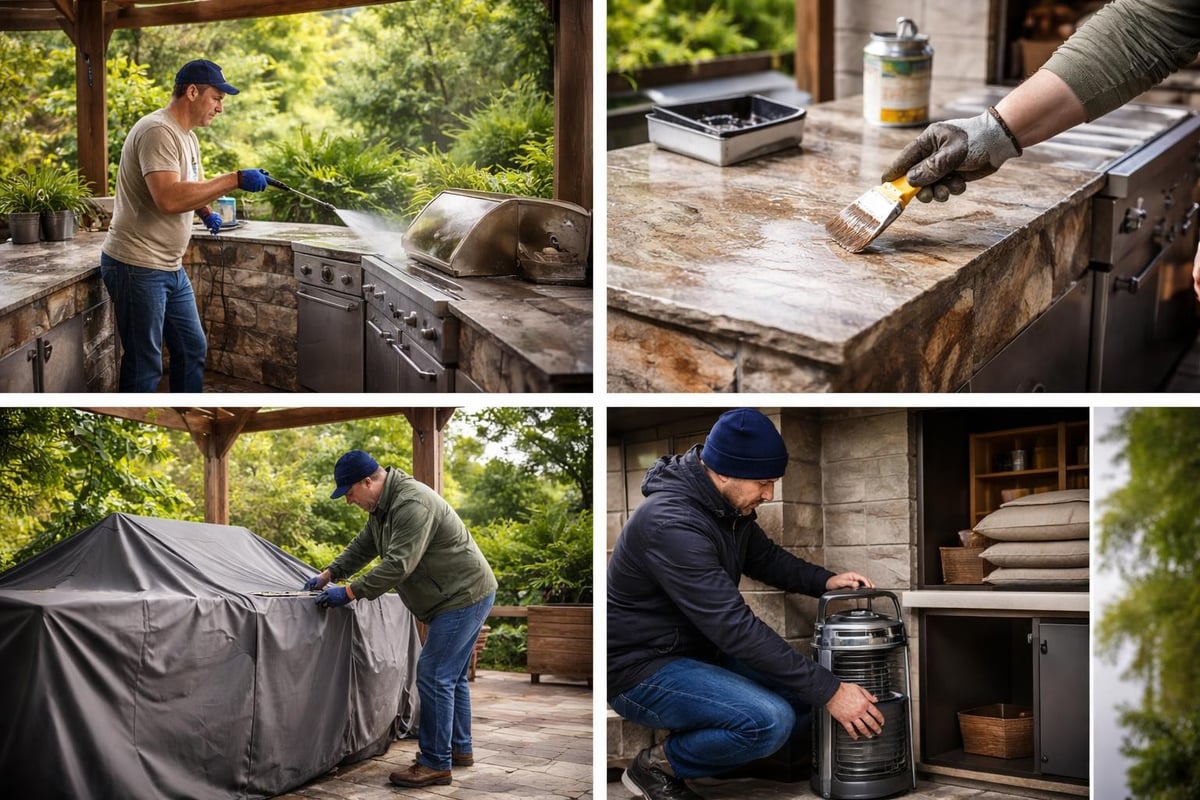
Regular cleaning prevents buildup that accelerates weathering and maintains hygiene standards. Stainless steel surfaces benefit from specialised cleaners that remove fingerprints and protect against corrosion. Natural stone requires periodic sealing to prevent staining and moisture penetration.
Seasonal maintenance schedule:
Equipment servicing ensures optimal performance and extends appliance lifespan. Gas systems require annual safety inspections, whilst refrigeration units benefit from condenser cleaning and seal checks. Professional servicing identifies potential issues before they escalate into costly repairs.
Winter preparation varies based on structure type and climate exposure. Draining water lines prevents freeze damage in unheated spaces, whilst covering or storing removable equipment protects against severe weather. Some homeowners choose to winterise completely, whilst others maintain year-round functionality through heating and screening systems.
Budget ranges span from modest £15,000 installations featuring basic pergola coverage and quality appliances to comprehensive £100,000+ projects incorporating full pavilions, premium equipment suites, and architectural integration. Most homeowners investing in covered outdoor kitchens allocate £30,000-£60,000 for well-equipped spaces that balance quality with value.
Material selection significantly influences total investment. Natural stone and traditional roofing materials command premium pricing but deliver timeless aesthetics and exceptional durability. Modern alternatives like porcelain and powder-coated metals reduce costs whilst maintaining performance standards suitable for British climates.
Equipment choices represent the largest variable expense. Entry-level built-in grills start around £2,000, whilst professional-grade systems with multiple cooking zones exceed £10,000. Refrigeration, pizza ovens, and integrated sinks add £5,000-£15,000 depending on specifications and brand selections.
Installation complexity affects labour costs substantially. Simple lean-to structures with straightforward utility connections minimise installation expense, whilst freestanding pavilions requiring extensive groundwork and utilities extensions increase project costs. Professional design consultations ensure realistic budgeting based on specific site conditions and requirements.
Property value enhancement justifies significant investment for many homeowners. Well-executed outdoor kitchens appeal strongly to buyers seeking lifestyle properties, particularly in premium markets across the Cotswolds, Oxfordshire, and surrounding regions. Estate agents consistently report that outdoor kitchen installations from specialist providers deliver returns exceeding initial investment when properties enter the market.
Planning permission requirements vary based on structure size, proximity to boundaries, and local authority regulations. Permitted development rights often accommodate modest covered kitchens without formal applications, though compliance with size and positioning restrictions remains essential. Conservation areas and listed buildings face stricter requirements necessitating early consultation with planning authorities.
Building regulations govern structural integrity, electrical installations, and gas systems regardless of planning permission status. Compliance ensures safety whilst protecting property value, as non-compliant work creates complications during future sales. Professional contractors familiar with outdoor kitchen construction navigate these requirements efficiently.
Boundary considerations influence positioning and design, particularly for properties with close neighbours. Privacy screens, strategic orientation, and consideration of smoke direction maintain neighbourly relations whilst maximising functionality. Many designers incorporate covered outdoor kitchen concepts that address these concerns during initial planning phases.
Minimalist aesthetics dominate current design preferences, with clean lines and concealed utilities creating sophisticated outdoor rooms. Integrated appliances disappear within cabinetry when not in use, whilst flush-mounted surfaces eliminate visual clutter. This approach particularly suits contemporary properties and modern garden designs.
Sustainable materials gain increasing prominence as environmental consciousness influences design decisions. Reclaimed timber, recycled composite decking, and locally sourced stone reduce environmental impact whilst adding character. Energy-efficient LED lighting and induction cooking appliances further minimise ecological footprint.
Smart technology integration enhances convenience and control. App-controlled lighting systems, remote temperature monitoring for refrigeration, and voice-activated features bring modern expectations to outdoor environments. However, weatherproofing requirements and connectivity challenges demand careful specification and professional installation.
Multi-functional spaces accommodate diverse activities beyond cooking and dining. Comfortable seating zones, entertainment systems, and ambient features transform covered kitchens into comprehensive outdoor living rooms. This versatility maximises return on investment by encouraging use across different seasons and occasions, as demonstrated by innovative outdoor kitchen designs showcased by leading specialists.
Professional design services deliver cohesive results that integrate seamlessly with existing architecture whilst maximising functionality. Experienced designers understand material performance, regulatory requirements, and construction methodologies that ensure long-term satisfaction. Their expertise proves particularly valuable for complex projects involving significant structural work or premium equipment integration.
Consultative approaches characteristic of specialist retailers provide invaluable guidance throughout the process. From initial concept development through equipment selection and installation coordination, professional support ensures informed decisions aligned with lifestyle requirements and budget parameters. This service model distinguishes luxury providers from basic suppliers.
DIY installations appeal to homeowners with relevant skills and modest ambitions, though outdoor covered kitchens present unique challenges. Weather exposure, utility connections, and structural requirements demand expertise beyond typical DIY capabilities. Many successful projects adopt hybrid approaches, with professional contractors handling structural and utilities work whilst homeowners complete finishing details.
Value assessment should consider long-term satisfaction rather than initial cost minimisation. Professional installations typically include warranties, proper material specifications, and construction standards that prevent expensive remediation. The construction methods employed fundamentally determine whether installations deliver decades of reliable service or require premature replacement.
Cotswold properties benefit from designs that honour local vernacular whilst accommodating modern functionality. Natural stone prevalent throughout the region provides cohesive material palettes, whilst traditional roofing methods complement period architecture. However, contemporary interpretations prevent pastiche whilst respecting architectural heritage.
Climate variations across British regions influence material selection and design priorities. Coastal locations demand enhanced corrosion resistance, favouring marine-grade stainless steel and treated materials. Northern installations prioritise heating and wind protection, whilst southern gardens may emphasise shade and ventilation.
Urban gardens present space constraints that require creative solutions. Vertical integration, compact equipment, and multi-functional elements maximise limited footprints. Lean-to designs attached to existing structures prove particularly efficient for terraced properties and modest outdoor spaces.
Rural estates accommodate expansive covered kitchens that function as entertaining pavilions capable of hosting substantial gatherings. These installations often incorporate multiple cooking zones, comprehensive dining accommodation, and luxury amenities that justify significant investment through exceptional lifestyle enhancement.
Outdoor covered kitchens represent a sophisticated evolution in British garden design, delivering year-round functionality that transforms how families engage with outdoor spaces. By carefully considering architectural integration, premium materials, and professional-grade equipment, these installations become defining property features that enhance both lifestyle and value. Whether you're envisioning a traditional pergola-covered cooking space or a comprehensive outdoor pavilion, Cotswold Cooking Company offers the expertise, curated brands, and consultative approach essential for creating refined culinary destinations tailored to your specific requirements and architectural context.

Leave a comment