


Creating a permanent outdoor cooking station represents a significant investment in both your property and lifestyle. A bbq built in solution transforms a simple patio into a sophisticated culinary destination, offering the convenience of indoor kitchens with the ambience of alfresco dining. Unlike portable alternatives, integrated grills become architectural features that enhance property value whilst delivering professional-grade performance season after season. For discerning homeowners seeking to elevate their outdoor living spaces, understanding the nuances of built-in barbecue design ensures your investment delivers lasting satisfaction.
The decision to install a bbq built in rather than a freestanding unit fundamentally changes how you approach outdoor entertaining. Integrated barbecues offer superior stability, enhanced safety, and seamless aesthetic integration with your garden design.
Permanent installation eliminates the annual ritual of storage and setup. Your cooking station remains ready whenever inspiration strikes, protected within weather-resistant cabinetry and countertops. This convenience encourages more frequent use, transforming outdoor cooking from occasional novelty into everyday pleasure.
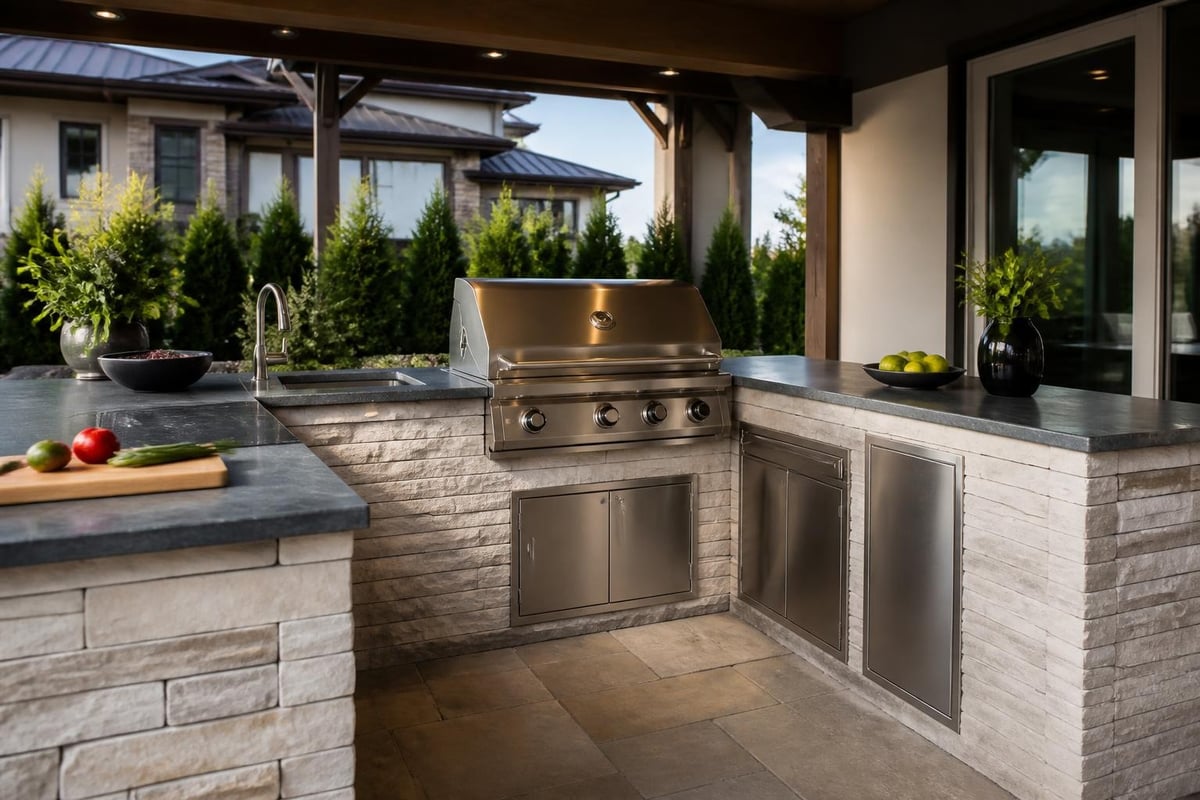
From a design perspective, built-in solutions allow complete customisation of your cooking environment. Counter heights, work surface materials, storage configurations, and appliance placement can be tailored precisely to your requirements. The outdoor cooking collection demonstrates how integrated appliances create cohesive design statements rather than isolated equipment pieces.
Built-in barbecues typically deliver superior cooking performance compared to portable alternatives. Larger cooking surfaces, more powerful burner systems, and better heat retention translate directly to improved results.
| Feature | Built-In BBQ | Portable BBQ |
|---|---|---|
| Cooking surface | 600-1200 sq inches | 300-500 sq inches |
| BTU output | 50,000-120,000+ | 20,000-40,000 |
| Heat retention | Excellent (insulated) | Moderate |
| Lifespan | 15-25+ years | 3-8 years |
| Wind protection | Superior | Limited |
The substantial construction of integrated units provides exceptional wind protection, maintaining consistent temperatures even in exposed locations. This reliability proves particularly valuable in British gardens where changeable weather can challenge outdoor cooking plans.
Planning your bbq built in installation requires careful attention to practical, regulatory, and design factors. Thorough preparation ensures your investment delivers optimal functionality and compliance.
Positioning determines success. Your barbecue requires sufficient clearance from combustible materials, adequate ventilation, and convenient access to utilities. Most manufacturers specify minimum distances from walls, overhangs, and structures, typically ranging from 24 to 36 inches.
Consider prevailing wind patterns to prevent smoke drifting toward seating areas or neighbouring properties. Proximity to your indoor kitchen streamlines food preparation whilst maintaining separation between cooking heat and social spaces. The comprehensive built-in grill buying guide offers detailed spatial planning recommendations.
UK building regulations apply to permanent outdoor structures, particularly concerning gas connections, electrical installations, and substantial masonry work. Gas-fired built-in barbecues must comply with Gas Safety (Installation and Use) Regulations 1998, requiring installation by Gas Safe registered engineers.
Planning permission typically isn't required for garden BBQ stations unless your property has specific restrictions or you're creating substantial structures. However, Building Regulations approval may be necessary for significant electrical or gas installations. Consulting your local authority prevents costly modifications later.
The fuel choice for your bbq built in fundamentally influences cooking style, maintenance requirements, and operational costs. Each option offers distinct advantages suited to different preferences.
Natural gas provides ultimate convenience with unlimited fuel supply and instant ignition. Once connected to your mains supply, you'll never need to monitor fuel levels or exchange cylinders. Running costs prove economical compared to LPG, particularly for frequent users.
Installation requires professional Gas Safe engineers to connect supply lines and ensure compliance. This upfront cost offsets through years of hassle-free operation. Natural gas burns cleanly, producing minimal residue and simplifying maintenance routines.
LPG offers installation flexibility without requiring mains gas connections. Built-in systems typically connect to larger propane tanks concealed within cabinetry, providing extended cooking sessions without cylinder changes.
This fuel type delivers higher heat output than natural gas, reaching searing temperatures quickly. For properties without mains gas access, LPG represents the logical choice for permanent installations.
Traditional charcoal built-in systems appeal to purists seeking authentic smoke flavour and high-heat searing capabilities. Specialised grills and smokers designed for permanent installation combine charcoal versatility with the refinement expected in luxury outdoor kitchens.
Hybrid systems increasingly popular in 2026 offer ultimate flexibility, accommodating multiple fuel types within single units. This versatility ensures you're prepared for any culinary technique, from low-and-slow smoking to high-temperature grilling.
Successful bbq built in installations harmonise with surrounding architecture and landscape design. The barbecue should feel intentional rather than added as afterthought.
Material selection establishes visual continuity. Stainless steel appliances complement contemporary aesthetics whilst offering exceptional durability and weather resistance. For traditional settings, natural stone surrounds and aged brass accents create timeless appeal reflecting Cotswold heritage.
Counter surfaces require careful consideration balancing aesthetics with functionality. Granite, quartz, and porcelain tiles withstand outdoor conditions whilst providing heat-resistant work surfaces. Incorporating multiple material textures adds visual interest without compromising practicality.
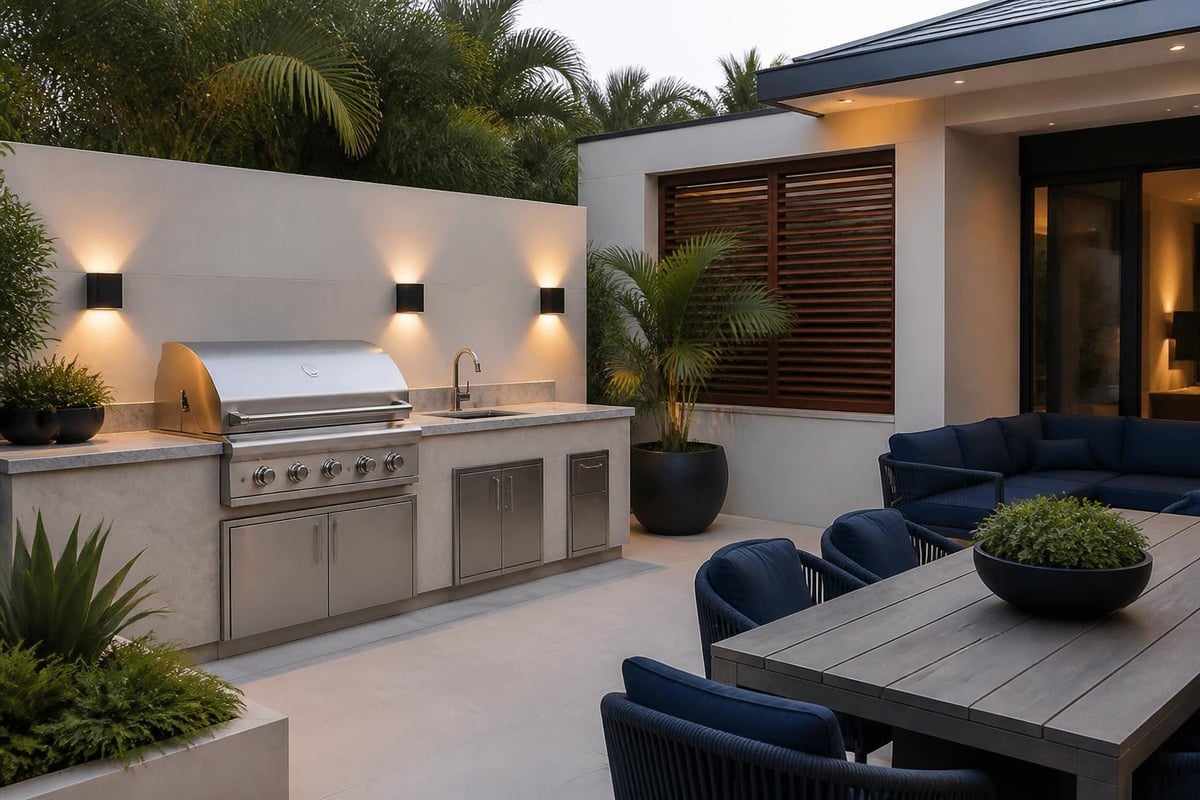
Purpose-designed outdoor cabinetry transforms your bbq built in from isolated appliance into complete cooking environment. Weather-resistant materials, including marine-grade polymer, stainless steel, and treated hardwoods, ensure longevity despite British climate challenges.
Storage should accommodate:
Integrated refrigeration units keep ingredients fresh and beverages chilled, eliminating constant trips indoors. The Cubic C1 Style Outdoor Kitchen exemplifies how modular cabinetry systems create comprehensive outdoor cooking environments with seamless aesthetic flow.
Built-in outdoor kitchens benefit enormously from professional design consultation, particularly when integrating multiple appliances and utilities. Specialists like Captivating Group bring expertise in structural requirements, ensuring foundations support substantial masonry work whilst accommodating utility connections.
Installing a bbq built in requires robust structural support and proper ventilation. Understanding construction methods helps you plan realistic timelines and budgets.
Freestanding islands offer design flexibility, positioning your barbecue away from walls to create 360-degree access. This approach suits larger gardens where the cooking station becomes a central gathering point.
Island construction typically involves:
The DIY guide for building BBQ grill stations provides detailed construction methodologies, though professional installation ensures compliance and longevity.
Wall-mounted configurations maximise space efficiency in smaller gardens whilst simplifying utility connections. This approach creates defined zones, separating cooking from dining areas.
Ventilation becomes critical when installing against structures. Adequate clearance prevents heat damage whilst allowing proper airflow. Consider overhead extraction if installing beneath covered areas or pergolas.
Prefabricated outdoor kitchen modules offer middle ground between DIY construction and fully custom designs. These engineered systems arrive with integrated frameworks, requiring only foundations and utility connections.
Quality varies significantly across manufacturers, making brand selection crucial. Premium systems feature reinforced construction, superior weather sealing, and comprehensive warranties reflecting manufacturer confidence.
Beyond the primary cooking surface, thoughtful accessory integration elevates your bbq built in from functional to exceptional.
Multiple burner configurations provide versatility. Main cooking areas typically feature 3-6 burners, whilst side burners accommodate sauces, side dishes, and auxiliary cooking. Infrared sear stations deliver restaurant-quality results on steaks and chops.
Rotisserie systems expand culinary possibilities, handling whole chickens, roasts, and specialty preparations. Modern built-in barbecues often include integrated rotisserie burners and motor housings as standard features.
| Accessory | Function | Priority Level |
|---|---|---|
| Side burner | Sauce preparation, sides | High |
| Infrared sear zone | High-heat searing | High |
| Rotisserie kit | Whole roasting | Medium |
| Smoker box | Wood smoke flavour | Medium |
| Work lights | Evening cooking | High |
| Warming rack | Food holding | Medium |
Running water transforms outdoor cooking efficiency. Integrated sinks enable vegetable washing, hands cleaning, and equipment rinsing without indoor trips. Hot water connections prove particularly valuable for cleaning and food safety.
Electrical outlets power accessories including work lights, refrigeration units, and small appliances. Ensure installations comply with outdoor electrical standards, incorporating proper weatherproofing and RCD protection.
Your bbq built in represents significant investment deserving materials that withstand decades of British weather. Understanding material properties guides informed decisions.
Stainless steel dominates premium built-in barbecues for excellent reasons. Type 304 stainless offers good corrosion resistance suitable for most UK locations. Coastal properties benefit from Type 316 stainless, containing molybdenum for enhanced salt-spray resistance.
Burner quality matters enormously for longevity. Cast stainless steel and brass burners outlast alternatives, maintaining consistent performance through years of thermal cycling. Warranty coverage often reflects manufacturer confidence in burner durability.
Cooking grates come in several materials:
Surrounding materials must withstand moisture, temperature extremes, and UV exposure without degrading. Natural stone including granite, limestone, and slate provides timeless aesthetics with proven durability.
Engineered quartz offers consistency unavailable in natural stone, with superior stain resistance and minimal maintenance requirements. Porcelain tiles handle thermal shock exceptionally well, suitable for zones immediately adjacent to cooking surfaces.
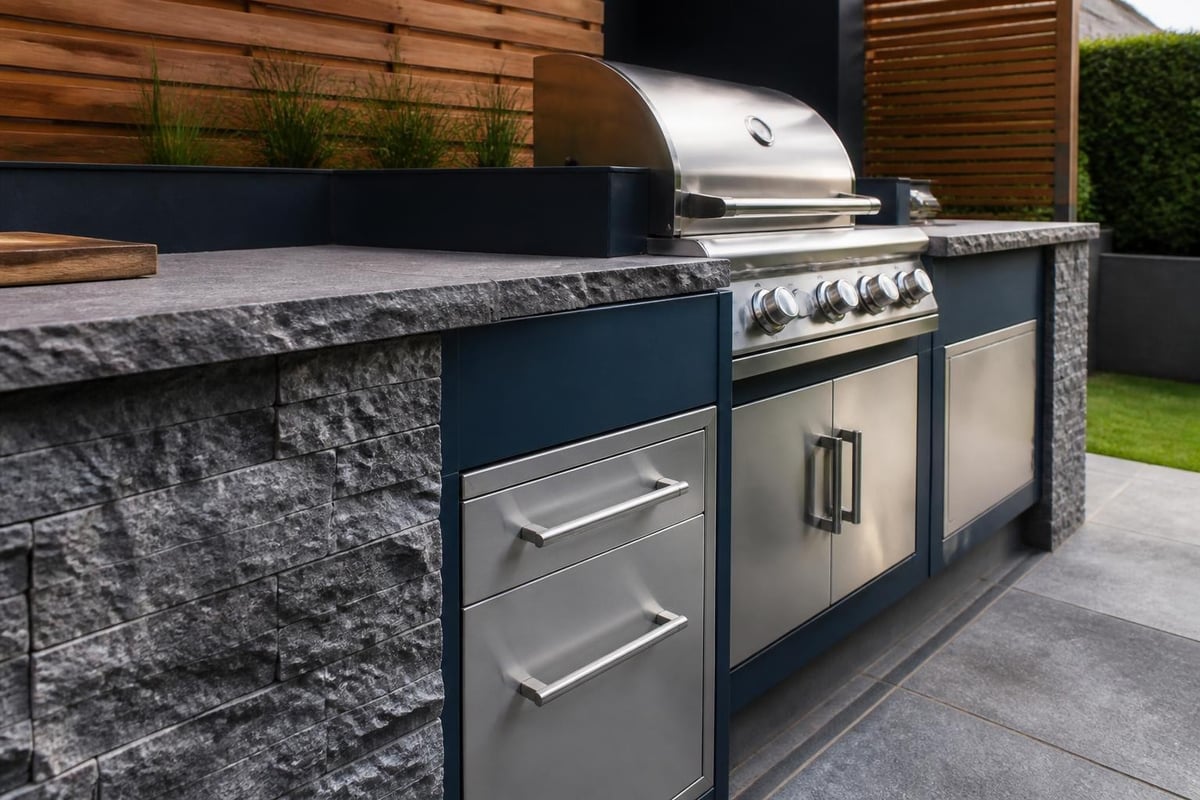
Undersized barbecues frustrate, whilst oversized units waste resources and garden space. Calculating appropriate sizing ensures satisfaction.
Average household needs vary by entertaining frequency and guest numbers. A family of four entertaining occasionally manages comfortably with 400-500 square inches. Regular hosts accommodating 8-12 guests should consider 600-800 square inches minimum.
Professional-scale installations for serious entertainers or hospitality applications may specify 1000+ square inches, featuring multiple cooking zones for simultaneous preparation techniques. The built-in outdoor grill ideas showcase various scale solutions appropriate for different property sizes.
Counter space surrounding your cooking surface proves equally important. Allow minimum 24 inches either side for food staging, plating, and utensil placement. L-shaped and U-shaped configurations maximise work surface whilst maintaining compact footprints.
Consider vertical storage utilising overhead racks and hooks. Wall-mounted magnetic strips organise knives and metal utensils, freeing valuable counter space for food preparation.
Protecting your bbq built in investment requires regular maintenance schedules. Establishing good habits from installation day ensures decades of reliable service.
After each use, brush cooking grates whilst still warm, removing food residue before it carbonises. Monthly deep cleaning should include:
Annual professional servicing identifies potential issues before they cause failures. Gas connections, ignition systems, and structural integrity all benefit from expert inspection.
Even built-in barbecues benefit from protective covers during extended non-use periods. Custom-fitted covers prevent moisture accumulation whilst allowing airflow to prevent mildew formation.
Winter preparation includes disconnecting gas supplies, cleaning thoroughly, and ensuring drainage points remain clear. Covering cooking surfaces with food-grade oil prevents corrosion during storage months.
Understanding investment requirements prevents surprises whilst ensuring quality standards remain met.
Entry-level built-in barbecues start around £800-£1,200 for basic gas models. Premium brands with superior construction, enhanced features, and comprehensive warranties range £2,500-£6,000+. Speciality units including charcoal systems, hybrids, or professional-grade equipment command £7,000-£15,000+.
Beyond the grill itself, budget must accommodate:
Quality bbq built in installations typically add 3-7% to property values, appealing particularly to buyers prioritising outdoor living. This return on investment strengthens when the installation forms part of comprehensive outdoor kitchen designs.
Operational savings accumulate through reduced restaurant visits and enhanced home entertaining. Many clients report their outdoor kitchens paying for themselves within 3-5 years through changed lifestyle patterns.
British weather needn't limit bbq built in enjoyment to summer months. Strategic design decisions enable comfortable year-round outdoor cooking.
Overhead coverage transforms outdoor kitchens from seasonal novelties into genuine year-round facilities. Architectural pergolas provide adjustable protection, featuring louvred roofs controlling sunlight and rain exposure. Premium systems incorporate integrated heating and lighting, creating comfortable microclimates regardless of season.
Combining your built-in barbecue with dedicated outdoor kitchens creates protected cooking zones where British drizzle doesn't dictate dining plans. Side panels and windbreaks further enhance comfort whilst maintaining adequate ventilation.
Infrared patio heaters extend comfortable outdoor seasons by weeks or months. Ceiling-mounted units provide efficient warmth without consuming valuable floor space. Modern systems include remote controls and smart home integration for effortless operation.
Task lighting illuminates cooking surfaces whilst ambient lighting creates evening atmosphere. LED systems offer energy efficiency and long service life, particularly valuable for outdoor installations where bulb changes prove inconvenient.
Deciding whether to self-build or engage professionals depends on skills, time availability, and project complexity.
Complex utility installations absolutely require qualified tradespeople. Gas connections demand Gas Safe registered engineers. Electrical work requires Part P compliance. Structural modifications may need building control approval and professional engineering.
Even confident DIY enthusiasts benefit from professional design consultation. Experienced outdoor kitchen designers prevent common mistakes including inadequate ventilation, poor workflow, and code violations. The consultative approach offered by specialists ensures your vision becomes reality without expensive corrections.
Competent home improvers can tackle surrounding landscaping, simple cabinetry assembly, and finishing work under professional guidance. Modular systems reduce construction complexity whilst maintaining professional appearance.
The built-in BBQ installation guide provides framework for understanding requirements, even if you ultimately engage contractors for execution.
Not all built-in barbecues offer equivalent performance or longevity. Recognising quality indicators helps navigate overwhelming options.
Heavy gauge materials indicate superior construction. Grills weighing significantly more than competitors typically feature thicker steel, more robust burners, and substantial frameworks. Inspect weld quality, ensuring smooth, consistent joints without gaps or irregularities.
Premium brands often specify exact steel grades and thicknesses. Look for detailed specifications rather than vague "commercial-grade" claims. Comprehensive warranties reflect manufacturer confidence, with quality brands offering 5-15 year coverage on major components.
Precise temperature control separates exceptional barbecues from adequate ones. Look for multiple independently controlled zones, enabling simultaneous high-heat searing and low-temperature roasting. Built-in thermometers should be large, readable, and accurately calibrated.
Ignition reliability matters enormously for user satisfaction. Electronic ignition systems eliminate matches and lighters whilst providing dependable startups. Battery-powered systems offer greater reliability than piezo alternatives.
Your bbq built in forms the centrepiece of comprehensive outdoor cooking environments. Complementary appliances expand culinary possibilities.
Wood-fired pizza ovens create authentic Neapolitan experiences impossible with conventional barbecues. Modern designs integrate beautifully with built-in cooking stations, sharing counter space and storage. For those seeking versatility beyond traditional grilling, exploring the pizza ovens and baking collection reveals how speciality equipment elevates outdoor entertaining.
Smokers deliver low-and-slow cooking perfection for briskets, ribs, and pulled pork. Built-in models maintain consistent temperatures through hours-long cooking sessions, producing restaurant-quality results at home.
Outdoor refrigeration proves essential for serious entertaining. Purpose-built outdoor fridges withstand temperature fluctuations and humidity levels destroying standard indoor units. Under-counter models integrate seamlessly whilst full-height options accommodate substantial food storage.
Ice makers ensure chilled beverages flow throughout gatherings. Dedicated units produce restaurant quantities, eliminating constant indoor trips for ice replenishment.
Permanent installations require heightened safety awareness compared to portable alternatives.
Maintain clear zones around cooking surfaces. Combustible materials including cushions, umbrellas, and decorative elements must remain beyond manufacturer-specified distances. Keep fire extinguishers rated for grease fires immediately accessible.
Never leave operating barbecues unattended. Grease fires can ignite rapidly, requiring immediate response. Installing overhead fire suppression systems provides additional protection for enclosed or semi-enclosed outdoor kitchens.
Annual gas connection inspections identify potential leaks before they create hazards. Use approved flexible connectors designed for outdoor installations, replacing them according to manufacturer schedules regardless of apparent condition.
Install gas shut-off valves within easy reach but away from heat zones. Label clearly so anyone can shut down systems during emergencies. The barbecue grills built-in considerations article provides comprehensive safety guidelines worth reviewing.
Hot surfaces remain dangerous long after cooking ends. Educate children about safety zones and establish clear rules about outdoor kitchen access during and after operation. Consider barriers or gates for households with young children.
Secure cabinet doors prevent curious pets accessing cleaning chemicals, utensils, or fuel supplies. Childproof locks on storage cabinets add layers of protection for households requiring them.
Modern bbq built in designs increasingly incorporate sustainability features without compromising performance.
Natural gas and LPG burn more efficiently than charcoal, producing fewer emissions per cooking session. Infrared burner technology reduces gas consumption whilst delivering superior heat control and faster preheating.
LED lighting throughout outdoor kitchens dramatically reduces electrical consumption compared to traditional incandescent or halogen alternatives. Solar-powered accent lighting eliminates electrical requirements entirely for decorative elements.
Responsibly sourced materials reduce environmental impact. Reclaimed timber for decorative elements, locally quarried stone for surrounds, and recycled metal components all contribute to sustainability goals.
Water conservation features including foot-pedal taps reduce waste during food preparation. Greywater systems can reuse washing water for garden irrigation in appropriate installations.
Strategic decisions throughout planning and installation maximise both enjoyment and financial returns.
Quality burner systems justify higher costs through superior performance and longevity. Saving £500 on inferior burners often leads to £2,000+ replacement costs within 5-7 years. Premium stainless steel throughout ensures your investment remains attractive and functional for decades.
Proper foundations prevent settling and structural issues requiring expensive corrections. Investing adequately in structural work from the beginning avoids costly remediation when problems emerge.
Excessive gadgetry adds complexity without proportional benefit. Features you'll actually use regularly deserve budget allocation; rarely used extras waste resources. Consider whether you'll genuinely use features like integrated ice bins, multiple refrigeration zones, or specialty cooking surfaces before specifying them.
Oversized installations for modest entertaining needs waste space and budget. Right-sizing your bbq built in ensures resources focus on quality rather than unnecessary scale.
Creating the perfect bbq built in installation transforms outdoor spaces into sophisticated culinary destinations, delivering years of entertaining pleasure whilst enhancing property value. Success requires thoughtful planning, quality materials, and expert installation ensuring safety, performance, and aesthetic appeal harmonise beautifully. The Cotswold Cooking Company brings decades of expertise to every outdoor kitchen project, offering curated selections from premium manufacturers, bespoke design services, and comprehensive installation support that transforms your outdoor living vision into reality.

Leave a comment