


Creating a permanent bbq grill station transforms outdoor entertaining from a seasonal activity into a year-round lifestyle statement. Whether you're designing a compact corner installation or a comprehensive cooking theatre, the right approach combines architectural vision with practical functionality. For discerning homeowners across the UK, particularly in the Cotswolds and surrounding counties, a properly designed bbq grill station represents a significant investment in both property value and quality of life.
The growing trend towards outdoor living has elevated expectations beyond portable equipment. Today's luxury outdoor kitchens demand the same level of specification and craftsmanship as their indoor counterparts, with weather-resistant materials, integrated utilities, and seamless aesthetic integration.
A bbq grill station differs fundamentally from standalone grilling equipment. It represents a permanent installation that integrates cooking appliances, preparation surfaces, storage solutions, and utility connections into a cohesive outdoor kitchen environment.
The foundation of any successful bbq grill station begins with thoughtful spatial planning. Consider these core elements:
Professional installations typically allocate 2.4 to 3.6 metres of linear space for a well-equipped station, though compact configurations can function effectively in smaller footprints. The key lies in maintaining ergonomic workflow between different zones.
| Station Size | Linear Space | Ideal Capacity | Typical Features |
|---|---|---|---|
| Compact | 1.8-2.4m | 4-6 guests | Single grill, minimal prep space |
| Standard | 2.4-3.6m | 6-10 guests | Grill, side burner, storage |
| Premium | 3.6-5.4m | 10-16 guests | Multiple cooking zones, full prep area |
| Estate | 5.4m+ | 16+ guests | Comprehensive cooking theatre |
Location selection demands careful consideration of prevailing winds, proximity to indoor kitchens, and sightlines from entertaining areas. Most designers recommend positioning the bbq grill station between 3 and 6 metres from the house, balancing convenience with smoke management.
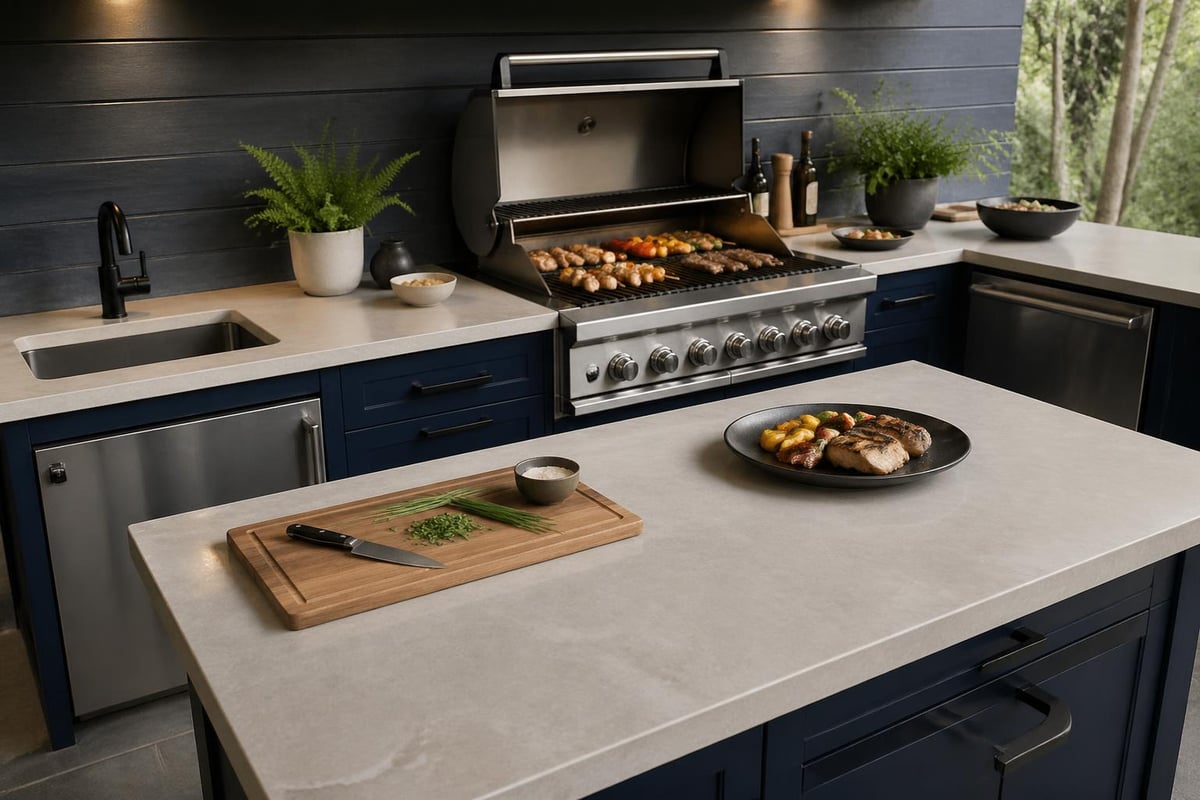
The Cotswolds climate presents specific challenges for outdoor installations. Temperature fluctuations, moisture exposure, and seasonal freeze-thaw cycles demand materials engineered for resilience.
Natural stone remains the premium choice for bbq grill station worktops, offering both aesthetic gravitas and functional durability. Granite provides excellent heat resistance and low porosity, whilst limestone delivers quintessentially British character when properly sealed.
Modern alternatives include:
Avoid porous materials like travertine or unsealed sandstone in direct cooking zones. These absorb grease and moisture, leading to staining and structural degradation.
Weather-resistant cabinetry forms the skeleton of your bbq grill station. Marine-grade stainless steel (304 or 316 grade) delivers uncompromising longevity, whilst powder-coated aluminium frames offer lighter weight with excellent corrosion resistance.
For those seeking warmer aesthetics, teak and iroko hardwoods provide natural beauty when maintained with appropriate oil treatments. However, timber requires annual maintenance and may weather unevenly in exposed locations.
Your bbq grill station should harmonise with existing architectural language whilst establishing its own presence within the garden landscape.
Clean-lined designs featuring handleless cabinetry, flush-mounted appliances, and monochromatic palettes suit modern properties. Consider integrated LED strip lighting beneath worktops and within cabinets for evening functionality. The Cubic C1 Style Outdoor Kitchen exemplifies this approach, with modular configurations that adapt to specific spatial requirements whilst maintaining architectural purity.
Sleek materials like honed granite, brushed stainless steel, and glass tile backsplashes reinforce the contemporary aesthetic. Recessed plinth lighting and invisible drainage channels maintain visual clarity.
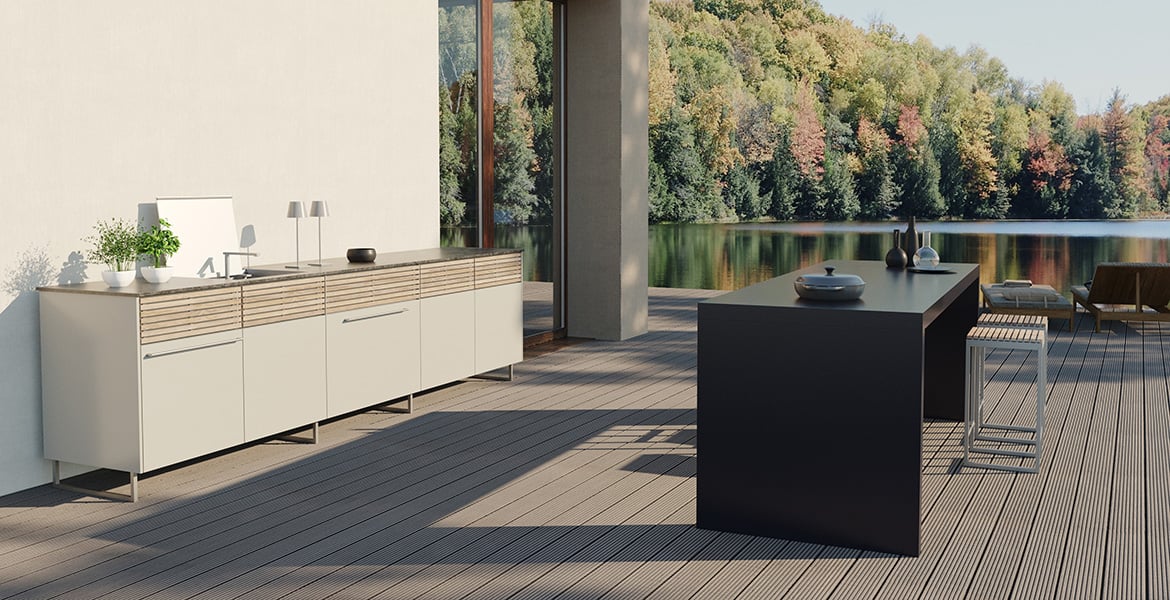
Period properties benefit from bbq grill station designs that reference local vernacular architecture. Incorporate reclaimed stone cladding, aged brass hardware, and oak accents to create sympathetic installations.
Rustic charm needn't compromise performance. Modern appliances can be housed within traditional facades, combining cutting-edge cooking technology with heritage aesthetics. Many outdoor cooking installations successfully blend these elements.
Mixed-material approaches offer creative flexibility. Pair natural stone bases with stainless steel worktops, or combine weathered timber with contemporary tile work. These eclectic designs particularly suit converted barns and modernised country estates.
Proper installation separates functional bbq grill stations from problematic ones. Several critical technical elements require professional attention.
A permanent bbq grill station demands solid foundations. Poured concrete bases (minimum 100mm thickness) provide stable support for heavy stone countertops and large grills. Include reinforcement mesh for spans exceeding 1.2 metres.
Where ground conditions permit, compact hardcore bases with vibrated paving slabs offer acceptable alternatives for lighter configurations. Always verify load-bearing capacity before proceeding with installation.
Consider these foundation specifications:
Gas lines must comply with current UK safety regulations, requiring professional installation by Gas Safe registered engineers. LPG installations typically utilise bulk tanks positioned minimum 3 metres from buildings, connected via underground armoured piping.
Electrical circuits should incorporate RCD protection with IP65-rated outlets positioned above worktop height. Many designers specify 32-amp supplies for bbq grill stations incorporating multiple appliances and lighting circuits.
Water connections enable integrated sinks and preparation stations. Include isolation valves and frost-protection measures, or design for seasonal drainage in unheated installations.
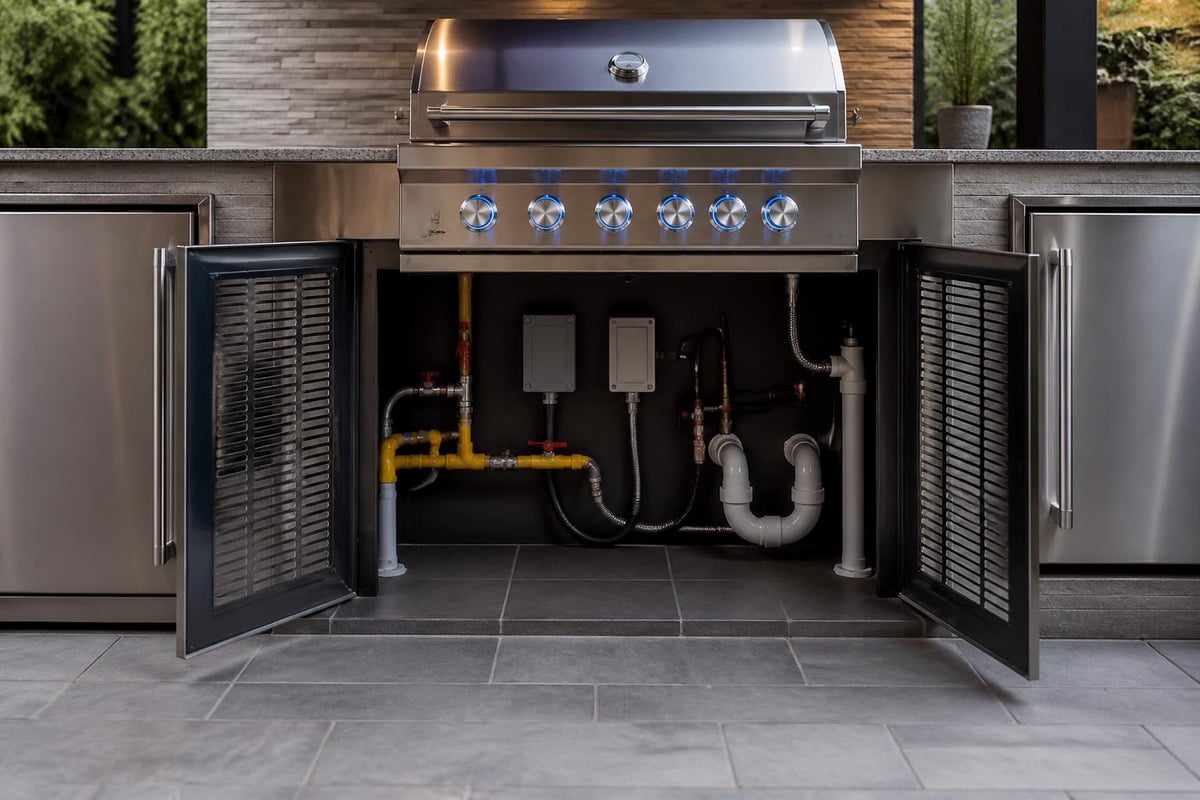
The cooking appliances you select define your bbq grill station's performance envelope. Today's premium market offers extraordinary diversity.
High-end built-in grills feature cast stainless steel burners, heavy-gauge cooking grates, and precision temperature control. Look for:
Premium brands incorporate infrared searing zones capable of exceeding 870°C, alongside low-temperature smoker boxes for versatility. The grills and smokers collection showcases options suitable for different cooking philosophies.
A comprehensive bbq grill station often incorporates multiple cooking methods:
| Appliance Type | Primary Function | Typical Placement | Integration Complexity |
|---|---|---|---|
| Side burner | Sauces, sides, boiling | Adjacent to main grill | Simple gas connection |
| Griddle plate | Breakfast, vegetables | Separate cooking zone | Moderate installation |
| Pizza oven | Artisan baking | Feature element | Complex (flue required) |
| Rotisserie | Whole roasts, poultry | Grill accessory | Electrical connection |
| Warming drawer | Temperature holding | Below-counter | Electrical + insulation |
These additions transform your bbq grill station into a complete outdoor cooking suite. When planning, ensure adequate clearance between active heat sources and combustible materials, following manufacturer safety guidelines.
Efficient storage distinguishes professional-calibre bbq grill stations from amateur installations. Strategic organisation enhances both functionality and enjoyment.
Design storage zones according to frequency of use. Position frequently accessed items (tongs, spatulas, seasonings) in upper drawers nearest the grill. Relegate occasional equipment (rotisserie attachments, cleaning supplies) to lower cabinets.
Soft-close drawer mechanisms and concealed hinges maintain smooth operation despite temperature extremes. Stainless steel or marine-grade polymer interiors resist moisture and simplify cleaning.
Consider dedicated storage for:
Adopt professional kitchen principles when arranging your bbq grill station. The classic work triangle connects refrigeration, preparation, and cooking zones in efficient relationship.
Maintain 1.2 to 1.8 metres between primary work centres. This spacing prevents congestion during multi-person cooking whilst minimising unnecessary movement. Position the main grill as the focal point, with preparation surfaces extending to the chef's dominant hand side.
British weather presents obvious challenges for outdoor entertaining. Thoughtful design extends your bbq grill station's practical season well beyond summer months.
Permanent canopies, retractable awnings, or architectural pergolas shelter cooking areas from rain whilst maintaining natural ventilation for smoke dispersal. Materials range from traditional oak post-and-beam structures to contemporary aluminium louvred systems.
Advanced installations incorporate integrated heating, lighting, and even automated weather sensors that close louvres when rain is detected. These systems transform your bbq grill station into a genuine four-season facility.
Infrared patio heaters positioned 2.4 to 3 metres overhead provide comfortable warmth during cooler months. Gas-fired models deliver instant heat, whilst electric alternatives offer cleaner operation and simpler installation.
Layered lighting schemes combine task illumination (for cooking surfaces), ambient lighting (for general entertaining), and accent lighting (highlighting architectural features). LED systems offer energy efficiency and minimal heat generation.
Bbq grill station projects span enormous price ranges, from modest DIY installations to comprehensive architectural commissions. Understanding cost drivers enables informed decision-making.
Budget-conscious approaches might explore affordable grill station concepts using materials like cinder blocks and reclaimed timber. These projects typically range from £2,000 to £5,000 for self-built installations.
Mid-tier specifications featuring quality built-in grills, natural stone worktops, and professional installation generally fall between £8,000 and £18,000. This bracket delivers excellent performance and longevity when properly specified.
Premium and bespoke bbq grill stations incorporating multiple cooking appliances, automated systems, and architectural integration regularly exceed £25,000. These installations represent long-term investments in property value and lifestyle quality.
| Budget Tier | Typical Range | Materials | Installation | Longevity |
|---|---|---|---|---|
| Entry | £2,000-£5,000 | Basic/DIY | Self-built | 5-8 years |
| Standard | £8,000-£18,000 | Quality | Professional | 12-18 years |
| Premium | £25,000-£50,000 | Luxury | Specialist | 20-30 years |
| Bespoke | £50,000+ | Architectural | Design-build | 30+ years |
Beyond obvious expenses, budget for utility connections (£800-£2,500 depending on distances), foundation work (£600-£1,800), and landscaping integration (£1,000-£5,000). Planning permission rarely applies to bbq grill stations, though listed buildings and conservation areas warrant verification.
Allocate 15-20% contingency for unforeseen complications during installation. Ground conditions, existing services, and access constraints frequently introduce unexpected requirements.
Proper maintenance preserves both performance and appearance across decades of service. Establish regular care routines appropriate to your materials and climate exposure.
Spring commissioning should include deep cleaning of all surfaces, inspection of gas connections, and lubrication of moving parts. Test ignition systems and verify even flame distribution across burners.
Summer operations demand weekly cleaning of cooking grates, monthly inspection of burner ports for blockages, and periodic checking of drainage systems.
Autumn preparation involves thorough cleaning, application of protective treatments to natural stone, and inspection of seals around appliances. Consider professional servicing of complex equipment.
Winter shutdown (for seasonal installations) requires complete drainage of water systems, disconnection of gas supplies, and protective covering of equipment. Stainless steel benefits from thin oil coating to prevent corrosion during dormant months.
Different surfaces demand tailored approaches:
Document maintenance activities and retain records of professional servicing. This diligence proves valuable for warranty claims and eventual property sales.
Contemporary bbq grill station design embraces extraordinary creativity. Recent projects demonstrate the breadth of possibility within this category.
Smart technology integration increasingly appears in luxury installations. Wi-Fi enabled grills offer remote monitoring, automated temperature control, and guided cooking programmes. Voice-activated controls, integrated entertainment systems, and app-based recipe libraries transform outdoor cooking into connected experiences.
Sustainability considerations drive material selection, with reclaimed timber, locally sourced stone, and energy-efficient appliances gaining favour. Solar-powered lighting and rainwater collection for sink supplies reflect growing environmental consciousness.
Exploring built-in outdoor grill concepts reveals international design trends adaptable to British contexts. From Mediterranean-inspired masonry structures to Scandinavian minimalism, cross-cultural influences enrich the design vocabulary.
Space constraints needn't compromise capability. Compact bbq grill stations measuring under 2 metres can incorporate impressive functionality through clever design. Corner installations, wall-mounted fold-down surfaces, and vertical storage maximise utility within limited footprints.
Multi-level designs place the grill at standard height with raised preparation surfaces and lower storage zones, creating distinct functional areas within compact overall dimensions. These small backyard solutions demonstrate practical ingenuity.
Whilst enthusiastic homeowners might consider DIY approaches detailed in construction guides, complex bbq grill stations benefit enormously from professional expertise. Designers bring invaluable perspective on spatial planning, material selection, and regulatory compliance.
Luxury outdoor kitchen specialists typically begin with site surveys assessing existing conditions, utility availability, and architectural context. Detailed discussions explore cooking preferences, entertaining patterns, and aesthetic priorities.
Concept designs present multiple approaches, often incorporating 3D visualisations that communicate spatial relationships and material palettes. Iterative refinement ensures the final specification aligns precisely with client requirements.
Technical documentation details construction sequences, material specifications, and appliance integration. This comprehensive approach minimises installation complications whilst ensuring coherent aesthetic execution.
Professional installations coordinate multiple trades including groundworkers, gas engineers, electricians, and specialist fitters. Experienced project managers orchestrate these activities, maintaining schedules and quality standards throughout construction.
Final commissioning includes thorough testing of all systems, client training on equipment operation, and handover documentation. Reputable suppliers provide ongoing support, spare parts access, and maintenance guidance long after installation completion.
Designing and installing a sophisticated bbq grill station represents a significant commitment to outdoor living excellence. Success depends upon thoughtful planning, quality materials, and expert execution that honours both practical requirements and aesthetic aspirations. Whether you're envisioning a compact cooking station or a comprehensive outdoor culinary theatre, Cotswold Cooking Company brings decades of experience in transforming outdoor spaces across the UK, offering comprehensive consultative services from initial concept through installation and beyond.

Leave a comment