


Outdoor pizza ovens have transformed from simple backyard accessories into sophisticated centrepieces of luxury garden design, enabling homeowners to recreate authentic Italian pizzeria experiences whilst entertaining family and friends. Whether you're seeking the romance of traditional wood-fired cooking or the precision of modern hybrid technology, selecting the best outdoor pizza oven requires careful consideration of fuel types, construction quality, temperature capabilities, and how the unit complements your overall outdoor living vision. This comprehensive guide explores the essential factors that define excellence in outdoor pizza ovens, helping discerning homeowners make informed decisions that elevate their culinary spaces.
The market for outdoor pizza ovens has evolved considerably, with manufacturers now offering distinct categories tailored to different cooking preferences, installation requirements, and aesthetic sensibilities. Understanding these fundamental differences empowers you to identify which style aligns with your entertaining ambitions.
Wood-fired ovens represent the pinnacle of authentic pizza cooking, delivering that distinctive smoky flavour and charred crust that defines Neapolitan tradition. These ovens typically reach temperatures between 400-500°C, allowing pizzas to cook in 60-90 seconds whilst developing the characteristic leopard-spotted base.
Key advantages include:
The learning curve for wood-fired cooking appeals to enthusiasts who appreciate the craft involved in fire management and temperature control. Wood-fired models remain the first choice for purists seeking restaurant-quality results.
Gas pizza ovens prioritise convenience and consistency, appealing to those who value precision over ritual. Connected to either natural gas lines or LPG bottles, these units heat rapidly and maintain stable temperatures with minimal intervention.
Modern gas ovens now incorporate flame distribution systems that closely mimic wood-fired heat patterns, whilst eliminating smoke, ash management, and fuel storage considerations. Temperature adjustment becomes instantaneous, allowing cooks to transition seamlessly between different dishes throughout an evening's entertainment.
| Feature | Wood-Fired | Gas | Hybrid |
|---|---|---|---|
| Heat-up time | 30-45 minutes | 15-20 minutes | 20-30 minutes |
| Temperature control | Manual skill required | Precise dial adjustment | Both options available |
| Flavour profile | Authentic smoky character | Clean, consistent heat | Wood option when desired |
| Maintenance | Regular ash cleaning | Minimal | Moderate |
| Fuel storage | Logs require dry space | Gas bottle or mains | Both fuel types |
Hybrid pizza ovens represent the evolution of outdoor cooking technology, allowing users to switch between gas and wood fuel depending on occasion, time constraints, or flavour preferences. This versatility has made hybrid systems increasingly popular amongst luxury outdoor cooking enthusiasts.
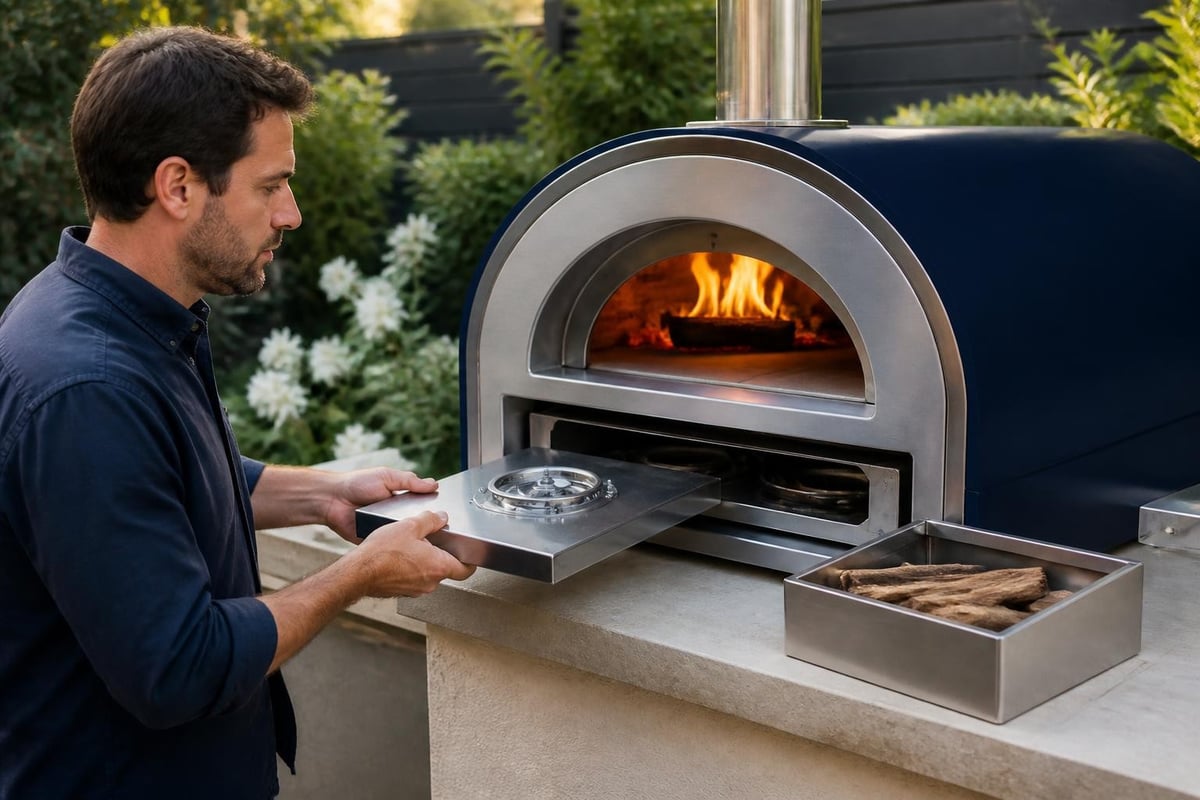
The flexibility extends beyond fuel choice-hybrid owners can ignite with gas for rapid heating, then introduce wood for finishing flavour during the final cooking stages. This approach combines efficiency with authenticity, particularly valuable when entertaining guests who appreciate both speed and tradition.
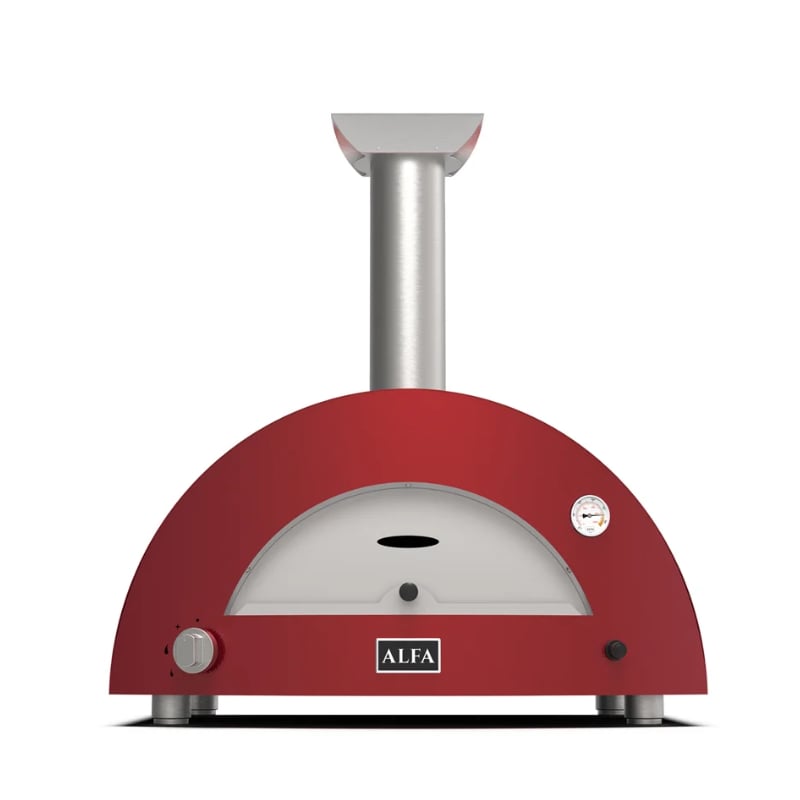
For those seeking exceptional hybrid performance, the Alfa Forni Moderno 2 Pizze Hybrid Pizza Oven exemplifies Italian craftsmanship meeting modern versatility. Handmade with meticulous attention to detail, this beautiful unit reaches 500°C in approximately 30 minutes and effortlessly produces authentic Neapolitan pizzas in around 90 seconds, whether you choose LPG gas or traditional wood fuel through the included hybrid kit.
Beyond fuel type, the best outdoor pizza oven distinguishes itself through measurable performance characteristics that directly impact cooking results, operational efficiency, and long-term satisfaction. These technical specifications deserve careful evaluation during your selection process.
Authentic Neapolitan pizza requires sustained temperatures between 430-480°C, with floor temperatures slightly lower than dome temperatures. The best outdoor pizza oven maintains this differential consistently, creating the ideal environment for simultaneous base crisping and topping cooking.
Thermal mass determines heat retention capability. Ovens constructed with refractory materials, firebricks, or ceramic composites absorb and radiate heat more effectively than thin stainless steel units. This characteristic becomes particularly important when cooking multiple pizzas consecutively or transitioning to slow-roasted dishes.
Temperature-related factors to evaluate:
Internal cooking space dictates both pizza size capabilities and overall cooking versatility. Standard Neapolitan pizzas measure 30cm diameter, whilst contemporary variations may extend to 35-40cm. Chamber height influences whether you can accommodate risen bread loaves, standing roasts, or stacked cooking vessels.
According to Consumer Reports' outdoor pizza oven evaluations, models offering 40cm+ cooking surfaces provide significantly greater entertaining flexibility without compromising heat concentration for individual pizzas.
Multi-pizza capacity appeals to frequent entertainers. Two-pizza models allow simultaneous cooking or staged preparation, reducing waiting times when serving larger gatherings. However, larger chambers require more fuel and extended heat-up periods-a trade-off worth considering based on your typical entertaining scale.
The longevity and performance consistency of your outdoor pizza oven depends fundamentally on construction materials and assembly precision. Premium manufacturers distinguish themselves through material selection that withstands thermal cycling, weather exposure, and years of intensive use.
Refractory materials form the heart of professional-grade ovens, engineered to withstand extreme temperatures whilst distributing heat evenly. Firebrick, ceramic fibre, and specialist refractory concretes each offer distinct thermal properties.
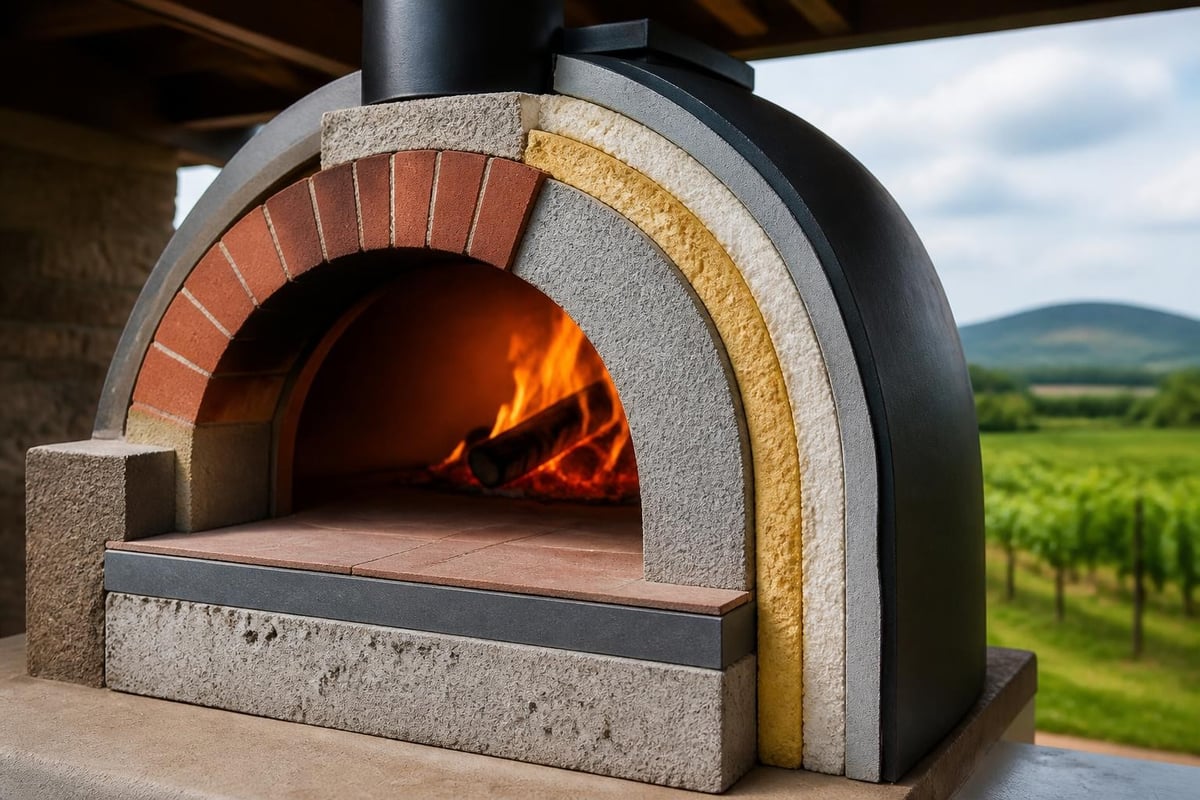
Traditional firebrick provides excellent heat retention but adds substantial weight, requiring robust support structures. Modern ceramic composites achieve similar thermal performance at reduced weight, enabling more versatile installation options including countertop positioning.
The cooking floor material directly contacts your pizza base, making its thermal conductivity and heat retention critical for achieving that perfect crisp-yet-chewy texture. Cordierite stone, cast iron, and refractory ceramic each deliver different results-serious cooks often consider this the most important specification.
British weather demands robust external construction capable of withstanding temperature fluctuations, moisture, and UV exposure. Stainless steel remains the preferred choice for external cladding, offering corrosion resistance and minimal maintenance requirements.
Material durability comparison:
| Material | Weather Resistance | Maintenance | Thermal Efficiency | Aesthetic Options |
|---|---|---|---|---|
| 304 Stainless Steel | Excellent | Low | Good | Modern, industrial |
| Powder-Coated Steel | Good (if intact) | Moderate | Good | Wide colour range |
| Ceramic-Coated Steel | Very Good | Low | Excellent | Traditional colours |
| Stone/Brick Cladding | Excellent | Very Low | Superior | Classic, rustic |
Stone or brick cladding over insulated cores combines traditional aesthetics with modern performance. These constructions integrate beautifully within established garden designs, particularly in period properties or Cotswold stone settings where visual harmony matters.
The best outdoor pizza oven transcends functional cooking equipment to become an architectural element within your broader outdoor living vision. Thoughtful integration ensures your investment enhances rather than disrupts your garden's aesthetic cohesion.
Freestanding units offer installation flexibility and portability, ideal for those who may relocate or prefer seasonal repositioning. Counter-mounted models provide professional kitchen aesthetics but require dedicated structures and often professional installation.
Built-in installations allow complete customisation, surrounding your oven with coordinated materials, integrated prep surfaces, and storage solutions. This approach creates cohesive cooking zones that rival indoor kitchen functionality. Many discerning homeowners now commission bespoke outdoor kitchens designed around their chosen pizza oven as the culinary centrepiece.
Professional outdoor cooking spaces extend beyond the oven itself, incorporating elements that streamline workflow and enhance entertaining experiences:
The most successful installations position pizza ovens within sight lines from main entertaining areas, allowing the cook to remain socially engaged whilst managing the fire and rotating pizzas. This consideration transforms cooking from isolated task to participatory entertainment.
Understanding operational costs helps evaluate the true long-term value of your outdoor pizza oven investment. Fuel consumption varies dramatically between oven types, construction quality, and usage patterns.
Well-insulated wood-fired ovens typically consume 3-5kg of hardwood logs for initial firing, then approximately 1kg per hour for temperature maintenance. Hardwoods like oak, ash, or beech provide optimal heat output and minimal smoke when properly seasoned (below 20% moisture content).
Annual costs depend on usage frequency. Weekend entertainers burning twice monthly might use 100-150kg annually, whilst daily hospitality use could exceed 1,000kg. Sourcing locally-sourced, sustainably-harvested hardwood reduces both costs and environmental impact.
LPG-fuelled ovens consume approximately 400-600g per hour at cooking temperature, translating to roughly 4-6 hours per standard 6kg gas bottle. Natural gas connections offer unlimited fuel at lower per-unit costs, though installation requires professional gas fitter certification.
The convenience premium of gas becomes apparent through reduced preparation time and elimination of wood storage requirements-factors particularly valuable in urban or space-constrained settings.
The best outdoor pizza oven balances performance capabilities with approachable operation, allowing enthusiastic beginners to achieve satisfying results whilst offering sufficient depth for developing advanced techniques. Expert testing from Good Housekeeping emphasises that intuitive controls and clear temperature feedback separate frustrating experiences from enjoyable ones.
Accurate temperature measurement proves essential for consistent results. Premium ovens incorporate multiple thermometers showing dome and floor temperatures simultaneously, enabling cooks to understand their oven's thermal behaviour.
Infrared thermometers provide non-contact surface temperature readings, particularly useful for identifying hot spots and optimising pizza placement. Digital probe thermometers track internal food temperatures for roasting applications beyond pizza.
Temperature management techniques:
Regular maintenance extends oven lifespan and ensures consistent performance. Wood-fired units require ash removal after each session, whilst gas burners need periodic inspection for blockages or corrosion. Pizza oven accessories including ash tools, covers, and cleaning implements simplify these tasks.
Quality covers protect against weather when not in use, particularly important for models with exposed insulation or powder-coated finishes. Annual inspections should check door seals, thermocouple function (gas models), and refractory surface integrity.
Investing in the best outdoor pizza oven involves evaluating manufacturer heritage, warranty provisions, and after-sales support infrastructure. Established brands demonstrate longevity through continuous refinement based on real-world performance feedback.
Italian manufacturers dominate premium outdoor pizza oven markets, drawing upon centuries of wood-fired cooking tradition. Brands like Alfa Forni, Fontana Forni, and Clementi maintain artisan construction methods whilst incorporating modern materials science and engineering precision.
British and European safety certifications ensure products meet stringent performance and emissions standards. CE marking indicates compliance with European health, safety, and environmental protection legislation-a baseline expectation for quality equipment.
Comprehensive warranties reflect manufacturer confidence in construction quality. Premium ovens typically offer 2-5 year coverage on structural components, with consumables like door seals excluded. Extended warranties sometimes become available through authorised retailers offering installation services.
Parts availability determines whether minor repairs prove straightforward or force premature replacement. Established brands maintain spare parts inventories and provide technical documentation enabling both DIY maintenance and professional servicing.
According to Tom's Guide's analysis, customer service responsiveness and technical support quality often matter as much as initial product quality, particularly when troubleshooting performance issues or optimising cooking techniques.
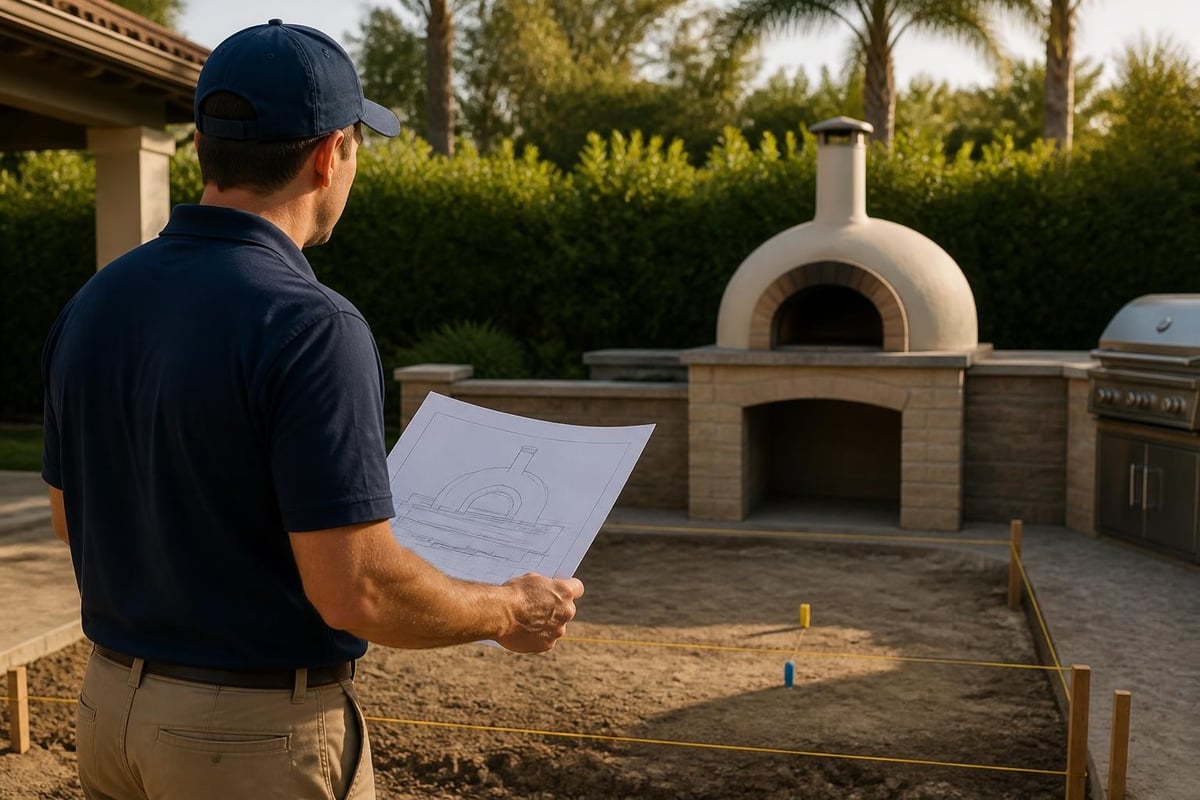
Proper installation forms the foundation for safe operation, optimal performance, and extended equipment lifespan. The best outdoor pizza oven deserves appropriate siting, structural support, and utility connections.
Strategic positioning balances practical requirements with aesthetic integration and entertaining flow. Key factors include:
Permanent installations benefit from professional site surveys evaluating ground stability, drainage, and utility accessibility. Many luxury installations incorporate pizza ovens within comprehensive outdoor living spaces featuring coordinated paving, landscaping, and architectural elements.
Oven weight varies from 50kg for compact portable units to 500kg+ for substantial built-in models. Support structures must accommodate not just static weight but thermal expansion, vibration during use, and potential lateral forces.
Professional-grade installations often specify reinforced concrete pads with appropriate depth for local soil conditions. Counter-mounted ovens require structural engineering calculations ensuring benches withstand concentrated loads without deflection or settlement.
Premium outdoor pizza ovens increasingly incorporate sophisticated features that enhance versatility, efficiency, and cooking precision. Understanding which innovations deliver genuine value helps justify investment premiums.
Advanced gas systems provide differential heating across cooking surfaces, allowing simultaneous pizza cooking and warming of finished items. This capability proves particularly valuable during dinner parties when timing coordination becomes critical.
Dedicated searing zones reaching 600°C+ enable restaurant-quality steaks and vegetables cooked alongside pizzas, transforming your oven into a complete outdoor cooking station rather than single-purpose equipment.
Built-in LED lighting illuminates cooking chambers, improving visibility during evening sessions without requiring auxiliary lighting. Some premium models incorporate camera systems allowing remote monitoring via smartphone apps-appealing for those learning fire management or documenting cooking processes.
Digital temperature controllers with preset programmes remove guesswork from firing sequences, automatically adjusting gas flow or prompting fuel additions to maintain target temperatures. These systems particularly benefit novice users developing their technique.
The outdoor pizza oven market spans from entry-level portable units under £300 to bespoke installations exceeding £10,000. Understanding how price correlates with capability, longevity, and cooking quality enables informed value judgements aligned with your specific requirements.
Budget-friendly models typically feature lightweight construction, smaller cooking surfaces, and basic temperature control. These ovens suit occasional users exploring wood-fired cooking before committing to substantial investments.
Compromises often include:
Despite limitations, quality entry-level ovens from established manufacturers deliver authentic wood-fired flavour and teach fundamental pizza-making techniques. T3's comprehensive guide notes that even affordable models now achieve temperatures sufficient for proper Neapolitan crusts when used skilfully.
This segment represents optimal value for serious home cooks, combining quality construction with versatile features. Expect superior insulation, hybrid fuel options, larger cooking chambers, and comprehensive warranty coverage.
Mid-range ovens often incorporate design refinements including integrated thermometers, improved door seals, and aesthetic options coordinating with outdoor décor. Build quality supports weekly use over many years, justifying the investment through reliability and consistent performance.
Luxury outdoor pizza ovens transcend cooking equipment to become statement pieces reflecting discerning taste and commitment to culinary excellence. Artisan construction, bespoke customisation, and heirloom quality justify premium pricing.
Distinguishing characteristics include:
These investments appeal to those creating comprehensive outdoor entertaining environments where every element reflects considered design and uncompromising quality. According to detailed evaluations from Livingetc, premium models justify their positioning through measurable performance advantages and aesthetic distinction.
British weather patterns present unique challenges for outdoor cooking equipment. The best outdoor pizza oven extends usability beyond summer months through design features supporting comfortable operation across seasons.
Weather-resistant materials and protective design elements enable cooking throughout variable British conditions. Porcelain enamelling, marine-grade stainless steel, and UV-stable powder coatings resist deterioration from moisture, temperature fluctuations, and solar exposure.
Ovens positioned within covered structures or beneath pergolas gain protection whilst maintaining adequate ventilation. Many luxury outdoor kitchen designs incorporate retractable roof systems providing flexibility between open-air summer cooking and sheltered winter operation.
Lower ambient temperatures increase fuel consumption and extend heat-up periods, though well-insulated ovens minimise these effects. Pre-heating chambers for extended periods in winter ensures thermal mass reaches operating temperature despite heat loss to surroundings.
Wind protection significantly improves efficiency-strategically positioned screens or integrated design elements shelter flames whilst maintaining combustion airflow. Some enthusiasts install their ovens within three-sided enclosures, creating micro-climates supporting comfortable cooking even during cooler months.
High-temperature cooking equipment demands rigorous safety consciousness. Responsible ownership involves understanding risks, implementing appropriate precautions, and maintaining equipment to prevent hazards.
Wood-fired ovens generate substantial heat and flames requiring constant supervision. Established safety practices include:
Gas systems require leak detection before each use, appropriate hose inspection, and immediate shutdown if irregular flame behaviour occurs. Annual professional inspections verify safe operation of gas trains, thermocouples, and burner assemblies.
External oven surfaces reach dangerous temperatures during operation, remaining hot for hours after cooking concludes. Physical barriers preventing accidental contact protect curious children and pets from serious burns.
Clear communication about oven status-whether through signage, visual indicators, or designated exclusion zones-prevents inadvertent contact. Many families establish protocols requiring adult supervision whenever ovens operate, integrating safety into their outdoor entertaining routines.
Strategic purchasing, proper maintenance, and expanding your culinary repertoire ensure your outdoor pizza oven delivers exceptional value throughout its operational lifetime.
Quality accessories transform good ovens into complete cooking systems. Essential additions include:
Preparation and cooking tools:
Performance enhancement:
Gradually building your accessory collection based on actual usage patterns prevents unnecessary expenditure whilst ensuring you acquire genuinely useful tools.
The best outdoor pizza oven becomes more valuable as your capabilities develop. Investing time learning dough fermentation, sauce preparation, and fire management transforms adequate results into exceptional ones.
Beyond pizza, these versatile ovens excel at bread baking, roasted vegetables, whole fish, and slow-cooked meats. Detailed buying guidance from WebstaurantStore emphasises that owners who explore diverse applications report higher satisfaction and more frequent usage.
Workshops, online communities, and manufacturer resources provide structured learning pathways. Many premium brands offer complimentary training sessions or detailed recipe libraries supporting skill development.
Conscientious buyers increasingly evaluate outdoor cooking equipment through environmental lenses, considering fuel sustainability, emissions profiles, and equipment longevity.
Wood-fired cooking offers carbon-neutral potential when using sustainably harvested local hardwoods. Choosing suppliers certified by the Forestry Stewardship Council ensures your fuel comes from responsibly managed forests supporting biodiversity and regeneration.
Avoiding softwoods, treated timber, or manufactured wood products prevents harmful emissions whilst improving cooking results. Well-seasoned hardwood produces minimal smoke and creosote, benefiting both air quality and chimney longevity.
Modern outdoor pizza ovens incorporate design refinements minimising fuel consumption and emissions. Complete combustion-achieved through proper air supply and sufficient temperatures-dramatically reduces particulate emissions compared to inefficient burning.
Gas options eliminate wood smoke entirely, appealing to urban settings with proximity concerns or areas subject to smoke control regulations. LPG produces primarily carbon dioxide and water vapour, with minimal particulates or volatile organic compounds.
Equipment longevity represents perhaps the most significant environmental consideration. Investing in well-constructed ovens lasting decades prevents premature disposal and manufacturing emissions associated with frequent replacement cycles.
Choosing the best outdoor pizza oven ultimately requires balancing multiple factors-performance requirements, budget parameters, aesthetic preferences, and practical constraints-into a decision aligned with your unique circumstances and entertaining aspirations.
Begin by honestly assessing which factors matter most for your specific situation:
For frequent entertainers: Capacity, heat-up speed, and fuel efficiency take priority For flavour purists: Wood-firing capability remains non-negotiable regardless of convenience trade-offs For space-constrained gardens: Compact footprints and freestanding flexibility outweigh capacity considerations For design-focused projects: Aesthetic integration and customisation options justify premium investment
Creating a weighted criteria list clarifies which specifications deserve investment versus acceptable compromises.
Experiencing ovens firsthand provides insights impossible to glean from specifications alone. Many specialist retailers, including appointment-based showrooms, offer demonstration sessions allowing prospective buyers to observe operation, evaluate build quality, and assess cooking results.
These experiences often reveal preferences between fuel types, door configurations, or size categories you hadn't anticipated. Tasting pizzas cooked in different oven types can decisively influence your fuel choice based on flavour profiles.
Expert guidance from experienced outdoor kitchen specialists helps navigate the overwhelming array of choices. Consultants familiar with British weather patterns, local installation requirements, and brand performance characteristics provide invaluable perspective during decision-making.
They can also identify integration opportunities you might overlook-positioning considerations, accessory recommendations, or complementary equipment enhancing overall functionality. Professional design services ensure your pizza oven integrates seamlessly within cohesive outdoor living environments rather than appearing as afterthought additions.
Selecting the best outdoor pizza oven involves carefully weighing construction quality, fuel preferences, capacity requirements, and design integration against your specific entertaining vision and budget parameters. Whether you choose traditional wood-fired authenticity, convenient gas precision, or versatile hybrid systems, the right oven transforms your garden into a year-round culinary destination that delights family and guests whilst creating lasting memories around exceptional food. The specialists at Cotswold Cooking Company offer consultative expertise helping discerning homeowners navigate these decisions, curating premium pizza ovens and complete outdoor kitchen solutions that blend Cotswold heritage with modern performance, supported by comprehensive design, installation, and after-sales service throughout the UK.

Leave a comment