


The art of building a pergola extends far beyond simple construction-it represents a transformative approach to outdoor living that combines architectural sophistication with practical functionality. Whether you're creating an intimate dining area, establishing a defined pathway through your garden, or developing a comprehensive outdoor kitchen space, a well-designed pergola serves as the cornerstone of refined al fresco living. For discerning homeowners seeking to elevate their properties with year-round outdoor entertainment zones, understanding the nuances of pergola construction ensures both aesthetic excellence and lasting structural integrity.
Building a pergola demands careful consideration of architectural harmony, site conditions, and intended functionality. The structure must complement your property's existing aesthetic whilst providing the practical benefits you require.
The design spectrum ranges from classical timber structures featuring ornate joinery to sleek, minimalist bioclimatic systems with integrated technology. Traditional pergolas typically employ substantial timber posts and beams, creating a sense of permanence and heritage that resonates particularly well within rural settings. Contemporary designs often incorporate aluminium frameworks, motorised louvres, and integrated lighting systems that respond to environmental conditions.
Key design considerations include:
The Royal Horticultural Society offers valuable guidance on integrating pergolas within garden landscapes, addressing both structural and horticultural considerations.
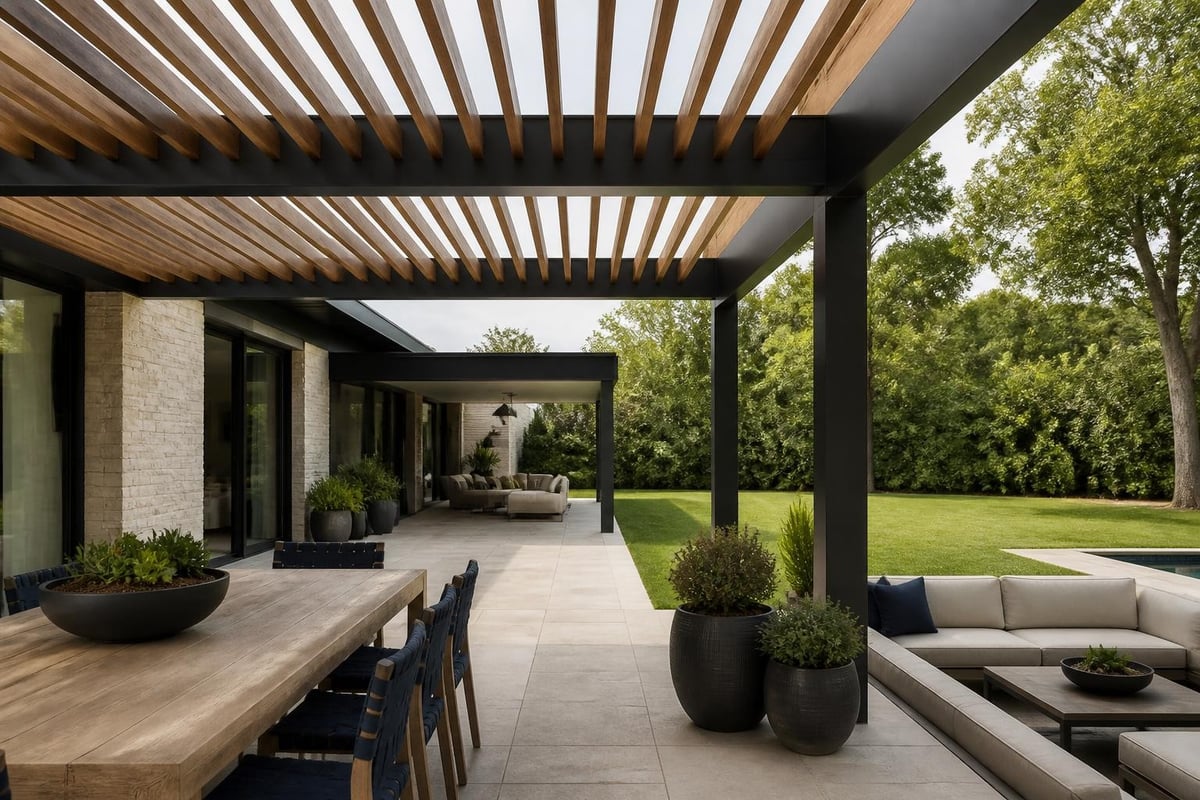
Successful pergola construction begins with comprehensive site evaluation and strategic planning. This preparatory phase determines structural feasibility, regulatory compliance, and design optimisation.
| Planning Element | Considerations | Impact on Design |
|---|---|---|
| Ground Conditions | Soil composition, drainage, load-bearing capacity | Foundation type, depth, reinforcement requirements |
| Solar Orientation | Sun path, seasonal variation, shade patterns | Louver direction, roof density, material selection |
| Wind Exposure | Prevailing winds, shelter, structural loading | Anchoring method, material weight, aerodynamic design |
| Access Requirements | Installation routes, equipment needs, ongoing maintenance | Modular versus monolithic design, material dimensions |
Building regulations and planning permissions vary significantly based on structure size, proximity to boundaries, and attachment to existing buildings. Attaching a pergola to a house requires particular attention to building regulations, especially regarding structural loading and weatherproofing interfaces.
Define your pergola's primary purpose before finalising design details. An outdoor cooking area demands different considerations than a garden walkway or standalone seating zone. Cooking-focused pergolas require adequate ventilation for smoke dispersal, integrated utilities for appliances, and weather protection systems that accommodate year-round use.
The spatial envelope should accommodate furniture, circulation pathways, and any integrated features such as outdoor kitchens, fire pits, or entertainment systems. Allow minimum clearances of 2.4 metres for head height and sufficient depth for comfortable seating arrangements including pulled-out chairs.
Material choices fundamentally influence both the aesthetic character and practical performance of your pergola. Each option presents distinct advantages regarding durability, maintenance demands, and design flexibility.
Quality hardwoods such as oak, sweet chestnut, or iroko deliver exceptional longevity when properly specified and maintained. Green oak develops beautiful silvered patinas over time whilst maintaining structural integrity for decades. Engineered timber products offer dimensional stability and resistance to warping, though they typically require more regular protective treatments.
Timber considerations:
Aluminium and composite systems increasingly dominate the luxury pergola market, particularly for bioclimatic designs incorporating motorised elements. These materials offer virtually maintenance-free performance, precise engineering tolerances, and seamless integration of technology.
Premium manufacturers provide powder-coated finishes in extensive colour ranges, allowing perfect coordination with existing architectural elements. The structural precision achievable with extruded aluminium enables slimmer profiles and larger unsupported spans than traditional timber construction permits.
For those seeking European craftsmanship and architectural distinction, the Tarsaola bioclimatic pergola system exemplifies premium design and engineering, offering bespoke configurations with integrated weather protection technology.
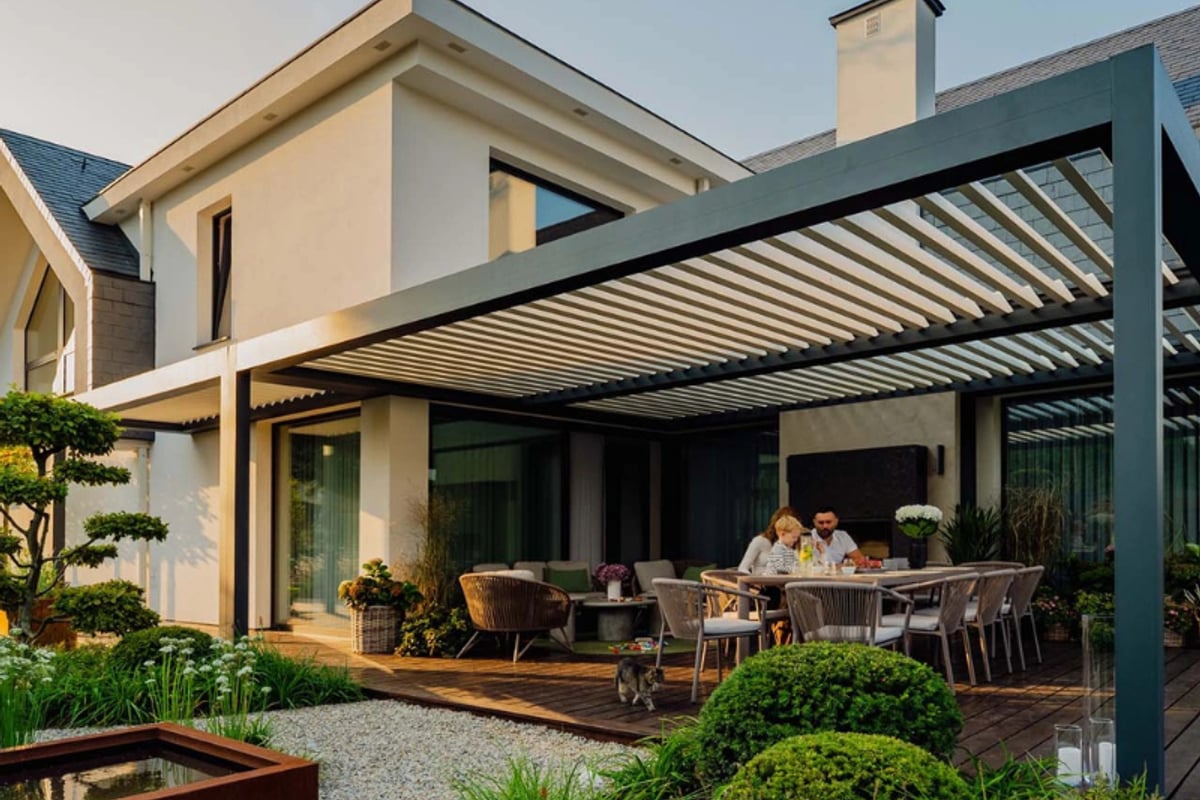
Proper foundation work ensures structural stability, prevents settlement issues, and maintains weatherproofing integrity throughout the pergola's lifespan. Anchoring methods vary significantly based on ground conditions, structure size, and attachment configurations.
Freestanding pergolas require substantial foundations to resist lateral forces from wind loading and prevent structural movement. The foundation type depends on soil conditions, structure weight, and local climate considerations.
| Foundation Type | Applications | Advantages | Limitations |
|---|---|---|---|
| Concrete Footings | Heavy timber or large structures | Maximum stability, permanent installation | Requires excavation, longer installation time |
| Ground Screws | Medium-weight structures, stable soil | Minimal ground disturbance, faster installation | Limited load capacity, unsuitable for rocky ground |
| Surface Mounts | Existing hardstanding, attached structures | No excavation required, relocatable options | Requires suitable base surface, additional weatherproofing |
Concrete footings typically extend below frost depth (minimum 600mm in the UK) and should measure at least three times the post dimension in width. Reinforcement with steel bars enhances resistance to tensile forces and prevents cracking during settlement.
When building a pergola attached to an existing structure, the wall connection becomes critical for both structural integrity and weatherproofing performance. Detailed guidance on house-attached construction addresses measurement precision, ledger board installation, and appropriate fixings.
The ledger board must attach directly to structural elements rather than cladding materials, using corrosion-resistant fixings at maximum 600mm centres. Flashing details prevent water ingress at the wall junction, incorporating appropriate overlap and sealant application.
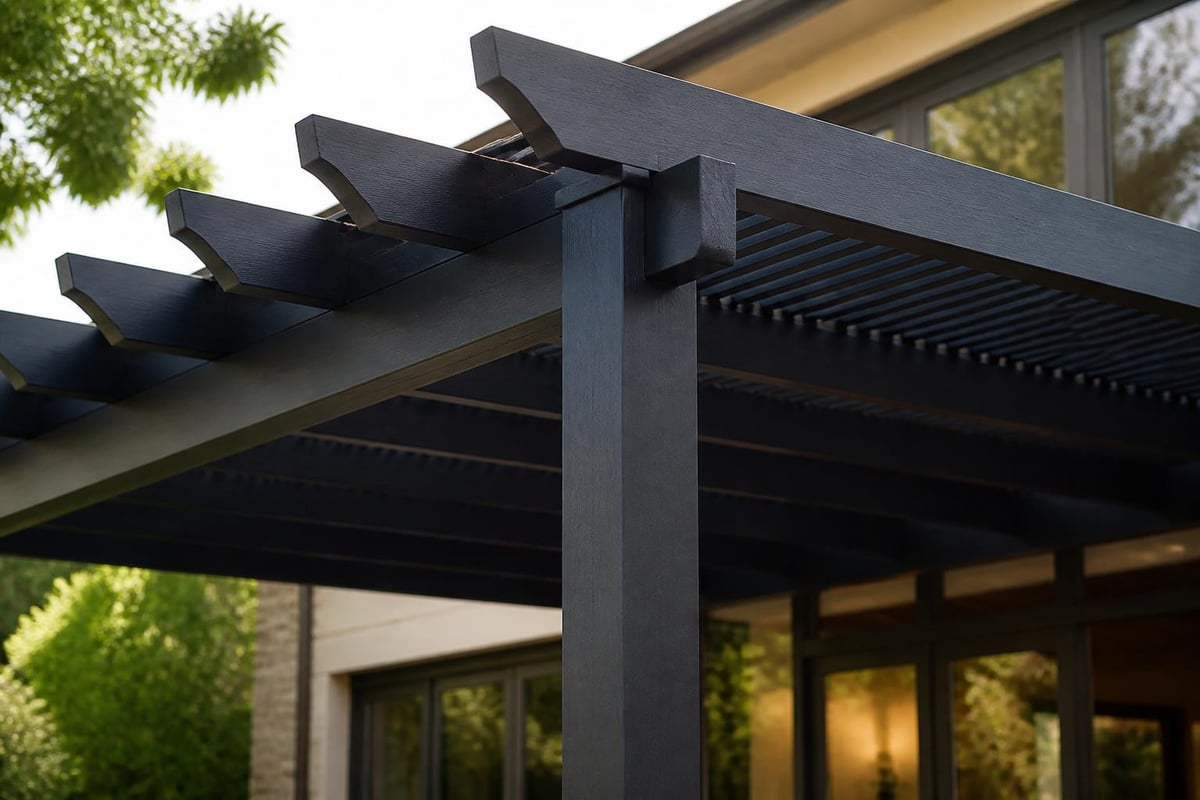
Building a pergola requires systematic approach, precise measurement, and attention to assembly sequence. Whether undertaking self-build construction or managing professional installation, understanding the construction process ensures quality outcomes.
Establishing accurate post positions determines the entire structure's geometry. Use string lines and theodolites for larger installations to maintain perfect alignment across multiple posts. Temporary bracing prevents movement during concrete curing or whilst completing frame assembly.
Installation sequence:
Post heights should account for final ground levels and any deck or paving installations that may raise finished floor levels. Cutting posts to final height after installation ensures level beam installation regardless of ground irregularities.
Primary beams span between posts, distributing roof loads and defining the pergola's structural character. Comprehensive construction guidance details joinery methods, fastening techniques, and assembly sequences for different design configurations.
Notched connections enhance structural performance whilst creating refined aesthetic details. Modern structural screws provide superior holding power compared to traditional bolts whilst simplifying installation procedures. Stainless steel or hot-dipped galvanised fixings prevent corrosion staining and maintain long-term structural integrity.
Rafter spacing influences both shade density and structural capacity. Standard spacings range from 300mm for maximum shade to 600mm for lighter filtering effects. Consider seasonal sun angles when determining optimal rafter orientation and spacing.
Contemporary pergola design increasingly incorporates sophisticated environmental control systems, transforming simple shade structures into fully functional outdoor rooms suitable for year-round use.
Motorised louvred roofs enable precise control over ventilation, shade, and weather protection. Aluminium blades rotate through 135 degrees, allowing adjustment from full closure (weatherproof protection) to completely open configurations. Integrated sensors automatically respond to rain, wind, and temperature conditions.
Premium systems incorporate concealed drainage channels within supporting posts, managing rainwater collection without compromising aesthetic refinement. LED lighting strips integrate within blade profiles, providing ambient illumination without visible fixtures.
Extending outdoor living into cooler months requires appropriate heating solutions integrated within the pergola structure. Options include:
For those seeking complete relaxation environments, combining pergola spaces with premium sauna installations creates comprehensive wellness zones within your garden, particularly effective when positioned to maximise privacy and scenic outlooks.
Building a pergola specifically designed to shelter outdoor cooking zones demands additional considerations regarding ventilation, utility integration, and spatial planning. The structure must accommodate both functional requirements and create an inviting culinary environment.
Outdoor kitchen configurations benefit from pergola coverage that shields cooking surfaces from weather whilst maintaining adequate ventilation for smoke and heat dispersal. Position grills and ovens beneath open or partially open sections, ensuring rising heat escapes naturally without accumulating under solid roof sections.
Counter heights, circulation pathways, and appliance clearances follow similar principles to indoor kitchen design, adapted for outdoor entertaining requirements. Allow generous prep zones adjacent to cooking equipment and ensure adequate landing space for serving dishes.
| Design Element | Indoor Standard | Outdoor Adaptation | Rationale |
|---|---|---|---|
| Counter Height | 900mm | 900-950mm | Consistent with indoor, higher option for standing entertainment |
| Circulation Space | 1000mm | 1200-1400mm | Increased allowance for outdoor furniture, multiple users |
| Appliance Clearance | 300mm sides | 400mm sides, 600mm front | Heat dissipation, ventilation, safety margins |
Electrical, gas, and water services require professional installation complying with relevant regulations. Buried services should follow prescribed routes marked on as-built drawings for future reference. All electrical installations demand RCD protection and weatherproof enclosures rated appropriate for outdoor exposure.
Gas installations require qualified Gas Safe registered engineers for both installation and certification. Rigid copper pipework generally proves more reliable than flexible connectors for permanent installations, particularly where concealed routing is possible.
The distinction between competent construction and exceptional craftsmanship often resides in finishing details, material interfaces, and decorative elements that elevate functional structures into architectural features.
Timber pergolas benefit from appropriate protective finishes that enhance durability whilst developing attractive patinas over time. Options range from penetrating oils that preserve natural appearance to opaque stains providing enhanced UV protection and colour consistency.
Application considerations:
Aluminium systems typically arrive pre-finished with powder coating requiring minimal ongoing maintenance. Quality coatings resist fading, chalking, and weathering for extended periods, maintaining appearance standards throughout the structure's lifespan.
Sophisticated lighting design transforms pergola spaces from daylight-only amenities into atmospheric evening destinations. Layered lighting approaches combine ambient illumination, task lighting for food preparation zones, and accent lighting highlighting architectural features or landscape elements.
LED technology enables energy-efficient operation whilst providing extensive control over colour temperature and brightness levels. Integrated systems respond to occupancy sensors, time schedules, or manual adjustment via smartphone applications.
Position fixtures thoughtfully to avoid glare whilst achieving desired illumination levels. Uplighting within posts creates dramatic shadows across overhead beams, whilst downlighting from rafters provides practical illumination for dining and activity zones.
The relationship between built structure and living landscape defines the pergola's integration within broader garden composition. Strategic planting softens architectural geometry whilst providing additional shade, privacy, and seasonal interest.
Traditional pergola plantings feature vigorous climbing species that scramble across overhead structures, creating living canopies that evolve throughout growing seasons. Select plants appropriate to aspect, maintenance commitment, and desired coverage density.
Popular climbing options:
Training systems guide growth patterns whilst preventing damage to pergola components. Stainless steel wires tensioned across framework provide secure attachment points without causing structural stress. Regular maintenance prevents stems infiltrating joinery gaps or lifting roofing materials.
The decision between professional installation and self-build construction depends on project complexity, available skills, time constraints, and desired quality standards. Each approach offers distinct advantages suited to different circumstances.
Simple freestanding timber pergolas with straightforward geometries fall within competent DIY capabilities, particularly when following detailed construction guides. Projects demanding electrical integration, complex structural calculations, or sophisticated bioclimatic systems typically benefit from professional expertise.
Professional installation provides:
Self-build approaches offer cost savings and personal satisfaction, though demand realistic assessment of skill levels and available time. Factor installation timelines against weather constraints, particularly for concrete work requiring specific temperature and moisture conditions.
Many homeowners adopt hybrid methodologies, engaging professionals for specialist elements whilst completing simpler tasks personally. Foundation work, structural framework, and utility installations commonly employ professional trades, whilst finishing details, planting, and decorative elements suit personal completion.
This approach balances cost management with quality assurance, ensuring critical structural and safety elements meet professional standards whilst retaining involvement in creative aspects. Exploring luxury outdoor kitchen specialists reveals design possibilities and professional capabilities available within specific regions.
Building a pergola represents significant investment demanding appropriate ongoing care to preserve both appearance and structural integrity. Maintenance requirements vary substantially between material systems and design complexity.
Systematic inspection identifies emerging issues before they develop into significant problems requiring costly remediation. Schedule inspections following winter weather when seasonal stresses have challenged structural connections and protective finishes.
Inspection checklist:
Timber structures demand particular attention to moisture-related deterioration, especially within ground-contact zones and wherever water may accumulate. Probe suspect areas with sharp instruments to detect early-stage decay before visible symptoms emerge.
Maintenance intervals depend on material specifications, exposure conditions, and quality of initial application. Hardwood pergolas with quality oil finishes may require only biennial attention in sheltered locations, whilst softwoods in exposed positions demand annual care.
Document maintenance activities including products used, application dates, and coverage rates. This record informs future scheduling whilst providing valuable information should property ownership transfer occur.
Building a pergola transforms outdoor spaces into sophisticated living environments that blur boundaries between interior comfort and garden beauty, providing year-round enjoyment when designed with appropriate weather protection and heating systems. Whether you envision an intimate dining retreat, a comprehensive outdoor kitchen, or an architectural statement piece, Cotswold Cooking Company delivers consultative expertise combining Cotswold heritage with contemporary design excellence, guiding you from initial concepts through to complete installation of bespoke outdoor living solutions.

Comments
Leave a comment