


The outdoor living sector has witnessed remarkable innovation in recent years, and the motorised pergola stands at the forefront of this evolution. Combining architectural elegance with cutting-edge automation, these sophisticated structures have transformed how discerning homeowners approach garden design and alfresco entertaining. Unlike traditional static pergolas, motorised variants offer unprecedented control over your outdoor environment, adapting seamlessly to weather conditions whilst maintaining the refined aesthetics that define premium outdoor spaces. For those seeking to create year-round outdoor kitchens and entertaining areas, understanding the capabilities and benefits of motorised pergola systems has become essential to making informed design decisions.
A motorised pergola represents a significant advancement beyond conventional outdoor structures, integrating intelligent louvre systems with automated controls to deliver unprecedented functionality. At its core, this technology features adjustable roof blades that rotate electronically, allowing precise management of light, shade, and airflow throughout the day.
The primary distinction lies in the motorisation itself. Rather than manually adjusting your outdoor coverage, these systems respond to remote controls, smartphone applications, or even environmental sensors that detect changes in weather conditions. This automation transforms a pergola from a static architectural element into a dynamic climate management system for your outdoor space.
Modern motorised pergola systems comprise several integrated elements working in harmony:
The engineering behind these systems reflects decades of refinement. Premium manufacturers utilise aerospace-grade aluminium and stainless steel components, ensuring longevity in the British climate whilst maintaining the sleek, minimalist profiles that complement contemporary architecture.
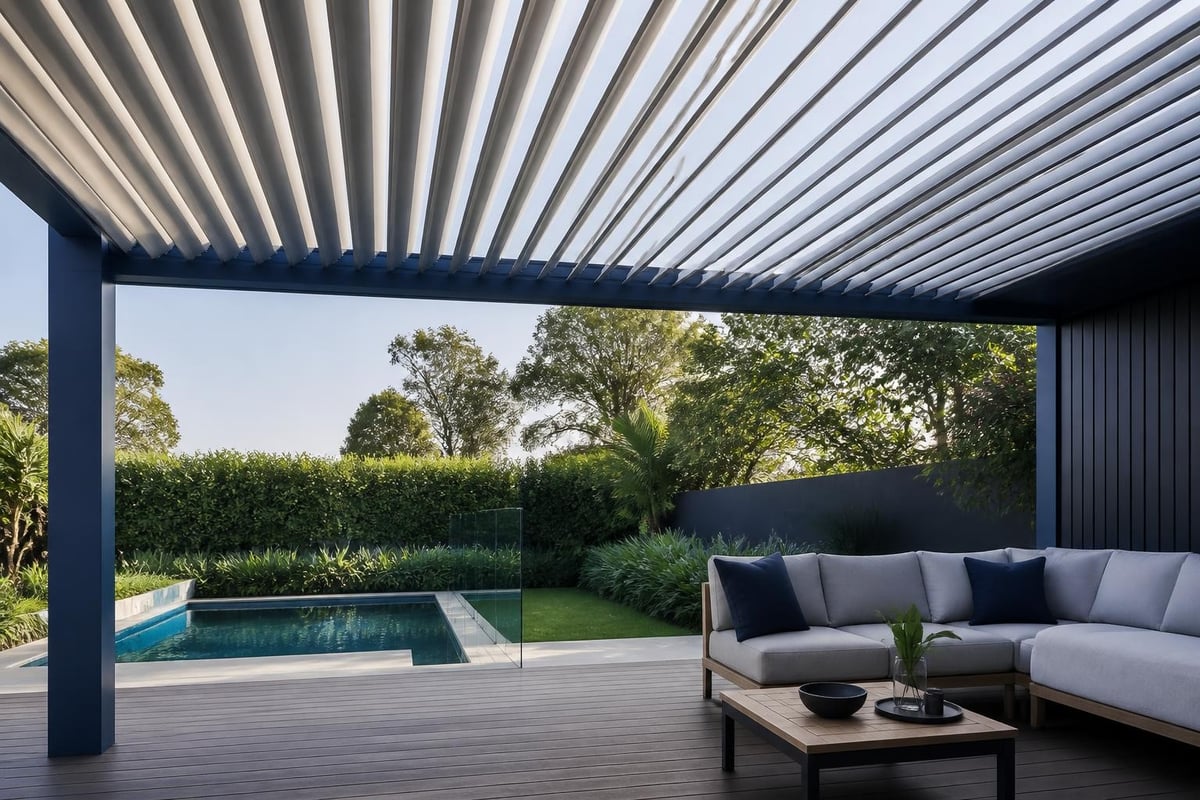
Investing in a motorised pergola delivers tangible advantages that extend far beyond simple weather protection. These sophisticated structures fundamentally enhance how you experience outdoor living throughout the seasons.
Perhaps the most compelling benefit is the ability to adapt to different weather conditions instantaneously. When summer sun becomes intense, blades rotate to provide optimal shade whilst maintaining airflow. During unexpected showers, the system closes completely, creating a watertight canopy that protects your outdoor kitchen, furniture, and guests.
This weather flexibility means your investment in outdoor entertaining infrastructure remains functional regardless of Britain's notoriously unpredictable climate. The system essentially extends your usable outdoor season significantly, allowing alfresco dining well into autumn and even winter months when combined with appropriate heating solutions.
Motorised pergolas contribute meaningfully to household energy efficiency. By positioning these structures adjacent to glass walls or sliding doors, you create a buffer zone that reduces solar heat gain during summer months. When louvres close partially, they deflect direct sunlight whilst maintaining natural ventilation, reducing reliance on air conditioning systems.
The energy efficiency advantages extend to winter months as well. A closed pergola system acts as an additional thermal layer, reducing heat loss from interior spaces and potentially lowering heating costs. This dual-season functionality aligns perfectly with sustainable design principles increasingly important to environmentally conscious homeowners.
| Season | Louvre Position | Primary Benefit | Energy Impact |
|---|---|---|---|
| Summer (Peak Sun) | 45° Angled | Filtered shade, airflow maintained | Reduces cooling demand by up to 30% |
| Summer (Evening) | Fully Open | Maximum ventilation, stargazing | Natural cooling, no energy use |
| Autumn/Spring | Variable | Adaptive sun tracking | Balanced thermal comfort |
| Winter (Closed) | Fully Closed | Weather protection, thermal buffer | Reduces heat loss by up to 20% |
Premium outdoor structures consistently deliver strong returns on investment when properties reach market. A professionally designed and installed motorised pergola represents a substantial value addition, particularly within the luxury property sector where outdoor living spaces significantly influence purchasing decisions.
Estate agents consistently report that homes featuring well-designed motorised pergolas command premium prices and attract more qualified buyers. The structure demonstrates thoughtful investment in property improvement whilst providing immediate functional benefits that prospective purchasers can easily appreciate during viewings.
Creating a motorised pergola that complements your property requires careful consideration of architectural context, materials selection, and functional requirements. The most successful installations seamlessly integrate with existing structures whilst establishing their own design presence.
The finest motorised pergola installations appear as though they were part of the original architectural vision. This requires understanding your property's design language, whether that's traditional Cotswold stone, contemporary glass and steel, or Georgian elegance. The pergola's proportions, material finishes, and detailing should echo these existing elements whilst introducing modern functionality.
For properties with outdoor kitchens, the pergola becomes the architectural canopy that defines the cooking and entertaining zone. Positioning is crucial. The structure should provide adequate coverage for cooking equipment, preparation areas, and dining spaces whilst maintaining sight lines to gardens and views that make outdoor living desirable in the first instance.
Premium motorised pergola systems offer extensive customisation in both structural materials and aesthetic finishes. Powder-coated aluminium frames can be specified in virtually any colour, from classic anthracite and white to bespoke heritage shades that match existing joinery or stonework.
Popular finish options include:
The choice extends to louvre blade profiles as well. Slimline blades create contemporary minimalism, whilst deeper profiles offer more pronounced shadow patterns and a stronger architectural statement.
Determining appropriate dimensions requires balancing functional coverage with architectural proportion. An undersized pergola fails to protect adequately, whilst an oversized structure can overwhelm garden spaces and dominate views.
Professional designers typically recommend extending coverage approximately 30-40cm beyond the functional areas requiring protection. For an outdoor kitchen measuring 4m x 3m, a pergola of 4.6m x 3.6m provides adequate overhang whilst maintaining proportional elegance.
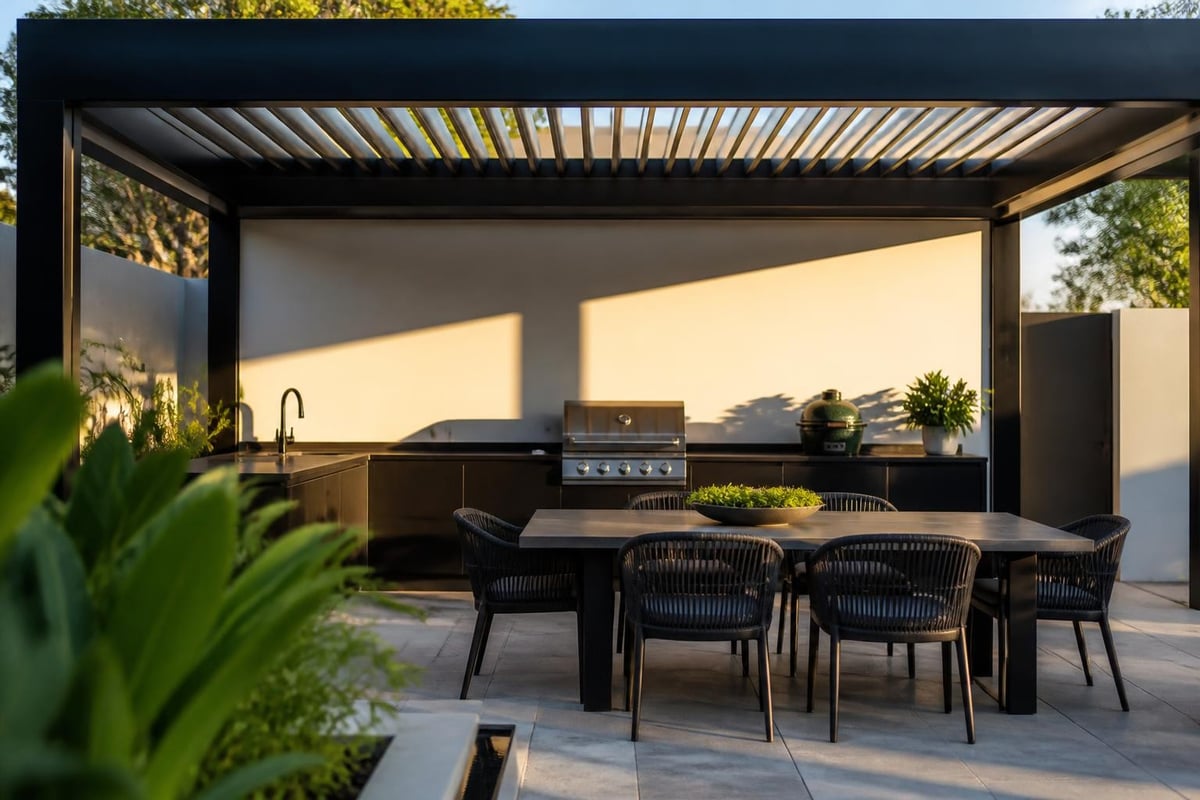
The relationship between motorised pergolas and outdoor kitchens represents one of the most compelling applications of this technology. Creating a functional, weather-protected cooking environment requires thoughtful coordination of several design elements.
Outdoor cooking equipment represents substantial investment, particularly when specifying professional-grade appliances. A motorised pergola extends the lifespan of pizza ovens, built-in barbecues, and outdoor refrigeration by shielding these elements from direct rainfall and intense UV exposure that accelerates material degradation.
The Cotswold Cooking Company curates exceptional outdoor kitchens featuring brands like Grillandia, Whistler, and Sub-Zero & Wolf, where equipment quality demands appropriate environmental protection. For those investing in premium European-made pergolas, the Tarasola range offers architectural sophistication perfectly suited to protecting high-specification outdoor kitchens whilst maintaining the refined aesthetics these installations deserve.
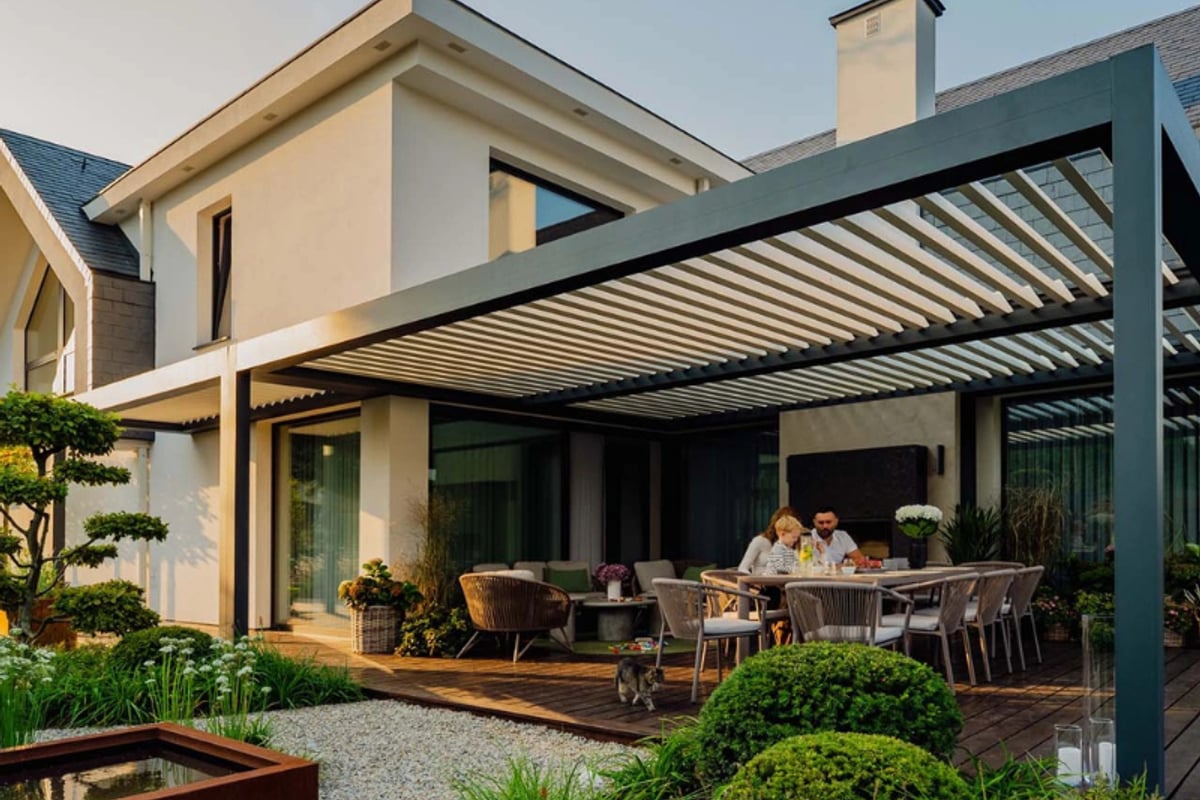
Unlike fully enclosed structures, motorised pergolas excel at managing the unique ventilation requirements of outdoor cooking. When grilling or operating wood-fired pizza ovens, louvres can be angled to maintain weather protection whilst allowing smoke and heat to dissipate naturally. This prevents the uncomfortable heat accumulation that occurs under solid roofs whilst still providing coverage from unexpected showers.
The adjustability proves particularly valuable during extended cooking sessions. As temperature and conditions change throughout an afternoon or evening, the pergola adapts, maintaining comfortable conditions for both the chef and guests.
Modern motorised pergola systems offer sophisticated control options that extend far beyond simple open and close functions. Understanding these capabilities helps you specify systems that align with your lifestyle and technical preferences.
Most contemporary installations include wireless remote controls as standard, offering convenient operation from anywhere within range. However, smartphone integration represents the current standard for premium installations. Dedicated applications allow you to adjust louvre positions, activate integrated lighting, and monitor system status from anywhere with internet connectivity.
This remote access proves valuable when weather conditions change whilst you're away from home. Closing the pergola remotely protects outdoor furniture and equipment from unexpected storms, providing peace of mind regardless of your location.
The most advanced systems incorporate weather sensors that automate responses to changing conditions. Rain sensors trigger automatic closure when precipitation begins, protecting your outdoor space without requiring intervention. Wind sensors similarly retract louvres during high winds, preventing potential structural stress or damage.
Sun-tracking functionality represents another sophisticated option. The system monitors solar position throughout the day, automatically adjusting louvre angles to maintain optimal shade in seating or dining areas. This automation transforms your pergola into a genuinely intelligent climate management system.
| Control Method | Response Time | Typical Applications | User Intervention Required |
|---|---|---|---|
| Manual Remote | Immediate | Ad-hoc adjustments | Full control required |
| Smartphone App | 2-3 seconds | Remote adjustments, scheduling | Moderate control |
| Rain Sensors | Automatic (<5 seconds) | Weather protection | None during events |
| Sun Tracking | Continuous adjustment | Optimal shade management | Initial setup only |
| Wind Sensors | Automatic (<3 seconds) | Structure protection | None during events |
For properties with existing home automation infrastructure, motorised pergolas can integrate seamlessly with platforms like Control4, Crestron, or KNX systems. This integration allows unified control of outdoor lighting, heating, audio systems, and the pergola itself through a single interface.
Voice control through Amazon Alexa or Google Assistant represents another increasingly popular option, allowing hands-free operation when hosting guests or when hands are occupied with cooking duties.
Proper installation fundamentally determines long-term performance and satisfaction with your motorised pergola. Understanding the process helps set realistic expectations and ensures appropriate preparation.
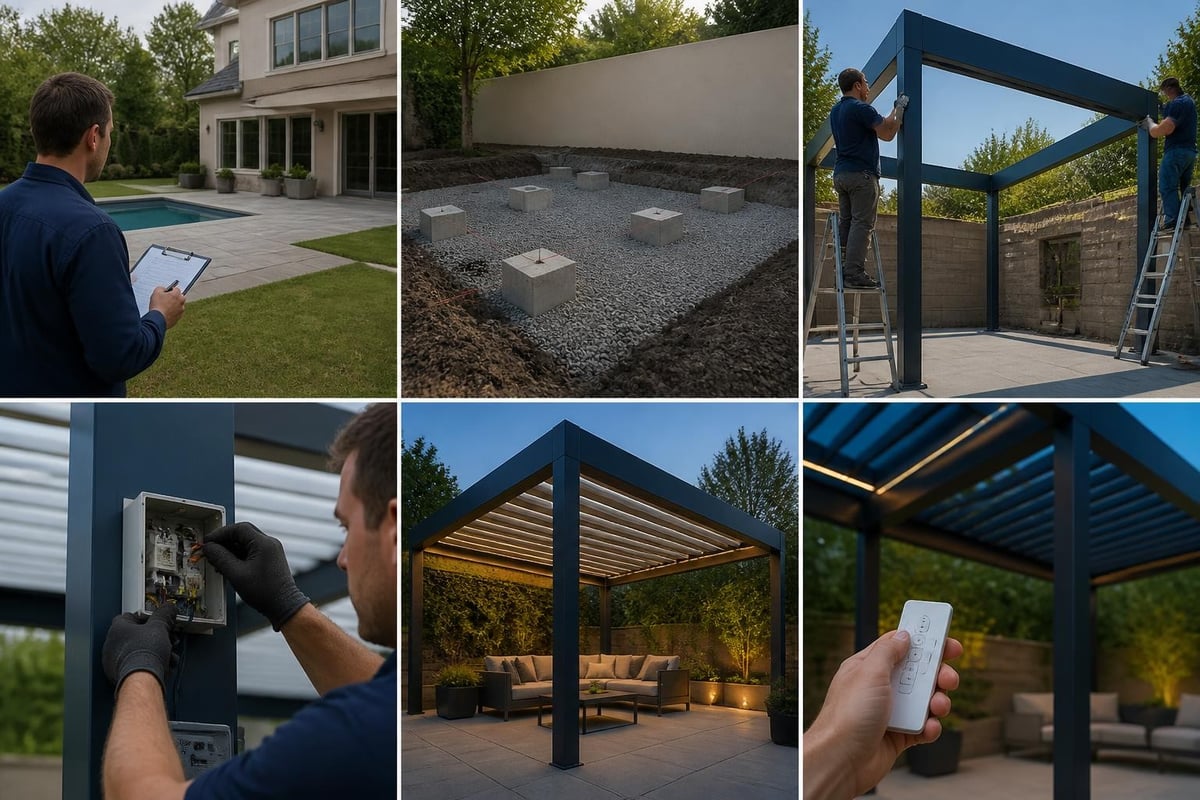
Motorised pergolas require robust foundations and mounting points capable of supporting both the structure's weight and additional loads from wind, snow accumulation, and the dynamic forces created during louvre operation. Most installations utilise one of three mounting approaches:
Each approach demands precise measurements and structural assessment. Wall-mounted installations require verification that existing walls possess adequate load-bearing capacity, whilst ground-mounted systems need soil analysis to determine appropriate foundation depth and width.
All motorised pergola systems require electrical connections for motor operation and any integrated lighting or heating elements. Professional installations typically specify dedicated circuits with appropriate weatherproof protection rated for permanent outdoor use.
Drainage integration proves equally critical. Premium systems incorporate concealed guttering within structural posts, directing water away from entertainment areas. This requires coordination with existing site drainage or installation of new systems capable of managing substantial water volumes during heavy rainfall.
From initial consultation to completion, most bespoke motorised pergola installations follow this approximate timeline:
Premium manufacturers often have extended lead times, particularly for fully customised specifications. Planning installations well in advance of anticipated use ensures the structure is operational when required.
Despite their sophisticated engineering, motorised pergolas require remarkably minimal maintenance when specified and installed correctly. Understanding routine care requirements ensures optimal performance throughout the system's lifespan.
Aluminium structures resist corrosion naturally, but periodic cleaning maintains aesthetic appeal and prevents debris accumulation that could affect moving components. Most manufacturers recommend quarterly cleaning using pH-neutral detergents and soft brushes to remove environmental contamination.
Seasonal maintenance checklist:
Quality motors housed within pergola structures typically operate maintenance-free for many years. However, annual professional servicing ensures components remain properly calibrated and identifies potential issues before they affect operation. This preventive approach significantly reduces the likelihood of unexpected failures during critical entertaining periods.
Premium motorised pergola systems typically include comprehensive warranties covering structural integrity, motor function, and finish durability. Understanding warranty terms and maintaining required service schedules protects your investment and ensures manufacturer support remains available should issues arise.
Leading manufacturers offer warranties ranging from five years on mechanical components to fifteen years or more on structural elements and finishes, reflecting the confidence in their engineering and material selection.
The motorised pergola market offers systems at various price points and specification levels. Understanding the distinctions helps identify options appropriate to your requirements and budget.
Cost differences between basic and premium motorised pergolas reflect substantial variations in engineering quality, material specification, and long-term durability. Entry-level systems often utilise thinner aluminium profiles, less robust motors, and simplified control systems. Whilst these installations provide basic functionality, they may lack the refinement and longevity expected in luxury outdoor spaces.
Premium systems from established European manufacturers feature heavier-gauge aluminium extrusions, precision-engineered components, and sophisticated control integration. The investment differential typically ranges from £8,000 to £25,000+ depending on size and specification, but this translates to markedly superior aesthetics, quieter operation, and extended service life.
| Feature Category | Entry Systems | Mid-Range Systems | Premium Systems |
|---|---|---|---|
| Aluminium Profile Thickness | 1.5-2mm | 2-3mm | 3mm+ reinforced |
| Motor Quality | Standard duty | Enhanced duty | Commercial grade |
| Maximum Span (unsupported) | 4.5m | 5.5m | 7m+ |
| Warranty (Structural) | 5 years | 10 years | 15-25 years |
| Warranty (Mechanical) | 2 years | 5 years | 5-10 years |
| Wind Rating | 75 km/h | 100 km/h | 120+ km/h |
| Customisation Options | Limited colours | Extended colours | Full bespoke |
The term "bioclimatic" refers to pergola systems specifically engineered to optimise outdoor climate conditions through intelligent design and automation. These systems represent the current pinnacle of motorised pergola technology, incorporating features like advanced weather protection and energy efficiency that passive structures simply cannot achieve.
Bioclimatic pergolas typically include enhanced insulation properties within louvre blades, sophisticated drainage management, and sensors that create genuinely autonomous climate control. For those seeking the ultimate in outdoor living refinement, these systems deliver unmatched performance.
Navigating planning requirements represents an essential preliminary step in any motorised pergola project. Whilst many installations proceed under permitted development rights, understanding applicable regulations prevents costly delays or modifications.
In England, pergola structures often qualify as permitted development, meaning formal planning permission is not required provided they meet specific criteria. Generally, structures must be single-storey with maximum heights of 2.5 metres for installations within 2 metres of boundaries, or 4 metres elsewhere within the property curtilage.
However, permitted development rights can be restricted in conservation areas, listed buildings, or through specific planning conditions attached to previous applications. Verifying your property's status before proceeding protects against complications.
Whilst planning permission addresses the principle of development, Building Regulations govern construction standards and safety. Motorised pergolas attached to existing buildings often require Building Regulations approval, particularly regarding structural adequacy of mounting points and electrical safety.
Professional installers experienced with luxury outdoor structures navigate these requirements routinely, coordinating necessary submissions and inspections as part of comprehensive project management. This expertise ensures compliance whilst minimising client involvement in regulatory processes.
Properties with listed status or locations within conservation areas face enhanced scrutiny for any alterations or additions. Motorised pergolas in these contexts require carefully considered design approaches that respect heritage significance whilst delivering desired functionality.
Applications in sensitive locations benefit from early engagement with conservation officers and heritage consultants who can guide appropriate design responses. Premium manufacturers experienced in heritage contexts understand these constraints and can propose solutions that satisfy both regulatory requirements and aesthetic aspirations.
Creating outdoor spaces that remain inviting throughout British seasons requires coordinating multiple elements beyond the pergola itself. A holistic approach delivers environments that genuinely extend usable living space regardless of weather conditions.
Motorised pergolas provide the weather protection foundation, but heating systems transform covered spaces into comfortable environments during cooler months. Options range from infrared heaters mounted within pergola structures to gas-fired patio heaters positioned strategically within the covered area.
Infrared heating proves particularly effective, delivering warmth directly to people and surfaces rather than attempting to heat air volumes. When combined with a closed pergola providing wind protection, infrared systems can maintain comfortable conditions even during winter months, extending your outdoor entertaining season considerably.
Integrated LED lighting transforms motorised pergolas into dramatic focal points after dark whilst providing essential task lighting for outdoor cooking and dining. Contemporary systems offer variable colour temperatures and dimming control, allowing you to adjust ambiance throughout evening entertaining.
Concealed installation within pergola profiles delivers clean aesthetics without compromising daytime appearance. Downlighting highlights dining areas and architectural features, whilst perimeter lighting can wash adjacent walls or landscaping for added visual interest.
The most successful outdoor entertaining spaces coordinate the motorised pergola with complementary elements:
This comprehensive approach creates outdoor kitchens that rival interior spaces for functionality whilst delivering the unique pleasure of cooking and entertaining in garden settings.
Motorised pergolas represent a transformative investment for discerning homeowners seeking to maximise outdoor living potential whilst maintaining the architectural refinement expected of luxury properties. The technology delivers genuine year-round functionality, protecting substantial investments in outdoor cooking equipment and furniture whilst creating adaptable entertaining environments that respond intelligently to Britain's changeable climate. Whether you're planning a new outdoor kitchen installation or enhancing existing outdoor spaces, Cotswold Cooking Company brings decades of expertise in specifying and installing premium pergola systems alongside world-class outdoor cooking equipment, delivering the consultative, design-led approach that luxury outdoor living projects demand.

Leave a comment