


A built in outdoor bbq represents the pinnacle of garden entertaining, transforming ordinary patio spaces into refined culinary destinations that rival indoor kitchens. Unlike portable alternatives, a permanently installed grill becomes the centrepiece of an integrated outdoor cooking environment, combining performance, durability, and architectural presence. For discerning homeowners seeking to elevate their outdoor living spaces, understanding the design principles, material specifications, and installation requirements proves essential to creating a built in outdoor bbq that delivers exceptional results for decades.
The fundamental distinction between a built in outdoor bbq and conventional grills lies in permanent integration. These installations become structural elements within your outdoor space, requiring careful planning of utilities, ventilation, and spatial flow. When designing a built in outdoor bbq system, architects and designers consider the relationship between cooking zones, preparation surfaces, storage requirements, and social spaces.
Effective built in outdoor bbq placement requires careful consideration of multiple factors:
The National Fire Protection Association provides comprehensive safety guidance on proper grill placement and clearance requirements. According to current research, built-in installations must maintain minimum distances from structures, with most building codes requiring 36 inches from combustible walls and adequate overhead clearance beneath pergolas or covered structures.
Professional designers typically allocate 7 to 10 linear feet for a comprehensive built in outdoor bbq station, incorporating the grill itself alongside preparation zones and storage. This generous footprint enables proper workflow whilst maintaining comfortable clearances for the cook.
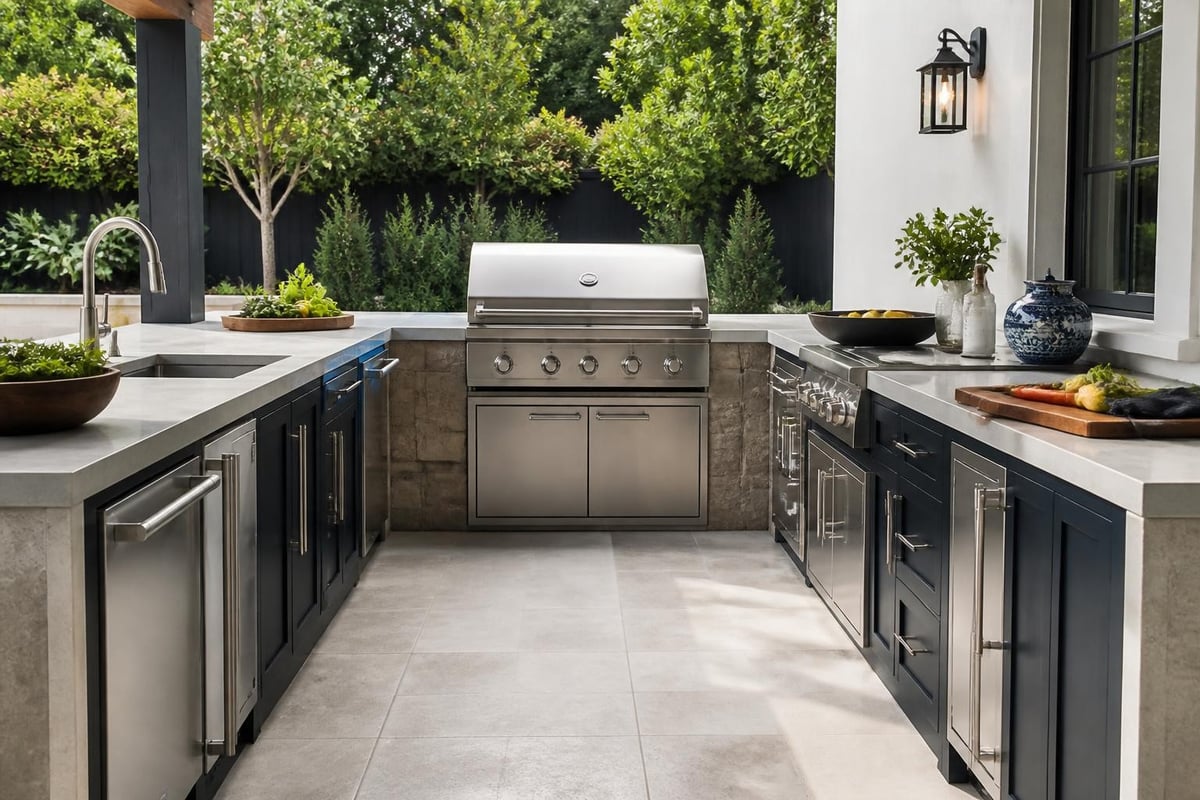
Choosing between natural gas and propane significantly impacts your built in outdoor bbq design. Natural gas requires permanent piping from your home's gas supply, offering unlimited fuel without cylinder changes. The U.S. Department of Energy's comparison of propane properties highlights how propane delivers higher heat output per unit but requires tank storage and periodic refilling.
| Fuel Type | BTU Output | Installation Complexity | Running Costs | Convenience |
|---|---|---|---|---|
| Natural Gas | 1,030 BTU/ft³ | High (permanent piping) | Lower long-term | Continuous supply |
| Propane | 2,516 BTU/ft³ | Moderate (tank storage) | Higher per BTU | Requires refills |
Natural gas installations demand professional certification and must comply with local building codes. The Department of Energy's safety framework establishes requirements for gas appliance installations, including proper ventilation, shutoff valve placement, and pressure regulation.
A built in outdoor bbq faces continuous exposure to moisture, temperature fluctuations, and UV radiation. Material specification directly influences durability, maintenance requirements, and aesthetic integration with surrounding architecture.
Marine-grade stainless steel remains the premium choice for built in outdoor bbq construction:
Thickness matters substantially. Professional-grade built in outdoor bbq units specify minimum 18-gauge stainless steel for firebox construction, with 16-gauge or heavier preferred for maximum longevity. Thinner materials warp under repeated thermal cycling, compromising performance and appearance.
Premium manufacturers employ double-wall construction with insulation between layers, dramatically improving heat retention whilst protecting cabinetry from excessive temperatures. This engineering detail transforms cooking efficiency and safety in built in outdoor bbq installations.
The surfaces surrounding your built in outdoor bbq require equal attention to the grill itself. Granite, porcelain, and engineered stone deliver exceptional weather resistance whilst providing generous preparation space. Tiled surfaces offer creative design flexibility but demand proper substrate waterproofing and frost-resistant adhesives suited to UK climates.
Natural stone creates timeless appeal but requires sealing against moisture penetration and staining from cooking oils. Dekton and similar ultra-compact surfaces combine stone aesthetics with superior stain resistance and minimal maintenance, increasingly popular in luxury outdoor kitchen specifications.
Contemporary built in outdoor bbq installations rarely stand alone. Modular systems enable comprehensive outdoor kitchens with integrated storage, refrigeration, sinks, and specialized cooking equipment. Grillandia outdoor kitchens exemplify this approach, offering fully customizable modules in UV-resistant materials that create cohesive cooking environments. These systems accommodate various built in outdoor bbq sizes whilst maintaining architectural consistency through matching cabinetry, doors, and drawer systems.
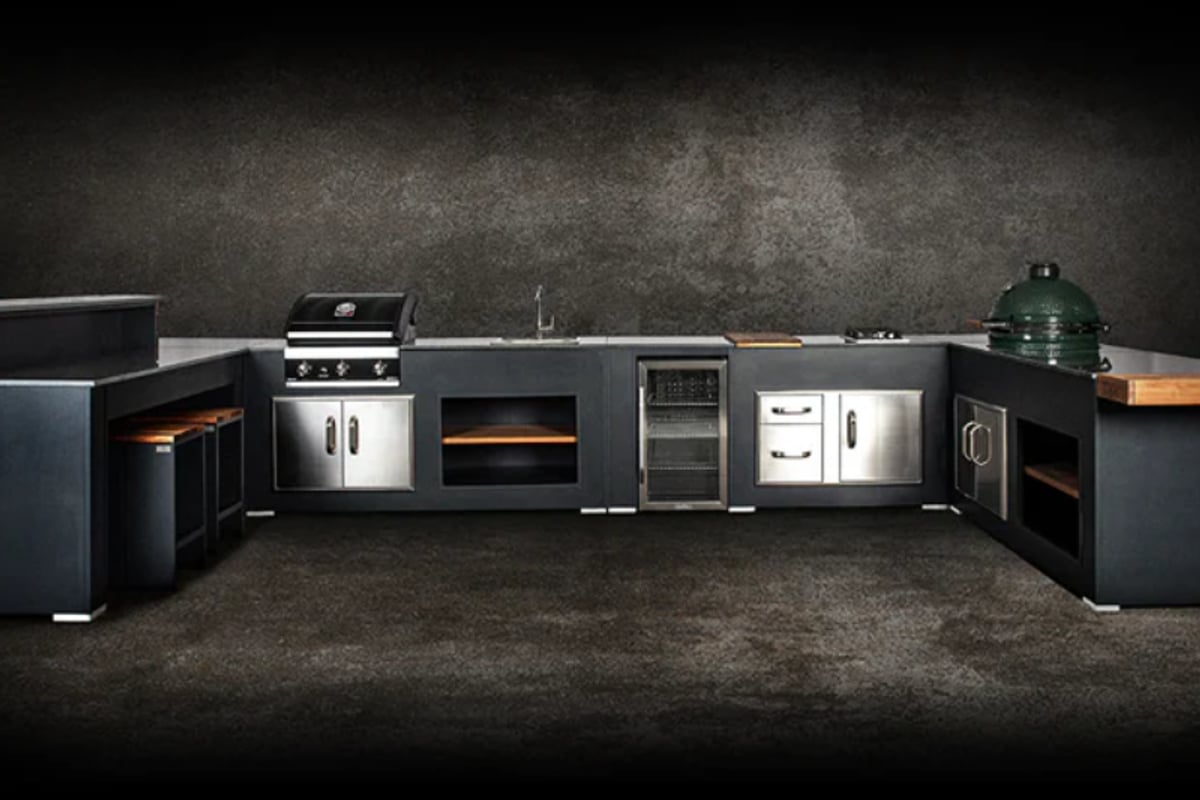
A well-planned built in outdoor bbq kitchen incorporates multiple functional zones:
The Consumer Reports grill buying guide emphasizes performance testing when selecting your primary grill unit. BTU ratings alone prove misleading; burner design, heat distribution, and construction quality determine actual cooking performance in built in outdoor bbq installations.
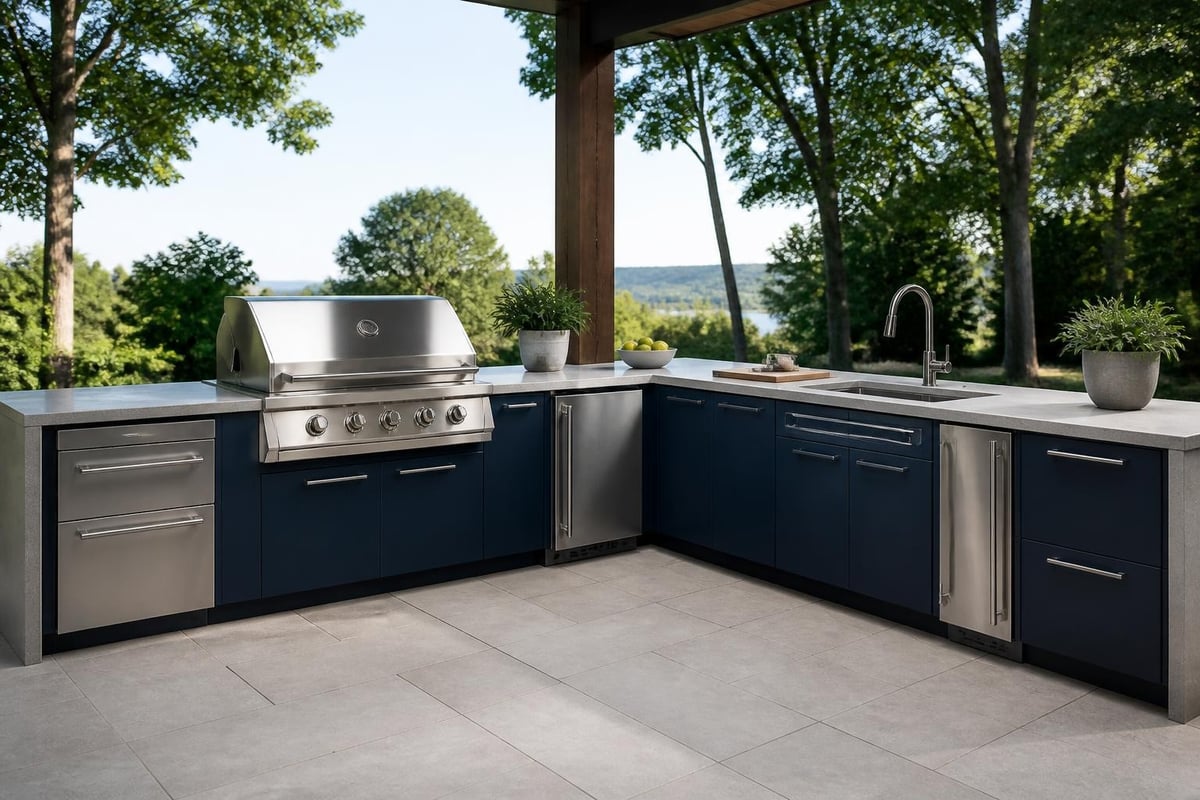
Permanent built in outdoor bbq installations constitute structural alterations requiring compliance with building regulations. Gas connections, electrical supplies, and plumbing additions demand proper certification and often require building control notification.
Critical installation elements include:
The FEMA grilling fire safety guidance emphasizes clearance requirements, particularly for covered outdoor spaces. Built in outdoor bbq installations beneath pergolas or roofed areas require additional ventilation planning to prevent carbon monoxide accumulation and heat damage.
Most local authorities classify permanent built in outdoor bbq installations as permitted development, though conservation areas and listed properties demand additional scrutiny. Professional design consultancies navigate these requirements, ensuring compliance whilst optimizing functionality.
Natural gas installations for built in outdoor bbq units must conform to Gas Safety regulations, requiring work by Gas Safe registered engineers. Pressure testing, proper valve specification, and certified pipe routing protect against leaks and ensure reliable operation.
Electrical supplies typically require 13-amp weatherproof sockets for accessories, with dedicated circuits for built-in lighting and temperature controls. All outdoor electrical work must comply with current wiring regulations, specifying appropriate IP-rated enclosures and RCD protection.
The heart of any built in outdoor bbq lies in its burner system. Burner count, BTU output, and heat distribution determine cooking versatility and performance across different techniques.
Premium built in outdoor bbq installations feature multiple independently controlled burners, enabling simultaneous high-heat searing and gentle indirect cooking. Four-burner configurations prove most versatile for serious outdoor cooking:
| Burner Zone | Temperature Range | Cooking Applications | Typical BTU |
|---|---|---|---|
| Primary sear | 260-315°C | Steaks, chops, vegetables | 12,000-15,000 |
| Secondary direct | 175-230°C | Chicken, fish, sausages | 10,000-12,000 |
| Indirect/warming | 120-175°C | Slow roasting, holding | 8,000-10,000 |
| Side burner | Variable | Sauces, sides, boiling | 12,000+ |
Infrared burners represent premium technology in built in outdoor bbq design, delivering intense radiant heat exceeding 480°C for restaurant-quality searing. These specialized burners consume less fuel whilst creating superior crust development on proteins.
Double-wall construction with insulation transforms built in outdoor bbq performance, particularly in Britain's variable climate. Insulated units maintain stable temperatures with reduced fuel consumption, whilst protecting surrounding cabinetry from heat damage.
Hood design significantly impacts heat retention and smoke management. Heavy-gauge stainless steel hoods with integrated temperature gauges enable precise cooking control, essential for low-and-slow barbecuing techniques. Built in outdoor bbq installations benefit from proper hood sealing, creating efficient convection environments for roasting and baking.
British weather demands robust protection for built in outdoor bbq installations. Whilst permanent structures offer inherent advantages over portable grills, proper specification ensures reliable performance across all seasons.
Integrating your built in outdoor bbq beneath a pergola or dedicated roof structure extends usability throughout the year. Bioclimatic pergolas with adjustable louvres provide weather protection whilst maintaining ventilation and natural light. These architectural elements transform outdoor spaces into genuine rooms, enabling comfortable cooking regardless of conditions.
Proper ventilation remains critical when incorporating a built in outdoor bbq under any covered structure. The NFPA research on grill fires documents hazards associated with inadequate clearance and ventilation. Professional designers ensure sufficient airflow to dissipate heat and combustion products safely.
Sophisticated outdoor entertainment spaces increasingly incorporate custom features beyond cooking. For instance, those creating complete outdoor living environments might consider how ANR media integrates audio-visual systems into covered outdoor rooms, complementing the built in outdoor bbq with entertainment capabilities for year-round gatherings.
Stainless steel built in outdoor bbq units resist corrosion naturally, but surrounding cabinetry requires robust weather protection. Marine-grade polymer cabinets, powder-coated aluminium frames, and sealed hardwood construction all offer distinct advantages depending on aesthetic preferences and budget considerations.
Cabinet door seals prevent moisture ingress that damages stored items and promotes corrosion. Magnetic closures provide weathertight sealing whilst maintaining easy access. Properly specified built in outdoor bbq installations include drainage provisions within base cabinets, allowing inevitable condensation and rainwater to escape harmlessly.
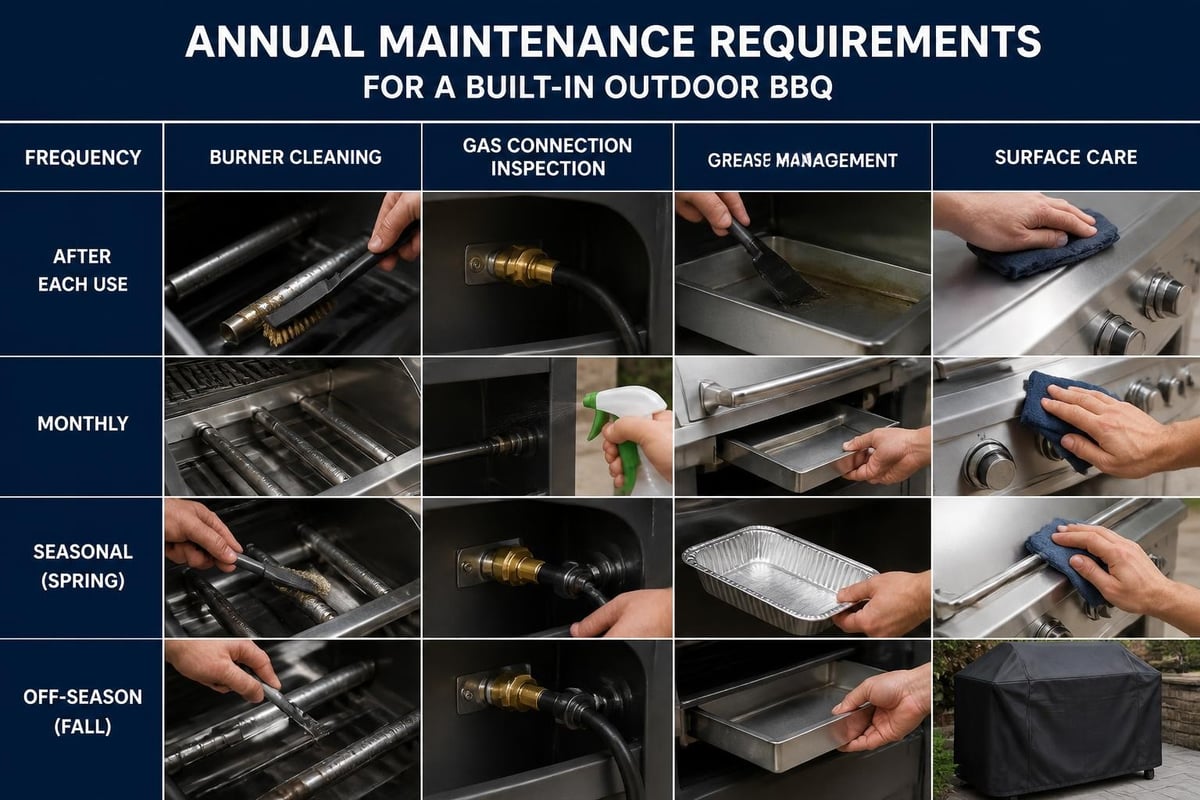
A well-maintained built in outdoor bbq delivers decades of reliable service. Establishing regular maintenance routines protects your investment whilst ensuring optimal cooking performance and safety.
Essential maintenance tasks include:
The CPSC safety guidance emphasizes proper grease management as critical fire prevention. Built in outdoor bbq installations should incorporate accessible grease traps requiring regular emptying and cleaning. Accumulated grease represents the primary fire hazard in outdoor cooking equipment.
Burner ports require periodic clearing to maintain proper flame pattern and prevent gas buildup. Spider webs and insect nests frequently obstruct venturi tubes during periods of inactivity, creating dangerous flashback conditions. Professional-grade built in outdoor bbq units incorporate screens preventing insect access whilst maintaining proper combustion air supply.
Even year-round outdoor kitchens benefit from winterization procedures during extended periods of inactivity. For natural gas built in outdoor bbq installations, simply shutting off the supply valve suffices. Propane systems require tank disconnection and storage in well-ventilated areas away from the home.
Covering your built in outdoor bbq with breathable, weather-resistant covers prevents moisture accumulation whilst protecting surfaces from UV degradation. Avoid plastic sheeting that traps condensation; purpose-designed grill covers in marine-grade fabrics provide optimal protection.
A built in outdoor bbq should complement your property's architectural character whilst creating visual harmony with surrounding landscape elements. Design coherence elevates outdoor kitchens from functional installations to genuine outdoor rooms.
Contemporary built in outdoor bbq designs favour clean lines and understated elegance. Brushed stainless steel creates timeless appeal, working beautifully with natural stone, rendered walls, and timber structures. Powder-coated finishes in charcoal, anthracite, or custom colours enable seamless integration with existing outdoor furniture and architectural elements.
Traditional properties benefit from sympathetic material selection. Natural stone surrounds, brick accents, and oak cabinetry create built in outdoor bbq installations that feel original rather than added. These considered designs age gracefully, developing patina that enhances character rather than appearing dated.
Proper illumination transforms built in outdoor bbq functionality and ambiance. Task lighting enables safe food preparation after dark, whilst accent lighting creates atmosphere for evening entertaining. LED strip lighting beneath counters eliminates shadows on preparation surfaces, and dedicated grill lights enable monitoring cooking progress without torches.
Integrated lighting schemes should employ warm colour temperatures (2700K-3000K) creating inviting atmosphere whilst providing adequate illumination for food safety. Dimmable systems offer flexibility for different occasions, from focused cooking sessions to relaxed evening gatherings.
A professionally designed built in outdoor bbq installation represents substantial investment, typically ranging from £8,000 for basic configurations to £30,000+ for comprehensive outdoor kitchens with premium appliances and architectural detailing.
Quality built in outdoor bbq installations enhance property value, particularly in premium markets where outdoor living spaces increasingly influence purchasing decisions. Estate agents report strong buyer interest in properties featuring well-executed outdoor kitchens, viewing them as genuine additional living space rather than simple garden features.
Key value drivers include:
The EPA's sustainable design guidelines encourage material selection based on lifecycle impacts. Durable built in outdoor bbq installations using responsibly sourced materials and efficient appliances align with contemporary sustainability values whilst delivering superior long-term performance.
Experienced designers recommend allocating roughly 40% of budget to the primary built in outdoor bbq unit itself, 30% to surrounding cabinetry and countertops, 20% to installation and utilities, and 10% to accessories and finishing details. This distribution ensures balanced investment across all elements contributing to successful outcomes.
Premium grill manufacturers warrant their products for 10-20 years, reflecting construction quality and expected longevity. These warranties provide peace of mind whilst signaling the manufacturer's confidence in their built in outdoor bbq engineering.
Modern built in outdoor bbq installations incorporate sophisticated technology enhancing convenience, precision, and cooking outcomes. These innovations transform outdoor cooking from rustic simplicity to refined culinary technique.
Digital temperature controllers maintain precise heat levels for low-and-slow cooking, whilst wireless thermometers monitor internal food temperatures from comfortable seating areas. Premium built in outdoor bbq systems integrate these technologies seamlessly, with weather-sealed control panels and Bluetooth connectivity.
Rotisserie systems with dedicated burners expand cooking versatility, enabling spit-roasting whole birds, joints, and even delicate fish. Counter-balanced motors ensure even rotation whilst infrared rear burners deliver restaurant-quality results. These features justify premium investment for serious outdoor cooking enthusiasts.
Comprehensive built in outdoor bbq installations increasingly incorporate specialized equipment beyond conventional grilling:
This diversity enables genuine outdoor cooking versatility, moving beyond simple grilling to encompass global culinary techniques. Well-planned installations accommodate current equipment whilst providing infrastructure for future additions.
Navigating the complexity of built in outdoor bbq specification, material selection, and installation coordination proves challenging without specialist expertise. Professional design consultancies bring invaluable experience ensuring successful outcomes.
Established outdoor kitchen specialists coordinate all project aspects, from initial concept development through final commissioning. This integrated approach eliminates coordination headaches between separate trades, ensuring gas engineers, electricians, landscapers, and installers work to unified plans.
Professional designers understand nuanced material performance, steering clients toward specifications proven in British conditions. They navigate building regulations, source premium components at trade pricing, and provide warranty coordination across multiple manufacturers. These services justify professional fees through reduced risk, superior outcomes, and streamlined project delivery.
Expert consultation proves particularly valuable when integrating a built in outdoor bbq within broader landscape renovations. Coordinating outdoor kitchens with pergola installations, paving projects, and garden redesigns requires careful phasing and communication across disciplines.
Built in outdoor bbq installations demand rigorous attention to safety throughout design, installation, and operation. Understanding and implementing appropriate safeguards protects property and occupants whilst ensuring insurance compliance.
Proper clearances form the foundation of built in outdoor bbq safety. Current guidance requires minimum 910mm (36 inches) from combustible walls, with increased distances beneath covered structures. Non-combustible backsplashes protect walls from radiant heat, whilst heat-resistant counter materials prevent damage from hot cookware.
Grease management systems prevent the dangerous accumulation that causes most grill fires. Quality built in outdoor bbq units incorporate sloped cooking surfaces directing drippings to accessible collection trays. Regular emptying and cleaning of these systems proves essential for safe operation.
Fire suppression equipment should remain readily accessible, with appropriate extinguishers rated for grease fires positioned within easy reach. Automatic suppression systems represent the premium solution for covered outdoor kitchens, providing rapid response if fires develop.
All natural gas connections require certification by Gas Safe registered engineers, with annual safety checks recommended for permanent installations. Proper pressure regulation, certified pipe materials, and accessible shutoff valves ensure safe built in outdoor bbq operation.
Leak detection systems using electronic sensors provide early warning of gas escape, particularly valuable for installations in enclosed or semi-enclosed spaces. These devices trigger audible alarms and can integrate with smart home systems for remote monitoring.
Investing in a built in outdoor bbq transforms your property into a versatile entertaining destination combining culinary performance with architectural presence. By carefully considering design principles, material specifications, and professional installation, you create outdoor cooking spaces delivering decades of reliable service and genuine lifestyle enhancement. Cotswold Cooking Company brings unmatched expertise in luxury outdoor kitchen design, offering comprehensive consultation from concept through installation, helping discerning clients across the UK create exceptional outdoor living spaces that blend heritage craftsmanship with contemporary performance.

Leave a comment