


The rise of compact outdoor kitchens represents a sophisticated response to contemporary living, where outdoor space may be limited but the desire for refined alfresco entertaining remains uncompromised. These thoughtfully designed culinary environments prove that exceptional outdoor cooking experiences need not demand expansive gardens or sprawling terraces. Through strategic planning, premium materials, and intelligent layouts, compact outdoor kitchens deliver the same level of luxury and performance as their larger counterparts whilst occupying a fraction of the footprint.
Modern homeowners increasingly seek to maximise every square metre of their outdoor living areas. Whether working with a modest courtyard in the Cotswolds, a London townhouse terrace, or a contemporary garden room extension, the challenge lies in creating a fully functional cooking space without overwhelming the available area. Compact outdoor kitchens answer this brief by prioritising essential elements whilst maintaining the aesthetic refinement expected from luxury outdoor spaces.
The current trend towards Cotswold outdoor kitchen design emphasises natural materials, timeless aesthetics, and seamless integration with the surrounding landscape. These principles translate beautifully to smaller installations, where quality craftsmanship becomes even more apparent. Rather than cramming unnecessary features into limited space, discerning homeowners focus on curating the perfect selection of appliances and finishes that reflect their culinary preferences and entertaining style.
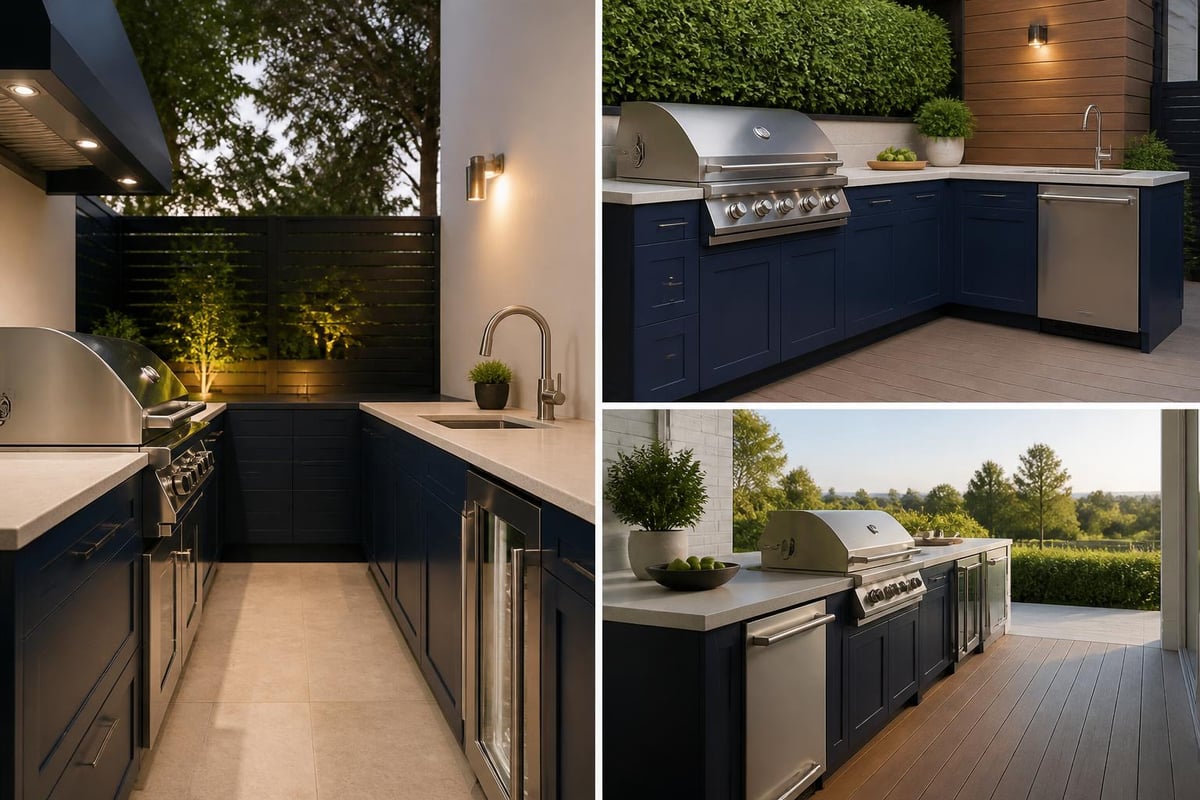
The foundation of successful compact outdoor kitchens lies in understanding spatial relationships and workflow efficiency. Professional designers employ several proven layout strategies to maximise functionality:
| Layout Type | Best For | Key Advantage | Space Required |
|---|---|---|---|
| Galley | Enclosed courtyards | Maximum efficiency | 1.8m x 3m minimum |
| L-Shaped | Corner positions | Versatile workflow | 2m x 2m minimum |
| Linear | Narrow terraces | Simple installation | 1.2m x 3m minimum |
| Modular | Evolving needs | Future flexibility | Variable |
Each configuration offers distinct advantages depending on your specific site conditions, entertaining frequency, and culinary ambitions. The linear layout, for example, proves particularly effective when designing efficient outdoor cooking spaces that maintain visual continuity with architectural features.
Selecting the appropriate equipment represents the most critical decision when planning compact outdoor kitchens. Every appliance must justify its presence through either frequent use or essential functionality. This disciplined approach prevents clutter whilst ensuring you possess the tools necessary for your preferred cooking methods.
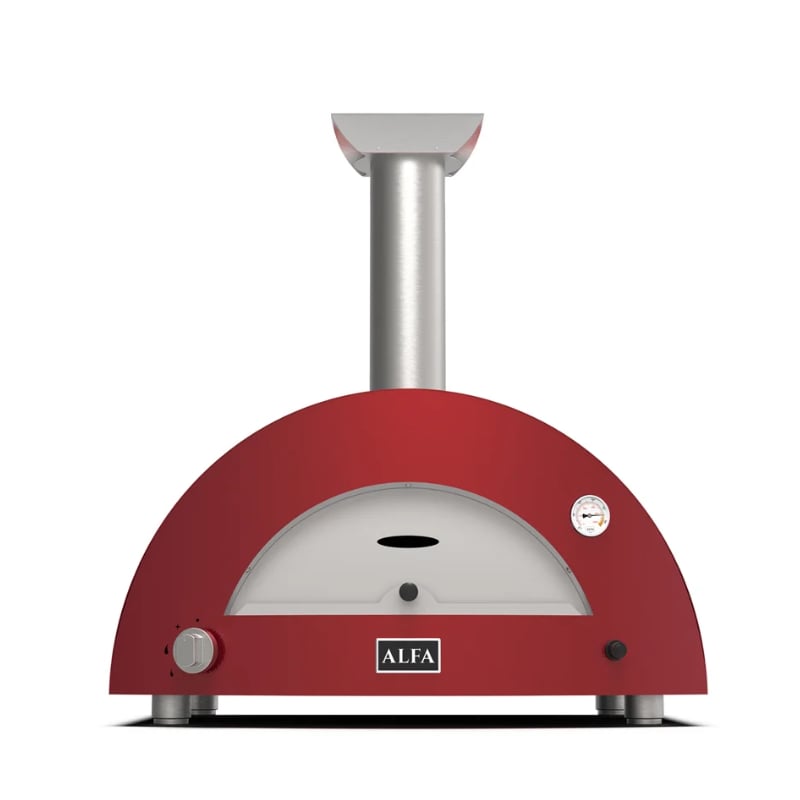
Primary cooking appliances form the heart of any outdoor kitchen. For compact installations, hybrid or multi-functional equipment delivers exceptional value. A premium gas barbecue with side burners, rotisserie capability, and integrated temperature control can handle everything from weeknight dinners to elaborate weekend entertaining. Alternatively, a high-performance pizza oven such as the Alfa Forni Moderno Hybrid Pizza Oven offers incredible versatility, reaching 500°C in approximately 30 minutes and operating on either LPG gas or wood fuel. This Italian-crafted appliance exemplifies how premium equipment can deliver professional results whilst occupying minimal space, creating authentic Neapolitan pizzas in just 90 seconds alongside roasted vegetables, fish, and meat dishes.
Preparation surfaces prove equally important. Stainless steel countertops resist weathering whilst providing hygienic food preparation zones. Granite or engineered stone alternatives introduce natural texture and complement traditional architecture, though these materials require appropriate sealing for outdoor exposure. Aim for at least 600mm of continuous worktop space adjacent to your primary cooking appliance.
Storage solutions keep compact outdoor kitchens organised and functional:
Proper utilities transform compact outdoor kitchens from occasional novelties into year-round culinary destinations. Gas supply lines eliminate the inconvenience of cylinder changes, whilst dedicated electrical circuits power lighting, small appliances, and heating elements. Water connections enable proper hygiene through integrated sinks, though frost-proof installations require professional specification to prevent winter damage.
Creating compact outdoor kitchens that feel spacious rather than cramped requires thoughtful design decisions at every level. Visual continuity, material selection, and lighting all contribute to the perception of space and luxury.
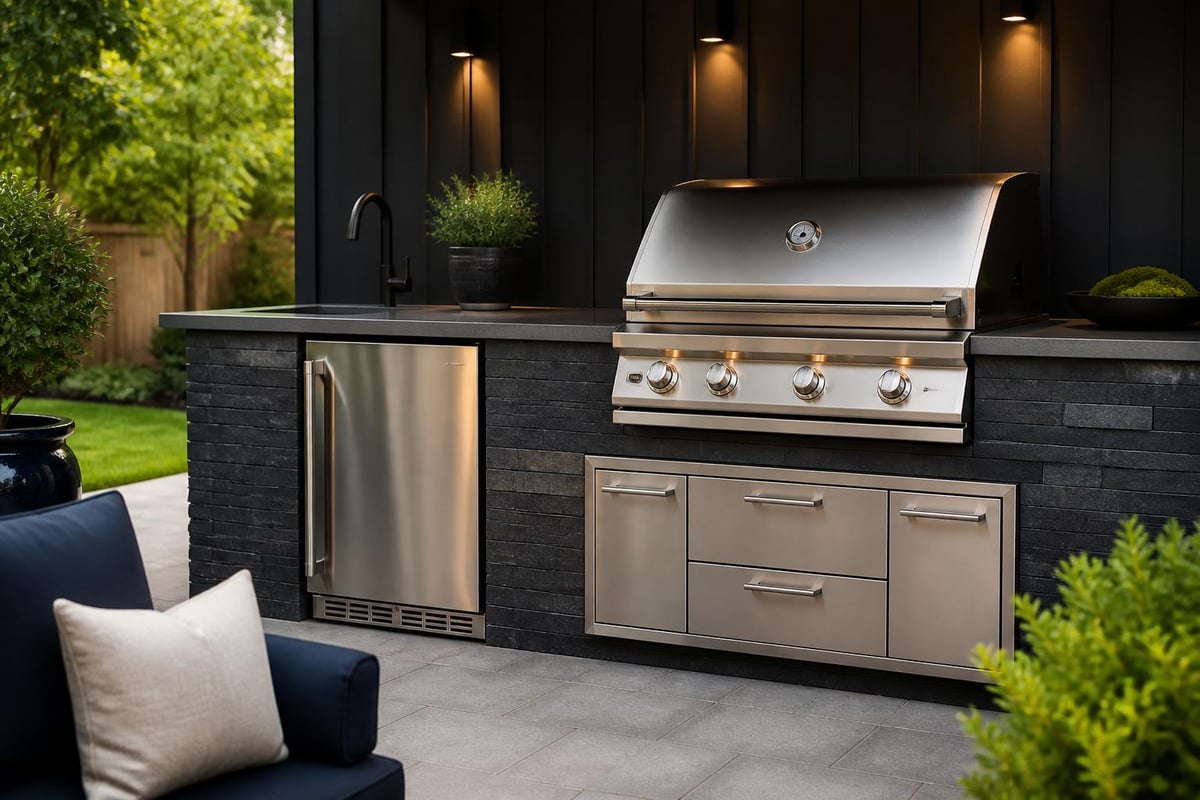
Sophisticated material choices elevate compact outdoor kitchens beyond purely functional spaces. Consider these premium options:
| Material | Application | Benefits | Maintenance |
|---|---|---|---|
| Brushed stainless steel | Worktops, appliances | Professional aesthetic, durability | Regular cleaning prevents water spots |
| Natural granite | Countertops, cladding | Timeless appeal, heat resistance | Annual sealing recommended |
| Porcelain tile | Backsplash, flooring | Extensive design options, low maintenance | Standard cleaning, frost-proof |
| Powder-coated aluminium | Cabinetry, framework | Lightweight, weather-resistant | Occasional washing |
The key lies in limiting your palette to two or three complementary materials that relate to your home's existing architecture. A Cotswold stone property might incorporate honey-toned granite counters with bronze hardware, whilst contemporary designs favour monochromatic schemes with industrial metals and dark timber accents.
When horizontal space proves limited, looking upwards offers additional opportunities. Wall-mounted storage racks, magnetic knife strips, and overhead shelving keep essential items accessible without consuming precious counter space. Pergola structures above compact outdoor kitchens serve multiple functions, providing weather protection, defining the cooking zone, and supporting integrated lighting or heating elements. Consider exploring architectural pergola solutions that complement your outdoor kitchen whilst extending its seasonal usability.
Professional kitchen designers employ the work triangle principle, positioning cooking appliances, preparation surfaces, and cleaning facilities to minimise movement whilst maintaining logical workflow. In compact outdoor kitchens, this concept becomes even more critical, as inefficient layouts quickly feel cramped and frustrating during use.
Ideally, the distance between your primary grill, preparation counter, and sink should total between 3.6 and 6.6 metres. Each leg of this triangle typically measures 1.2 to 2.7 metres, creating an efficient workspace without requiring excessive steps. When space constraints prevent a true triangle, consider a linear workflow where ingredients progress logically from storage through preparation to cooking.
Zone planning further enhances efficiency:
Small outdoor kitchen design approaches, as outlined in specialist planning resources, emphasise multi-functional elements that serve multiple zones simultaneously. A well-positioned island, for instance, might incorporate preparation surface, storage beneath, and dining seating opposite.
Compact outdoor kitchens demand creative storage solutions that maximise every available centimetre. Deep drawers with adjustable dividers accommodate varying utensil sizes whilst maintaining organisation. Pull-out spice racks keep seasonings accessible yet protected from the elements. Toe-kick drawers beneath cabinetry provide surprisingly useful storage for flat items like baking sheets or serving platters.
Consider these space-saving strategies:
British weather presents particular challenges for outdoor kitchens, compact or otherwise. Year-round usability requires thoughtful consideration of heating, shelter, and material durability. Whilst summer entertaining proves straightforward, extending the season into spring and autumn demands additional infrastructure.
Overhead protection represents the first line of defence against unpredictable weather. Fixed canopies provide permanent shelter, whilst retractable pergolas with adjustable louvres offer flexibility to capture sunshine during pleasant conditions or close completely when rain approaches. Glass-sided structures create windbreaks without sacrificing natural light or views.
Heating elements extend comfortable outdoor dining well into cooler months:
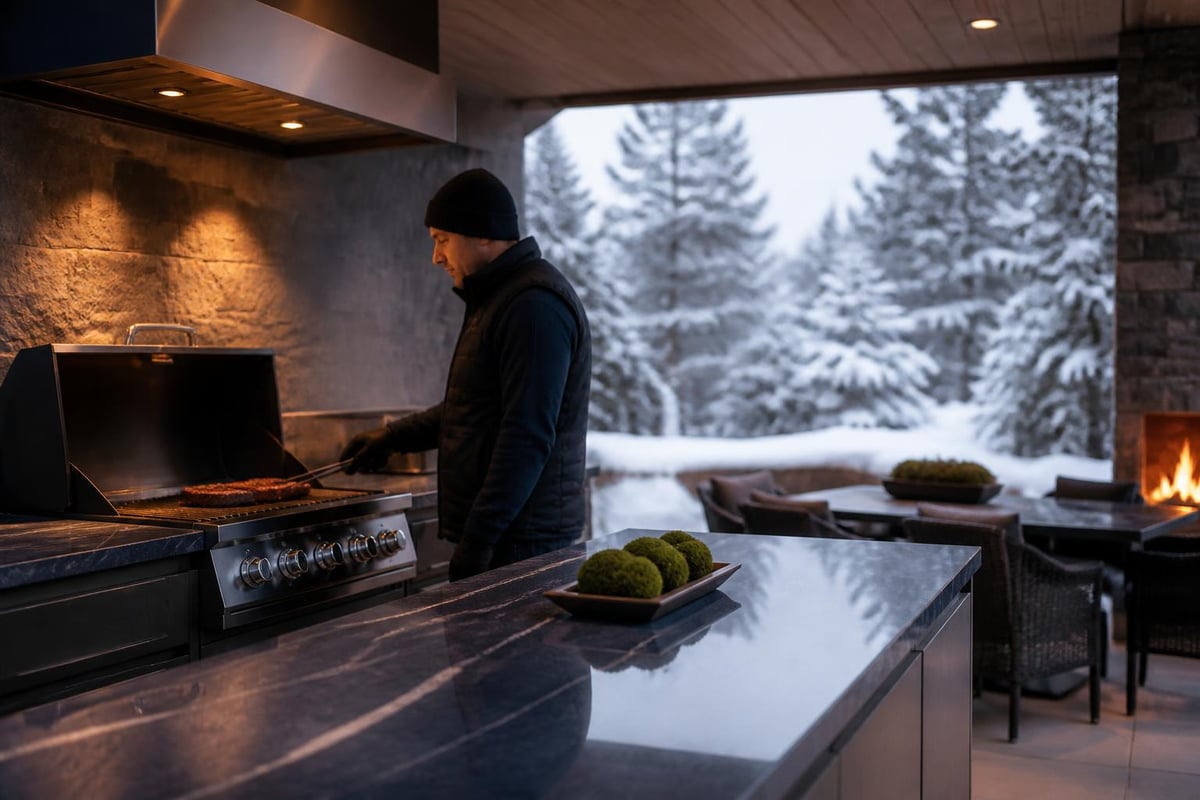
Weatherproof materials ensure compact outdoor kitchens withstand exposure without deterioration. Stainless steel components resist rust when properly specified with marine-grade alloys. Powder-coated finishes protect aluminium frameworks from corrosion. Granite and engineered stone surfaces tolerate freeze-thaw cycles without cracking, though proper sealing remains essential.
Sophisticated lighting transforms compact outdoor kitchens from daytime cooking spaces into enchanting evening entertainment venues. Layer different light sources to achieve both practical illumination and atmospheric effects.
Task lighting ensures safe food preparation and cooking. LED strips beneath overhead cabinetry illuminate worktops without glare. Directional spotlights positioned above grills provide focused visibility for monitoring cooking progress. These functional elements require adequate power and waterproof ratings suitable for outdoor exposure.
Ambient lighting establishes mood and defines spatial boundaries. Warm-toned uplighters wash pergola beams or wall surfaces with gentle illumination. Festoon bulbs strung overhead create relaxed, convivial atmosphere. Integrated LED strips along countertop edges or cabinet toe-kicks add subtle architectural emphasis whilst aiding navigation.
Creating exceptional compact outdoor kitchens need not demand prohibitive investment when approached strategically. Understanding where to allocate budget for maximum impact enables phased development that spreads costs whilst delivering immediate functionality.
Foundation and infrastructure deserve primary investment. Proper drainage, level bases, and correctly specified utility connections prove far more expensive to retrofit than install initially. Skimping on these invisible elements compromises long-term performance and enjoyment.
Core cooking appliances represent your second priority. A premium barbecue or pizza oven delivers reliable performance for decades when properly maintained, justifying higher initial expenditure. Budget alternatives may appear attractive but often require replacement within several seasons, ultimately costing more whilst providing inferior results.
| Investment Level | Typical Budget | Key Inclusions | Best For |
|---|---|---|---|
| Essential | £3,000–£6,000 | Quality grill, basic prep surface, minimal storage | Occasional use, compact spaces |
| Enhanced | £6,000–£12,000 | Premium appliances, integrated storage, partial shelter | Regular entertainers, medium gardens |
| Luxury | £12,000–£25,000+ | Designer finishes, complete infrastructure, full pergola | Year-round use, architectural integration |
Aesthetic finishes can develop over time. Starting with functional but simple cabinetry allows future upgrades when budget permits. Similarly, basic paving or decking establishes usable space immediately, with premium surfacing materials added during subsequent phases. Those seeking inspiration for budget-conscious approaches will find modular systems particularly valuable for staged development.
Begin with the minimum viable kitchen: a quality grill, adequate preparation surface, and basic storage. This foundation enables immediate use whilst establishing the layout framework. Phase two might add weather protection through a pergola or canopy, dramatically extending usable seasons. Phase three introduces refinements like integrated lighting, premium surfacing materials, or supplementary appliances such as side burners or warming drawers.
Successful compact outdoor kitchens function as integral components of cohesive outdoor environments rather than isolated installations. Consider how your cooking space relates to dining areas, lounging zones, and garden circulation patterns.
Position compact outdoor kitchens to facilitate natural flow between food preparation and consumption. Ideally, cooking and dining zones occupy adjacent but distinct areas, allowing hosts to interact with guests whilst preparing meals. A serving counter or island forming the boundary between these zones provides practical separation whilst maintaining social connection.
Circulation routes require particular attention in compact settings. Ensure adequate clearance around all sides of the cooking zone, typically 900mm minimum, to prevent congestion during entertaining. Main garden pathways should bypass rather than bisect the kitchen area, avoiding conflicts between cooking activities and general movement.
Visual connections to the broader garden enhance the outdoor kitchen experience. Strategic positioning captures attractive views whilst screening less desirable aspects like utility areas or boundary walls. Planting schemes soften hard landscaping edges, integrating the kitchen naturally within its setting.
Compact outdoor kitchens should echo your home's architectural character through proportions, materials, and detailing. A Georgian property might inspire symmetrical layouts with classical stone finishes and refined hardware. Contemporary architecture suggests cleaner lines, minimalist cabinetry, and industrial materials. This coherence creates visual unity that makes outdoor spaces feel like natural extensions of interior rooms.
For those planning complete outdoor kitchen projects, professional design consultation ensures all elements work harmoniously together, from initial concept through final installation. Expert guidance proves particularly valuable when navigating planning permissions, building regulations, or listed building constraints common across Cotswold properties.
Premium compact outdoor kitchens represent significant investments deserving proper care to maintain performance and appearance. Establishing regular maintenance routines prevents minor issues escalating into costly repairs whilst preserving the refined aesthetic that defines luxury installations.
Spring preparation involves thorough cleaning after winter dormancy. Remove protective covers, checking for moisture accumulation or pest intrusion. Deep clean all surfaces, paying particular attention to appliance interiors where grease or debris may have accumulated. Inspect gas connections for security and test all burners before the season's first use. Lubricate moving parts on cabinet hinges, drawer runners, and pergola mechanisms.
Summer maintenance focuses on regular cleaning and immediate spill management:
Autumn preparation for winter involves protective measures. Apply fresh sealant to natural stone surfaces before cold weather arrives. Drain all water lines if frost protection proves inadequate. Remove cushions, textiles, and portable items to storage. Consider professional servicing for complex appliances, ensuring they enter winter in optimal condition.
Winter protection varies based on usage intentions. Dedicated covers shield unused equipment from harsh weather, though ventilation prevents condensation damage. For those maintaining year-round operation, ensure heating elements function correctly and weather seals remain intact.
Quality materials and professional installation deliver decades of service when appropriately maintained. Stainless steel components require only regular cleaning with appropriate products, avoiding abrasive materials that scratch protective finishes. Powder-coated aluminium withstands British weather admirably, though annual inspection identifies any coating damage requiring touch-up.
Natural stone surfaces develop character over time, with proper sealing preventing staining whilst allowing the material to age gracefully. Granite proves particularly robust, whilst softer stones like limestone demand more attentive care. Porcelain tiles offer exceptional durability with minimal maintenance, making them ideal for compact outdoor kitchens where every surface works hard.
Whilst enthusiastic homeowners certainly create functional compact outdoor kitchens independently, professional design expertise elevates results from adequate to exceptional. Experienced consultants bring specialist knowledge spanning spatial planning, material specification, regulatory compliance, and supplier relationships.
Professional designers visualise three-dimensional spatial relationships that prove challenging to appreciate from two-dimensional plans. They identify opportunities for efficiency gains, storage optimisation, and workflow improvements that amateur planners often overlook. This expertise proves particularly valuable in compact outdoor kitchens where every centimetre counts and poor decisions prove difficult to rectify.
Detailed technical drawings ensure builders and installers understand exact requirements, reducing costly misunderstandings or modifications during construction. Accurate specifications for utilities, structural supports, and finish materials eliminate guesswork whilst establishing clear quality expectations.
Established design consultancies maintain relationships with premium manufacturers and specialist suppliers, accessing products unavailable through standard retail channels. They understand which materials perform reliably in outdoor applications versus those marketed attractively but proving disappointing in practice. This knowledge prevents expensive mistakes whilst ensuring your compact outdoor kitchen features the finest available components within your budget parameters.
Professional procurement often achieves better pricing than individual homeowners purchasing identical items, as volume relationships and trade discounts offset consultation fees. Additionally, designers coordinate delivery logistics, ensuring materials arrive in appropriate sequence for efficient installation.
Compact outdoor kitchens demonstrate that exceptional alfresco entertaining requires thoughtful design rather than expansive gardens. Through strategic layout planning, premium materials, and carefully curated equipment, even modest outdoor spaces transform into refined culinary destinations that enhance both property value and lifestyle quality. Whether you're working with a Cotswold courtyard, a London terrace, or a contemporary garden room, professional consultation ensures every element works harmoniously to deliver the sophisticated outdoor cooking experience you envision. Cotswold Cooking Company brings decades of expertise to outdoor kitchen design, combining hand-selected luxury brands with bespoke consultative service that transforms your outdoor space into a year-round entertaining destination.

Comments
Leave a comment