


The rise of compact outdoor cooking has transformed how discerning homeowners approach garden entertaining. A countertop grill outdoor solution offers the perfect balance between culinary performance and spatial efficiency, particularly suited to British gardens where versatility and design integration matter as much as cooking capability. Whether you're designing a luxury terrace kitchen or maximising a courtyard space, understanding the nuances of countertop grilling unlocks new possibilities for year-round outdoor living.
The term countertop grill outdoor encompasses a spectrum of cooking appliances designed to sit atop rather than be built into your outdoor kitchen structure. This approach offers distinct advantages for those seeking flexibility alongside premium performance.
Unlike fully built-in systems, a countertop grill outdoor unit provides remarkable adaptability. You can reposition equipment as your entertaining needs evolve, test different layouts before committing to permanent installations, or create modular cooking zones that respond to seasonal requirements.
Key spatial benefits include:
This flexibility proves particularly valuable when working with historic properties across the Cotswolds, where architectural constraints may limit built-in options. A thoughtfully selected countertop configuration respects heritage whilst delivering contemporary cooking performance.
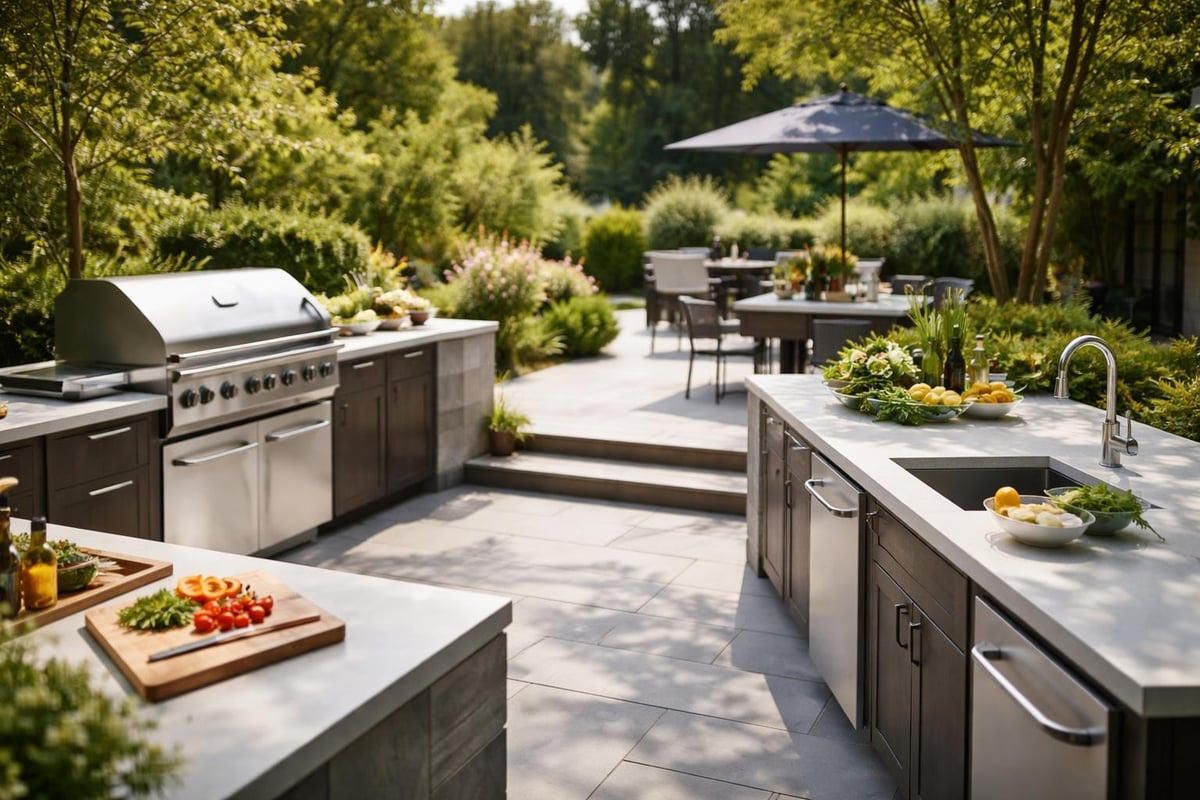
The outdoor environment demands exceptional material resilience. When selecting a countertop grill outdoor system, consider how components withstand moisture, temperature fluctuations, and UV exposure across British seasons.
| Material Type | Weather Resistance | Aesthetic Character | Maintenance Requirements |
|---|---|---|---|
| Stainless Steel 304 | Excellent corrosion resistance | Contemporary, professional | Regular cleaning, occasional polishing |
| Stainless Steel 316 | Superior marine-grade protection | Premium finish, coastal-suitable | Minimal, highly durable |
| Powder-Coated Cast Iron | Good with quality coating | Traditional, robust appearance | Check coating integrity annually |
| Ceramic-Coated Steel | Very good heat retention | Versatile colour options | Gentle cleaning, avoid abrasives |
The investment in marine-grade stainless steel pays dividends in longevity, particularly in regions experiencing high humidity or proximity to water features. This specification ensures your countertop grill outdoor equipment maintains both performance and visual appeal for decades.
Successful integration requires understanding how standalone grilling equipment harmonises with broader kitchen architecture and landscape design principles.
The surface supporting your countertop grill outdoor unit must balance aesthetic sophistication with practical performance. Heat resistance, moisture impermeability, and structural integrity form the foundation of specification.
Premium countertop materials for outdoor grilling:
When designing your outdoor kitchen layout, ensure adequate overhang specifications and clearances. The Kalamazoo Outdoor Gourmet design guide provides excellent technical insights into proper placement and safety considerations for grill installations.
Natural stone typically requires 75-100mm thickness to safely support grill weight whilst managing thermal stress. Cantilevers should be engineered specifically for equipment loads rather than relying on standard countertop projections.
Even portable countertop grill outdoor equipment requires thoughtful consideration of air circulation, heat dissipation, and combustible material clearances. The Portland grilling safety guidelines emphasise maintaining appropriate distances from structures and flammable materials.
Positioning your grill with adequate overhead clearance proves essential, particularly when incorporating covered structures like pergolas. A minimum 900mm vertical clearance to combustible materials provides baseline safety, though specific manufacturer requirements may dictate greater distances.
Different grill technologies serve distinct culinary ambitions and entertaining styles. Understanding these categories helps align equipment selection with your lifestyle requirements.
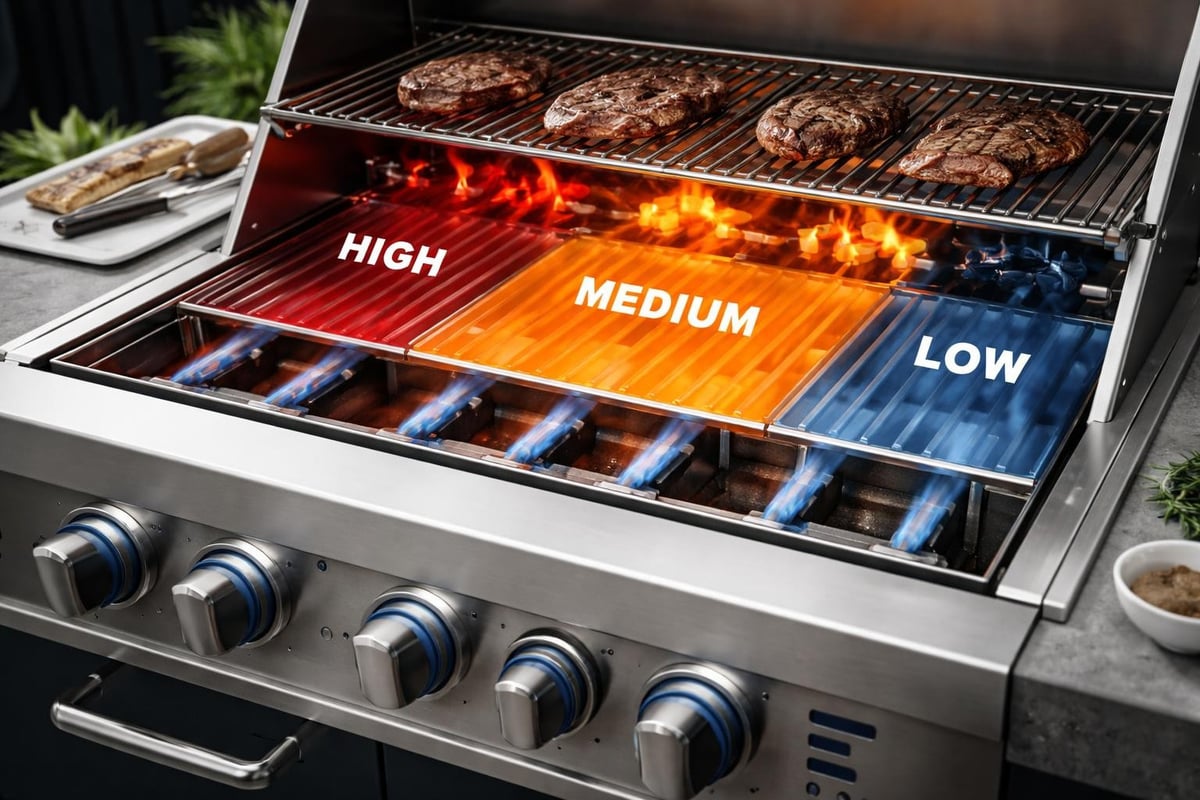
Gas countertop grills deliver immediate heat control and consistent performance, making them ideal for frequent outdoor cooking. Modern premium units feature multiple burner zones, infrared searing capabilities, and rotisserie integration.
The GRLLR Prime Black 5 Gas Burner BBQ exemplifies this category with sophisticated burner technology that responds instantly to adjustment, enabling precise temperature management across different cooking zones.
Premium gas systems typically specify burner outputs in BTUs (British Thermal Units) or kW ratings. For serious outdoor cooking, seek specifications offering 3.5-4.5 kW per burner, providing sufficient power for high-heat searing whilst maintaining low-temperature zones for gentle cooking.
For those prioritising flavour complexity and traditional cooking methods, charcoal or wood-fired countertop grill outdoor options deliver unmatched authenticity. These systems require greater engagement but reward with distinctive taste profiles impossible to replicate with gas.
Charcoal grilling considerations:
When integrating charcoal systems, ensure adequate ventilation and consider proximity to seating areas. Smoke drift patterns shift with wind direction, making flexible positioning valuable.
Contemporary countertop grill outdoor design increasingly embraces hybrid capabilities, allowing transition between fuel types based on occasion and culinary requirements. This versatility particularly suits British entertaining where convenience sometimes trumps tradition.
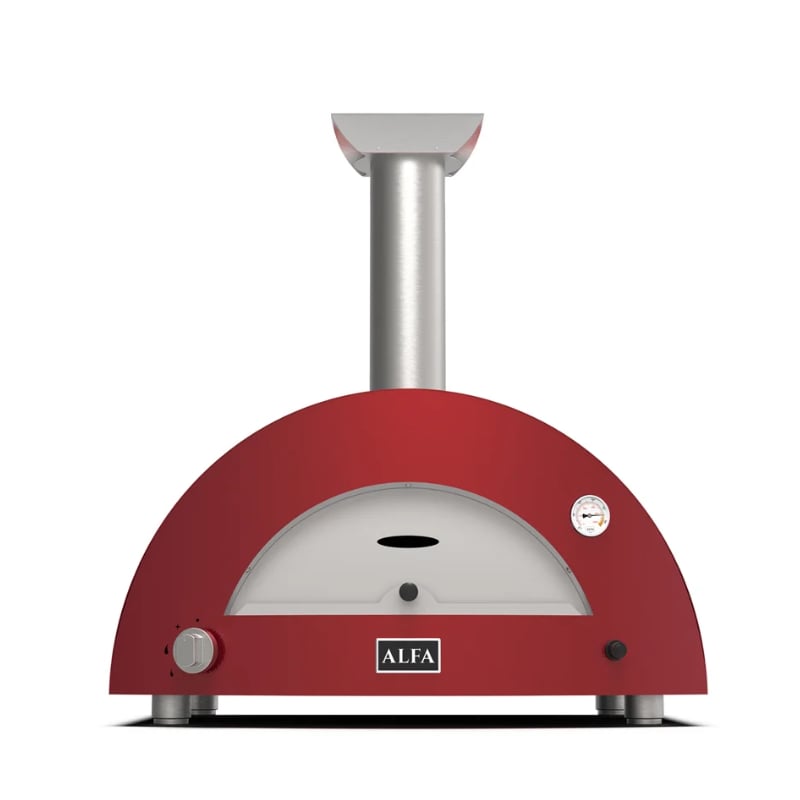
The Alfa Forni Moderno Hybrid Pizza Oven demonstrates this approach brilliantly, combining LPG convenience with authentic wood-fired cooking. This dual-fuel flexibility means you can achieve 500°C temperatures in approximately thirty minutes using gas, then switch to wood for that unmistakable char and aroma when time permits. Reaching authentic Neapolitan pizza standards in ninety seconds, it exemplifies how hybrid technology serves both impromptu gatherings and planned celebrations.
Moving beyond marketing descriptions requires understanding the technical parameters that genuinely influence cooking performance and long-term satisfaction with your countertop grill outdoor investment.
The burner system represents the heart of any gas-fuelled countertop grill outdoor unit. Cast stainless steel burners offer superior longevity compared to stamped alternatives, whilst tube thickness directly correlates with resistance to burnout and warping.
| Burner Feature | Premium Specification | Standard Specification | Performance Impact |
|---|---|---|---|
| Burner Material | Cast 304/316 SS | Stamped stainless | Durability, heat retention |
| Wall Thickness | 3mm+ | 1.5-2mm | Warp resistance, longevity |
| BTU Output | 12,000-15,000 per burner | 8,000-10,000 | Searing capability, heat recovery |
| Burner Configuration | H-shaped or multi-tube | Single tube | Even heat distribution |
| Ignition System | Electronic pulse | Piezo push-button | Reliability, ease of use |
Premium systems incorporate flame tamers or radiant barriers between burners and cooking grates. These components protect burners from drippings whilst vaporising fats for enhanced flavour, creating that characteristic grilled taste without flare-ups.
The actual usable cooking area often differs substantially from overall grill dimensions. When evaluating a countertop grill outdoor unit, measure primary cooking zones separately from warming racks or secondary surfaces.
For entertaining six to eight guests comfortably, target 1,800-2,200 square centimetres of primary grilling surface. This allows simultaneous cooking of multiple proteins and vegetables without overcrowding, which compromises heat retention and searing quality.
Grate material and thickness influence both heat retention and maintenance requirements. Cast iron excels at heat retention but demands seasoning maintenance. Stainless steel rods (minimum 6mm diameter) offer easier cleaning whilst providing good heat transfer. Some premium systems feature reversible grates with wide-spacing on one side for proteins and narrow spacing for vegetables.
A countertop grill outdoor solution achieves its full potential when thoughtfully integrated within broader landscape and architectural contexts rather than appearing as an afterthought.
Scale relationships matter profoundly in outdoor kitchen design. Your countertop grill should neither dominate the space nor appear lost within expansive counter runs. Creating visual balance involves considering equipment height, width, and depth against surrounding elements.
Standard outdoor countertop height measures 900-920mm, aligning with ergonomic cooking comfort. However, when incorporating a countertop grill outdoor unit with substantial lid height, ensure total elevation doesn't create awkward operational angles or obstruct sight lines across entertaining spaces.
Dimensional planning considerations:
These specifications ensure your installation meets both safety requirements and functional excellence. When designing bespoke outdoor kitchens, explore outdoor kitchen ideas that demonstrate successful integration across various garden styles.
The most refined outdoor kitchens demonstrate material consistency between grill surrounds, countertops, and broader garden architecture. This continuity creates visual coherence whilst simplifying long-term maintenance through standardised care protocols.
When specifying your countertop grill outdoor installation, consider how equipment finishes relate to existing or planned architectural elements. Stainless steel grills harmonise naturally with contemporary schemes featuring metal-framed glazing or modern pergola structures. Conversely, traditional settings might benefit from grills with powder-coated finishes in heritage colours or integrated into stone-clad surrounds.
The Cubic C1 Style Outdoor Kitchen showcases this principle beautifully, with modular configurations that allow countertop grilling equipment to integrate seamlessly within minimalist frameworks whilst maintaining luxury performance standards.
British gardens experience significant seasonal variation, making equipment resilience and operational versatility paramount for those committed to year-round outdoor cooking.
Even the finest countertop grill outdoor equipment benefits from thoughtful protection against elements. Custom-fitted covers manufactured from solution-dyed acrylic or marine-grade vinyl provide the first defence against moisture infiltration and UV degradation.
Beyond covers, consider structural protection through pergola integration or dedicated cooking pavilions. These architectural solutions extend usable cooking seasons whilst creating defined outdoor rooms that enhance property value and lifestyle quality.
Weather protection hierarchy:
Winter storage presents another consideration. Whilst premium countertop grill outdoor units withstand freezing temperatures, removing ignition components and thoroughly cleaning systems before extended dormant periods prevents corrosion and ensures spring reliability.
Ambient temperature significantly affects grill performance. Gas systems experience pressure variations in cold weather, potentially reducing burner output. Quality regulators compensate for temperature fluctuations, maintaining consistent gas flow regardless of cylinder temperature.
Summer presents opposing challenges, particularly heat retention in enclosed grill designs. Adequate ventilation prevents component degradation whilst maintaining operator comfort during extended cooking sessions. Strategic positioning relative to afternoon sun exposure influences both equipment longevity and cooking conditions.
Transforming a standalone countertop grill outdoor unit into a complete cooking station requires thoughtful accessory specification that extends culinary capability without cluttering precious countertop real estate.
The accessories accompanying your grill determine operational efficiency as much as the primary equipment itself. Prioritise quality over quantity, selecting tools and additions that genuinely enhance your cooking approach.
Priority accessory categories:
Premium countertop grill outdoor systems increasingly incorporate USB charging ports and Bluetooth connectivity, allowing temperature monitoring through smartphone applications. Whilst technological integration appeals to some, ensure any connected features complement rather than complicate the fundamental cooking experience.
Countertop space represents valuable real estate in outdoor kitchens. Balancing grill placement with adequate preparation zones requires strategic planning that considers typical cooking workflows and entertaining patterns.
Integrated storage beneath countertops keeps frequently used items accessible whilst maintaining clean visual lines. Pull-out drawers accommodate utensils, seasoning collections, and serving platters. Dedicated compartments for fuel storage (propane cylinders, charcoal, wood chunks) keep supplies organised and protected.
When designing storage adjacent to your countertop grill outdoor installation, maintain appropriate clearances from heat sources and ensure ventilation for any enclosed propane storage. Regulations typically require cylinder storage in well-ventilated areas rather than fully enclosed cabinets.
Premium outdoor cooking equipment represents significant investment. Implementing consistent maintenance routines protects that investment whilst ensuring optimal performance and food safety across years of service.
Establishing habits after each cooking session prevents buildup that compromises both performance and hygiene. The intensity of cleaning varies with cooking type, but foundational practices remain consistent.
Immediate post-use steps:
For charcoal or wood-fired countertop grill outdoor systems, complete ash removal prevents moisture absorption that leads to corrosion. Allow ashes to cool completely before disposal, typically 24-48 hours after cooking concludes.
Beyond routine cleaning, comprehensive seasonal maintenance extends equipment life and maintains peak performance. Schedule these procedures during spring preparation and autumn winterisation.
| Maintenance Task | Spring Focus | Autumn Focus | Frequency |
|---|---|---|---|
| Burner inspection | Remove, clean ports, check alignment | Verify operation, replace worn components | Twice yearly |
| Gas line check | Leak test all connections | Inspect for wear, tighten fittings | Twice yearly |
| Ignition system | Replace batteries, test reliability | Clean electrodes, verify spark | Twice yearly |
| Grate restoration | Deep clean, re-season cast iron | Strip buildup, protect surfaces | Twice yearly |
| Cover assessment | Inspect for damage, clean thoroughly | Ensure waterproof integrity | Twice yearly |
Professional servicing every 24-36 months ensures components beyond typical homeowner maintenance receive expert attention. Gas regulators, internal wiring, and structural integrity benefit from trained assessment, particularly in high-use installations.
With understanding established across technical specifications, design integration, and maintenance requirements, the selection process becomes a matter of aligning capabilities with lifestyle priorities and aesthetic preferences.
Honest evaluation of cooking frequency, typical guest numbers, and preferred techniques guides appropriate equipment specification. A household entertaining weekly benefits from different capabilities than those hosting occasional large gatherings.
Lifestyle-based selection criteria:
Those passionate about wood-fired flavours should prioritise systems offering genuine charcoal or wood capability rather than compromise with smoke boxes or chips on gas grills. Conversely, convenience-focused cooks achieve better satisfaction with responsive gas systems than struggling with charcoal they'll rarely use.
Countertop grill outdoor equipment spans enormous price ranges, from entry-level units under £500 to bespoke systems exceeding £15,000. Understanding where investment delivers genuine value versus diminishing returns prevents both under-specification and wasteful over-specification.
Investment tiers and typical characteristics:
Within luxury outdoor kitchen contexts, equipment quality should align with broader specification standards. Pairing premium countertops and cabinetry with entry-level grills creates aesthetic and functional incongruity. Similarly, specifying top-tier grills within modest surrounds appears disproportionate.
When working with design professionals on luxury outdoor kitchens, expect consultative guidance balancing equipment capability against project budgets, ensuring harmonious specification across all components.
Established manufacturers bring decades of engineering refinement, warranty support, and parts availability that newcomers cannot match. Whilst emerging brands occasionally offer compelling value, outdoor cooking equipment longevity favours proven performers.
Premium brands curated by specialists like Cotswold Cooking Company undergo rigorous evaluation before inclusion in their portfolio. This curation process provides confidence that selected systems meet demanding performance, aesthetic, and longevity standards appropriate for discerning clients across the UK.
Research manufacturer heritage, read independent reviews beyond marketing materials, and where possible, inspect equipment physically. The quality differences between budget and premium systems become immediately apparent when comparing burner construction, grate thickness, and control precision in person.
Even countertop configurations benefit from professional installation ensuring gas connections, electrical integration, and structural support meet safety standards and building regulations.
Natural gas or LPG connections require Gas Safe registered engineers for legal compliance and insurance validity. Whilst countertop units offer flexibility, permanent gas lines provide convenience eliminating cylinder changes and ensuring uninterrupted operation during extended cooking.
Electrical requirements vary based on features. Basic systems need nothing beyond nearby lighting. Advanced units with rotisserie motors, internal lighting, or electronic ignition require weatherproof outlets installed to outdoor specifications with appropriate RCD protection.
Verify that existing or planned countertop structures adequately support your chosen countertop grill outdoor equipment. Standard outdoor countertops typically accommodate 50-75kg loading, but larger grills with substantial construction may exceed these capacities.
Reinforcement options include additional support brackets, revised stud spacing in framed structures, or thicker stone specifications for masonry installations. Address structural adequacy during design phases rather than discovering inadequacy after completion.
Whilst many outdoor kitchen installations proceed under permitted development, specific circumstances require planning permission or building regulation approval. Permanent gas installations, electrical work, and substantial structural additions potentially trigger these requirements.
Local authority requirements vary across England, with conservation areas and listed buildings facing additional scrutiny. Early consultation with planning departments prevents costly revisions and ensures compliance throughout your project. Experienced outdoor kitchen specialists navigate these complexities routinely, leveraging established relationships with local authorities across regions like Oxfordshire and the Cotswolds.
Creating an exceptional outdoor cooking environment centres on selecting equipment that harmonises technical excellence with architectural refinement, ensuring every element serves both functional and aesthetic purposes. Whether you're drawn to the precision of gas grilling, the authenticity of wood-fired cooking, or the versatility of hybrid systems, the right countertop grill outdoor solution transforms your garden into a year-round culinary destination. Cotswold Cooking Company brings decades of expertise to this transformation, offering consultative design services, curated equipment selection, and complete installation support for discerning homeowners creating refined outdoor living spaces across the United Kingdom.

Leave a comment