


Transforming a British garden into a sophisticated outdoor cooking and entertaining space demands more than simply positioning a barbecue on the patio. As homeowners increasingly seek to extend their living areas beyond four walls, outdoor kitchen ideas UK designers recommend reflect a growing appetite for permanent, weather-resilient installations that honour both heritage aesthetics and contemporary culinary ambitions. From the rolling landscapes of the Cotswolds to London townhouse gardens, discerning property owners are investing in bespoke outdoor kitchens that function beautifully throughout the seasons, creating refined alfresco dining destinations that rival their indoor counterparts.
The foundation of any successful outdoor kitchen lies in thoughtful spatial planning. British gardens present unique opportunities and constraints compared to continental or American equivalents, with changeable weather patterns and varying property sizes shaping design decisions.
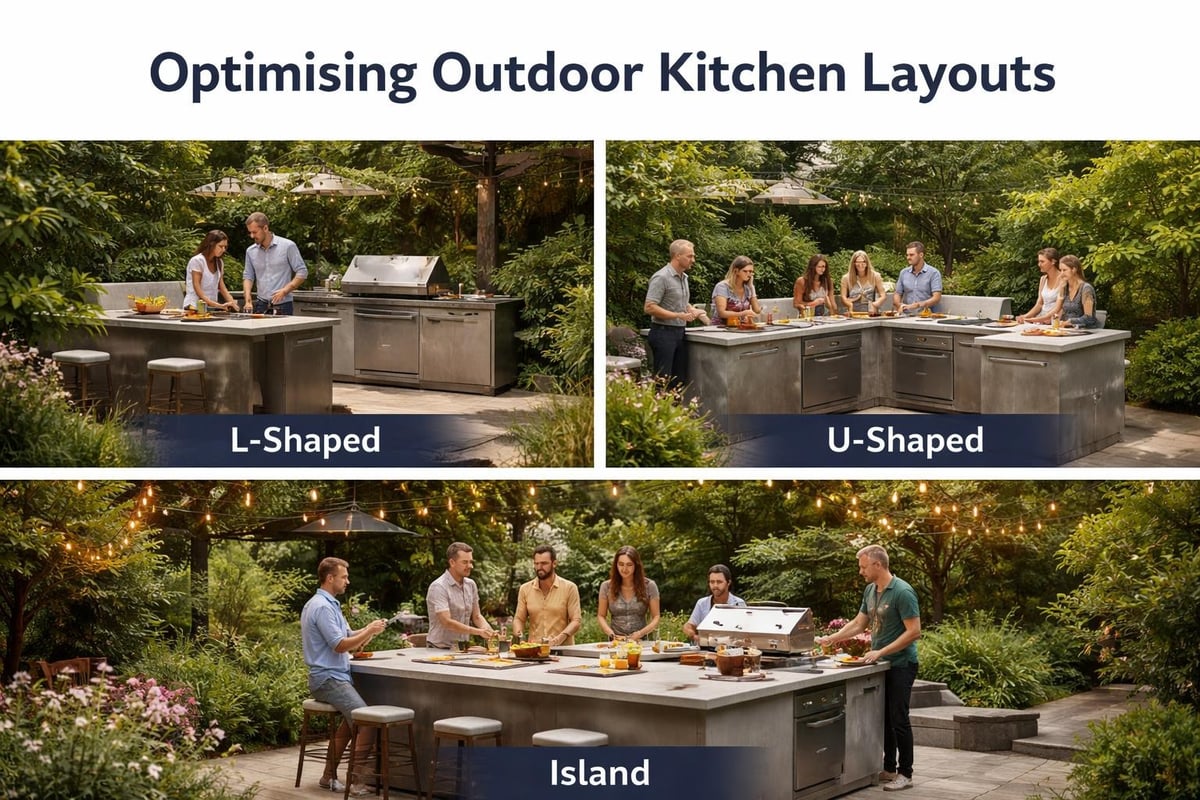
Before exploring specific outdoor kitchen ideas UK gardens can accommodate, measure your available area precisely. Consider how the kitchen will integrate with existing landscape features, including mature trees, boundary walls, and sight lines from the house. L-shaped configurations work exceptionally well in corner positions, maximising counter space whilst maintaining an open entertaining flow. Island layouts suit larger gardens, creating a central focal point that encourages guests to gather around the cooking zone.
U-shaped designs offer the most comprehensive work triangle, incorporating preparation, cooking, and serving zones within arm's reach. This layout proves particularly effective for serious outdoor cooks who want the functionality of an indoor kitchen translated to an exterior setting.
Professional designers organise outdoor kitchen ideas UK clients favour into distinct functional zones:
The distance between your outdoor kitchen and indoor facilities matters considerably. Positioning your installation within reasonable proximity to the main house simplifies utility connections and reduces the journey time when retrieving forgotten ingredients or serving equipment. However, creating a covered outdoor kitchen setup shouldn't compromise the sense of escape and connection to nature that makes alfresco dining special.
British meteorology presents particular challenges that differentiate outdoor kitchen ideas UK homeowners pursue from those in more predictable climates. Rain, wind, and temperature fluctuations demand robust materials and intelligent architectural solutions.
Investing in substantial overhead coverage transforms seasonal amenities into year-round assets. Architectural pergolas with louvred roofs offer adjustable protection, allowing sunlight during fine weather whilst providing complete shelter when conditions deteriorate. Alternatively, fixed canopies constructed from powder-coated aluminium or engineered hardwood deliver permanent protection with minimal maintenance requirements.
Consider extending the roof structure beyond the cooking zone to shelter adjacent dining areas. This creates a cohesive outdoor room that remains usable during light rainfall, significantly extending the practical season for outdoor entertaining. Many outdoor kitchen ideas UK landscape architects recommend incorporate integrated lighting and heating elements within pergola frameworks, maximising functionality after sunset and during cooler months.
| Weather Protection Option | Benefits | Considerations |
|---|---|---|
| Louvred Pergola | Adjustable coverage, modern aesthetics, integrated drainage | Higher initial investment, mechanical components require maintenance |
| Fixed Canopy | Permanent protection, lower maintenance, cost-effective | Fixed coverage limits sun exposure, requires planning permission in some cases |
| Retractable Awning | Flexibility, suitable for smaller spaces | Fabric requires replacement, wind sensitivity, manual operation |
Choosing materials that withstand British weather cycles without degrading ensures your outdoor kitchen maintains its visual appeal and structural integrity. Stainless steel cabinetry resists corrosion whilst offering a contemporary appearance that complements modern architecture. For properties with period features or rural settings, powder-coated aluminium replicates traditional painted finishes whilst delivering superior weather resistance.
Worktop selections significantly influence both aesthetics and practicality. Granite and quartz provide exceptional durability and heat resistance, creating surfaces that tolerate hot cookware placement without damage. Porcelain slabs offer similar performance with a wider range of finishes, including options that replicate natural stone, concrete, or timber grain patterns.
Avoid materials that deteriorate rapidly in damp conditions. Whilst certain outdoor kitchen ideas showcase tiled splashbacks for added character, ensure tiles specify exterior-grade frost resistance and appropriate adhesive formulations designed for temperature fluctuation exposure.
The heart of any outdoor kitchen lies in its cooking apparatus. Beyond basic barbecues, contemporary outdoor kitchen ideas UK culinary enthusiasts embrace incorporate diverse cooking methods and professional-grade equipment.
Built-in gas grills deliver consistent temperature control and immediate ignition, making them ideal for British weather where sudden rain might interrupt charcoal lighting processes. Look for models featuring heavy-gauge stainless steel burners, cast iron cooking grates, and effective grease management systems. Multiple burner zones allow simultaneous cooking at different temperatures, essential for complex menus.
For those seeking authentic smoke flavour, hybrid cooking stations accommodate both gas and charcoal fuel sources. This versatility proves particularly valuable when hosting larger gatherings, where gas efficiency complements charcoal's distinctive taste profile. Premium installations might incorporate outdoor cooking collections featuring modular components that can be reconfigured based on specific culinary requirements.
Wood-fired pizza ovens have become signature features in luxury outdoor kitchens, transforming weekend cooking into engaging culinary theatre. Models reaching temperatures exceeding 450°C produce authentic Neapolitan-style pizzas in approximately 90 seconds, whilst also accommodating roasting, baking, and slow-cooking applications.
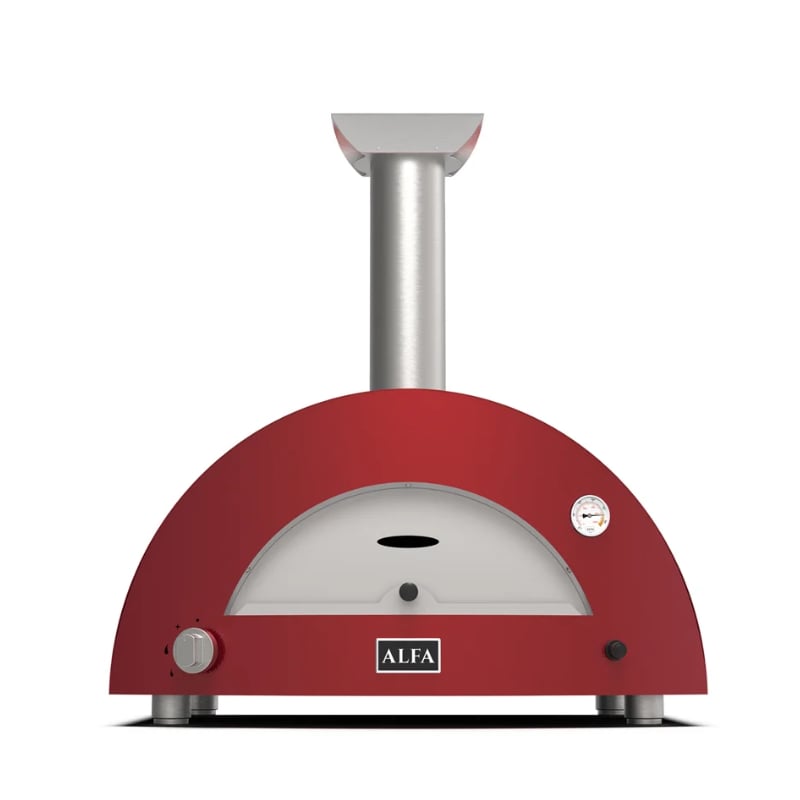
For those seeking versatility without compromising on artisan flavour, hybrid options offer exceptional flexibility. The Alfa Forni Moderno Hybrid Pizza Oven combines Italian craftsmanship with dual-fuel capability, allowing cooks to choose between wood-fired authenticity and convenient gas operation. Reaching peak temperature in around 30 minutes, it delivers restaurant-quality results whilst integrating beautifully into both contemporary and traditional outdoor kitchen designs.
Additional speciality appliances worth considering include:
Practical outdoor kitchen ideas UK designers specify always incorporate comprehensive storage solutions and essential utilities that enable genuine self-sufficiency.
Premium outdoor cabinetry features marine-grade construction techniques including fully welded seams, reinforced corners, and multiple gasket layers that prevent moisture ingress. Soft-close drawer mechanisms maintain smooth operation despite temperature variations, whilst adjustable shelving accommodates varying equipment sizes.
Organise storage based on usage frequency. Position frequently accessed items within the primary cooking zone, whilst seasonal equipment and bulk serving ware occupy perimeter cabinets. Dedicated compartments for speciality cookware and tools protect investments in premium utensils and prevent clutter accumulating on worksurfaces.
Standard domestic refrigerators lack the insulation and sealing required for exterior installation. Purpose-built outdoor refrigeration units feature weatherproof housings, enhanced insulation specifications, and ventilation systems designed to operate efficiently despite ambient temperature fluctuations. Undercounter models integrate seamlessly within cabinetry runs, whilst beverage centres offer dedicated wine storage with precise temperature zones.
Consider total refrigeration capacity based on typical entertaining numbers. A 24-inch undercounter unit provides adequate storage for intimate gatherings, whilst serious entertainers benefit from combining refrigerator-freezer units with supplementary beverage refrigeration and ice makers.
Professional installations incorporate permanent utility connections rather than temporary extensions. Dedicated electrical circuits rated for outdoor use power refrigeration, lighting, and small appliances safely. Natural gas lines or LPG installations fuel cooking appliances reliably, eliminating the inconvenience of cylinder exchanges during extended cooking sessions.
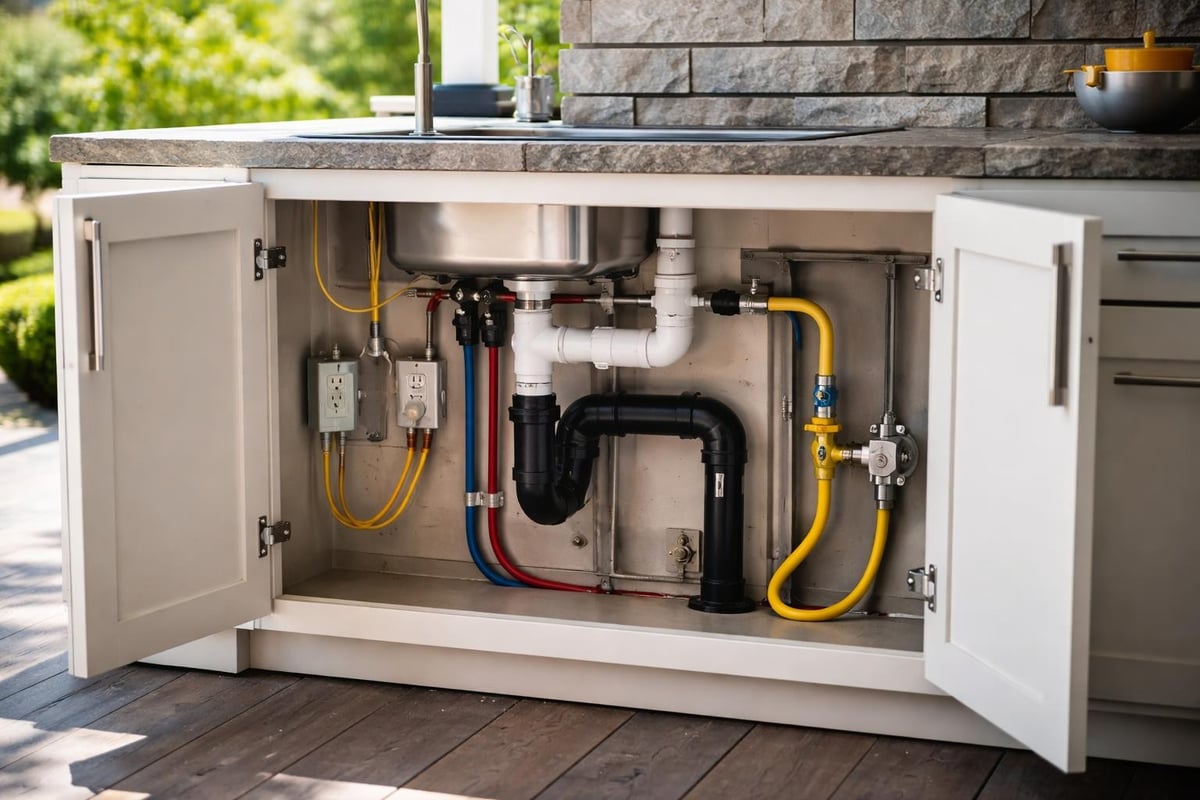
Water provision proves equally important. A dedicated cold water supply with exterior-rated shut-off valves serves integrated sinks, whilst hot water circulation from the main house or dedicated outdoor heaters enhances washing-up efficiency. Proper drainage solutions prevent standing water, with waste pipes incorporating appropriate traps and gradients that comply with building regulations.
Thoughtful illumination extends outdoor kitchen functionality beyond daylight hours whilst creating ambience that enhances evening entertaining. Successful outdoor kitchen ideas UK lighting designers recommend layer multiple light sources addressing specific needs.
Undercabinet LED strips illuminate preparation surfaces without creating glare, allowing precise knife work and ingredient assessment after sunset. Overhead directional spots positioned above grills and cooking stations provide focused illumination exactly where needed, typically delivering 500-700 lux for comfortable food monitoring.
Ensure all outdoor lighting carries appropriate IP (Ingress Protection) ratings, with IP65 minimum specification recommended for exposed installations. Dimmable circuits allow adjustment based on mood and functional requirements, shifting from bright task lighting during food preparation to softer ambient levels during dining.
Pergola-integrated downlights wash surrounding areas with gentle illumination, defining the outdoor room whilst avoiding harsh shadows. Strip lighting concealed within toe kicks or beneath counter overhangs adds subtle architectural definition that guides movement without overwhelming sightlines.
Consider incorporating feature lighting that highlights landscape elements, creating visual interest beyond the kitchen footprint. Uplighting mature trees, illuminating water features, or grazing textured boundary walls extends the designed environment, making the outdoor kitchen feel integrated within a broader composition rather than an isolated installation.
Outdoor kitchen ideas UK property owners pursue span diverse aesthetic territories, from sleek contemporary installations to characterful designs echoing period architecture. Selecting a coherent design language ensures visual harmony with existing structures.
Clean lines, handleless cabinetry, and monochromatic palettes define modern outdoor kitchens. Stainless steel appliances pair with matt grey or charcoal cabinetry, creating sophisticated compositions that foreground cooking equipment as sculptural elements. Worktop materials typically feature large-format slabs with minimal joints, emphasising uninterrupted horizontal planes.
Modular outdoor kitchen systems offer particular advantages for contemporary aesthetics, delivering factory-finished precision whilst allowing configuration flexibility. These installations integrate cooking, storage, and serving functions within unified visual systems that read as considered architectural interventions rather than assembled components.
Properties with period architecture or rural settings often suit outdoor kitchens that reference traditional materials and craft techniques. Natural stone cladding, reclaimed brick detailing, and painted timber pergola structures create sympathetic installations that appear rooted in their landscape context.
Choosing appliances with classic styling cues rather than overtly contemporary detailing helps maintain period-appropriate character. Seek cooking equipment featuring cast iron components, bronze or brass fittings, and muted colour finishes that complement heritage materials without appearing anachronistic.
Many successful outdoor kitchen ideas UK designers develop occupy middle ground between contemporary and traditional extremes. Shaker-style cabinetry rendered in sophisticated neutral tones, stone or porcelain worktops with subtle veining, and mixed material palettes combining timber, stone, and metal create timeless compositions that avoid stylistic dating.
This approach proves particularly effective when outdoor kitchens must relate to houses combining period structure with contemporary extensions, allowing the installation to mediate between architectural languages whilst maintaining its own distinct character.
Extending outdoor kitchen usability throughout the year requires addressing thermal comfort during cooler months. Strategic heating integration transforms fair-weather amenities into genuinely year-round destinations.
| Heating Type | Coverage Pattern | Installation Requirements | Running Costs |
|---|---|---|---|
| Gas Patio Heaters | Radiant column, 3-4m diameter | Free-standing or fixed mounting | Moderate (LPG/natural gas) |
| Electric Infrared Panels | Directional warmth, targeted zones | Ceiling or wall mounting, electrical supply | Low-moderate (mains electric) |
| Wood-Burning Fire Features | Ambient radiant heat, atmospheric | Foundations required, fuel storage | Low (seasoned logs) |
Infrared heating panels mounted within pergola structures deliver targeted warmth exactly where diners sit, operating silently without moving air or creating combustion byproducts. Their instant-on characteristics suit British weather unpredictability, providing comfort precisely when needed without extended warm-up periods.
For installations incorporating outdoor fire pits and tables, these features serve dual purposes as heating sources and focal gathering points. Gas fire tables offer clean-burning convenience with adjustable flame height, whilst wood-burning options provide the sensory appeal of crackling logs and authentic smoke character.
Even with overhead coverage, lateral wind exposure significantly affects thermal comfort and cooking control. Glass balustrades or frameless glazed panels create transparent windbreaks that preserve views whilst eliminating drafts. Retractable screens offer seasonal flexibility, remaining concealed during summer months whilst deploying to create protected enclosures during autumn and winter use.
Living screens comprising evergreen hedge planting or trained climbers on architectural frameworks provide natural wind filtration that evolves across seasons. Species selection should favour robust varieties tolerating cooking heat, occasional smoke exposure, and British climate fluctuations, with Portuguese laurel, yew, or hornbeam proving reliably resilient.
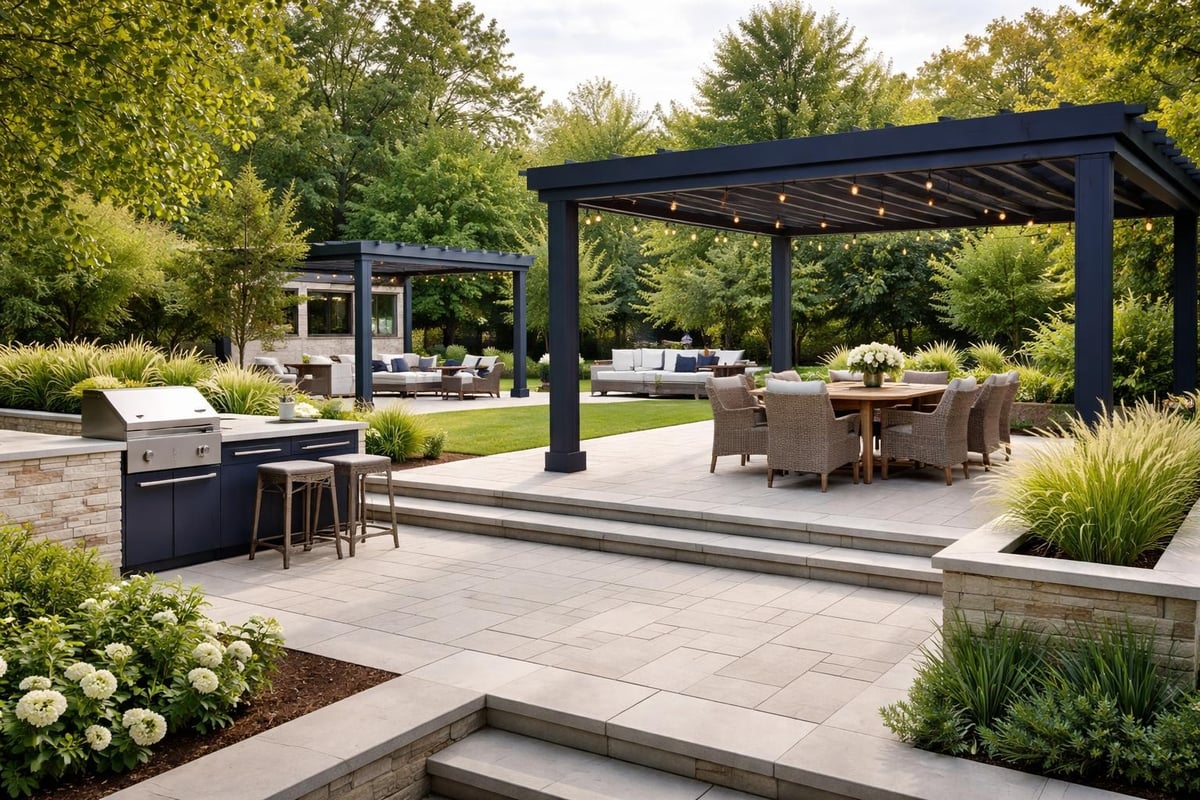
The most successful outdoor kitchen ideas UK landscape designers conceive treat cooking zones as integral components within broader entertaining landscapes rather than isolated installations. Spatial relationships between preparation areas, serving surfaces, and dining locations fundamentally influence how spaces function during gatherings.
Counter-height bar seating positioned opposite cooking zones enables guest interaction during food preparation, transforming cooking from solitary task into shared experience. Overhang depths of 300-350mm accommodate comfortable knee clearance, with weatherproof upholstered stools providing supportive seating that tolerates extended conversation.
Separate dining table placements work best positioned 2-3 metres from primary cooking areas, maintaining conversational proximity whilst preventing smoke interference with seated guests. Luxury outdoor furniture collections specify materials engineered for permanent exterior placement, including powder-coated aluminium frames, solution-dyed acrylic fabrics, and teak or synthetic timber surfaces.
Defining distinct zones within larger gardens establishes hierarchy and purpose. Changes in paving materials, level variations, or structural pergola elements delineate cooking territories from dining areas and relaxation zones without requiring solid partitions that fragment space.
Incorporate greenery and planting that softens hard landscaping whilst providing seasonal interest. Herb gardens positioned adjacent to cooking zones offer culinary convenience alongside aromatic contribution, with rosemary, thyme, and sage delivering year-round presence suited to British conditions. Raised planters built from materials matching outdoor kitchen finishes create visual cohesion across the broader landscape composition.
Outdoor kitchen projects span considerable cost ranges depending on specification choices and installation complexity. Understanding where investment delivers disproportionate value helps optimise budgets whilst avoiding false economies.
Allocate substantial budget proportions toward permanent structural elements and weather protection. Quality pergolas, proper drainage infrastructure, and durable cabinetry construction form foundations that determine long-term satisfaction and maintenance requirements. Economising on these core components frequently necessitates premature replacement, ultimately costing more than specifying appropriately from the outset.
Conversely, cooking equipment upgrades remain relatively straightforward to implement after initial installation. Starting with mid-range appliances whilst ensuring adequate utility provisions and spatial allowances permits future enhancement without requiring structural modifications.
Many homeowners successfully implement outdoor kitchen ideas UK budgets constrain by adopting phased approaches:
This methodology delivers immediate usability whilst spreading investment across multiple financial periods. Design initial phases with eventual completion in mind, ensuring adequate spatial provision and utility capacity for planned future additions.
Engaging experienced outdoor kitchen specialists early in planning processes frequently saves more than consultation fees cost. Professional designers identify spatial optimisations, material selections, and utility routing solutions that DIY approaches overlook, whilst leveraging trade relationships that access preferential equipment pricing and installation rates.
Comprehensive design services typically include site surveys, detailed specifications, 3D visualisations, and project management coordinating multiple trades. This integrated approach proves particularly valuable for complex outdoor kitchen installations incorporating building regulations submissions, structural engineering requirements, or conservation area considerations.
Preserving outdoor kitchen condition and performance requires appropriate maintenance regimes addressing seasonal challenges specific to British weather patterns.
Establish cleaning habits that prevent buildup becoming entrenched. Stainless steel surfaces benefit from weekly wiping with dedicated cleaners that remove fingerprints whilst depositing protective coatings resisting water spotting. Stone worktops require sealing annually using products appropriate to specific material types, with granite, quartz, and porcelain each demanding distinct maintenance approaches.
Cooking equipment performance depends on regular cleaning that prevents grease accumulation interfering with ignition systems or creating fire hazards. Remove and clean burner components monthly during active use periods, checking gas jets remain unobstructed and igniters function reliably. Many premium outdoor cooking collections feature dishwasher-safe components simplifying this maintenance burden considerably.
Despite year-round ambitions, most British outdoor kitchens experience reduced winter usage requiring protective measures. Drain water systems completely to prevent freeze damage, opening taps and low-point drains until lines run dry. Cover outdoor faucets with insulated jackets providing additional protection during severe cold snaps.
Protect cooking surfaces using breathable covers that shed precipitation whilst allowing moisture evaporation, preventing mildew formation. Avoid plastic sheeting that traps condensation, instead specifying outdoor furniture covers in technical fabrics engineered for exterior equipment protection.
Disconnect LPG cylinders for safety and compliance, storing them upright in ventilated locations away from heat sources. For natural gas installations, main shut-off valves should close, with annual servicing confirming connection integrity and appliance function before each season commences.
Permanent outdoor kitchen installations may trigger building regulations or planning permission requirements depending on scale, location, and property constraints.
Most outdoor kitchen projects constitute permitted development not requiring formal planning consent, provided they meet specific criteria. However, planning applications become necessary when:
Consult local planning authorities early when uncertainty exists. Pre-application advice services offer informal guidance clarifying whether proposals require formal submissions, potentially saving significant time and expense.
Electrical and gas installations universally require compliance with current building regulations, with work performed by certified professionals holding appropriate qualifications. Gas Safe registered engineers must undertake all LPG and natural gas connections, issuing completion certificates confirming safe installation.
Part P electrical regulations govern outdoor wiring, requiring qualified electricians to design and install circuits with appropriate protection devices, cable ratings, and weatherproof terminations. Ensure contractors provide certification documenting compliance, as these documents prove essential during property sales or insurance claims.
Drainage connections to existing systems may require building control notification, particularly when incorporating new waste runs or modifying existing layouts. Proper installation prevents contamination risks whilst ensuring adequate capacity and appropriate fall gradients.
Thoughtfully executed outdoor kitchens contribute measurably to property values whilst delivering immediate lifestyle benefits. Estate agents increasingly recognise sophisticated outdoor living spaces as significant selling features, particularly for properties targeting lifestyle-focused buyers.
Research suggests well-designed outdoor kitchens can recoup 60-80% of installation costs upon property sale, with percentages rising in premium markets where outdoor entertaining aligns with buyer expectations. Beyond pure financial return, outdoor kitchens extend usable living space substantially, effectively adding a functional room to property footprints without physical extension costs.
The quality of execution proves critical to value realisation. Amateur installations featuring mismatched components, inadequate weather protection, or poor material choices often detract from property appeal rather than enhancing it. Professional designs demonstrating coherent aesthetic vision, robust construction, and thoughtful integration with surrounding landscapes deliver the compelling presentations that attract premium buyer interest.
Creating a successful outdoor kitchen requires balancing aesthetic vision with practical functionality whilst respecting British weather realities and site-specific constraints. Whether pursuing contemporary minimalism or heritage-inspired character, investments in quality materials, professional installation, and comprehensive weather protection deliver outdoor spaces that function beautifully across seasons whilst significantly enhancing property lifestyle appeal. The Cotswold Cooking Company brings decades of expertise to outdoor kitchen design and specification, curating premium brands and delivering fully consultative services from initial concept through installation, helping discerning homeowners across the UK transform their outdoor spaces into refined culinary destinations that rival indoor kitchen capabilities.

Leave a comment