


A garden BBQ represents far more than a simple cooking appliance tucked into a corner of your outdoor space. For discerning homeowners across the UK, it serves as the centrepiece of a carefully considered outdoor living environment where culinary excellence meets architectural design. Whether you're planning intimate family gatherings or hosting larger celebrations, creating a properly specified garden BBQ area requires thoughtful consideration of equipment selection, spatial planning, safety protocols, and aesthetic integration with your property's existing character.
Before selecting equipment or breaking ground, defining your objectives ensures every design decision supports your intended use. A successful garden BBQ installation begins with understanding how you'll actually use the space throughout the year.
Your cooking preferences fundamentally shape equipment specifications and layout requirements. Consider whether you'll primarily grill quick weeknight meals or slow-smoke larger cuts over extended periods. High-frequency users benefit from durable commercial-grade materials and easy-clean surfaces, whilst occasional entertainers might prioritise versatility and visual impact.
Key considerations include:
Understanding these parameters prevents over-specification whilst ensuring your garden BBQ grows with your culinary ambitions rather than limiting them.
Positioning your garden BBQ correctly balances practical requirements with aesthetic considerations. Choosing the right location involves assessing prevailing winds, proximity to your kitchen, accessibility for guests, and integration with existing landscaping.
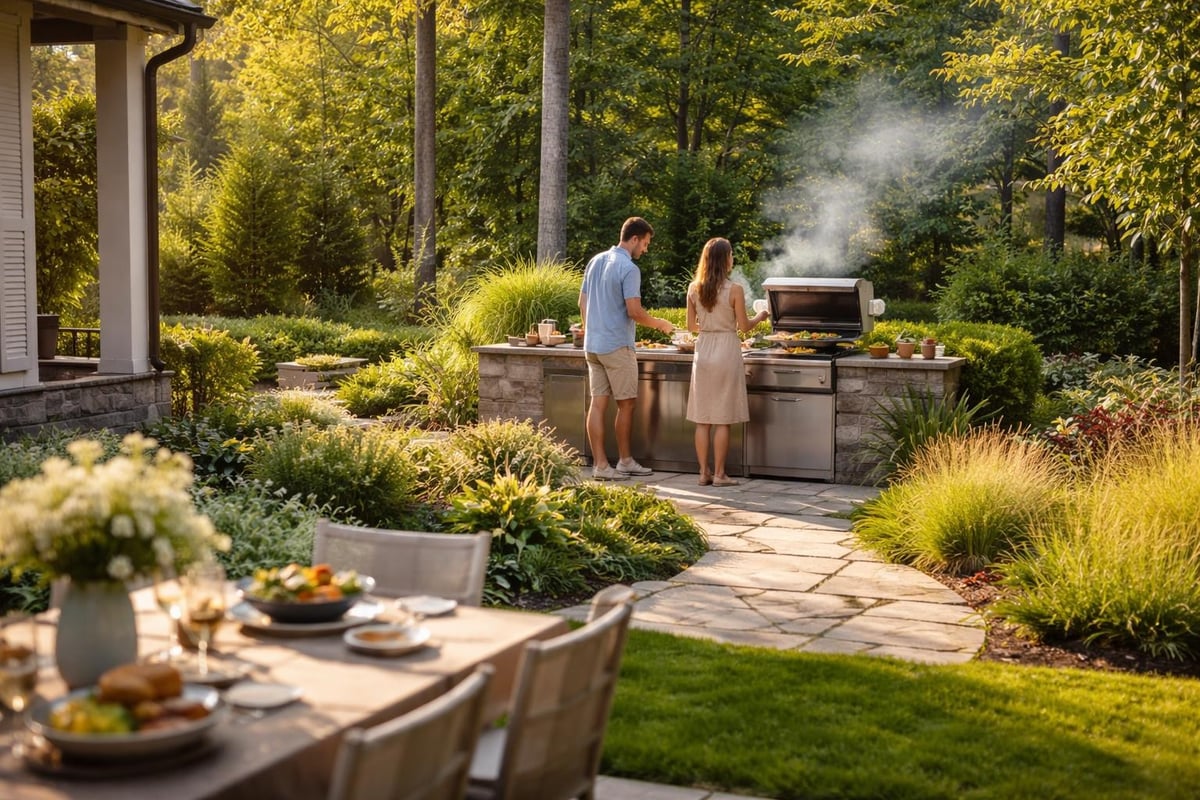
Minimum clearances matter significantly. Allow at least 3 metres from combustible structures and overhead canopies, whilst maintaining comfortable circulation space around the cooking zone. Consider sight lines from your home's interior spaces and how the garden BBQ area relates to existing garden rooms or terraces.
Equipment choice defines both performance capabilities and long-term satisfaction. The garden BBQ market spans entry-level options through to professional-specification systems designed for serious outdoor cooking.
Each fuel source offers distinct characteristics affecting flavour development, temperature control, and operational convenience.
| Fuel Type | Heat-Up Time | Temperature Control | Flavour Profile | Maintenance Level |
|---|---|---|---|---|
| Natural Gas | 10-15 minutes | Excellent precision | Clean, neutral | Low - annual service |
| LPG Propane | 10-15 minutes | Excellent precision | Clean, neutral | Low - tank replacement |
| Charcoal | 30-45 minutes | Moderate skill required | Rich, smoky depth | Medium - ash disposal |
| Wood Pellets | 15-20 minutes | Good with automation | Variable wood notes | Medium - hopper cleaning |
| Hybrid Systems | Variable | Maximum flexibility | User-controlled | Medium - dual systems |
Gas-fuelled systems deliver consistent results with minimal preparation, making them ideal for regular weeknight cooking. Charcoal and wood options appeal to enthusiasts seeking traditional smoke flavour and the ritualistic aspects of fire management. Many luxury outdoor cooking installations now incorporate hybrid capabilities, allowing fuel choice based on occasion and menu.
Premium garden BBQ construction uses marine-grade stainless steel (typically 304 or 316 grade) that withstands British weather patterns without degradation. Look for welded rather than bolted construction, double-walled hoods for heat retention, and cast brass or stainless burners engineered for longevity.
Quality indicators include:
These specifications ensure your garden BBQ maintains performance standards and aesthetic appeal across seasons and years of regular use.
A properly conceived garden BBQ area extends beyond the grill itself to encompass preparation, serving, and dining functions within a cohesive outdoor environment.
For homeowners seeking a permanent, architecturally resolved solution, modular outdoor kitchen systems offer significant advantages over standalone units. The Cubic C1 Style Outdoor Kitchen exemplifies this approach, combining weather-resistant cabinetry with integrated grilling zones, refrigeration, and ample preparation surfaces. These systems create a seamless cooking experience where everything you need remains within arm's reach, eliminating the constant trips back to your indoor kitchen that fragment the entertaining experience.
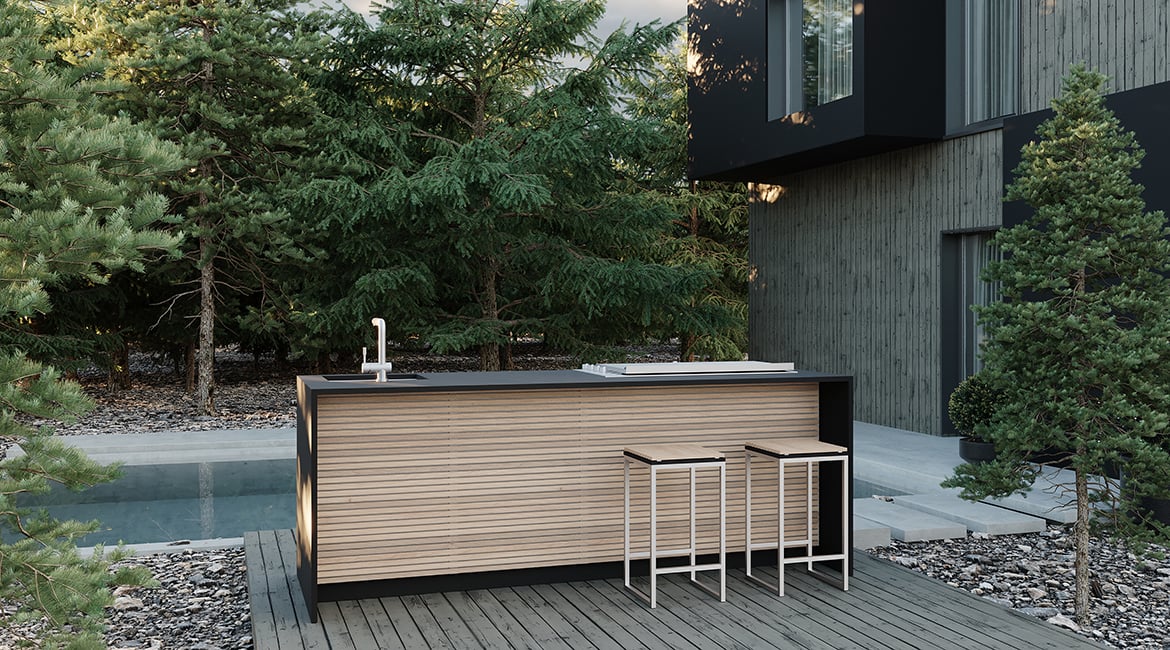
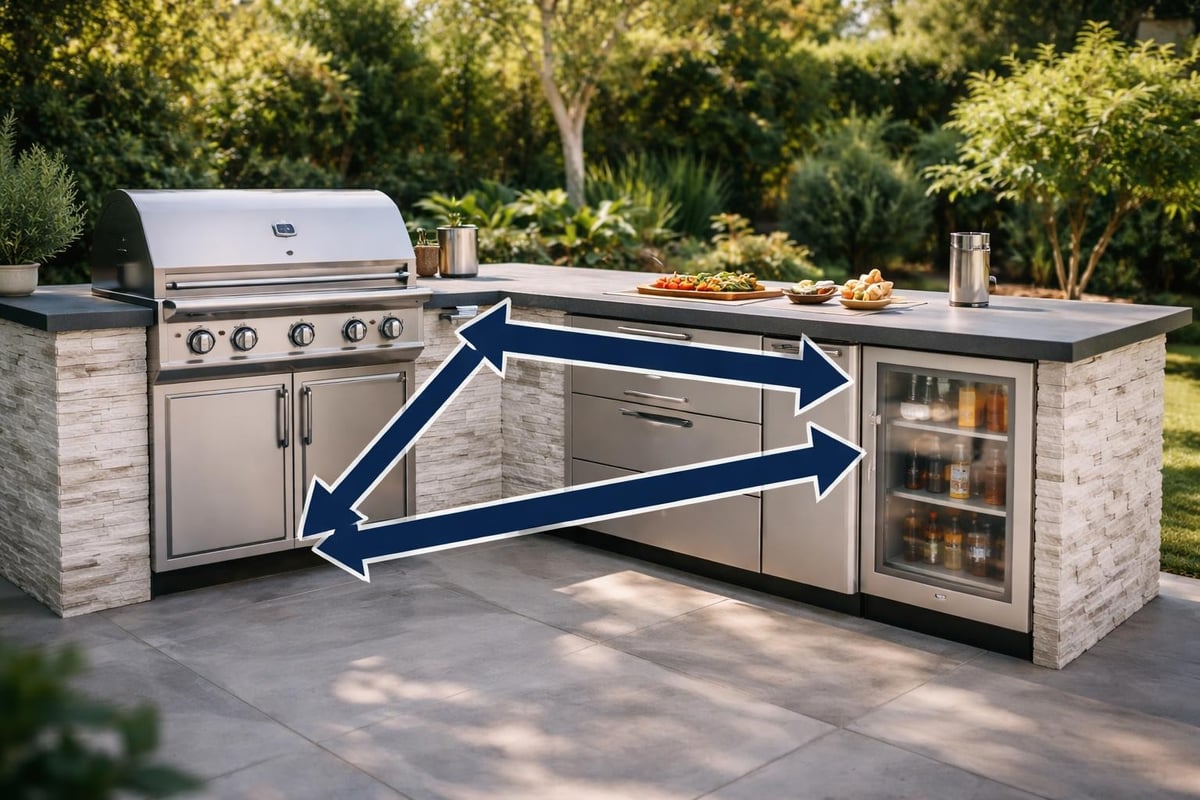
Beyond the primary cooking equipment, several supporting elements transform a basic garden BBQ setup into a fully functional outdoor culinary space:
Outdoor kitchen delivery and installation professionals ensure these elements integrate seamlessly whilst meeting building regulations and safety standards.
Operating a garden BBQ safely protects both people and property whilst ensuring consistent cooking results. Understanding fundamental safety principles prevents common accidents and equipment damage.
BBQ safety guidance emphasises maintaining adequate clearances from structures, vegetation, and combustible materials. Position your garden BBQ on a stable, level, non-combustible surface such as paving, concrete, or dedicated stone pads.
Critical safety clearances:
Never relocate a hot garden BBQ, and ensure adequate ventilation in covered outdoor spaces. Carbon monoxide risks exist even with outdoor cooking when insufficient air circulation occurs.
Safe fuel management varies by type but follows consistent principles. Store LPG cylinders upright in ventilated areas away from ignition sources and building openings. When not in use, disconnect gas supplies and close cylinder valves completely.
Charcoal and wood pellets require dry storage in sealed containers preventing moisture absorption. BBQ safety practices recommend checking gas connections with soapy water for leaks before each use and maintaining clear records of maintenance and safety inspections.
A garden BBQ area succeeds when it feels like a natural extension of your home's design language rather than an afterthought added to vacant garden space.
Coordinate your garden BBQ zone materials with existing hardscaping, architectural details, and landscape elements. Stainless steel equipment pairs beautifully with natural stone worktops, timber pergola structures, and contemporary paving materials.
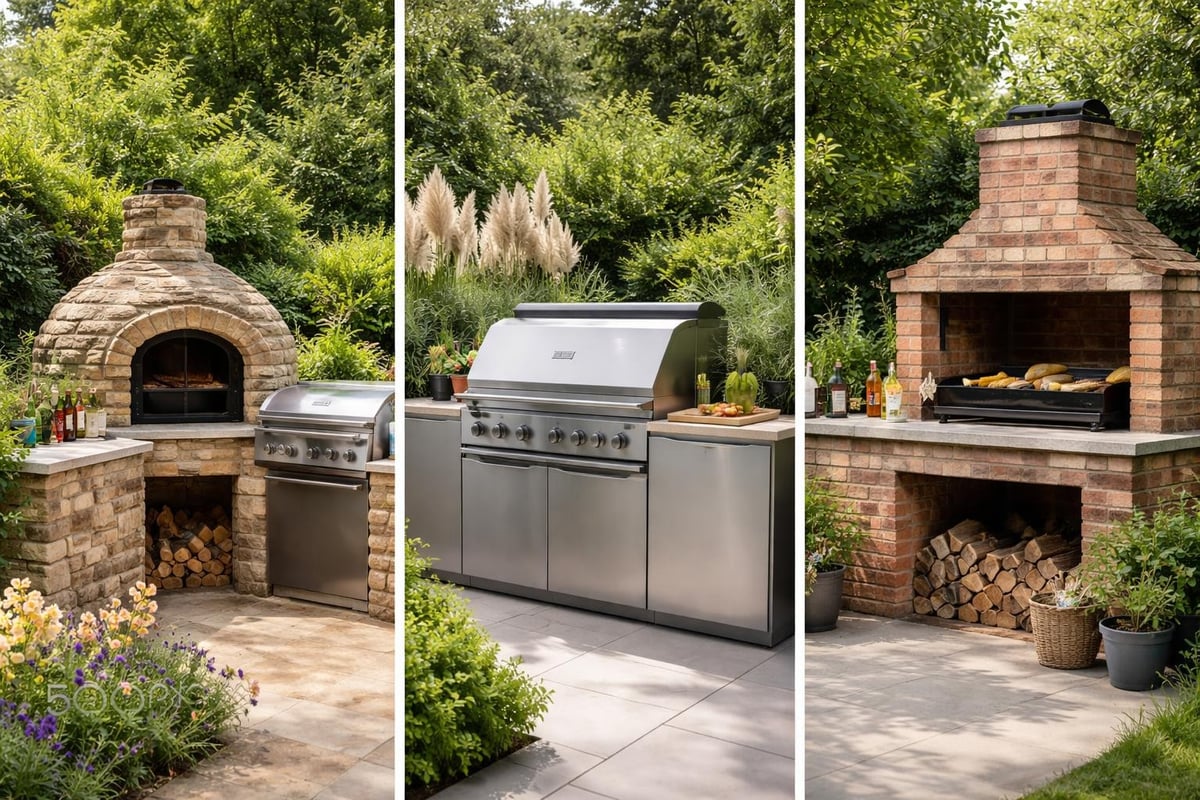
Consider weathered oak cabinetry for countryside settings, powder-coated aluminium in modern schemes, or metal outdoor kitchen cabinets offering industrial-chic aesthetics with exceptional durability. Worktop materials might include granite, quartzite, porcelain, or concrete depending on your design direction.
Styling a BBQ area extends to selecting dining furniture, shade structures, and decorative elements that enhance functionality whilst reinforcing your aesthetic vision. Choose weather-resistant materials engineered for outdoor exposure rather than repurposing indoor furniture.
Styling elements to consider:
These elements create atmosphere and comfort that encourage extended outdoor living throughout warmer months.
Extending your garden BBQ season beyond summer maximises return on investment whilst supporting the growing trend toward all-season outdoor living across the UK.
Architectural pergolas fitted with adjustable louvred roofs allow year-round use by providing rain protection whilst maintaining airflow and natural light. Glass or polycarbonate side screens block wind without creating an enclosed space requiring building consent.
Quality BBQ covers protect equipment during storage periods, whilst permanent installations benefit from weather-resistant materials requiring minimal seasonal maintenance. Consider integrated heating solutions such as infrared panels or gas patio heaters extending comfortable outdoor dining into cooler months.
Adapting your garden BBQ repertoire to seasonal ingredients and cooking techniques maintains culinary interest throughout the year:
| Season | Ideal Techniques | Featured Ingredients | Temperature Management |
|---|---|---|---|
| Spring | Direct grilling, vegetables | Asparagus, lamb, spring greens | Medium-high, quick cooking |
| Summer | Smoking, slow cooking | Stone fruits, seafood, beef | Variable, extended sessions |
| Autumn | Roasting, indirect heat | Root vegetables, game, squash | Medium, steady heat |
| Winter | Braising, covered cooking | Hearty cuts, preserved items | Low-slow, lid-down methods |
This approach keeps your garden BBQ actively used rather than sitting dormant for eight months annually.
Proper maintenance preserves performance, appearance, and safety across years of regular use. Establishing simple routines prevents major issues whilst identifying minor problems before they escalate.
After each cooking session, burn off residue at high temperature for 10-15 minutes, then brush cooking grates whilst still warm. This simple practice prevents build-up that becomes increasingly difficult to remove and can affect food flavour.
Empty grease management systems regularly, clean burner ports annually, and inspect gas connections for deterioration. Stainless steel surfaces benefit from specialised cleaners maintaining lustre whilst removing fingerprints and water spots.
Spring and autumn represent ideal times for thorough garden BBQ servicing:
Professional servicing every 18-24 months ensures optimal performance whilst identifying issues requiring specialist attention. Many outdoor cooking accessories suppliers offer maintenance kits specifically formulated for premium equipment.
As your garden BBQ proficiency develops, expanding capabilities through additional equipment or advanced techniques adds new dimensions to your outdoor cooking.
Dedicated pizza ovens, smokers, or rotisserie attachments complement your primary garden BBQ whilst enabling entirely new menu categories. Wood-fired pizza ovens reach temperatures impossible on standard grills, creating authentic Neapolitan results in home settings.
Pellet smokers automate temperature management during extended low-and-slow cooking, whilst built-in wok burners or side burners expand your repertoire beyond traditional grilling. Consider which additions align with your cooking interests and available space rather than accumulating equipment that remains unused.
Moving beyond basic grilling into smoking, reverse-searing, or indirect roasting requires understanding temperature zones, fuel management, and timing. Investment in quality instant-read thermometers, remote temperature monitoring, and proper grills and smokers equipment supports skill development.
Online resources, manufacturer guidance, and hands-on experimentation all contribute to mastery. Document successful approaches in a garden BBQ journal noting temperatures, timings, and results for future reference.
The ultimate purpose of most garden BBQ installations centres on creating memorable experiences for family and guests. Thoughtful planning ensures hosts enjoy the occasion rather than feeling overwhelmed by logistics.
Restaurant kitchens succeed through meticulous preparation before service begins. Apply these principles to garden BBQ entertaining by preparing ingredients, setting tables, and pre-lighting grills well before guests arrive.
Pre-event checklist:
This preparation allows you to focus on cooking and conversation rather than scrambling for forgotten items mid-service.
Many guests appreciate watching the cooking process and learning techniques. Position your garden BBQ area to allow comfortable spectator space without crowding the working cook. Explain what you're doing and why, sharing knowledge whilst demonstrating skills.
Consider courses that allow social time between grilling sessions rather than attempting to prepare entire meals simultaneously. Starters and desserts prepared in advance let you focus on perfectly executing centrepiece proteins or vegetables on the garden BBQ itself.
Creating a successful garden BBQ environment combines equipment selection, thoughtful design, safety awareness, and culinary ambition into spaces that extend your home's living areas into the garden. Whether you're planning a simple upgrade to your existing setup or envisioning a comprehensive outdoor kitchen installation, proper specification ensures lasting satisfaction and genuine year-round usability. Cotswold Cooking Company offers consultative design services, premium equipment from curated brands, and complete installation support for discerning homeowners transforming their outdoor spaces into refined culinary destinations throughout the Cotswolds and across the UK.

Leave a comment