


Modern gas grill design represents the intersection of culinary performance, architectural integration, and outdoor living sophistication. For discerning homeowners and hospitality professionals creating luxury outdoor kitchens, understanding the design principles that separate exceptional grills from ordinary equipment becomes essential. From burner configuration and material selection to spatial planning and aesthetic harmony, today's gas grill design embodies decades of engineering innovation whilst meeting the exacting standards of year-round British outdoor living. This comprehensive guide explores the critical elements that define exceptional gas grill design, offering insights into construction quality, functional integration, and the refined details that elevate outdoor cooking spaces.
Contemporary gas grill design extends far beyond basic functionality to encompass sophisticated engineering principles that affect cooking performance, durability, and visual integration. The structural framework establishes the foundation for everything that follows.
Quality gas grill design begins with the chassis and frame construction. Premium models employ heavy-gauge stainless steel or cast aluminium frameworks that resist corrosion whilst providing thermal stability. The frame must support substantial weight from burners, cooking grates, and accessories without flexing or warping under extreme temperature variations.
Key structural components include:
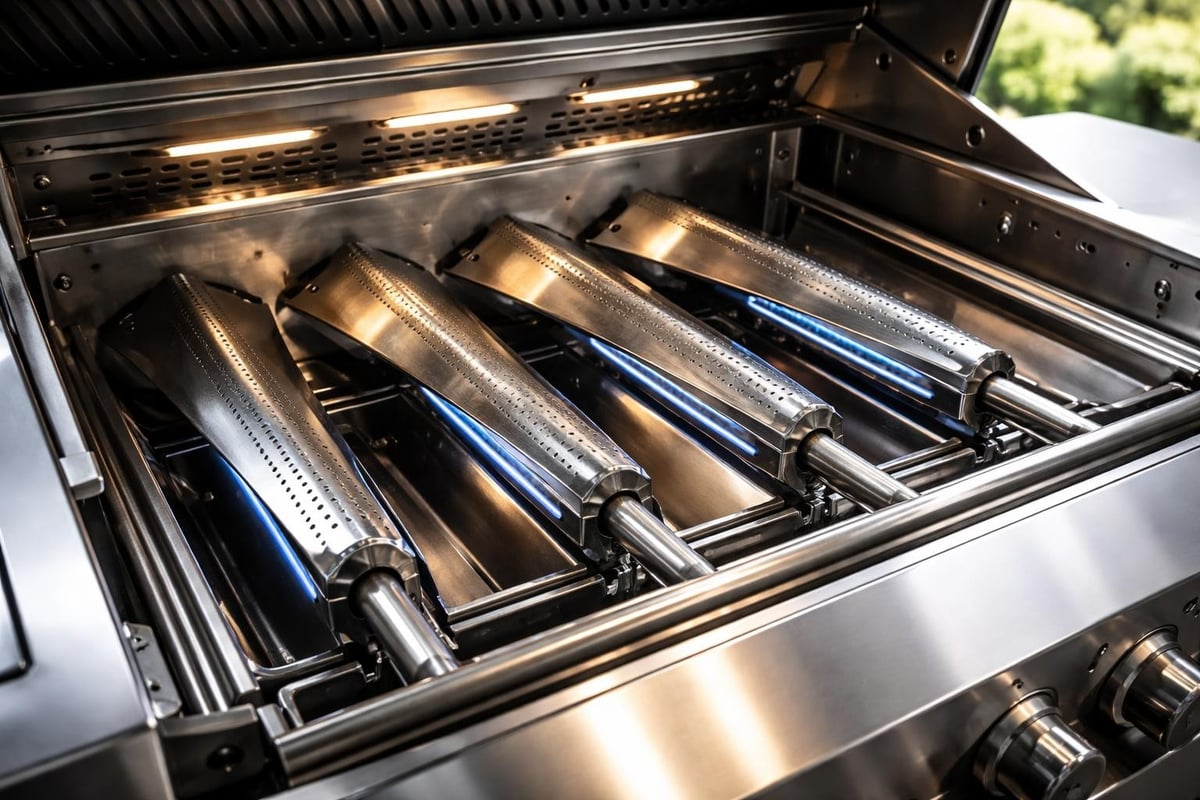
The firebox represents the heart of gas grill design, where combustion efficiency meets heat distribution. Manufacturers employ various configurations, from U-shaped burners to linear arrays, each offering distinct performance characteristics. Weber's comprehensive buyer's guide emphasises how construction quality directly influences cooking consistency and equipment lifespan.
| Design Element | Premium Specification | Standard Specification | Performance Impact |
|---|---|---|---|
| Burner Material | Cast brass or stainless steel | Stainless-coated steel | Longevity, heat output consistency |
| Frame Gauge | 14-16 gauge stainless | 18-20 gauge steel | Structural integrity, corrosion resistance |
| Cooking Grates | Porcelain-coated cast iron | Chrome-plated steel | Heat retention, sear quality |
| Hood Construction | Double-wall insulated | Single-wall stamped | Temperature control, exterior safety |
| Ignition System | Electronic multi-point | Single-point piezo | Reliability, burner-specific control |
Burner design fundamentally determines cooking versatility and performance. Modern gas grill design incorporates multiple burner zones, allowing simultaneous direct and indirect cooking methods. High-end configurations feature independently controlled burners ranging from 12,000 to 25,000 BTUs each, creating precise temperature zones across the cooking surface.
Tube burners remain the most common design, though innovations include ceramic infrared burners offering intense radiant heat for superior searing. The spacing, orientation, and heat shield design above burners critically affect temperature uniformity and eliminate hot spots that compromise cooking results.
For luxury outdoor cooking installations, infrared rotisserie burners and dedicated searing stations add culinary flexibility. These specialised zones integrate seamlessly within comprehensive gas grill design, transforming basic equipment into complete outdoor cooking systems.
British weather demands exceptional material performance in outdoor kitchen installations. Gas grill design must address moisture exposure, temperature cycling, and UV degradation whilst maintaining visual refinement throughout extended service life.
Not all stainless steel offers equivalent performance. Premium gas grill design specifies 304-grade stainless steel as minimum standard, whilst the most demanding applications employ marine-grade 316 stainless with enhanced corrosion resistance. The gauge thickness matters considerably, with 16-gauge material providing superior structural integrity compared to thinner 20-gauge alternatives.
Surface finishing affects both aesthetics and maintenance requirements. Brushed finishes conceal minor scratching better than polished surfaces, whilst powder-coated stainless offers additional colour options for design integration. Consumer Reports' durability testing reveals significant longevity differences between properly specified materials and economy alternatives.
Cooking grates represent the primary food-contact surface, making material selection critical for both performance and safety. Cast iron grates provide exceptional heat retention and natural non-stick properties when properly seasoned. Porcelain coating over cast iron combines these benefits with easier cleaning and corrosion protection.
Premium gas grill design increasingly employs stainless steel rod grates for commercial-grade durability, though they require higher BTU output to achieve comparable heat retention. The spacing between rods affects small food item handling, with 7-8mm gaps providing optimal versatility.
Heat distribution plates or flame tamers above burners serve multiple functions within sophisticated gas grill design. They vaporise drippings for flavour enhancement, protect burners from grease damage, and create more uniform temperature distribution across cooking surfaces.
Exceptional gas grill design considers the broader context of outdoor living spaces, ensuring seamless integration with surrounding cabinetry, work surfaces, and architectural elements. This holistic approach distinguishes luxury installations from standalone equipment placement.
Built-in gas grill design removes external cabinets and legs, creating a streamlined profile that integrates flush with surrounding stone or masonry work. This approach requires careful planning for ventilation, gas line routing, and service access. The grill body typically drops into a cutout within the counter surface, with fascia panels matching adjacent cabinetry materials.
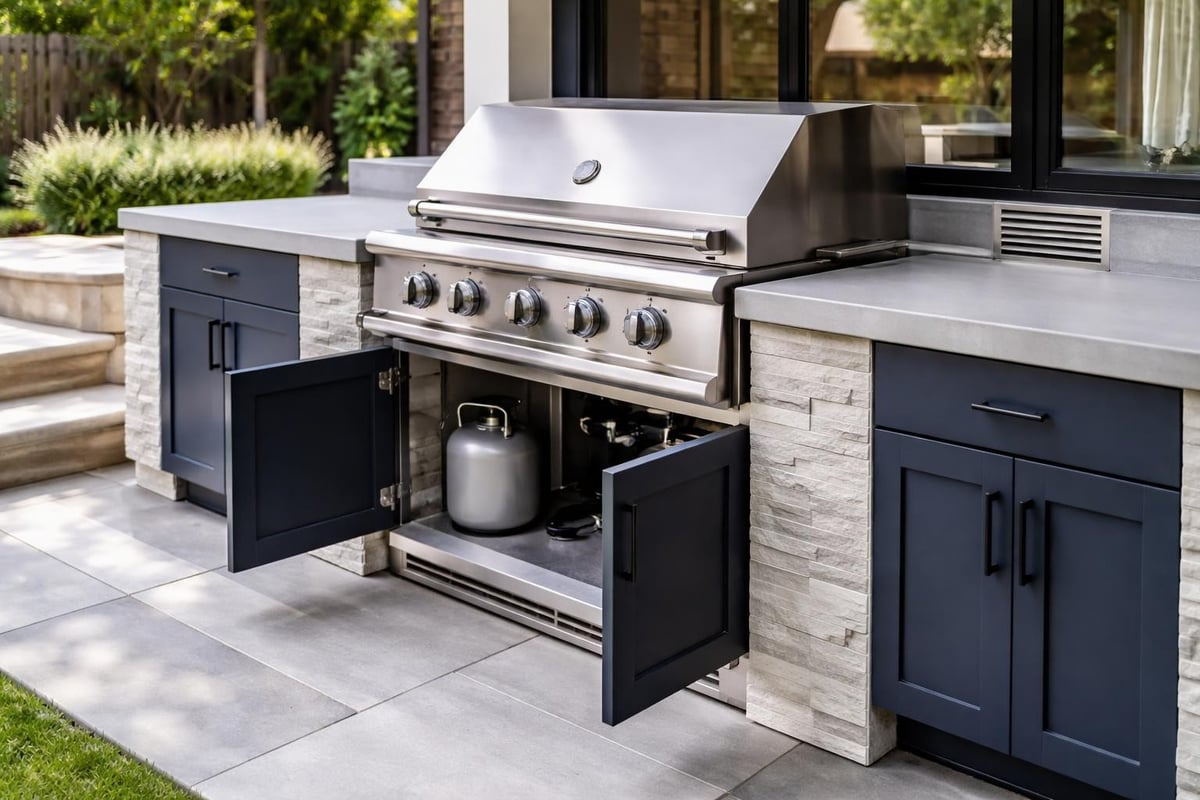
Freestanding designs offer installation flexibility and portability, making them suitable for terraces, patios, or temporary outdoor dining arrangements. High-end freestanding units incorporate enclosed cabinet bases with shelving, providing integrated storage whilst maintaining a refined appearance suitable for visible placement.
Contemporary gas grill design increasingly employs modular systems allowing configuration customisation. Side burners, refrigeration units, and storage cabinets combine with the primary grill module, creating comprehensive cooking stations tailored to specific requirements.
When designing luxury outdoor environments, the Cubic C1 Style Outdoor Kitchen exemplifies how modular design principles create cohesive outdoor cooking spaces. These thoughtfully engineered systems blend modern minimalism with practical functionality, featuring integrated zones for preparation, cooking, and serving that transform outdoor areas into year-round culinary destinations.
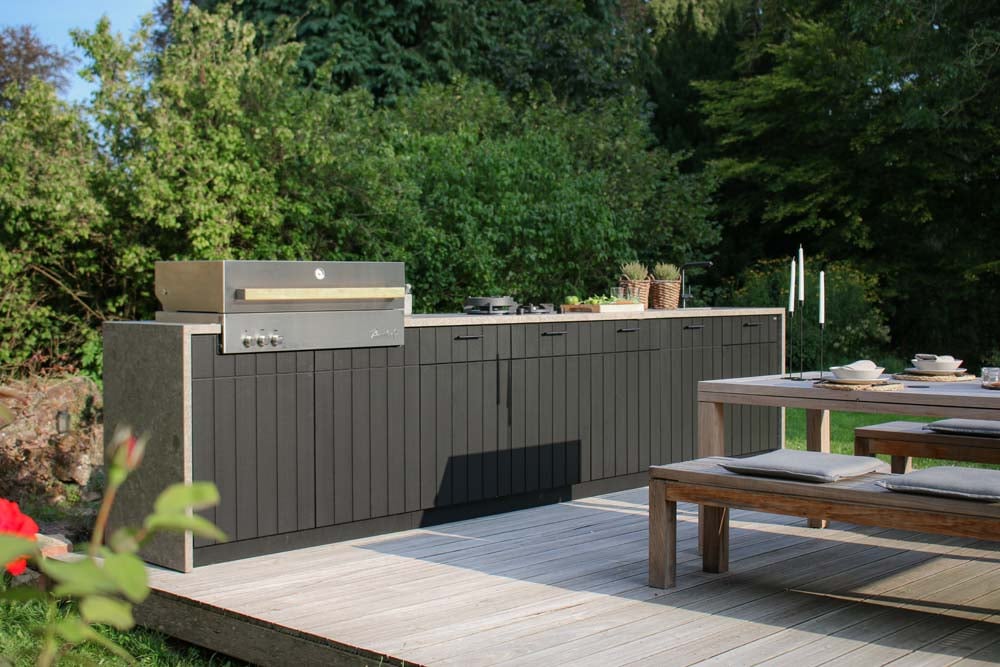
Professional gas grill design incorporates specific clearances ensuring safe operation and compliance with building regulations. Non-combustible materials must surround built-in installations, typically extending 150mm beyond grill perimeters. Overhead clearances prevent heat damage to pergolas, awnings, or architectural features, with minimum distances varying by grill BTU output and hood design.
Ventilation becomes critical in covered outdoor kitchens. Adequate airflow prevents gas accumulation whilst managing smoke and combustion byproducts. Some sophisticated installations incorporate extraction hoods similar to indoor kitchen designs, though most open-air configurations rely on natural ventilation with appropriate clearances.
Modern gas grill design incorporates technology that enhances cooking precision, convenience, and monitoring capabilities. These innovations distinguish premium equipment whilst providing tangible performance benefits.
Precise temperature control represents a hallmark of sophisticated gas grill design. Multi-zone burner systems with independent controls allow simultaneous high-heat searing and low-temperature roasting. Digital thermometers with multiple probe inputs monitor food internal temperatures without opening the hood, preserving heat and moisture.
Some advanced designs feature adjustable burner heights, as highlighted in Forbes' ultimate grilling guide, allowing users to modify heat intensity beyond simple gas flow adjustment. This innovation provides additional control dimension, particularly beneficial for rotisserie cooking or achieving specific browning effects.
Performance-enhancing features include:
Contemporary gas grill design increasingly incorporates digital connectivity, allowing remote monitoring and control via smartphone applications. Temperature alerts, fuel level indicators, and cooking timers enhance convenience whilst ensuring consistent results.
Voice control integration with home automation systems represents the cutting edge, though practical benefits remain debatable for most users. More universally valuable are LED-illuminated control knobs, fuel gauge integration, and digital displays showing real-time cooking surface temperatures.
Visual integration within luxury outdoor living spaces requires gas grill design that complements architectural context whilst expressing quality through refined details and material selections.
The grill's physical presence must harmonise with surrounding elements. Oversized equipment overwhelms intimate terraces, whilst undersized units appear inadequate within expansive outdoor kitchens. Professional designers calculate grill sizing based on entertaining capacity, cooking requirements, and visual proportion to adjacent cabinetry and work surfaces.
Hood design significantly affects visual character. Curved, streamlined hoods convey contemporary aesthetics, whilst angular, industrial designs suggest commercial-grade performance. The hood profile also influences spatial perception; lower profiles create visual continuity with counter surfaces, whilst prominent hoods establish the grill as a focal architectural element.
| Aesthetic Element | Traditional Design Language | Contemporary Design Language | Transitional Approach |
|---|---|---|---|
| Hood Profile | Arched, prominent | Low-profile, integrated | Subtle curve, mid-height |
| Control Panel | Analogue knobs, brass accents | Touch controls, minimalist | Illuminated knobs, clean graphics |
| Material Finish | Polished stainless, decorative details | Brushed stainless, geometric simplicity | Matte finish, refined detailing |
| Handle Design | Ornamental, substantial | Linear, recessed | Ergonomic, understated |
| Colour Options | Stainless or black | Multiple powder-coat options | Coordinated metallic tones |
Successful gas grill design coordinates metal finishes with surrounding outdoor kitchen materials. Brushed stainless steel complements natural stone surfaces, whilst powder-coated finishes can match architectural metalwork or cabinetry hardware. Some manufacturers offer interchangeable fascia panels, allowing customisation to specific design schemes.
The control panel design presents opportunities for aesthetic expression whilst maintaining functional clarity. Backlit graphics, laser-etched details, and precision-machined components convey quality through tactile interaction. Premium gas grill design treats these elements as jewellery details, recognising their contribution to the overall impression of craftsmanship.
Understanding performance metrics allows informed evaluation of gas grill design claims. BTU ratings, cooking surface area, and heat retention capabilities directly affect culinary results and equipment value.
British Thermal Unit (BTU) ratings indicate burner heat generation capacity, though higher numbers don't automatically ensure superior performance. Efficient gas grill design balances BTU output with cooking surface area, firebox volume, and heat retention characteristics. The Man Cave Store's feature guide explains how 80-100 BTUs per square inch of cooking surface typically provides adequate performance.
Excessive BTU ratings without corresponding firebox engineering create fuel waste without performance benefits. Premium gas grill design optimises combustion efficiency, heat distribution uniformity, and retention characteristics rather than merely maximising raw heat output.
Double-wall hood construction dramatically improves heat retention, reducing fuel consumption whilst maintaining stable cooking temperatures. This design feature becomes particularly valuable during British weather conditions, where wind and ambient temperature variations challenge heat management.
The usable cooking area encompasses primary grates plus warming racks, though manufacturers sometimes inflate specifications by including non-functional space. Quality gas grill design provides clearly defined cooking zones with adequate clearance for proper heat circulation and food positioning.
Multi-level cooking surfaces add versatility, allowing simultaneous preparation at different temperatures. Some sophisticated designs incorporate hinged grate sections providing access to smoker boxes or allowing coal addition for hybrid cooking methods, as detailed in the historical evolution of barbecue grills.
Long-term value in gas grill design depends heavily on maintenance accessibility and component replacement ease. Equipment requiring professional service for routine maintenance proves impractical for most outdoor kitchen applications.
Premium gas grill design provides tool-free access to burners, igniters, and heat distribution components. Hinged or removable cooking grates allow thorough cleaning without wrestling heavy cast iron elements. Grease management systems should offer straightforward removal and cleaning without disassembling surrounding cabinetry.
Removable drip trays and disposable grease pans simplify maintenance whilst preventing buildup that causes flare-ups and compromises flavour. Some advanced designs incorporate self-cleaning cycles or catalytic panels that reduce manual cleaning requirements.
Serviceability features include:
British outdoor cooking extends across multiple seasons, requiring gas grill design that accommodates weather protection without compromising accessibility. Custom-fitted covers in breathable fabrics prevent condensation whilst blocking rain and UV exposure. Built-in designs benefit from integrated weather seals around control panels and hood perimeters.
Winter preparation involves disconnecting gas supplies, cleaning all surfaces thoroughly, and applying protective coatings to cast iron components. Quality gas grill design facilitates these processes through accessible connections and removable components that allow complete cleaning and inspection.
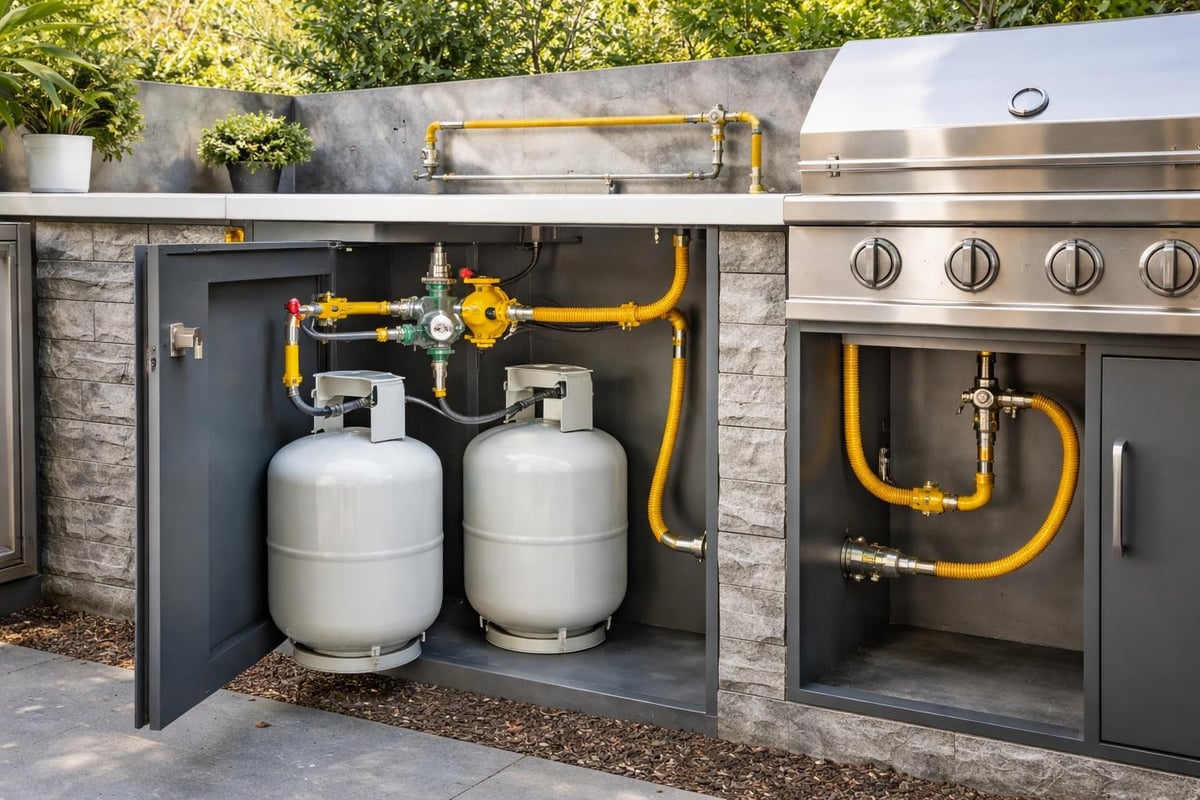
Gas grill design accommodates both natural gas and LPG (propane) configurations, each presenting distinct installation requirements and operational characteristics.
Permanent outdoor kitchen installations increasingly specify natural gas connections, eliminating tank exchanges whilst providing unlimited fuel supply. Natural gas burns at lower pressure than LPG, requiring specific orifice sizing and burner configuration within the gas grill design.
Professional installation ensures proper line sizing, pressure regulation, and leak-free connections complying with current gas safety regulations. The connection point typically locates beneath or behind the grill body, requiring coordination between outdoor kitchen construction and gas supply installation.
AuthenTEAK's comprehensive buying guide emphasises verifying conversion kit availability when selecting equipment, as not all manufacturers support dual-fuel capability.
Freestanding gas grill design typically incorporates enclosed cabinet bases concealing propane tanks whilst maintaining ventilation. Built-in installations require alternative tank positioning, often within adjacent cabinetry or dedicated alcoves with proper ventilation.
Tank access doors should integrate visually with surrounding cabinetry whilst providing sufficient clearance for cylinder replacement. Some luxury installations employ remote tank locations with extended gas lines, completely removing visible tank presence from the outdoor kitchen area.
Gas grill design quality reveals itself through warranty terms and manufacturer service commitment. Premium brands offer comprehensive coverage reflecting confidence in construction quality and component longevity.
Typical warranty structures provide:
| Component Category | Premium Warranty | Standard Warranty | Budget Warranty |
|---|---|---|---|
| Firebox/Chassis | Lifetime limited | 10-15 years | 2-5 years |
| Burners | 10 years | 5 years | 1-2 years |
| Cooking Grates | 5 years | 2 years | 90 days |
| Electronics/Igniters | 3 years | 1 year | 90 days |
| Cosmetic Finish | 3 years | 1 year | None |
Manufacturer support networks matter considerably for built-in installations where equipment removal proves impractical. Brands maintaining UK service centres and parts availability ensure timely repairs without extended downtime. Weber's design evolution insights demonstrate how established manufacturers continuously refine designs based on long-term performance data and customer feedback.
Luxury outdoor kitchen projects often require gas grill design customisation beyond standard product offerings. Leading manufacturers accommodate specific dimensional requirements, finish preferences, and functional modifications for discerning clients.
Custom colour matching through powder coating allows equipment integration with architectural colour schemes. Some manufacturers offer bespoke fascia panel engraving, personalised control knob designs, or unique handle configurations that express individual design visions.
Functional customisation might include additional burner zones, specialised cooking surface configurations, or integrated accessory mounting systems. The grills and smokers collection at luxury retailers demonstrates the breadth of specification options available for sophisticated outdoor cooking installations.
Contemporary gas grill design increasingly addresses environmental impact through improved combustion efficiency, reduced emissions, and sustainable material selection.
Modern burner designs achieve more complete combustion, reducing carbon monoxide output whilst maximising heat transfer efficiency. Electronic ignition systems eliminate standing pilot lights, conserving fuel during idle periods. Improved insulation reduces energy waste, lowering overall fuel consumption for equivalent cooking results.
Material selection favouring recyclable stainless steel and aluminium components supports end-of-life recycling rather than landfill disposal. Some manufacturers incorporate recycled content within cast components, reducing virgin material extraction without compromising performance.
Exceptional gas grill design represents the synthesis of engineering precision, material excellence, and thoughtful integration within broader outdoor living architecture. Understanding these fundamental principles empowers informed specification decisions that deliver lasting value and culinary performance. Whether planning a comprehensive outdoor kitchen or selecting standalone equipment, the design details examined throughout this guide provide the foundation for creating refined outdoor cooking spaces. The Cotswold Cooking Company brings decades of expertise to outdoor kitchen design, offering consultative guidance from initial concept through installation, helping discerning clients across the UK transform their outdoor spaces into exceptional year-round culinary destinations.

Leave a comment