


A well-designed patio grill station elevates outdoor entertaining from casual cookouts to sophisticated culinary experiences. Whether you're planning intimate family dinners or hosting larger gatherings, the right configuration transforms your garden into a year-round destination that combines professional-grade cooking capability with architectural distinction. For discerning homeowners across the UK, particularly throughout the Cotswolds and Oxfordshire, investing in a thoughtfully specified patio grill station represents both a lifestyle enhancement and a valuable property feature that extends usable living space well beyond traditional boundaries.
Creating an exceptional patio grill station requires careful consideration of several interconnected elements that work together to deliver both functionality and aesthetic appeal. Unlike standalone grills positioned haphazardly on decking, a properly designed station integrates cooking equipment, preparation surfaces, storage, and utility connections into a cohesive architectural feature.
The foundation of any successful patio grill station begins with understanding what components deliver the most value for your specific entertaining style and culinary ambitions. A comprehensive approach considers both immediate needs and future expansion possibilities.
Primary components include:
The layout must facilitate efficient workflow, typically following the classic kitchen triangle principle adapted for outdoor conditions. Positioning your grill with preparation zones on either side creates natural movement patterns that prevent bottlenecks during cooking.
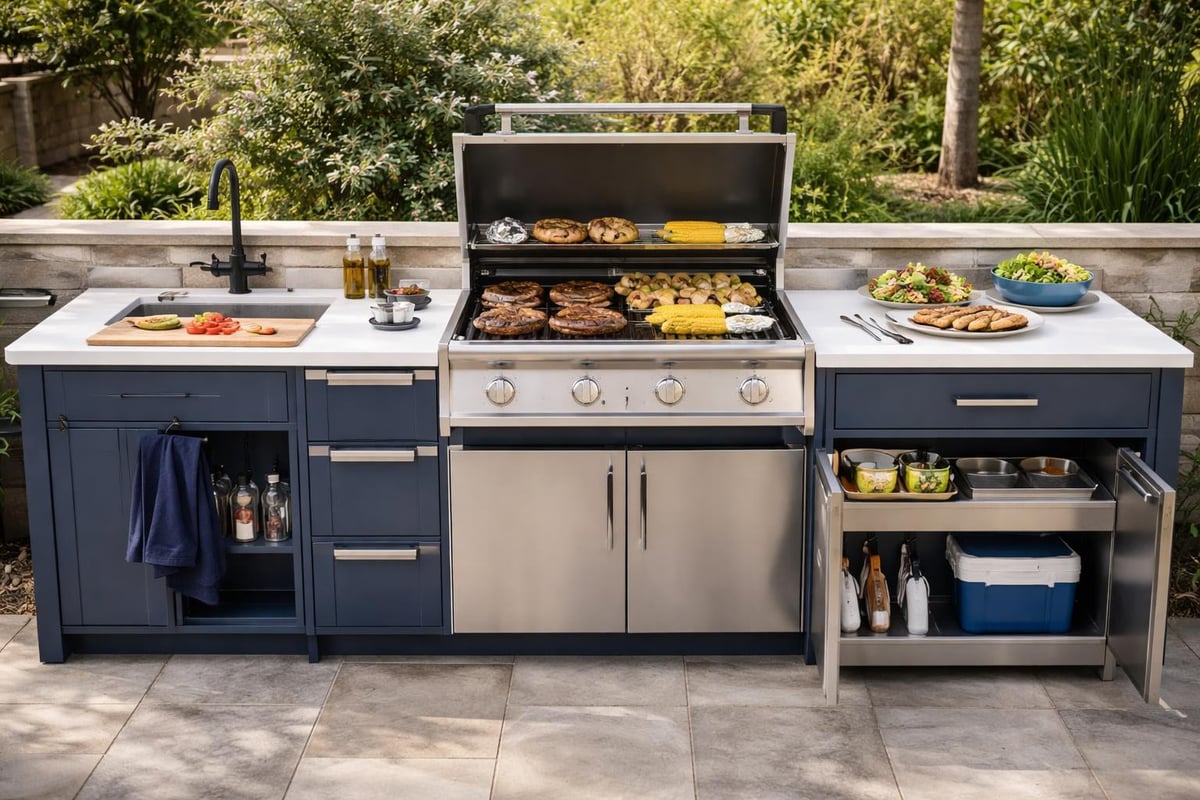
British weather demands robust material choices that withstand temperature fluctuations, moisture exposure, and UV degradation without compromising visual sophistication. Premium outdoor kitchens utilise materials selected specifically for longevity and minimal maintenance requirements.
| Material Category | Recommended Options | Key Benefits | Maintenance Requirements |
|---|---|---|---|
| Countertops | Granite, porcelain, stainless steel | Heat resistance, durability, non-porous surface | Seasonal sealing (granite), regular cleaning |
| Cabinetry | Marine-grade stainless steel, HDPE polymer | Complete weather resistance, pest-proof | Occasional washing, no refinishing needed |
| Structural Framework | Galvanised steel, aluminium, engineered masonry | Structural integrity, corrosion resistance | Annual inspection, minimal upkeep |
| Backsplash | Natural stone, ceramic tile, stainless panels | Easy cleaning, heat protection | Regular wiping, grout sealing |
When selecting materials for your patio grill station, consider how different surfaces interact with one another. Combining warm natural stone with sleek stainless steel appliances creates visual interest whilst maintaining practical functionality. The outdoor cooking station ideas explored by luxury outdoor kitchen specialists demonstrate how material palettes can complement surrounding architecture and landscape design.
Thoughtful spatial planning separates functional outdoor kitchens from disappointing installations that frustrate users and underperform expectations. Before specifying equipment or breaking ground, invest time in understanding how your available space, entertaining patterns, and cooking preferences should inform the final configuration.
Professional designers typically recommend minimum dimensions that ensure comfortable operation without creating unnecessarily large footprints. For a basic patio grill station featuring a built-in grill with flanking preparation surfaces, plan for at least 2.4 to 3 metres of linear space. This accommodates a standard 90cm grill cartridge with 60-75cm of counter space on each side.
Spatial considerations for various configurations:
The positioning relative to your home's architecture matters considerably. Locating your patio grill station near existing utility access points reduces installation complexity whilst maintaining visual connection to indoor spaces facilitates serving and guest interaction. Homes & Gardens offers creative outdoor grill station ideas that demonstrate how thoughtful placement enhances both functionality and design cohesion.
Professional kitchens organise space into distinct zones that separate incompatible activities and create efficient movement patterns. Applying these principles to outdoor settings prevents congestion and improves the cooking experience, particularly when preparing complex menus or entertaining guests simultaneously.
Establish clear zones for:
The distance between these zones should minimise unnecessary movement whilst preventing overcrowding. Position frequently used items within arm's reach of the grill whilst storing seasonal equipment in less accessible locations. This hierarchical approach to storage maximises efficiency without cluttering prime working surfaces.
Whilst basic patio grill stations serve their fundamental purpose adequately, thoughtfully selected premium features dramatically enhance both capability and enjoyment. These investments distinguish truly exceptional outdoor kitchens from merely functional installations, delivering tangible benefits that justify their inclusion.
Modern outdoor kitchens transcend traditional grilling limitations by incorporating diverse cooking methods that expand culinary possibilities. A well-appointed patio grill station might feature complementary appliances that enable entirely different cooking techniques.
High-value supplementary equipment includes:
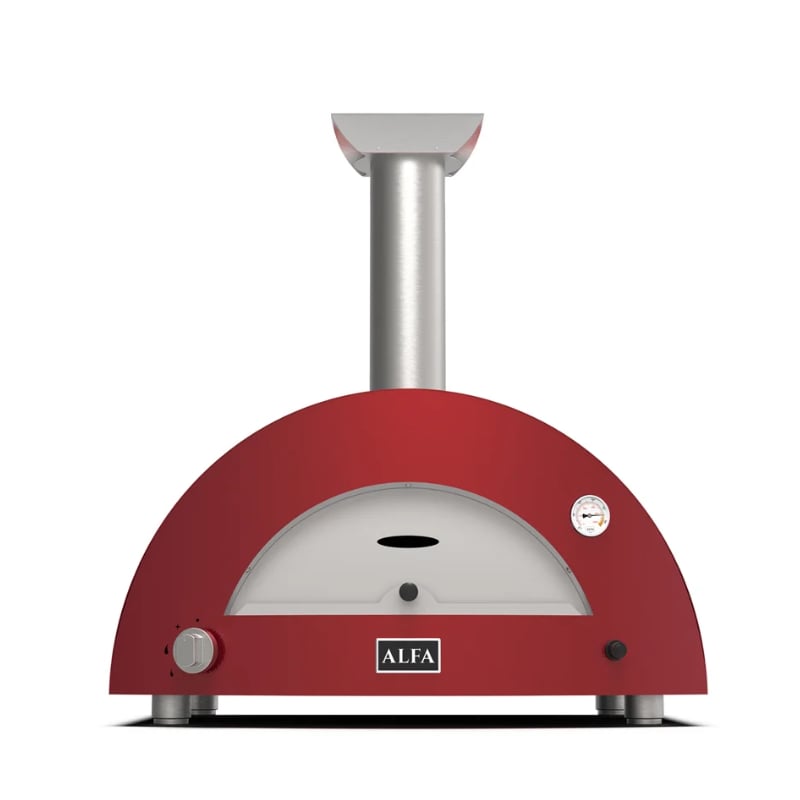
For those passionate about artisan pizza, integrating a premium hybrid oven transforms your patio grill station into a versatile cooking destination. The Alfa Forni Modorno Hybrid Pizza Oven exemplifies how Italian craftsmanship and modern engineering combine to deliver professional results, reaching 500°C in approximately 30 minutes and producing authentic pizzas in around 90 seconds whilst offering the flexibility of both wood and LPG fuel options.
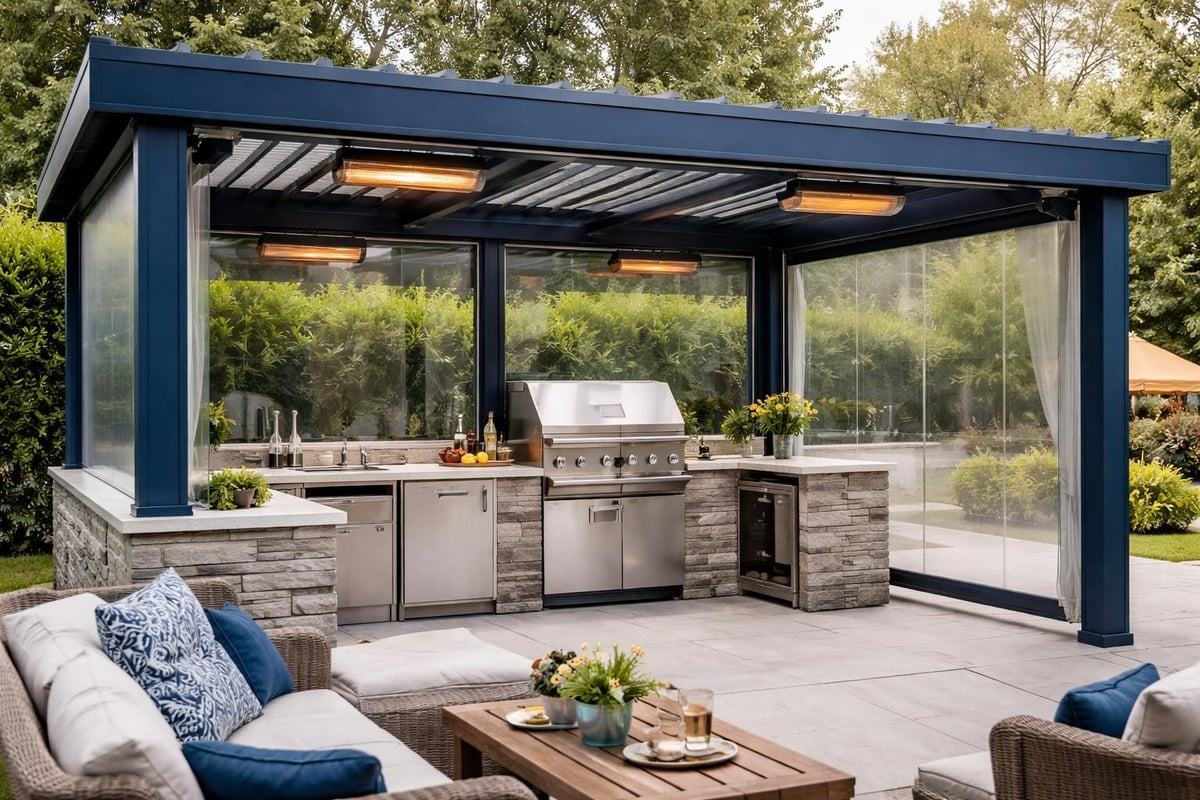
British homeowners increasingly demand outdoor spaces that function comfortably across all seasons rather than limiting use to brief summer periods. Integrating proper weather protection extends the practical season significantly whilst protecting equipment investments from accelerated deterioration.
| Protection Strategy | Implementation Options | Season Extension | Investment Level |
|---|---|---|---|
| Fixed canopy | Timber pergola, aluminium louver system | Spring through autumn | Moderate to high |
| Retractable awning | Motorised fabric canopy, adjustable coverage | Late spring through early autumn | Moderate |
| Full enclosure | Glass panels, bi-fold doors, climate control | Year-round capability | High |
| Hybrid approach | Fixed structure with removable panels | Three-season comfort | Moderate |
Combining structural weather protection with supplementary heating extends comfortable use into cooler months. Infrared patio heaters, integrated fire features, or even discrete radiant panels mounted within pergola structures maintain pleasant ambient temperatures that encourage lingering over meals rather than rushing indoors at the first hint of chill.
Successful patio grill station installations depend on properly specified infrastructure that supports equipment performance whilst meeting safety regulations and building standards. Addressing these technical requirements during initial planning prevents costly modifications and ensures long-term reliability.
Professional-grade outdoor cooking equipment demands robust utility provision that often exceeds residential baseline specifications. Gas grills require adequate fuel supply pressure and volume, whilst supplementary appliances may necessitate dedicated electrical circuits and water connections.
Essential utility specifications:
Engaging qualified professionals for utility installations ensures compliance with current building regulations whilst preventing potentially dangerous situations. The City of San Diego offers outdoor grilling safety tips that highlight proper grill positioning and maintenance practices essential for safe patio grill station operation, principles equally applicable to UK installations.
The substantial weight of built-in grills, stone countertops, and masonry elements requires properly engineered foundations that prevent settling, cracking, and structural failure. Inadequate groundwork represents false economy that inevitably leads to expensive repairs and component replacement.
Permanent patio grill stations typically require:
For substantial installations incorporating multiple cooking appliances, overhead structures, or extensive cabinetry, consulting a structural engineer during design phases prevents costly oversights. The investment in proper engineering delivers peace of mind and ensures your patio grill station remains stable and serviceable for decades.
Whilst functionality drives initial planning decisions, visual harmony with existing architecture and landscape design determines whether your patio grill station enhances or detracts from overall property presentation. Thoughtful aesthetic consideration elevates outdoor kitchens from purely utilitarian installations to genuine design features.
Successful outdoor kitchen design respects the architectural language of surrounding structures whilst establishing its own visual identity. A Georgian country house demands different aesthetic approaches than contemporary glass-and-steel architecture, yet both can accommodate exceptional patio grill stations when design principles are properly applied.
Coordinating elements include:
For properties throughout the Cotswolds, honouring regional vernacular architecture whilst incorporating modern convenience creates installations that feel both timeless and contemporary. Natural stone work surfaces complement traditional honey-coloured limestone whilst stainless steel appliances provide necessary durability without visual conflict. Exploring outdoor barbecue grill designs demonstrates how varied architectural contexts can successfully accommodate sophisticated cooking installations.
Proper illumination transforms patio grill stations from daytime-only facilities into evening destinations that extend entertaining hours well past sunset. Layered lighting approaches combine task illumination for safe food preparation with ambient lighting that creates inviting atmosphere.
Effective outdoor kitchen lighting incorporates:
LED technology offers particular advantages for outdoor applications, delivering energy efficiency, longevity, and colour temperature options ranging from warm 2700K for intimate evenings to cooler 4000K for detailed food preparation. Dimming capability allows adjusting light levels to match activities and moods throughout the evening.
For homeowners seeking streamlined installation processes without sacrificing quality or capability, modular outdoor kitchen systems offer compelling alternatives to fully custom construction. These pre-engineered solutions deliver professional results with reduced complexity and more predictable timelines.
Contemporary modular systems utilise precision manufacturing that ensures consistent quality whilst accommodating site-specific customisation. Components arrive pre-finished and ready for assembly, dramatically reducing on-site construction duration and associated disruption.
Advantages of modular patio grill stations:
The Cubic outdoor kitchen range exemplifies how modular design philosophy delivers sophisticated results without compromising aesthetic standards. Featuring sleek minimalist lines and durable weather-resistant construction, these systems allow extensive customisation through modular components including integrated grills, sinks, storage zones, and preparation surfaces. The ability to specify layouts that perfectly suit available space whilst maintaining design cohesion makes modular approaches particularly attractive for projects requiring efficient delivery.
Modular patio grill stations adapt readily to various installation contexts, whether positioned as freestanding islands, integrated against existing walls, or incorporated beneath pergola structures. This flexibility enables homeowners to develop outdoor cooking capabilities incrementally, beginning with core components and expanding as budget and requirements evolve.
Livingetc provides built-in outdoor grill ideas focusing on integrating grills with complementary amenities like refrigeration and storage, demonstrating how modular components combine to create comprehensive cooking environments. The key lies in planning initial installations with future expansion in mind, ensuring utility provisions and structural foundations accommodate anticipated additions.
Protecting your investment in a premium patio grill station requires establishing consistent maintenance routines that address both immediate post-use cleaning and longer-term preservation. Whilst quality materials and construction minimise ongoing demands, neglecting basic care accelerates deterioration and compromises both appearance and performance.
After each cooking session, basic cleaning prevents residue accumulation that becomes increasingly difficult to remove and potentially damages surfaces. Different materials require specific approaches that preserve their properties whilst removing cooking debris and grease deposits.
Material-specific cleaning protocols:
| Surface Type | Cleaning Method | Products to Use | Products to Avoid |
|---|---|---|---|
| Stainless steel | Wipe with grain using microfibre cloth | Mild detergent, specialist stainless cleaner | Abrasive pads, chlorine bleach, steel wool |
| Natural stone | Gentle washing with pH-neutral cleaner | Stone-specific soap, soft bristle brush | Acidic cleaners, vinegar, abrasive compounds |
| Ceramic tile | Regular washing with all-purpose cleaner | Mild alkaline cleaners, grout brush | Harsh acids, metal scrapers |
| Powder-coated metal | Soft cloth with soapy water | Car wash solution, gentle detergents | Solvent cleaners, abrasive materials |
Grill components require more intensive cleaning regimens depending on use frequency and cooking methods. Grease management systems need regular emptying, burners benefit from annual deep cleaning, and grates perform better when brushed before and after each use. BBQ Revolt presents outdoor grill station ideas including durable countertops and built-in storage that facilitate easier maintenance routines.
Even weather-resistant installations benefit from protective measures during extended periods of non-use or severe weather conditions. Proper winterisation prevents freeze damage to water systems, protects equipment from corrosion, and ensures your patio grill station emerges ready for use when warmer weather returns.
Essential winterisation steps include:
Spring recommissioning reverses these processes whilst providing opportunity to inspect components for winter damage, service equipment according to manufacturer schedules, and refresh surfaces before the entertaining season begins. This cyclical approach to care maximises longevity whilst ensuring peak performance when your patio grill station sees heaviest use.
Developing realistic budget expectations helps align aspirations with practical possibilities whilst identifying areas where strategic investment delivers disproportionate value. Patio grill station projects span enormous cost ranges depending on scale, equipment specification, and finish quality, making informed planning essential for satisfactory outcomes.
Understanding how various project elements contribute to total investment enables more effective decision-making about where to prioritise spending and where economical alternatives might prove acceptable. Breaking down typical installations reveals where costs concentrate and which elements offer flexibility.
Approximate budget distribution for comprehensive installations:
Premium equipment represents the single largest expense category but delivers tangible performance benefits that cheaper alternatives cannot match. Professional-grade grills, for example, feature heavier construction, superior heat distribution, and dramatically extended service life compared to consumer products. The outdoor cooking collection demonstrates quality ranges that justify their premium positioning through superior engineering and materials.
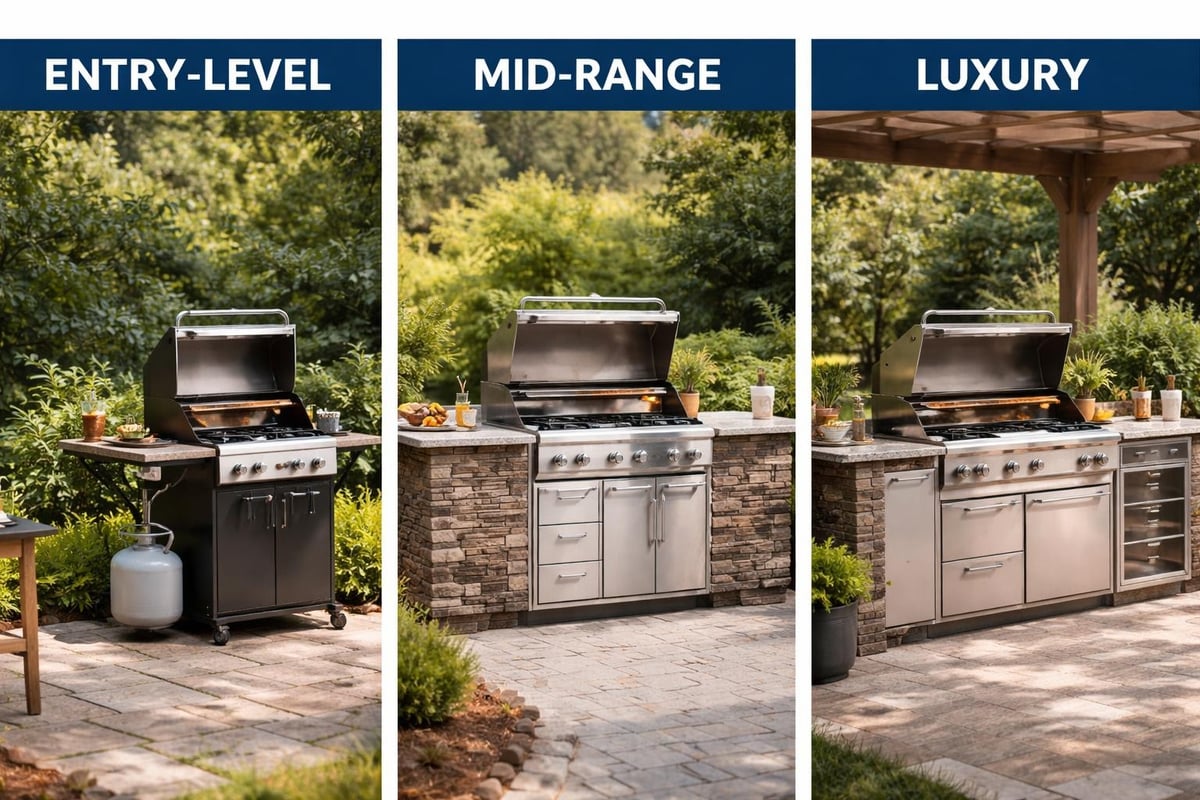
For homeowners desiring comprehensive outdoor cooking capabilities but facing budget constraints, phased implementation offers practical compromise. Beginning with core components and expanding over subsequent seasons distributes costs whilst allowing experimentation with layouts and equipment before committing to permanent configurations.
Effective phasing typically follows this progression:
This approach requires initial planning that anticipates future expansion, ensuring foundations, utility provisions, and structural elements accommodate anticipated additions without requiring expensive modifications. Houzz showcases grill station designs demonstrating various scales and configurations that might inform phased development strategies.
Operating high-heat cooking equipment outdoors introduces specific safety considerations that responsible installations must address through proper design, quality equipment, and adherence to applicable regulations. Understanding these requirements protects both people and property whilst ensuring installations meet insurance and building standards.
Adequate clearance between combustible materials and heat-producing equipment represents the most fundamental safety consideration for any patio grill station. Manufacturers specify minimum distances that must be observed, but conservative approaches often exceed these baselines for enhanced protection.
Typical minimum clearances include:
Non-combustible backsplashes extending above grill height provide additional protection for nearby walls whilst simplifying cleaning of grease deposits. Stainless steel, tile, or stone backsplashes should extend at least 30cm beyond grill edges on both sides for comprehensive coverage.
Fire suppression equipment positioned within easy reach enables rapid response to grease fires or other emergencies. Whilst water-based extinguishers prove ineffective against grease fires, Class K or dry chemical extinguishers specifically designed for cooking fires provide appropriate protection. Portland.gov provides grilling safety information including tips on grill placement and maintenance relevant to safe patio installations.
Professional installation of gas and electrical services ensures compliance with current regulations whilst preventing potentially catastrophic failures. DIY approaches to these critical systems represent false economy that endangers occupants and may void insurance coverage.
Gas installations must incorporate:
Electrical work requires similar professional attention, with outdoor installations demanding weatherproof components, proper grounding, and GFCI protection on all circuits. Lighting, motorised equipment, and accessory outlets each require appropriate circuit sizing and protection devices that prevent overloading and potential fire hazards.
Beyond cooking capability alone, exceptional patio grill stations facilitate memorable entertaining experiences through features that encourage gathering, conversation, and culinary participation. Designing with social interaction in mind transforms outdoor kitchens from purely functional spaces into genuine lifestyle destinations.
Positioning dining surfaces adjacent to cooking areas enables interaction between chef and guests whilst maintaining logical separation between active cooking zones and relaxed dining. This configuration particularly suits informal entertaining where meal preparation becomes participatory rather than isolating the cook from social activity.
Effective gathering space integration includes:
The relationship between cooking and dining spaces should feel natural rather than forced, with clear circulation paths preventing congestion during meal service. Consider how guests will move between indoor and outdoor areas, where they'll naturally congregate during preparation, and how serving will flow most efficiently.
Comprehensive outdoor entertaining capabilities extend beyond food preparation to include proper beverage service facilities. Integrating refrigeration, ice makers, and bar equipment transforms patio grill stations into complete hospitality centres requiring no indoor access during gatherings.
Premium outdoor bar features might include:
These elements work synergistically with cooking equipment to create self-sufficient outdoor environments that encourage extended entertaining without sacrificing convenience or requiring constant movement between indoor and outdoor spaces. The luxury outdoor furniture collection demonstrates how coordinated furnishings complement cooking installations to create cohesive outdoor living environments.
Creating an exceptional patio grill station transforms outdoor spaces into versatile culinary destinations that enhance both daily living and special occasions throughout the year. From initial design decisions through material selection, equipment specification, and thoughtful integration with surrounding architecture, every choice contributes to installations that deliver lasting value and genuine enjoyment. Cotswold Cooking Company brings decades of expertise to designing and specifying bespoke outdoor kitchens that blend Cotswold heritage with cutting-edge performance, guiding discerning homeowners from initial consultation through installation to create refined outdoor cooking environments tailored to your specific vision and requirements.

Leave a comment