


The best gazebo for a grill is a sturdy, open-sided structure with a non-combustible or fire-retardant roof, generous height and good airflow, positioned so the grill sits well clear of fabric, timber and walls. A well-chosen shelter lets you cook in rain, wind and low winter light, but only if the grill, the roof and the ventilation have been planned together.
This guide explains how to choose, size and position a gazebo for grilling, which materials suit a premium garden, and how to keep the whole arrangement safe.
A grill gazebo should shelter the cook and the equipment from weather while allowing smoke, heat and fumes to escape freely. That dual purpose separates it from a standard garden gazebo built for dining or lounging.
Think of the structure as doing four jobs:
If your gazebo has solid walls on three sides and a low roof, it will trap smoke and heat. That is a comfort problem at best and a safety problem at worst.
Grilling under a gazebo is safe only when the structure is built for it, the grill is placed with ample clearance, and the space remains open and well ventilated. Never treat any covered structure as a place to cook without checking the clearances first.
The guidance from fire safety bodies is consistent. The NFPA advises placing grills away from the home, deck railings, eaves and overhanging branches, and following the manufacturer's instructions for placement. The U.S. Consumer Product Safety Commission adds that grills should be used outdoors only, in well-ventilated areas, and never under a surface that can burn.
For buildings other than one- and two-family dwellings, the NFPA's fire code generally states that grills must not be used under an overhanging portion or within 10 feet (3 metres) of a structure, though local rules may differ. Those rules are written for commercial and multi-occupancy buildings rather than private homes, but they illustrate how seriously clearance is treated.
For gas grills in particular, good ventilation also protects against any build-up of unburnt gas, so airflow is not a cosmetic preference.
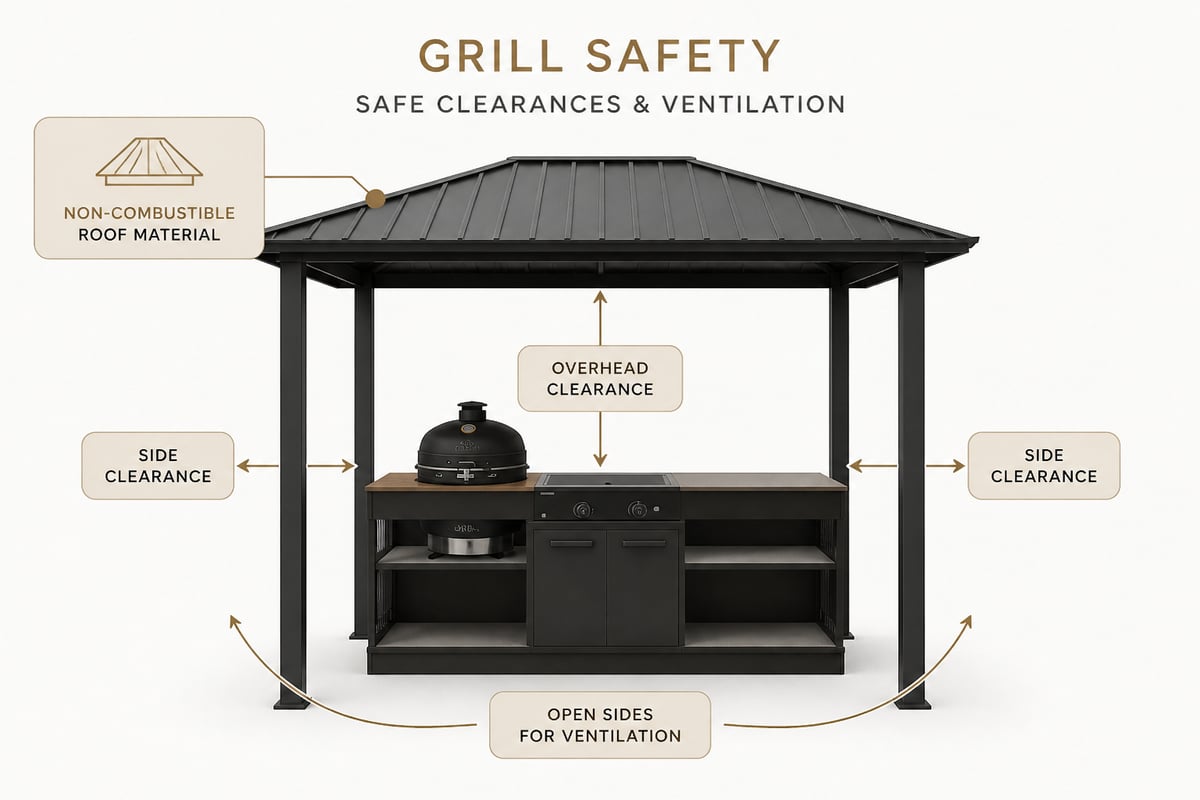
A permanent structure with a rigid, non-combustible roof is the best choice for regular grilling, while pop-up and fabric gazebos suit only occasional, cautious use. Your decision should follow how often you cook and how much you want the structure to look part of the garden.
| Gazebo type | Roof | Suitability for grilling | Typical use |
|---|---|---|---|
| Architectural pergola with louvred roof | Aluminium louvres | Excellent: adjustable airflow, rain-proof when closed | Year-round outdoor kitchens |
| Hardtop gazebo | Steel, aluminium or polycarbonate | Very good: rigid, durable, wind-resistant | Permanent grill shelters |
| Timber pavilion | Shingle, tile or sheet metal | Good if the roof is treated and clearances are generous | Traditional garden settings |
| Fabric or soft-top gazebo | Polyester or canvas | Poor to fair: flammable unless rated and well clear | Occasional summer use |
| Pop-up gazebo | Thin polyester | Not recommended directly over a hot grill | Short-term shade only |
For the luxury homeowner, an aluminium louvred pergola is often the strongest option. The blades tilt to shed rain or open to vent smoke, and the powder-coated frame withstands UK weather without the maintenance timber demands. If you are comparing structures, our overview of gazebos for sale sets out the main styles in more detail.
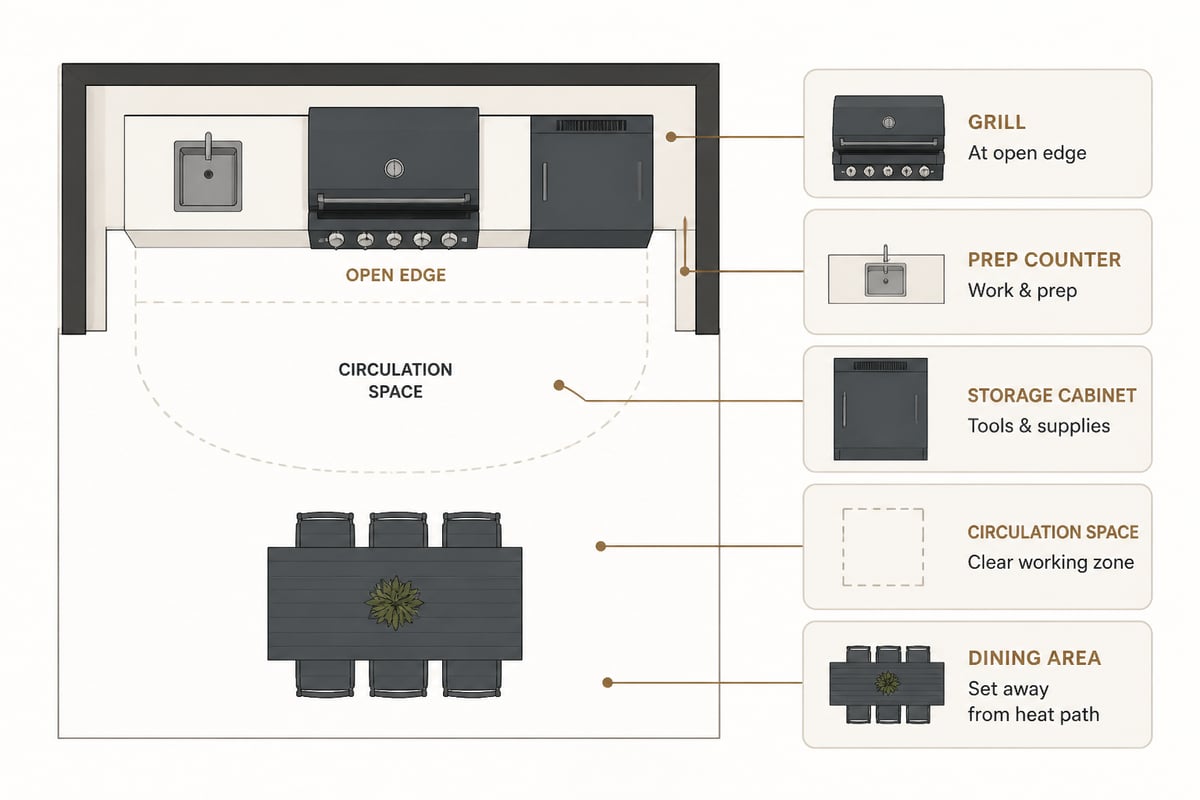
Size the gazebo so the grill has full clearance on every side and the cook has room to move, which usually means a footprint well beyond the grill's own dimensions. A common mistake is measuring only the grill and forgetting the working space around it.
Plan for these zones:
Height matters as much as footprint. A roof set well above the cooking surface gives heat and smoke room to rise away from the cook. Lower ceilings concentrate both. As a general principle, if you can feel the roof radiating warmth when the grill is lit, the structure is too low or too close.
Position the gazebo downwind of the house and any seating, on level, non-combustible ground, with the grill placed at the structure's open side. Siting is the cheapest part of the project to get right and the most expensive to correct afterwards.
Consider these points before committing:
Heritage settings deserve particular care. In the Cotswolds and similar conservation areas, a structure visible from the road may be subject to additional controls, so early conversation with your planning officer saves time.
Powder-coated aluminium and steel frames with metal or glass roofing offer the best balance of durability, fire resistance and low maintenance for a grill gazebo. Material choice affects safety, longevity and how well the structure ages.
Avoid placing anything that melts, sags or ignites easily within the heat plume of the grill. When in doubt, choose the harder, colder material.
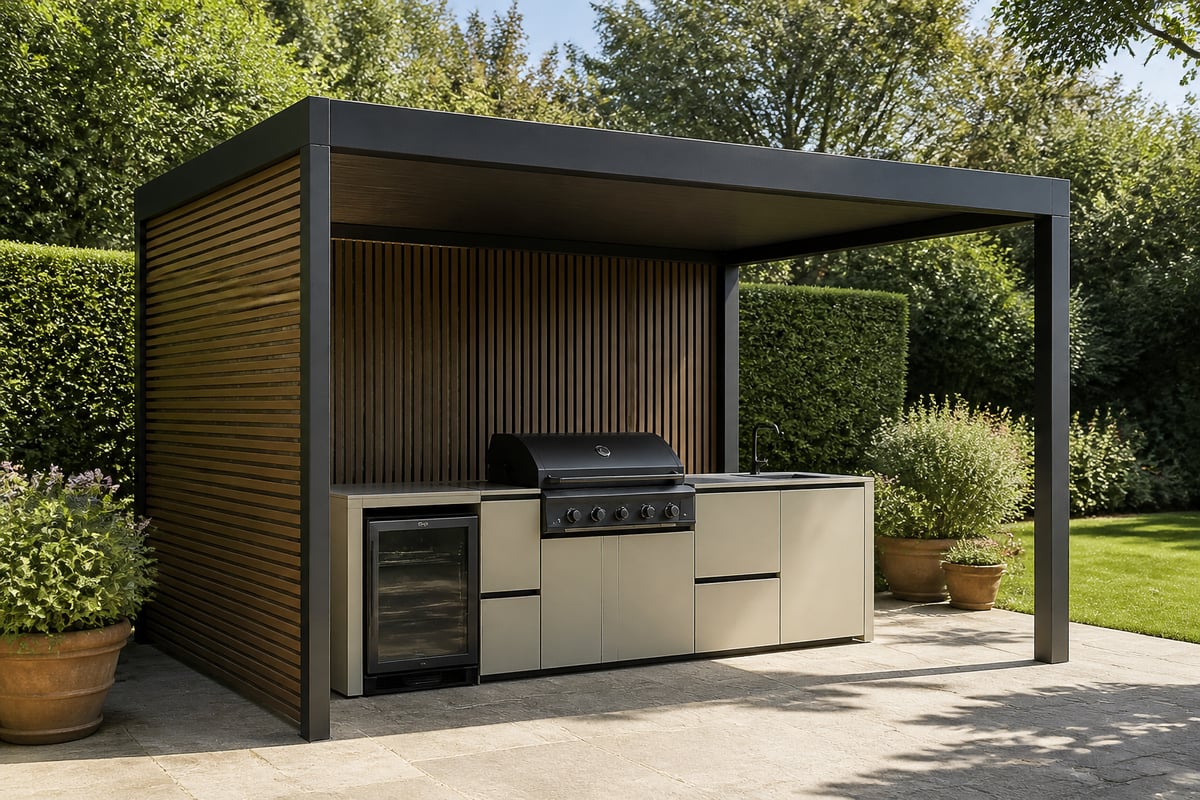
The most satisfying results come from designing the shelter, grill, worktops and storage as one scheme rather than buying a gazebo and adding equipment later. A coordinated plan lets the roof height, ventilation and services all be set around the cooking equipment.
A modular system makes this straightforward. Grillandia Outdoor Kitchens can be specified in standard or fully custom form, with size, colour, equipment and layout all adjustable, and the weather-resistant outdoor materials are made to withstand UV and the elements over the long term. Positioned beneath a louvred pergola, such a kitchen gives you a refined, sheltered cooking space that feels part of the home.
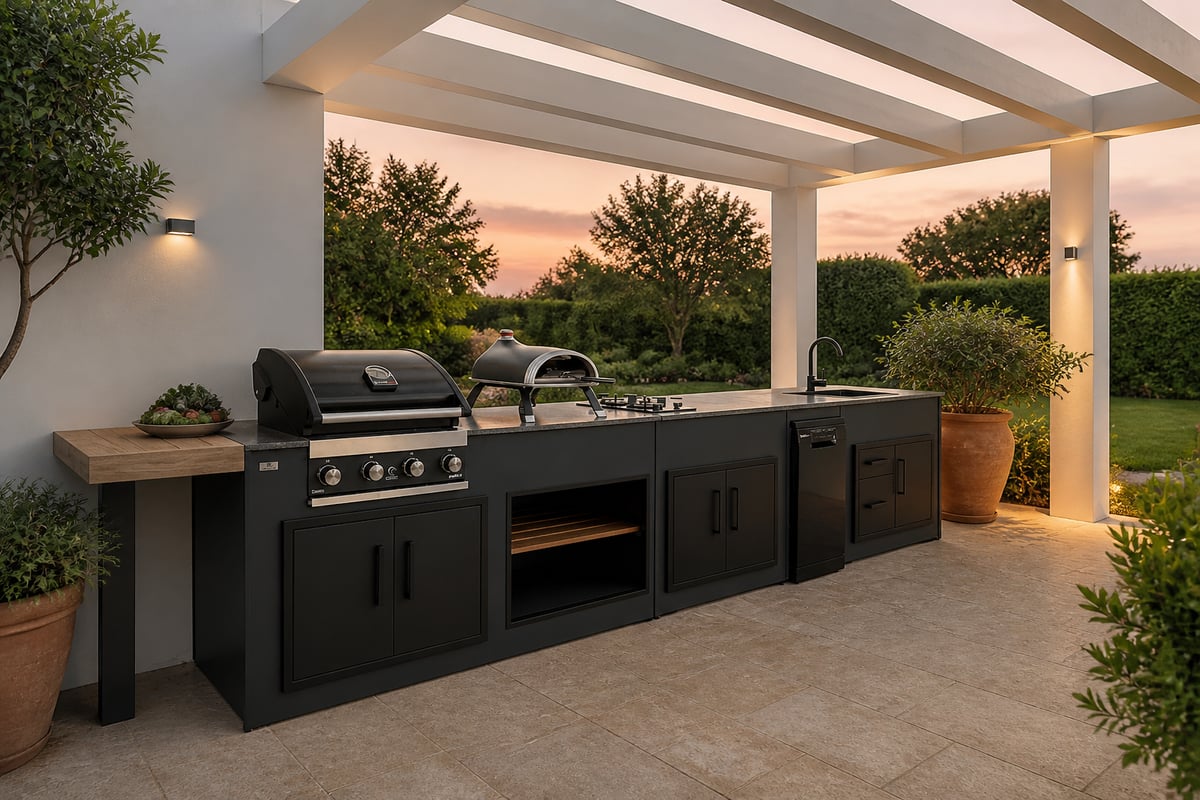
If you are choosing equipment to go inside the structure, a built-in unit often works better than a freestanding model, because it can be set at the correct clearance and finished flush with the worktop. Our guides to built-in grills for an outdoor kitchen and cabinets for outdoor grills cover the options and the storage that supports them.
Yes, provided the structure keeps rain and wind off the cook without sealing the space, which is why a well-designed grill gazebo extends the British barbecue season far beyond summer. The aim is shelter with airflow, not an enclosed room.
For autumn and winter cooking, consider these additions:
Weather covers protect the equipment when it is not in use. Fitted covers, such as the Wolf canvas cover for a built-in grill, keep moisture and dust off between sessions, even under a roof.
Gas and electric grills generally suit a covered space best, as they produce controllable heat and less lingering smoke, while charcoal and wood-fired equipment need a taller roof and more generous ventilation. Fuel type should shape both the equipment choice and the structure around it.
Whatever you choose, keep the manufacturer's clearance figures in front of you when finalising the roof height and the distance to any wall. Our broader guide to grills for outdoor cooking compares fuel types in more depth.
Before committing, confirm clearances, roof material, ventilation, planning requirements and installation arrangements, because these decide whether the finished space is safe and enjoyable. A short checklist keeps the project on track.
Cotswold Cooking Company offers professional installation of pergolas, verandas and canopies, and you can see outdoor kitchens in person at the Oxfordshire showroom. Buy now, pay later options are available if you prefer to spread the cost. For a wider view of how the pieces fit together, our guide to the outdoor kitchen for a grill is a useful companion.
Yes, if the structure has a non-combustible roof, adequate height and open sides, and the grill is placed within the manufacturer's clearance limits. Never use a low fabric canopy directly above a lit grill.
Aluminium louvres or a rigid metal roof are generally a strong choice, as they resist heat and can be built to vent smoke. Louvres add the advantage of adjustable airflow.
Follow the grill manufacturer's stated clearances, which vary by model. As a principle, keep the grill well away from anything combustible and ensure ample overhead space for rising heat.
It depends on the size, height, position and your property's status. Permanent structures near boundaries or in conservation areas often need consent, so check with your local planning authority first.
It is not advisable to place a thin fabric pop-up directly over a hot grill, because the material can melt or ignite. If you need temporary shelter, keep it well clear and the grill supervised at all times.
Start by measuring your cooking area and writing down your grill's clearance requirements, then bring those figures to a design conversation. The team at Cotswold Cooking Company can help you specify a sheltered kitchen around a modular Grillandia scheme, from design through to installation, and a buy now, pay later option makes it easier to spread the cost of a project built to last for years of all-season cooking.

Leave a comment