


If you are looking at a gazebo for sale in the UK, the right choice depends on how permanent you want it to be, how much wind and rain it must withstand, and whether it needs to shelter a cooking area. A pop-up gazebo suits occasional events, a hardtop or timber gazebo suits regular use, and an architectural pergola suits a fully fitted outdoor kitchen.
This guide takes you from the basics to a confident purchase: the types available, the materials worth paying for, how to keep a structure safe in British weather, the planning rules, and how to plan a covered space around a barbecue or pizza oven.
The main types are pop-up gazebos, fixed-frame metal gazebos, timber gazebos, polycarbonate or hardtop gazebos, and louvred or bioclimatic pergolas that serve the same purpose with more engineering.
Each type answers a different need:
For a homeowner planning a premium outdoor kitchen, the last category deserves serious consideration, as later sections explain.
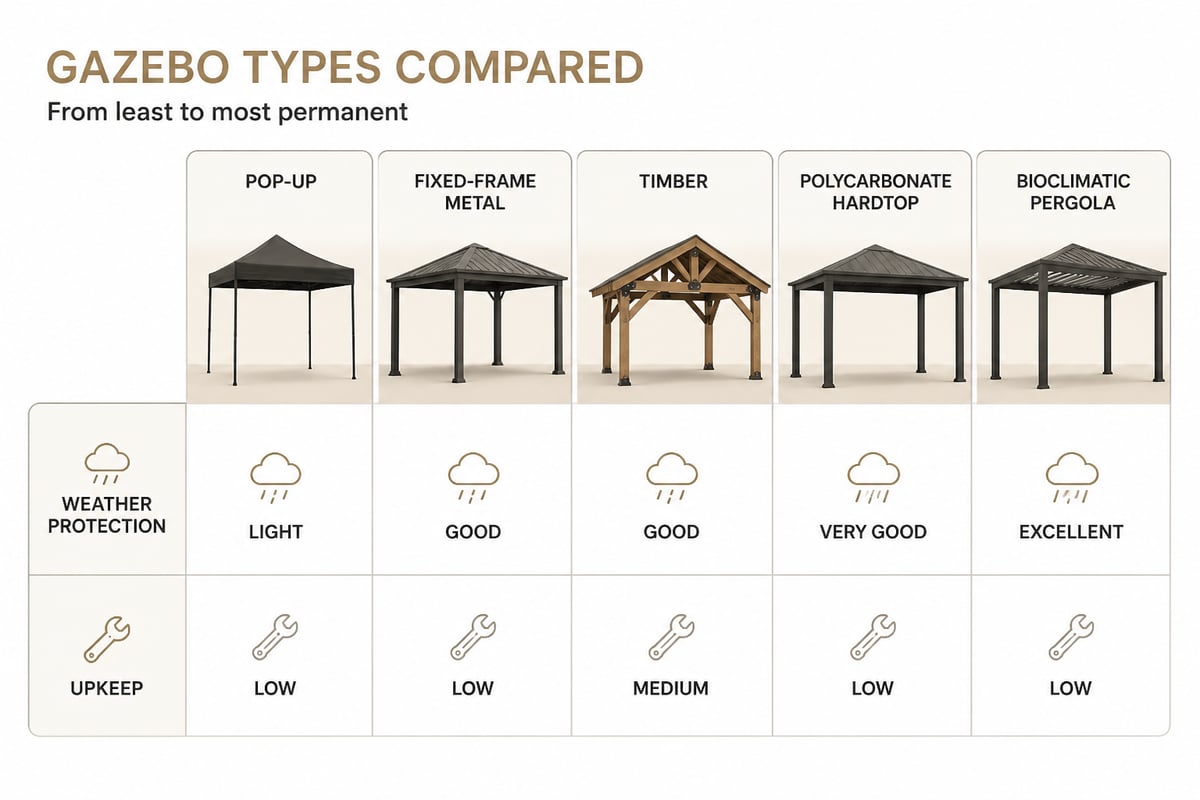
Start with the job the gazebo must do, then measure the space, then match the material to your exposure and maintenance appetite.
Work through these steps in order:
A short on-site assessment saves expensive mistakes. If your plot is in the Cotswolds, Oxfordshire or London, a consultative design visit can establish sizing and siting before you commit.
Powder-coated aluminium and good-quality timber last longest in the UK climate, while thin steel and low-grade fabric tend to fail first.
| Material | Typical strength | Maintenance | Best suited to |
|---|---|---|---|
| Powder-coated aluminium | Light, rigid, rust-resistant | Occasional wash | Modern and architectural gardens |
| Hardwood or treated softwood | Warm, traditional appearance | Re-treat every few years | Period homes and walled gardens |
| Galvanised steel | Strong and economical | Check for rust at joints | Budget fixed-frame structures |
| Polycarbonate roofing | Light-transmitting, waterproof | Wipe clean | Dining and hot tub cover |
| Polyester canopy (PVC coated) | Flexible, replaceable | Dry before storing | Temporary or seasonal use |
Aluminium is the material most associated with premium outdoor living because it holds a precise finish, resists corrosion and carries the engineering needed for louvres, lighting and integrated rain management.
Anchor it properly, follow the manufacturer's wind limit, and take the structure down or clear the area when conditions exceed that limit.
Guidance from Bradford Council is a useful benchmark even for private gardens. It advises that where staking is not possible on hard standing, you should secure weight to each leg if no manufacturer guidance exists. It also says to follow the manufacturer's maximum safe wind speed and to stop using the structure and clear the area if that limit is exceeded.
Understanding forecasts helps. The Met Office classes force 6 as a strong breeze, with a mean wind speed of 24 knots (12 m/s). Its forecast guidance also explains that a quoted wind speed is an average, so actual wind can strengthen and lull above and below that figure. A gazebo rated for moderate wind can therefore be tested by a forecast that looks acceptable on paper.
Practical habits that protect your investment:
Often you do not, but the answer depends on height, size, permanence and location.
The Country Land and Business Association explains that a gazebo within a dwelling's curtilage may qualify as a garden building under permitted development if it is under 2.5 m high and covers less than 50% of the garden area. It adds that a gazebo used as a permanent structure for more than 28 days in a calendar year, or one located in a designated area such as a Conservation Area, will require planning permission.
That second point matters across much of the Cotswolds, where Conservation Areas and Areas of Outstanding Natural Beauty are common. Listed properties carry further restrictions. Confirm the position with your local planning authority before ordering anything fixed, and keep written confirmation.
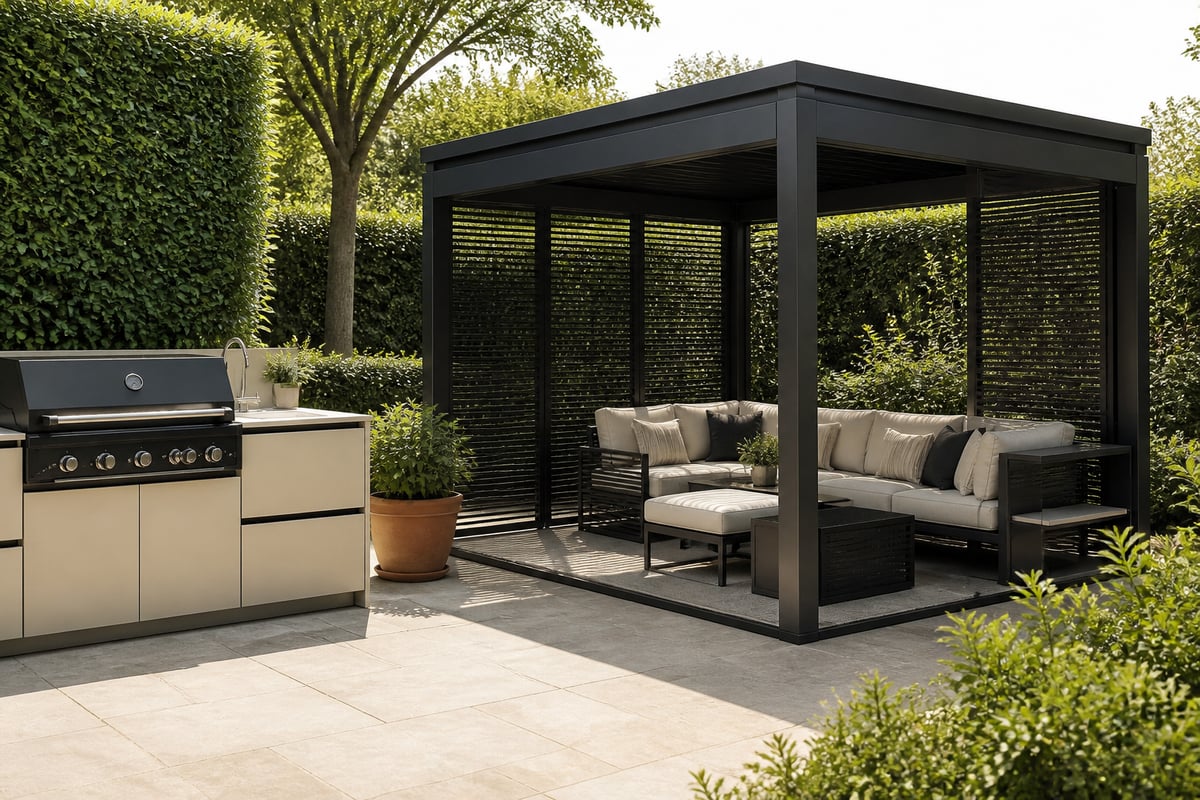
A gazebo can cover dining and seating comfortably, but cooking beneath any roof demands attention to ventilation, heat clearance and fire safety.
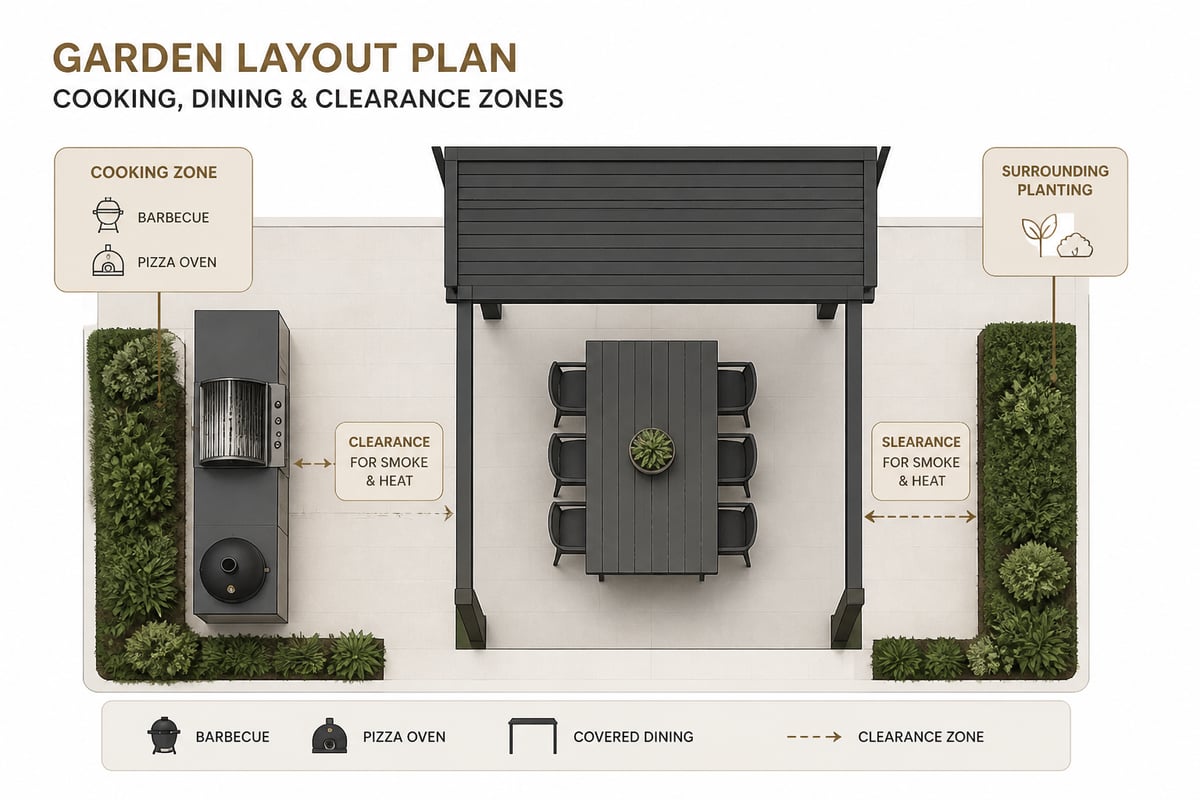
Gas barbecues, wood-fired ovens and charcoal grills produce heat and smoke. Fabric canopies and thin plastic sheeting are unsuitable above them. A solid, non-combustible roof, generous height and open sides are the baseline. Always follow the appliance manufacturer's clearance guidance, and keep a gas bottle in a ventilated cabinet rather than under cover.
A better approach is to separate the zones. Place the cooking line where smoke can disperse, and use the covered area for dining and conversation. A modular run such as the Whistler Fairford outdoor kitchen range pairs a five-burner barbecue with weather-resistant cabinetry, and sits naturally beside a covered dining terrace. If pizza is the priority, the Alfa Forni collection offers ovens designed for outdoor positions, while Fontana Forni wood-fired ovens suit gardens where a traditional flame is the draw.
A pergola is the better choice when you want year-round use, a permanent finish and a structure that works as part of the architecture of your home and garden.
Where a gazebo is freestanding and often seasonal, an architectural pergola can attach to the house, carry lighting and heating, and protect an outdoor kitchen in all weathers. Bioclimatic designs let you angle louvres to manage sun or close them completely in rain.
For a considered permanent solution, Tarsaola offers premium, architectural, bespoke European-made pergolas for design-conscious buyers. It is a sensible option if you want the shelter of a gazebo with the precision of a built feature.
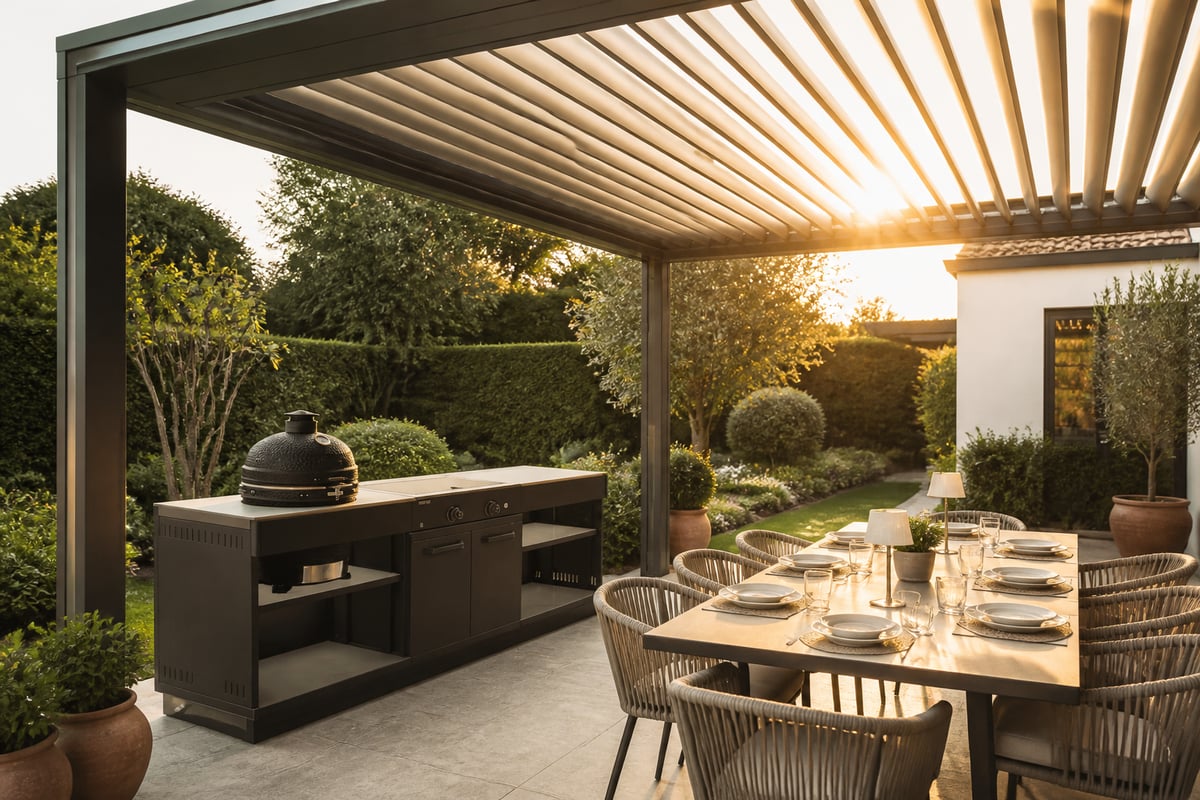
You can read more in our guides to pergolas for sale and the Sola luxury aluminium pergola collection. The following comparison shows how the main options differ.
Feature Pop-up gazebo Fixed hardtop gazebo Bioclimatic pergola
Permanence Temporary Semi-permanent Permanent
Wind resilience Low Moderate to good High when correctly fixed
Rain protection Fair Good Excellent, adjustable
Suitable above cooking No With care Yes, with correct clearances
Typical use Occasional events Seasonal dining Year-round living
Buy from a retailer that publishes clear specifications, explains delivery and returns, and can advise on siting and fixing, rather than choosing on price alone.
Before you order a gazebo for sale online, check these points:
Cotswold Cooking Company offers delivery, a price match guarantee, easy returns and buy now, pay later options. It also provides professional installation of pergolas, verandas and canopies, and has an appointment-only space at Thorpe Manor where you can see outdoor kitchens in person.
Visualising the finished space helps before you buy. A specialist such as TNT Render Studio produces photo-realistic 3D renderings that can show how a structure sits against your house, although it operates in Canada, so treat it as an example of the approach rather than a local service.
Clean it regularly, check the fixings, protect the cover and store movable parts dry.
A simple seasonal routine keeps any structure in good order:
Protective covers make a real difference to what sits beneath. A Barbecook premium barbecue cover or a Fontana Forni pizza oven cover keeps equipment clean through the colder months.
Prices range from modest sums for a basic pop-up to a considerably higher figure for a permanent aluminium or timber structure. Bespoke pergolas are priced to specification, so request a quotation through the product page or contact page.
Fabric gazebos are water-resistant rather than fully waterproof, and seams can leak in sustained rain. Polycarbonate, hardtop and louvred roofs shed rain far more reliably.
Use weighted feet or bolted brackets rather than pegs. Bradford Council suggests securing weight to each leg where manufacturer guidance is unavailable.
Only beneath a non-combustible roof with generous clearance and open sides, and always within the appliance manufacturer's guidance. Never use a barbecue under fabric.
A well-designed, permanent covered space extends usable living area and is a strong selling point. A temporary structure adds comfort but little lasting value.
Begin by measuring your terrace and noting how you want to use it through the year, then arrange a consultation to match that brief to the right structure. Cotswold Cooking Company can guide you from design through to delivery and installation, showing you pergolas such as Tarsaola alongside complete outdoor kitchens. When you are ready to proceed, the team at Cotswold Cooking Company can help you spread the cost with Buy Now Pay Later options on your outdoor living project.

Leave a comment