


A glass pergola represents the pinnacle of contemporary outdoor living design, merging architectural sophistication with practical functionality. As UK homeowners increasingly seek to maximise their outdoor spaces throughout the year, these transparent structures have emerged as the premium solution for creating protected yet light-filled garden rooms. The marriage of structural elegance and modern glazing technology enables discerning property owners to enjoy their gardens regardless of weather conditions, whilst maintaining the visual connection to nature that makes outdoor living so appealing.
The glass pergola has revolutionised how we approach outdoor living design in the UK. Unlike traditional timber or fabric-covered structures, glass-roofed pergolas deliver an uninterrupted view of the sky whilst providing comprehensive weather protection. This transparency creates an almost magical effect, where outdoor spaces feel simultaneously sheltered and completely open to the elements.
Modern glass pergola systems incorporate engineering advances that would have been impossible even a decade ago. Tempered safety glass, structural aluminium frames, and precision drainage systems work in harmony to create structures that are both beautiful and remarkably durable. The integration of glass into pergola designs has evolved significantly, with contemporary systems offering thermal efficiency, self-cleaning coatings, and even electrochromic glass that adjusts its tint based on sunlight intensity.
What sets a glass pergola apart from conventional garden structures? Several key features distinguish these premium installations:
The visual impact cannot be overstated. A well-designed glass pergola appears to float above its surroundings, creating defined outdoor rooms without the visual weight of solid roofing materials.
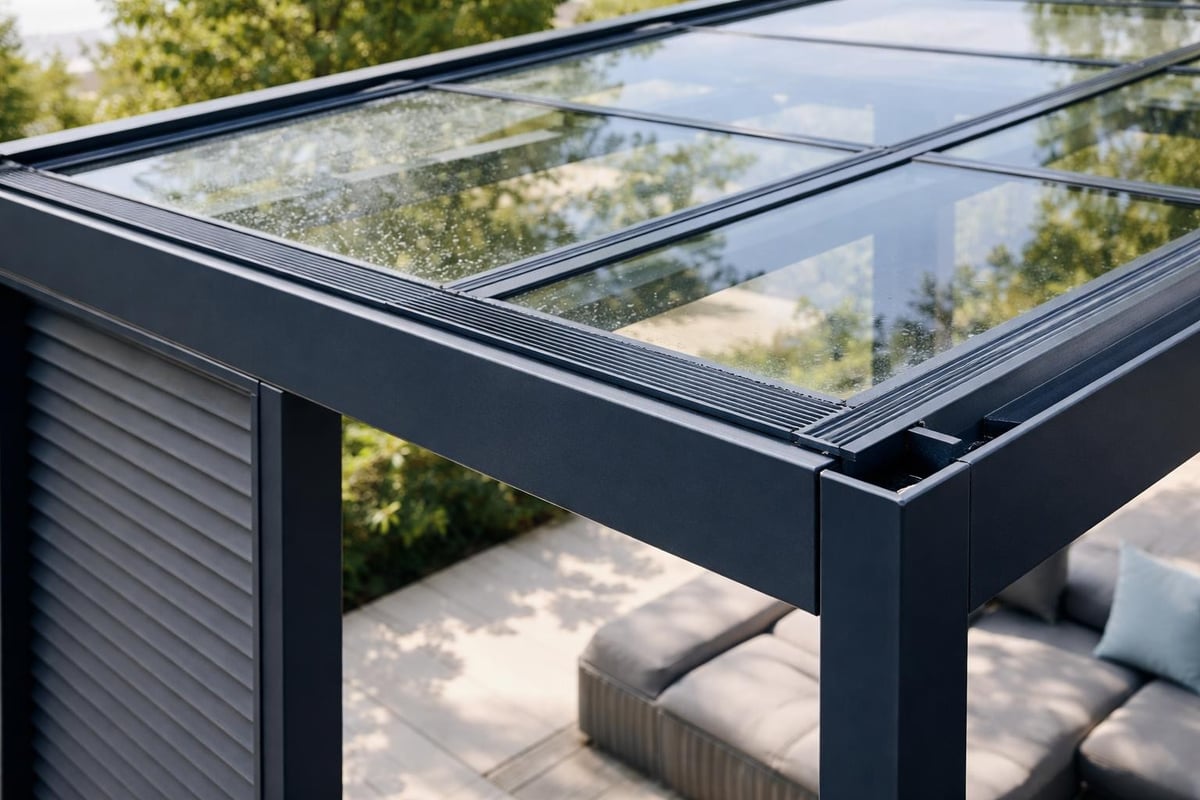
Selecting a glass pergola for a British garden requires careful consideration of climate, architecture, and intended use. Our weather patterns present unique challenges that Mediterranean or continental designs may not adequately address.
The UK's temperate maritime climate brings frequent rainfall, moderate temperatures, and variable sunshine. A glass pergola must manage these conditions effectively. High-quality systems incorporate slight roof pitches (typically 5-10 degrees) to ensure efficient water runoff, whilst reinforced glass panels withstand the occasional hailstorm or heavy snow load that British winters occasionally deliver.
Thermal performance matters significantly when extending the outdoor season. Adding sliding glass to pergolas creates a genuine four-season space, particularly when combined with outdoor heating solutions. This transforms a summer dining area into a year-round entertaining venue, protected from wind and rain whilst maintaining natural ventilation when desired.
The most successful glass pergola installations complement existing architecture rather than competing with it. Period properties in the Cotswolds, for instance, benefit from pergola designs that reference traditional proportions whilst employing contemporary materials. A Georgian manor might feature a glass pergola with classical column spacing and refined detailing, whilst a modern farmhouse conversion could embrace minimalist lines and frameless glass corners.
| Design Element | Traditional Property | Contemporary Property | Transitional Property |
|---|---|---|---|
| Frame Colour | Heritage grey, bronze | Anthracite, black | White, champagne |
| Glass Type | Lightly tinted | Clear or bronze | Clear or grey tint |
| Post Style | Decorative capitals | Slim profiles | Simple geometric |
| Integration | Sympathetic proportions | Bold contrast | Balanced harmony |
Beyond aesthetic considerations, a glass pergola delivers tangible improvements to how you use garden spaces. These structures solve multiple challenges that UK weather presents to outdoor entertaining and relaxation.
Traditional covered outdoor spaces often feel enclosed and dim. The glass pergola eliminates this compromise. Full transparency means natural light floods the space beneath, maintaining the open-air ambience whilst providing genuine shelter from rain. This is particularly valuable in the British climate, where sudden showers can interrupt outdoor gatherings.
Waterproofing solutions for pergolas have evolved considerably, with glass roofing representing the most elegant and permanent option. Unlike retractable canopies or polycarbonate panels, glass maintains clarity for decades and requires minimal maintenance beyond occasional cleaning.
A glass pergola establishes clear zones within larger gardens. Whether positioning the structure over an outdoor kitchen, dining terrace, or seating area, the transparent roof creates psychological and practical boundaries. This zoning effect makes gardens feel more designed and intentional, whilst the see-through nature prevents any sense of confinement.
For properties with luxury outdoor kitchens, a glass pergola becomes essential infrastructure. It protects premium appliances from weather exposure, enables comfortable food preparation regardless of conditions, and creates an obvious focal point for outdoor entertaining. The combination of professional cooking equipment beneath architectural glass roofing delivers restaurant-quality alfresco dining experiences.
The Tarasola Technic bioclimatic pergola exemplifies this integration beautifully, offering adjustable louvred roofing that can incorporate glass panels for ultimate flexibility. This European-designed system allows you to control light, ventilation, and weather protection precisely, creating the perfect environment for year-round outdoor cooking and entertaining.
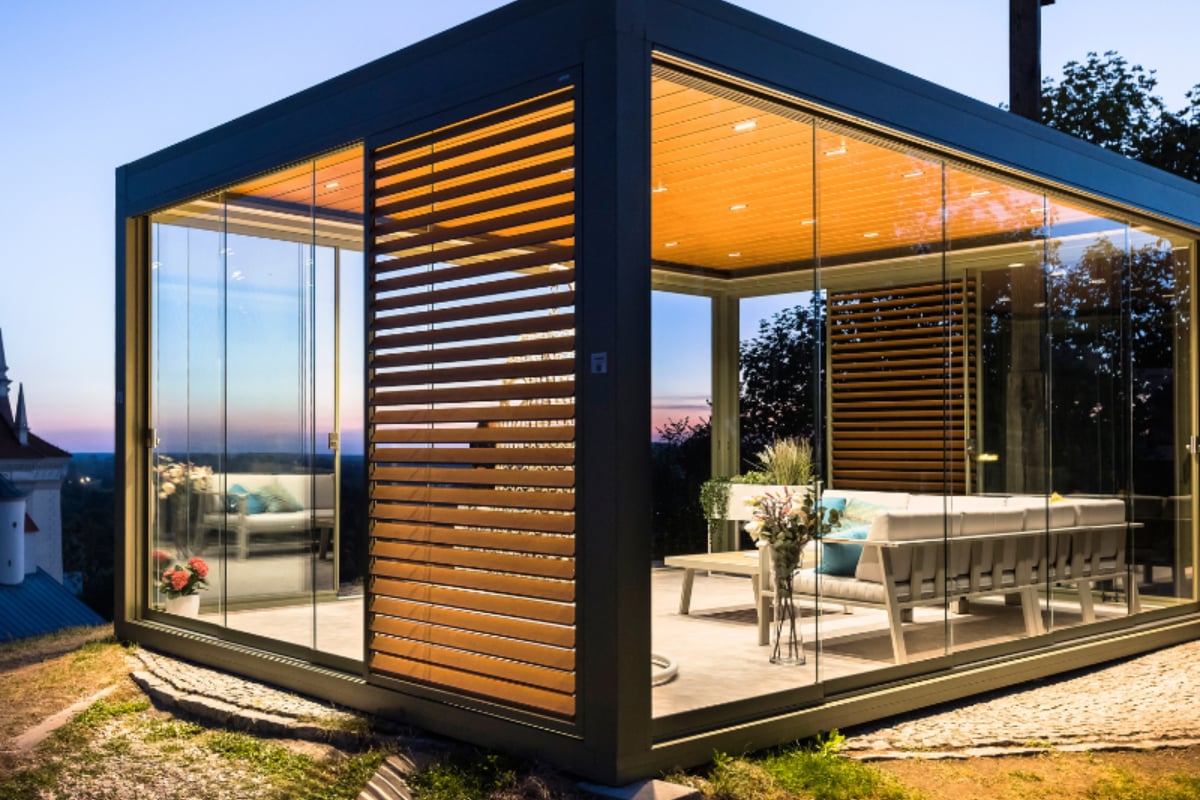
Modern glass pergola systems incorporate advanced glazing technologies. Low-emissivity coatings reduce heat gain during summer months whilst UV-filtering treatments protect furniture, fabrics, and occupants from harmful radiation. These features mean you can enjoy full transparency without the greenhouse effect that plagued earlier glass roof designs.
Not all glass pergolas offer equivalent performance or longevity. The specification details matter enormously when investing in a permanent garden structure.
Tempered safety glass represents the minimum acceptable standard for pergola roofing. This heat-treated material is approximately four times stronger than standard glass and fractures into small, relatively harmless granules rather than dangerous shards. Thickness typically ranges from 8mm for smaller spans to 12mm or even laminated constructions for larger unsupported areas.
Laminated glass provides additional benefits:
Whilst the glass captures visual attention, the supporting framework determines long-term structural integrity and maintenance requirements. Aluminium pergolas offer significant advantages over timber alternatives, particularly in wet British climates.
Aluminium Benefits:
Premium systems employ extruded aluminium profiles specifically engineered for glazing applications, with integral drainage channels, gasket grooves, and reinforcement ribs. These details separate architectural-grade installations from basic DIY kits.
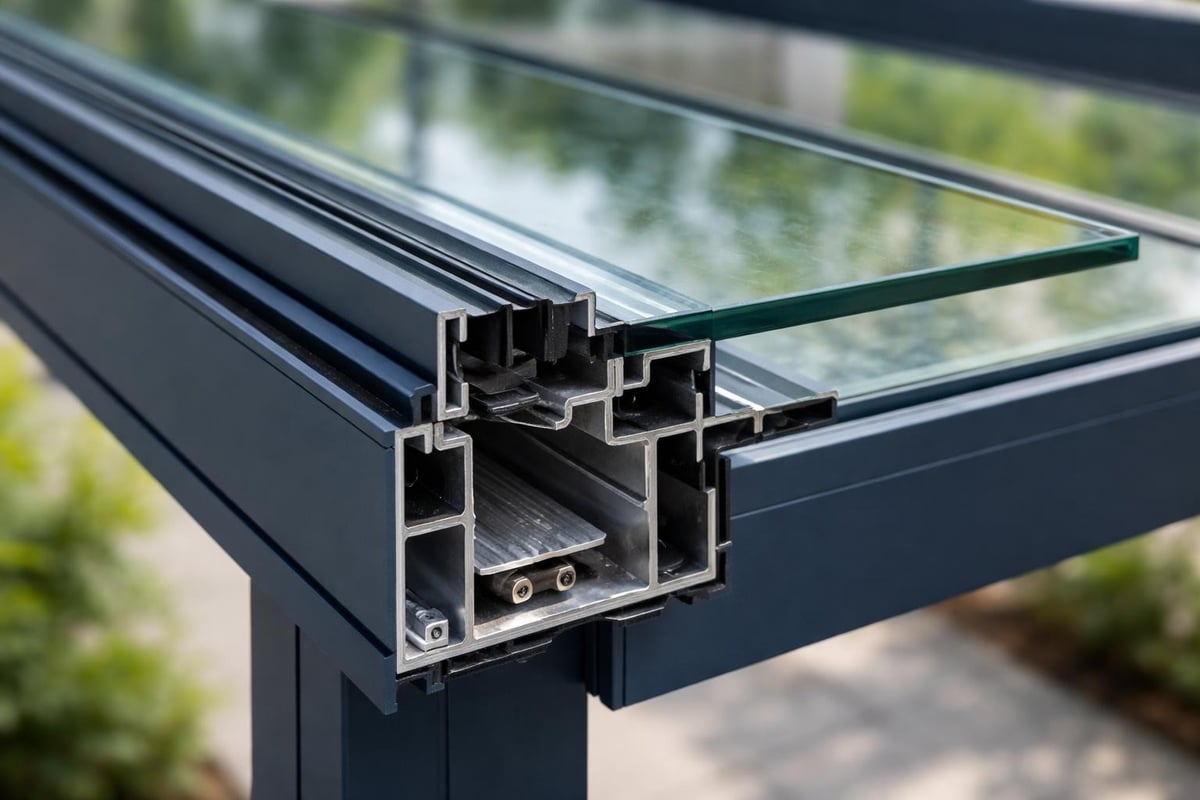
Installing a glass pergola involves more than simply erecting an attractive structure. Several practical and regulatory factors require attention during the planning phase.
In England, glass pergolas typically fall under permitted development rights, meaning formal planning permission isn't required provided certain conditions are met. The structure must not exceed 4 metres in height, cannot project beyond the principal elevation facing a highway, and total outbuilding coverage mustn't exceed 50% of the garden area.
However, listed buildings, conservation areas, and properties with restrictive covenants may face additional scrutiny. Early consultation with local planning authorities prevents costly mistakes. Even where permission isn't required, building regulations may apply if the pergola connects to the house or includes electrical installations.
A glass pergola demands proper foundations. The combination of glazing weight and wind loading requires stable, level support. Concrete pad foundations or adjustable feet anchored into existing hard landscaping provide suitable bases for most installations.
Drainage considerations extend beyond the pergola's own water management system. Consider where rainwater will discharge and ensure it won't create pooling or erosion issues. Integration with existing garden drainage or connection to soakaways may be necessary.
Whilst building versus buying pergola structures presents cost considerations, glass pergolas generally demand professional installation. The precision required for weather-tight glazing seals, structural calculations for wind and snow loading, and electrical integration for lighting or heating systems all benefit from expert execution.
Professional installers also navigate warranty requirements. Most premium glass pergola manufacturers only honour warranties when installation is completed by certified contractors, protecting your investment against premature failure or weather infiltration.
A glass pergola provides the foundation for exceptional outdoor living, but thoughtful enhancements elevate functionality further.
Transparent roofing creates unique opportunities for lighting design. LED strips integrated into framework channels deliver ambient illumination that highlights architectural lines. Recessed downlights provide task lighting for dining or food preparation, whilst feature pendant lights suspended from the glass create visual interest and practical illumination.
Smart lighting systems allow scene programming: bright task lighting during cooking, dimmed ambience for dinner, and subtle pathway lighting for late evening relaxation. The transparency means internal lighting remains visible from the garden, creating a beautiful focal point after dark.
For truly year-round usability, consider integrated heating solutions. Infrared panel heaters mounted to the framework provide efficient warmth without open flames or ventilation requirements. These electric systems deliver instant heat exactly where needed, controlled via smartphone apps or voice assistants.
Alternatively, outdoor fire features positioned adjacent to but outside the glass pergola create atmospheric warmth whilst maintaining smoke-free comfort beneath the structure. The transparent roof allows full appreciation of flickering flames whilst diners remain protected.
Fixed or sliding glass panels transform an open pergola into an enclosed garden room. Frameless sliding systems disappear when opened, maintaining the airy feel, whilst stacking neatly when weather protection becomes necessary. This flexibility proves invaluable in the unpredictable British climate, where conditions can shift dramatically within hours.
| Side Glazing Type | Advantages | Considerations |
|---|---|---|
| Sliding Panels | Space-efficient, flexible, modern aesthetic | Higher cost, track maintenance |
| Bi-fold Screens | Complete opening possible, elegant when stacked | Requires clearance space, complex mechanism |
| Fixed Glazing | Most weather-tight, thermally efficient | Permanent, reduces airflow |
| Retractable Screens | Insect protection, partial weather barrier | Limited weather protection, fabric maintenance |
Modern glass pergola systems accommodate diverse architectural visions and functional requirements. Understanding available configurations helps match structures to specific garden contexts and usage patterns.
Freestanding glass pergolas create independent garden pavilions, perfect for positioning over remote seating areas, outdoor dining zones, or hot tub surrounds. These structures make strong architectural statements and can be oriented to capture optimal sun angles or frame particular views.
Attached glass pergolas extend from the house, creating sheltered transition zones between interior and garden. This configuration suits outdoor kitchens particularly well, allowing easy access from indoor facilities whilst protecting cooking areas. Reasons to choose glass pergolas include their ability to visually expand interior spaces by creating transparent outdoor rooms that feel like extensions of living areas.
Glass pergola dimensions should respond to functional requirements and visual balance. A structure covering a dining table for eight typically measures around 4 x 3 metres minimum, whilst outdoor kitchen installations benefit from 5 x 4 metres or larger to accommodate cooking zones, preparation areas, and casual seating.
Proportion matters enormously. A glass pergola that's too small appears insignificant within a large garden, whilst an oversized structure can overwhelm intimate courtyards. The transparent nature of glass roofing mitigates bulk somewhat, allowing larger structures than solid-roofed alternatives might permit.
Premium glass pergola installations increasingly incorporate bespoke elements that reflect individual tastes and specific site requirements. Curved glass corners create flowing forms that soften geometric frameworks. Clerestory glazing sections introduce additional height and light whilst maintaining weather protection. Integrated planters or water features embedded within frameworks blur boundaries between structure and landscape.
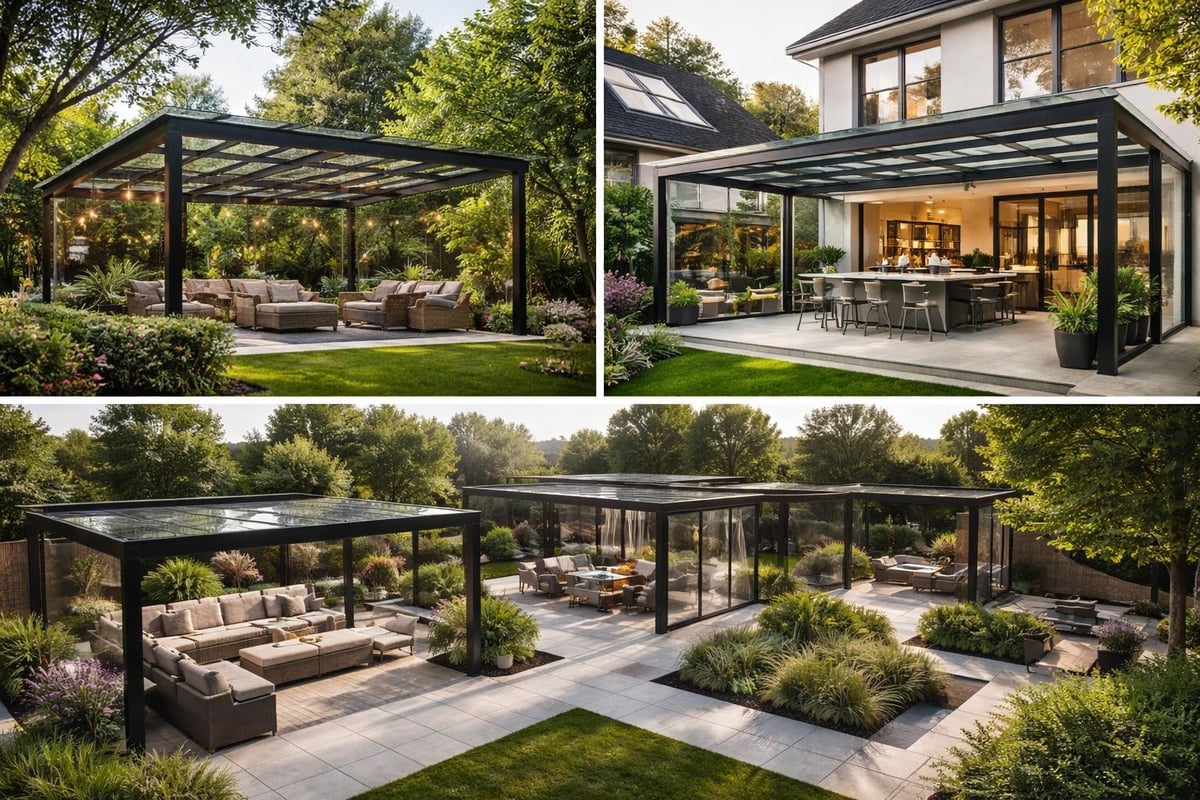
A well-specified glass pergola requires surprisingly little ongoing maintenance, but understanding care requirements ensures optimal long-term performance and appearance.
The most visible maintenance task involves keeping glass panels clean. Fortunately, many modern systems incorporate self-cleaning glass coatings that use UV light and rainwater to break down and wash away organic debris. These photocatalytic surfaces significantly reduce cleaning frequency, though occasional manual washing maintains perfect clarity.
For manual cleaning, standard glass cleaning solutions and soft cloths or squeegees suffice. Avoid abrasive materials that might scratch coatings or glass surfaces. Access considerations matter, particularly for larger installations where roof panels may require extension poles or professional cleaning services for safe completion.
Annual inspection of framework components identifies potential issues before they escalate:
Aluminium frameworks require minimal active maintenance but benefit from annual washing with mild detergent to remove atmospheric pollutants and organic matter.
Winter brings specific challenges. Heavy snow accumulation rarely causes structural concerns with properly engineered systems, but clearing excessive loads reduces stress and accelerates melting. Spring pollen can temporarily cloud glass surfaces, particularly during peak season in May and June. Summer algae growth occasionally affects shaded edges where moisture lingers. Autumn leaf accumulation in drainage channels requires clearing to prevent blockages.
A glass pergola represents a significant investment in your property and outdoor lifestyle. Understanding costs and value implications helps set appropriate expectations and budget allocations.
Glass pergola pricing varies considerably based on size, specification, and installation complexity. Entry-level systems start around £8,000-£12,000 for modest freestanding structures, whilst premium architectural installations with custom features, integrated lighting, heating, and automated systems can exceed £40,000-£60,000.
Key cost drivers include:
Quality outdoor living infrastructure increasingly influences property valuations. Estate agents report that well-executed glass pergolas contribute positively to kerb appeal and marketability, particularly when integrated with premium outdoor kitchens or entertaining spaces. The year-round usability aspect proves particularly attractive to buyers seeking to maximise their property's lifestyle potential.
Glass roof pergola applications demonstrate how these structures function as genuine outdoor rooms rather than seasonal accessories, positioning them as valuable property features rather than mere garden ornaments.
Beyond pure financial returns, glass pergolas deliver lifestyle value that's difficult to quantify. The ability to entertain outdoors comfortably throughout the year, protect premium outdoor cooking equipment, and create stunning visual focal points within gardens provides daily satisfaction that transcends monetary considerations.
For hospitality venues or properties targeting the luxury rental market, glass pergolas function as revenue-generating assets. Protected outdoor dining capacity extends seasonal operation, commands premium rates, and differentiates properties in competitive markets.
A glass pergola rarely exists in isolation within well-designed outdoor spaces. Thoughtful integration with other elements creates cohesive, highly functional garden environments.
The synergy between glass pergolas and luxury outdoor kitchens proves particularly compelling. Weather protection enables reliable use of premium appliances like built-in grills, pizza ovens, and refrigeration units. The transparent roof maintains the alfresco cooking experience whilst protecting chefs and equipment from rain.
When planning this integration, consider workflow efficiency. Position preparation zones, cooking equipment, and serving areas logically beneath the protected space. Adequate ventilation remains important even with open sides, particularly when using charcoal or wood-fired equipment. Some designs incorporate elevated sections or louvred panels specifically to manage cooking smoke whilst maintaining weather protection.
Metal outdoor kitchen cabinets pair beautifully with glass pergola structures, as both emphasise durability and weather resistance. The clean lines of stainless steel or powder-coated aluminium cabinetry complement the architectural precision of engineered glass roofing.
Furniture selection for glass pergola spaces balances weather resistance with aesthetic refinement. All-weather wicker, powder-coated aluminium, and marine-grade stainless steel provide durability, whilst cushions and textiles in solution-dyed acrylics resist fading and moisture damage.
The protected nature of the space allows slightly more delicate furnishings than fully exposed areas might accommodate. Wooden furniture receives protection from direct rainfall, though seasonal storage or protective covers remain advisable for valuable pieces.
The most successful glass pergola installations feel integrated within their garden settings rather than imposed upon them. Surrounding planting softens hard edges, with climbing plants on adjacent structures (though not the glass pergola itself) creating vertical interest. Pathway materials should transition smoothly between garden and pergola flooring, whether that's matching stone paving, complementary timber decking, or coordinated porcelain tiles.
The glass pergola category continues evolving as materials technology advances and design preferences shift. Several emerging trends are shaping the next generation of these structures.
Home automation increasingly extends to outdoor spaces. Glass pergolas with integrated sensors can automatically adjust louvred sections based on temperature, trigger heating systems when evening temperatures drop, or activate lighting at sunset. Voice control and smartphone apps place comprehensive management in users' hands, creating outdoor environments that respond intuitively to needs and preferences.
Environmental consciousness influences material selection. Recycled aluminium frameworks, responsibly sourced timber accents, and glass with high recycled content appeal to sustainability-focused buyers. Solar panels integrated into glass roofing can generate electricity whilst maintaining transparency, offsetting the energy requirements of heating, lighting, and automation systems.
The integration of living elements within glass pergola structures represents an emerging frontier. Suspended planter systems, living walls on solid panels, and integrated water features create connections to nature whilst maintaining the protection and architectural precision these structures provide.
| Emerging Feature | Benefit | Availability in 2026 |
|---|---|---|
| Electrochromic glass | Adjustable tint without moving parts | Specialist installations |
| Integrated PV glass | Electricity generation plus shade | Limited premium systems |
| Sound systems | Invisible speakers within framework | Widely available |
| Radiant heating | Embedded heating elements in glass | Developing technology |
| Air quality monitoring | Automated ventilation control | Smart system integration |
A glass pergola transforms outdoor spaces into year-round luxury living destinations, combining architectural elegance with practical weather protection that extends the British outdoor season dramatically. These transparent structures create defined garden rooms that maintain visual connections to nature whilst delivering genuine shelter and comfort.
The Cotswold Cooking Company brings consultative expertise to outdoor living design, helping discerning homeowners specify glass pergolas that integrate seamlessly with luxury outdoor kitchens and entertaining spaces. From initial concept through installation and beyond, our family-run consultancy delivers the craftsmanship and attention to detail that transforms gardens into refined culinary destinations worthy of the Cotswolds heritage.

Leave a comment