


Creating an exceptional outdoor wellness retreat requires more than simply installing a hot tub in your garden. A thoughtfully designed hot tub pergola transforms your spa area into an architectural destination, offering privacy, shelter, and year-round usability whilst elevating your property's aesthetic appeal. For discerning homeowners seeking to extend their living space beyond traditional boundaries, the combination of premium spa equipment and a carefully specified pergola structure represents the pinnacle of refined outdoor living.
The integration of pergolas with outdoor spa areas has evolved significantly beyond basic shelter provision. Modern bioclimatic pergola systems now offer intelligent climate control, transforming what was once a seasonal amenity into a twelve-month wellness destination. The benefits extend across multiple dimensions, from practical weather protection to substantial property value enhancement.
A dedicated hot tub pergola creates distinct spatial definition within your garden landscape. Rather than leaving your spa exposed as an isolated feature, the pergola framework establishes visual hierarchy and architectural intent. This structured approach aligns with current garden pergola trends that emphasise resort-style design and architectural intervention.
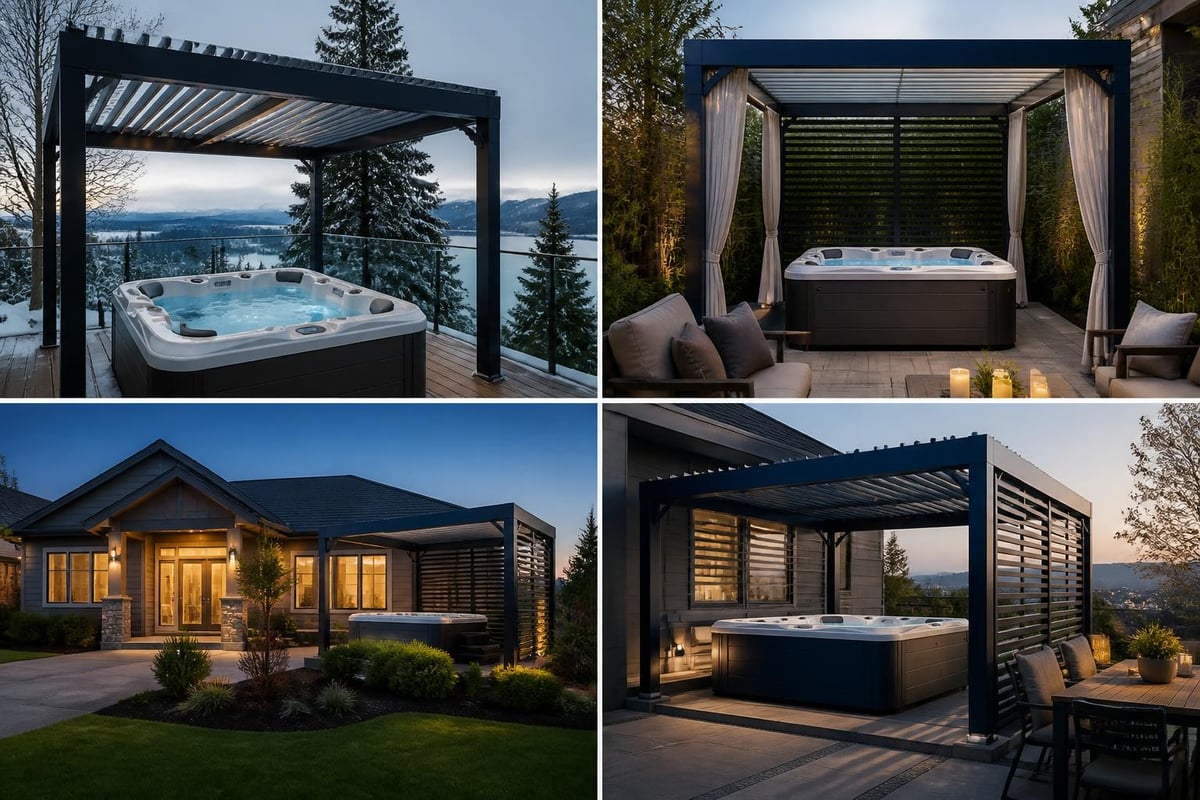
Privacy ranks among the primary considerations for any hot tub installation. A well-designed pergola framework supports multiple privacy solutions without creating a claustrophobic enclosure. Vertical slat systems, climbing plants on integrated trellis panels, and retractable fabric screens can all be incorporated within the pergola structure.
The atmospheric transformation achieved through pergola integration extends beyond visual screening. Strategic lighting placement within the pergola beams creates ambient illumination that enhances evening use whilst maintaining discretion. Integrated speakers, heating elements, and even misting systems can be concealed within the pergola architecture, maintaining clean lines whilst delivering resort-level amenity.
| Privacy Solution | Visual Impact | Maintenance | Flexibility | Cost Factor |
|---|---|---|---|---|
| Vertical timber slats | High architectural appeal | Medium - annual treatment | Fixed positioning | Medium |
| Climbing plants with trellis | Natural, softens structure | High - seasonal pruning | Gradual coverage | Low to Medium |
| Retractable fabric screens | Contemporary aesthetic | Low - occasional cleaning | Fully adjustable | High |
| Tempered glass panels | Modern, maintains views | Medium - regular cleaning | Fixed with optional frosting | Very High |
The structural requirements for a hot tub pergola differ substantially from decorative garden pergolas. Understanding these technical parameters ensures safety, longevity, and regulatory compliance whilst achieving your aesthetic vision. The planning process should commence with site analysis and technical consultation rather than stylistic selection.
Hot tub installations demand substantial foundation work regardless of pergola integration. However, the combined weight of water-filled spa equipment, users, and pergola structure necessitates comprehensive ground assessment. Clay soils prevalent throughout the Cotswolds require particular attention due to seasonal movement characteristics.
Your structural engineer should calculate combined loading including:
The foundation design typically incorporates either a reinforced concrete slab or individual post footings with interconnecting ground beams. The choice depends on site conditions, budget, and whether the pergola will be freestanding or attached to existing structures. For comprehensive guidance on placement and structural planning, resources such as this guide on hot tub pergola installation provide valuable technical insights.
Appropriate vertical dimensions prove critical for both user comfort and equipment longevity. Insufficient height creates an oppressive environment, whilst excessive clearance undermines the sense of enclosure that makes pergola integration appealing. For standard hot tubs with seated users, minimum internal clearance of 2.4 metres provides adequate headroom without feeling cavernous.
Ventilation requirements demand particular attention when creating covered spa areas. Hot tubs generate substantial moisture through surface evaporation and user activity. Without adequate air circulation, this moisture accumulates on pergola surfaces, accelerating material degradation and creating uncomfortable condensation.
Bioclimatic pergola systems address this challenge through adjustable louvre roofs that modulate ventilation whilst maintaining weather protection. The ability to open louvres partially or fully allows precise environmental control based on ambient temperature, humidity levels, and user preferences. This intelligent approach to climate management represents a significant advance over fixed-roof structures.
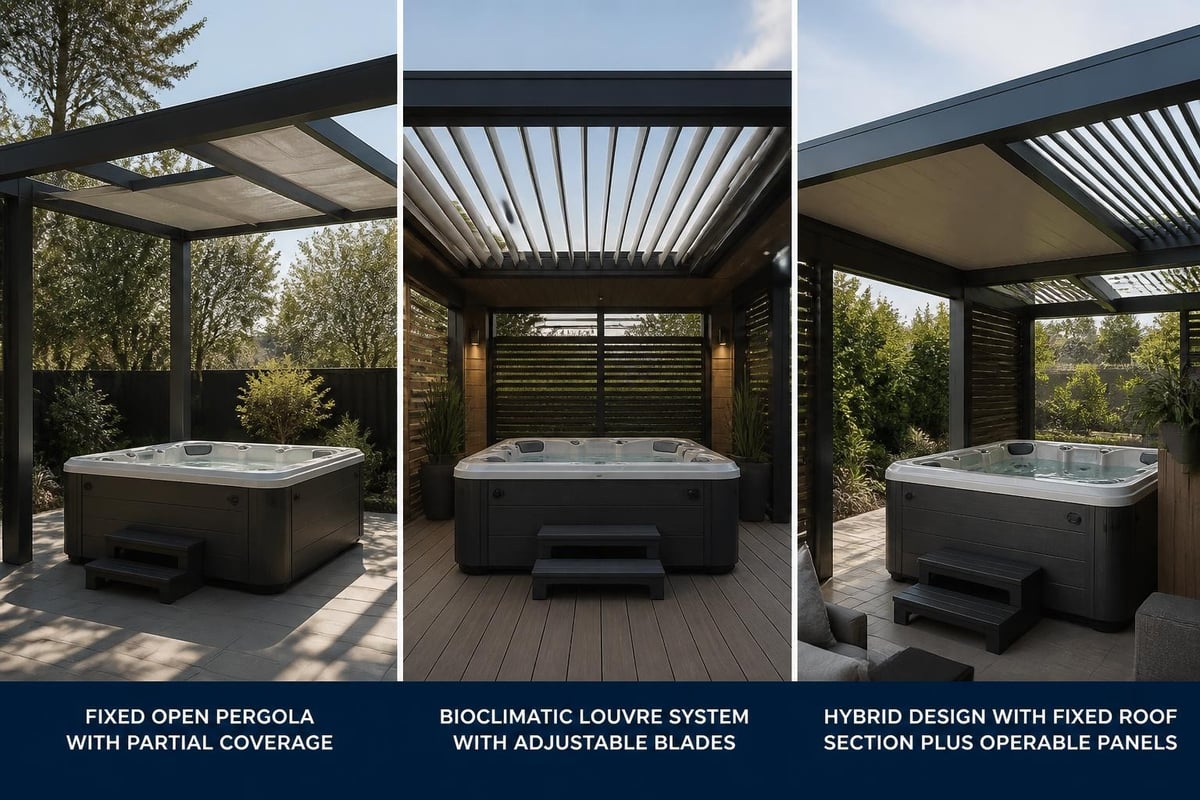
Material choices fundamentally influence both the longevity and visual character of your hot tub pergola. The humid, chemically active environment surrounding spa equipment accelerates degradation of inappropriate materials, making specification decisions critical to long-term satisfaction.
Timber remains popular for hot tub pergola construction due to its natural aesthetic warmth and structural versatility. However, not all timber species perform equally in high-moisture environments. Western Red Cedar, European Oak, and pressure-treated softwoods each offer distinct characteristics suitable for different applications and budgets.
Western Red Cedar contains natural preservative oils that resist moisture and insect damage without chemical treatment. Its dimensional stability and attractive grain make it ideal for exposed pergola elements. However, it commands premium pricing and requires annual cleaning plus periodic sealing to maintain colour consistency.
European Oak delivers exceptional structural strength and longevity, particularly when air-dried to appropriate moisture content. Its dense grain structure resists moisture penetration better than softwoods, though it requires more substantial framework due to weight considerations. Oak develops an attractive silver-grey patina when left untreated, appealing to those seeking weathered natural aesthetics.
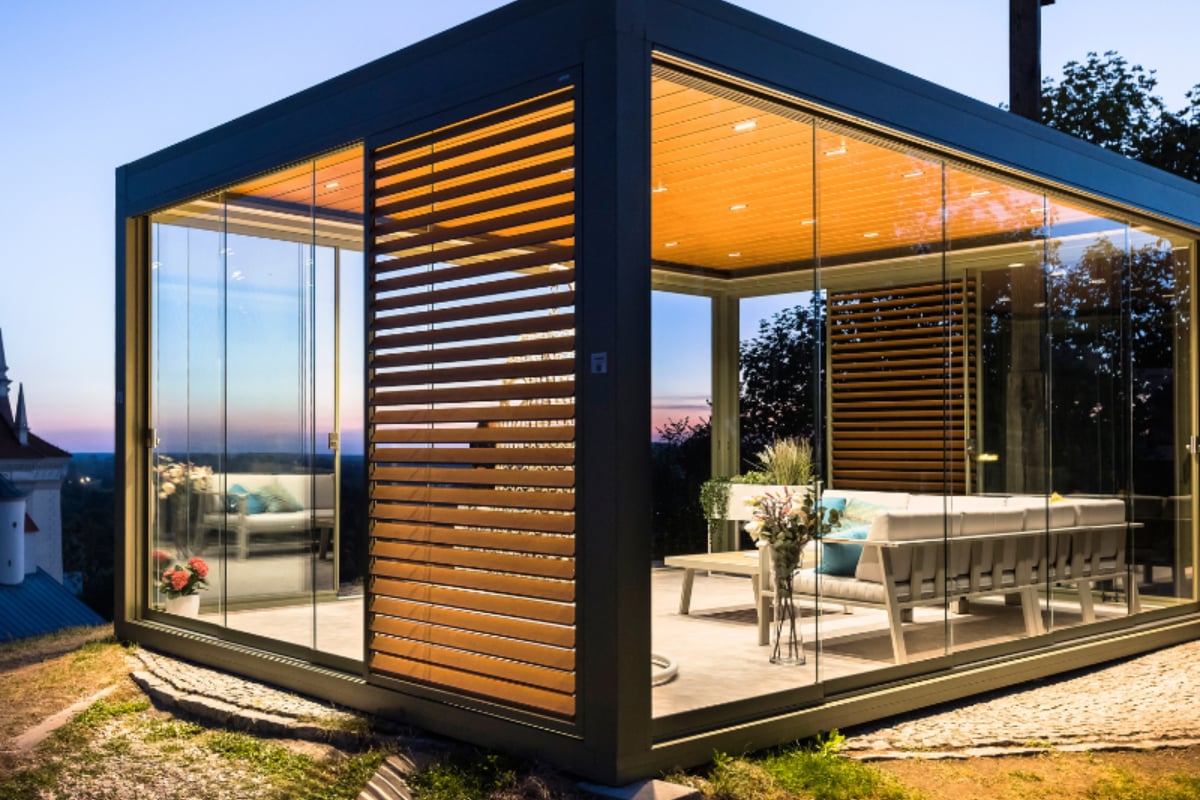
Metal pergola systems offer maintenance advantages particularly relevant to hot tub installations. Powder-coated aluminium resists corrosion from chlorine-laden moisture whilst maintaining structural integrity across temperature variations. Modern aluminium profiles achieve remarkably slender sightlines without compromising strength, appealing to contemporary design preferences.
Premium architectural pergola systems often employ aluminium frames with integrated technology platforms. These engineered solutions accommodate motorised louvre systems, LED lighting arrays, heating elements, and remote control functionality. The Tarsaola Technic bioclimatic pergola exemplifies this approach, combining European manufacturing precision with sophisticated climate control capability specifically designed for year-round outdoor living.
For homeowners prioritising minimal maintenance alongside architectural refinement, these engineered pergola solutions deliver exceptional long-term value despite higher initial investment. The integration of motorised weather-responsive systems transforms the pergola from passive structure to active climate management tool.
Steel frameworks suit those seeking industrial aesthetics or requiring particularly robust structures for large-span pergolas. Hot-dip galvanisation followed by powder coating provides excellent corrosion resistance, though thermal expansion requires careful detailing at connection points.
Visual harmony between hot tub pergola and existing architecture determines whether the installation appears considered or arbitrary. Successful integration requires analysing your property's architectural language and translating those characteristics into outdoor structures that feel intentional rather than appended.
Modern architectural styles favour clean lines, restrained material palettes, and functional honesty. Contemporary hot tub pergolas embrace these principles through slender posts, flush detailing, and integrated rather than applied features. Aluminium louvre systems align naturally with this aesthetic, their engineered precision complementing modernist sensibilities.
Colour selection typically references the main dwelling's facade. Anthracite grey, deep charcoal, and pure white dominate contemporary schemes, creating strong geometric definition against landscaping. Integrated LED strips concealed within louvre channels provide linear lighting effects that emphasise architectural geometry whilst delivering practical illumination.
Material transitions should be deliberate and minimal. Where contemporary pergolas meet traditional properties, the contrast becomes a design statement rather than apologetic compromise. This confident approach respects both architectural languages without attempting pastiche.
Period properties throughout the Cotswolds demand sensitivity to architectural heritage when introducing outdoor structures. Timber pergolas with classical proportions and traditional joinery details maintain visual continuity with Georgian, Victorian, or Edwardian architecture.
Design elements that support heritage integration include:
The objective isn't historical replication but rather respectful dialogue between old and new. A well-proportioned traditional pergola enhances rather than detracts from period architecture by demonstrating design continuity across eras.
Understanding regulatory requirements prevents costly mistakes and ensures compliant installations. Hot tub pergola projects may require planning permission, building regulation approval, or both depending on structure size, location, and property constraints.
Under current permitted development rights, pergolas generally qualify as outbuildings exempt from planning permission if they meet specific criteria. The structure must not exceed 2.5 metres height if within 2 metres of a boundary, and total outbuilding footprint including other garden structures cannot exceed 50% of garden area.
However, these general provisions include numerous exceptions. Listed buildings, conservation areas, Article 4 directions, and properties with restricted permitted development rights all face tighter controls. Consultation with your local planning authority provides definitive guidance for your specific circumstances.
Building Regulations typically apply when pergola structures include substantial foundations, electrical installations, or drainage connections. Hot tub installations almost invariably trigger electrical safety requirements under Part P, necessitating certified electrician involvement and appropriate certification.
Structural calculations may be required for larger pergolas, particularly where they attach to existing buildings. This professional input ensures safe design whilst providing documentation valuable for insurance and future property transactions. For detailed planning considerations specific to hot tub pergola installations, this comprehensive guide offers UK-focused regulatory context.
| Regulatory Aspect | Typical Requirement | Professional Input | Documentation |
|---|---|---|---|
| Planning permission | May apply - site specific | Planning consultant | Drawings, application forms |
| Structural design | Calculations for large/attached structures | Structural engineer | Calculation package, drawings |
| Electrical installation | Part P compliance mandatory | Certified electrician | Installation certificate |
| Drainage connections | Building control approval | Plumber, building control | Completion certificate |
Transforming your hot tub pergola into a year-round destination requires thoughtful integration of environmental control systems. Modern technology enables sophisticated climate management whilst maintaining architectural refinement through concealed installation.
Effective lighting balances practical visibility with atmospheric ambience. Layered lighting schemes incorporate multiple sources at varying intensities to support different usage scenarios from therapeutic evening soaks to social gatherings.
Task lighting ensures safe movement around the hot tub perimeter. Low-level recessed floor lights mark step changes and path edges without creating glare. Waterproof LED strip lighting concealed within pergola beams provides indirect illumination that washes ceiling surfaces whilst avoiding direct eye contact.
Accent lighting highlights architectural features and creates visual interest. Uplighting posts from concealed ground positions emphasises vertical elements and creates dramatic shadow patterns. Pendant features suspended from pergola beams can introduce decorative focal points, though these must be specified for exterior use and positioned away from water contact zones.
Controllability proves essential for lighting versatility. Smart home integration allows scene programming where different lighting configurations activate based on time, occupancy, or user preference. Dimming capability across all circuits supports gradual transition from bright functional light to subtle atmospheric glow.
UK climate realities mean unheated outdoor spaces remain underutilised for significant portions of the year. Strategic heating provision extends usable season substantially whilst supporting rapid ambient temperature recovery when pergola louvres open for ventilation.
Infrared heaters deliver efficient radiant warmth directly to users rather than inefficiently heating air volume. Ceiling-mounted units integrate discreetly into pergola architecture whilst providing controllable heat zones. Quality units with aluminium housings resist moisture better than steel equivalents, important given the humid pergola environment.
Gas-fired patio heaters offer higher heat output for larger pergola areas, though they require ventilation consideration and periodic bottle replacement. Electric infrared represents the more convenient solution for most residential installations given silent operation, precise control, and minimal maintenance.
Heat integration planning should occur during pergola design phases to ensure adequate electrical capacity, appropriate mounting locations, and safe clearances from combustible materials. Retrofitting heating often compromises visual integration through visible cable runs and suboptimal positioning.
The usable area within your hot tub pergola extends beyond the spa footprint itself. Thoughtful spatial planning incorporates changing areas, seating zones, and storage without creating cramped conditions or awkward circulation patterns.
Successful hot tub pergola layouts designate distinct functional zones that support the user journey from arrival through bathing to departure. Entry zones benefit from storage benches where towels, robes, and accessories remain protected yet accessible. Seating areas positioned away from splash zones allow companions to socialise comfortably whilst others use the spa.
Minimum clearance around hot tub perimeter should measure 800mm for comfortable movement and equipment access. Service access to pump and control systems requires consideration during layout planning to prevent later furniture rearrangement when maintenance becomes necessary.
For those seeking to create comprehensive outdoor living environments beyond spa facilities, exploring luxury outdoor kitchen design options demonstrates how multiple outdoor amenities can integrate cohesively within unified architectural frameworks.
Furniture specified for hot tub pergola use must withstand moisture, temperature variation, and chlorine exposure. Teak, aluminium, and all-weather wicker represent the most durable options for this demanding environment, each offering distinct aesthetic character.
Teak's natural oils provide inherent water resistance whilst developing attractive patina over time. Substantial teak benches and loungers convey quality whilst requiring minimal maintenance beyond annual cleaning. However, weight and cost may prove prohibitive for some installations.
Powder-coated aluminium furniture delivers contemporary aesthetics with exceptional durability. Drainage holes in seat surfaces prevent water accumulation, important given the splashing and humidity inherent to hot tub environments. Cushions specified for exterior use with quick-draining foam cores and solution-dyed fabrics maintain appearance despite moisture exposure.
The relationship between hard pergola structure and soft landscape planting determines whether your hot tub area feels architecturally stark or naturally integrated. Strategic planting softens structural geometry whilst providing privacy screening, seasonal interest, and sensory enhancement.
Pergola posts and beams provide ideal support for climbing plants that introduce vertical greenery. Species selection should prioritise non-invasive varieties that won't damage pergola finishes through aggressive aerial roots or excessive weight when mature.
Evergreen climbers such as Star Jasmine (Trachelospermum jasminoides) deliver year-round screening with the bonus of intensely fragrant white flowers during summer months. The glossy foliage provides elegant textural contrast against timber or aluminium pergola frames whilst tolerating the humid microclimate surrounding hot tubs.
For deciduous interest, Clematis varieties offer spectacular flowering with relatively restrained growth habits. Large-flowered hybrids create dramatic visual impact when trained along pergola beams, though they require annual pruning to maintain shape and promote flowering.
Consideration should extend to plant maintenance access. Pergolas with integrated louvre systems require careful plant positioning to avoid interference with mechanical operation. Fixed-structure pergolas allow more generous planting without operational constraints.
Peripheral planting beds surrounding your hot tub pergola establish visual context and soften the transition between paving and lawn areas. Architectural foliage plants create year-round structure whilst requiring less maintenance than flower-focused schemes.
Ornamental grasses such as Miscanthus varieties provide elegant movement and seasonal transformation from fresh spring growth through winter architectural skeletons. Their tolerance of reflected heat from paving makes them ideal pergola companions. Evergreen structural plants including Fatsia japonica and Phormium varieties deliver bold foliage statements that maintain presence throughout winter.
Aromatic plants positioned near seating areas enhance the sensory experience. Lavender, rosemary, and scented geraniums release fragrance when brushed whilst thriving in the warm microclimate adjacent to heated spa areas. Evening-fragrant plants such as Nicotiana add olfactory dimension to twilight bathing sessions.
Preserving your hot tub pergola investment requires systematic maintenance addressing both structural and mechanical elements. Establishing annual maintenance schedules prevents minor issues escalating into costly repairs whilst maintaining optimal appearance and functionality.
Timber structures demand regular inspection and treatment to combat moisture, UV degradation, and biological growth. Annual cleaning removes surface contamination before it penetrates timber grain, where removal becomes significantly more challenging.
Soft washing with appropriate timber cleaners removes algae, mildew, and atmospheric grime without damaging wood fibres. High-pressure washing should be avoided as it can raise grain and accelerate moisture ingress. Following cleaning, allowing timber to dry thoroughly before applying protective treatments ensures proper absorption.
Treatment frequency depends on timber species, previous finishes, and exposure conditions. Western Red Cedar may require annual treatment whilst oak can extend to biennial cycles given its natural durability. UV-resistant stains and oils maintain timber colour whilst providing water repellency.
Powder-coated aluminium pergolas require minimal routine maintenance beyond periodic washing to remove atmospheric deposits. Automotive wash products designed for modern paint finishes prove suitable for aluminium pergola frames, maintaining finish integrity without abrasion.
Mechanical louvre systems benefit from quarterly inspection of operating mechanisms. Lubricating pivot points and clearing drainage channels prevents premature wear whilst ensuring responsive operation. Motor-driven systems should undergo annual professional service to verify electrical connections, sensor calibration, and emergency operation functionality.
Weather seals around louvre blades require periodic inspection for compression set and splitting. Replacement seals maintain weathertightness and prevent water ingress that could damage internal mechanisms. Manufacturer-specific maintenance schedules provide detailed guidance for particular pergola systems.
Budget planning for hot tub pergola projects requires understanding both initial capital outlay and ongoing operational costs. Project costs vary dramatically based on size, material specification, technological integration, and installation complexity.
Entry-level hot tub pergola installations using pressure-treated softwood and basic construction techniques typically commence around £3,000-5,000 for modest freestanding structures. Mid-range projects incorporating quality hardwoods or aluminium frames with integrated lighting and heating systems range from £8,000-15,000.
Premium bioclimatic pergola systems with motorised louvres, integrated technology platforms, and bespoke sizing represent substantial investments typically exceeding £20,000. These sophisticated solutions deliver exceptional functionality and long-term durability that justify higher initial cost through reduced maintenance and enhanced usability.
Cost drivers include:
Well-executed outdoor living improvements typically return 50-80% of investment cost when properties sell. Premium pergola installations in sought-after locations often achieve complete cost recovery or even enhancement beyond pure installation cost.
The value proposition extends beyond mere financial return. Enhanced lifestyle quality, extended usable outdoor season, and refined aesthetic environment deliver immediate benefits to current occupants regardless of future resale considerations. For design-conscious buyers in premium property markets, exceptional outdoor living facilities increasingly influence purchase decisions.
The integration of spa facilities with outdoor cooking and dining areas creates comprehensive outdoor living destinations that rival interior spaces for comfort and functionality. Coordinated design ensures visual cohesion whilst practical planning prevents conflicts between different usage patterns.
Hot tub and outdoor kitchen zones require sufficient separation to prevent cooking vapours, smoke, and food preparation activities from interfering with spa relaxation. Minimum separation of 3-4 metres provides functional independence whilst maintaining visual connection between zones.
Shared pergola structures can span both areas provided appropriate zoning strategies delineate different functions. Changes in ceiling height, louvre configuration, or lighting treatment signal functional transitions whilst maintaining architectural unity. For those exploring integrated outdoor living solutions, examining innovative pergola design concepts provides valuable inspiration.
Visual coherence across outdoor living zones requires consistent material palettes and architectural language. Pergola framework materials, cladding selections, and finishing details should reference each other even when zones serve different functions.
Colour coordination proves particularly important. Matching or complementary powder coat finishes on aluminium structures maintain visual flow between hot tub pergola and outdoor kitchen canopy. Timber structures benefit from identical species selection and finish treatments across different zones.
Lighting strategies should employ compatible fixture styles and colour temperatures throughout outdoor living areas. Unified control systems allow coordinated scene programming where lighting adjusts consistently across multiple zones based on time or activity.
Creating a refined hot tub pergola transforms outdoor spa ownership from seasonal indulgence to year-round wellness destination, combining architectural distinction with practical environmental control. Whether you favour contemporary bioclimatic systems or heritage-inspired traditional designs, the key lies in considered material specification, appropriate spatial planning, and integrated technology that enhances rather than dominates the experience. The Cotswold Cooking Company brings decades of expertise in curating premium outdoor living solutions, from architectural pergolas to complete outdoor kitchen installations, helping discerning clients throughout the UK realise exceptional outdoor environments tailored to their specific requirements. Explore how our consultative approach and hand-selected premium brands can transform your outdoor space at Cotswold Cooking Company.

Comments
Leave a comment