


The kamado outdoor kitchen represents a sophisticated fusion of ancient cooking tradition and contemporary outdoor living design. These ceramic-based cooking stations have evolved from simple standalone grills into fully integrated culinary hubs, offering discerning homeowners the ability to roast, smoke, grill, and bake within meticulously crafted outdoor environments. As more UK homeowners embrace year-round alfresco entertaining, the kamado outdoor kitchen has emerged as a centrepiece that combines versatility, thermal efficiency, and architectural presence.
A kamado outdoor kitchen centres around the distinctive egg-shaped ceramic cooker, integrated within a purpose-built outdoor cooking environment. Unlike traditional built-in grills, the kamado's unique design requires specific spatial and structural considerations.
The ceramic construction provides exceptional heat retention, allowing temperatures from 100°C for slow smoking to over 400°C for pizza baking. This versatility makes the kamado outdoor kitchen particularly valuable for homeowners seeking a single cooking station capable of replacing multiple appliances.
Successful kamado outdoor kitchen design balances accessibility, workflow, and aesthetic integration. The ceramic cooker itself weighs between 60kg and 150kg depending on size, necessitating robust supporting structures.
Essential design elements include:
The kamado outdoor kitchen typically follows a galley, L-shaped, or U-shaped configuration, mirroring indoor kitchen principles whilst accommodating the unique requirements of ceramic cooking equipment. Compact L-shaped designs work particularly well in courtyard gardens common throughout Oxfordshire and the Cotswolds.
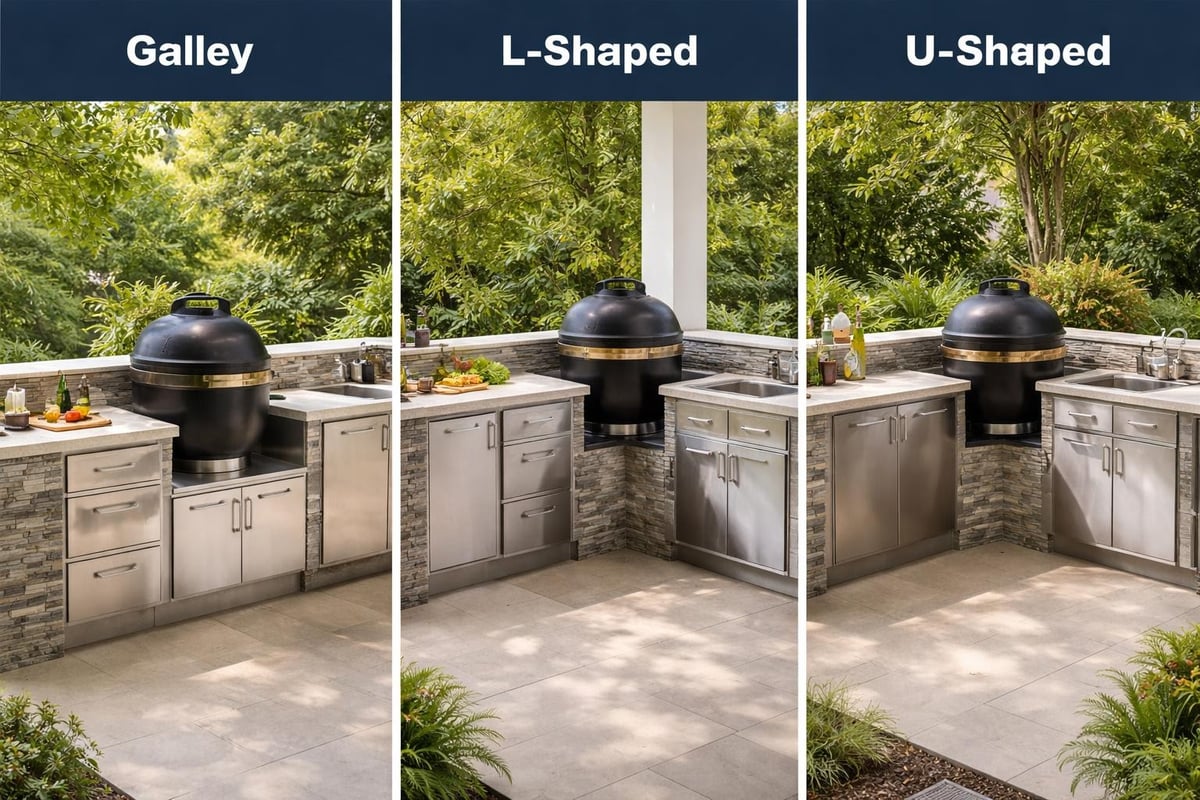
| Layout Type | Footprint | Ideal For | Workflow Efficiency |
|---|---|---|---|
| Galley | 2.4m × 0.9m | Compact gardens | Excellent for single cook |
| L-Shaped | 3.0m × 2.4m | Corner installations | Optimal prep-to-cook flow |
| U-Shaped | 3.6m × 3.0m | Dedicated entertaining | Multiple cook zones |
| Island | 2.4m × 1.5m | Central placement | 360° access |
The kamado outdoor kitchen demands materials that withstand both British weather conditions and intense radiant heat. Stone, brick, and engineered composites dominate specification choices for luxury installations.
Natural stone remains the preferred choice for discerning clients. Granite provides exceptional durability with heat resistance to 480°C, whilst limestone and sandstone offer softer, heritage-appropriate aesthetics aligned with Cotswold architectural traditions.
Porcelain slabs have gained prominence in contemporary kamado outdoor kitchen projects. These engineered surfaces offer consistent colouring, minimal maintenance, and resistance to thermal shock. Thickness specifications typically range from 20mm for standard applications to 30mm for cantilevered or heavily loaded sections.
Material performance comparison:
The supporting cabinetry framework utilises marine-grade stainless steel, powder-coated aluminium, or sustainably sourced hardwood with appropriate weather protection. Each material brings distinct advantages to the kamado outdoor kitchen environment.
Professional-grade outdoor cooking spaces segment into distinct operational areas, enhancing both efficiency and user experience. The kamado outdoor kitchen benefits particularly from this zoning approach given the unique operational requirements of ceramic cooking.
Kamado cooking relies on precise airflow management rather than gas valves or electric controls. Your outdoor kitchen design must accommodate this operational difference through thoughtful storage and access planning.
Dedicated fuel storage should include:
Understanding proper charcoal management techniques proves essential for maintaining cooking consistency and preventing flare-ups that could damage surrounding materials in your kamado outdoor kitchen.
The workflow within a kamado outdoor kitchen differs significantly from gas-fuelled alternatives. Ceramic cookers require time to reach temperature, making prep zone efficiency crucial.
Minimum recommended prep surface measures 1200mm × 600mm, positioned within comfortable reach of the kamado. This allows ingredient staging, plating, and tool access without crossing traffic patterns. Many luxury installations incorporate separate sink stations positioned 900mm to 1500mm from the primary cooking zone.
For those seeking to complement their ceramic cooker with additional cooking methods, exploring the broader outdoor cooking collection reveals complementary equipment that integrates seamlessly within comprehensive outdoor kitchen designs.
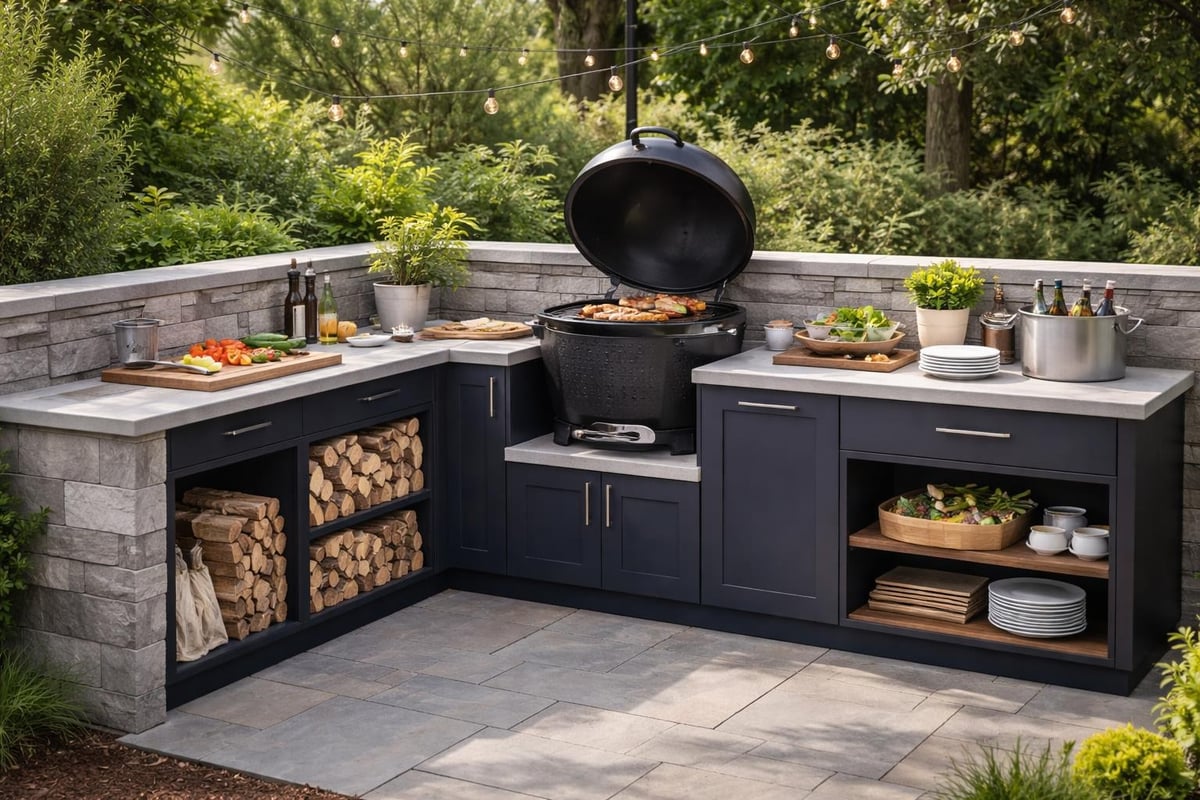
The kamado outdoor kitchen achieves its fullest potential when protected from adverse weather whilst maintaining connection to the garden. Pergolas, fixed canopies, and retractable roof systems extend usability throughout the British calendar.
Ceramic cookers generate significant vertical heat plumes, particularly during high-temperature cooking. Overhead structures require minimum 2.4m clearance with non-combustible materials directly above the cooking zone.
Timber pergolas treated with appropriate fire-retardant finishes provide traditional aesthetics whilst offering partial weather protection. For year-round functionality, consider louvred roof systems that allow heat dissipation whilst protecting against rainfall.
The kamado outdoor kitchen particularly benefits from side protection against prevailing winds. Wind disrupts the precise airflow control essential for ceramic cooking, making partially enclosed designs preferable in exposed locations across the Cotswolds and wider UK regions.
Outdoor cooking installations must address building regulations, fire safety protocols, and user protection. The kamado outdoor kitchen presents specific considerations beyond standard built-in grills.
Ceramic cookers rarely present direct flame hazards, yet surface temperatures exceed 300°C during operation. Non-combustible materials must extend minimum 300mm beyond the kamado perimeter, with heat-resistant countertops capable of withstanding accidental contact from hot cooking grates.
Following manufacturer safety instructions ensures proper installation and ongoing operation. These guidelines address placement, clearances, and operational protocols specific to ceramic cooker technology.
Critical safety specifications include:
Additional fire safety considerations specific to kamado grills address proper lighting techniques, ash disposal, and shutdown procedures that protect both users and the surrounding outdoor kitchen infrastructure.
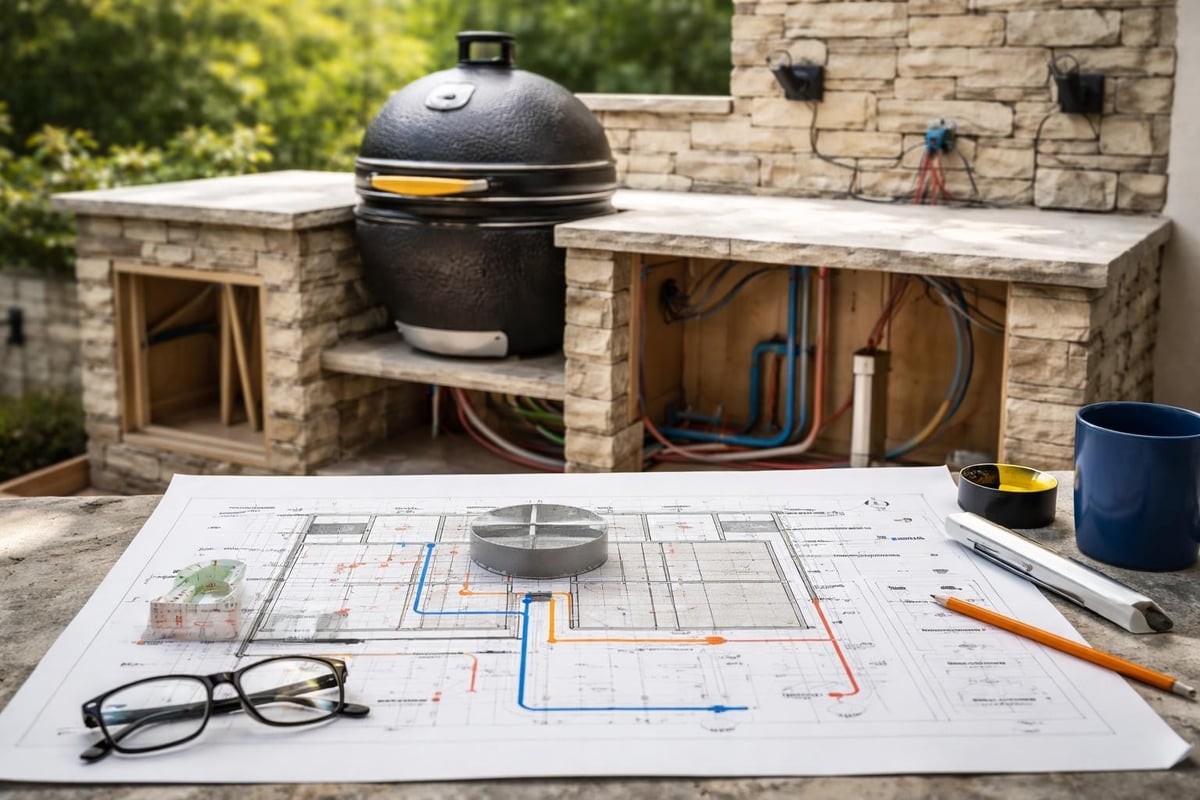
The kamado outdoor kitchen requires fewer utility connections than gas-fuelled alternatives, yet thoughtful service planning enhances functionality and convenience.
Integrated sink stations elevate the kamado outdoor kitchen from cooking appliance to complete culinary workspace. Cold water supply proves sufficient for most applications, though heated water lines add comfort during cooler months.
Drainage solutions range from simple grey water systems discharging to surrounding gardens through to fully plumbed connections meeting building regulations. Consult local water authorities regarding outdoor wastewater disposal requirements specific to your location.
Task lighting positioned 1.8m to 2.2m above prep surfaces provides essential visibility for evening cooking sessions. LED strip lighting beneath countertops creates ambient illumination whilst highlighting the kamado outdoor kitchen's architectural features.
Weatherproof electrical outlets (IP65 rated minimum) support accessory equipment including temperature monitoring devices, powered rotisserie attachments, and occasional small appliances. Position outlets minimum 600mm from water sources and protect circuits with appropriate RCD protection.
British climate demands resilient outdoor kitchen solutions capable of withstanding temperature fluctuations, persistent moisture, and occasional freezing conditions. The kamado outdoor kitchen, when properly specified, delivers year-round functionality.
Ceramic cookers themselves withstand British weather admirably, yet the surrounding infrastructure requires careful material selection. Frost-resistant stone, marine-grade metals, and properly sealed timber ensure longevity despite challenging conditions.
| Material | Frost Resistance | Moisture Tolerance | Maintenance Frequency | Expected Lifespan |
|---|---|---|---|---|
| Granite | Excellent | Excellent | Annual sealing | 25+ years |
| Porcelain | Excellent | Excellent | Minimal | 20+ years |
| Stainless Steel | Excellent | Excellent | Quarterly cleaning | 15+ years |
| Treated Hardwood | Good (with treatment) | Moderate | Bi-annual treatment | 12-15 years |
Winter storage proves unnecessary for quality ceramic cookers, though protective covers shield against prolonged moisture exposure. The surrounding kamado outdoor kitchen benefits from seasonal deep cleaning and material-specific maintenance protocols.
The kamado outdoor kitchen adapts to diverse architectural languages, from traditional Cotswold stone to contemporary minimalism. Material choices, proportions, and detailing establish the desired aesthetic character.
Stone and brick kamado outdoor kitchens complement period properties throughout Oxfordshire and surrounding counties. Reclaimed materials, sympathetic mortar colours, and proportions echoing existing architecture create cohesive garden-to-dwelling relationships.
Dry-stone walling techniques, whilst labour-intensive, deliver authentically regional character. Alternatively, rendered blockwork with lime-based finishes provides weather protection whilst maintaining traditional aesthetics.
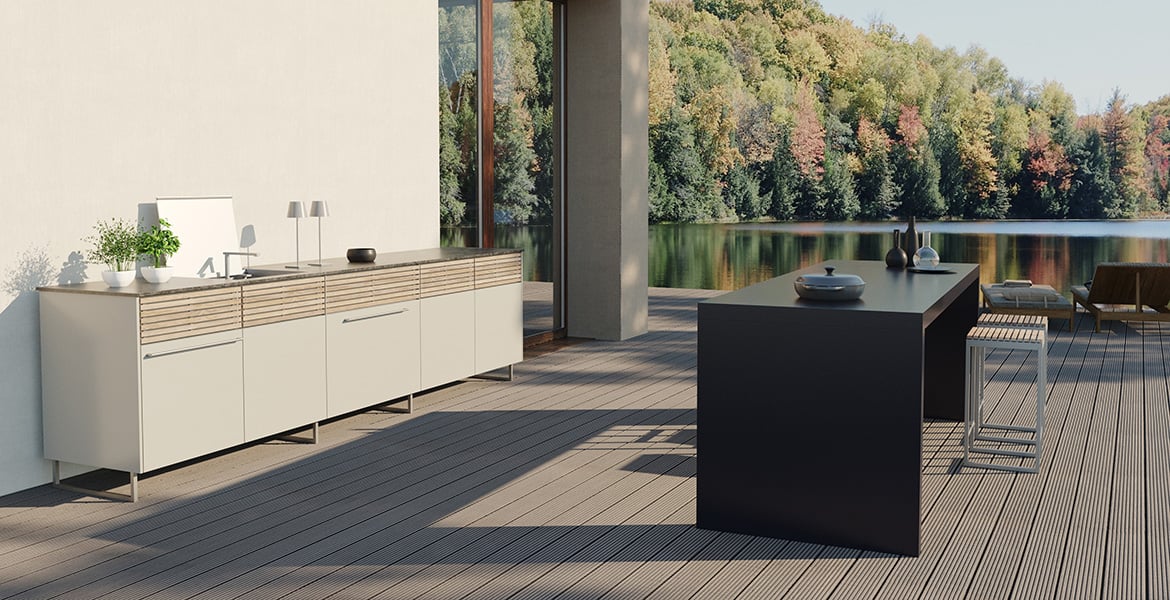
Clean-lined kamado outdoor kitchens emphasise material honesty and functional clarity. Large-format porcelain, brushed stainless steel, and powder-coated aluminium create streamlined compositions.
The ceramic cooker itself provides visual interest within otherwise restrained palettes. Handleless cabinetry, integrated drainage channels, and concealed storage maintain uncluttered surfaces suited to modern garden designs.
For those drawn to sleek, modular approaches, the Cubic C1 Style Outdoor Kitchen demonstrates how contemporary materials and precision engineering create sophisticated outdoor cooking environments. These systems accommodate kamado integration whilst offering weatherproof storage, integrated sinks, and customisable configurations suited to various garden dimensions.
The kamado outdoor kitchen requires numerous specialised accessories for optimal performance. Heat-resistant gloves, ash tools, temperature probes, and grate lifters demand dedicated storage within arm's reach of the cooking zone.
Purpose-designed drawer inserts organise smaller items, whilst vertical dividers accommodate pizza peels, long-handled tongs, and cleaning brushes. Stainless steel or marine-grade aluminium prevents corrosion in outdoor environments.
Recommended storage provisions include:
Many kamado outdoor kitchen projects incorporate charging stations for wireless thermometer receivers and tablet devices displaying recipes or streaming entertainment during extended cooking sessions.
Most kamado outdoor kitchens fall within permitted development rights, yet several scenarios trigger planning requirements. Structures exceeding 2.5m height, installations within conservation areas, or listed building modifications generally require formal approval.
Building regulations apply when outdoor kitchens incorporate permanent structures, fixed electrical installations, or water connections. Part P (electrical safety), Part H (drainage), and Part B (fire safety) may prove relevant depending on your design scope.
Consulting local planning authorities early in the design process prevents costly modifications later. Professional design services navigate these requirements whilst ensuring your kamado outdoor kitchen meets both regulatory standards and personal aspirations.
Kamado outdoor kitchen projects span considerable price ranges depending on scale, materials, and complexity. Understanding cost drivers enables realistic budgeting and informed decision-making.
Entry-level installations featuring concrete block construction, basic countertops, and minimal cabinetry begin around £3,500-£5,000 excluding the kamado itself. Mid-range projects incorporating natural stone, integrated sinks, and quality cabinetry typically range £8,000-£15,000.
Luxury kamado outdoor kitchens with bespoke stonework, premium appliances, integrated lighting, and architectural shelters exceed £20,000, reflecting craftsmanship, materials, and comprehensive functionality.
Principal cost components include:
These figures reflect 2026 UK market conditions and regional variation across the Cotswolds, Home Counties, and wider UK locations.
Properly maintained kamado outdoor kitchens deliver decades of reliable service. Ceramic cookers themselves require minimal intervention beyond occasional gasket replacement and hardware tightening.
The surrounding infrastructure demands seasonal attention. Annual deep cleaning, stone sealing (where applicable), timber treatment, and hardware inspection prevent deterioration and extend service life.
Recommended maintenance schedule:
Establishing relationships with professional maintenance providers ensures expert attention when required, though most homeowners manage routine care independently once familiar with their kamado outdoor kitchen's specific requirements.
Following comprehensive maintenance guidelines appropriate to your specific ceramic cooker model protects your investment whilst ensuring optimal cooking performance throughout the outdoor kitchen's lifespan.
Beyond the fundamental cooking infrastructure, thoughtful enhancements elevate the kamado outdoor kitchen from functional workspace to cherished gathering space.
Integrated refrigeration maintains ingredients at optimal temperatures, reducing trips to the indoor kitchen. Weather-resistant wine storage, beverage refrigeration, and ice makers transform the outdoor environment into a self-sufficient entertaining zone.
Outdoor heating elements extend usability into cooler months. Infrared heaters, fire pits positioned 3m+ from the cooking zone, and integrated hearths create comfortable microclimates supporting year-round use.
Exploring options within comprehensive outdoor dining collections reveals furniture, serving pieces, and entertaining accessories that complete the alfresco experience centred around your kamado outdoor kitchen.
Whilst competent DIY enthusiasts tackle kamado outdoor kitchen projects successfully, professional design consultation delivers measurable advantages. Experienced designers navigate spatial challenges, specify appropriate materials, and coordinate trades efficiently.
Professional services typically encompass site assessment, conceptual design, detailed specifications, and project management through to completion. This comprehensive approach prevents costly errors whilst ensuring cohesive integration with existing garden features and architectural elements.
Designers familiar with luxury outdoor living understand the nuanced requirements of ceramic cooking equipment, specifying appropriate clearances, structural support, and material selections that amateur projects sometimes overlook. Their supplier relationships often secure preferential pricing that offsets consultation fees.
For complex installations or properties with heritage constraints, professional expertise proves particularly valuable. Understanding planning requirements, conservation area restrictions, and listed building protocols requires specialised knowledge beyond typical DIY resources.
The kamado outdoor kitchen represents a thoughtful investment in enhanced outdoor living, combining versatile cooking capabilities with architectural presence suited to discerning UK homeowners. From material selection through seasonal maintenance, careful planning ensures decades of reliable performance within gardens throughout the Cotswolds and beyond. The team at Cotswold Cooking Company brings extensive experience specifying, designing, and installing luxury outdoor kitchens tailored to individual requirements, site conditions, and aesthetic preferences. Their consultative approach ensures your kamado outdoor kitchen achieves both functional excellence and lasting visual appeal.

Leave a comment