


The transformation of British gardens into sophisticated culinary destinations has reached new heights in 2026, with outdoor BBQ kitchens becoming the centrepiece of luxury outdoor living. No longer mere grilling stations, today's outdoor kitchens represent fully equipped cooking environments that rival indoor facilities in both functionality and aesthetic refinement. For discerning homeowners across the UK, these spaces blend the pleasure of al fresco dining with the performance of professional-grade equipment, all whilst embracing the unique character of the British landscape and climate.
British outdoor living has evolved dramatically over the past decade, moving beyond traditional patio furniture and portable barbecues toward permanent, architecturally integrated cooking spaces. This shift reflects changing lifestyle priorities, where the garden becomes an extension of the home's entertaining areas.
Contemporary outdoor BBQ kitchens now incorporate weather-resistant cabinetry, integrated refrigeration, multiple cooking zones, and sophisticated lighting systems. The design principles for outdoor kitchens have matured to address British climate challenges whilst maintaining visual harmony with period properties and modern builds alike.
The anatomy of a well-designed outdoor kitchen extends far beyond a single grill. Professional installations typically include:
The most successful installations balance these functional elements with aesthetic considerations, ensuring the kitchen complements existing landscape architecture and property style.
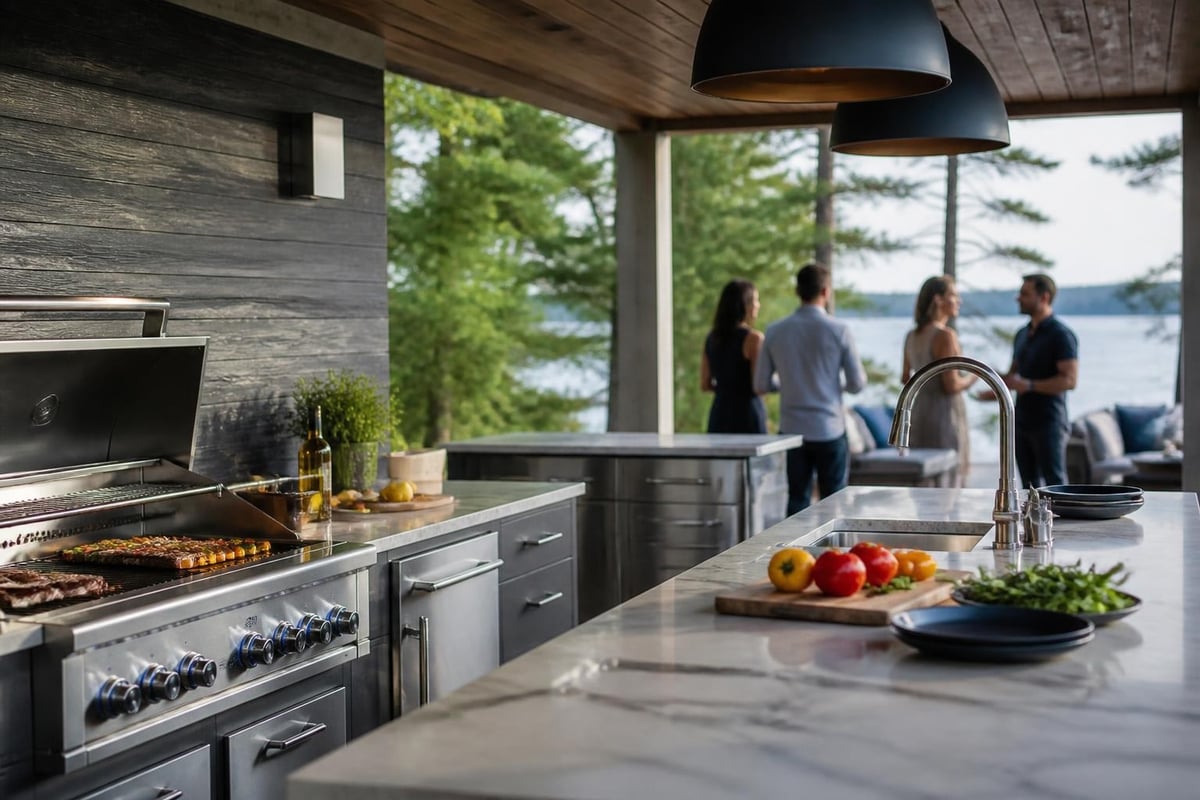
Material choice determines both longevity and maintenance requirements for outdoor BBQ kitchens. British weather presents unique challenges, from prolonged autumn damp to occasional hard frosts, demanding careful specification.
| Material Category | Advantages | Considerations | Typical Lifespan |
|---|---|---|---|
| Stainless Steel | Corrosion-resistant, modern aesthetic, hygienic, minimal maintenance | Can show fingerprints, may require UV-resistant coating | 15-20+ years |
| Powder-Coated Steel | Colour versatility, contemporary finish, excellent durability | Quality of coating critical, inspect annually | 12-18 years |
| Natural Stone | Timeless appeal, heat-resistant, complements traditional properties | Requires sealing, can stain, heavier installation | 20-30+ years |
| Porcelain | Non-porous, stain-resistant, wide design range, UV-stable | Professional installation essential, edge chipping possible | 15-25 years |
Stainless steel remains the preferred choice for professional-grade outdoor kitchens, particularly marine-grade 316 specification that withstands coastal environments and urban pollution. Powder-coated finishes offer colour customisation whilst maintaining structural integrity.
The choice between materials should align with your property's architectural language. Cotswold stone properties benefit from natural stone or complementary neutral tones, whilst contemporary builds can embrace bold metallic finishes.
Effective spatial planning transforms outdoor BBQ kitchens from attractive installations into genuinely functional cooking environments. The classic kitchen work triangle applies equally outdoors, connecting refrigeration, preparation, and cooking zones.
Professional designers typically organise outdoor kitchens into distinct operational areas:
Maintaining 900-1200mm between key appliances ensures comfortable movement whilst cooking. Traffic flow should allow guests to access refreshments without disrupting the chef's workspace.
Counter height standardisation at 900mm provides ergonomic comfort for most users, though bespoke installations can accommodate specific requirements. Adequate prep surface area, ideally 1200mm or more of continuous worktop, prevents operational bottlenecks during elaborate meal preparation.
For those seeking ready-to-install solutions, modular systems offer pre-configured zones that simplify the design process whilst maintaining professional functionality.
The heart of any outdoor kitchen lies in its cooking appliances, where performance, fuel type, and construction quality directly impact culinary results and long-term satisfaction.
Each fuel type offers distinct advantages for outdoor cooking:
Gas BBQ Systems provide instant ignition, precise temperature control, and minimal cleanup. Modern multi-burner configurations allow simultaneous high-heat searing and gentle indirect cooking. Consumer Reports' grill buying guide offers comprehensive performance testing across major brands.
Charcoal and Wood-Fired Options deliver authentic smoke flavour and high-temperature capabilities essential for certain techniques. Traditional charcoal grills require more preparation time but reward patience with distinctive taste profiles.
Hybrid Solutions combine gas convenience with wood-fired flavour, offering fuel flexibility for different occasions. These systems prove particularly valuable for year-round use, when weather conditions may favour quick gas ignition over charcoal preparation.
When evaluating grills, consider BTU output (British Thermal Units per hour), cooking surface area, and construction materials. Professional-grade stainless steel burners and cast-iron grates provide superior heat retention and longevity compared to budget alternatives.
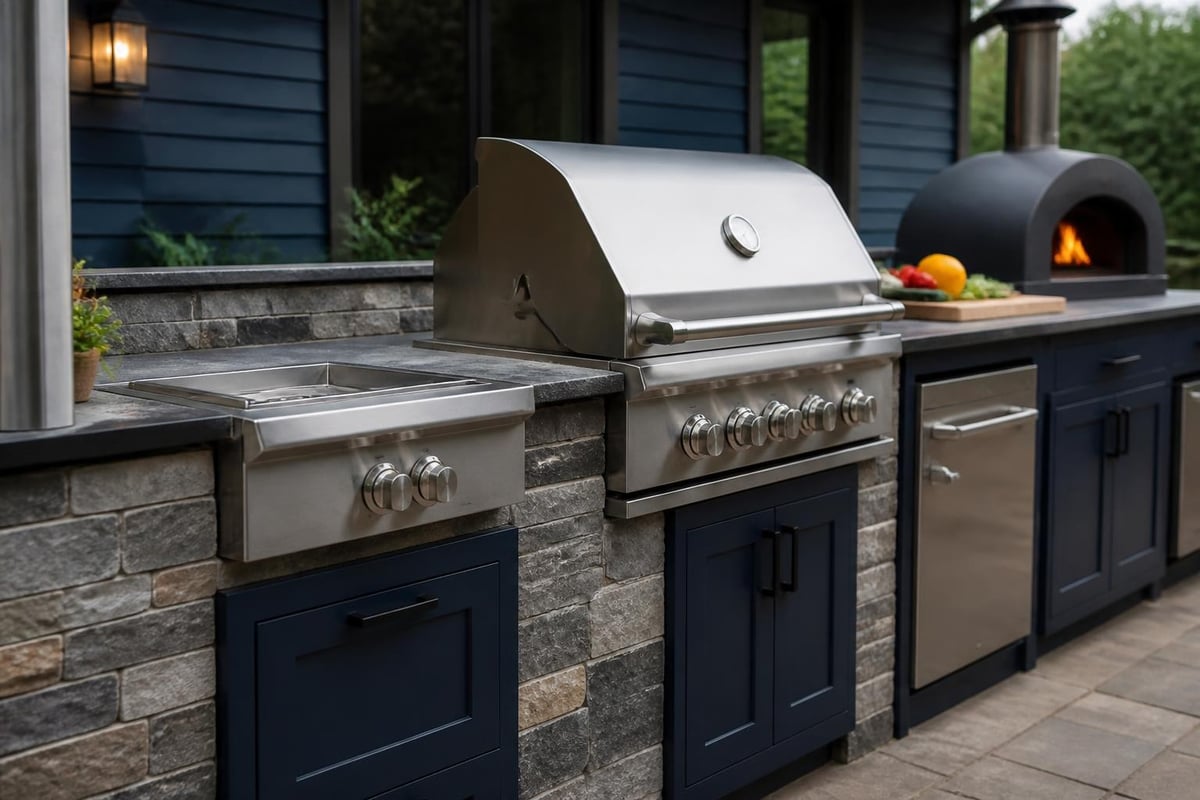
The British climate presents particular challenges for outdoor cooking spaces, yet thoughtful design enables comfortable use across extended seasons. Protection from elements transforms fair-weather installations into genuine three-season or even year-round destinations.
Permanent overhead structures significantly expand usable months whilst protecting appliances from weather damage. Options include:
For comprehensive guidance on selecting appropriate overhead systems, our pergola and veranda selection guide examines architectural styles and functional considerations.
Wind protection equally impacts comfort. Strategic placement near existing structures, incorporation of glass screens, or installation of retractable windbreaks maintain pleasant conditions during breezy spring and autumn evenings.
Successful outdoor BBQ kitchens require careful utility planning during design phases. Retrofitting services after installation proves significantly more expensive than integrated planning.
Gas Supply: Natural gas connections provide endless fuel supply but require professional installation meeting British Standards. Bottled LPG offers installation flexibility with periodic cylinder replacement.
Electrical Infrastructure: Outdoor-rated electrical circuits power refrigeration, lighting, extraction fans, and small appliances. All installations must comply with BS 7671 wiring regulations and incorporate RCD protection.
Water and Drainage: Cold water supply enables sink functionality and cleanup convenience. Waste drainage requires either gravity connection to existing systems or pump-assisted solutions where fall proves insufficient.
Ventilation Considerations: Covered outdoor kitchens benefit from mechanical extraction removing smoke and cooking odours. The ASHRAE ventilation guidelines provide technical specifications for outdoor cooking exhaust systems.
Working with experienced installers ensures compliance whilst avoiding costly errors. Underground service routing should account for future access requirements and avoid conflicts with existing drainage or landscaping features.
Outdoor cooking introduces specific safety considerations that responsible homeowners must address. National Fire Protection Association grilling safety guidelines provide authoritative recommendations for safe outdoor-cooking practices.
Maintain minimum clearances around cooking appliances:
Gas hose connections require annual inspection for cracks, brittleness, or damage. Replace hoses showing any degradation, regardless of age. The Consumer Product Safety Commission guidance details specific inspection protocols and hazard recognition.
Fire suppression equipment should remain immediately accessible. Class F fire extinguishers specifically address cooking oil fires, whilst ABC-rated extinguishers provide general coverage. Never locate extinguishers beyond the cooking area where flames might block access.
Efficient storage transforms outdoor kitchens from basic cooking stations into comprehensive culinary environments. Well-designed cabinetry protects equipment whilst maintaining visual refinement.
Weather-resistant cabinet construction utilises marine-grade materials or purpose-built outdoor specifications. Internal organisation should accommodate:
The Grillandia outdoor kitchen collections demonstrate how modular storage integrates with cooking appliances, offering customisable configurations matching specific entertaining patterns and storage requirements.
Thoughtful organisations extend to waste management. Integrated bin systems with separate compartments for refuse and recycling maintain hygiene whilst supporting environmental responsibility.
Effective lighting serves dual purposes in outdoor kitchens: providing adequate illumination for safe food preparation whilst creating inviting atmosphere for evening entertaining.
Professional installations incorporate multiple lighting types:
| Lighting Type | Purpose | Recommended Specification |
|---|---|---|
| Task Lighting | Work surface illumination | 500-750 lux, LED strips or downlights |
| Ambient Lighting | General area illumination | 150-200 lux, overhead fixtures |
| Accent Lighting | Architectural highlighting | Low-voltage LEDs, adjustable beam angles |
| Safety Lighting | Path and step illumination | Motion-activated, 100 lux minimum |
LED technology offers superior efficiency, longevity, and colour accuracy compared to traditional outdoor lighting. Warm white (2700-3000K) creates comfortable evening atmosphere whilst maintaining sufficient brightness for cooking tasks.
All electrical fixtures must carry appropriate IP (Ingress Protection) ratings: IP65 minimum for exposed locations, IP67 for areas subject to water spray or cleaning. Control systems benefit from smart technology enabling scene programming and remote adjustment.
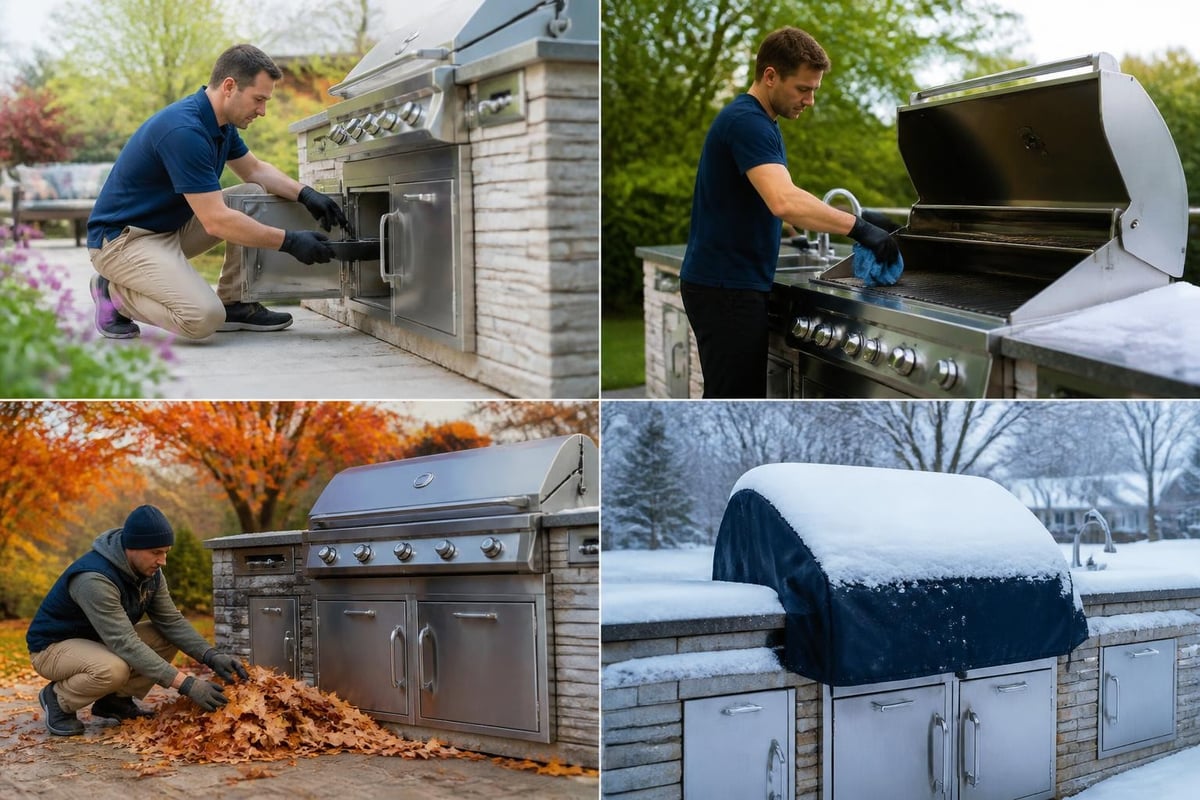
Protecting your investment requires consistent maintenance aligned with British seasonal patterns. Outdoor BBQ kitchens endure temperature extremes, moisture exposure, and UV radiation that accelerate wear without proper care.
Spring Preparation (March-April):
Summer Operation (May-September):
Autumn Protection (October-November):
Winter Precautions (December-February):
Different materials demand specific care protocols. EPA wood-burning practices guide responsible fuel selection and smoke management for wood-fired appliances, addressing both performance and environmental considerations.
Outstanding outdoor kitchens respect and enhance existing property character rather than appearing as afterthoughts. Landscape architecture professionals emphasise contextual sensitivity when positioning outdoor cooking spaces.
Material Continuity: Echo existing architectural materials, whether Cotswold stone, brick, or contemporary renders. Visual connections between house and outdoor kitchen create cohesive outdoor environments.
Proportional Relationships: Scale kitchen dimensions appropriately to garden size and entertaining capacity. Oversized installations overwhelm modest gardens; undersized kitchens frustrate ambitious hosts.
Sight Lines and Privacy: Position cooking areas considering views both from within the space and from neighbouring properties. Strategic screening balances openness with appropriate privacy.
Circulation Patterns: Integrate pathways connecting kitchen to dining areas, house access points, and garden features. Hard landscaping materials should transition logically between zones.
Modular systems like the EO Outdoor Kitchens offer particular advantages for architectural integration, with powder-coated finishes available in virtually any colour to complement existing palettes whilst delivering contemporary clean-lined aesthetics.
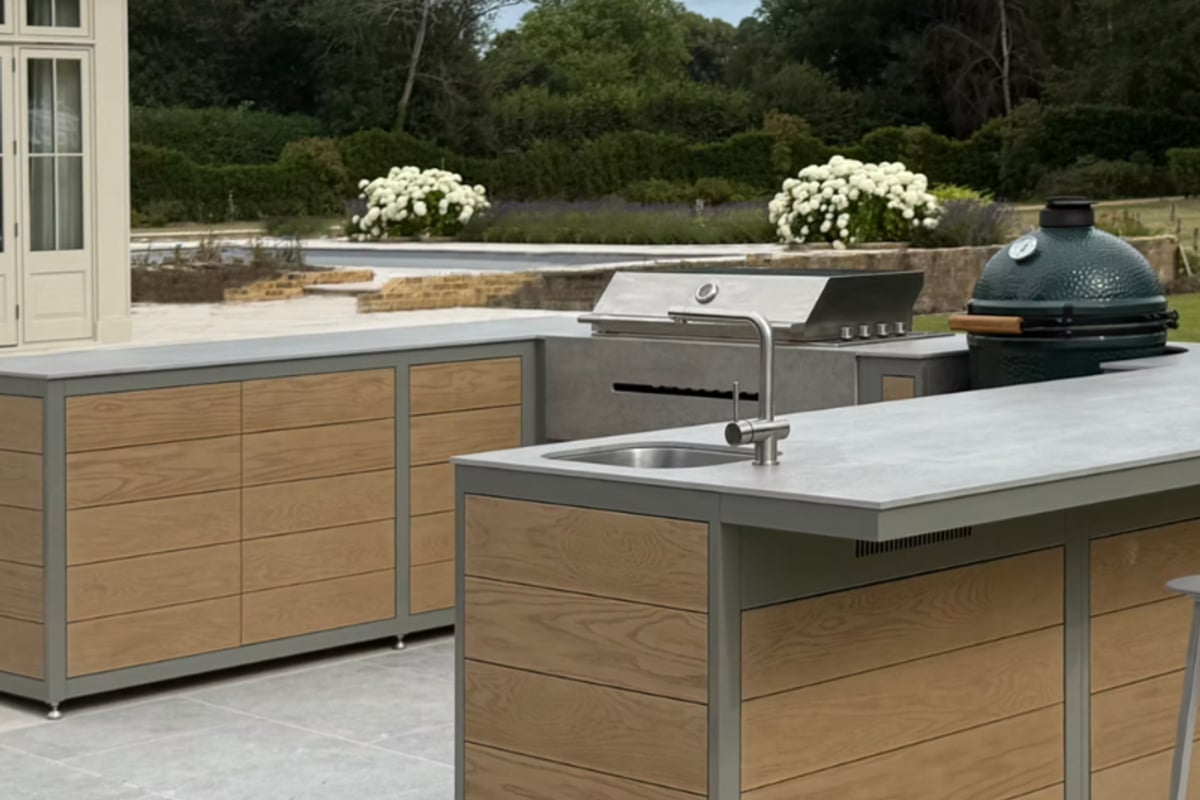
Contemporary design trends favour minimalist forms with integrated storage, concealed utilities, and seamless worktop transitions. Traditional properties may incorporate classic detailing, natural stone, or heritage-inspired finishes whilst maintaining modern functionality beneath.
Outdoor BBQ kitchens represent significant investments, with final costs varying dramatically based on specification, materials, and installation complexity. Understanding cost structures enables realistic budgeting and informed decision-making.
Entry-Level Installations (£8,000-£15,000):
Mid-Range Specifications (£15,000-£35,000):
Luxury Installations (£35,000-£75,000+):
These figures exclude groundwork preparation, utility extensions, or structural modifications that site-specific conditions may require. Obtaining comprehensive quotations prevents budget surprises during installation phases.
Value optimisation focuses on quality where it matters most: cooking appliances, cabinetry construction, and worktop durability. Cosmetic elements can start modestly with upgrade potential as budgets allow.
While many outdoor BBQ kitchens proceed as permitted development, certain circumstances trigger planning permission or building regulation requirements. Understanding regulatory frameworks prevents costly retrospective corrections.
Generally, outdoor kitchens fall under permitted development rights. However, applications become necessary when:
Building regulations typically apply when creating permanent structures with foundations, adding electrical installations, or incorporating gas appliances requiring fixed pipework. Working with registered professionals ensures compliance whilst protecting liability.
Gas Safe registered engineers must complete all natural gas installations. Electrical work requires Part P compliance through certified electricians or notification to local authority building control. These aren't optional conveniences but legal requirements protecting safety and property value.
The outdoor kitchen landscape continues evolving, with 2026 seeing particular emphasis on sustainability, smart technology, and year-round usability. Architectural Digest's outdoor kitchen feature showcases current aesthetic directions and functional innovations shaping luxury installations.
Integrated Sustainability: Solar-powered lighting, rainwater harvesting for sink supplies, and reclaimed materials reduce environmental impact whilst lowering operational costs.
Smart Connectivity: App-controlled temperature monitoring, automated lighting scenes, and voice-activated controls enhance convenience for technology-embracing homeowners.
Multi-Functional Zones: Spaces accommodating diverse activities beyond cooking-outdoor bars, pizza-making stations, coffee preparation areas-reflect expanded entertainment aspirations.
Biophilic Design: Living walls, integrated planters, and natural material palettes blur boundaries between built kitchen and surrounding garden.
All-Weather Commitment: Heated floors, infrared warmers, and fully enclosed options extend comfortable use into colder months, particularly valuable for British climates.
Colour trends favour sophisticated neutrals-warm greys, soft taupes, muted sage tones-that complement rather than compete with natural surroundings. Bold accent colours appear through accessories, cushions, and tableware rather than permanent installations.
For homeowners viewing outdoor kitchens as property enhancements beyond personal enjoyment, certain specifications deliver stronger returns upon resale whilst broadening market appeal.
Estate agents consistently highlight these elements as buyer attractions:
Properties with thoughtfully designed outdoor cooking spaces typically command 5-10% premiums in comparable markets, with higher returns in areas where outdoor living represents established lifestyle expectations. However, highly personalised or oversized installations may limit appeal, particularly where garden space becomes constrained.
Balance personal preferences with broader market tastes when specification decisions impact permanent elements. Appliance choices and decorative touches remain easily updated, whilst structural decisions prove expensive to modify.
Outdoor BBQ kitchens represent the pinnacle of contemporary garden design, transforming British outdoor spaces into sophisticated culinary destinations that rival indoor kitchens in both functionality and refinement. From material selection and appliance specification through utility planning and architectural integration, success demands careful consideration of numerous interconnected elements. The Cotswold Cooking Company brings decades of expertise to every project, curating hand-selected brands and delivering fully consultative design services from initial concept through final installation. Whether you're envisioning a compact grilling station or an elaborate all-season outdoor culinary environment, our team combines Cotswold heritage with modern craftsmanship to create spaces that elevate outdoor living for discerning homeowners across the UK.

Leave a comment