


Choosing the right outdoor grill for outdoor kitchen installations requires careful consideration of performance, aesthetics, and long-term durability. Unlike standalone barbecues that can be moved or replaced on a whim, built-in grills become permanent fixtures within your outdoor living space, demanding thoughtful specification from the outset. For discerning homeowners and hospitality clients investing in luxury outdoor kitchens, the grill serves as the centrepiece of culinary performance, where British weather resilience meets year-round entertaining ambitions. This comprehensive guide explores the key factors that distinguish exceptional outdoor kitchen grills from their conventional counterparts, helping you make an informed decision that complements your lifestyle and design vision.
When planning your outdoor kitchen configuration, the fundamental choice between built-in and freestanding grills shapes both functionality and aesthetics. Built-in models offer seamless integration with cabinetry, worktops, and surrounding elements, creating a cohesive design language throughout your outdoor space.
Built-in advantages include:
Freestanding units, conversely, provide flexibility and can be repositioned as your outdoor space evolves. However, for those commissioning luxury outdoor kitchens through specialists like the outdoor cooking experts, built-in configurations deliver the refined permanence that transforms gardens into true culinary destinations.
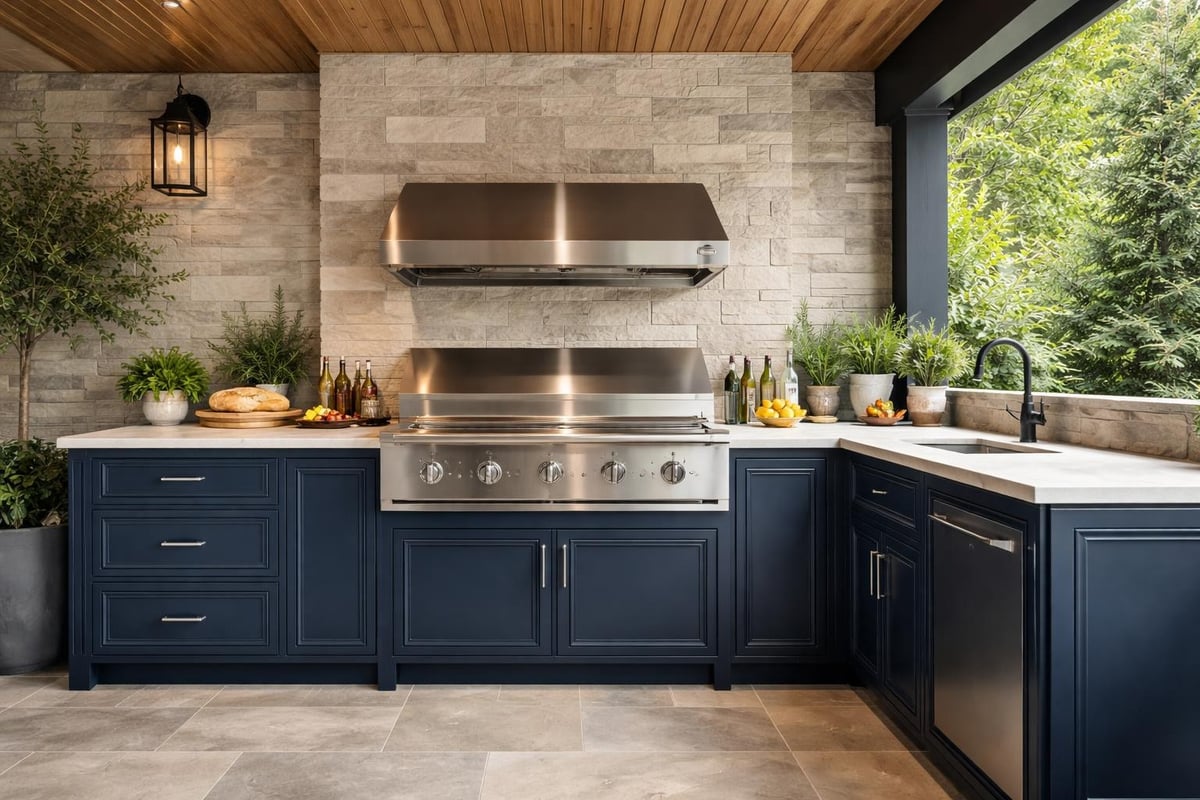
The installation process for a built-in outdoor grill for outdoor kitchen applications demands professional expertise, particularly regarding fuel connections, ventilation requirements, and structural support. Unlike portable alternatives, these installations must account for thermal expansion, drainage, and weatherproofing from the design stage onwards.
Selecting the appropriate fuel source fundamentally influences cooking performance, maintenance requirements, and operational costs. Each fuel type offers distinct advantages suited to different cooking styles and practical considerations.
Natural gas and propane-powered grills dominate luxury outdoor kitchen installations for compelling reasons. Choosing the right grill for your outdoor kitchen involves assessing how gas models deliver instantaneous heat control, minimal pre-heating time, and consistent temperature regulation across multiple burners.
| Feature | Natural Gas | Propane |
|---|---|---|
| Fuel Source | Mains connection | Replaceable cylinders |
| Operating Cost | Generally lower | Higher per BTU |
| Installation | Requires professional gas fitting | More flexible placement |
| Convenience | Unlimited supply | Requires cylinder monitoring |
| Portability | Fixed installation | Semi-portable options |
Premium gas grills from manufacturers featured in collections like grills and smokers incorporate infrared burners, rotisserie systems, and dedicated searing zones that elevate outdoor cooking to professional standards. The best gas grill for outdoor kitchen cooking combines robust BTU output with precise flame control, enabling everything from gentle vegetable roasting to high-heat steak searing.
For purists who prioritise authentic smoke flavour and traditional cooking methods, charcoal grills remain relevant even within contemporary outdoor kitchens. Built-in charcoal systems require careful ventilation planning and ash management solutions, yet they deliver the distinctive taste profiles that gas alternatives cannot replicate.
Modern charcoal grill designs incorporate adjustable grate systems, temperature gauges, and airflow controls that bring scientific precision to ancestral cooking techniques. When integrated properly, these units complement gas installations, offering versatility for different culinary applications.
Progressive outdoor kitchen designers increasingly specify hybrid systems that combine multiple fuel sources within unified cooking stations. These configurations might pair gas burners for everyday efficiency with charcoal or wood-fired sections for weekend entertaining and flavour experimentation.
Electric grills, whilst less common in luxury installations, suit settings where gas connections prove impractical or local regulations restrict open flame cooking. Premium electric models now achieve impressive searing temperatures, though they lack the thermal mass and BTU output of their gas counterparts.
Determining the appropriate dimensions for your outdoor grill for outdoor kitchen depends on entertaining frequency, typical guest numbers, and available counter space. Undersized grills create bottlenecks during gatherings, whilst oversized units consume valuable workspace and increase operational costs.
Standard built-in grill widths:
Beyond linear dimensions, consider cooking surface configuration. Multi-zone grills with dedicated burners for different heat levels enable simultaneous cooking of proteins, vegetables, and delicate items requiring gentle heat. Integrated side burners, warming racks, and rotisserie systems expand culinary possibilities without requiring separate appliances.
The high-end grills featured by lifestyle publications demonstrate how premium manufacturers maximise usable cooking area through innovative grate designs and vertical space utilisation, delivering restaurant-calibre capacity within residential footprints.
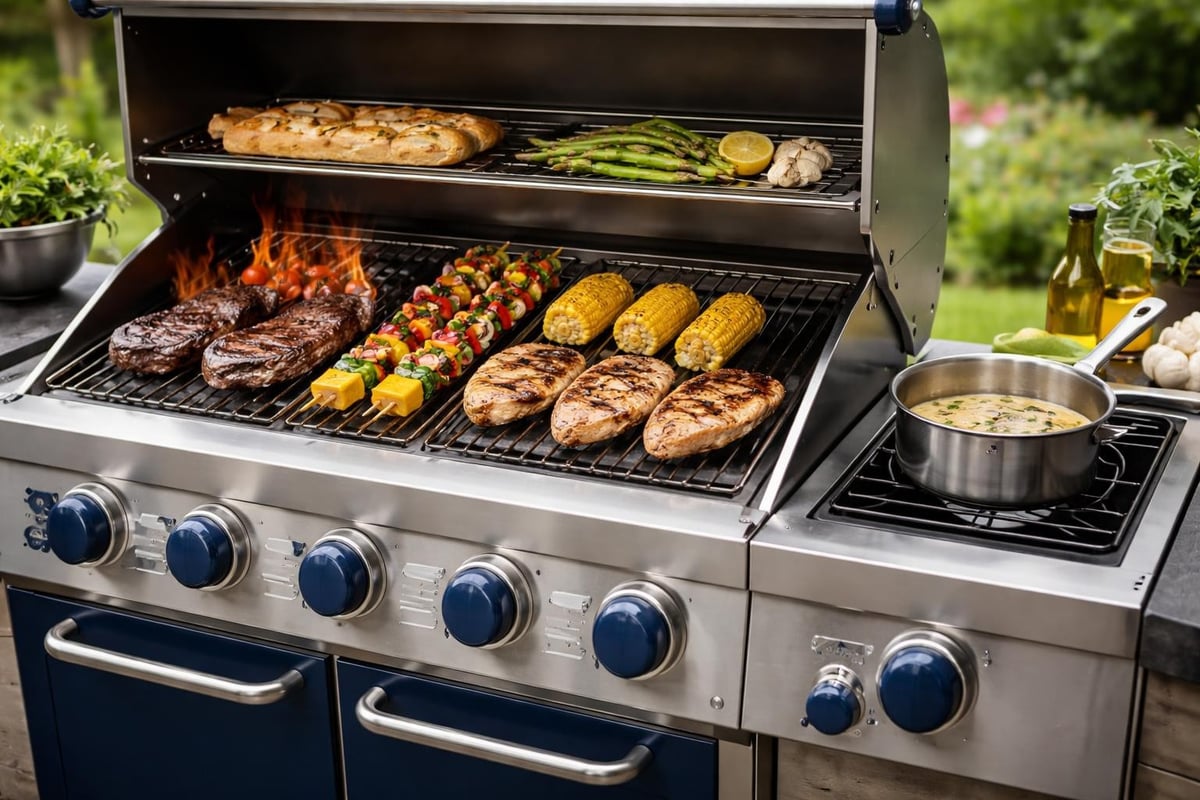
British weather patterns demand exceptional material specifications for outdoor kitchen equipment. Coastal installations face salt air corrosion, whilst rural settings contend with humidity and temperature fluctuations that can degrade inferior materials within seasons.
Premium outdoor grills utilise marine-grade stainless steel (304 or 316 series) throughout critical components. These alloys resist corrosion, maintain structural integrity across temperature extremes, and age gracefully with minimal maintenance.
| Component | Recommended Material | Rationale |
|---|---|---|
| Burners | 304 stainless steel minimum | Heat resistance and longevity |
| Cooking grates | Cast stainless or porcelain-coated cast iron | Heat retention and searing capability |
| Housing | 304 stainless steel | Weather resistance and aesthetics |
| Control panels | Sealed stainless steel | Moisture protection |
| Warming racks | Chrome-plated steel or stainless | Corrosion resistance |
Welded construction surpasses bolted assemblies in durability and weather sealing. Double-walled hoods with internal insulation maintain consistent cooking temperatures whilst protecting exterior surfaces from excessive heat that might damage surrounding cabinetry.
The heart of any outdoor grill for outdoor kitchen lies in its burner system. Cast stainless steel burners outlast tubular designs, delivering decades of reliable service when properly maintained. U-shaped and H-shaped burner configurations provide superior heat distribution compared to straight tube alternatives.
Infrared burners, increasingly featured in luxury installations, generate intense radiant heat ideal for searing whilst consuming less fuel than conventional burners. These systems reach cooking temperature faster and maintain steadier heat during windy conditions, addressing a common challenge in exposed outdoor settings.
Successful outdoor grill for outdoor kitchen installations extend beyond appliance selection to encompass holistic design integration. The grill must harmonise with architectural elements, complement surrounding materials, and support efficient workflow patterns.
Design integration considerations:
Working with experienced outdoor kitchen specialists ensures proper spatial planning from initial concept through installation. The consultative approach offered by premium retailers helps clients navigate complex decisions regarding placement, utilities, and aesthetic cohesion.
When building an outdoor kitchen, budget allocation should prioritise quality grills that will anchor the space for decades. Compromising on grill specifications to accommodate other features frequently leads to disappointment, as the cooking experience directly impacts how often and how enthusiastically you'll use the outdoor space.
Beyond basic cooking capability, luxury outdoor grills incorporate features that enhance usability, expand culinary options, and simplify maintenance. Understanding which features deliver genuine value versus marketing embellishment requires examining your cooking style and entertaining patterns.
Precision temperature management separates exceptional grills from adequate performers. Multi-burner systems with independent controls enable zone cooking, whilst integrated thermometers provide real-time feedback for consistent results.
Advanced models feature electronic ignition systems with individual burner indicators, eliminating the frustration of match-lighting and clearly showing operational status. Some premium grills now incorporate Bluetooth connectivity, enabling remote temperature monitoring through smartphone applications.
Integrated LED lighting illuminates cooking surfaces and control panels, extending usability into evening hours. Halogen task lighting mounted within hoods ensures visibility during food preparation and plating, particularly valuable during winter months when daylight hours diminish.
Push-button or rotary ignition systems with safety features ensure reliable lighting even in windy conditions. Quality grills incorporate flame failure devices that automatically shut off gas supply if burners extinguish unexpectedly, addressing safety concerns inherent in outdoor cooking environments.
Built-in grills benefit enormously from thoughtfully designed adjacent storage and workspace. Dedicated drawers for grilling tools, spice racks positioned within arm's reach, and pull-out rubbish bins streamline cooking workflow whilst maintaining clean sightlines.
Practical workspace elements include:
The outdoor kitchens collection showcases how comprehensive planning addresses these functional requirements whilst maintaining aesthetic refinement throughout the installation.
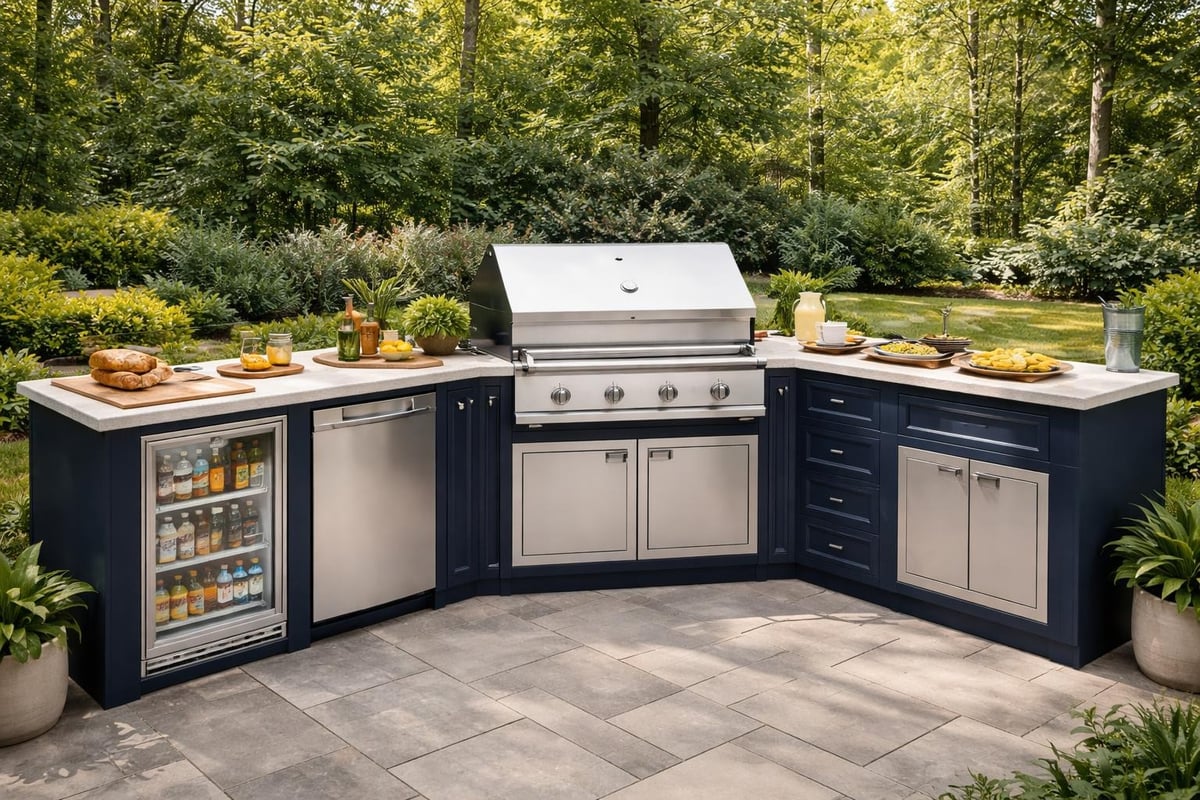
Premium outdoor grills represent significant investments that reward proper maintenance with decades of reliable service. Understanding care requirements before purchase ensures realistic expectations and prevents premature deterioration.
Post-cooking maintenance involves brushing cooking grates whilst still warm, emptying grease management systems, and wiping exterior surfaces. Stainless steel benefits from specialised cleaners that remove fingerprints and restore lustre without scratching.
Quarterly deep cleaning should address burner ports, flavouriser bars, and internal components where grease accumulation can impede performance. Professional servicing annually ensures gas connections remain secure, igniters function correctly, and all safety systems operate as designed.
Even the finest outdoor grill for outdoor kitchen installations benefits from protective measures during extended periods of non-use. Custom-fitted covers shield components from precipitation and debris, whilst proper winterisation prevents moisture intrusion that can damage electronics and corrode internal parts.
For installations in exposed locations, consider integrated cover storage that keeps protective materials readily accessible. Some luxury outdoor kitchens incorporate retractable canopies or pergola systems that shield cooking areas from weather whilst permitting year-round operation.
Navigating the outdoor grill marketplace requires distinguishing established manufacturers with proven track records from newcomers offering untested technologies. Heritage brands like Weber and Char-Broil built reputations through decades of residential products, whilst specialist manufacturers focus exclusively on built-in luxury grills.
Premium outdoor kitchen retailers curate collections from manufacturers who demonstrate commitment to quality, provide comprehensive warranties, and maintain parts availability for legacy products. This curation process eliminates the overwhelming choice paralysis that can derail outdoor kitchen projects.
Key warranty evaluation factors:
Brands featured through specialists like Whistler Grills typically offer superior warranty terms reflecting confidence in manufacturing quality and material specifications.
Professional installation remains non-negotiable for built-in outdoor grill for outdoor kitchen projects. Gas connections require certified engineers, electrical work demands qualified electricians, and structural modifications need proper building control approval where applicable.
Site assessment should verify adequate utility access, confirm structural capacity for planned cabinetry and appliances, and identify any drainage requirements for cleaning and weather management. Proper ventilation planning prevents heat build-up that can damage adjacent materials or create uncomfortable cooking environments.
Clearance requirements vary by manufacturer and fuel type, with gas grills typically needing greater spacing from combustible materials than electric alternatives. Hood systems must exhaust properly without creating smoke problems for neighbours or violating local air quality regulations.
Outdoor kitchen installations typically span 4-12 weeks depending on complexity, custom fabrication requirements, and weather conditions. Coordinating trades (gas fitters, electricians, stone masons, carpenters) requires experienced project management to prevent delays and ensure sequential work proceeds logically.
Many homeowners underestimate the value of working with full-service providers who manage the entire process from design through commissioning. This integrated approach, offered by established outdoor kitchen specialists, eliminates the frustration of coordinating multiple contractors whilst ensuring all elements work harmoniously.
Beyond the grill itself, complete outdoor kitchens incorporate complementary elements that transform functional cooking spaces into destination entertaining areas. Strategic additions amplify enjoyment whilst addressing practical requirements often overlooked during initial planning.
Complementary outdoor kitchen elements:
Collections like pizza ovens and baking demonstrate how multiple cooking methods within unified outdoor spaces create versatility that sustains long-term interest and usage. Pairing your primary outdoor grill for outdoor kitchen with a wood-fired pizza oven, for instance, enables Italian-themed evenings that would be impossible with grilling alone.
Selecting the ideal outdoor grill for outdoor kitchen installations requires balancing performance expectations, design aesthetics, and long-term value considerations. The most successful projects emerge from thoughtful planning that considers cooking style, entertaining patterns, and site-specific constraints before committing to specific equipment. Whether you're envisioning intimate family dinners or elaborate gatherings, the right grill becomes the foundation upon which memorable outdoor experiences are built. The team at Cotswold Cooking Company brings decades of expertise to outdoor kitchen consultations, guiding discerning clients through every decision from initial concept through final installation, ensuring your outdoor living space achieves both culinary excellence and timeless aesthetic appeal.

Leave a comment