


A stainless outdoor kitchen represents the pinnacle of alfresco culinary design, combining professional-grade performance with weather-resistant durability that British gardens demand. Whether nestled within a Cotswold stone terrace or anchoring a contemporary London roof garden, stainless steel components deliver unmatched longevity, hygiene standards, and aesthetic versatility that transform outdoor spaces into year-round entertaining destinations. For discerning homeowners and designers seeking materials that marry form with function, understanding the unique advantages of stainless steel construction proves essential to creating outdoor kitchens that elevate both cooking experiences and property value.
The material choice for an outdoor kitchen fundamentally determines its performance, maintenance requirements, and aesthetic longevity. Stainless steel has emerged as the definitive standard for luxury installations across the UK, from coastal properties facing salt-laden air to rural estates experiencing temperature extremes.
Marine-grade stainless steel, particularly 304 and 316 alloys, contains chromium that forms a protective oxide layer when exposed to oxygen. This self-healing barrier prevents rust penetration even in challenging British weather conditions.
The corrosion resistance becomes particularly critical in outdoor cooking environments where:
Unlike powder-coated metals or painted finishes that chip and expose underlying material to degradation, stainless steel maintains integrity throughout its structure. This characteristic proves especially valuable for materials and layouts designed for durability, where long-term performance justifies initial investment.
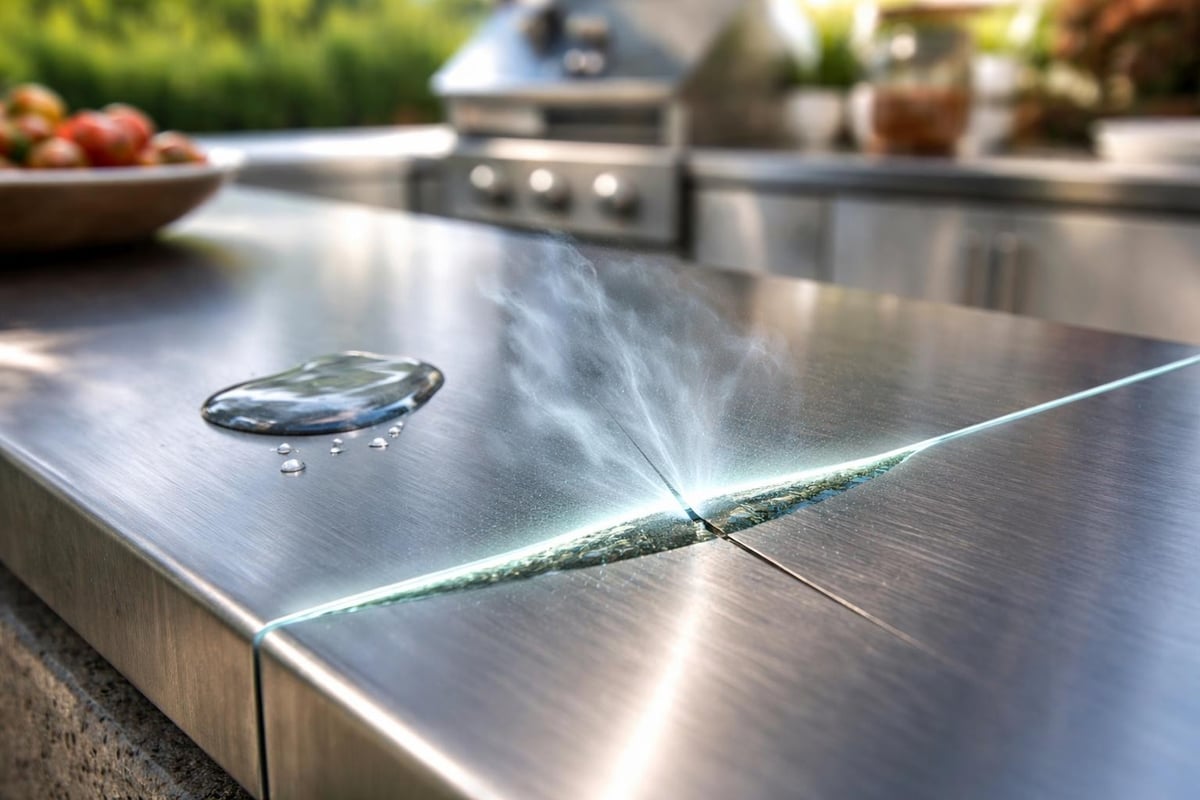
Professional chefs and food safety authorities recognise stainless steel as the gold standard for food preparation surfaces. The non-porous material prevents bacterial colonisation, resists staining from acidic ingredients, and withstands rigorous sanitisation protocols.
| Hygiene Factor | Stainless Steel Performance | Alternative Materials |
|---|---|---|
| Bacterial Growth | Non-porous surface prevents colonisation | Wood, concrete absorb liquids |
| Stain Resistance | Resists acids, oils, and tannins | Stone can stain permanently |
| Cleaning Temperature | Tolerates boiling water and steam | Plastics warp, sealants degrade |
| Chemical Compatibility | Safe with all food-grade sanitisers | Some finishes react or discolour |
| Surface Scratches | Minor scratches don't harbour bacteria | Scored surfaces trap contaminants |
This superior hygiene profile makes stainless steel particularly appropriate for outdoor kitchens serving outdoor dining gatherings where food safety cannot be compromised by environmental exposure.
A stainless outdoor kitchen performs reliably across British seasonal extremes, from summer heatwaves exceeding 30°C to winter frosts dropping below freezing. The material's thermal expansion coefficient remains stable, preventing warping or cracking that compromises functionality.
Heat tolerance proves essential around cooking appliances where surface temperatures spike dramatically. Stainless steel work surfaces positioned adjacent to grills, pizza ovens, or wok burners resist scorching, discolouration, and structural damage that would destroy lesser materials.
Cold weather durability ensures year-round accessibility. Unlike tile grout that cracks with freeze-thaw cycles or concrete that spalls when moisture expands, stainless steel components maintain dimensional stability regardless of temperature.
Contemporary stainless outdoor kitchen design transcends purely utilitarian aesthetics, offering sophisticated finishes and fabrication techniques that complement diverse architectural styles across the Cotswolds and beyond.
Stainless steel fabricators provide multiple finish treatments that dramatically alter visual appearance whilst maintaining core material benefits:
The finish selection directly impacts maintenance expectations and visual integration with surrounding landscape architecture. Brushed 304-grade stainless steel typically offers the optimal balance between aesthetic appeal and practical upkeep for residential installations.
Stainless steel's fabrication versatility enables truly bespoke layouts that respond to site-specific constraints and culinary ambitions. Specialist manufacturers create custom modules that integrate seamlessly:
Each module can incorporate precision cutouts for built-in appliances, coordinated drawer systems with soft-close mechanisms, and weatherproof storage designed to British Standards. This modularity particularly benefits phased installations where initial investment focuses on core cooking capability before expansion.
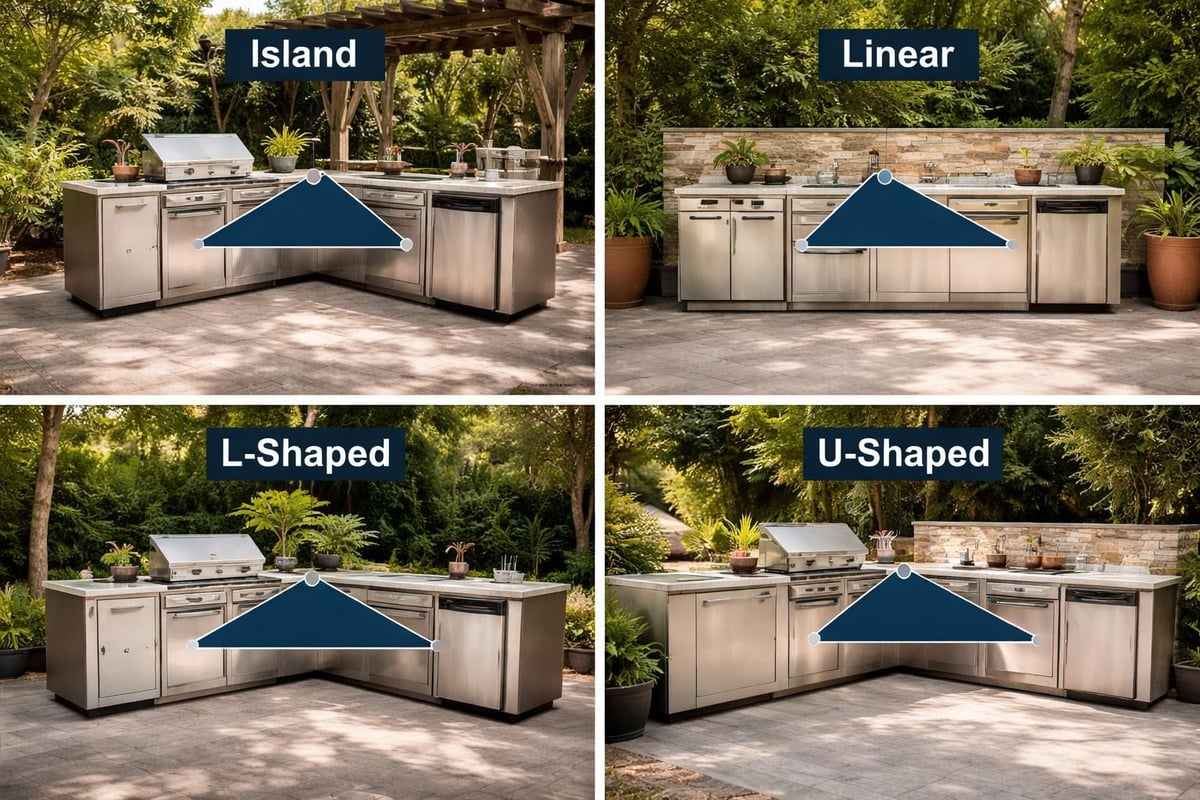
Building a comprehensive stainless outdoor kitchen requires coordinating multiple specialised components that collectively deliver restaurant-calibre capability in garden settings.
The heart of any outdoor kitchen comprises its primary cooking equipment. High-performance grills and smokers constructed from heavy-gauge stainless steel provide:
Professional-grade appliances feature double-wall construction with insulation that protects cabinet interiors whilst maintaining consistent cooking temperatures. Cast stainless steel burners resist corrosion far longer than cheaper alternatives, justifying premium investment through decades of reliable service.
Beyond cooking equipment, functional outdoor kitchens require comprehensive prep capabilities comparable to indoor facilities:
| Component | Specification Considerations | Performance Impact |
|---|---|---|
| Work Surfaces | 16-18 gauge thickness, marine-grade | Resists denting, supports heavy equipment |
| Sink Stations | Undermount installation, deep bowl | Proper drainage, utensil washing capability |
| Refrigeration | Outdoor-rated compressors, sealed units | Temperature stability, energy efficiency |
| Storage Cabinets | Fully welded construction, marine hinges | Weather resistance, longevity |
| Waste Management | Integrated bins with sealed lids | Hygiene, pest prevention |
Proper outdoor kitchen design positions these components according to ergonomic work triangle principles, minimising movement between refrigeration, preparation, and cooking zones whilst facilitating natural workflow during multi-course meal preparation.
Luxury outdoor kitchens increasingly incorporate dedicated appliances that expand culinary repertoire beyond standard grilling. Wood-fired pizza ovens and baking equipment deliver authentic artisan results that elevate entertaining occasions.
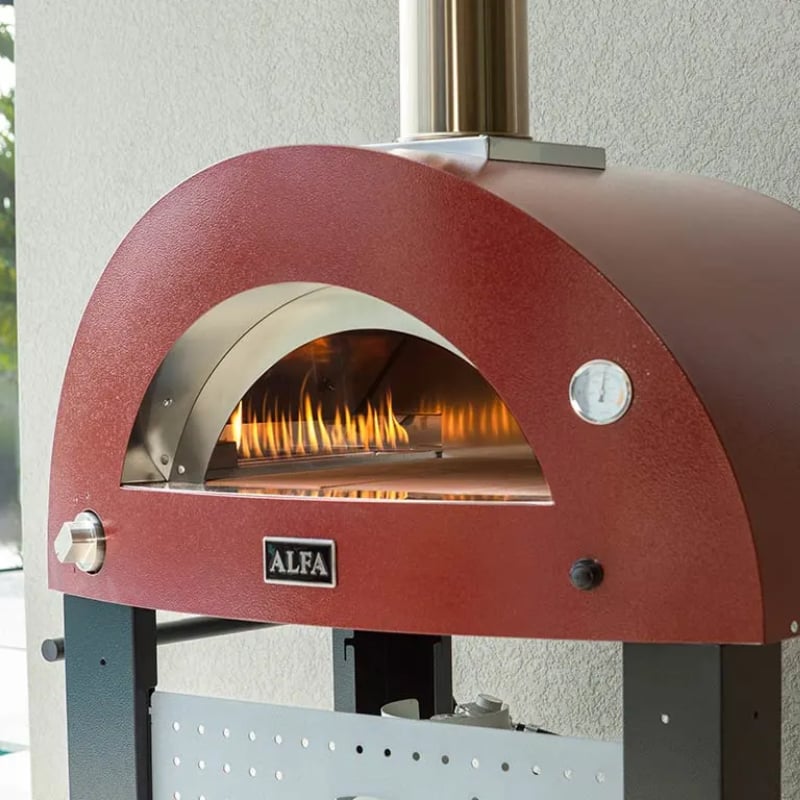
The Alfa Forni Moderno Hybrid Pizza Oven exemplifies this category brilliantly, handcrafted in Italy with dual-fuel capability that offers both LPG convenience and traditional wood-fire flavour. Reaching 500°C in approximately 30 minutes, it produces authentic Neapolitan pizzas in just 90 seconds whilst its antique red finish provides striking visual contrast against stainless steel surroundings. This combination of performance and aesthetics makes it an ideal complement to comprehensive outdoor cooking installations.
Additional speciality equipment might include smokers for low-and-slow barbecue, outdoor fryers for tempura and chips, or dedicated bread ovens for artisan baking. Each integration requires careful planning for utility connections, clearances, and workflow coordination.
Whilst stainless outdoor kitchens offer exceptional durability, appropriate maintenance protocols ensure optimal performance and appearance throughout decades of service. Understanding proper care techniques prevents common issues whilst preserving the material's inherent advantages.
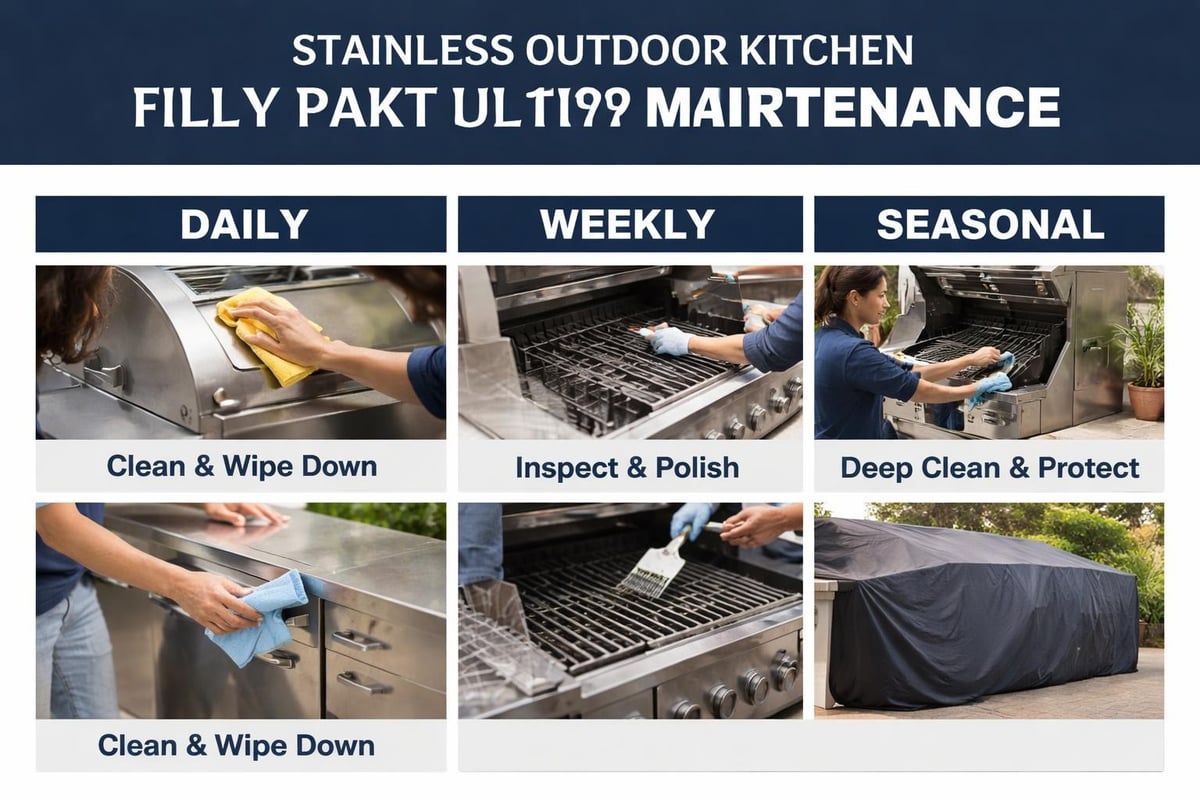
Regular cleaning represents the most critical maintenance activity, preventing buildup that can compromise both hygiene and aesthetics. Effective cleaning and protection strategies focus on:
Daily maintenance after cooking sessions:
Weekly deep cleaning during active seasons:
Seasonal preparation protects installations during dormant periods:
The year-round maintenance schedule adapts to regional climate patterns, with coastal locations requiring more frequent attention to salt deposits and industrial areas addressing atmospheric pollutants.
Despite its resilience, stainless steel can develop specific issues when improperly maintained or exposed to particular contaminants. Understanding these challenges enables prompt remediation:
Surface staining from hard water minerals, iron particles, or chlorides responds to:
Scratch minimisation through proper technique:
Rust prevention particularly around fasteners and joints:
The comprehensive maintenance guide applicable to grills extends logically to all stainless outdoor kitchen components, emphasising prevention over remediation.
A thoughtfully designed stainless outdoor kitchen functions as the anchor point for comprehensive alfresco living environments that extend usable space beyond traditional indoor boundaries. This integration proves particularly valuable across British properties where maximising garden utility justifies significant investment.
Positioning outdoor kitchen installations requires balancing multiple factors that influence both functionality and enjoyment:
Professional design consultation evaluates these variables holistically, often recommending outdoor kitchens positioned to capture evening sun whilst providing morning shade, protected from north winds yet enjoying southern aspect warmth.
Stainless outdoor kitchens achieve greatest impact when integrated within broader landscape architecture that extends living capability across seasons:
Overhead structures including pergolas, louvred roofs, and glazed canopies shelter cooking and dining areas from precipitation whilst allowing natural ventilation. These elements transform fair-weather spaces into year-round destinations suitable for British climate variability.
Heating solutions such as infrared panels, fire features, and enclosed braziers extend comfortable outdoor occupation into autumn and winter months, supporting the investment in premium cooking facilities through increased utilisation.
Lighting schemes combining task illumination for food preparation, ambient lighting for dining zones, and accent features highlighting architectural elements enable safe, sophisticated evening entertaining.
Flooring materials coordinate with stainless steel's contemporary aesthetic whilst providing slip resistance, drainage capability, and thermal mass characteristics appropriate to exposed locations.
This holistic approach positions outdoor kitchens as integral components within designed landscapes rather than isolated appliances, maximising both functional value and aesthetic cohesion.
Specifying a stainless outdoor kitchen represents substantial financial commitment, requiring clear understanding of cost drivers, value delivery, and return on investment through enhanced property appeal and lifestyle enrichment.
Comprehensive outdoor kitchen installations involve multiple expense categories that collectively determine total project investment:
| Cost Category | Typical Range (£) | Key Variables |
|---|---|---|
| Cabinetry & Counters | £8,000 – £25,000 | Size, finish grade, custom details |
| Cooking Appliances | £4,000 – £15,000 | Brand, fuel type, features |
| Refrigeration | £1,500 – £5,000 | Capacity, outdoor rating |
| Sink & Plumbing | £800 – £3,000 | Complexity, distance from mains |
| Electrical & Gas | £1,200 – £4,000 | New runs vs existing supply |
| Installation Labour | £3,000 – £8,000 | Site access, groundwork required |
| Ancillary Features | £2,000 – £10,000 | Lighting, heating, covering |
Bespoke installations incorporating premium brands, extensive customisation, and comprehensive utility infrastructure typically range between £25,000 and £60,000 for complete outdoor kitchens serving serious entertaining requirements. This investment horizon positions installations as permanent landscape improvements rather than temporary garden furniture.
The superior longevity of stainless outdoor kitchen components fundamentally alters cost-per-year calculations compared to alternatives requiring replacement or significant refurbishment:
Expected service life for properly maintained stainless steel installations exceeds 25-30 years, with many components remaining fully functional after four decades. This durability compares favourably against:
Maintenance cost reduction through stainless steel's inherent properties minimises ongoing expenditure. The material requires no painting, sealing, or protective treatments beyond routine cleaning, eliminating recurring professional service costs.
Property value enhancement from professional-grade outdoor kitchens contributes measurable appeal during property marketing, particularly within premium segments where sophisticated outdoor living capability represents expected amenity rather than optional luxury.
Current outdoor kitchen design evolution reflects broader architectural movements whilst responding to specific functional innovations that enhance cooking capability and user experience. Understanding these trends informs specification decisions that ensure installations remain current throughout their extended service lives.
Contemporary luxury outdoor kitchens increasingly embrace restrained design vocabularies that prioritise proportion, material honesty, and functional clarity over decorative embellishment. Stainless steel's inherent properties align perfectly with this minimalist approach:
This aesthetic particularly suits modern and transitional properties across Oxfordshire and the broader Cotswolds region, where traditional vernacular meets progressive design thinking.
Connected outdoor cooking systems bring indoor kitchen convenience to alfresco settings through integrated technology that enhances control, monitoring, and automation:
Remote temperature management allows precision cooking whilst attending to guests, with smartphone apps providing real-time monitoring and adjustment of multiple cooking zones simultaneously.
Automated ignition and safety systems enhance convenience and security, particularly valuable for installations accessed infrequently during shoulder seasons when manual checks might be overlooked.
Integrated lighting and audio controlled through unified smart home platforms create cohesive entertaining environments where ambiance adjusts seamlessly throughout evening progression.
Weather-responsive covering using motorised louvres or retractable canopies protects cooking areas automatically, responding to rain sensors or manual override through mobile interfaces.
These technological enhancements complement stainless outdoor kitchen durability, ensuring installations remain functionally current even as smart home ecosystems evolve.
Environmental consciousness increasingly influences outdoor kitchen specification, with discerning clients prioritising materials, appliances, and design approaches that minimise ecological impact:
British climate patterns, architectural traditions, and lifestyle preferences create specific requirements that distinguish UK outdoor kitchen design from continental European or North American approaches. Understanding these regional nuances ensures installations deliver optimal performance within their intended context.
The UK's maritime climate, characterised by moderate temperatures, abundant precipitation, and variable conditions, demands robust weather management strategies that maintain usability across seasons:
Overhead protection proves nearly essential rather than optional, with spring cleaning and maintenance schedules demonstrating year-round usage patterns that justify covering investment.
Wind mitigation through strategic positioning, integrated screening, or landscape planting protects cooking zones from prevailing westerlies whilst maintaining desired views and circulation.
Drainage design addresses frequent precipitation through properly pitched surfaces, adequate gutter capacity, and below-grade systems that prevent standing water around cabinetry bases.
These protective measures transform fair-weather amenities into genuinely all-season facilities that justify premium stainless outdoor kitchen investment through extended utilisation periods.
The Cotswolds region's distinctive architectural heritage, characterised by honey-coloured limestone, steep-pitched roofs, and traditional proportions, requires thoughtful material coordination when introducing contemporary stainless steel elements:
Finish selection gravitating toward brushed or antiqued treatments rather than polished mirror surfaces provides appropriate visual temperature that complements rather than conflicts with historic character.
Proportional scaling respects traditional building rhythms, with outdoor kitchen massing and module dimensions reflecting established architectural patterns rather than jarring through excessive scale.
Material bridging through transitional elements such as stone cladding bases, timber pergola structures, or matching masonry creates visual connection between contemporary stainless components and heritage surroundings.
This sensitive integration approach ensures outdoor kitchens enhance property character whilst delivering uncompromising modern performance.
A stainless outdoor kitchen delivers unmatched durability, hygiene, and design flexibility that transforms British gardens into year-round culinary destinations worthy of the investment they represent. From material selection and spatial planning through maintenance protocols and aesthetic integration, these installations exemplify the intersection of professional performance and refined outdoor living. The Cotswold Cooking Company brings decades of expertise to outdoor kitchen design and specification, offering comprehensive consultative services from initial concept through installation and beyond, helping discerning clients across the UK create bespoke outdoor cooking environments that blend Cotswold heritage with contemporary craftsmanship.

Comments
Leave a comment