


Transforming your outdoor space into a functional culinary destination requires more than simply relocating your indoor appliances to the garden. The foundation of any successful outdoor kitchen lies in selecting the right cabinetry-storage solutions that can withstand Britain's notoriously unpredictable weather whilst delivering the aesthetic refinement expected in luxury outdoor living spaces. From choosing weather-resistant materials to understanding UK planning requirements, selecting outdoor kitchen cabinets uk demands careful consideration of durability, design, and practical functionality. This comprehensive guide explores everything discerning homeowners need to know about specifying, installing, and maintaining outdoor kitchen cabinets that perform beautifully year after year.
When specifying outdoor kitchen cabinets uk, material selection determines both longevity and maintenance requirements. British weather presents unique challenges-persistent dampness, temperature fluctuations, coastal salt exposure, and UV degradation all conspire to compromise inferior materials.
Marine-grade stainless steel remains the gold standard for outdoor cabinetry in the UK. 304-grade stainless steel offers excellent corrosion resistance, whilst 316-grade (marine grade) provides superior protection in coastal environments or areas with high pollution levels. The British Stainless Steel Association provides detailed guidance on selecting appropriate grades for permanent external installations.
Key advantages of stainless steel cabinets include:
Powder-coated finishes expand colour options beyond traditional brushed or polished steel, allowing outdoor kitchens to complement existing garden design schemes whilst maintaining the underlying durability of stainless construction.
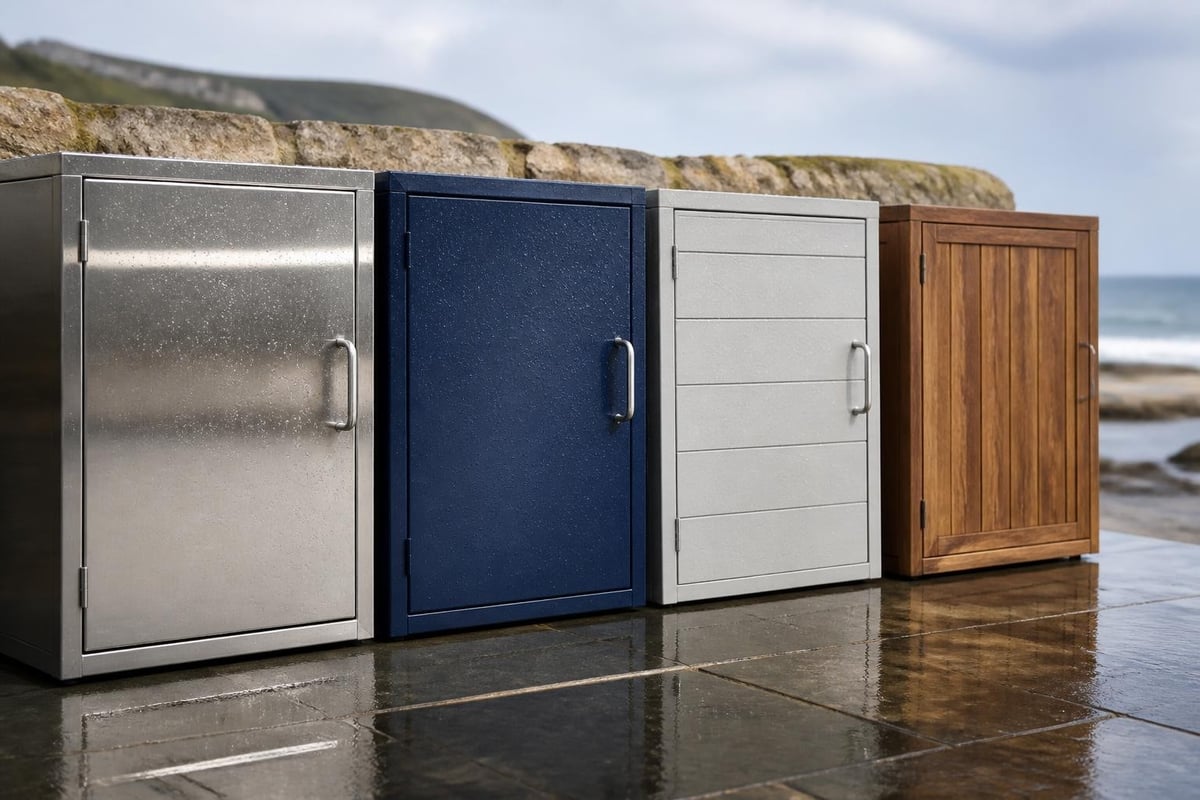
Marine-grade polymer cabinets deliver impressive weather resistance at moderate price points. High-density polyethylene (HDPE) construction resists moisture, never requires painting, and withstands freezing temperatures without cracking. However, these cabinets may lack the refined aesthetic expected in luxury installations.
Powder-coated aluminium offers lighter weight than stainless steel whilst maintaining excellent corrosion resistance. This material suits contemporary designs where clean lines and bold colours feature prominently.
Treated timber cabinets wrapped in waterproof cladding can work in sheltered locations, though they demand considerably more maintenance than metal alternatives. Regular sealing, pest treatment, and moisture monitoring become essential management tasks.
| Material | Durability (Years) | Maintenance Level | Coastal Suitability | Typical Cost Range |
|---|---|---|---|---|
| 316 Stainless Steel | 25+ | Very Low | Excellent | £££££ |
| 304 Stainless Steel | 20-25 | Low | Good | ££££ |
| Powder-Coated Aluminium | 15-20 | Low | Very Good | £££ |
| Marine Polymer (HDPE) | 15-20 | Very Low | Excellent | ££ |
| Treated Timber | 8-12 | High | Poor | ££ |
Before investing in outdoor kitchen cabinets uk, understanding regulatory requirements prevents costly mistakes. Most garden kitchens fall under permitted development rights as outbuildings, but specific conditions apply.
Standard permitted development allows outbuildings (including covered outdoor kitchens) without planning permission if they meet these criteria:
Permanent cabinet installations on patios typically don't require permission, but adding substantial roofing structures may trigger requirements.
Gas safety regulations apply when installing gas appliances within outdoor kitchens. The Health and Safety Executive's catering ventilation guidance outlines requirements for adequate ventilation, combustion air supply, and safe flue arrangements-even in open-air settings.
Electrical installations must comply with BS 7671 wiring regulations. Electrical Safety First recommends that all outdoor sockets feature RCD protection, appropriate IP ratings (minimum IP44, preferably IP65 for exposed locations), and professional installation by qualified electricians.
Flood risk assessment becomes relevant in certain locations. Properties in Flood Zones 2 or 3 should position outdoor kitchen cabinets above anticipated flood levels and consider waterproof base construction.
Successful outdoor kitchen cabinets uk installations balance aesthetic appeal with ergonomic functionality. Design should accommodate workflow efficiency whilst creating inviting entertainment spaces.
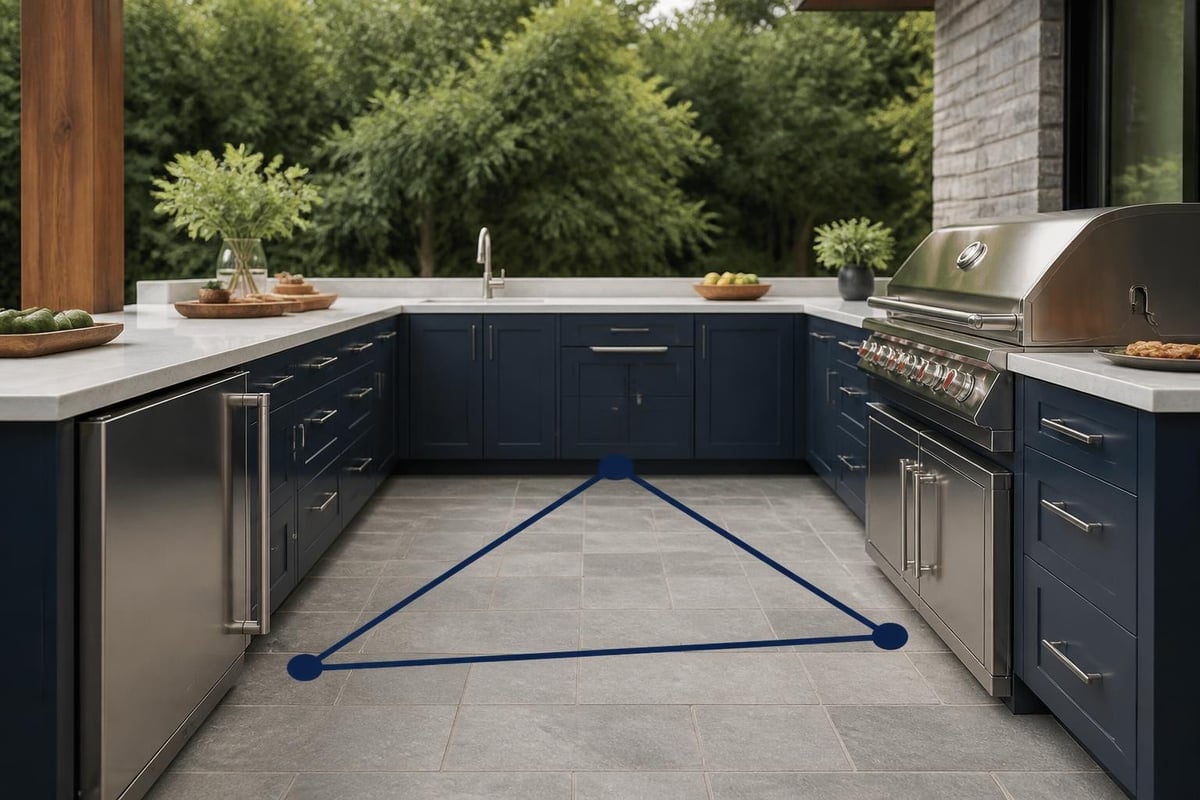
Professional outdoor kitchen design applies the same working triangle concept used indoors-positioning refrigeration, preparation zones, and cooking areas to minimise unnecessary movement. Ideal triangle dimensions measure between 4-9 metres total perimeter, with no single leg exceeding 2.7 metres.
Modular cabinet systems offer exceptional flexibility. Grillandia outdoor kitchens exemplify this approach, with fully customisable modules in various sizes, colours, and equipment configurations that adapt to diverse garden layouts and entertaining requirements.
Contemporary configurations include:
Effective outdoor kitchen cabinets uk incorporate zone-based storage:
Drawer dividers and internal organisers prevent items shifting during windy conditions. Soft-close mechanisms with weather-sealed bearings prevent slamming and extend hardware longevity. Lockable cabinets secure valuable equipment and hazardous materials when the outdoor kitchen sits unattended.
When selecting cabinet solutions that blend modern minimalism with premium performance, Cubic outdoor kitchens offer sleek lines, modular configurations, and durable weather-resistant materials engineered for British gardens. Their integrated approach accommodates BBQs, sinks, storage, and preparation zones within cohesive, architecturally refined designs.
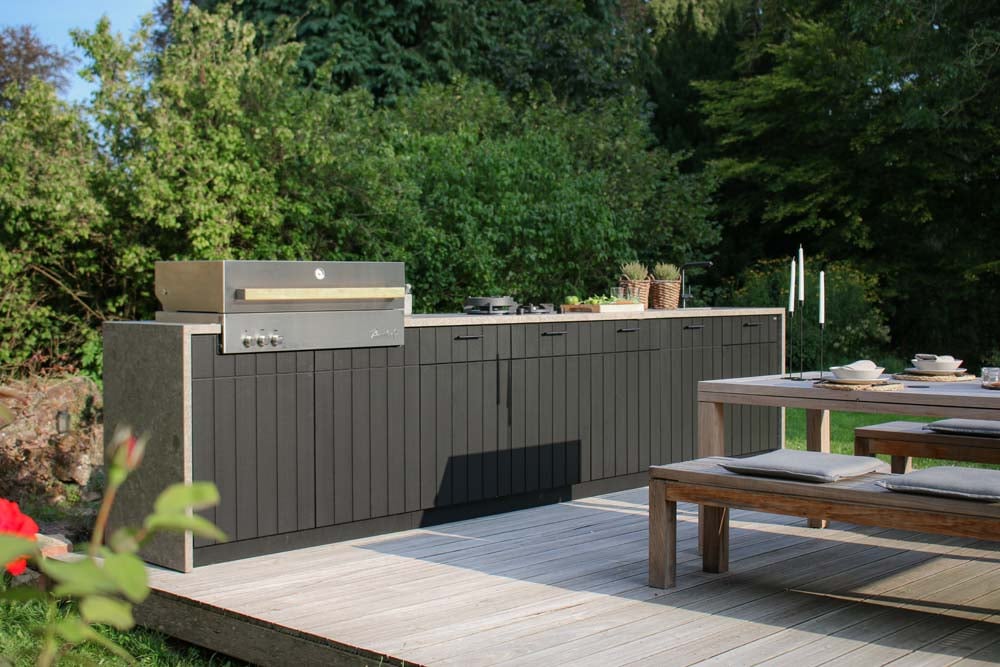
Even premium outdoor kitchen cabinets uk require proper protection to maximise service life. British weather demands multi-layered defence strategies.
Proper drainage prevents water pooling around cabinet bases. Installations should sit on level, well-drained surfaces-ideally porcelain paving, concrete pads, or composite decking with adequate ventilation beneath. The NHBC Standards provide technical guidance on waterproofing terraces and ensuring appropriate falls for drainage.
Adjustable legs with stainless steel or powder-coated aluminium construction allow precise levelling whilst maintaining ventilation underneath cabinets. This airflow prevents moisture accumulation and accelerates drying after rainfall.
Quality outdoor cabinets feature continuous gasket seals around doors and drawers. Silicone or EPDM rubber gaskets compress when closed, creating weathertight barriers against driven rain. Annual inspection and replacement of degraded seals prevents moisture ingress.
Internal drainage channels within cabinet frames evacuate any water that penetrates seals, directing it harmlessly away rather than allowing pooling inside storage compartments.
Whilst quality outdoor kitchen cabinets uk withstand direct weather exposure, overhead shelters extend longevity and enhance usability:
The CIBSE provides guidance on ventilation requirements for covered outdoor cooking areas, ensuring adequate combustion air and heat dissipation even under partial enclosures.
Modern outdoor kitchen cabinets uk must accommodate sophisticated appliances whilst maintaining weather protection and aesthetic cohesion.
Built-in grills require precise cabinet cut-outs with adequate clearances. Most manufacturers specify minimum distances from combustible materials-typically 100-150mm sides and rear, 300mm above cooking surfaces. Non-combustible insulation boards protect adjacent cabinetry from radiant heat.
Ventilation grilles in cabinet bases and backs allow cooling airflow for refrigeration units. Understanding built-in grill requirements ensures safe, efficient appliance operation integrated within cabinet runs.
Professional installations conceal services within cabinet structures:
Gas supply lines run through protected channels with accessible isolation valves. Regulations require rigid copper or approved flexible hoses, with pressure testing before commissioning.
Water supply and drainage for sinks demand frost-protected installation in UK climates. Self-draining tap designs and insulated supply pipes prevent winter damage. Waste connections require trapped drainage to prevent odours, venting appropriately to avoid pressure issues.
Electrical circuits should be dedicated to outdoor kitchens, with weatherproof consumer units positioned in accessible but protected locations. IP-rated junction boxes within cabinets facilitate appliance connections whilst maintaining water ingress protection.
Preserving outdoor kitchen cabinets uk in pristine condition requires understanding appropriate maintenance protocols for different materials and finishes.
Stainless steel surfaces benefit from weekly cleaning with pH-neutral detergents and microfibre cloths, wiping along the grain direction. Quarterly treatment with specialised stainless steel polish restores lustre and provides protective layers. Avoid chlorine-based cleaners, which can initiate pitting corrosion-particularly relevant to British atmospheric conditions.
Powder-coated finishes require gentler care. Wash with warm soapy water, avoiding abrasive materials that scratch protective coatings. Touch-up paint pens address minor chips before moisture reaches underlying metal.
Polymer cabinets tolerate more aggressive cleaning but benefit from UV-protectant treatments that prevent fading and surface degradation.
British winters demand specific protective measures:
| Maintenance Task | Frequency | Stainless Steel | Powder-Coated | Polymer | Timber |
|---|---|---|---|---|---|
| Surface Cleaning | Weekly | ✓ | ✓ | ✓ | ✓ |
| Polish/Protect | Quarterly | ✓ | ✓ | ✓ | - |
| Seal Inspection | Bi-annually | ✓ | ✓ | ✓ | ✓ |
| Hardware Lubrication | Annually | ✓ | ✓ | ✓ | ✓ |
| Touch-Up Treatment | As needed | - | ✓ | - | ✓ |
| Deep Refinishing | 3-5 years | - | - | - | ✓ |
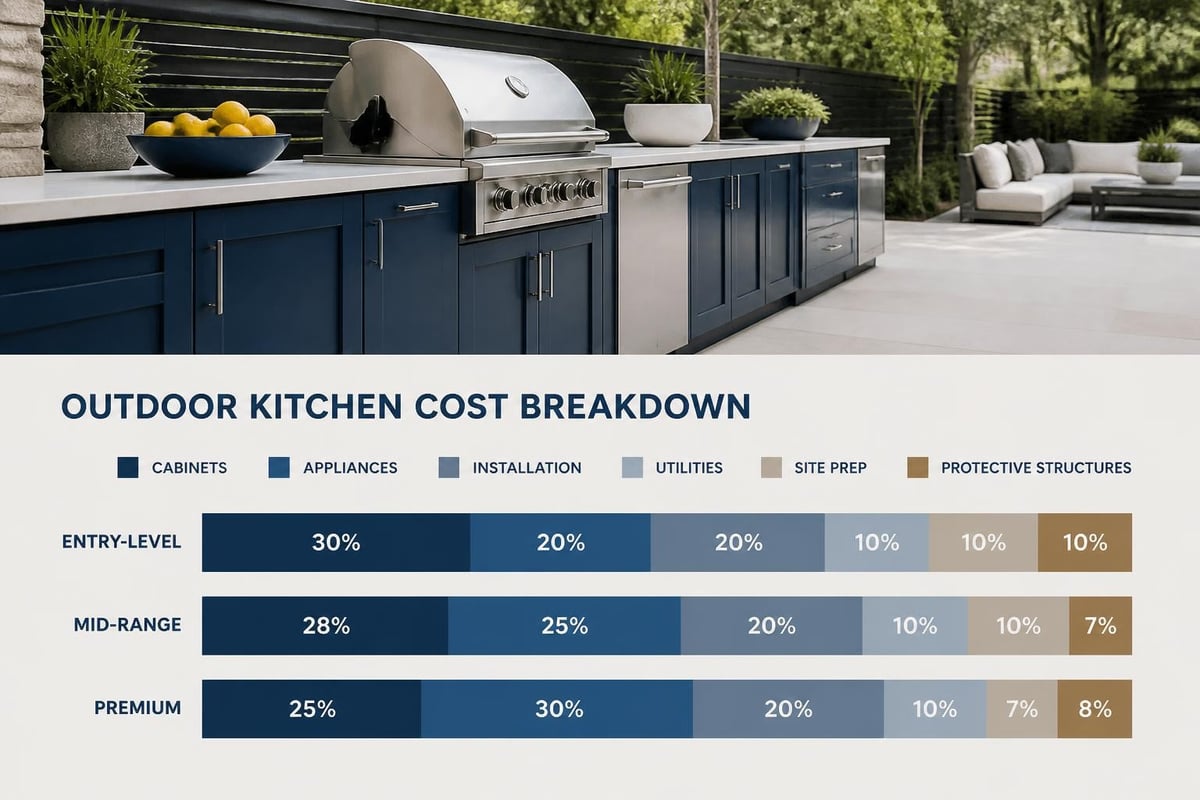
Outdoor kitchen cabinets uk represent significant investments, with pricing reflecting material quality, customisation level, and installation complexity.
Entry-level installations (£3,000-£8,000) typically feature:
Mid-range projects (£8,000-£20,000) include:
Premium installations (£20,000-£50,000+) deliver:
Installation costs typically add 15-30% beyond cabinet purchase prices. Complex utility connections, challenging access, or extensive site preparation increase this proportion.
Quality outdoor kitchen cabinets uk enhance property values, particularly in premium markets. Estate agents report outdoor living spaces adding 5-15% to home valuations when executed to high standards. Key value drivers include:
Navigating outdoor kitchen cabinets uk market requires understanding quality indicators that separate premium manufacturers from budget alternatives.
European manufacturing generally delivers superior quality control compared to mass-produced Asian imports. Italian, German, and British manufacturers typically employ:
Warranty coverage signals manufacturer confidence. Premium brands offer 10-25 year structural warranties on stainless cabinets, with separate coverage for hardware and finishes. Scrutinise exclusions-some warranties void if cabinets aren't covered when not in use, imposing impractical maintenance burdens.
Truly luxury outdoor kitchen cabinets uk accommodate individual requirements:
The professional trade programme offered to designers and architects ensures cohesive outdoor living spaces where cabinetry, cooking equipment, and structural elements work harmoniously together.
Modern outdoor kitchen cabinets uk increasingly reflect environmental consciousness alongside aesthetic and functional priorities.
Stainless steel's recyclability positions it favourably in lifecycle assessments. At end-of-life, cabinets retain scrap value and re-enter manufacturing streams without quality degradation. Contrast this with composite materials that typically end in landfill.
Powder coating eliminates volatile organic compounds (VOCs) associated with liquid painting, improving environmental profiles. Modern powder technology achieves exceptional durability with minimal environmental impact during application.
Local sourcing reduces transportation emissions. British-designed and European-manufactured outdoor kitchen cabinets uk carry smaller carbon footprints than products shipped from Asia, whilst supporting regional employment.
Smart outdoor kitchen cabinet design facilitates sustainable practices:
For homeowners creating comprehensive outdoor entertainment spaces, integration with custom audio-visual solutions allows energy-efficient zone control, where lighting, heating, and entertainment systems activate only when spaces are occupied.
Contemporary outdoor kitchen cabinets uk reflect evolving lifestyle priorities and design sensibilities.
Handleless designs with push-to-open mechanisms create seamless cabinet facades. Recessed grip channels offer alternatives where tactile interaction suits user preferences better than mechanical releases.
Monochromatic colour schemes-particularly charcoal greys, deep blues, and warm bronze tones-dominate luxury installations. These sophisticated palettes complement natural stone, timber, and planted elements within garden contexts.
Smart storage solutions now include:
Connectivity features allow remote monitoring of refrigeration temperatures, automated defrost cycles, and inventory tracking through smartphone applications.
Green walls integrated into cabinet runs blur boundaries between built and natural elements. Vertical planting panels filter air, provide fresh herbs for cooking, and soften hard architectural lines.
Natural material combinations see stainless steel paired with sustainably sourced timber accents, natural stone worktops, and planted roof elements on overhead structures.
While basic outdoor kitchen cabinets uk installations suit competent DIY enthusiasts, comprehensive projects benefit from professional expertise.
Gas appliance integration legally requires Gas Safe registered installers. Attempting DIY gas work breaches regulations and invalidates insurance coverage.
Complex electrical work demands Part P qualified electricians, particularly for permanent outdoor installations requiring consumer unit modifications.
Structural installations-especially those approaching permitted development limits-benefit from professional survey and specification ensuring regulatory compliance.
Freestanding modular systems on existing prepared bases suit capable homeowners with appropriate tools. Quality manufacturers provide detailed assembly instructions and telephone support.
Preparatory work-base preparation, drainage installation, utility rough-in to termination points-reduces professional installation costs when completed competently before specialist trades arrive.
Understanding the full outdoor journey from initial concept through to completion helps homeowners recognise which elements suit self-completion and which demand professional input.
Selecting outdoor kitchen cabinets uk requires balancing durability, design, and practical functionality whilst navigating British weather challenges and regulatory requirements. Premium materials, thoughtful configuration, and professional installation deliver outdoor culinary spaces that enhance properties and lifestyles for decades. Whether you're planning a modest terrace kitchen or an expansive outdoor entertaining suite, Cotswold Cooking Company offers consultative design expertise, hand-selected European brands, and comprehensive installation support to transform your vision into reality. Explore how their curated collections and bespoke design services can create your perfect outdoor cooking destination.

Leave a comment