


Creating a refined outdoor culinary destination requires more than exceptional cooking equipment and beautiful landscaping. The outdoor kitchen furniture you select forms the structural and functional backbone of your alfresco space, defining how you prepare, serve, and enjoy meals beneath open skies. From weather-resistant cabinetry to elegant bar seating and generous prep surfaces, these foundational elements must balance aesthetic refinement with practical durability. For discerning homeowners across the UK, particularly those transforming gardens in the Cotswolds and beyond, understanding how to specify and configure outdoor kitchen furniture ensures your investment delivers lasting beauty and performance throughout every season.
Outdoor kitchen furniture serves multiple purposes within your alfresco entertaining space. Unlike decorative garden furniture, these pieces provide essential infrastructure for food preparation, storage, and service.
The category encompasses base cabinets, overhead storage units, island configurations, bar counters, and integrated prep stations. Each element must withstand British weather patterns whilst maintaining visual harmony with your home's architecture and garden design.
Key functional requirements include:
When planning outdoor cooking station ideas, the furniture layout determines workflow efficiency and guest interaction patterns. A well-configured space allows the cook to engage with guests whilst preparing meals, transforming outdoor cooking from a solitary task into a social experience.
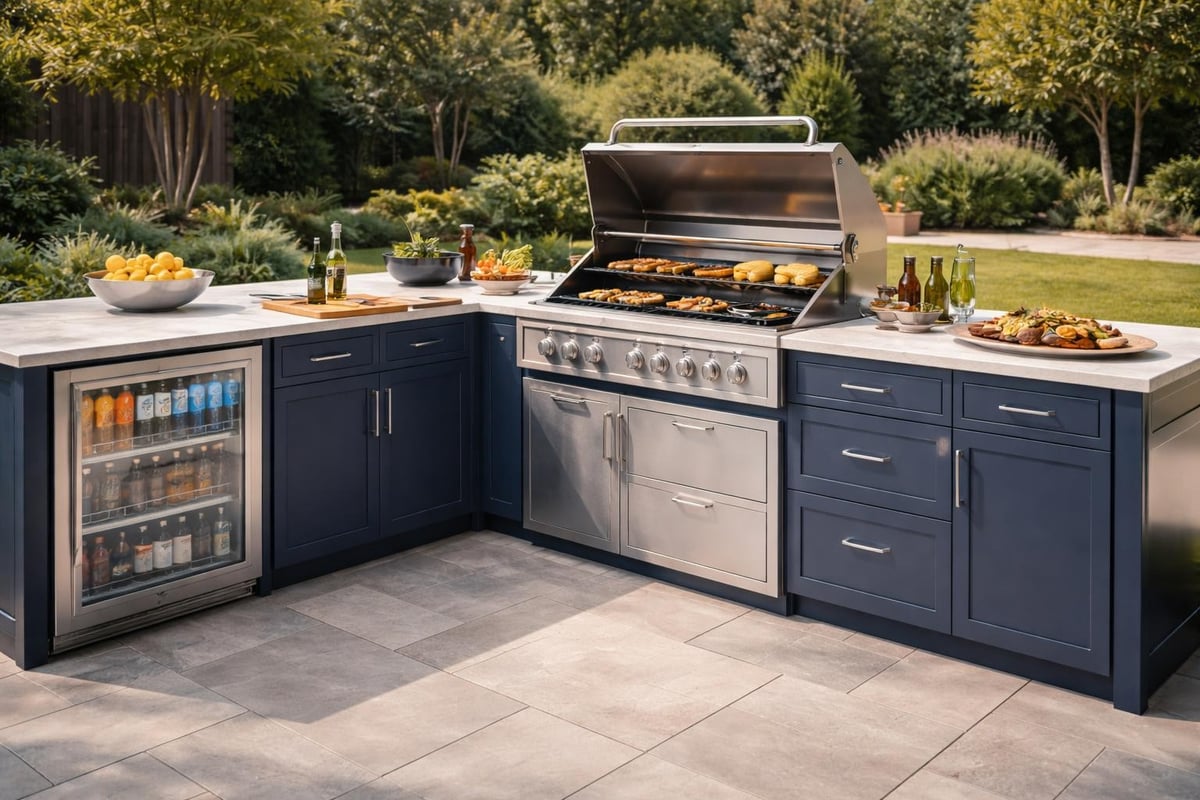
The materials you choose for outdoor kitchen furniture directly impact longevity, maintenance requirements, and aesthetic character. British climate conditions demand careful specification.
Stainless steel remains the premium choice for outdoor kitchen furniture, offering exceptional corrosion resistance and a contemporary aesthetic. Marine-grade 316 stainless steel provides superior protection in coastal regions, whilst 304-grade suffices for inland locations. The material ages gracefully, developing a subtle patina that many homeowners appreciate.
Powder-coated aluminium delivers lightweight durability with excellent weather resistance. Modern powder coating technology produces rich, stable colours that resist fading and chipping. This material suits both modern and traditional design schemes, depending on finish selection.
Weather-resistant timber appeals to those seeking warmth and natural texture. Iroko, teak, and thermally modified ash offer excellent outdoor performance when properly maintained. These materials require periodic oiling but reward owners with deepening character over time.
| Material | Durability | Maintenance | Aesthetic | Cost |
|---|---|---|---|---|
| 316 Stainless Steel | Excellent | Minimal | Contemporary | Premium |
| Powder-Coated Aluminium | Very Good | Low | Versatile | Moderate |
| Iroko Timber | Good | Regular | Traditional | Moderate-High |
| Marine Ply with HPL | Good | Low | Clean/Modern | Moderate |
Research from quality-focused manufacturers consistently demonstrates that initial investment in superior materials reduces lifetime ownership costs through decreased maintenance and replacement needs.
Outdoor kitchen furniture can be configured in numerous arrangements, each offering distinct advantages for different garden sizes, cooking styles, and entertaining preferences.
Freestanding island units create a focal point within larger gardens, allowing 360-degree access and encouraging guest interaction from all sides. These configurations work particularly well when positioned under pergolas or covered structures, protecting both cook and equipment from weather whilst maintaining an open, airy atmosphere.
Island layouts typically incorporate cooking equipment on one face, with prep surfaces and seating on the remaining sides. This arrangement keeps heat and smoke directed away from guests whilst creating natural conversation zones.
Corner configurations maximise functionality within compact footprints, utilising garden boundaries or structural walls to create efficient work triangles. The L-shaped approach suits medium-sized terraces and patios, providing generous counter space whilst leaving adequate circulation room.
Galley-style outdoor kitchen furniture arrangements position two parallel runs facing each other, ideal for narrow spaces or when creating distinct cooking and serving zones. This layout delivers professional-grade workflow efficiency for serious outdoor chefs.
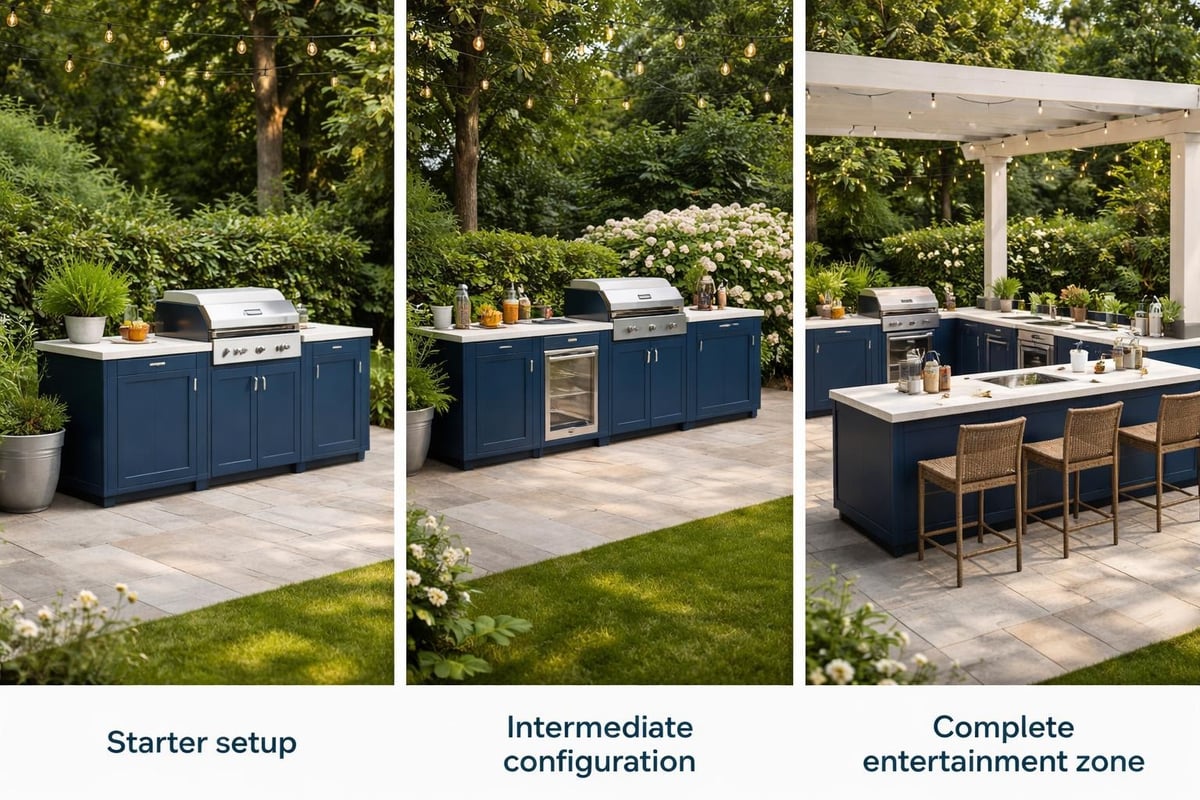
Contemporary outdoor kitchen furniture increasingly features modular construction, allowing homeowners to begin with essential components and expand over time. This approach suits both budget-conscious projects and those evolving alongside changing family needs.
Modular systems from curated brands ensure visual cohesion as your outdoor space develops, with matching finishes and standardised dimensions simplifying future additions.
Thoughtful storage within outdoor kitchen furniture transforms chaotic cooking sessions into streamlined culinary experiences. Beyond simple cabinet doors, modern systems incorporate specialised organisational features.
Pull-out shelving maximises accessibility, bringing items stored at the rear forward for easy retrieval. This feature proves particularly valuable in deeper base units where fixed shelving creates difficult-to-reach zones.
Drawer systems with soft-close mechanisms protect contents from impact whilst providing organised storage for utensils, tools, and smaller items. Marine-grade drawer slides resist corrosion and maintain smooth operation despite exposure to moisture and temperature variations.
Integrated waste management keeps outdoor spaces tidy, with concealed bins for recyclables, compost, and general waste. Dual-compartment systems encourage sustainable practices without compromising aesthetic appeal.
Weatherproof electrical integration allows charging of devices, powering of small appliances, and accent lighting. Properly sealed IP66-rated outlets maintain safety in exposed locations.
Consider how outdoor barbecue grill designs influence storage requirements. Built-in grills demand protected spaces for gas bottles, charcoal, smoking woods, and related accessories, whilst pizza ovens require storage for peels, turning tools, and fuel.
The countertop material you select for outdoor kitchen furniture significantly influences both functionality and visual impact. British weather demands surfaces resistant to freeze-thaw cycles, UV exposure, and moisture penetration.
Granite offers exceptional durability and heat resistance, readily withstanding hot pans placed directly on the surface. Its natural variation creates unique character, though some varieties require periodic sealing to prevent staining. Darker colours conceal minor scratches and weathering more effectively than lighter stones.
Quartzite delivers similar performance to granite with often more dramatic veining and colour patterns. This naturally occurring stone ranks higher on the Mohs hardness scale than granite, providing superior scratch resistance for high-use outdoor prep areas.
Porcelain slabs represent a relatively recent innovation in outdoor kitchen furniture, offering remarkable stain resistance, UV stability, and zero porosity. Available in stunning replicas of natural stone and innovative solid colours, porcelain requires no sealing and maintains its appearance indefinitely. The material's impermeability makes it ideal for food preparation surfaces.
Compact laminate provides cost-effective durability for outdoor applications. High-pressure laminate engineered specifically for exterior use resists moisture, impact, and temperature extremes whilst offering diverse aesthetic options. Though not suitable for hot pan placement, it performs admirably as general prep surface.
| Surface Material | Heat Resistance | Stain Resistance | Maintenance | Visual Options |
|---|---|---|---|---|
| Granite | Excellent | Good (sealed) | Periodic sealing | Natural variation |
| Porcelain | Excellent | Excellent | None required | Extensive range |
| Quartzite | Excellent | Good (sealed) | Periodic sealing | Dramatic patterns |
| Compact Laminate | Moderate | Very Good | Minimal | Wide colour range |
Professional guidance from industry specialists emphasises matching worksurface selection to your primary cooking style and maintenance preferences.
Outdoor kitchen furniture extends beyond cooking infrastructure to encompass integrated seating solutions that encourage lingering and conversation. Bar-height counters with overhang accommodate stools, creating casual dining opportunities adjacent to food preparation zones.
Fixed bench seating maximises space efficiency whilst providing generous capacity for larger gatherings. Built-in storage beneath bench seats capitalises on otherwise wasted volume, housing cushions, outdoor tableware, or garden games.
Freestanding dining furniture offers flexibility for repositioning based on sun patterns, wind direction, or guest numbers. Selecting materials and finishes that complement your outdoor kitchen furniture creates visual cohesion whilst maintaining practical versatility.
The rise of luxury outdoor furniture reflects growing recognition that alfresco spaces deserve the same design attention as interior rooms. Weather-resistant upholstery, powder-coated frames, and quick-dry cushion technologies ensure comfort without constant maintenance burdens.
Consider intermediate zones between cooking and dining areas. Pass-through counters facilitate service, allowing food to move seamlessly from kitchen to table. These transitional surfaces also provide useful staging areas for drinks, condiments, and serving platters during meals.
Incorporating different counter heights creates visual interest whilst serving distinct functions. Standard kitchen height (900mm) suits food preparation, whilst bar height (1100mm) accommodates standing guests and elevated seating.
The British climate presents unique challenges for outdoor kitchen furniture, with wet winters, occasional frost, and variable summers demanding thoughtful specification and protection strategies.
Permanently roofed structures provide the most comprehensive protection for outdoor kitchen furniture. Louvred pergolas allow adjustable coverage, opening during fine weather and closing when rain threatens. Fixed roofs with adequate overhang shield cabinetry and appliances whilst maintaining natural light.
Retractable awnings offer flexible protection, extending when needed and retracting to maximise sun exposure during favourable conditions. Modern motorised systems integrate with weather sensors, automatically deploying when rain is detected.
Even under covered areas, outdoor kitchen furniture benefits from protective treatments. Marine-grade sealants for timber, protective waxes for metal, and UV-resistant coatings for powder-coated surfaces extend component lifespan significantly.
Custom-fitted covers protect sensitive equipment and surfaces during extended periods of non-use. Breathable fabrics prevent condensation accumulation whilst blocking rain, dust, and debris. Premium covers feature reinforced stress points, securing ties, and UV-stabilised materials for multi-season durability.
Thoughtfully integrated lighting transforms outdoor kitchen furniture from daytime-only utility to all-hours entertainment hub. Multiple lighting layers serve distinct purposes whilst creating atmospheric warmth.
Task lighting illuminates prep surfaces, cooking zones, and serving areas with focused beams, ensuring safe and accurate food preparation after sunset. LED strip lighting beneath overhead cabinets provides shadow-free illumination exactly where needed.
Ambient lighting establishes mood through softer, diffused sources. Backlit panels, toe-kick illumination, and integrated strip lighting create visual drama whilst providing gentle wayfinding illumination.
Accent lighting highlights architectural features, texture, and material quality within your outdoor kitchen furniture. Uplighting within island units, spotlights trained on interesting surfaces, and feature pendants above bar seating create focal points and visual interest.
Modern LED technology delivers exceptional energy efficiency, longevity, and colour consistency. IP-rated fixtures ensure safe operation in exposed outdoor environments, whilst dimmable systems allow adjustment based on occasion and preference.
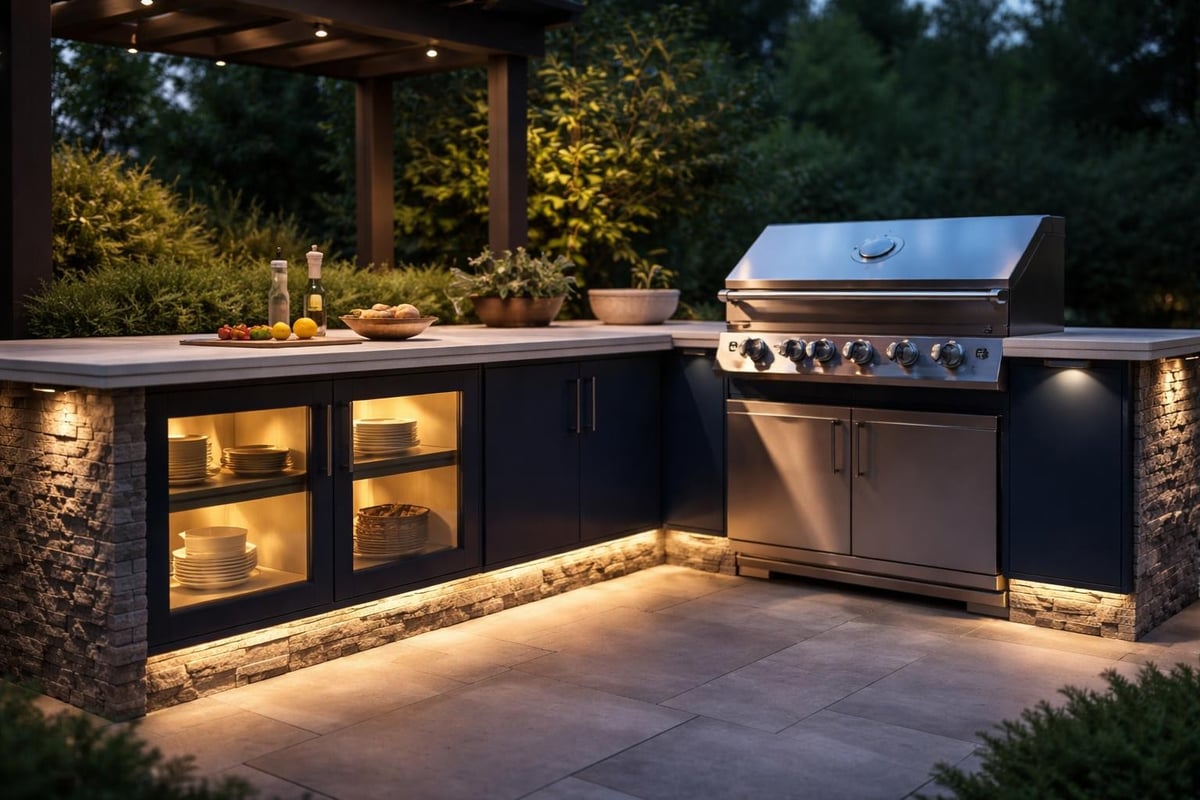
Whilst modular outdoor kitchen furniture systems offer convenience and value, bespoke commissioning delivers perfect alignment with your specific requirements, site conditions, and aesthetic vision. Custom fabrication accommodates irregular dimensions, non-standard appliance specifications, and unique material preferences.
Bespoke outdoor kitchen furniture allows incorporation of personal touches: integrated wine storage calibrated to your collection, charging drawers sized for your devices, or prep surfaces positioned at your precise ergonomic height. These refinements elevate functionality whilst expressing individual style.
Working with experienced design consultants during the specification process ensures technical requirements receive proper attention. Utility routing, structural support, drainage integration, and weatherproofing details demand professional expertise, particularly for complex installations.
For those drawn to modular systems, semi-bespoke approaches combine standardised cabinet boxes with custom doors, handles, worksurfaces, and finishes. This middle path delivers personalisation whilst controlling costs and timelines.
Outdoor kitchen furniture installation differs significantly from indoor cabinetry work, requiring specialised knowledge of drainage, weatherproofing, and structural support. Professional installation ensures both performance and longevity.
Adequate foundations prove essential for outdoor kitchen furniture longevity. Concrete pads, properly reinforced and levelled, provide stable platforms resistant to settlement and frost heave. Insufficient foundations lead to cabinet misalignment, door operation issues, and potential structural failure.
Drainage integration prevents water accumulation around and beneath cabinetry. Gentle slopes direct moisture away from structures, whilst weep holes in base units allow any penetrating water to escape rather than pooling inside cabinets.
Gas, water, and electrical services require proper installation by qualified tradespeople. Gas lines demand appropriate pressure regulation and leak testing. Water supplies need backflow prevention and seasonal winterisation capabilities to prevent freeze damage.
Electrical circuits serving outdoor kitchen furniture require GFCI protection and weatherproof enclosures. Dedicated circuits prevent overload, particularly when powering multiple appliances simultaneously.
The professional service partners you engage should demonstrate specific outdoor kitchen experience, understanding the unique demands of exposed installations.
Quality outdoor kitchen furniture represents significant investment, justified by enhanced lifestyle enjoyment, entertainment capabilities, and potential property value increase. Understanding cost drivers helps establish realistic budgets aligned with aspirations.
Material selection influences pricing substantially, with marine-grade stainless steel commanding premium pricing compared to powder-coated aluminium or composite materials. However, lifecycle costing often favours higher initial investment in superior materials.
Configuration complexity affects costs through both material quantities and installation labour. Simple linear arrangements prove more economical than elaborate islands with multiple angles, levels, and integrated features.
Appliance integration demands precision fabrication and professional installation, adding costs beyond basic cabinetry. However, built-in equipment delivers superior aesthetics and weather protection compared to freestanding alternatives.
According to consumer research, outdoor kitchen investments typically enhance property desirability and marketability, particularly in premium segments where alfresco entertaining capabilities feature prominently in buyer preferences.
Budget-conscious homeowners can implement outdoor kitchen furniture in phases, beginning with essential elements and expanding as resources allow. Initial phases typically include basic prep surface, cooking equipment, and minimal storage. Subsequent additions introduce enhanced storage, integrated seating, specialty appliances, and luxury finishes.
This approach requires upfront planning to ensure later additions integrate seamlessly with existing elements. Modular systems particularly suit phased implementation, with manufacturers designing ranges specifically for progressive expansion.
Proper maintenance extends outdoor kitchen furniture lifespan whilst preserving appearance and performance. Establishing regular care routines prevents minor issues escalating into costly repairs.
Spring preparation involves thorough cleaning after winter dormancy, inspecting seals and weatherstripping, testing moving parts, and refreshing protective treatments. This annual review identifies emerging issues before the entertaining season begins.
Summer maintenance focuses on regular cleaning, prompt spill removal, and monitoring for any weather damage after storms. Keeping drainage channels clear prevents water accumulation.
Autumn preparation includes deep cleaning, applying protective treatments, and potentially covering sensitive elements before winter weather arrives. Draining water lines in unheated installations prevents freeze damage.
Winter protection varies by climate and installation specifics. Some homeowners continue year-round use beneath covered structures, whilst others mothball installations until spring returns.
Different outdoor kitchen furniture materials demand tailored maintenance approaches. Stainless steel benefits from periodic cleaning with specialised products that remove water spots and restore lustre. Timber requires regular oiling to maintain moisture resistance and colour. Powder-coated surfaces need gentle cleaning with non-abrasive products to preserve finish integrity.
Understanding these requirements during material selection ensures alignment between maintenance tolerance and material choice.
Outdoor kitchen furniture design continues evolving, influenced by changing lifestyles, technological advances, and shifting aesthetic preferences. Understanding current trends provides inspiration whilst avoiding dated choices.
Contemporary outdoor kitchen furniture increasingly favours clean lines and handleless operation. Push-to-open mechanisms, recessed grips, and integrated finger pulls create streamlined facades that emphasise material quality and proportional refinement.
This minimalist approach suits both modern architectural contexts and transitional schemes where simplicity provides visual calm. The aesthetic pairs particularly well with monolithic worksurfaces and concealed appliances.
Combining multiple materials within outdoor kitchen furniture creates visual richness and tactical variety. Timber doors against stainless steel frames, stone worktops above powder-coated cabinets, or concrete surfaces complementing iroko accents demonstrate thoughtful layering.
Mixed material approaches require careful colour and texture coordination to achieve cohesion rather than confusion. Drawing materials from a limited palette ensures harmony.
Smart technology increasingly features within outdoor kitchen furniture through wireless temperature probes, automated lighting systems, integrated audio, and appliance connectivity. These conveniences enhance the cooking experience without overwhelming the outdoor atmosphere.
Concealing technology infrastructure maintains visual simplicity whilst delivering modern functionality. Dedicated equipment housings, discreetly positioned controls, and weatherproof connections ensure reliable operation.
Recent insights from luxury outdoor kitchen specialists indicate growing demand for year-round usability, driving interest in heated outdoor spaces, all-weather furniture materials, and robust climate control integration.
Environmentally conscious homeowners increasingly evaluate outdoor kitchen furniture through sustainability lenses, considering material sourcing, manufacturing processes, and lifecycle impacts.
Responsibly sourced timber from certified sustainable forests offers renewable material choices with lower carbon footprints than metal alternatives. FSC and PEFC certifications provide assurance regarding forest management practices.
Recycled content materials including recycled aluminium and composite decking manufactured from reclaimed plastics reduce virgin resource consumption whilst delivering durable performance.
Local manufacturing minimises transportation emissions whilst supporting regional economies. British-made outdoor kitchen furniture often demonstrates superior quality through established craftsmanship traditions and rigorous manufacturing standards.
Longevity focus represents perhaps the most significant sustainability contribution. Durable outdoor kitchen furniture constructed from quality materials and designed for repair rather than replacement reduces replacement frequency and associated environmental impacts.
Outdoor kitchen furniture functions as one element within broader landscape composition. Successful integration requires considering relationships with surrounding features, architectural context, and garden character.
Drawing design cues from your home's architecture creates natural connections between indoor and outdoor spaces. Traditional Cotswold stone cottages pair beautifully with timber outdoor kitchen furniture in heritage finishes, whilst contemporary glass and steel homes call for sleek minimalist cabinetry in complementary materials.
Repeating architectural details like panel configurations, trim profiles, or colour tones strengthens visual relationships without requiring identical replication.
Position outdoor kitchen furniture to capitalise on garden assets whilst minimising less attractive views. Siting near mature plantings provides natural screening and softening, whilst orientation toward garden focal points enhances the cooking and dining experience.
Consider seasonal changes in sun patterns, prevailing wind directions, and privacy requirements when finalising locations. Professional design consultation helps optimise placement for comfort and functionality.
Extending flooring materials from adjacent terraces into the outdoor kitchen zone creates seamless transitions. Similarly, coordinating furniture finishes with architectural metalwork, window frames, or other garden structures reinforces design cohesion.
This material continuity needn't mean monotony. Thoughtful variation in scale, texture, or application prevents uniformity whilst maintaining harmonious relationships.
Outdoor kitchen furniture must accommodate specialised cooking equipment beyond standard appliances. Pizza ovens, smokers, teppanyaki grills, and dedicated wok burners each demand specific spatial and utility provisions.
The Cubic C1 Style Outdoor Kitchen exemplifies how modular outdoor kitchen furniture can integrate diverse cooking technologies within unified aesthetic frameworks. Its weather-resistant construction and customisable configuration accommodate everything from built-in barbecues to integrated refrigeration, demonstrating how thoughtful design creates cohesive outdoor culinary destinations.
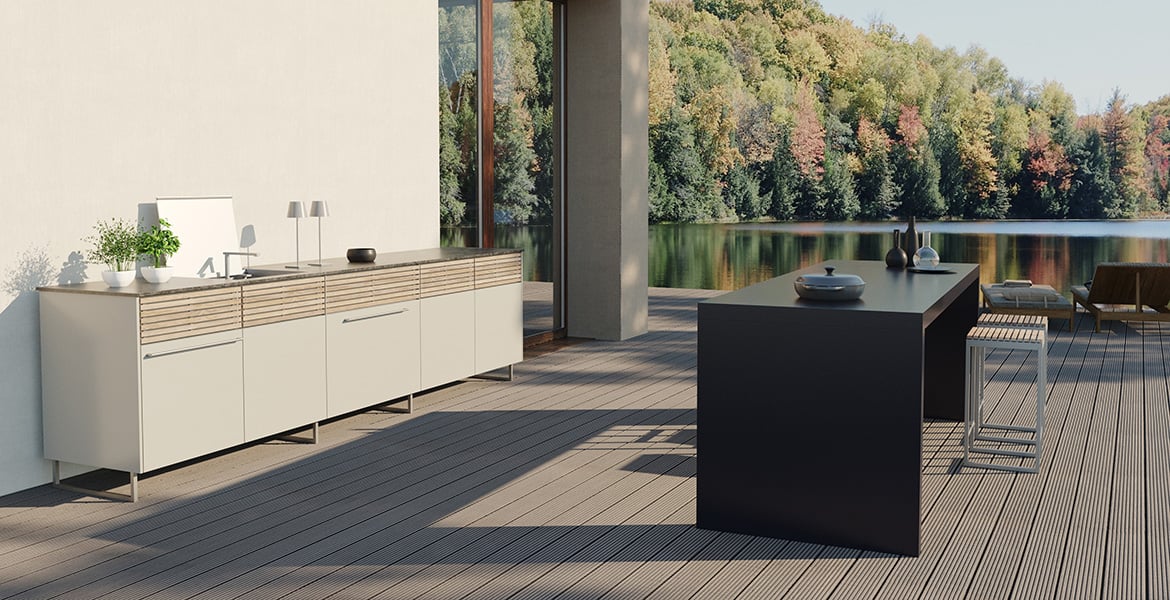
High-heat equipment requires adequate clearance from combustible materials and sufficient ventilation to prevent heat accumulation. Manufacturer specifications define minimum distances, but generous clearances enhance safety and component longevity.
Heat shields and insulation barriers protect cabinetry adjacent to ovens and grills. Marine-grade insulation materials withstand outdoor conditions whilst preventing heat transfer to sensitive components.
Gas bottles, charcoal, smoking woods, and other fuels require dedicated storage within outdoor kitchen furniture. Proper ventilation prevents gas accumulation, whilst keeping fuels dry ensures optimal performance.
Some configurations incorporate dual fuel storage, allowing seamless switching between gas convenience and wood-fired flavour enhancement, particularly valuable for hybrid cooking equipment.
Outdoor kitchen furniture suits diverse property contexts, from compact urban terraces to expansive country estates. Understanding scale-appropriate approaches ensures successful outcomes regardless of available space.
Limited footprints demand space-efficient outdoor kitchen furniture that maximises functionality within minimal dimensions. Galley configurations against boundary walls, fold-down prep surfaces, and vertical storage optimisation characterise successful urban installations.
Lightweight materials facilitate rooftop installations where structural loading limits constrain options. Powder-coated aluminium and composite materials deliver performance without excessive weight.
Medium-sized gardens typically accommodate L-shaped or small island configurations, balancing cooking capability with circulation space and entertainment areas. These installations often feature mid-range appliance specifications and versatile material selections suited to regular family use and periodic entertaining.
Partial overhead coverage through pergolas or retractable awnings extends usability whilst controlling costs compared to fully enclosed structures.
Expansive grounds enable ambitious outdoor kitchen furniture installations incorporating multiple cooking zones, extensive prep surfaces, substantial storage, and integrated dining for large gatherings. These projects often feature premium materials throughout, bespoke fabrication, and comprehensive utility integration.
The scale supports separate zones for different cooking styles, drinks service, and food preparation, allowing multiple cooks to work simultaneously without congestion.
Selecting and configuring outdoor kitchen furniture requires balancing aesthetic aspirations with practical performance demands, particularly within the British climate's challenging conditions. From material specification through layout optimisation to equipment integration, each decision shapes your outdoor space's functionality and character. Whether you're drawn to contemporary minimalism or heritage-inspired warmth, quality outdoor kitchen furniture transforms gardens into year-round culinary destinations. The Cotswold Cooking Company brings decades of expertise to outdoor kitchen design, offering consultative guidance from initial concept through final installation, ensuring your investment delivers enduring beauty and performance across every season.

Leave a comment