


Transforming your garden into a sophisticated culinary destination has never been more accessible, thanks to the evolution of outdoor kitchen kits. These comprehensive solutions combine professional-grade cooking equipment, weather-resistant cabinetry, and thoughtfully designed storage into cohesive systems that rival indoor kitchens in functionality whilst embracing the pleasure of alfresco dining. Whether you're a discerning homeowner seeking to enhance your property's value or a design professional specifying outdoor living spaces for clients, understanding the nuances of outdoor kitchen kits ensures you invest wisely in a solution that delivers performance, durability, and aesthetic refinement for years to come.
Outdoor kitchen kits represent a paradigm shift from traditional built-in-situ outdoor cooking spaces. Rather than coordinating individual elements from disparate suppliers, these integrated systems provide matched components designed to work harmoniously together. The most sophisticated kits include everything from core cooking appliances and refrigeration to countertops, storage, and utility connections.
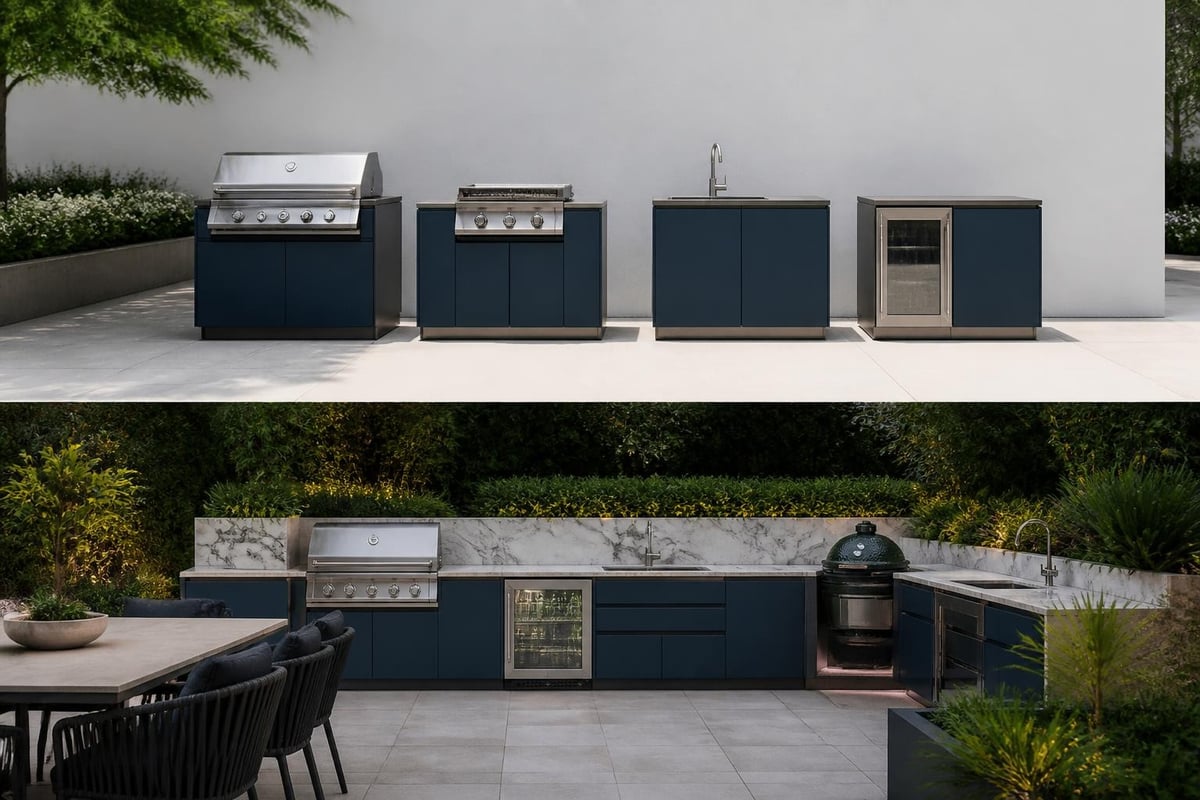
The outdoor kitchen market offers two principal approaches: standardised modular systems and bespoke custom configurations. Modular kits feature pre-designed units with fixed dimensions that can be arranged in various layouts. These systems excel in predictability-you know precisely what you're receiving, installation timelines are shorter, and costs remain transparent.
Custom configurations, conversely, allow complete freedom in size, layout, and specification. Premium manufacturers such as Grillandia offer fully customisable outdoor kitchens where every dimension, equipment choice, and finish can be tailored to your exact requirements. This approach suits properties with unique spatial constraints or homeowners with specific culinary ambitions.
| Configuration Type | Advantages | Best Suited For | Typical Lead Time |
|---|---|---|---|
| Modular Kits | Predictable costs, faster installation, proven designs | Standard garden spaces, straightforward layouts | 4-8 weeks |
| Semi-Custom | Some dimensional flexibility, wider material choices | Properties with minor spatial challenges | 8-12 weeks |
| Fully Bespoke | Complete design freedom, perfect fit, unique specifications | Luxury properties, architectural projects, complex sites | 12-16 weeks |
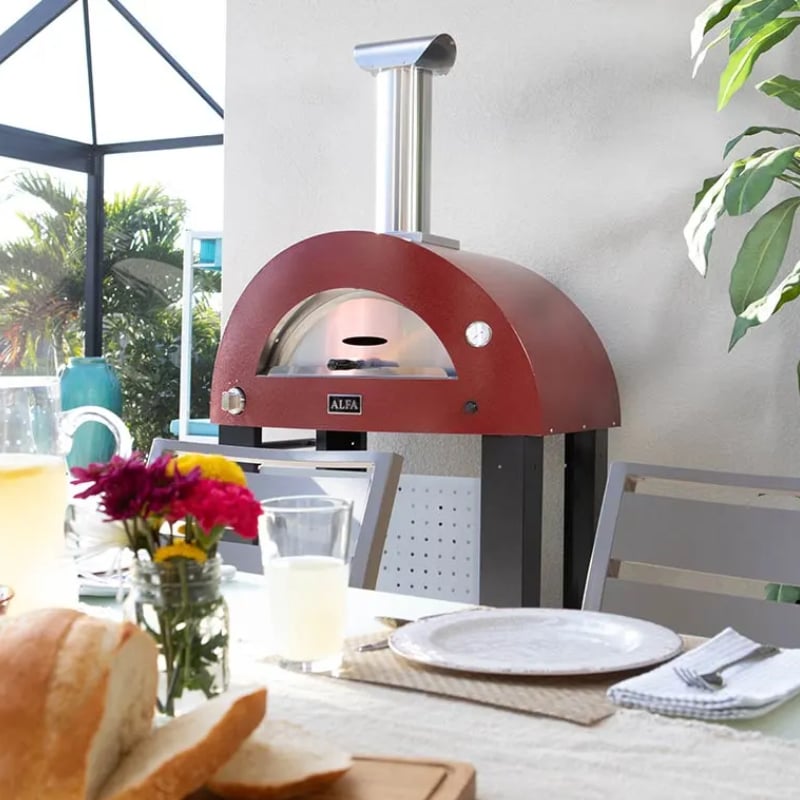
Quality outdoor kitchen kits incorporate several critical elements. The cooking zone typically centres on a built-in grill, often complemented by side burners, griddles, or specialist equipment such as pizza ovens. The Alfa Forni Moderno Hybrid Pizza Oven exemplifies how hybrid technology-combining wood and gas fuel options-delivers both convenience and authentic flavour, reaching 500°C in approximately 30 minutes for perfect Neapolitan pizzas.
Refrigeration represents another non-negotiable component for serious outdoor cooking. Purpose-built outdoor refrigerators feature enhanced insulation, marine-grade stainless steel construction, and weatherproof seals. Consumer Reports testing demonstrates that outdoor-rated units significantly outperform adapted indoor models in temperature stability and longevity when exposed to the elements.
Storage and prep surfaces complete the functional triangle. Weatherproof cabinetry must withstand UV exposure, temperature fluctuations, and moisture without warping or degrading. High-quality outdoor kitchen kits utilise marine-grade stainless steel, powder-coated aluminium, or advanced polymer composites that resist corrosion whilst maintaining aesthetic appeal.
British weather presents unique challenges for outdoor kitchen installations. Unlike Mediterranean or desert climates, UK gardens experience persistent moisture, freezing temperatures, and dramatic seasonal variations. Material selection directly impacts both longevity and maintenance requirements.
Stainless steel remains the gold standard for luxury outdoor kitchens. Marine-grade 316 stainless steel offers superior corrosion resistance compared to standard 304 alloys, particularly important in coastal regions or areas with high rainfall. The material's non-porous surface resists bacteria, simplifies cleaning, and maintains appearance indefinitely with minimal maintenance.
Powder-coated stainless steel and aluminium provide excellent weather resistance whilst offering expanded colour options. Advanced powder coating processes create finishes that resist chipping, fading, and chemical damage. Premium manufacturers apply multiple coating layers and utilise UV-stable pigments that maintain colour integrity even under intense sunlight.
Polymer and composite materials have evolved significantly. Modern high-density polyethylene (HDPE) and advanced composites deliver impressive weather resistance at reduced weight compared to metal alternatives. These materials won't rust, require no painting, and prove impervious to insects and rot. However, discerning buyers should verify UV stabilisation and temperature tolerance, as inferior composites can become brittle in freezing conditions or warp under sustained heat.
Countertop selection influences both functionality and aesthetics. Granite and engineered quartz offer proven durability, resist staining, and tolerate temperature extremes. Porcelain slabs have gained favour for outdoor applications, combining exceptional scratch resistance with frost tolerance and minimal maintenance requirements.
Natural stone requires sealing to prevent moisture absorption and staining. In UK climates, water penetration followed by freezing can cause surface spalling or cracking. Regular resealing-typically annually-maintains protection, but even with diligent maintenance, some natural stones prove less suitable for outdoor exposure than engineered alternatives.
Stainless steel countertops create seamless, hygienic work surfaces that integrate beautifully with professional-grade equipment. The material resists heat damage, simplifies cleaning, and develops a distinguished patina over time. Quality fabrication with properly welded seams prevents water intrusion and bacterial growth.
Effective outdoor kitchen design balances functionality, flow, and aesthetic harmony with your garden and home architecture. The most successful installations feel like natural extensions of both indoor living spaces and the surrounding landscape.
Professional kitchen designers apply the work triangle concept-positioning refrigeration, preparation, and cooking zones to minimise movement whilst maintaining efficiency. In outdoor kitchens, this principle adapts to accommodate the more relaxed, social nature of garden cooking.
Unlike indoor kitchens where efficiency dominates, outdoor spaces often prioritise guest interaction. Positioning the grill so the cook faces the entertaining area maintains conversation flow. Design inspiration from Architectural Digest demonstrates how thoughtful orientation transforms cooking from a solitary task into a social centrepiece.
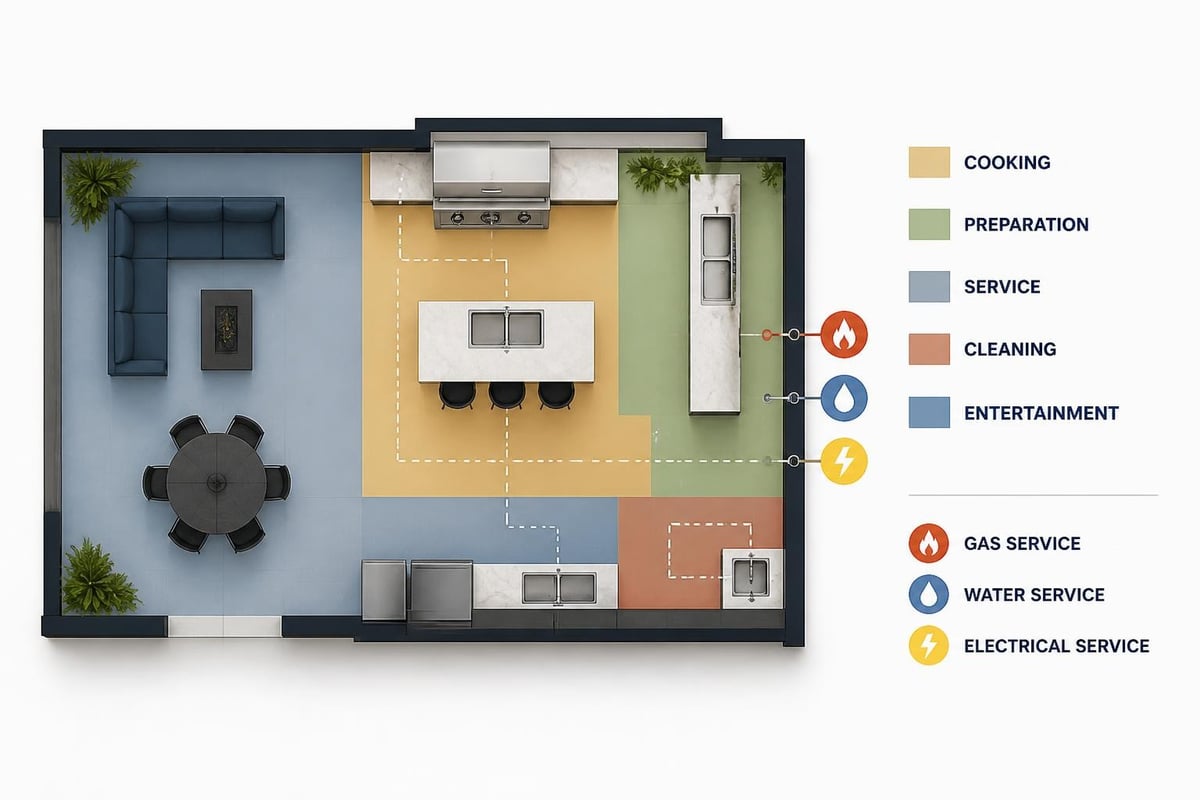
Sophisticated outdoor kitchens incorporate distinct zones:
Each zone requires specific utilities and equipment. Planning utility runs-gas, water, electricity, and drainage-during initial design prevents costly retrofitting. Working with experienced outdoor kitchen specialists ensures compliance with building codes whilst optimising functionality.
Outdoor kitchen installations involve numerous regulatory considerations. Understanding these requirements prevents project delays, ensures safety, and protects your investment.
Most permanent outdoor kitchen installations require building notice or full plans approval under UK Building Regulations. Code requirements for outdoor kitchens vary by location, but typically address structural support, gas connections, electrical work, and drainage.
Gas installations must comply with Gas Safety (Installation and Use) Regulations 1998. Only Gas Safe registered engineers may install, modify, or service gas appliances and pipework. Documentation of all gas work remains legally required and provides essential protection for property transactions.
Electrical work must meet BS 7671 wiring regulations. Outdoor installations demand enhanced protection against moisture ingress, typically requiring IP65-rated enclosures and RCD protection. Many local authorities require separate notification for outdoor electrical installations beyond simple socket additions.
Fire safety represents a critical consideration, particularly given the NFPA research on cooking-related fires, which identifies cooking as the leading cause of residential fires. Outdoor kitchens must maintain adequate clearances from combustible materials-typically 600mm minimum from wooden fences, pergolas, or structures.
Built-in grills require specific installation clearances detailed in manufacturer specifications. Premium manufacturers provide comprehensive installation guides addressing ventilation, combustible material proximity, and structural support requirements. When exploring built-in grills for outdoor kitchens, reviewing these specifications ensures compliant, safe installations.
Equipment selection defines your outdoor kitchen's capabilities and longevity. Professional-grade appliances deliver superior performance whilst withstanding the demanding outdoor environment.
Built-in grills represent the centrepiece of most outdoor kitchens. When evaluating options, Consumer Reports' outdoor kitchen and grill testing emphasises consistent heat distribution, burner longevity, and weather-resistant construction.
Premium grills feature:
Outdoor refrigeration differs fundamentally from indoor units. Temperature stability proves challenging when ambient conditions fluctuate dramatically. Purpose-designed outdoor refrigerators incorporate enhanced insulation, more powerful compressors, and ventilation systems that function efficiently across wider temperature ranges.
Stainless steel interiors and exteriors resist corrosion whilst simplifying maintenance. Glass-door units offer visibility and aesthetic appeal, though solid doors provide superior energy efficiency. Features such as automatic defrost, adjustable shelving, and integrated lighting enhance functionality.
Beyond core grilling and refrigeration, specialty equipment expands culinary possibilities:
Outdoor kitchen installation ranges from enthusiastic DIY projects to fully managed professional installations. Your approach depends on technical capability, time availability, and project complexity.
Simple modular outdoor kitchen kits suit confident DIY enthusiasts. Pre-fabricated units with clear assembly instructions, standardised dimensions, and minimal customisation reduce complexity. This Old House's outdoor kitchen construction guide provides comprehensive methodology for owner-builders tackling outdoor kitchen projects.
However, certain elements demand professional expertise. Gas connections legally require Gas Safe registered engineers. Electrical work necessitates qualified electricians, particularly for outdoor installations requiring enhanced protection. Plumbing connections benefit from professional installation ensuring proper drainage, frost protection, and compliance with water regulations.
Professional installation through specialists such as Cotswold Cooking Company's delivery and installation services delivers numerous advantages:
Working with experienced installers proves particularly valuable for custom configurations where precision, material knowledge, and problem-solving abilities directly impact final results.
British gardens offer genuine year-round potential when outdoor kitchens integrate weather protection and comfort features. Strategic design transforms fair-weather cooking spaces into all-season destinations.
Pergolas and covered structures extend usability dramatically. Modern bioclimatic pergolas feature adjustable louvres that control sun exposure, provide rain protection, and facilitate natural ventilation. Integrated heating, lighting, and even retractable screens create comfortable environments regardless of weather conditions.
When planning covered outdoor spaces, consider cooking equipment ventilation. Adequate airflow prevents smoke accumulation whilst maintaining comfortable temperatures. Many sophisticated systems integrate extraction with weather protection, ensuring both comfort and safety.
Radiant heating provides efficient warmth without air circulation that disperses heat. Ceiling-mounted infrared heaters deliver focused warmth to specific zones, enabling comfortable use during cooler months. These systems prove far more efficient than traditional patio heaters whilst maintaining unobtrusive aesthetics.
Enclosed windbreaks protect against persistent British breezes. Glass panels, retractable screens, or strategic landscaping create sheltered microclimates without compromising the open-air experience. Premium installations incorporate automatic wind sensors that deploy screens when conditions warrant.
Proper maintenance preserves appearance, functionality, and equipment longevity. Establishing regular care routines prevents deterioration and protects your investment.
Spring commissioning involves:
Autumn preparation includes:
Different materials and components demand tailored maintenance approaches:
| Component | Maintenance Frequency | Key Tasks |
|---|---|---|
| Stainless Steel | Weekly during use | Clean with dedicated stainless cleaner, maintain grain direction |
| Granite/Stone | Monthly | Reseal annually, clean spills immediately, avoid acidic cleaners |
| Grill Burners | After each use | Brush grates, clear burner ports, empty grease traps |
| Refrigeration | Monthly | Clean condenser coils, check door seals, verify temperature accuracy |
| Gas Connections | Annually | Professional inspection, leak testing, regulator verification |
Premium manufacturers provide detailed care instructions specific to their products. Following these guidelines maintains warranty coverage whilst ensuring optimal performance.
Outdoor kitchen investments span an enormous range, from modest £3,000 starter kits to bespoke installations exceeding £50,000. Understanding cost drivers helps align budgets with expectations.
Several factors influence overall investment:
Quality outdoor kitchens consistently enhance property appeal and value. Estate agents report that well-designed outdoor living spaces attract premium buyers and differentiate properties in competitive markets. Working with respected brands and maintaining professional installation standards maximises this return.
For those in property sectors, such as professionals like real estate agent Steven Cirillo who specialises in helping clients maximise property value through strategic improvements, outdoor kitchens represent compelling upgrade opportunities. These installations appeal to lifestyle-focused buyers whilst offering tangible functionality that justifies premium positioning.
Successful outdoor kitchens complement rather than compete with existing architecture. Thoughtful design creates visual harmony between indoor spaces, outdoor kitchens, and garden landscapes.
Material coordination establishes visual connections. Matching countertop materials, cabinetry finishes, or architectural details from your home creates cohesive aesthetics. This approach proves particularly effective in properties with distinctive architectural character.
Proportional scaling ensures outdoor kitchens suit their setting. Oversized installations overwhelm modest gardens whilst undersized kitchens appear lost in expansive landscapes. Professional designers assess spatial relationships, ensuring appropriate scale and presence.
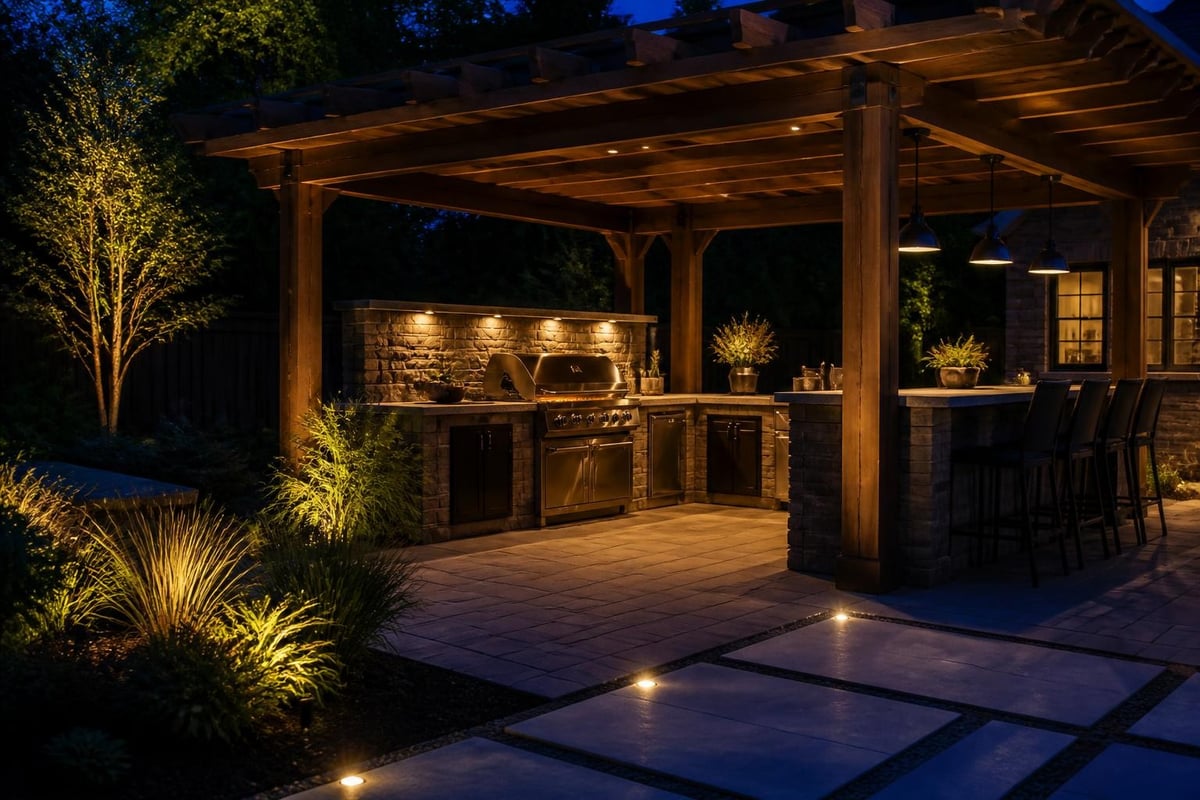
Sophisticated lighting transforms outdoor kitchens from daytime-only spaces into atmospheric evening destinations. Layered lighting approaches combine:
Modern LED systems offer energy efficiency, longevity, and controllability. Smart lighting integrates with home automation, enabling scene creation and remote control.
Choosing suppliers impacts everything from initial design through long-term support. Established specialists offer advantages beyond simply providing equipment.
Premium suppliers provide comprehensive design consultancy, helping translate your vision into functional reality. This process typically includes:
Many homeowners benefit from booking showroom appointments where they can experience equipment firsthand, discuss requirements with specialists, and refine their vision before committing to specifications.
Established retailers maintain close relationships with manufacturers, providing access to latest products, technical support, and warranty assistance. This expertise proves invaluable when specifying equipment, troubleshooting issues, or planning upgrades.
Curated product selections from respected brands ensure quality standards whilst simplifying decision-making. Rather than navigating countless options of varying quality, working with specialists who pre-qualify manufacturers streamlines the selection process.
Long-term support distinguishes exceptional suppliers from mere product vendors. Comprehensive after-sales service includes:
Environmentally conscious outdoor kitchen design balances performance with sustainability. Several strategies reduce environmental impact without compromising functionality.
Natural gas offers cleaner combustion than propane whilst eliminating cylinder replacement. Where mains gas connection proves feasible, this option delivers convenience and reduced carbon footprint. Gas connections must comply with current regulations and require professional installation by Gas Safe registered engineers.
Wood-fired cooking creates distinctive flavours but produces particulate emissions. The EPA's guidance on backyard fires emphasises using dry, seasoned wood and maintaining proper combustion to minimise smoke production. Modern hybrid ovens combine wood authenticity with gas convenience, offering flexibility whilst managing emissions.
Electric equipment eliminates on-site emissions entirely. Where renewable electricity powers your home, electric grills and cooking equipment provide genuinely low-carbon cooking. Technology improvements have narrowed the performance gap between gas and electric equipment, making this option increasingly viable.
Efficient fixtures reduce water consumption without compromising functionality. Low-flow taps and spray heads deliver adequate pressure for cleaning whilst minimising usage. Foot-operated controls prevent taps running unnecessarily during food preparation.
Drainage considerations prevent water waste and environmental contamination. Greywater from sinks can irrigate gardens when appropriate soaps are used. Professional drainage design prevents standing water whilst protecting water features or sensitive plantings from grease-laden runoff.
Selecting durable materials reduces replacement frequency and associated environmental impacts. Stainless steel's indefinite lifespan and recyclability make it environmentally preferable to materials requiring periodic replacement. Similarly, porcelain and natural stone offer multi-decade service lives that offset initial resource consumption.
Choosing manufacturers committed to sustainable practices amplifies positive environmental impact. Companies implementing renewable energy, waste reduction, and responsible sourcing demonstrate environmental stewardship beyond individual product specifications.
Modern outdoor kitchens increasingly incorporate technology that enhances convenience, control, and connectivity. Smart features transform traditional cooking spaces into integrated entertainment destinations.
Smart grills offer precise temperature control via smartphone apps, enabling remote monitoring and adjustment. Multi-zone temperature management ensures perfect results across different foods simultaneously. Some systems provide guided cooking programmes that adjust temperatures automatically based on food type and desired doneness.
Integrated timers and alerts prevent overcooking whilst allowing hosts to socialise rather than hovering over grills. Mobile notifications indicate when foods require attention or have completed cooking.
Outdoor audio systems purpose-designed for exterior environments deliver quality sound without weather vulnerability. Modern systems integrate with home networks, providing access to streaming services and multi-room audio systems. For those seeking comprehensive entertainment solutions, specialists like ANR Media, who create custom home cinema and audio video installations, can design outdoor systems that rival indoor performance.
Lighting control enables scene creation matching activities and ambience preferences. Preset scenes optimise lighting for cooking, dining, or entertaining. Integration with home automation systems allows centralised control alongside other outdoor features.
Environmental sensors detect rain, wind, or temperature extremes, triggering automated responses such as closing pergola louvres or alerting homeowners to potential issues. These systems protect equipment and furnishings whilst enabling unattended operation.
Security integration incorporates outdoor kitchens into broader property protection. Cameras, motion sensors, and access controls extend indoor security systems into garden spaces, protecting valuable equipment whilst deterring unauthorised access.
Outdoor kitchen kits offer transformative potential for British gardens, creating sophisticated entertaining spaces that function beautifully across all seasons. From modular systems delivering predictable results to fully bespoke configurations expressing individual vision, the market provides solutions for every requirement and budget. Whether you're embarking on your first outdoor kitchen project or enhancing an existing installation, partnering with specialists who understand both technical requirements and design excellence ensures outstanding results. Cotswold Cooking Company combines curated premium brands, comprehensive design consultancy, and complete installation support to help discerning clients create exceptional outdoor culinary destinations that enhance both lifestyle and property value for decades to come.

Leave a comment