


Creating a successful outdoor kitchen begins with thoughtful planning that balances aesthetics, functionality, and flow. Whether you're designing a compact courtyard cooking space or an expansive garden culinary destination, the right outdoor kitchen layout plans can transform how you entertain, cook, and enjoy your outdoor living areas. Understanding the fundamental principles of kitchen ergonomics, work triangle theory, and zone planning ensures your investment delivers both performance and pleasure for years to come.
The kitchen work triangle-connecting refrigeration, cooking, and cleaning zones-remains as relevant outdoors as it is inside. Effective outdoor kitchen layout plans position these three key areas within comfortable reach, typically between 1.2 and 2.7 metres apart, creating an efficient workflow that reduces unnecessary movement during meal preparation.
Key considerations for outdoor work triangles include:
Unlike indoor kitchens, outdoor layouts must account for weather conditions, sun position throughout the day, and seasonal variations in usage. Positioning your outdoor cooking equipment with these factors in mind ensures year-round functionality.
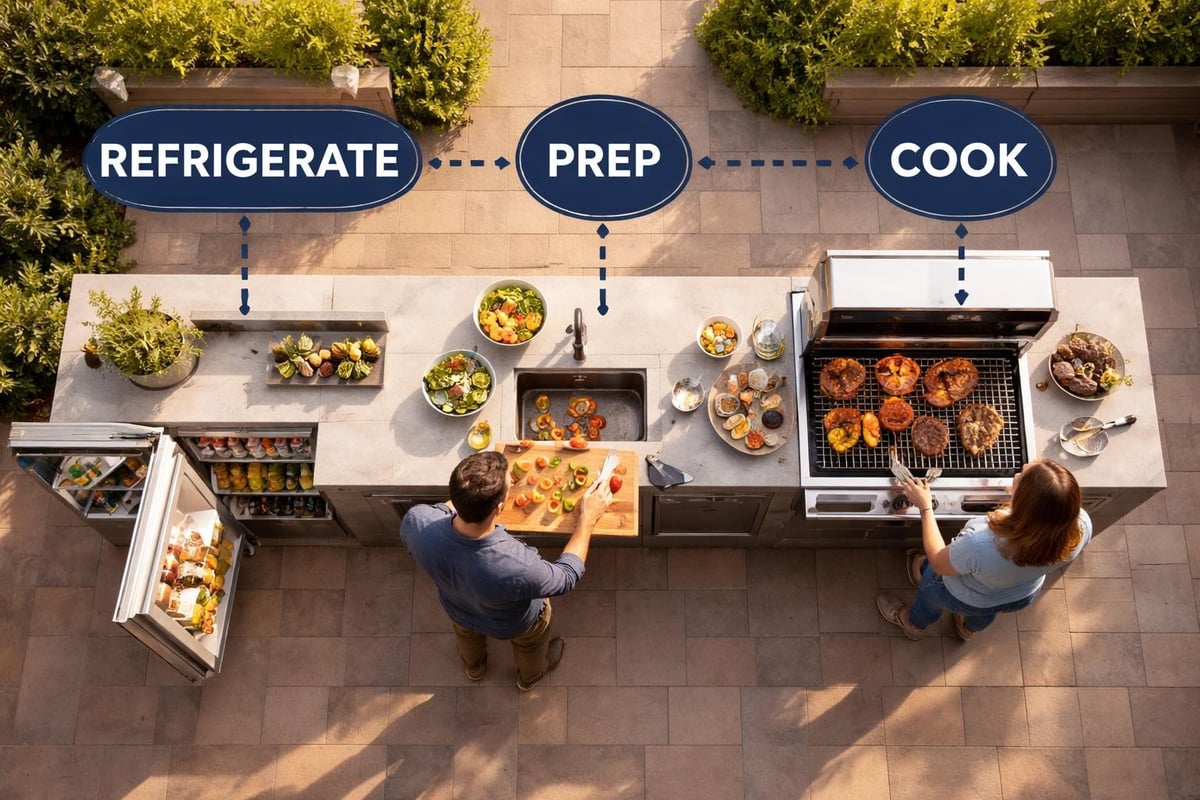
Professional designers divide outdoor kitchen layout plans into distinct functional zones that extend beyond the basic work triangle. A comprehensive luxury outdoor kitchen typically incorporates five to seven zones, each serving a specific purpose whilst maintaining visual and functional cohesion.
| Zone Type | Primary Function | Typical Width | Key Considerations |
|---|---|---|---|
| Preparation | Chopping, mixing, assembly | 90-120cm | Weatherproof surface, good lighting |
| Cooking | Grilling, roasting, sautéing | 150-240cm | Heat resistance, ventilation |
| Cleaning | Washing, waste disposal | 60-90cm | Plumbing access, drainage |
| Storage | Utensils, ingredients, equipment | Variable | Weather protection, accessibility |
| Serving | Plating, presentation | 60-90cm | Counter height, proximity to dining |
| Bar/Beverage | Drinks preparation, ice | 90-120cm | Refrigeration, sink access |
| Dining | Eating, socialising | Variable | Seating capacity, shade options |
This zoned approach, featured in many outdoor kitchen design guides, allows multiple people to work simultaneously without congestion whilst maintaining logical progression from preparation through cooking to serving.
Selecting the right configuration for your space determines both functionality and social flow. Each layout type offers distinct advantages depending on garden size, entertaining style, and architectural context.
The straight-line or galley configuration suits narrow spaces, courtyard gardens, and terraces with limited depth. This efficient outdoor kitchen layout plan positions all elements along a single run, typically between 3 and 6 metres in length.
Advantages of linear layouts:
Linear designs work particularly well when backed against existing structures, providing natural protection from weather whilst maximising usable garden space. However, they can feel isolated from dining areas if not positioned thoughtfully. As detailed in expert layout guidance, incorporating pass-through elements or bar seating along the front creates engagement with guests.
L-shaped outdoor kitchen layout plans represent the most versatile option for medium to large gardens, offering excellent workflow whilst creating a natural boundary between cooking and entertaining zones. This configuration typically spans 3 to 4.5 metres along each leg, providing ample counter space without overwhelming the garden.
The corner position in L-shaped layouts presents opportunities for premium features-consider positioning a luxury outdoor cooking station at the junction where it becomes a focal point visible from multiple angles. This configuration naturally accommodates the work triangle whilst offering protected areas less exposed to wind.
Design considerations for L-shaped layouts:
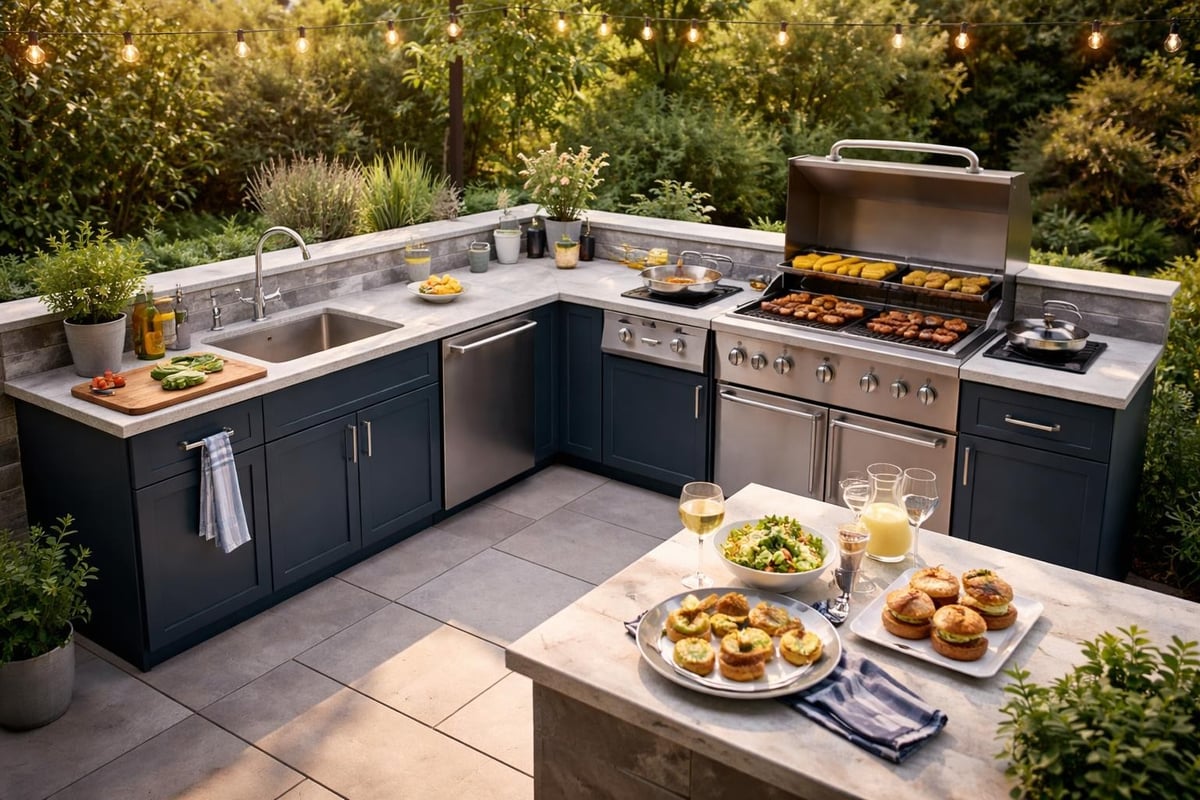
U-shaped outdoor kitchen layout plans create the ultimate luxury cooking environment, surrounding the chef with everything needed whilst maintaining intimate connection with guests. Requiring substantial space-typically 4 by 4 metres minimum-this configuration delivers restaurant-quality functionality for serious outdoor cooks.
The enclosed nature of U-shaped layouts provides several benefits beyond mere workspace. Wind protection improves dramatically, cooking fumes contain better, and the design creates a distinct room-like atmosphere even in open gardens. Many designers incorporate metal outdoor kitchen cabinets throughout to ensure durability and weather resistance across all three sides.
| Layout Type | Minimum Space | Best For | Work Triangle | Guest Interaction |
|---|---|---|---|---|
| Linear | 3m × 1m | Small gardens, terraces | Limited | Moderate |
| L-Shaped | 3m × 3m | Medium gardens, versatility | Excellent | Good |
| U-Shaped | 4m × 4m | Large gardens, serious cooks | Optimal | Enclosed |
| Island | 5m × 5m | Expansive gardens, entertaining | Variable | Maximum |
| Peninsula | 4m × 3m | Semi-open spaces | Good | Excellent |
Freestanding island layouts suit expansive gardens where the outdoor kitchen becomes a destination feature rather than a boundary element. These outdoor kitchen layout plans require considerable space-minimum 5 by 5 metres including circulation-but deliver unparalleled flexibility and social engagement.
Islands work best when incorporating seating along at least one side, transforming cooking into performance and creating natural gathering points. Peninsula configurations offer similar benefits whilst maintaining connection to walls or structures, requiring less total space whilst still providing multi-sided access. Explore creative outdoor kitchen concepts for inspiration on island arrangements.
Precise dimensional planning separates functional outdoor kitchen layout plans from frustrating ones. Professional designers adhere to established ergonomic standards whilst adapting for outdoor-specific requirements like weather protection and social flow.
Standard counter height for outdoor kitchens remains 90-95cm, matching indoor dimensions for comfortable food preparation. However, luxury outdoor designs often incorporate varied heights to accommodate different functions and create visual interest.
Counter depth deserves particular attention in outdoor kitchen layout plans. Whilst indoor kitchens typically maintain 60cm depth, outdoor installations benefit from deeper counters-75 to 90cm-providing space for larger grills, better weather protection, and more generous preparation areas. For those designing compact modular outdoor kitchens, maintaining adequate counter space between appliances remains crucial even when total dimensions reduce.
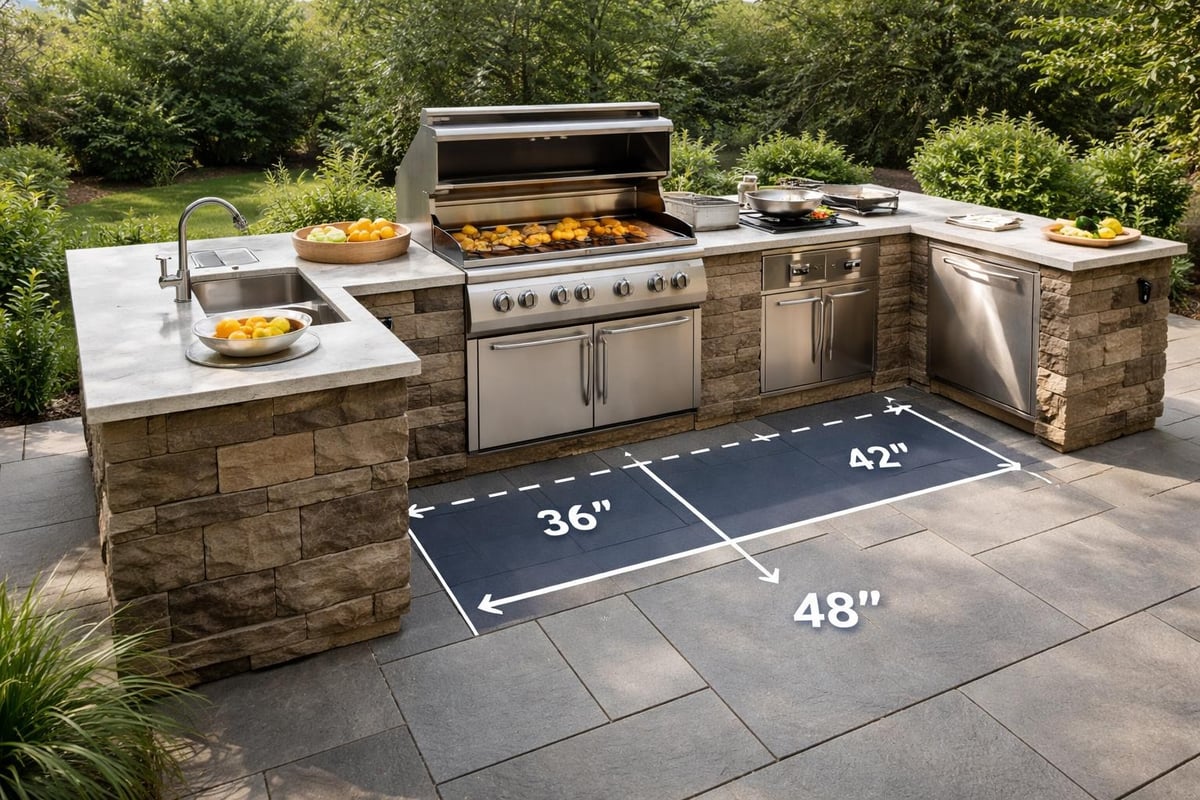
Adequate circulation space transforms outdoor kitchen layout plans from cramped to comfortable. Unlike indoor kitchens with fixed walls defining boundaries, outdoor spaces require discipline to maintain appropriate clearances.
Minimum clearance dimensions:
When designing outdoor kitchen layout plans for entertaining, allow 150-180cm circulation aisles. This accommodates guests moving through the space whilst someone cooks without creating congestion. Consider how outdoor dining arrangements integrate with kitchen zones, ensuring smooth transitions between cooking and eating areas.
Professional outdoor kitchen layout plans allocate appropriate landing space adjacent to key appliances, improving safety and functionality. These guidelines, adapted from indoor kitchen standards but enhanced for outdoor use, prevent common frustrations.
| Appliance | Landing Space Required | Minimum Counter Each Side | Additional Requirements |
|---|---|---|---|
| Primary Grill | 45cm both sides | 45cm | Heat-resistant surface material |
| Secondary Cooktop | 30cm one side, 40cm other | 30cm | Clearance from combustibles |
| Sink | 60cm one side, 45cm other | 45cm | Draining space consideration |
| Refrigeration | 40cm latch side | 30cm | Ventilation clearance (varies by model) |
| Pizza Oven | 60cm both sides | 60cm | Heat shield, clearances per manufacturer |
These dimensions ensure safe, efficient workflow whilst preventing damage to adjacent materials. When positioning premium grills and smokers, verify manufacturer specifications as high-output equipment may require enhanced clearances beyond standard minimums.
British climate demands outdoor kitchen layout plans that acknowledge our famously unpredictable weather. Positioning, orientation, and protective elements determine whether your investment delivers year-round value or seasonal-only use.
Understanding solar paths throughout the year influences both comfort and functionality. Summer sun tracking high across the southern sky creates different conditions than low winter angles, affecting everything from cooking temperatures to guest comfort.
Orientation strategies for UK gardens:
Integrating architectural shade solutions into outdoor kitchen layout plans transforms usability. The Tarasola bioclimatic pergola offers adjustable louvre roofs that adapt to conditions, providing shade during bright days whilst allowing warmth through during cooler periods, creating genuinely year-round outdoor cooking environments that respond to British weather patterns.
Wind patterns dramatically affect outdoor cooking comfort and efficiency. Gas flames struggle in breezes, smoke dispersal becomes problematic, and guests feel uncomfortable in exposed positions. Effective outdoor kitchen layout plans address wind without creating stagnant, smoky conditions.
Consider incorporating permanent and seasonal windbreaks at strategic points. Solid walls work on prevailing wind sides, whilst open railings or planted screens provide filtered protection elsewhere. Position cooking equipment perpendicular to dominant winds when possible, and ensure adequate ventilation above to prevent smoke accumulation under covered areas.
Material selection fundamentally affects longevity and maintenance requirements. UK conditions-frequent rain, freeze-thaw cycles, UV exposure-demand robust specifications that justify premium investment through decades of performance.
Natural stone worktops like granite, limestone, or slate offer timeless aesthetics and exceptional durability. Porcelain provides similar performance with broader design possibilities. For cabinetry, marine-grade stainless steel, powder-coated aluminium, and weather-treated hardwoods each deliver proven performance when properly specified. Review comprehensive guidance on outdoor cooking accessories to understand material compatibility across your complete installation.
Successful outdoor kitchen layout plans incorporate utilities early in the design process. Retrofitting services proves expensive and disruptive; planning infrastructure from the outset ensures seamless integration and compliance with UK building regulations.
Outdoor electrical installations must comply with BS 7671 wiring regulations, typically requiring RCD protection and appropriate IP ratings for exposed components. Plan for adequate power capacity-outdoor kitchens with multiple appliances often require dedicated circuits rated at 32-50 amps.
Essential electrical provisions:
Position outlets thoughtfully within outdoor kitchen layout plans, maintaining accessibility whilst protecting from direct weather exposure. Countertop outlets should recess or include weatherproof covers; under-counter placement often proves more practical for permanent installations.
Running water transforms outdoor kitchens from basic grilling stations to comprehensive cooking environments. Supply lines require frost protection in the UK-either drain-down systems, heated trace cables, or burial below frost line (typically 60-90cm depth).
Drainage presents equal importance. Grey water from sinks requires proper disposal through mains drainage or approved soakaway systems. Position sinks with adequate fall towards drain points-minimum 1:40 gradient-and incorporate accessible cleanout points for maintenance. Consult professional layout planning resources for comprehensive utility integration guidance.
Natural gas or LPG connections provide consistent fuel for serious outdoor cooking equipment. Professional installation by Gas Safe registered engineers is mandatory, with supply lines sized appropriately for total BTU demand across all appliances.
Calculate cumulative gas consumption carefully. A premium outdoor kitchen with 60,000 BTU grill, 25,000 BTU side burner, and 40,000 BTU pizza oven requires supply infrastructure supporting 125,000+ BTU simultaneously. Many outdoor kitchen layout plans underestimate total demand, resulting in inadequate performance when multiple elements operate concurrently.
Outdoor kitchens exist within broader landscape contexts. The most successful outdoor kitchen layout plans harmonise with existing garden architecture, boundary treatments, and planting schemes, creating cohesive outdoor rooms rather than isolated functional zones.
Physical and visual connection with interior kitchens enhances both spaces. When outdoor kitchen layout plans position cooking areas visible from indoor entertaining rooms, they extend perceived living space dramatically whilst facilitating easy movement between environments.
Connection strategies include:
Consider how luxury outdoor furniture bridges between spaces, creating comfortable transitional zones that encourage flow between indoor and outdoor areas regardless of weather conditions.
Overhead protection transforms outdoor kitchens from fair-weather amenities to year-round destinations. Integrating roofed structures into outdoor kitchen layout plans from the outset ensures proper load distribution, utility routing, and architectural cohesion.
Fixed roofs, retractable canopies, and bioclimatic louvres each offer distinct advantages. Fixed structures provide maximum weather protection and support integrated lighting and heating. Retractable systems offer flexibility, extending lifespan of furniture and equipment during winter storage. Bioclimatic designs deliver sophisticated climate response, adjusting to conditions automatically.
Outdoor kitchen layout plans benefit from thoughtful boundary treatment that provides privacy without creating oppressive enclosure. UK gardens vary enormously in configuration; terraced townhouse courtyards require different approaches than open countryside plots.
Solid walls offer maximum privacy and wind protection but can feel confining in smaller spaces. Slatted screens, planted hedges, or mixed treatments balance openness with intimacy. Position taller elements to block specific sightlines-neighbouring windows, road frontages-whilst maintaining openness towards desirable views or private garden areas.
Outstanding outdoor kitchen layout plans facilitate effortless entertaining, positioning the cook within the social circle whilst maintaining functional efficiency. Understanding how people naturally gather and move informs layout decisions that enhance rather than hinder social dynamics.
Incorporating counter seating along one or more sides of your outdoor kitchen transforms cooking from isolated task to shared experience. Bar-height surfaces at 105-110cm accommodate standard bar stools whilst allowing seated guests to converse comfortably with the standing cook.
Bar seating best practices:
Plan for electrical outlets beneath bar areas, supporting phone charging or small appliances without visible cables. When reviewing inspiring outdoor kitchen layouts, note how successful designs balance guest proximity with cooking efficiency.
Positioning dining areas relative to cooking zones affects service efficiency and guest experience. Outdoor kitchen layout plans should position tables within comfortable serving distance-typically 2-4 metres-without forcing service paths through primary circulation routes.
Consider sightlines from dining positions. Most guests enjoy watching meal preparation; orient seating to provide views of cooking action without direct exposure to smoke or heat. Subtle level changes-raising dining areas 15-30cm-often improve both views and spatial definition whilst maintaining accessibility.
Sophisticated outdoor kitchen layout plans accommodate multiple simultaneous activities without conflicts. Designate distinct zones for active cooking, casual gathering, formal dining, and quiet conversation, each appropriately scaled and positioned within the broader garden context.
| Activity Zone | Typical Size | Key Features | Relationship to Kitchen |
|---|---|---|---|
| Active Cooking | 3-4m² | Grills, prep surfaces, task lighting | Core kitchen area |
| Food Assembly | 2-3m² | Serving counter, plating area | Adjacent to cooking |
| Bar/Social | 4-6m² | Refrigeration, ice, mixing area | Accessible but separate |
| Dining | 12-20m² | Table seating 6-12 | 2-4m from kitchen |
| Lounge | 8-15m² | Comfortable seating, fire feature | 3-6m from kitchen |
This zoned approach, detailed in professional outdoor kitchen planning guides, ensures adequate space for each function whilst maintaining cohesive flow throughout your outdoor living environment.
Adequate storage transforms outdoor kitchen layout plans from occasionally used novelties into daily-use extensions of indoor cooking facilities. British weather demands secure, weatherproof storage protecting equipment, ingredients, and supplies from moisture and temperature fluctuations.
Outdoor cabinetry differs fundamentally from indoor equivalents. Marine-grade construction, weatherproof seals, and corrosion-resistant hardware ensure longevity in exposed conditions. Base cabinets typically span 60-90cm width, 60-75cm depth, and 85-90cm height, matching indoor dimensions whilst incorporating enhanced weatherproofing.
Drawer systems often prove more practical than doors for outdoor applications, providing easier access and better weather sealing. Soft-close mechanisms resist British weather when specified with appropriate materials. Include dedicated storage for:
Outdoor refrigeration maintains ingredients at optimal temperatures whilst eliminating constant trips indoors. Built-in units designed specifically for outdoor use resist humidity and temperature variations better than adapted indoor models. Specify units with front ventilation suitable for enclosed cabinetry, and ensure adequate electrical capacity.
Consider dual-zone refrigeration separating drinks from food ingredients, or dedicated wine storage for entertaining. Under-counter models integrate seamlessly within outdoor kitchen layout plans, whilst standalone units offer flexibility for evolving layouts. Explore professional kitchen appliances designed for demanding outdoor environments.
Discrete waste management systems maintain visual appeal whilst supporting functional cooking environments. Integrated bins within cabinetry keep waste contained and protected from weather and wildlife. Separate streams for recycling, compost, and general waste align with environmental consciousness.
Position waste collection points near preparation zones for convenient disposal during cooking, but away from dining and social areas. Pull-out systems prove most practical, offering easy access during use whilst concealing contents completely when closed. Ensure adequate capacity for entertaining-outdoor gatherings generate substantial waste volumes during events.
Thoughtful lighting extends usability beyond daylight hours whilst creating atmosphere essential for evening entertaining. Outdoor kitchen layout plans should incorporate multiple lighting layers-task, ambient, and accent-controlled independently for flexibility.
Adequate illumination over preparation and cooking zones ensures safety and precision. LED strips beneath overhead structures provide even, shadow-free light across worksurfaces. Specify 500-750 lux (50-75 foot-candles) for primary work zones, matching indoor kitchen standards.
Task lighting essentials:
Position task lighting to eliminate shadows where cooks work. Overhead sources should sit 90-120cm above counter surfaces, whilst under-structure lighting mounts 200-240cm above finished floor level for adequate clearance.
Softer general illumination creates welcoming atmosphere whilst providing safety lighting for circulation paths. String lights, lanterns, and architectural uplighting establish mood without harsh brightness. Consider warm colour temperatures (2700-3000K) for flattering, inviting glow.
Integrate lighting with landscape elements-uplighting feature trees, washing boundary walls, or highlighting architectural details. This extends visual interest beyond the immediate kitchen area, creating cohesive outdoor rooms that rival indoor spaces for atmosphere. Review outdoor kitchen ideas with lighting examples for creative inspiration.
Smart lighting controls enhance convenience and energy efficiency. Zone-based switching allows independent control of task, ambient, and accent layers. Dimming capability adapts brightness to activities and time of day. Motion sensors provide automatic security lighting whilst conserving energy.
Contemporary outdoor kitchen layout plans increasingly incorporate home automation integration, enabling voice control, scheduling, and scene presets. Create saved settings for different occasions-"cooking mode" with bright task lighting, "entertaining mode" with ambient glow, or "cleaning mode" illuminating all zones fully.
British climate demands heating strategies that extend comfortable outdoor cooking well beyond summer months. Outdoor kitchen layout plans incorporating effective heating transform seasonal amenities into genuine year-round destinations, substantially improving return on investment.
Ceiling-mounted electric or gas heaters provide efficient warmth without consuming valuable floor space. Position heat sources over primary gathering zones-bar seating, dining areas-rather than active cooking zones where built-in equipment generates substantial heat.
Heating technology comparisons:
| Heater Type | Heat Output | Best Application | Running Cost | Installation Complexity |
|---|---|---|---|---|
| Electric Infrared | 1.5-3kW | Targeted zones, pergola mounting | Medium | Low (electric only) |
| Gas Patio Heater | 8-13kW | Open areas, flexible positioning | Low | Medium (gas connection) |
| Gas Radiant | 6-12kW | Fixed installations, broad coverage | Low | High (gas + electric) |
| Wood Fire Feature | Variable | Ambient warmth, social focus | Very Low | Medium (flue required) |
Calculate heating requirements based on volume-approximately 100-150 watts per cubic metre for enclosed pergola areas in UK climate. Open gardens require substantially higher output for equivalent comfort.
Integrated fireplaces or fire pits add atmospheric warmth whilst creating natural gathering points. Outdoor kitchen layout plans often position fire features adjacent but distinct from cooking zones, allowing them to remain focal points after meals conclude.
Wood-burning, gas, or bioethanol fires each offer distinct characteristics. Wood provides authentic ambience and high heat output but requires fuel storage and generates smoke. Gas offers convenience and controllability. Bioethanol provides clean-burning flames without utility connections, ideal for terraces or balconies. Browse outdoor fire pits and tables to understand integration options.
Outdoor kitchen layout plans should align with realistic budgets established early in the design process. UK installations vary enormously in cost-from £8,000 modest setups to £80,000+ luxury installations-depending on size, materials, appliances, and complexity.
Understanding cost distribution helps prioritise expenditure effectively. Base construction typically consumes 25-35% of total budget, appliances 30-40%, utilities 15-20%, and finishes/furnishings 15-25%. These proportions shift based on specific priorities and product selections.
Budget planning by scale:
These ranges include design, materials, appliances, installation, and basic utility extensions. Complex structural work, extensive landscaping integration, or remote site access increase costs substantially.
Achieving maximum value requires strategic decisions throughout the design process. Consider phased implementation-establish core cooking zone initially, expanding to full outdoor kitchen layout plans over subsequent seasons as budget permits.
Cost-conscious approaches:
Resist false economy on weatherproofing, structural integrity, or utility installations. Retrofit corrections prove substantially more expensive than proper specification initially. Compare modular outdoor kitchen options for cost-effective starting points that allow expansion.
Premium outdoor kitchens typically return 50-70% of installation cost in added property value, varying by location, quality, and integration with broader garden design. Beyond financial metrics, consider lifestyle value-extended entertaining season, enhanced property enjoyment, and reduced reliance on indoor kitchens during warm months.
UK property markets increasingly value quality outdoor living spaces, particularly in regions with strong garden culture. Well-designed outdoor kitchen layout plans that demonstrate year-round usability through weather protection and heating command premium appeal. Document design quality, branded appliances, and professional installation to support future property valuations.
Most outdoor kitchens in England fall within permitted development rights, requiring no formal planning permission. However, specific circumstances trigger requirements worth understanding during early outdoor kitchen layout plan development.
Structures exceeding 4 metres height (3 metres near boundaries), covering more than 50% of garden area, or positioned forward of the principal elevation towards a road may require planning consent. Listed buildings, conservation areas, or properties with restrictive covenants typically face additional scrutiny.
Planning triggers to consider:
Consult your local planning authority early if uncertain. Pre-application advice services provide clarity before investing in detailed outdoor kitchen layout plans. Most consultative design services incorporate planning assessment as standard practice.
Building Regulations Parts A (Structure), F (Ventilation), G (Sanitation), H (Drainage), J (Combustion appliances), L (Energy efficiency), and P (Electrical safety) may apply depending on specific installations. Gas connections require Gas Safe registered installers; electrical work demands certified electricians complying with Part P.
Permanent structures incorporating covered areas over 30 square metres typically trigger Building Regulations approval requirements. Foundations, drainage connections, and combustion appliance installations warrant particular attention. Maintain documentation of certified installations, specifications, and completion certificates for future property transactions.
Engaging experienced designers familiar with UK building standards, climate challenges, and premium outdoor equipment ensures outdoor kitchen layout plans achieve regulatory compliance whilst maximising functional performance. Professional services typically include site survey, concept development, detailed planning, specification, supplier coordination, and project management through installation.
Creating successful outdoor kitchen layout plans requires balancing functional efficiency, aesthetic appeal, and practical consideration of British weather throughout the year. From spatial planning and appliance positioning to weather protection and utility integration, every decision contributes to how effectively your outdoor kitchen serves your entertaining and cooking needs. At Cotswold Cooking Company, our consultative design service helps discerning clients across the UK transform outdoor spaces into refined culinary destinations that deliver year-round performance. From initial concept through specification, delivery, and installation, we bring together heritage craftsmanship and contemporary expertise to create bespoke outdoor kitchens perfectly suited to your property and lifestyle.

Leave a comment