


When designing a luxury outdoor kitchen in the UK's variable climate, the choice of materials becomes paramount. Outdoor kitchen steel, particularly stainless steel, has emerged as the definitive material for discerning homeowners and designers who refuse to compromise on either aesthetics or longevity. Unlike traditional materials that deteriorate under British weather conditions, premium steel offers unparalleled resistance to moisture, temperature fluctuations, and the corrosive effects of outdoor cooking environments. Understanding the nuances of steel grades, finishes, and maintenance requirements ensures your investment delivers decades of refined outdoor culinary experiences.
The ascendancy of outdoor kitchen steel in premium outdoor living spaces stems from its unique combination of practical benefits and sophisticated aesthetics. Steel's non-porous surface prevents bacterial growth, making it the hygienic choice for food preparation areas exposed to the elements.
Key advantages include:
The material's versatility extends beyond countertops. From outdoor cooking cabinetry to appliance housings, outdoor kitchen steel creates cohesive design narratives that elevate garden spaces into true culinary destinations.
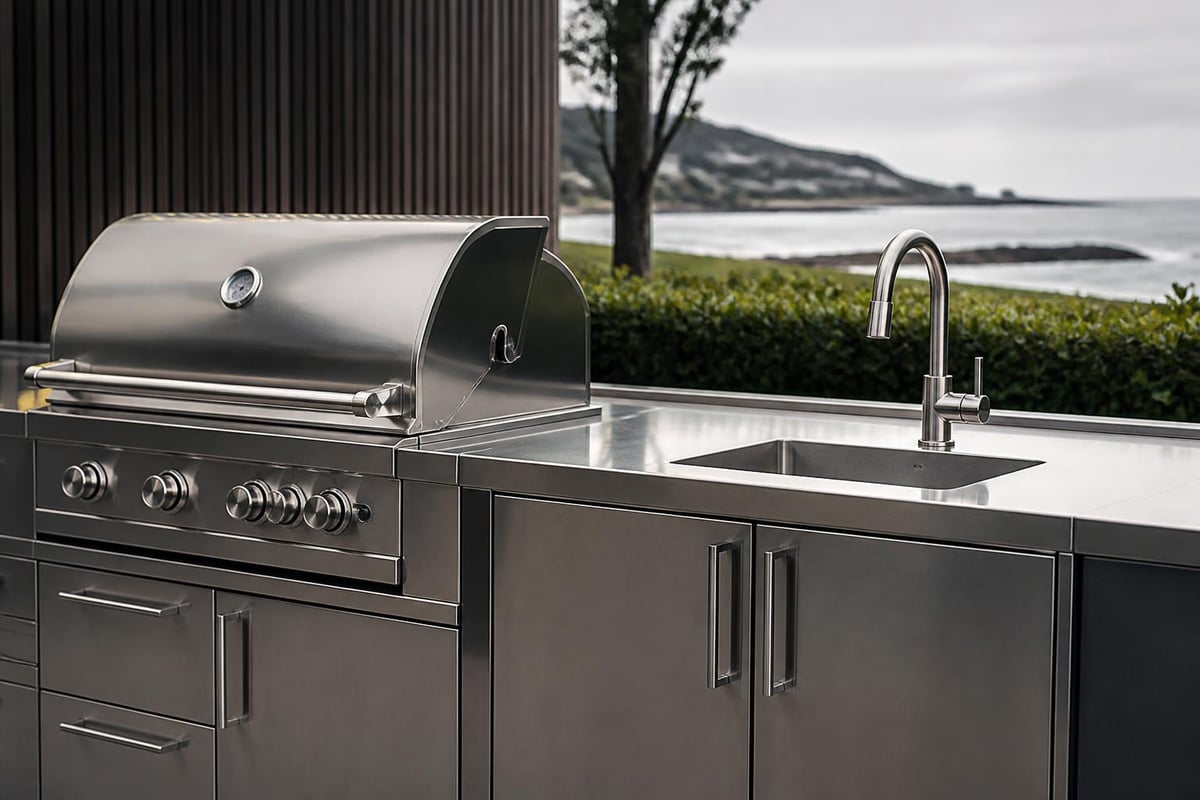
Not all outdoor kitchen steel performs equally in British conditions. The grade designation determines corrosion resistance, longevity, and appropriate applications.
| Steel Grade | Chromium Content | Molybdenum | Best For | Coastal Suitable |
|---|---|---|---|---|
| 304 | 18% | None | Urban gardens, covered areas | No |
| 316 | 16% | 2-3% | All environments, coastal properties | Yes |
| 430 | 16% | None | Budget applications, limited exposure | No |
Grade 304 represents the industry standard for most UK installations. Its 18% chromium content provides robust protection against oxidation in typical garden environments. This grade suits homeowners in the Cotswolds, Oxfordshire, and inland locations where salt exposure remains minimal.
Grade 316 introduces molybdenum to the alloy composition, significantly enhancing resistance to chlorides and salt. Properties within twenty miles of the British coastline benefit substantially from this upgraded specification. The rising trend of using premium stainless steel reflects growing awareness of these material distinctions among luxury homeowners.
Grade 430 offers a cost-effective alternative but sacrifices corrosion resistance. This ferritic steel lacks the nickel content found in 304 and 316 grades, making it unsuitable for primary food preparation surfaces or appliance components in outdoor kitchen steel installations.
Integration of outdoor kitchen steel into your design scheme requires thoughtful consideration of finish options, fabrication details, and spatial planning. The material's inherent versatility accommodates both minimalist contemporary aesthetics and more traditional design languages.
Steel finish selection profoundly impacts both visual character and maintenance requirements. Each finish serves specific design intentions whilst offering practical benefits.
The Number 4 brushed finish dominates luxury outdoor kitchens due to its forgiving nature and timeless appearance. This directional grain pattern integrates seamlessly with natural materials like stone and timber, creating harmonious transitions between indoor and outdoor living zones.
Mirror finishes create dramatic focal points but demand diligent maintenance. Consider reserving these high-gloss surfaces for vertical elements or backsplashes rather than horizontal worksurfaces that accumulate cooking residue.
Premium outdoor kitchen steel fabrication distinguishes luxury installations from mediocre ones. Inspect potential suppliers for these quality indicators:
The difference between adequate and exceptional fabrication becomes apparent within the first season of use. Poorly executed welds trap moisture and cooking residue, whilst quality craftsmanship creates surfaces that clean effortlessly and age gracefully.
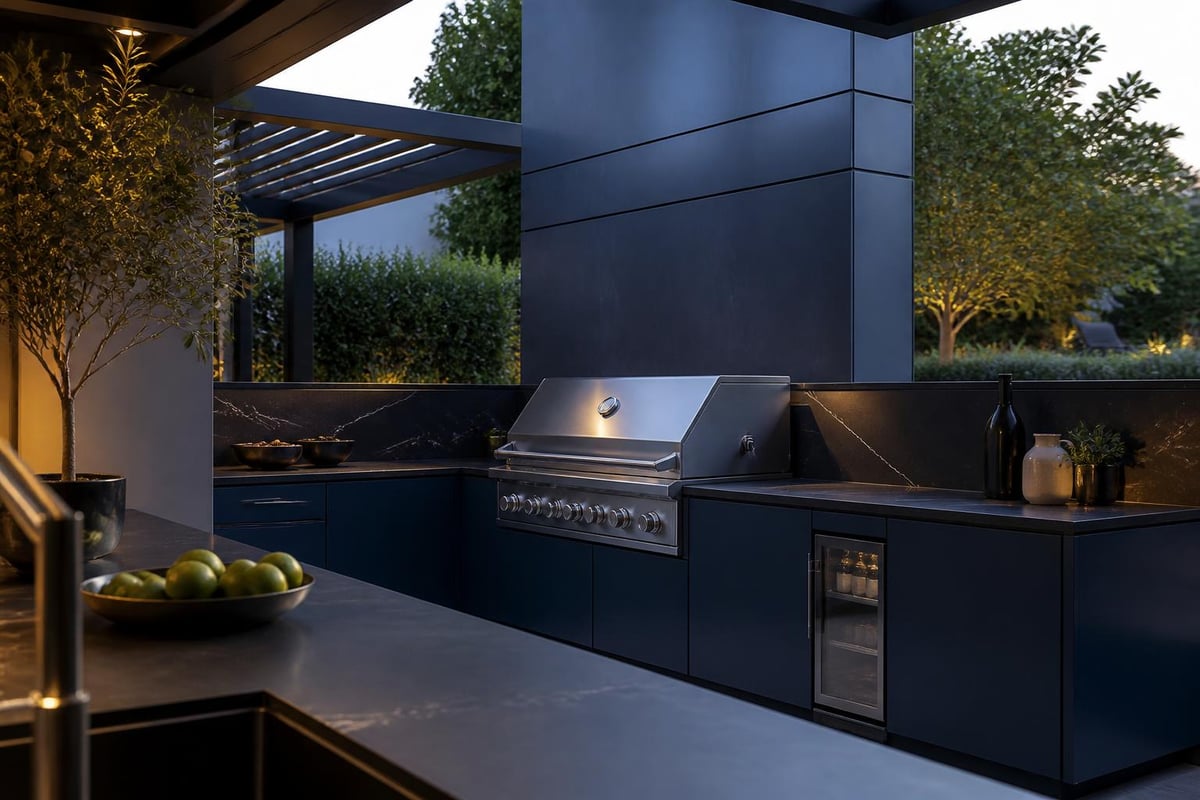
Storage represents perhaps outdoor kitchen steel's most transformative application. Unlike traditional outdoor cabinetry materials that swell, rot, or harbour pests, steel enclosures provide secure, hygienic storage that performs reliably across seasons.
Modern modular systems allow homeowners to configure layouts matching their specific culinary requirements. Base cabinets typically measure 720mm in height to align with standard indoor kitchen ergonomics, whilst depth varies between 600mm and 700mm depending on appliance integration requirements.
Drawer systems benefit particularly from outdoor kitchen steel construction. Marine-grade ball-bearing runners ensure smooth operation despite moisture exposure, whilst stainless drawer boxes resist corrosion indefinitely. Consider these storage priorities:
Door construction ranges from full steel panels to composite designs featuring steel frames with alternative infill materials. Solid steel doors offer maximum durability and security but add significant weight to the structure. Ensure hinges specify marine-grade stainless steel to prevent premature failure.
Worktop integration demands careful attention to waterproofing and thermal expansion. Quality installations incorporate subtle gaps allowing material movement whilst maintaining weathertight seals. Silicone-based sealants formulated for outdoor applications prevent water ingress without restricting natural expansion.
The seven key benefits of stainless steel cabinets extend beyond mere durability. Their lightweight nature relative to masonry alternatives simplifies installation, particularly for roof terrace and balcony applications where structural loading becomes critical.
Even premium outdoor kitchen steel requires appropriate maintenance to preserve its appearance and performance. Establishing routine cleaning protocols prevents minor surface contamination from developing into permanent staining.
Immediate post-cooking cleaning removes grease splatter and food residue before they bond to surfaces. Use pH-neutral cleaners specifically formulated for stainless steel rather than harsh alkaline or acidic products that attack the protective chromium oxide layer.
Directional cleaning following the grain pattern prevents scratching on brushed finishes. Microfibre cloths minimize abrasion whilst effectively lifting contaminants. The comprehensive guide to cleaning stainless steel offers sixteen expert-recommended methods suitable for various surface conditions.
Weekly deep cleaning addresses accumulated cooking residue and environmental deposits:
British winters present particular challenges for outdoor kitchen steel. Salt from nearby roads, combined with moisture and temperature cycling, can compromise even premium grades without proper care.
Pre-winter preparation involves thorough cleaning followed by application of protective treatments. Some homeowners apply automotive-grade wax to horizontal surfaces, creating additional barrier protection during months of reduced use.
Spring restoration addresses any surface dulling or minor corrosion that developed during winter months. Specialized stainless steel restoration compounds remove surface oxidation whilst polishing away minor scratches. For maintaining outdoor kitchen equipment, systematic approaches yield superior long-term results compared to reactive intervention.
Ventilation considerations prevent condensation accumulation within enclosed cabinetry. Installing passive vents or incorporating ventilation gaps in door designs allows airflow that inhibits moisture-related issues.
The relationship between outdoor kitchen steel structures and integrated appliances requires careful specification. Cutouts for grills, refrigeration units, and cooking equipment must provide adequate clearance whilst maintaining weathertight seals.
Built-in grills demand precise measurements accommodating both the appliance body and required ventilation clearances. Premium installations incorporate stainless steel chimney sections that protect masonry or timber structures from heat damage whilst maintaining cohesive aesthetics.
When selecting equipment for your outdoor kitchen steel installation, compatibility extends beyond mere dimensional fit. Consider thermal expansion coefficients, ensuring appliances and housing materials expand at similar rates to prevent gaps or binding.
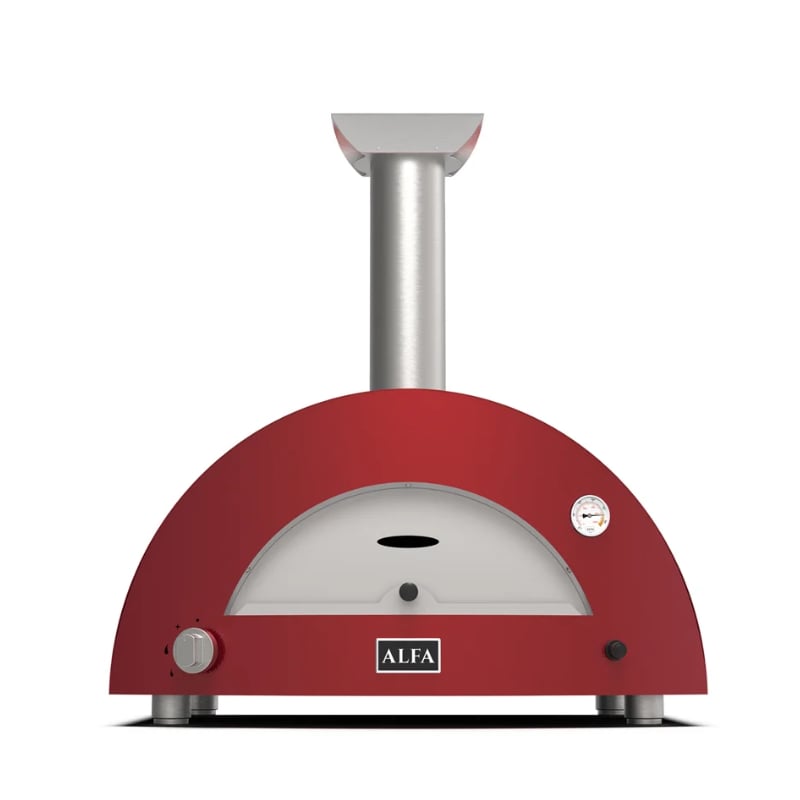
For those incorporating traditional wood-fired cooking, the Alfa Forni Moderno Hybrid Pizza Oven represents an exceptional choice. Its handmade Italian construction and hybrid fuel capability pair beautifully with outdoor kitchen steel surrounds, creating a refined focal point that combines authentic craftsmanship with modern convenience. The oven's ability to reach 500°C whilst housed within a properly ventilated steel structure demonstrates how traditional cooking methods integrate seamlessly into contemporary outdoor kitchen steel design.
Refrigeration requirements introduce additional complexity. Outdoor-rated refrigeration units generate condensation that must be channeled away from steel cabinetry. Incorporate drainage channels and ensure adequate rear ventilation preventing moisture accumulation.
Undermount sinks fabricated from matching outdoor kitchen steel create seamless transitions between worksurface and basin. Ensure specifications include adequate bowl depth (minimum 200mm) for practical food preparation and equipment washing.
Tap selection should prioritize marine-grade construction. Solid brass bodies with stainless steel finishes resist British weather conditions indefinitely. Spring-loaded professional-style taps offer flexibility for filling large pots and cleaning equipment.
Drainage systems require thoughtful integration. Waste pipes must incorporate adequate fall whilst remaining protected from freezing temperatures. Some installations benefit from heated trace cables preventing ice formation during severe weather.
Outdoor kitchen steel represents a significant initial investment compared to alternative materials. However, lifecycle cost analysis reveals compelling economic advantages for discerning homeowners planning extended property tenure.
| Component | Budget Range | Mid-Range | Premium |
|---|---|---|---|
| Steel countertop (per linear metre) | £350-500 | £500-750 | £750-1,200+ |
| Base cabinet units | £600-900 | £900-1,400 | £1,400-2,500+ |
| Drawer systems | £200-350 | £350-600 | £600-1,000+ |
| Doors and panels | £150-250 | £250-400 | £400-700+ |
These figures reflect quality variations in steel grade, fabrication precision, and finish specification. Premium outdoor kitchen steel installations incorporating Grade 316 material with museum-quality fabrication command appropriate pricing but deliver unmatched longevity.
Fabrication complexity significantly influences costs. Simple rectangular countertops with standard edge profiles represent baseline pricing, whilst curved sections, integrated drainage grooves, or bespoke detailing increase investment requirements proportionally.
Installation expenses vary based on site accessibility and integration requirements. Rooftop installations demand specialized lifting equipment, whilst ground-level gardens allow simpler logistics. Factor professional installation into budget planning rather than attempting DIY approaches that risk compromising expensive materials.
The different types of steel used in outdoor kitchens offer varying lifespans, but premium grades properly maintained can exceed fifty years of service. This longevity transforms apparently expensive initial investment into economically rational decision-making.
Maintenance cost savings accumulate substantially over decades. Unlike timber requiring regular treatment or composite materials needing periodic replacement, outdoor kitchen steel demands minimal ongoing expenditure beyond basic cleaning supplies.
Property value enhancement represents another consideration for luxury homeowners. Well-executed outdoor dining spaces featuring premium materials appeal strongly to discerning buyers, often delivering returns exceeding initial investment upon property sale.
Outdoor kitchen steel's aesthetic neutrality allows integration into diverse architectural contexts. From period Cotswold stone properties to contemporary glass and steel constructions, the material adapts through thoughtful specification and detailing.
Heritage settings benefit from outdoor kitchen steel's ability to provide modern functionality without visual discord. Positioning steel elements within sympathetic structures such as traditional outbuildings or contemporary pavilions preserves period character whilst delivering contemporary performance.
Material combinations soften steel's industrial associations. Timber shelving, natural stone worktop sections, or copper accent details introduce warmth and texture. These mixed-material approaches create transitional aesthetics bridging indoor period features with outdoor modern convenience.
Concealment strategies allow steel functionality without prominent visibility. Housing steel cabinetry within timber-clad enclosures or behind traditional painted doors maintains architectural authenticity whilst accessing material benefits.
Minimalist installations celebrate outdoor kitchen steel's inherent clarity. Handleless cabinets with push-to-open mechanisms eliminate visual interruption, whilst continuous worksurfaces stretching across multiple functional zones create seamless composition.
Industrial aesthetics embrace material honesty. Exposed welds, visible fixings, and utilitarian detailing transform functional necessity into design feature. This approach suits warehouse conversions and modern architectural statements.
Sculptural elements demonstrate steel's formability. Cantilevered countertops, curved cabinetry, and integrated seating showcase fabrication capabilities that transcend purely functional considerations. These statement pieces anchor outdoor spaces whilst delivering practical utility.
The growing interest in stainless steel kitchen design extends logically from indoor applications to outdoor contexts, where material advantages become even more pronounced.
Environmentally conscious homeowners increasingly scrutinize material choices through sustainability lenses. Outdoor kitchen steel presents compelling credentials across multiple environmental metrics.
Recycled content in quality stainless steel typically exceeds 60%, with some manufacturers achieving 90%+ recycled material in their products. This substantially reduces environmental impact compared to virgin material production.
Recyclability at end-of-life approaches 100%. Unlike composite materials that enter landfill streams, outdoor kitchen steel retains value indefinitely through recycling processes. This circular material lifecycle aligns with sustainable design principles.
Transportation considerations favor European-manufactured products for UK installations. Steel fabricated domestically or within the EU carries significantly lower carbon footprints than Asian imports, whilst supporting local economies and ensuring quality standards.
Longevity represents perhaps outdoor kitchen steel's greatest environmental attribute. A single quality installation potentially serves multiple generations of homeowners, avoiding repeated manufacturing cycles associated with shorter-lived alternatives.
Maintenance product requirements remain minimal. Unlike timber demanding regular chemical treatments or painted surfaces requiring periodic refinishing, steel needs only basic cleaning products throughout its service life.
Energy efficiency in cleaning processes favours steel's non-porous surfaces. Where porous materials harbor bacteria requiring hot water sanitation, steel achieves equivalent hygiene through ambient temperature cleaning, reducing energy consumption.
The complexity of outdoor kitchen steel installation raises questions regarding professional specification versus self-installation. Whilst skilled DIY enthusiasts manage certain elements successfully, complete installations benefit substantially from professional expertise.
Precision fabrication delivered by experienced outdoor kitchen specialists ensures components fit accurately and perform reliably. Professional workshops possess specialized equipment for cutting, welding, and finishing that exceeds typical DIY capabilities.
Site assessment expertise identifies potential issues before they manifest. Professionals evaluate drainage requirements, structural adequacy, utility integration, and weatherproofing needs comprehensively.
Warranty protection typically requires professional installation. Manufacturer guarantees on premium outdoor kitchen steel components may become void through DIY installation, creating substantial financial risk.
Time efficiency represents another consideration. Professional teams complete installations within days that might consume weeks of homeowner time, particularly given the learning curve associated with unfamiliar techniques.
Appliance installation within pre-fabricated steel cabinetry suits capable DIYers. Most built-in grills and refrigeration units include detailed installation instructions manageable with basic tools and mechanical aptitude.
Minor customization such as adding hooks, shelving, or organizational accessories to existing steel structures presents straightforward projects enhancing functionality without risking expensive damage.
Maintenance tasks including cleaning, minor repairs, and seasonal preparation fall comfortably within DIY scope. Understanding how to clean stainless steel grills and surfaces ensures optimal performance without requiring professional intervention.
British climatic diversity demands location-specific approaches to outdoor kitchen steel specification. Coastal properties face dramatically different challenges than inland urban gardens or rural Cotswold estates.
Grade 316 steel becomes non-negotiable within marine influence zones. The salt-laden atmosphere rapidly corrodes inferior grades, making upfront investment in appropriate materials economically essential.
Regular maintenance intensifies near coastlines. Weekly washing removes salt deposits before they penetrate protective oxide layers. Some coastal homeowners incorporate automatic misting systems providing periodic freshwater rinses.
Protective treatments including marine-grade waxes add another defense layer. Applied quarterly, these treatments significantly extend intervals between major cleaning sessions whilst preserving surface aesthetics.
Grade 304 steel performs excellently in most inland UK locations. The balanced combination of performance and cost-effectiveness makes this specification ideal for Oxfordshire, Cotswolds, and metropolitan garden installations.
Pollution considerations in urban environments introduce different challenges than coastal exposure. Airborne particulates combined with moisture create slightly acidic conditions requiring regular cleaning but rarely demanding upgraded steel grades.
Microclimate assessment within individual properties influences specification choices. South-facing locations with generous sun exposure require different considerations than shaded northern aspects or enclosed courtyards with limited air circulation.
The evolution of outdoor kitchen steel continues introducing sophisticated features that enhance functionality whilst maintaining aesthetic refinement.
Heating elements embedded within steel worksurfaces keep food warm during extended entertaining. These systems operate at low temperatures preventing burns whilst maintaining service temperature for plated dishes.
Lighting integration transforms functional spaces into atmospheric evening venues. LED strips concealed beneath wall cabinets or within toe kicks provide task illumination and ambient enhancement simultaneously.
Drainage systems built directly into worksurfaces channel water away from food preparation areas. Subtle grooves machined into steel surfaces guide moisture toward concealed collection points, maintaining dry working environments.
Beverage stations incorporating ice wells, bottle storage, and glass racks create dedicated entertaining areas. These zones benefit particularly from outdoor kitchen steel's hygienic properties and temperature resilience.
Prep sinks with integrated cutting boards and colanders streamline food preparation workflows. Stainless steel construction ensures these high-use areas withstand constant exposure to moisture and acidic ingredients.
Waste management systems designed into cabinetry hide unsightly bins whilst providing convenient access during cooking. Pull-out mechanisms with soft-close dampers combine practicality with refined operation.
The breadth of creative outdoor kitchen ideas demonstrates how thoughtful material specification enables diverse functional programs within coherent design frameworks.
British weather patterns demand robust weatherproofing strategies protecting both outdoor kitchen steel structures and integrated equipment from moisture ingress and temperature extremes.
Surface drainage prevents standing water that accelerates corrosion and creates cleaning challenges. Specify subtle falls (minimum 1:80) on horizontal surfaces directing moisture toward drainage points.
Joint sealing between components requires marine-grade silicones maintaining flexibility across temperature ranges whilst preventing water penetration. Avoid rigid sealants that crack under thermal cycling.
Overhead protection through pergolas or canopies significantly extends outdoor kitchen steel lifespan whilst improving usability. Even partial coverage reduces direct weather exposure dramatically.
Expansion joints accommodate thermal movement in extended installations. Steel's coefficient of thermal expansion necessitates allowances preventing buckling during summer heating or winter contraction.
Insulation strategies for cabinetry housing temperature-sensitive items prevent condensation whilst improving energy efficiency. Closed-cell foam insulation resists moisture absorption whilst providing thermal separation.
Freeze protection for plumbing components prevents costly winter damage. Isolation valves allowing complete drainage of water systems provide simple yet effective protection during extended cold periods.
The success of outdoor kitchen steel projects depends substantially on selecting appropriate design and installation partners. Several factors distinguish exceptional providers from adequate ones.
Material transparency regarding steel grades, sourcing, and fabrication methods indicates professional integrity. Quality suppliers willingly discuss technical specifications and provide material certifications documenting grade and origin.
Portfolio diversity demonstrates versatility and experience across varying project scales and aesthetic directions. Review completed installations similar to your intended scope, noting finish quality and design resolution.
Technical expertise becomes evident through consultative approaches addressing site-specific challenges rather than promoting standardized solutions. Skilled professionals ask detailed questions about intended use, aesthetic preferences, and budget parameters before suggesting approaches.
Aftercare support including maintenance guidance and warranty provision indicates long-term commitment to client satisfaction. Clarify what warranty coverage includes and excluded conditions that might void protection.
Before committing to outdoor kitchen steel installation, pose these essential questions:
Comprehensive, confident responses indicate expertise and transparency, whilst vague or evasive answers suggest potential concerns warranting further investigation.
Investing in outdoor kitchen steel represents a commitment to enduring quality, refined aesthetics, and practical performance across British seasons. By understanding steel grades, maintenance requirements, and design possibilities, discerning homeowners create outdoor culinary spaces delivering decades of sophisticated entertaining and everyday enjoyment. The Cotswold Cooking Company brings together exceptional European craftsmanship, curated premium brands, and comprehensive consultative expertise to help you realize your outdoor kitchen aspirations. From initial concept through final installation, their team ensures every detail reflects both your lifestyle requirements and the highest standards of luxury outdoor living.

Leave a comment