


An outdoor pergola with roof represents a significant evolution in garden architecture, transforming traditional open-slat structures into sophisticated, all-weather outdoor rooms. For discerning homeowners across the UK, particularly those in the Cotswolds and surrounding regions, these enhanced structures bridge the gap between exposed garden seating and fully enclosed conservatories, offering weather protection whilst maintaining that essential connection to the outdoors. The addition of a roof to a pergola fundamentally changes how you experience your garden, extending usability throughout Britain's unpredictable seasons and creating a refined backdrop for luxury outdoor entertaining and culinary pursuits.
The traditional pergola, with its open rafters and cross-beams, provides filtered shade and architectural interest. However, an outdoor pergola with roof takes this foundation and adds genuine weather protection, creating a versatile outdoor living space that functions regardless of meteorological conditions.
This evolution addresses a practical challenge faced by British homeowners: how to maximise outdoor living potential in a climate characterised by frequent rainfall and variable temperatures. Modern pergola trends for 2026 emphasise both aesthetic refinement and functional adaptability, with roofed designs leading the market.
Key distinctions include:
The choice between these systems depends on your specific requirements, architectural context, and how you envision using the space throughout the year.
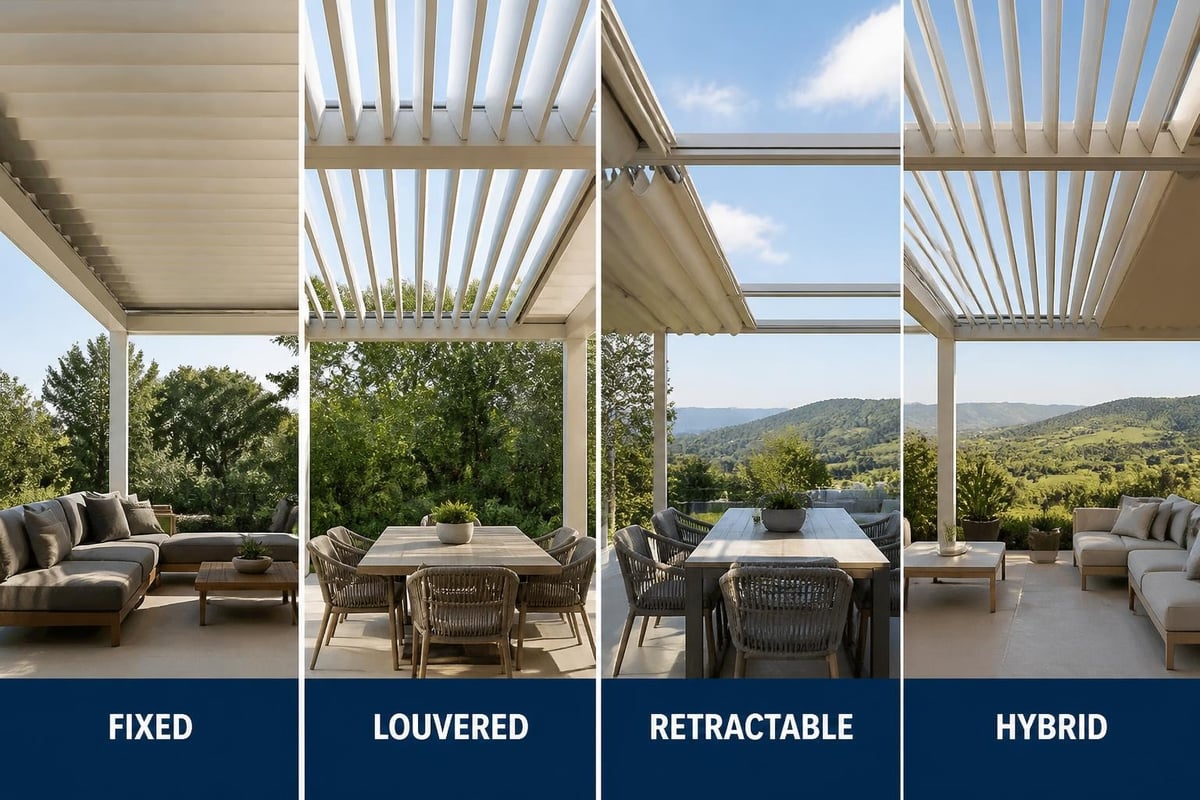
Selecting the appropriate roofing material for your outdoor pergola with roof significantly impacts both aesthetics and functionality. Each material brings distinct characteristics that suit different design visions and practical requirements.
| Material | Weather Resistance | Light Transmission | Aesthetic | Maintenance | Typical Lifespan |
|---|---|---|---|---|---|
| Polycarbonate Panels | Excellent | High (translucent) | Modern, clean | Low | 15-20 years |
| Glass | Excellent | Maximum (clear) | Contemporary, refined | Medium | 25+ years |
| Aluminium Louvres | Excellent (when closed) | Adjustable | Architectural, sleek | Very low | 30+ years |
| Timber Slats | Good (with treatment) | Moderate | Traditional, warm | High | 15-25 years |
| Fabric Canopy | Moderate | Varies | Soft, elegant | Medium | 5-10 years |
| Metal Panels | Excellent | None | Industrial, bold | Low | 25+ years |
Polycarbonate roofing remains popular for its balance of light transmission and weather protection. Available in clear, tinted and opaque finishes, it filters UV radiation whilst allowing natural light to illuminate the space beneath. This material works particularly well when you want to maintain brightness whilst gaining shelter.
Glass roofing represents the premium option, offering unobstructed views of the sky and seamless integration with contemporary architecture. Tempered or laminated glass provides safety and durability, though it requires occasional cleaning to maintain clarity. The transparency creates an almost invisible barrier, preserving the open-air feeling whilst delivering complete rain protection.
Aluminium louvered systems provide the ultimate flexibility for an outdoor pergola with roof. Motorised versions allow remote adjustment of blade angles, enabling you to control sunlight penetration, ventilation and rain protection with precision. When closed, the interlocking louvres create a watertight seal; when open, they permit natural airflow and partially filtered light.
The UK's temperate maritime climate demands thoughtful material selection. Waterproofing strategies become particularly important given our average annual rainfall and the frequency of prolonged wet periods.
Effective drainage integration prevents water pooling and directs runoff away from seating areas. Incorporating guttering systems within the pergola structure maintains clean lines whilst managing rainwater efficiently. This attention to drainage detail separates professionally designed installations from amateur attempts.
Thermal performance also merits consideration. Whilst an outdoor pergola with roof isn't typically heated, certain materials provide better insulation than others, extending comfortable usage into cooler months when combined with radiant heaters or fire features.
An outdoor pergola with roof should complement your property's existing architecture rather than appearing as an afterthought. The most successful installations demonstrate thoughtful design integration that enhances overall garden aesthetics.
Contemporary minimalist designs feature clean lines, flat rooflines, and monochromatic colour palettes. Powder-coated aluminium frames in anthracite grey, matt black or architectural bronze create striking modern statements. These structures work beautifully with glass or solid panel roofing, emphasising geometric precision.
Traditional designs incorporate timber construction, pitched roofs, and classical proportions. Oak or cedar frames develop attractive patina over time, whilst maintaining structural integrity. Shingle or tile roofing options echo heritage architecture, though these add considerable weight requiring robust foundations.
Transitional styles blend contemporary materials with softer design elements, creating pergolas that bridge traditional and modern aesthetics. Combining timber posts with aluminium louvered roofs exemplifies this approach, offering warmth and character alongside cutting-edge functionality.
For those seeking truly bespoke solutions, architectural pergola specialists like Tarasola deliver premium European-made structures engineered to exacting standards. These bioclimatic systems represent the pinnacle of pergola design, integrating sophisticated roof mechanisms with refined aesthetics that suit design-conscious buyers.
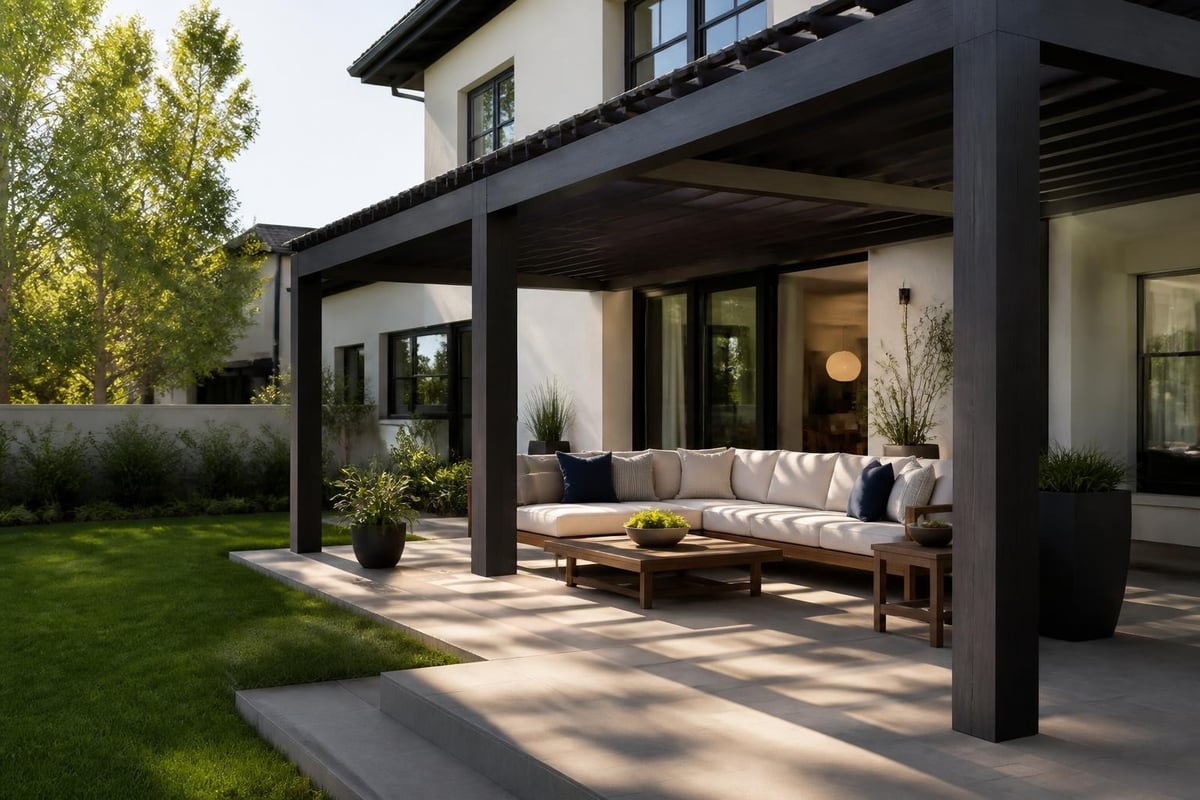
Determining appropriate dimensions for your outdoor pergola with roof requires careful consideration of intended use, garden proportions and sight lines.
Minimum recommended dimensions:
Height clearance typically ranges from 2.4m to 3m, balancing headroom with proportional aesthetics. Taller structures suit grand properties and create more dramatic spatial presence, whilst lower profiles integrate better with cottage-scale architecture.
The natural synergy between an outdoor pergola with roof and luxury outdoor kitchens creates the ultimate al fresco entertaining environment. Protection from rain and sun enables year-round culinary experiences previously impossible in exposed garden settings.
When planning this integration, consider equipment placement, workflow efficiency and utility connections. Built-in barbecues, pizza ovens, refrigeration and prep surfaces all benefit from overhead protection that preserves equipment longevity and maintains comfortable cooking conditions.
Proper ventilation becomes critical when cooking equipment sits beneath a roof. Louvered systems excel here, allowing smoke and heat to escape whilst maintaining weather protection. Fixed roofs require carefully positioned extraction or sufficient open sides to prevent heat accumulation.
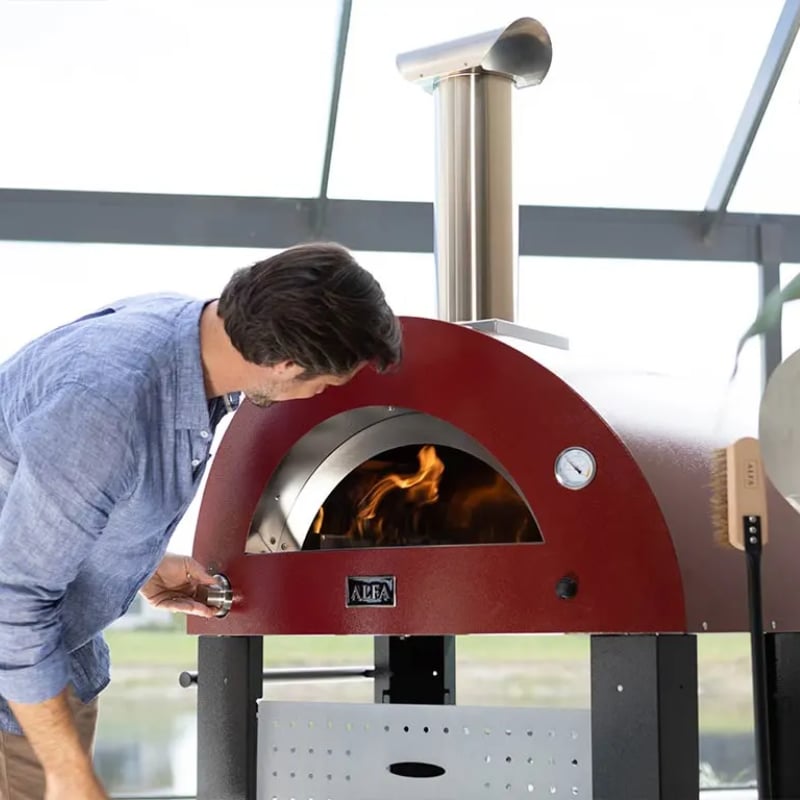
For those passionate about wood-fired cooking, protecting your pizza oven under a roofed pergola extends its operational season dramatically. The Alfa Forni Moderno Hybrid Pizza Oven exemplifies equipment that thrives in this environment, reaching 500°C in around thirty minutes whilst remaining protected from the elements, allowing you to create authentic Neapolitan pizzas regardless of weather conditions.
Functional zones to incorporate:
This zoning creates efficient workflow similar to indoor kitchens, whilst maintaining the relaxed character of outdoor entertaining. The overhead protection allows you to install more sophisticated equipment and finishes that wouldn't survive in fully exposed locations.
Building an outdoor pergola with roof involves more complexity than traditional open structures. Understanding key technical requirements ensures successful installation and long-term performance.
Adequate foundations prevent settling, movement and structural issues. The specific approach depends on soil conditions, structure size and local building regulations.
Professional site assessment identifies the most appropriate foundation strategy for your specific location. Clay soils common across the Cotswolds require particular attention to prevent seasonal movement affecting structural integrity.
An outdoor pergola with roof supports significantly more weight than open versions, particularly when incorporating solid roofing materials or during snow loading. Construction guidance emphasises the importance of proper structural calculations and local building code compliance.
Key structural considerations include:
Professional installation ensures these technical requirements are met, providing peace of mind and typically qualifying for structural warranties that protect your investment.
In England, many pergola installations fall under permitted development rights, allowing construction without formal planning permission. However, certain scenarios require approval:
Planning permission typically required when:
Building regulations may apply to substantial structures, particularly those incorporating permanent roofing, electrical installations or significant foundations. Early consultation with local planning authorities clarifies requirements and prevents costly modifications later.
Modern outdoor pergola with roof designs incorporate sophisticated features that elevate functionality and user experience beyond simple weather protection.
Integrated lighting systems transform the space for evening entertaining. LED strips within roof channels provide ambient illumination, whilst pendant fixtures add decorative interest and task lighting above dining areas. Smart controls enable scene setting and dimming to match different occasions.
Heating solutions extend comfortable usage into cooler months. Radiant ceiling heaters mount discretely within the roof structure, infrared wall panels deliver targeted warmth, and gas patio heaters provide flexible supplementary heat. Combined with the wind protection offered by the structure, these systems make autumn and spring evenings genuinely comfortable.
Automated weather response represents the cutting edge of pergola technology. Sensors detect rain, triggering automatic closure of louvered roofs. Wind sensors retract fabric canopies during storms to prevent damage. Temperature monitoring adjusts heating output. These systems deliver convenience whilst protecting both the structure and your outdoor furnishings.
| Feature Category | Options | Benefits | Considerations |
|---|---|---|---|
| Lighting | LED strips, pendants, spotlights, feature lighting | Ambiance, safety, extended use | Power supply, weatherproofing |
| Heating | Radiant panels, infrared, gas patio heaters | Season extension, comfort | Running costs, installation |
| Shade Control | Motorised louvres, retractable screens | Precision control, automation | Maintenance, initial cost |
| Audio | Weather-resistant speakers, zones | Entertainment, atmosphere | Connectivity, sound quality |
Privacy screening attaches to pergola sides, creating enclosure without full walls. Options include retractable fabric screens, adjustable louvered panels, glass sliding doors and planted screens using climbing vegetation. This flexibility allows you to modulate privacy and wind protection according to conditions and preferences.
An outdoor pergola with roof represents significant investment, making proper maintenance essential to protect its value and appearance. Maintenance requirements vary considerably based on materials selected.
Aluminium structures demand minimal intervention. Annual washing with mild detergent removes accumulated dirt and preserves powder-coated finishes. Inspect moving parts of louvered systems, lubricating hinges and mechanisms as recommended by manufacturers. Check drainage channels remain clear to prevent overflow during heavy rain.
Timber pergolas require more intensive care. Inspect annually for signs of rot, insect damage or structural movement. Reapply protective treatments every 2-3 years, selecting products appropriate to the timber species and finish. Replace damaged sections promptly to prevent deterioration spreading. Various pergola designs incorporate naturally durable species like oak and cedar that extend maintenance intervals.
Glass and polycarbonate roofing needs periodic cleaning to maintain transparency and prevent algae growth. Use appropriate cleaning products that won't scratch or degrade materials. Inspect seals and gaskets, replacing any that show deterioration to maintain weather resistance.
Fabric canopies typically require annual removal for cleaning or seasonal storage. Check mounting hardware and canvas condition, addressing tears or fraying before they worsen. Most quality fabrics last 5-10 years with proper care before requiring replacement.
Winter considerations:
Summer preparation:
Understanding the financial investment required for an outdoor pergola with roof helps establish realistic expectations and appropriate budgeting.
Budget ranges (supply and installation):
These figures vary based on size, specification, site conditions and regional installation costs. Complex sites requiring substantial groundworks or those with difficult access increase overall expense.
Value-adding factors include:
When evaluating costs, consider the complete outdoor living investment including furniture, lighting, heating and integrated cooking equipment. Comprehensive design and installation guidance suggests allocating approximately 40% of budget to structure, 30% to finishes and features, and 30% to furnishings and equipment.
Current design directions influence how homeowners approach outdoor pergola with roof projects, with several distinct trends emerging across the luxury outdoor living sector.
Biophilic design integration brings nature into covered structures through living roofs planted with sedums or wildflowers, integrated planters within posts and beams, and deliberate framing of garden views. This approach softens architectural elements whilst providing ecological benefits including improved drainage and pollinator habitat.
Sustainable material selection reflects growing environmental consciousness. Reclaimed timber, recycled aluminium, and FSC-certified woods feature prominently. Solar panels integrated into roof structures generate electricity for lighting and heating, reducing operational environmental impact.
Multi-functional spaces blur boundaries between cooking, dining and relaxation zones. Outdoor dining inspiration emphasises creating versatile areas that accommodate various activities throughout the day, from morning coffee to evening entertaining.
Smart home integration connects pergola systems to broader home automation. Voice control adjusts louvres, lighting scenes synchronise with indoor settings, and weather forecasts trigger preemptive responses. This connectivity delivers convenience whilst optimising energy efficiency.
Minimalist aesthetics continue dominating design preferences, with clean lines, concealed fixings and monochromatic palettes creating sophisticated outdoor rooms that complement contemporary architecture. Frameless glass, handleless doors and invisible drainage details exemplify this refined approach.
The complexity of installing an outdoor pergola with roof makes professional expertise invaluable. Selecting appropriate partners significantly influences project success, final quality and long-term satisfaction.
Key selection criteria include:
Consultative approaches that prioritise understanding your vision, lifestyle and property characteristics deliver superior outcomes compared to purely transactional relationships. Expect site visits, detailed discussions about usage patterns, and presentation of multiple design options during the specification phase.
Questions to ask potential suppliers:
Professional installation includes proper structural engineering, building regulation compliance, tested electrical and water connections, and comprehensive handover explaining system operation and maintenance requirements.
An outdoor pergola with roof functions as the anchor for broader garden design, creating opportunities to integrate complementary features that enhance overall outdoor living quality.
Water features positioned nearby add sensory richness through sound and movement. Contemporary designs incorporate linear rills, raised pools and wall-mounted spouts that complement architectural pergola styles. Traditional gardens might include naturalistic ponds or classical fountains providing focal points visible from covered seating areas.
Fire features create gathering points and extend comfortable outdoor use. Built-in fireplaces, freestanding fire pits and modern bioethanol burners all work effectively within or adjacent to roofed structures, though proper ventilation remains essential when combining fire and overhead coverage.
Planting schemes soften architectural elements whilst providing privacy and seasonal interest. Climbing plants trained along posts and beams create living architecture. Roof-specific pergola ideas often incorporate planting pockets within the structure itself, allowing vegetation to integrate with built elements.
Outdoor furniture protected beneath a roof permits more refined selections than fully exposed gardens allow. Upholstered seating, decorative cushions and weather-sensitive materials become viable options, elevating comfort and aesthetic sophistication. Built-in banquette seating maximises space efficiency whilst providing permanent, properly proportioned furniture.
Connecting pathways link covered outdoor rooms to house and garden, extending architectural language throughout the landscape. Materials echoing those used in pergola construction create visual continuity. Lighting along these routes ensures safe navigation whilst adding evening ambiance.
Maximising utility across all seasons requires thoughtful climate-responsive design that addresses Britain's variable weather patterns.
Spring considerations: Adjustable shade controls manage increasing solar gain whilst maintaining ventilation during unpredictable weather. Retractable side screens provide wind protection during blustery periods common in early spring.
Summer requirements: Maximum ventilation prevents heat accumulation beneath solid roofs. Louvered systems excel by opening fully during hot days whilst providing shade adjustment to prevent glare. Integrated misting systems offer cooling during exceptional heat waves.
Autumn strategies: Weather protection becomes paramount as rainfall increases. Ensure drainage handles heavy precipitation without overflow. Heating elements extend comfortable use as temperatures drop. Task lighting compensates for earlier darkness.
Winter approaches: Close louvered systems during extended absences to prevent snow accumulation. Ensure structures can support local snow loading. Consider transparent roofing that permits weak winter sun to provide passive warming. Radiant heating transforms covered spaces into cosy winter refuges.
Various roof designs for pergolas address these seasonal demands through material selection, operational flexibility and integrated environmental controls that respond to changing conditions.
Responsible outdoor pergola with roof design incorporates safety features protecting users whilst complying with relevant standards and regulations.
Structural safety begins with proper engineering and installation. Adequate foundations prevent collapse or movement. Correctly sized members support anticipated loads including snow, wind and suspended features. Regular inspections identify deterioration before it becomes hazardous.
Electrical safety requires qualified installation meeting current wiring regulations. GFCI protection on all outdoor circuits prevents shock hazards. Proper weatherproof enclosures protect connections and switches. Consider low-voltage systems for lighting, reducing risk whilst maintaining functionality.
Fire safety around cooking equipment demands adequate clearances between heat sources and combustible materials. Installing pergola roofing near BBQs and pizza ovens requires non-combustible materials and sufficient ventilation to dissipate smoke and heat. Keep fire extinguishers accessible when operating cooking equipment.
Weather event preparation includes securing or retracting movable elements during storms, ensuring drainage handles extreme rainfall, and understanding snow loading limits for your specific structure. Automated systems with weather sensors provide valuable protection during unexpected conditions.
Child safety considers accessible mechanisms, prevents climbing hazards, and ensures glass or acrylic panels use safety-rated materials. Rounded edges and recessed fixings reduce injury risk from impacts.
Protected outdoor spaces permit furniture and accessory choices unavailable in fully exposed gardens, creating opportunities for refined comfort and sophisticated aesthetics.
Dining furniture ranges from traditional teak and aluminium to contemporary concrete and powder-coated steel. Under a roof, you might incorporate upholstered dining chairs that wouldn't survive exposed conditions. Built-in banquettes maximise seating whilst creating permanent architectural elements.
Lounge seating benefits enormously from overhead protection. Deep-cushioned sofas, daybed-style seating and hanging swing chairs all become viable options. Weather-resistant fabrics still make sense for maintenance ease, but the palette expands beyond purely outdoor-rated materials.
Tables can incorporate more delicate materials including marble, fine hardwoods and decorative ceramics that require protection from sustained moisture. Coffee tables, side tables and serving carts enhance functionality whilst contributing to overall design cohesion.
Accessory layers add personality and comfort. Outdoor rugs define zones and soften hard surfaces. Decorative cushions introduce colour and pattern. Throws provide warmth during cooler evenings. Protected storage contains these items when not in use, maintaining pristine condition.
Colour palette considerations should harmonise with pergola finishes, adjacent architecture and garden planting. Neutral foundations with accent colours provide flexibility for seasonal refreshment without requiring complete replacement.
An outdoor pergola with roof fundamentally transforms how you experience your garden, creating sophisticated all-weather spaces that extend your home's living area into the landscape. By carefully considering design integration, material selection, technical requirements and functional features, you can create an outdoor room that delivers year-round enjoyment and becomes the heart of al fresco entertaining. The Cotswold Cooking Company brings decades of expertise in luxury outdoor living, offering comprehensive consultative services from initial concept through final installation, helping discerning homeowners across the UK create refined outdoor spaces that blend Cotswold heritage with cutting-edge performance and timeless design.

Comments
Leave a comment