


An outdoor kitchen suited to UK weather is one built from weatherproof materials, positioned for shelter and sun, and ideally covered by a pergola or roof so you can cook comfortably for much of the year. With the right planning, an outdoor kitchen becomes a genuine extension of the home rather than a few warm weeks' novelty. This guide covers where to site it, what to include, which materials survive British winters, how to power it and how to cook safely.
An outdoor kitchen is a permanent or modular cooking and preparation area in your garden or on your terrace, typically combining a grill or barbecue with worktops, storage and often a sink and refrigeration. It is worth the investment in the UK if you plan for the climate from the outset and add some form of cover.
The case rests on usable time. An uncovered kitchen is a summer feature. One with a pergola, heating and lighting is used on cool evenings in spring and autumn, and often on dry winter days too. Many homeowners also find a well-designed space adds to the appeal of the property, though the primary return is how often you use it.
If you only grill a handful of times each summer, a freestanding barbecue may serve you well. If you entertain regularly and want cooking to become part of the gathering, a properly specified kitchen is a different proposition.
Plan for rain, wind, damp and frost first, and for sunshine second. British weather is rarely extreme, but it is persistently changeable, so the kitchen must cope with moisture on most days and temperature swings across the year.
Start with these principles:
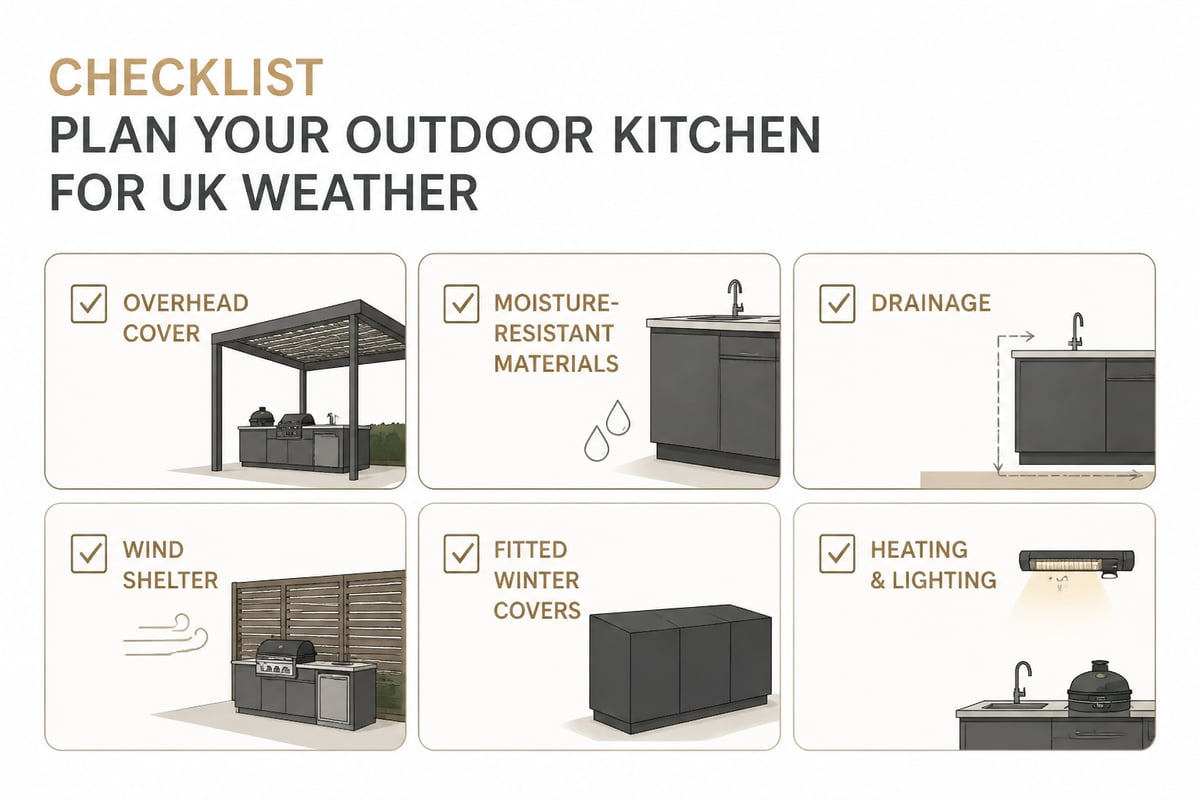
The best position is close to the house, sheltered from the prevailing wind, and within easy reach of power, water and gas. Proximity to the indoor kitchen makes carrying food and crockery practical, which in turn means you will use the space more often.
Consider these factors before you commit:
Fire services advise siting barbecues well away from sheds, fences, overhanging branches and buildings, and keeping water nearby.
A well-planned outdoor kitchen needs a primary cooking appliance, a generous preparation surface, weatherproof storage and a place to wash up and chill drinks. Everything beyond those basics depends on how you entertain.
Think in zones rather than appliances. A cooking zone holds the grill, kamado, pizza oven or plancha. A preparation zone needs clear worktop either side of the heat source. A cold zone houses a fridge for drinks and ingredients. A wash zone provides a sink with a cold, and ideally hot, water supply.
Popular additions include a kamado-style ceramic cooker, a pizza oven, a side burner, a warming drawer, built-in bins and a bar counter with stools. Whistler's Cirencester modular outdoor kitchen with a 6-burner BBQ, sink and fridge shows how those zones combine in one run, and Grillandia's bespoke outdoor kitchen is a route if your garden needs a bespoke layout.
Marine-grade stainless steel, powder-coated aluminium, ceramic and sealed natural stone last longest outdoors in the UK. Each handles damp and frost well, but they differ in appearance, weight and maintenance.
| Material | Weather resistance | Appearance | Maintenance |
|---|---|---|---|
| Marine-grade stainless steel | Excellent | Contemporary, sleek | Wipe clean; occasional polish |
| Powder-coated aluminium | Very good | Crisp, wide colour range | Low; wash with mild soap |
| Ceramic or porcelain finishes | Excellent | Refined, marbled or stone-effect | Very low |
| Sealed granite worktops | Excellent | Natural, timeless | Periodic resealing |
| Thermowood shelving | Good | Warm, rustic contrast | Occasional oiling |
| Untreated softwood | Poor | Rustic | High; prone to rot |
For most homeowners, the strongest combination is a stainless or aluminium carcass with a granite or ceramic worktop. If you want warmth, use treated timber as an accent rather than the structure.
Yes: cover is the single most effective upgrade for a UK outdoor kitchen, because it keeps you cooking through showers and shade. Without it, you plan around the forecast. With it, you simply light the grill.
Your main options are:
Cotswold Cooking Company offers professional installation of pergolas, verandas and canopies, which suits those wanting the structure and kitchen designed together. Any covered structure needs careful thought about heat and ventilation, which leads directly to the safety question below.
You power an outdoor kitchen with a combination of gas, electricity and water, each installed to outdoor-rated standards by qualified professionals. The right mix depends on your appliances.
Gas, whether bottled propane or a piped natural gas supply, fuels most grills and side burners. Electricity runs fridges, lighting, heaters, rotisseries and sockets, and needs weatherproof, RCD-protected circuits. Water is needed for a sink, and the supply must be drained or protected against frost in winter. An electric-only setup suits smaller spaces, as Grillandia's E-Boy outdoor kitchen with an electric bar grill demonstrates.
Trenching, wiring and gas connections should always be carried out by registered tradespeople, and it is far cheaper to run services before paving than after. Plan sockets and isolators now, even if you will add appliances later.
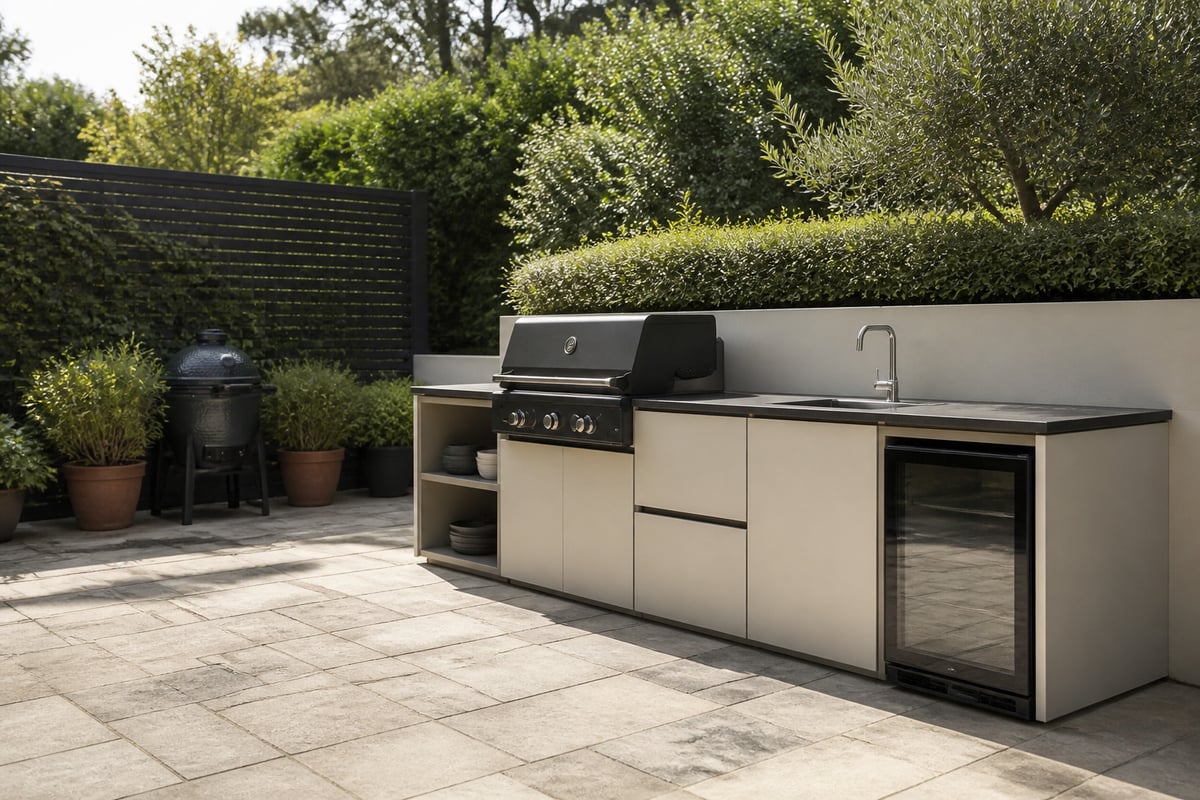
Yes. A modular outdoor kitchen is assembled from freestanding units and suits most gardens, because it goes in faster, can be reconfigured and avoids heavy masonry work. A built-in kitchen offers a bespoke finish but takes longer and costs more to alter.
Modular systems let you start with a grill and a cabinet, then add a sink, fridge or kamado unit later. They are also easier to move if you redesign the garden. Explore the full modular outdoor kitchens collection to compare configurations.
For a clean, contemporary look, the Cubic C1 Style Outdoor Kitchen pairs minimalist lines with weather-resistant materials and a modular layout. You can specify integrated barbecues, sinks, storage and preparation zones to suit the way you cook, and the result sits comfortably against both contemporary architecture and period stonework.
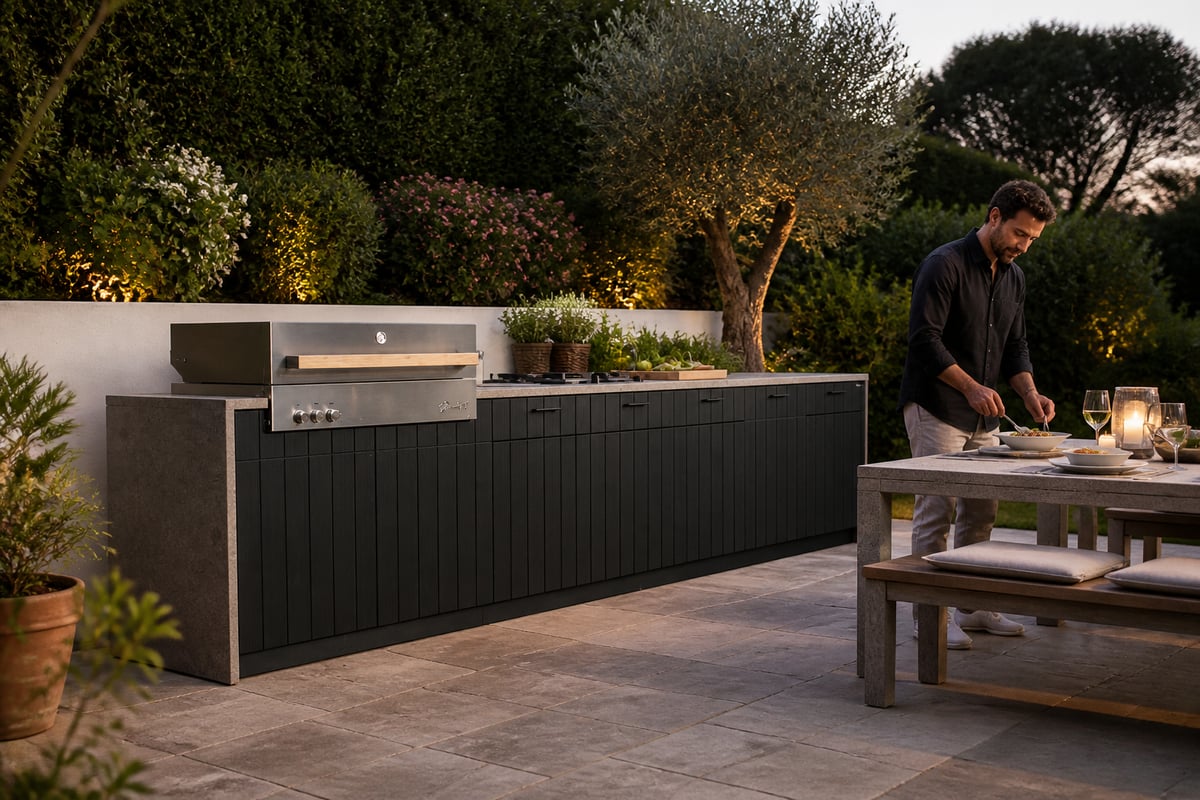
A good layout follows the cook's natural movement between cold storage, preparation, heat and serving. Aim for a compact working triangle, so nothing needs more than a step or two.
The most common shapes are:
Leave a clear walkway behind the units, and more where people will queue or pass. Place the grill at one end of a run, so heat and smoke do not cross the prep area. Add layered lighting: task lights over the worktop, softer ambient lighting overhead and low-level lights along the paving.
Often not, but it depends on the structure, its size and where you live. A freestanding modular kitchen is usually treated as garden furniture, whereas a permanent roofed structure, large pergola or building attached to the house may fall under permitted development rules that have limits on height and footprint.
Listed buildings, conservation areas and Areas of Outstanding Natural Beauty, which cover much of the Cotswolds, carry tighter restrictions. Check with your local planning authority before building anything with a roof or fixed foundations. Your supplier or installer can advise on what a design involves, but the authority makes the final decision.
Cook safely by keeping the kitchen open to the air, using fuel sensibly and having a means of putting out a fire to hand. The principles are the same for a luxury installation as for a basic barbecue, and covered kitchens need extra attention to ventilation.
Follow the guidance in GOV.UK's fire safety outdoors advice:
For food hygiene, GOV.UK's BBQ food safety guidance advises inspecting and cleaning a barbecue that has been left outdoors before cooking, and making sure charcoal is hot enough before you begin. A good grill brush helps here, and chemical-free options such as Scrappy Scraper's grill cleaning tools avoid the risk of loose metal bristles ending up in food.
Care for it with light, regular cleaning, a deeper annual service and sensible winter protection. Little and often is far easier than rescuing neglected surfaces.
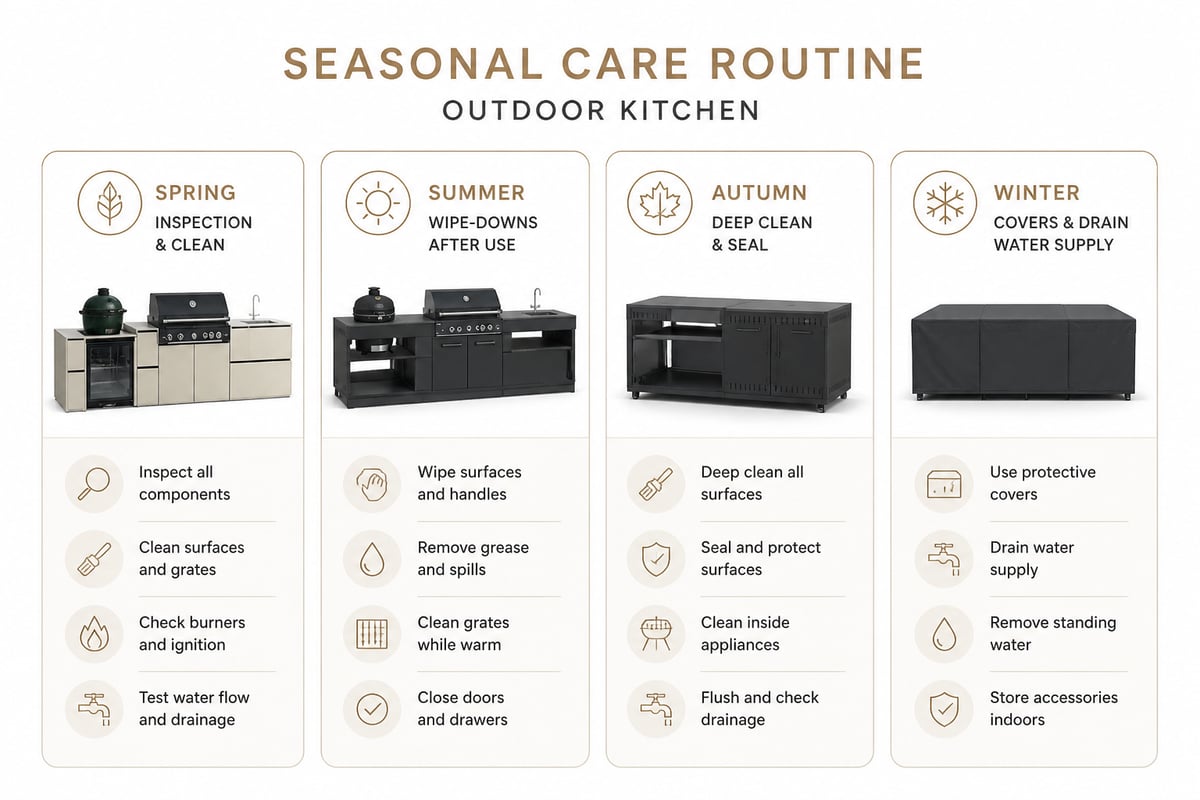
In spring, inspect hoses, regulators and seals, and clean the grill thoroughly. Through summer, wipe worktops after each use and empty grease trays. In autumn, deep clean, reseal stone surfaces if needed and check drainage. Before the first hard frost, drain the sink and water lines, then fit weather covers over appliances and cabinets. Follow the manufacturer's maintenance instructions for each appliance, as finishes and components vary.
Costs vary widely with size, materials, appliances and groundwork, so budget by listing every element rather than the units alone. The cabinets and grill are only one part of the final figure.
Allow for:
Installation is arranged through consultation rather than shown as a fixed price online, so request a quote once your layout is settled. Buy now, pay later options can help spread the cost of a larger project. Premium kitchens are an investment, so choose quality that you will still enjoy in a decade.
Yes, with cover, heating and lighting. A pergola or veranda keeps off rain, and a patio heater or fire pit takes the edge off cold evenings. Keep the space well ventilated whenever you cook.
Quality units in marine-grade stainless steel, aluminium or ceramic can last many years with regular cleaning and covers in winter. Lifespan depends on materials, exposure and upkeep.
Gas offers speed and control, which suits frequent, spontaneous cooking. Charcoal and kamado cookers reward you with flavour and are well suited to slower cooking. Many premium kitchens combine both.
Cotswold Cooking Company offers an appointment-only space at Thorpe Manor where you can view outdoor kitchens. Contact the team through its website to arrange a visit.
Start by sketching your terrace with measurements, then note where gas, power and water could reach it, as that single page shapes every decision that follows. From there, the team at Cotswold Cooking Company can guide you through layout, appliances and covered structures, and you can view the Cubic C1 Style Outdoor Kitchen as a starting point. If spreading the cost makes the project easier to begin, you can buy now and pay later through Cotswold Cooking Company and move from planning to cooking sooner.

Leave a comment