


An IKEA pergola is a flat-pack, powder-coated steel frame with a fabric or polycarbonate roof, sold mainly as the HAMMARÖN pergola at 300 x 300 cm, alongside the HIMMELSÖ and GUNNÖN gazebos. It suits a seasonal shaded seating area on a patio or deck, but it is a lightweight, semi-permanent structure rather than a year-round outdoor kitchen cover. This guide explains the range, the sizes, how to set one up properly in a British garden, and where a permanent pergola becomes the wiser choice.
The IKEA pergola range centres on one true pergola, the HAMMARÖN, supported by a small group of gazebos that serve a similar purpose. The collection is compact, and the names matter because shoppers often use "pergola" and "gazebo" interchangeably.
The distinction is practical. A pergola generally has an open or slatted roof and open sides, while a gazebo is typically more enclosed. If you want to understand the difference in more depth, our guide to pergolas and gazebos sets out how each performs in the British climate.
The most useful size to plan around is 300 x 300 cm, because it is the footprint of both the HAMMARÖN and the HIMMELSÖ. That gives roughly nine square metres of covered space, enough for a four to six seat dining table with room to pull chairs out.
Furniture should drive your decision, not the other way round. Lay out your table and chairs first, then add at least 90 cm of clearance on each side so people can move comfortably. Decks.com's pergola planning guide recommends choosing a footprint around the furniture and activities you intend, which is sound advice for any size of structure.
| Model | Type | Footprint | Best use |
|---|---|---|---|
| HAMMARÖN | Pergola | 300 x 300 cm | Dining or lounge shade |
| HIMMELSÖ | Gazebo | 300 x 300 cm | Enclosed seating with curtains and net |
| GUNNÖN | Gazebo | 238 x 233 cm | Compact patio or balcony seating |
Check the current dimensions, finishes and availability on IKEA's website before you plan, as stock and colourways change between seasons.
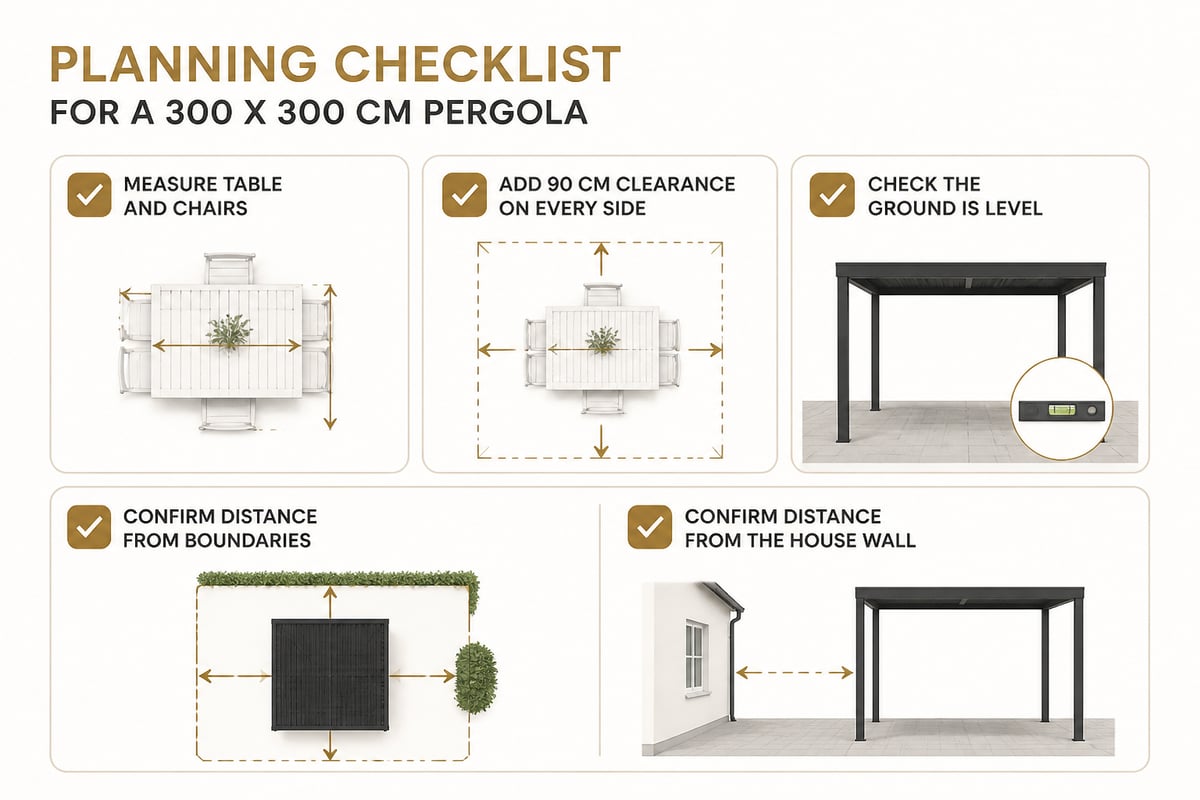
Setting up a flat-pack pergola takes a level base, a helper and a dry, calm day. Most of the work is preparation rather than assembly.
On anchoring, Polywood's pergola buying guide covers the basic approaches for concrete and deck installations, including the tools you will need. If your pergola sits on a patio and will hold lighting or heaters, the same Decks.com guide above also flags outdoor electrical safety, which is worth reading before you add any power.
Yes. Any pergola on a patio or deck should be fixed to the ground, because a canopy acts like a sail in a gust, and UK weather regularly produces strong winds.
Unanchored, a lightweight frame can be vulnerable to lifting, twisting or sliding. Fix each leg to the base, and remove fabric covers and curtains in winter or ahead of a storm warning. Fabric roofs and mesh nets are not designed to carry heavy snow, so brush it off promptly or take the covering down.
Planning rules are a separate point. Many garden structures fall within permitted development, but height, proximity to boundaries and listed or conservation-area status can change that. Check with your local planning authority before you build, particularly in the Cotswolds, where conservation area restrictions are common.
A flat-pack pergola is designed for occasional shade and mild weather, so its limits show up when you try to use it as a true outdoor room. Understanding these limits helps you decide whether it is a sensible starter or a short-term compromise.
For a space that will hold a cooking area, the fire point alone is decisive. If you plan to cook outdoors, read our guide to a pergola with a grill before choosing any structure.
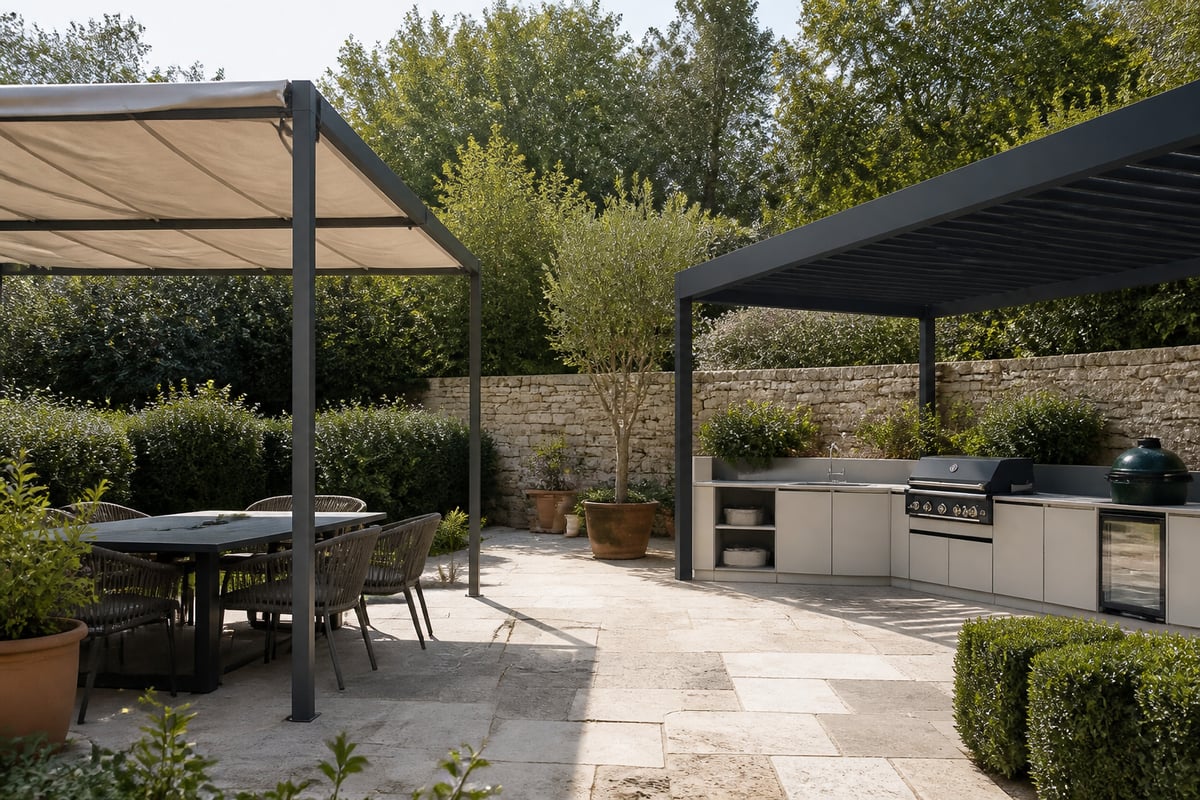
You can improve the look of an IKEA pergola with modest additions, though the underlying structure stays the same. Popular upgrades include outdoor curtains for privacy, climbing plants such as clematis or wisteria trained along the frame, and string or solar lighting for evening use.
A few approaches work well:
These changes make a seasonal shelter more inviting. They do not change its weatherproofing, so treat the frame as a pleasant shaded corner rather than a permanent room.
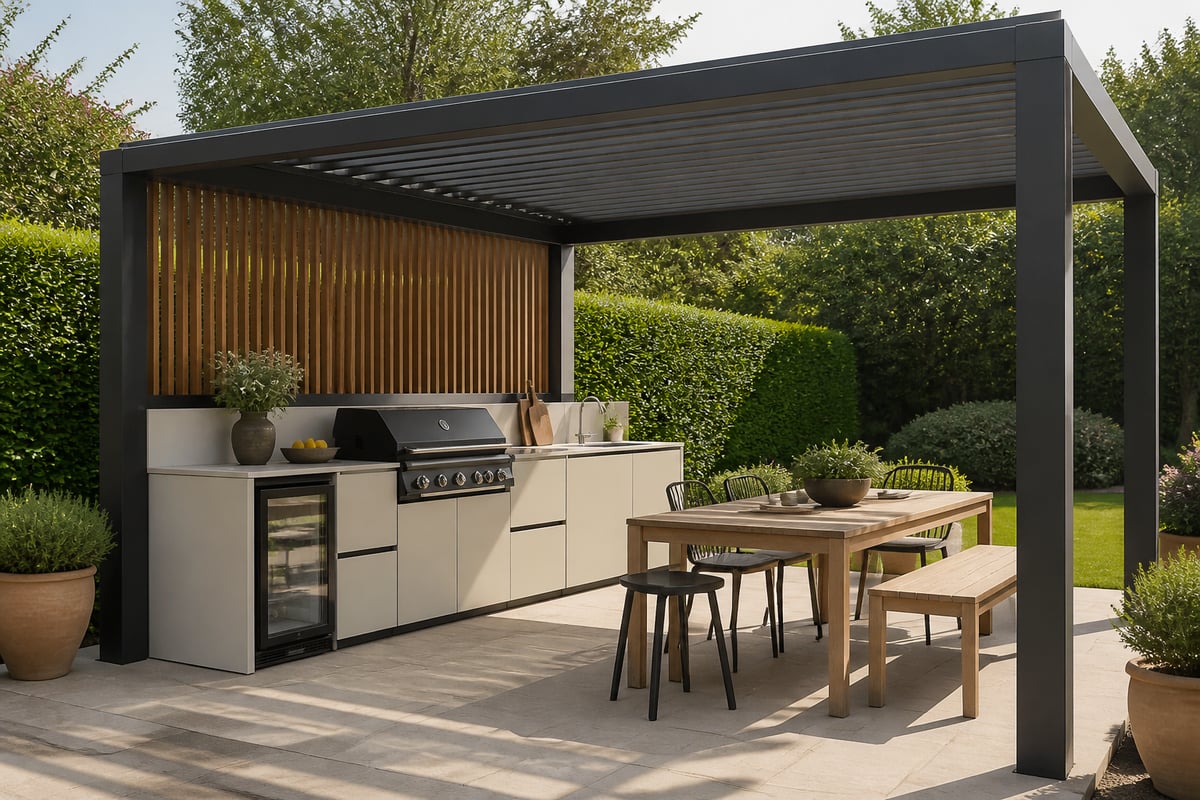
Choose a permanent pergola when you want to use the space across all four seasons, cook beneath it, or add value to your home. A permanent, architectural structure is engineered for wind, rain and snow, and it can be designed around a kitchen, lighting and heating from the start.
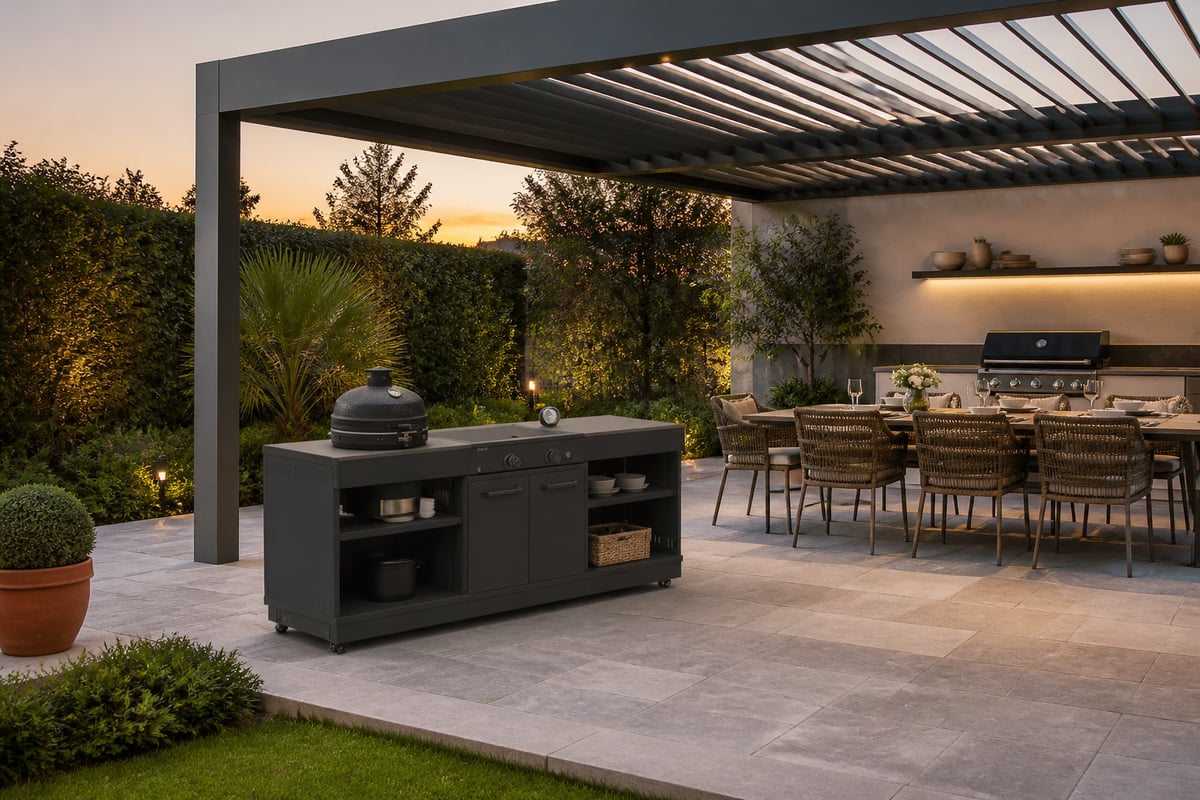
Bioclimatic and louvred designs are the clearest step up. Motorised aluminium blades can pivot to shade the sun, shed rain or open to the sky, so the space can remain usable in changeable British weather. Our explainer on the bioclimatic pergola shows how the blades work, and our guide to waterproof pergolas explains how drainage is handled through the frame.
For homeowners planning a premium outdoor kitchen, the Tarasola range is a strong example of a bespoke, European-made alternative. The Tarasola Technic bioclimatic pergola is an architectural aluminium structure with a louvred roof, designed for design-conscious buyers who want year-round outdoor living rather than seasonal shade.
The two sit in different categories, and the table below sets out how they differ on the points that matter most to a homeowner investing in their garden.
Feature IKEA pergola Luxury aluminium pergola
Construction Flat-pack powder-coated steel Engineered aluminium, built to specification
Roof Open frame or fabric canopy Motorised louvres or fixed solid roof
Season of use Spring to early autumn Year-round
Cooking beneath Not suitable Designed to accommodate an outdoor kitchen
Sizing Fixed standard sizes Tailored to the space
Add-ons Curtains and nets Lighting, heating, screens and zip blinds
If you are weighing the options, our collection of aluminium pergolas shows the range of finishes and roof styles available.
Budget for the structure, the base it sits on, and any services you intend to add, because the pergola itself is rarely the only cost. A flat-pack frame is a modest outlay, though you will need a level base and fixings, and a fabric roof may need replacing after a few seasons.
For a permanent pergola, costs depend on size, roof type, motorisation, lighting and the groundwork required. Pricing varies by project, so request a quotation through Cotswold Cooking Company's pergolas and verandas collection rather than relying on a guide figure. Cotswold Cooking Company offers professional installation of pergolas, verandas and canopies, and buy now, pay later options are available to spread the cost.
The HAMMARÖN is sold as a pergola, with an open-sided frame in grey-beige. The HIMMELSÖ and GUNNÖN are sold as gazebos, which are generally more enclosed.
The HAMMARÖN pergola is 300 x 300 cm. The HIMMELSÖ gazebo shares that footprint, and the GUNNÖN is smaller at 238 x 233 cm. Always confirm current dimensions on IKEA's site.
No. Fabric roofs, curtains and nets are flammable, and a lightweight frame is not designed for heat or smoke. Cook in a separate, well-ventilated area, or choose a pergola engineered to cover a kitchen.
Often not, as many garden structures fall within permitted development. Height, boundary distance and conservation-area or listed-building status can change this, so check with your local planning authority first.
Treat it as shower-resistant at best. Open frames offer no rain protection, and fabric canopies are not intended for heavy or sustained rain or for carrying snow.
Your next step is to measure your patio and mark out a 300 x 300 cm footprint with tape, so you can see how a structure of that size sits against your furniture and house. If it becomes clear that you want year-round cover and a proper cooking space, the architectural Tarasola pergola is a natural place to start, and the team at Cotswold Cooking Company can guide you from design through to installation, with buy now, pay later options to spread the cost of your project.

Leave a comment