


The traditional open-slatted pergola has evolved dramatically over recent years, giving rise to sophisticated enclosed structures that redefine outdoor living. A pergola with roof and sides represents the pinnacle of this evolution, transforming exposed garden spaces into protected, climate-controlled outdoor rooms that function beautifully throughout all four seasons. For discerning homeowners seeking to maximise their property's potential, these architectural statements combine weather protection, privacy, and design sophistication in equal measure.
A pergola with roof and sides differs fundamentally from its open-air predecessor. Where traditional pergolas offered dappled shade and aesthetic appeal, these contemporary structures deliver comprehensive environmental control.
The enclosed design creates a genuine outdoor room, protected from wind, rain, and excessive sunlight whilst maintaining visual connection to the surrounding garden. This fundamental shift in functionality has positioned the structure as an essential element in transforming outdoor spaces into year-round culinary destinations.
Modern enclosed pergolas incorporate several sophisticated elements working in harmony:
The most advanced systems, such as those featured in modern retractable pergola designs, incorporate motorised mechanisms allowing effortless adjustment via remote control or smartphone application.
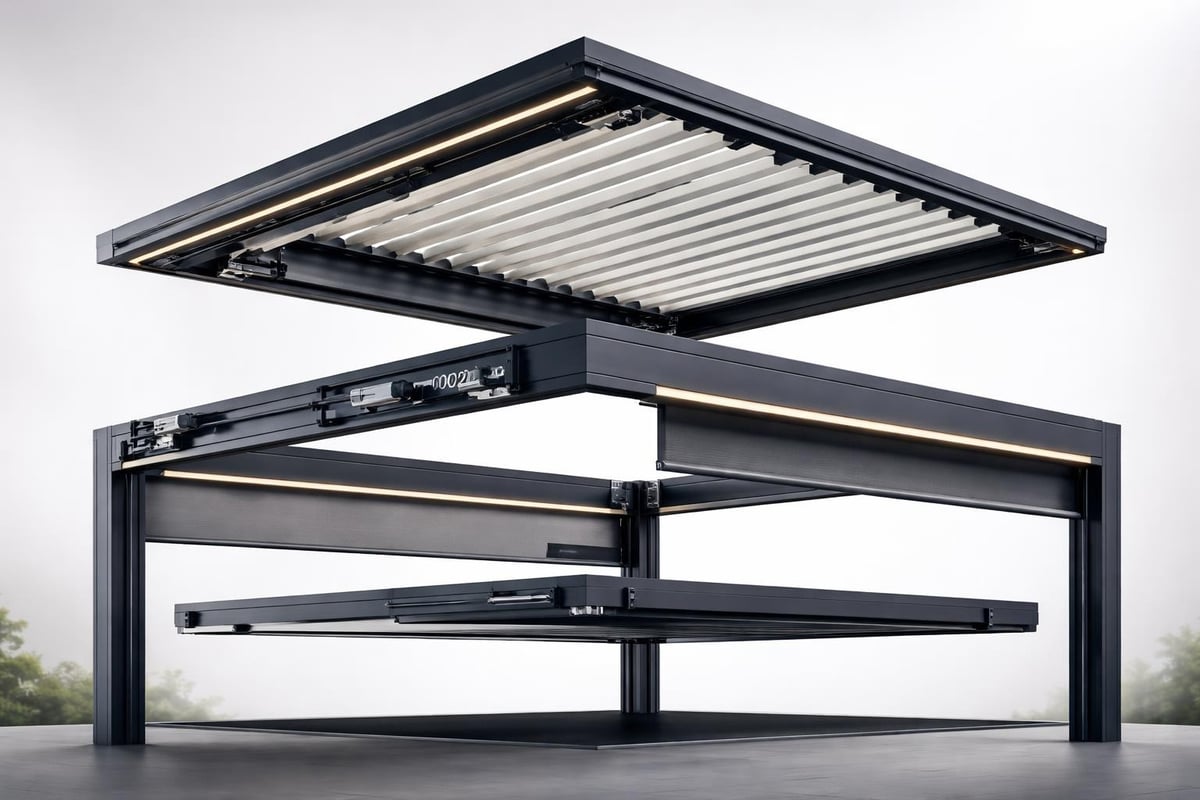
Selecting the appropriate design requires careful consideration of multiple factors, from architectural compatibility to functional requirements.
The structure must complement your property's existing architecture. Period homes typically benefit from traditional materials and proportions, whilst contemporary residences pair beautifully with minimalist aluminium frames and clean lines.
Considerations when attaching a pergola to a house include structural loading, drainage management, and maintaining the building's architectural integrity. Freestanding configurations offer greater flexibility but require careful positioning to maximise garden flow and views.
| Design Aspect | Attached Configuration | Freestanding Configuration |
|---|---|---|
| Structural Requirements | Load-bearing wall assessment, building regulations compliance | Independent foundation system, greater engineering complexity |
| Spatial Integration | Seamless indoor-outdoor transition, reduced construction costs | Flexible positioning, defines distinct zones |
| Planning Permissions | May require consent depending on size and location | Generally more straightforward approval process |
| Aesthetic Impact | Appears as architectural extension of home | Creates garden focal point, standalone statement piece |
Material choice profoundly influences both aesthetics and longevity. Premium aluminium frames offer exceptional durability with minimal maintenance requirements, resisting corrosion whilst supporting powder-coated finishes in virtually any colour specification.
Timber alternatives provide warmth and traditional charm but demand regular treatment to withstand British weather conditions. High-quality hardwoods like oak or iroko offer superior weather resistance compared to softwood options.
Glass side panels deliver unobstructed views and maximum natural light transmission, whilst polycarbonate alternatives provide similar transparency at reduced cost with enhanced impact resistance. Fabric screens offer flexibility and softer aesthetics, particularly suitable for creating intimate entertaining spaces.
The practical advantages of a fully enclosed pergola with roof and sides extend far beyond simple weather protection.
Complete enclosure transforms previously seasonal outdoor spaces into twelve-month destinations. The weatherproofing solutions provided by integrated roofing and side panels mean entertaining schedules need never defer to meteorological forecasts.
Morning coffee on drizzly October days becomes perfectly feasible. Winter dinner parties beneath infrared heating panels create magical experiences. The investment in complete enclosure typically increases outdoor space utilisation by 300-400% annually.
Advanced pergola with roof and sides systems incorporate sophisticated climate management:
These features create remarkably consistent microclimates, maintaining comfort across diverse weather conditions.
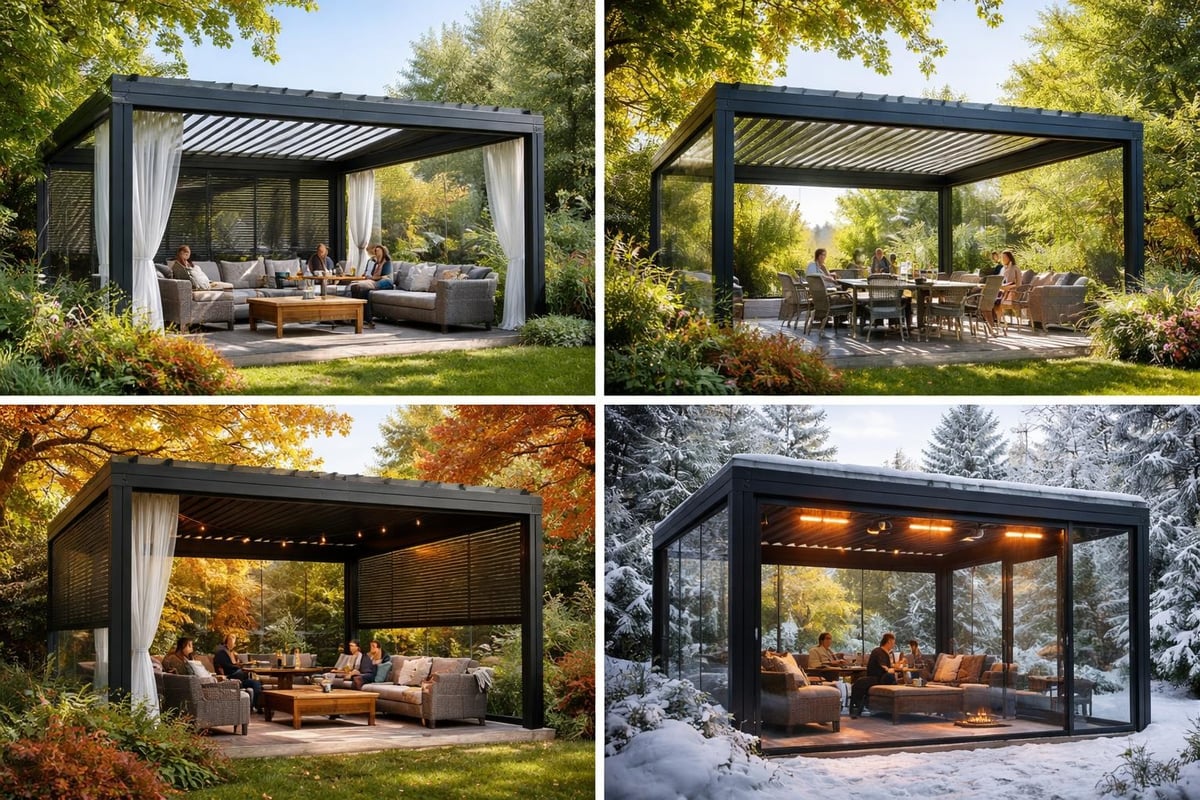
Enclosed sides deliver substantial privacy advantages, particularly valuable in urban or densely populated settings. Frosted or tinted glass panels maintain natural light whilst preventing overlooking from neighbouring properties.
The same panels provide acoustic dampening, reducing traffic noise and creating more intimate conversation environments. This proves especially beneficial when positioning outdoor kitchens near property boundaries.
The synergy between a pergola with roof and sides and luxury outdoor kitchens represents peak outdoor living sophistication.
Weather protection transforms outdoor cooking from occasional activity to daily lifestyle choice. Premium appliances, from built-in barbecues to pizza ovens, operate more efficiently and require less maintenance when sheltered from direct rainfall and excessive UV exposure.
The controlled environment allows installation of temperature-sensitive equipment, including refrigeration units and wine storage, expanding culinary possibilities dramatically. Metal outdoor kitchen cabinets benefit particularly from overhead protection, maintaining pristine finishes without weather-induced degradation.
Successful integration requires coordinated planning from project inception. Consider these critical factors:
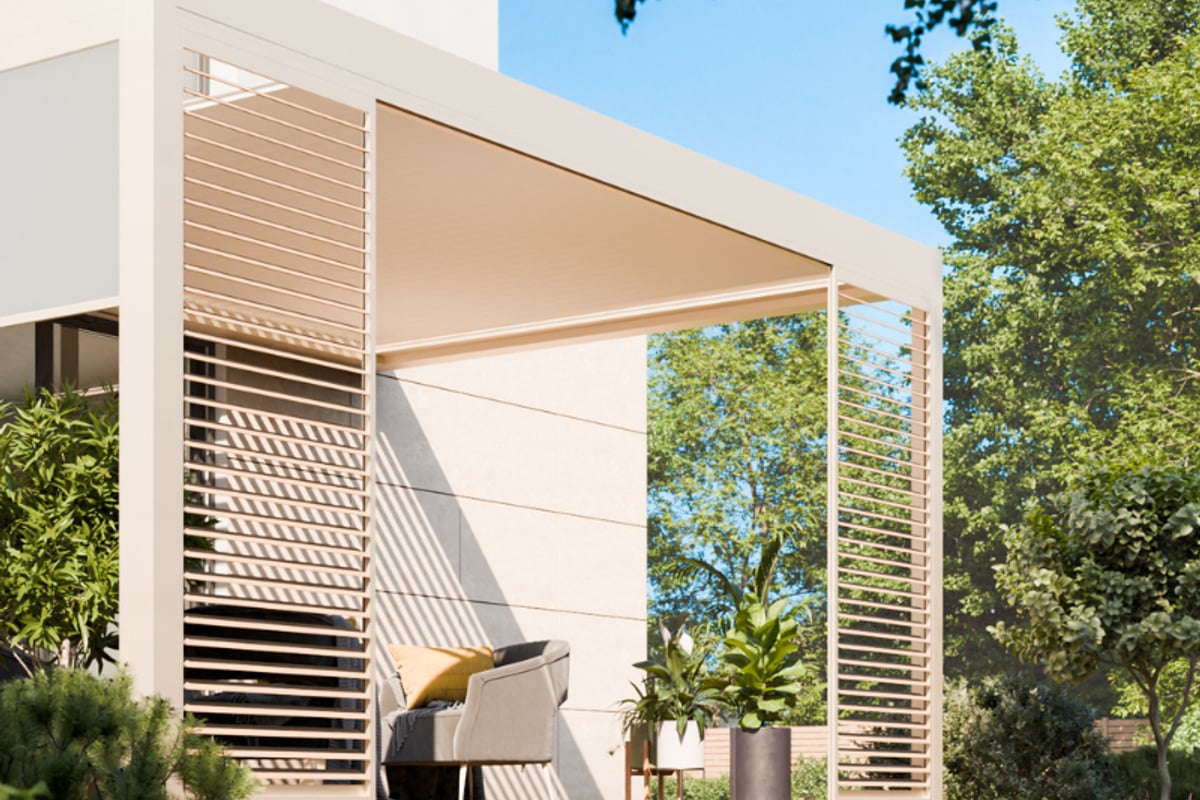
The premium Tarasola bioclimatic pergola systems exemplify architectural excellence, offering sophisticated louvered roof technology and customisable side panel configurations that create the perfect environment for luxury outdoor kitchens. These European-engineered structures blend seamlessly with high-performance cooking equipment, delivering cohesive outdoor living spaces that function beautifully year-round.
| Integration Element | Benefit | Consideration |
|---|---|---|
| Overhead Extraction | Removes cooking odours and smoke efficiently | Requires integrated design during pergola specification |
| Splash-Back Protection | Simplifies cleaning, protects structural elements | Consider material compatibility with side panel systems |
| Counter Lighting | Enhances safety and precision during food preparation | Plan electrical infrastructure early in design process |
| Appliance Clearances | Ensures safe operation and maintenance access | Height considerations affect overall pergola dimensions |
Understanding technical parameters ensures compliant, successful installations.
A properly engineered pergola with roof and sides requires professional structural assessment. Loading calculations must account for:
Foundation specifications vary according to soil conditions, structure size, and whether the design attaches to existing buildings or stands independently. Clay soils common across southern England require particular attention to movement and drainage.
Most pergola installations fall within permitted development rights, though exceptions apply. Structures exceeding certain dimensions, positioned forward of the principal elevation, or located in conservation areas typically require planning consent.
Whether you can attach a pergola to a house without planning permission depends on multiple factors including overall size, height, and proximity to boundaries. Building regulations may apply particularly when incorporating permanent utilities like gas and electrical supplies.
Engaging professional design and installation services ensures regulatory compliance whilst optimising design outcomes.
While modern materials minimise ongoing maintenance, certain tasks ensure longevity:
Premium aluminium structures typically require only periodic cleaning, whilst timber options demand biennial treatment to maintain weather resistance and appearance.
A pergola with roof and sides represents significant investment, with costs varying according to specification, materials, and complexity.
Budget expectations should account for multiple variables:
| Cost Component | Budget Range | Premium Range |
|---|---|---|
| Basic Structure | £8,000 – £15,000 | £25,000 – £50,000+ |
| Louvered Roof System | £5,000 – £10,000 | £15,000 – £25,000 |
| Side Panel Integration | £3,000 – £8,000 | £10,000 – £20,000 |
| Automation Systems | £1,500 – £3,000 | £4,000 – £8,000 |
| Installation & Groundworks | £2,000 – £5,000 | £6,000 – £12,000 |
These ranges reflect standard residential installations. Bespoke designs incorporating architectural specifications or premium materials command higher investment levels.
Property value enhancement represents tangible financial return. Estate agents consistently report that well-designed outdoor living spaces, particularly those offering year-round functionality, add 5-15% to property valuations in premium markets.
Beyond monetary value, lifestyle benefits prove equally compelling. Extended usable outdoor space, enhanced entertaining capabilities, and improved quality of life deliver returns that transcend financial metrics.
Larger projects benefit from phased implementation. Initial installation might focus on core structural elements and roofing, with side panels, automation, and integrated outdoor kitchens added subsequently as budgets allow.
This approach spreads investment whilst delivering immediate functionality improvements. Many specialist suppliers offer consultation services helping clients optimise phasing strategies aligned with priorities and budgets.
Contemporary pergola with roof and sides designs incorporate increasingly sophisticated technology.
Modern systems connect seamlessly with whole-home automation platforms. Smartphone applications provide remote control over:
Voice control through platforms like Amazon Alexa or Google Home adds convenience, allowing hands-free operation whilst entertaining or cooking.
Advanced installations incorporate weather monitoring systems that automatically respond to changing conditions. Rain sensors close louvered roofs preventing water ingress. Wind speed monitors retract side panels preventing damage during storms. Temperature sensors modulate heating systems maintaining comfort efficiently.
These autonomous features enhance user experience whilst protecting the investment from weather-related damage.
While enclosed pergolas consume energy for heating and lighting, thoughtful design minimises consumption. LED lighting reduces electrical demand by 80% compared to traditional alternatives. Infrared heating systems deliver targeted warmth more efficiently than convection methods.
Solar panels integrated into roof systems can offset electrical consumption, particularly valuable for properties seeking net-zero energy performance. Battery storage systems allow surplus solar generation to power evening lighting and automation.
A pergola with roof and sides offers extensive personalisation opportunities beyond functional specifications.
Powder-coated aluminium frames accommodate virtually any colour specification, from classic blacks and greys to bold contemporary hues. RAL colour matching ensures perfect coordination with existing architectural elements.
Timber staining ranges from natural oils preserving wood grain character to opaque finishes delivering stronger colour statements. Consider long-term maintenance implications when selecting finishes, as some require more frequent reapplication than others.
Transform functional structures into design statements through thoughtful enhancement:
These elements personalise spaces whilst maintaining the practical benefits that define enclosed pergola systems.
The structure should integrate harmoniously within broader garden composition. Consider sightlines from key vantage points both inside the home and throughout the garden. Innovative pergola ideas demonstrate how thoughtful positioning enhances rather than dominates landscape design.
Surrounding planting schemes, paving materials, and outdoor furniture selections should complement the pergola's aesthetic, creating cohesive outdoor environments that feel intentional and refined.
The quality of your pergola with roof and sides depends fundamentally upon supplier selection and installation expertise.
Seek suppliers demonstrating comprehensive expertise across design, engineering, and installation disciplines. Request portfolio examples showcasing completed projects similar in scale and specification to your requirements.
Manufacturing provenance matters significantly. European manufacturers typically maintain stricter quality standards and offer superior warranties compared to imports from developing markets. Examining curated premium brands reveals commitment to quality and performance.
Professional installation ensures structural integrity, weatherproofing effectiveness, and operational reliability. Experienced installers understand the critical importance of:
Request references from previous clients and, where possible, visit completed installations to assess workmanship quality firsthand.
Comprehensive warranties covering both materials and workmanship provide essential protection. Premium suppliers typically offer 10-year structural warranties with extended coverage for mechanical components.
Equally important are aftercare provisions. Annual servicing maintains optimal performance whilst identifying potential issues before they escalate. Responsive customer support proves invaluable should operational questions or concerns arise.
Proper maintenance preserves both appearance and functionality across years of service.
As temperatures rise, complete these essential tasks:
This seasonal service prepares the structure for intensive summer entertaining whilst identifying any winter damage requiring attention.
Before challenging weather arrives, protect your investment:
These preventative measures minimise winter damage whilst ensuring comfort during colder months when the enclosed structure proves most valuable.
Annual professional servicing complements owner maintenance, addressing technical aspects beyond typical homeowner capability. Technicians examine structural integrity, calibrate automated systems, and identify developing issues requiring intervention.
This proactive approach extends system lifespan whilst maintaining warranty compliance, representing sound long-term investment protection.
A pergola with roof and sides represents the ultimate evolution in outdoor living architecture, transforming exposed garden areas into sophisticated, year-round entertaining destinations that rival interior spaces for comfort and functionality. Whether you're envisioning an intimate dining pavilion or an expansive outdoor kitchen beneath protective shelter, careful planning around materials, technology, and design integration ensures outstanding results. Cotswold Cooking Company brings together architectural pergola expertise and luxury outdoor kitchen design, offering consultative guidance from initial concept through final installation to help discerning clients across the UK create exceptional outdoor living environments.

Comments
Leave a comment