


Searching for pergolas for sale requires more than browsing catalogues. For discerning homeowners investing in their outdoor living spaces, selecting the right pergola involves understanding architectural styles, material longevity, climate adaptability, and how these structures integrate with existing garden design. Whether you're creating a sheltered dining area, extending your kitchen outdoors, or establishing a year-round entertaining space, the pergola market in 2026 offers unprecedented choice in both traditional and cutting-edge bioclimatic designs that respond to Britain's changeable weather whilst elevating property value and lifestyle.
The landscape of pergolas for sale has transformed dramatically over recent years. Traditional timber structures now share shelf space with sophisticated aluminium bioclimatic systems, retractable louvred designs, and architectural statement pieces that blur the boundaries between indoor and outdoor living.
Today's pergola market segments into three distinct categories:
Each category serves different design philosophies, budgets, and functional requirements. The rise of outdoor kitchens and year-round garden rooms has particularly accelerated demand for weather-responsive pergolas that provide genuine shelter rather than purely decorative arbours.
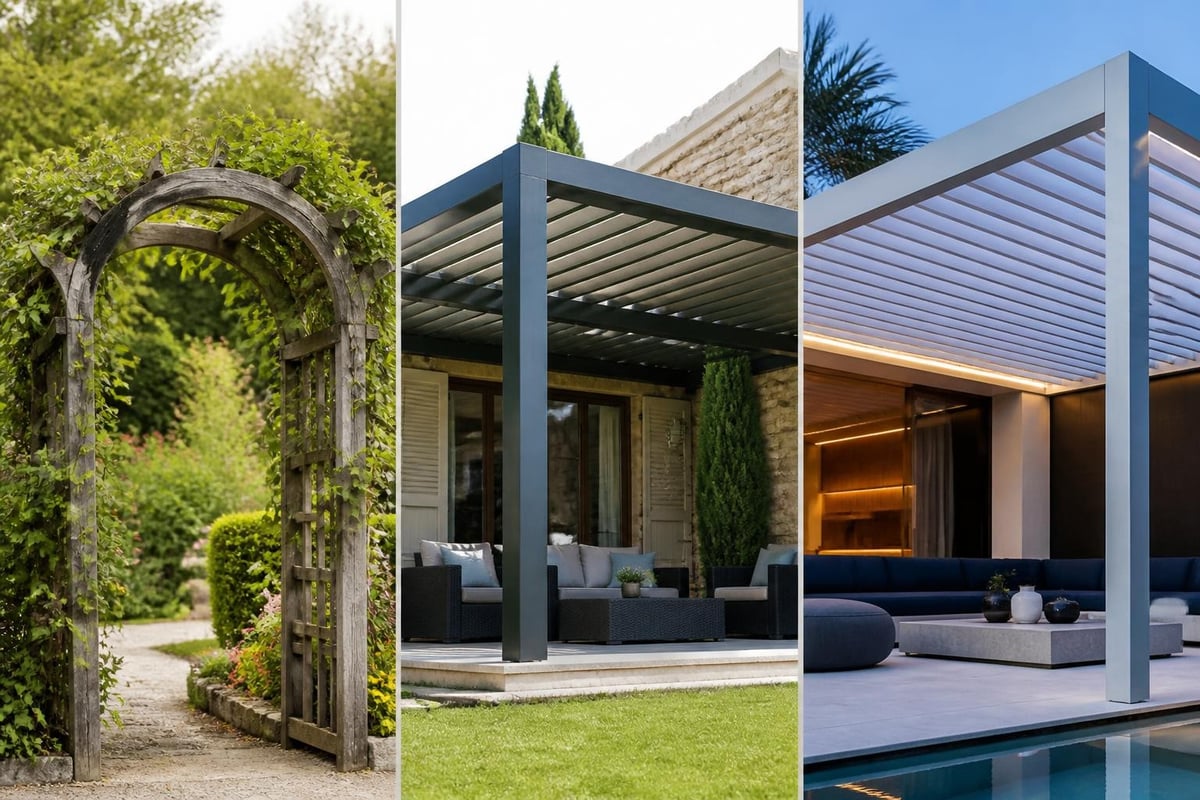
Britain's unpredictable weather patterns demand careful material selection. Timber pergolas require annual maintenance, regular treatment against rot, and eventual replacement of structural members. However, they offer unmatched warmth and natural character that complements period properties and cottage gardens.
Aluminium pergolas deliver exceptional longevity with minimal upkeep. Powder-coated finishes withstand coastal salt spray, urban pollution, and UV exposure without degradation. The material's strength-to-weight ratio enables larger spans and more slender profiles than timber equivalents.
| Material | Lifespan | Maintenance | Initial Cost | Best Suited For |
|---|---|---|---|---|
| Pressure-treated softwood | 10-15 years | Annual treatment required | £1,200-£3,500 | Budget-conscious, rustic aesthetics |
| Cedar or oak | 20-30 years | Biannual oiling recommended | £3,000-£8,000 | Traditional gardens, period properties |
| Powder-coated aluminium | 25-40 years | Occasional washing only | £4,500-£15,000 | Contemporary designs, coastal locations |
| Bioclimatic aluminium | 30-50 years | Annual service check | £12,000-£35,000 | Year-round use, integrated technology |
The investment equation extends beyond purchase price. Factoring in maintenance hours, treatment products, and potential replacement costs reveals aluminium structures often deliver superior lifetime value despite higher initial expenditure.
Current pergola design trends for 2026 emphasise architectural presence over decorative afterthought. Homeowners increasingly view pergolas as structural garden rooms rather than simple shade providers.
Minimalist linear designs dominate contemporary specifications. Clean-lined aluminium frames with concealed fixings, integrated LED lighting channels, and powder-coated finishes in anthracite grey, bronze, or architectural white create sophisticated outdoor extensions that complement modern architecture.
The integration of smart home technology into pergola systems represents significant evolution. Bioclimatic pergolas now feature app-controlled louvre adjustment, automated rain sensors, integrated heating elements, and programmable lighting scenes. These systems transform outdoor spaces into genuine year-round rooms rather than seasonal features.
For properties with established outdoor kitchens, pergola selection becomes part of cohesive spatial planning. The structure must accommodate cooking equipment clearances, provide adequate ventilation whilst offering weather protection, and create defined zones for preparation, cooking, and dining.
Brands such as Tarasola specialise in architectural pergolas designed specifically for demanding outdoor kitchen applications. Their systems integrate seamlessly with premium cooking equipment whilst maintaining the refined aesthetics expected in luxury outdoor environments. Tarasola pergolas exemplify this design-conscious approach, offering bespoke European-engineered solutions for discerning buyers seeking permanent outdoor living infrastructure.
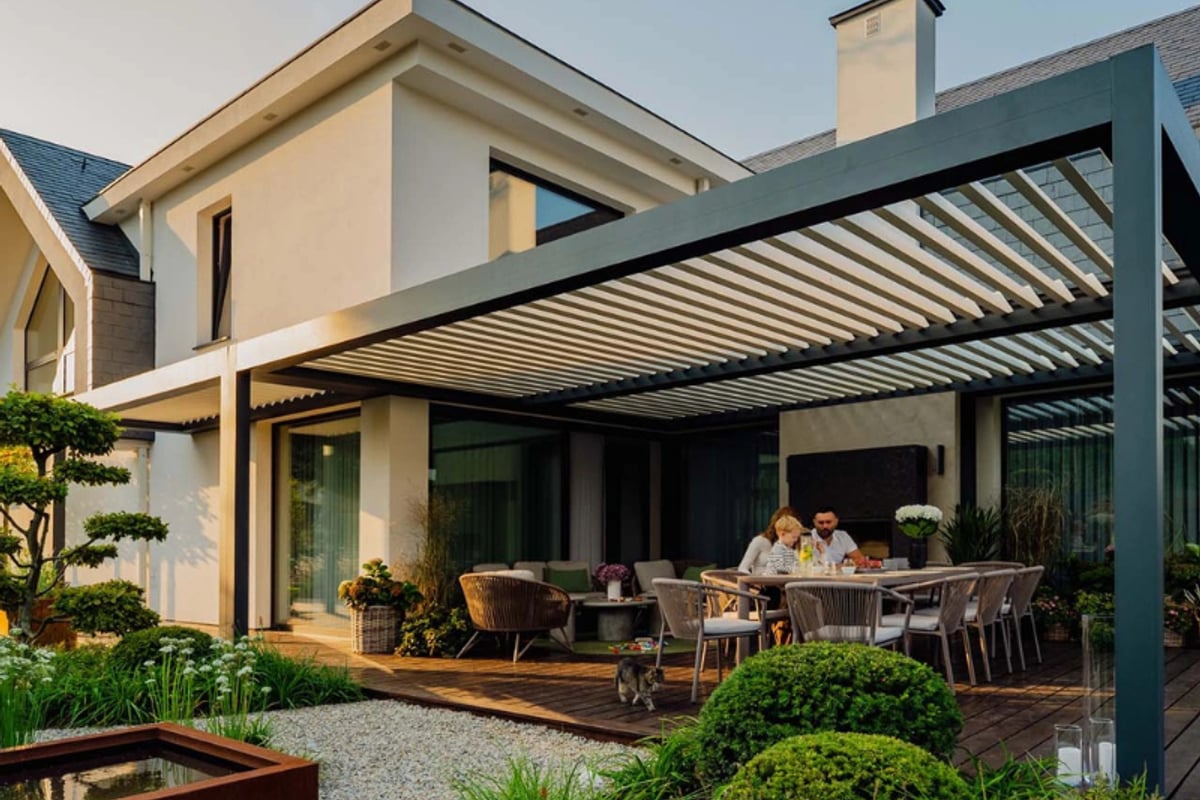
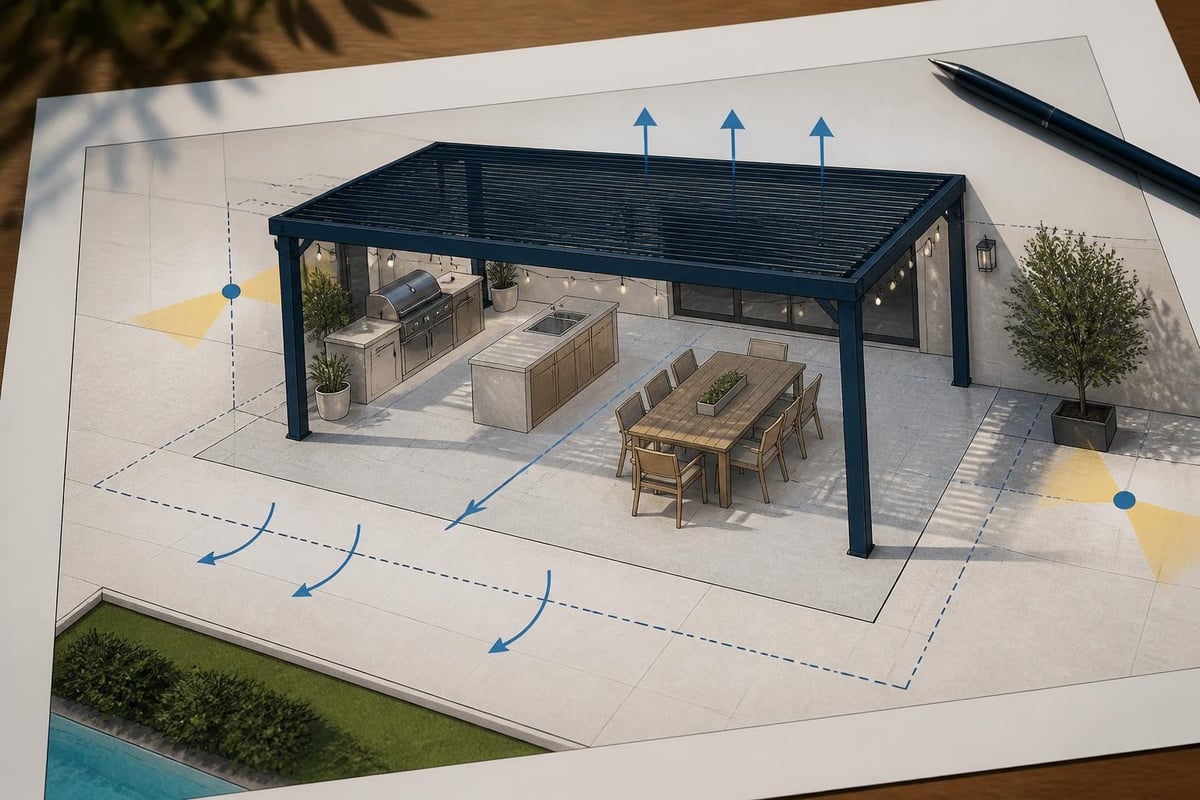
Louvred roof pergolas represent the fastest-growing segment within pergolas for sale. These systems feature adjustable aluminium blades that rotate to control sunlight penetration, airflow, and rain protection. When fully closed, quality bioclimatic pergolas achieve complete waterproofing through precision-engineered blade overlap and integrated drainage systems.
Key bioclimatic pergola features include:
This technology enables true four-season use. Summer afternoons benefit from opened louvres creating natural ventilation. Autumn evenings require closed blades providing complete overhead protection whilst side openings maintain garden connection. Winter months see full enclosure with optional heating elements creating protected spaces for outdoor cooking equipment and entertaining.
Determining appropriate pergola dimensions requires careful consideration of both immediate coverage needs and future spatial flexibility. Undersized structures fail to provide adequate shelter whilst oversized installations can dominate gardens and create oppressive rather than intimate atmospheres.
Professional spatial planning considers:
Standard dining configurations require minimum 3.5m x 3.5m coverage for eight-person seating with adequate clearance. Outdoor kitchen installations typically specify 4m x 5m minimum to accommodate cooking zones, preparation areas, and associated dining space under single structure.
The decision between attached or freestanding pergolas significantly impacts both functionality and planning requirements. Attaching a pergola to a house creates seamless indoor-outdoor transitions and typically costs less than freestanding alternatives through shared structural support.
However, attached structures require careful consideration of existing building fabric, potential damp ingress, and structural load transfer. Professional installation becomes essential rather than optional. Freestanding pergolas offer greater flexibility in garden positioning, simpler installation processes, and complete design independence from existing architecture.
| Configuration | Advantages | Disadvantages | Typical Cost Differential |
|---|---|---|---|
| Attached to house | Seamless transition, weather protection at threshold, lower cost | Structural assessment required, potential damp issues, planning sensitivity | Baseline |
| Freestanding in garden | Flexible positioning, independent design, simpler installation | Requires complete structure, higher material cost, separate access path | +15-25% |
| Freestanding adjacent to house | Design flexibility, minimal building work, good access | Gap between house and pergola, requires transition planning | +10-18% |
For properties with established outdoor kitchens near the house, freestanding configurations positioned 1-2 metres from the building wall often provide optimal results. This spacing accommodates service connections whilst maintaining structural independence and simplified installation.
Proper foundation and anchoring represent critical elements often overlooked when evaluating pergolas for sale. How you anchor a pergola determines structural integrity, longevity, and safety throughout its service life.
Concrete base installation provides the most robust anchoring method. Posts are either cast into concrete foundations or bolted to concrete pads using chemical anchors and substantial base plates. This approach suits permanent installations and essential for bioclimatic systems where structural loads and wind resistance requirements demand engineered foundations.
Existing patio anchoring allows installation over established hard landscaping without excavation. Through-bolting with resin anchors creates secure fixing whilst maintaining paving integrity. However, this method requires minimum 100mm concrete sub-base beneath paving for adequate anchor depth and load distribution.
Ground screw foundations offer increasingly popular alternatives to traditional concrete work. Helical steel screws are mechanically driven to bearing depth, providing immediate load capacity without curing delays. This method particularly suits properties where access restrictions prevent concrete delivery or where minimal ground disturbance is preferred.
The question of whether building a pergola is cheaper than buying one deserves nuanced analysis beyond simple material costs. DIY timber pergolas can reduce immediate expenditure by 40-60% compared to professional installation of equivalent structures.
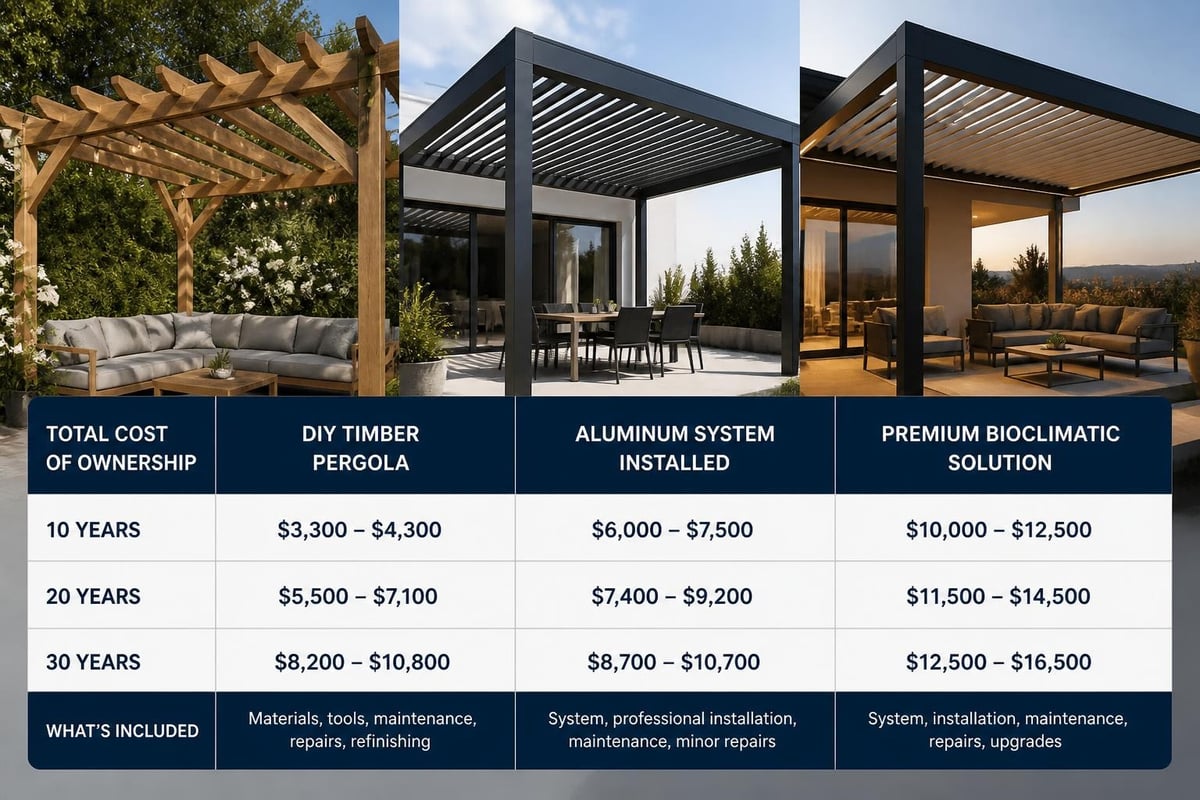
However, this calculation neglects several significant factors. Construction time for competent DIY builders typically spans 3-5 weekends for straightforward designs. Complex structures requiring angled cuts, decorative elements, or integrated features extend this substantially. Professional installation of purchased systems completes within 1-3 days depending on complexity.
Quality and longevity differences prove substantial:
For properties in the luxury segment, the question extends beyond cost to aesthetic achievement and functional performance. Premium bioclimatic pergolas deliver capabilities impossible to replicate through DIY approaches, transforming outdoor spaces into year-round assets rather than seasonal features.
Most pergolas for sale fall within permitted development rights, avoiding formal planning applications. However, several conditions must be satisfied for this exemption to apply within England.
Permitted development requires:
Conservation areas and listed buildings typically require planning consent regardless of structure size. Additionally, building regulations may apply to pergolas with integrated heating, electrical systems, or substantial enclosure elements that create defined rooms rather than open structures.
Professional suppliers familiar with UK regulations provide invaluable guidance during specification. Booking a design consultation enables discussion of site-specific constraints before commitment, ensuring chosen solutions comply with all applicable restrictions whilst achieving design objectives.
Structures positioned within 2 metres of boundaries face more stringent height restrictions and may require neighbour consultation depending on local planning policies. Freestanding pergolas located centrally within larger gardens typically avoid these complications whilst offering superior design flexibility.
For properties with outdoor kitchens near boundaries, careful positioning becomes essential. Cooking equipment generates heat, smoke, and operational noise that considerate design should direct away from neighbouring properties. Pergola placement influences these factors through structural orientation and optional side screening specification.
The market for pergolas for sale encompasses vast quality spectrum from flat-pack timber kits to bespoke architectural systems engineered for specific sites. Understanding brand positioning and manufacturing standards proves essential for specification decisions.
European manufacturers dominate the premium bioclimatic segment. German and Italian engineering delivers precision-manufactured aluminium systems with comprehensive warranties, detailed technical documentation, and established UK distribution networks. These brands typically offer extensive customisation including bespoke dimensions, integrated technology, and architectural powder coating colours.
| Brand Category | Origin | Typical Features | Price Range | Warranty Period |
|---|---|---|---|---|
| Entry level DIY | UK/China | Pressure-treated timber, basic fixings, limited sizes | £800-£2,500 | 1-5 years |
| Mid-range manufactured | UK/Europe | Cedar or aluminium, standard sizes, quality fixings | £2,500-£7,000 | 5-10 years |
| Premium architectural | Germany/Italy | Bespoke aluminium, integrated technology, engineered | £8,000-£20,000 | 10-15 years |
| Luxury bioclimatic | Italy/Switzerland | Full automation, heating, lighting, bespoke design | £15,000-£45,000 | 15-25 years |
Renson, Gibus, and Tarasola represent benchmark brands within the architectural segment. Their systems integrate seamlessly with luxury outdoor environments, delivering the refined aesthetics and engineered performance expected in premium installations. Working with specialist retailers ensures access to these brands alongside professional design consultation and technical support throughout specification and installation.
For homeowners investing in complete outdoor living environments, pergola specification forms part of comprehensive spatial planning. The structure must complement outdoor kitchen functionality whilst maintaining cohesive design language across the entire space.
Critical integration considerations include:
Premium outdoor kitchen brands increasingly design equipment ranges considering pergola integration. Modular systems accommodate overhead structures through thoughtful proportions and flexible configuration options that work within covered environments.
The relationship between cooking equipment and overhead protection requires careful balance. Complete enclosure risks heat accumulation and inadequate ventilation. Purely decorative pergolas provide insufficient weather protection for year-round cooking. Bioclimatic systems with adjustable louvres deliver optimal versatility, adapting to cooking requirements whilst offering full protection when equipment stands idle.
Understanding maintenance obligations before purchasing ensures realistic expectations and appropriate budgeting for long-term care. Pergolas for sale with minimal stated maintenance requirements typically refer only to structural preservation, neglecting routine cleaning, mechanical servicing, and component replacement.
Annual treatment cycles prove essential for timber longevity. Pressure-treated softwood requires reapplication of protective stains every 12-18 months to prevent moisture ingress, UV degradation, and fungal attack. Cedar and oak benefit from natural rot resistance but demand regular oiling to maintain colour and prevent surface checking.
Expect to dedicate one weekend annually to comprehensive timber maintenance including cleaning, sanding rough areas, and applying protective treatments. Material costs for quality exterior wood treatments range £40-£80 per application depending on structure size.
Powder-coated aluminium demands minimal intervention. Quarterly washing with mild detergent solution maintains finish appearance and prevents build-up of atmospheric pollutants that can dull surfaces over time. Annual inspection of fixings, drainage outlets, and moving components identifies any issues before they escalate.
Bioclimatic systems require professional servicing every 1-2 years. Technicians inspect motorised components, lubricate moving parts, verify drainage system function, and test automated sensors. This preventive maintenance typically costs £150-£300 depending on system complexity and location.
Modern pergolas for sale increasingly function as platforms for comprehensive outdoor room systems rather than standalone structures. Optional accessories transform basic coverage into sophisticated living environments.
Popular enhancement options include:
These additions significantly impact both functionality and budget. Complete side enclosure with automated glass panels can add £8,000-£15,000 to base pergola costs. However, the transformation in usability often justifies investment for homeowners committed to maximising outdoor living potential.
For properties with established outdoor kitchens, integrated heating proves particularly valuable. Quality infrared systems enable comfortable cooking and dining throughout British winters, protecting significant equipment investment through consistent year-round use rather than seasonal abandonment.
Premium pergolas for sale represent substantial investments deserving careful consideration of value impact. Quality installations enhance property appeal and can contribute to resale value, though precise financial returns prove difficult to quantify.
Estate agents confirm well-executed outdoor living spaces influence buyer perception, particularly within the luxury residential segment. Properties offering turn-key outdoor entertaining capabilities command premium interest from buyers seeking lifestyle-ready homes. However, the installation must align with overall property quality and local market expectations.
A £25,000 bioclimatic pergola system suits a £1.5 million Cotswold property with professional landscaping and premium interiors. The same system appears incongruous on a £400,000 terrace requiring comprehensive renovation. Specification appropriateness matters as much as absolute quality.
Beyond direct monetary return, lifestyle value deserves consideration. Extending usable living space by 20-40 square metres without building extensions or planning complexities provides genuine utility. For enthusiastic outdoor cooks and entertainers, weather-protected spaces transform seasonal activities into year-round pleasures.
Choosing among pergolas for sale requires synthesising multiple factors into coherent specification decisions. Create shortlists based on clear prioritisation of requirements rather than attempting to balance all factors equally.
Develop your specification hierarchy:
Visit physical installations whenever possible. Photographs and specifications inadequately communicate spatial presence, material quality, and operational characteristics. Showroom appointments enable examination of actual installations, operation of mechanical systems, and detailed discussion with specialists familiar with site-specific challenges common to your region.
Request detailed quotations encompassing complete installation including groundworks, electrical connections, and commissioning. Comparing headline structure costs whilst neglecting installation variables creates misleading value assessments. Comprehensive quotations enable genuine like-for-like comparison and prevent budget-breaking surprises during project execution.
The complexity of contemporary pergola systems increasingly demands professional involvement beyond simple product purchase. Quality suppliers provide comprehensive design consultation, technical specification, and project management throughout installation.
Professional support typically encompasses:
This consultative approach proves particularly valuable for projects integrating pergolas with outdoor kitchens, landscaping renovations, or architectural extensions. Coordinating multiple trades and ensuring specification compatibility across systems requires experience that specialist retailers provide as standard service within premium market segments.
The investment in professional design support typically represents 8-12% of total project value for bespoke installations. However, this expenditure delivers specification confidence, installation quality, and long-term performance that self-managed projects struggle to replicate.
Selecting among pergolas for sale represents significant investment in outdoor living infrastructure that should deliver decades of functional service and aesthetic pleasure. Understanding material options, design trends, installation requirements, and integration possibilities ensures specification decisions align with both immediate needs and long-term lifestyle aspirations. Whether you're seeking traditional timber structures or cutting-edge bioclimatic systems, Cotswold Cooking Company offers expert consultation, premium European brands including Tarasola and Renson, and comprehensive support transforming outdoor spaces into refined year-round entertaining destinations throughout the UK.

Leave a comment