


Transforming your outdoor space into a sophisticated culinary destination begins with selecting the right cooking equipment. Pizza ovens outdoor have evolved from simple backyard additions to essential centrepieces of luxury garden design, offering homeowners the ability to recreate authentic Italian cuisine whilst entertaining guests in refined comfort. Whether you're a discerning homeowner seeking to elevate weekend gatherings or a hospitality professional designing an all-season outdoor dining experience, understanding the nuances of outdoor pizza ovens will inform your investment in this increasingly popular cooking medium.
Selecting the appropriate outdoor pizza oven begins with understanding the fundamental differences between available models. The market offers diverse options, each with distinct characteristics that influence cooking performance, installation requirements, and aesthetic integration.
Traditional wood-fired pizza ovens outdoor deliver unmatched authenticity and flavour complexity. These ovens reach temperatures exceeding 450°C, creating the distinctive char and texture associated with Neapolitan-style pizza. The cooking process itself becomes part of the entertainment, with flames visible through the oven opening and aromatic wood smoke enhancing the outdoor ambience.
Key advantages include:
However, wood-fired models require skill development, regular cleaning, and approximately 45-60 minutes for proper heat-up. The learning curve rewards those willing to master temperature management and fuel selection.
Gas pizza ovens outdoor offer precision and convenience without compromising performance. Connected to LPG cylinders or natural gas lines, these units heat rapidly and maintain consistent temperatures with minimal effort. Understanding outdoor pizza oven safety guidelines becomes essential when installing gas models, particularly regarding ventilation and fuel line placement.
Modern gas ovens incorporate ceramic stone bases and insulated chambers that replicate traditional wood-fired results. Temperature dials provide granular control, making them ideal for varying cooking applications beyond pizza.
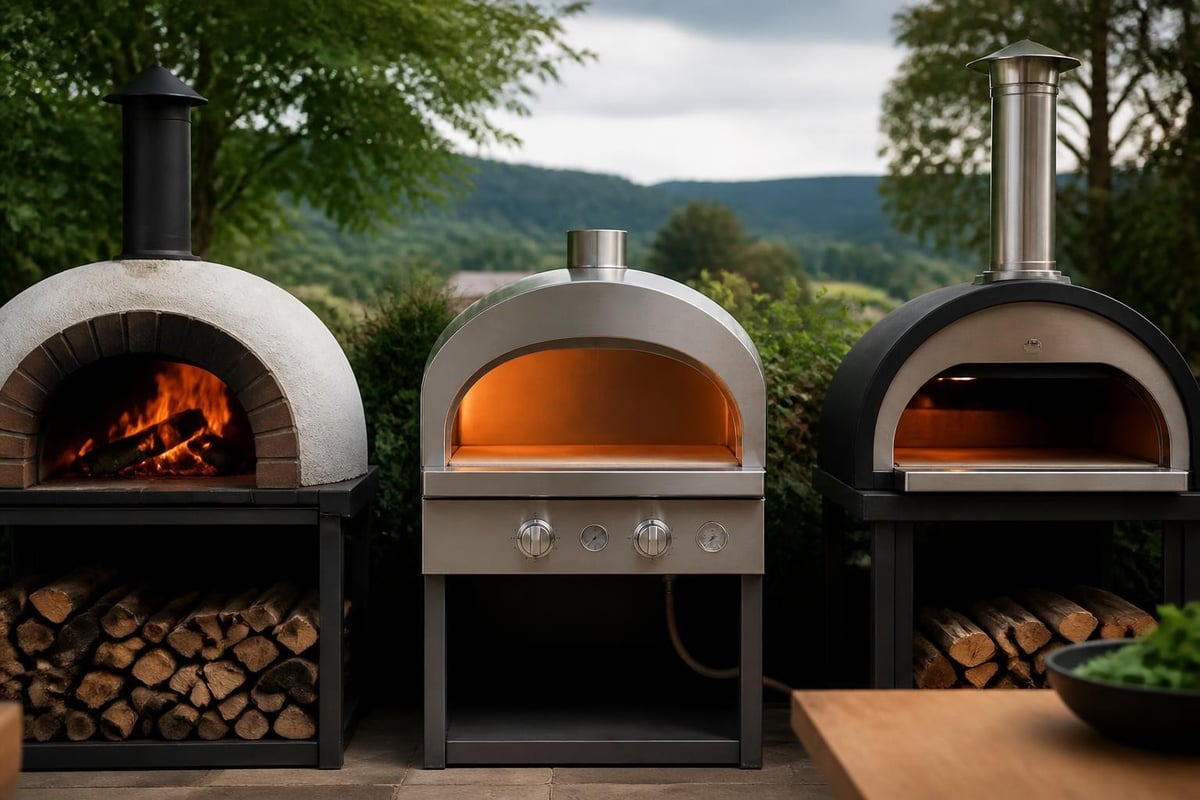
Hybrid pizza ovens outdoor represent the pinnacle of cooking flexibility. These sophisticated units accommodate both gas and wood fuel sources, allowing users to choose based on occasion, time availability, or desired flavour profile.
The versatility proves invaluable for regular entertaining. Quick midweek dinners benefit from gas ignition, whilst weekend gatherings can embrace the theatrical element of wood-fired cooking. For those seeking exceptional performance, the Alfa Forni Moderno Hybrid Pizza Oven exemplifies Italian craftsmanship, reaching 500°C in approximately 30 minutes and delivering authentic Neapolitan pizzas in 90 seconds using either LPG or wood.
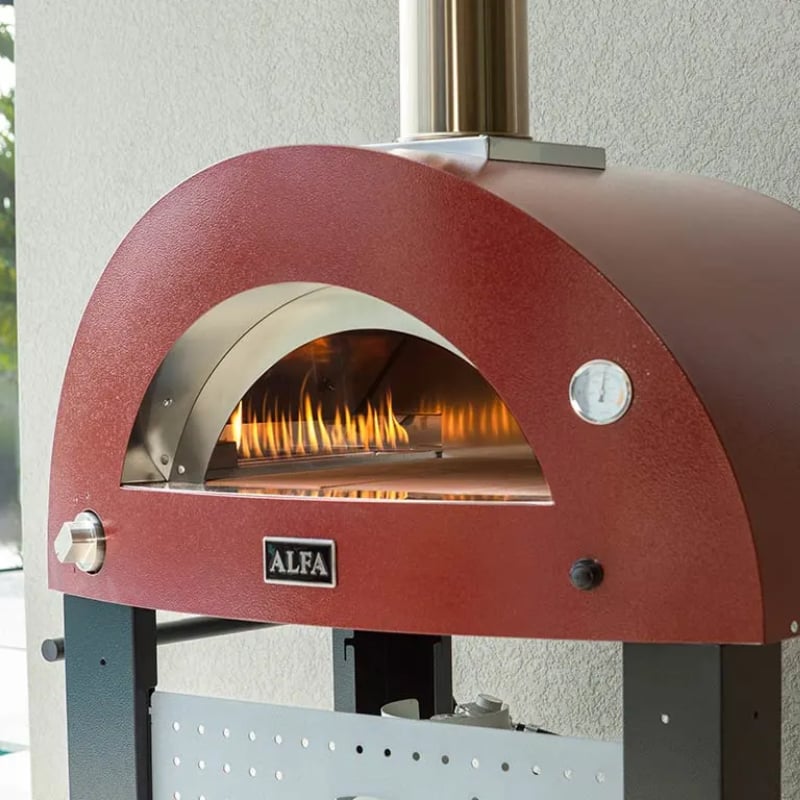
The construction quality of pizza ovens outdoor directly influences longevity, heat retention, and cooking performance. Premium materials withstand British weather patterns whilst maintaining structural integrity through repeated heating cycles.
| Material | Heat Retention | Weather Resistance | Aesthetic Appeal | Typical Lifespan |
|---|---|---|---|---|
| Refractory Clay | Excellent | Good (with covering) | Traditional | 15-20 years |
| Stainless Steel | Good | Excellent | Contemporary | 10-15 years |
| Ceramic Fibre | Very Good | Excellent | Modern | 12-18 years |
| Copper Clad | Excellent | Very Good | Premium | 20+ years |
Advanced insulation systems separate exceptional outdoor ovens from mediocre alternatives. Multi-layer insulation using ceramic fibre, mineral wool, or proprietary composite materials ensures exterior surfaces remain touchable whilst interior chambers maintain temperatures exceeding 400°C.
Quality insulation delivers three critical benefits:
Superior models incorporate double-wall construction with air gaps, creating thermal barriers that improve efficiency by 30-40% compared to single-wall designs.
Thoughtful placement maximizes both functionality and safety. Common mistakes in pizza oven placement include positioning units too close to property boundaries, beneath overhanging trees, or in areas with poor ventilation.
Professional installation demands specific clearances. Position pizza ovens outdoor at least 3 metres from combustible structures, including timber fencing, garden sheds, and property walls. Overhead clearance should exceed 2.4 metres to prevent heat damage to pergolas or architectural features.
Consider prevailing wind direction during site assessment. Smoke should disperse away from entertaining areas and neighbouring properties. Outdoor cooking equipment performs optimally when integrated into comprehensive outdoor kitchen designs that account for weather patterns specific to your location.
Modern outdoor living embraces cohesive design principles. Pizza ovens outdoor should complement existing architectural elements rather than appearing as isolated additions. The most successful installations incorporate ovens within structured zones that include:
Creating dedicated cooking zones enhances workflow efficiency. Position ovens approximately 90-120cm from preparation surfaces, allowing comfortable movement whilst maintaining the cook's connection to guests.
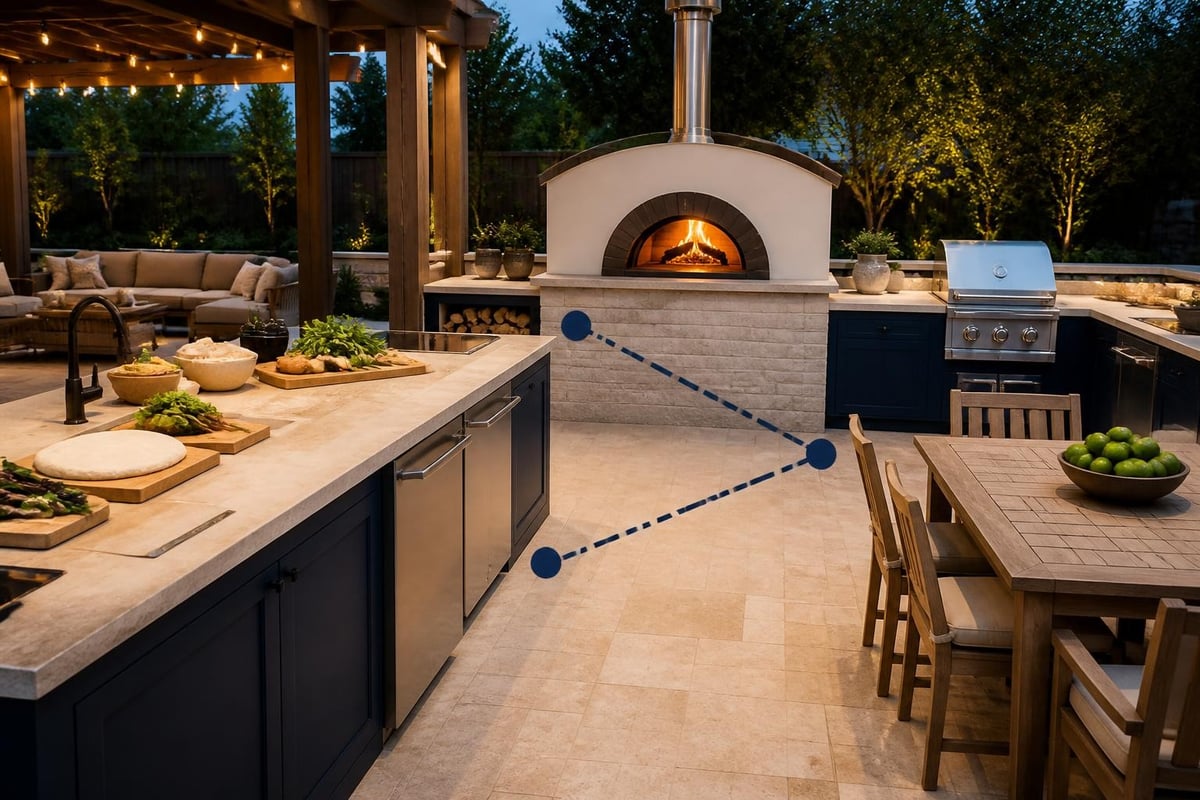
Capacity requirements depend upon typical gathering sizes and cooking ambitions. Pizza ovens outdoor range from compact 30cm models suitable for individual pizzas to commercial-grade 90cm chambers accommodating multiple dishes simultaneously.
For domestic applications, consider these capacity guidelines:
Small Format (30-45cm cooking floor):
Medium Format (50-70cm cooking floor):
Large Format (75cm+ cooking floor):
Mastering temperature control distinguishes exceptional results from mediocre outcomes. Pizza ovens outdoor operate within specific thermal zones, each suited to different culinary applications.
| Cooking Application | Target Temperature | Cooking Duration |
|---|---|---|
| Neapolitan Pizza | 430-480°C | 60-90 seconds |
| New York Style | 260-290°C | 4-6 minutes |
| Focaccia/Bread | 220-250°C | 12-18 minutes |
| Roasted Vegetables | 190-220°C | 15-25 minutes |
| Slow-Roasted Meats | 150-180°C | 2-4 hours |
Temperature verification requires infrared thermometers rather than built-in gauges, which often measure ambient air rather than cooking surface temperatures. Professional-grade ovens incorporate multiple measurement points for precise monitoring.
Understanding heat zones within pizza ovens outdoor prevents common cooking errors. The rear of traditional dome ovens retains highest temperatures due to flame proximity, whilst front sections run 30-50°C cooler. Rotating pizzas 180 degrees halfway through cooking ensures even browning.
Gas models with burner configurations beneath the cooking floor distribute heat more uniformly, reducing rotation requirements. This consistency particularly benefits novice users developing their technique.
British climate variability demands robust weather protection strategies. Uncovered pizza ovens outdoor deteriorate rapidly when exposed to persistent moisture, freeze-thaw cycles, and UV radiation.
Premium protective covers manufactured from marine-grade materials extend oven lifespan significantly. Specifications should include:
Remove covers only when ovens have cooled completely. Trapped heat accelerates material degradation and creates fire hazards.
Thoughtful placement under architectural structures transforms pizza ovens outdoor into four-season cooking appliances. Pergolas with retractable roofing systems or permanent covered outdoor kitchens enable comfortable cooking regardless of weather conditions.
Insulated models maintain performance in cold weather, though heat-up times increase approximately 15-20% when ambient temperatures drop below 5°C. Premium outdoor kitchens integrate heating elements and wind barriers that extend the entertaining season well into autumn and winter months.
Regular maintenance preserves both performance and appearance. Pizza ovens outdoor accumulate ash, carbonized food residue, and moisture that compromise cooking quality when neglected.
After Each Use:
Monthly (during active season):
Annual Preparation:
Maximizing pizza oven outdoor performance requires purposeful accessories. The pizza oven accessories category encompasses items that enhance safety, precision, and cooking versatility.
Professional results demand professional tools:
Quality accessories represent relatively modest investments that dramatically improve the cooking experience whilst protecting the primary oven investment.
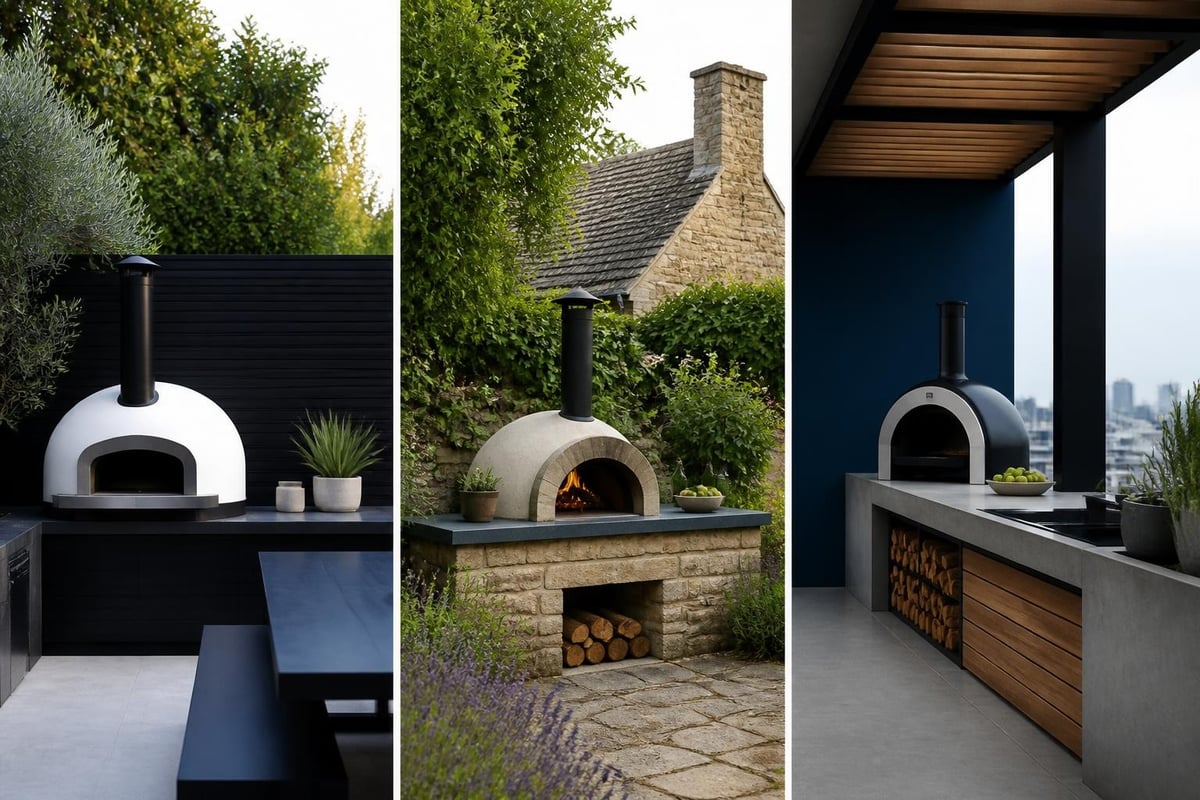
Pizza ovens outdoor function as sculptural elements within sophisticated garden designs. Contemporary models embrace minimalist aesthetics with clean lines and monochromatic finishes, whilst traditional designs celebrate rustic charm through aged copper cladding and terracotta tones.
Premium manufacturers offer extensive customization:
Colour Palettes:
Structural Elements:
Coordinate oven finishes with broader outdoor kitchen materials, including countertop stone, cabinetry hardware, and architectural metalwork, creating visual cohesion throughout the entertaining space.
Pizza ovens outdoor represent significant investments ranging from £800 for entry-level portable models to £8,000+ for professional-grade built-in installations. Understanding value drivers informs purchasing decisions aligned with long-term satisfaction.
| Price Range | Typical Features | Best For | Expected Quality |
|---|---|---|---|
| £800-1,500 | Portable, single fuel, basic insulation | Occasional use, small gatherings | Entry-level performance |
| £1,500-3,500 | Fixed installation, quality materials, good insulation | Regular entertaining, developing skills | Solid mid-range quality |
| £3,500-6,000 | Premium construction, hybrid fuel, excellent insulation | Serious home cooks, frequent use | Professional-grade performance |
| £6,000+ | Bespoke design, commercial capability, superior craftsmanship | Dedicated enthusiasts, hospitality applications | Investment-grade quality |
The relationship between cost and longevity proves nearly linear. Premium models lasting 20+ years deliver superior cost-per-use economics compared to budget alternatives requiring replacement within 5-7 years.
Permanent pizza ovens outdoor demand careful installation planning. While portable models require minimal setup, built-in installations necessitate substantial groundwork and often professional expertise.
Proper foundations prevent settling, cracking, and performance degradation. Pizza ovens outdoor weighing 150-400kg require:
Structures housing built-in ovens must accommodate substantial weight whilst providing adequate ventilation. Consultation with structural engineers ensures compliance with building regulations and prevents costly remediation.
Gas models require certified installations by Gas Safe registered engineers. Natural gas connections offer convenience but limit placement flexibility, whilst LPG systems provide portability with regular cylinder replacement obligations.
Electrical connections power integrated lighting, rotisserie motors, and monitoring systems. Outdoor-rated wiring with appropriate ingress protection (minimum IP65) ensures safe operation in wet conditions.
Modern pizza ovens outdoor transcend their namesake application. The exceptional heat retention and temperature control facilitate diverse culinary techniques previously requiring indoor equipment.
Bread Baking: Artisanal loaves benefit from steam injection and sustained heat. Sourdough, focaccia, and ciabatta develop superior crusts whilst maintaining moist interiors.
Roasting Applications: Whole chickens, lamb shoulders, and vegetable medleys acquire smoky complexity when slow-roasted. Reduced temperatures (180-200°C) transform ovens into outdoor roasting chambers.
Dessert Preparation: Fruit tarts, cobblers, and even delicate pastries thrive in wood-fired environments. The gentle residual heat after primary cooking proves ideal for finishing desserts.
This versatility justifies premium investments, transforming single-purpose equipment into comprehensive outdoor cooking stations that rival indoor kitchen capabilities.
Operating pizza ovens outdoor safely protects both property and people. Understanding safety considerations specific to high-temperature outdoor cooking prevents accidents and ensures compliance with insurance requirements.
Implement comprehensive safety protocols:
Modern designs incorporate safety features including cool-touch handles, double-wall insulation preventing external burns, and automatic gas shut-off systems activated by flame failure.
Discerning buyers prioritize heritage brands demonstrating manufacturing excellence. Italian producers dominate premium segments, leveraging centuries of artisanal knowledge combined with contemporary engineering.
Established manufacturers maintain rigorous quality control, comprehensive warranties, and extensive spare parts availability. Curated brand collections from specialist retailers ensure access to authentic products backed by expert consultation and after-sales support.
When evaluating brands, investigate production locations, material sourcing transparency, and certification compliance. Premium manufacturers readily provide detailed specifications and welcome technical inquiries, reflecting confidence in their craftsmanship.
Environmentally conscious homeowners increasingly evaluate the ecological impact of outdoor cooking equipment. Pizza ovens outdoor powered by sustainably sourced wood or renewable energy-generated gas align with broader environmental objectives.
Wood Selection: Choose kiln-dried hardwoods from certified sustainable forestry operations. Oak, ash, and beech deliver excellent heat output whilst supporting responsible forest management. Avoid treated timber, painted wood, and softwoods producing excessive smoke.
Efficiency Optimization: Well-maintained ovens with quality insulation consume 30-40% less fuel than poorly maintained alternatives. Regular cleaning, gasket replacement, and door seal maintenance preserve thermal efficiency.
Multi-Purpose Usage: Maximizing each firing by cooking multiple dishes reduces cumulative energy consumption. Plan menus exploiting the full temperature range as ovens cool naturally from peak heat to residual warmth.
Technology continues advancing pizza oven outdoor design. Recent innovations include smartphone-controlled temperature monitoring, automated fuel feeding systems, and integrated smoke management technologies reducing environmental impact.
When selecting models, consider upgrade pathways and compatibility with emerging accessories. Modular designs accommodating retrofit improvements protect investments against obsolescence whilst allowing performance enhancement as budgets permit.
The growing integration of outdoor cooking within comprehensive luxury outdoor living spaces suggests continued innovation in materials, efficiency, and aesthetic refinement throughout 2026 and beyond.
Pizza ovens outdoor transform gardens into year-round culinary destinations when selected thoughtfully and integrated professionally. From fuel type selection through placement strategy and ongoing maintenance, each decision influences long-term satisfaction and performance. The Cotswold Cooking Company brings decades of expertise to outdoor kitchen design, offering consultative guidance from initial concept through installation, helping discerning homeowners across the UK create refined outdoor spaces that blend Cotswold heritage with modern cooking performance.

Leave a comment