


The landscape of British outdoor living has evolved dramatically, and prefabricated outdoor kitchens now represent one of the most compelling solutions for homeowners seeking to extend their culinary space beyond four walls. Unlike traditional bespoke builds that can take months to complete, these engineered systems deliver professional-grade performance with significantly reduced installation timescales. For discerning property owners across the Cotswolds, Oxfordshire, and beyond, prefabricated solutions now rival custom designs in both aesthetic refinement and functional capability.
Prefabricated outdoor kitchens arrive as pre-engineered modules designed to slot together seamlessly, offering a middle ground between fully custom installations and standalone barbecue units. These systems incorporate weatherproof cabinetry, integrated appliances, and purpose-built worksurfaces manufactured to exacting standards in controlled factory environments.
The fundamental advantage lies in precision. Every component undergoes quality control before leaving the production facility, eliminating the variables that often complicate on-site construction. Weather delays, material inconsistencies, and coordination challenges between multiple trades become largely irrelevant.
The term encompasses several manufacturing approaches, each with distinct characteristics:
Most premium prefabricated outdoor kitchens utilise marine-grade stainless steel, powder-coated aluminium, or high-density polymer composites engineered specifically for British weather patterns. Architectural Digest showcases various configurations that demonstrate how these materials translate into striking design statements.
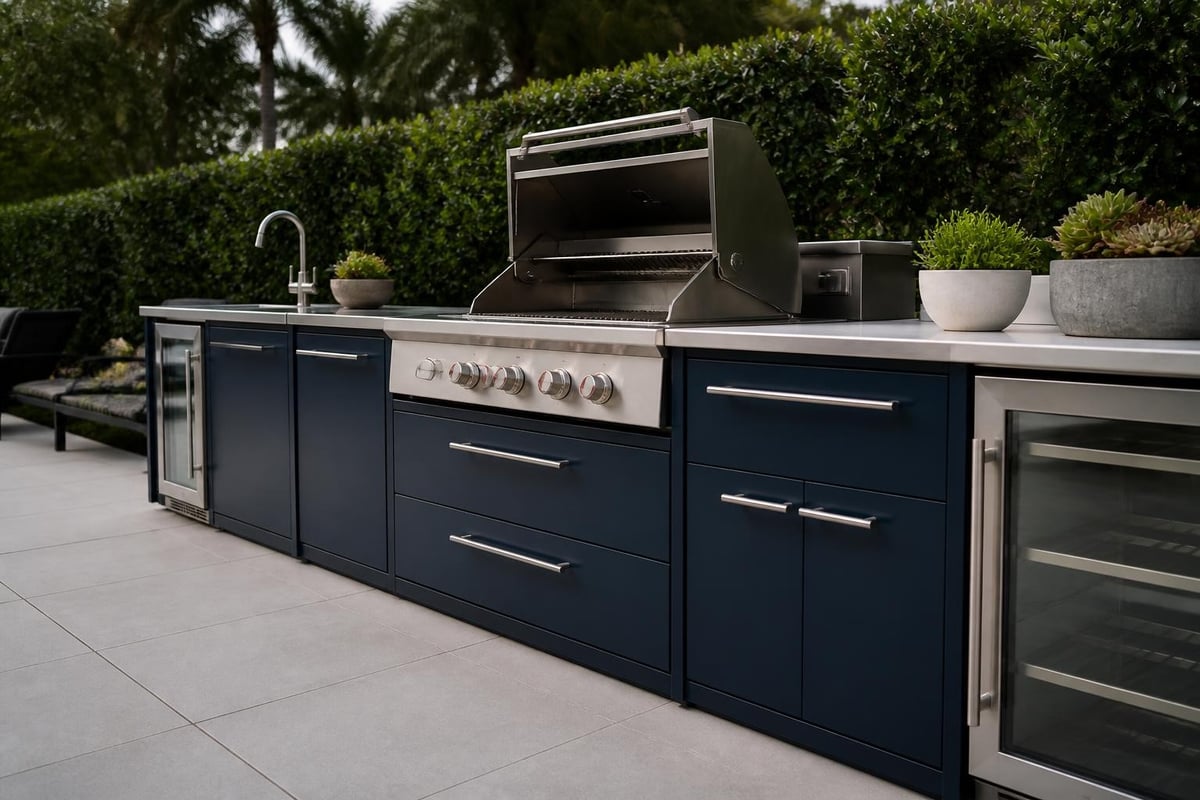
Traditional wisdom once held that bespoke meant better. Yet contemporary prefabricated outdoor kitchens challenge this assumption through advanced manufacturing techniques and material science innovations. For clients working with design consultants who understand outdoor kitchen delivery and installation, prefabrication offers compelling advantages.
A custom-built outdoor kitchen typically requires 8-12 weeks from groundwork to completion, weather permitting. Prefabricated systems reduce this to 2-4 weeks in most scenarios. Foundation preparation remains necessary, but the superstructure arrives ready for connection to utilities and immediate use.
This timeline compression proves particularly valuable for property developers, hospitality venues, and homeowners planning around specific events. The certainty of delivery schedules allows precise coordination with landscaping, pergola installations, and ancillary works.
| Factor | Prefabricated Systems | Traditional Build |
|---|---|---|
| Design to Installation | 2-4 weeks typical | 8-12 weeks minimum |
| Weather Dependency | Minimal (foundation only) | Significant (multiple trades) |
| Cost Predictability | Fixed pricing standard | Variable, subject to overruns |
| Quality Control | Factory-certified | Site-dependent |
| Modification Flexibility | Modular reconfiguration | Requires reconstruction |
Premium prefabricated outdoor kitchens employ materials tested to withstand freeze-thaw cycles, UV exposure, and moisture ingress far more rigorously than site-assembled alternatives. Manufacturing environments allow for welding techniques, bonding processes, and protective treatments impossible to replicate in field conditions.
Stainless steel grades 316 and 304 dominate high-specification units, offering exceptional corrosion resistance essential for the UK's coastal and rural environments. Powder-coated finishes undergo multi-stage preparation and curing processes that site-applied paints cannot match.
Prefabricated outdoor kitchens must harmonise with architectural context whilst addressing functional requirements specific to year-round outdoor living in the UK climate. The most successful installations balance aesthetic refinement with practical performance.
L-shaped and U-shaped configurations dominate British installations, maximising worksurface area whilst creating natural social gathering points. Linear arrangements suit terraced properties and narrow garden spaces, whilst island formats work beautifully within expansive lawns or beneath architectural pergolas.
Essential zoning principles include:
The relationship between these zones follows the classic kitchen triangle principle, adapted for outdoor entertaining patterns. Planning outdoor kitchen spaces requires consideration of prevailing wind direction, solar orientation, and sight lines from indoor living areas.
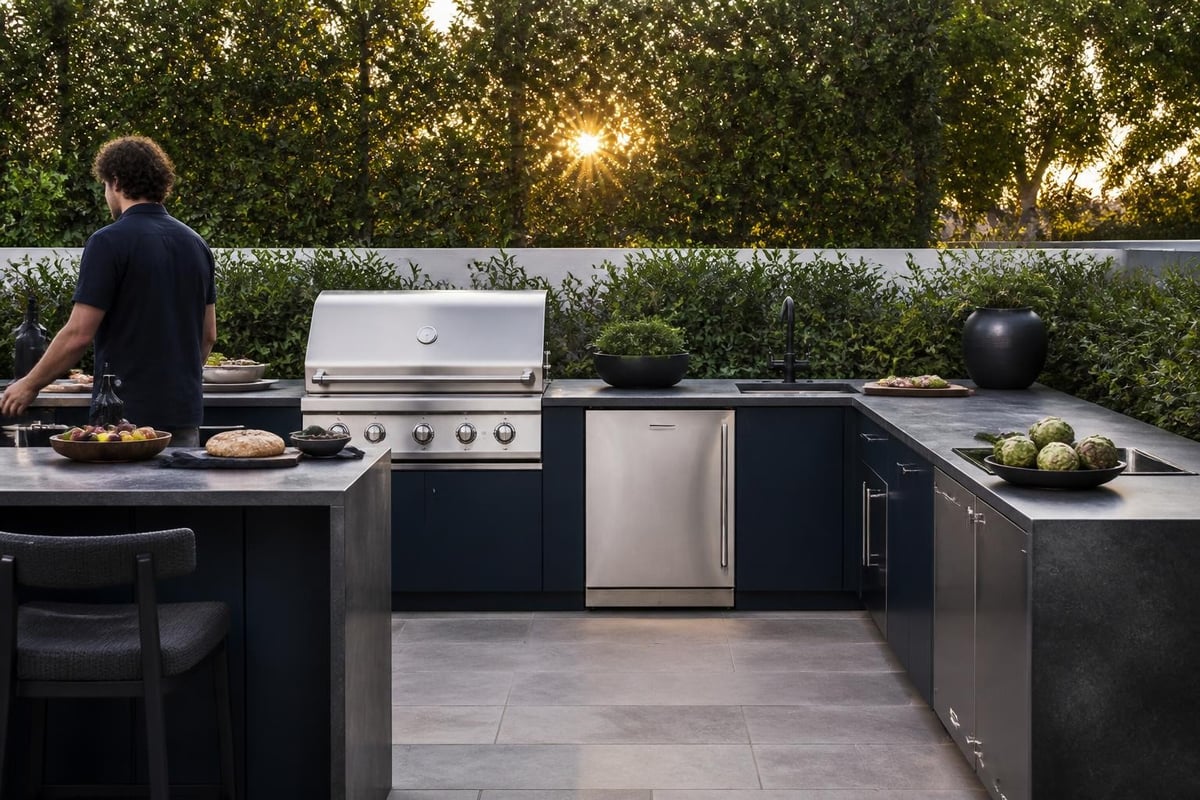
British weather demands protection. Prefabricated outdoor kitchens perform optimally beneath pergolas, verandas, or dedicated outdoor rooms that shield equipment from direct rainfall whilst maintaining natural ventilation. This combination extends the usable season from April through October into genuine year-round capability.
The Cubic C1 Style Outdoor Kitchen exemplifies this integration philosophy, featuring sleek modular construction that complements contemporary pergola designs. Its weather-resistant materials and customisable layout adapt seamlessly to covered outdoor spaces, creating cohesive entertaining environments that blur the boundary between interior refinement and garden freedom.
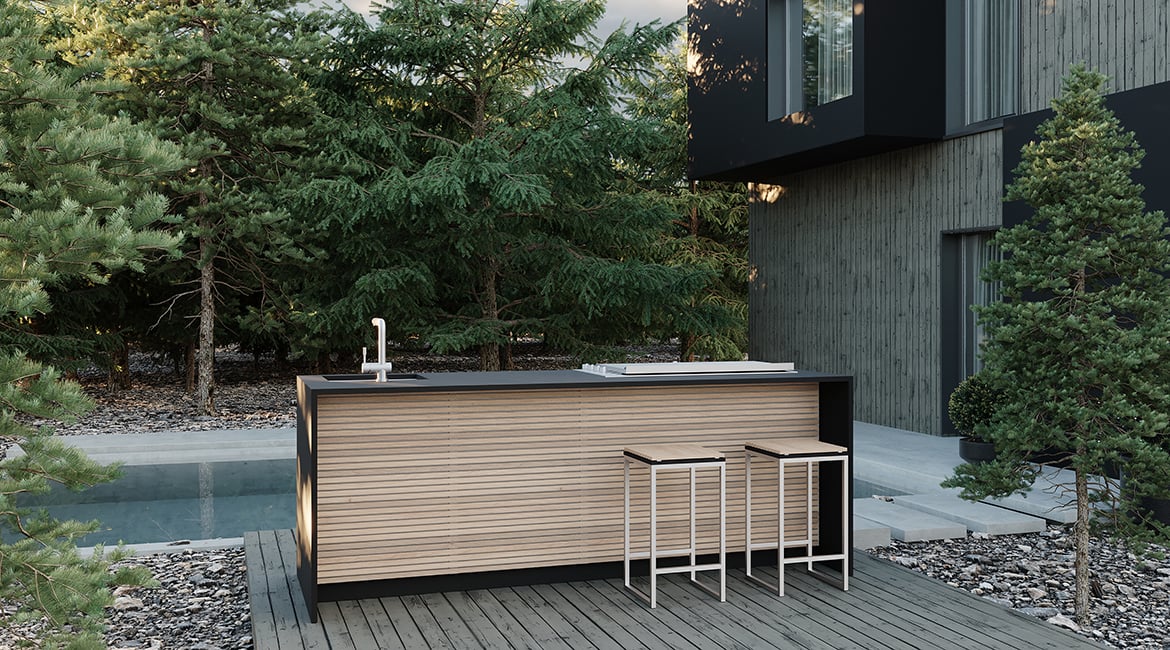
When selecting roofing solutions for outdoor kitchen coverage, working with experienced contractors ensures structural integrity and proper weatherproofing. Premium installations increasingly incorporate louvred roof systems, offering adjustable protection that responds to changing conditions whilst maintaining open-air ambiance when weather permits.
The aesthetic language of prefabricated outdoor kitchens has matured considerably. Contemporary systems offer finishes ranging from industrial minimalism to heritage-inspired designs that resonate with Cotswold architectural vernacular.
Stainless steel remains the benchmark for professional-grade outdoor kitchens, valued for its hygienic properties and maintenance simplicity. Brushed finishes reduce fingerprint visibility, whilst bead-blasted surfaces offer subtle texture variation.
Powder-coated aluminium introduces colour possibilities previously unavailable in outdoor applications. Modern formulations withstand UV degradation and thermal expansion cycles that compromised earlier generations. Charcoal grey, bronze, and muted green tones prove particularly effective in garden settings.
Composite materials merit serious consideration for worksurfaces. Sintered stone slabs resist thermal shock, scratching, and staining whilst offering visual depth impossible in metal. Granite and quartzite deliver natural beauty with proven outdoor durability, though requiring periodic sealing for moisture protection.
Premium prefabricated systems distinguish themselves through component quality. Soft-close hinges, magnetic latches, and marine-grade handles indicate manufacturing attention to detail. Concealed fixings, integrated drainage channels, and sealed cable entries separate exceptional products from merely adequate offerings.
| Component | Standard Specification | Premium Specification |
|---|---|---|
| Hinges | Zinc-plated steel | 316 stainless, adjustable |
| Drawer Runners | Epoxy-coated | Stainless ball-bearing |
| Door Seals | Foam compression | Silicone multi-stage |
| Worksurface Join | Mechanical fastening | Welded/seamless |
| Plinth Detail | Ventilation slots | Integrated LED lighting |
The appliances selected fundamentally determine cooking capability and user satisfaction. Prefabricated outdoor kitchens accommodate both built-in and drop-in formats, with cut-out dimensions standardised across major manufacturers.
Gas grills dominate British outdoor cooking, offering instant heat control and all-weather reliability. Premium units feature cast stainless burners, dual-fuel capability, and rotisserie systems for whole bird roasting. Infrared searing zones deliver steakhouse-quality crusting, whilst side burners expand menu possibilities.
Hybrid pizza ovens represent the fastest-growing category, combining wood-fired tradition with gas convenience. These versatile units reach 500°C for authentic Neapolitan results whilst accommodating roasting, baking, and slow-cooking applications.
Installation considerations include:
Outdoor refrigeration operates under more demanding conditions than indoor equivalents, requiring enhanced insulation and robust compressor systems. Look for units rated to function reliably in ambient temperatures from -5°C to 40°C, with automatic defrost cycles and condensation management.
Drawer-style refrigerators maximise accessibility whilst minimising door-open temperature loss. Wine coolers, beverage centres, and ice makers elevate the entertaining experience, transforming outdoor kitchens into complete hospitality zones. For property owners prioritising year-round outdoor cooking lifestyle, proper refrigeration proves essential.
Whilst prefabricated outdoor kitchens simplify construction, proper foundation work remains critical. The installation site must provide stable, level support capable of bearing concentrated loads whilst facilitating utility connections.
Concrete slab foundations offer optimal stability and longevity. Specifications typically call for 100-150mm thickness, reinforced with steel mesh, extending 100mm beyond the kitchen footprint. Fall gradients of 1:60 ensure effective drainage away from cabinetry.
Porcelain paving represents an increasingly popular alternative, particularly when matching broader terrace schemes. High-density porcelain withstands point loads from appliances whilst offering slip resistance and aesthetic continuity. Specialist porcelain tiling bases provide the stable platform prefabricated systems require.
Pre-installation checklist:
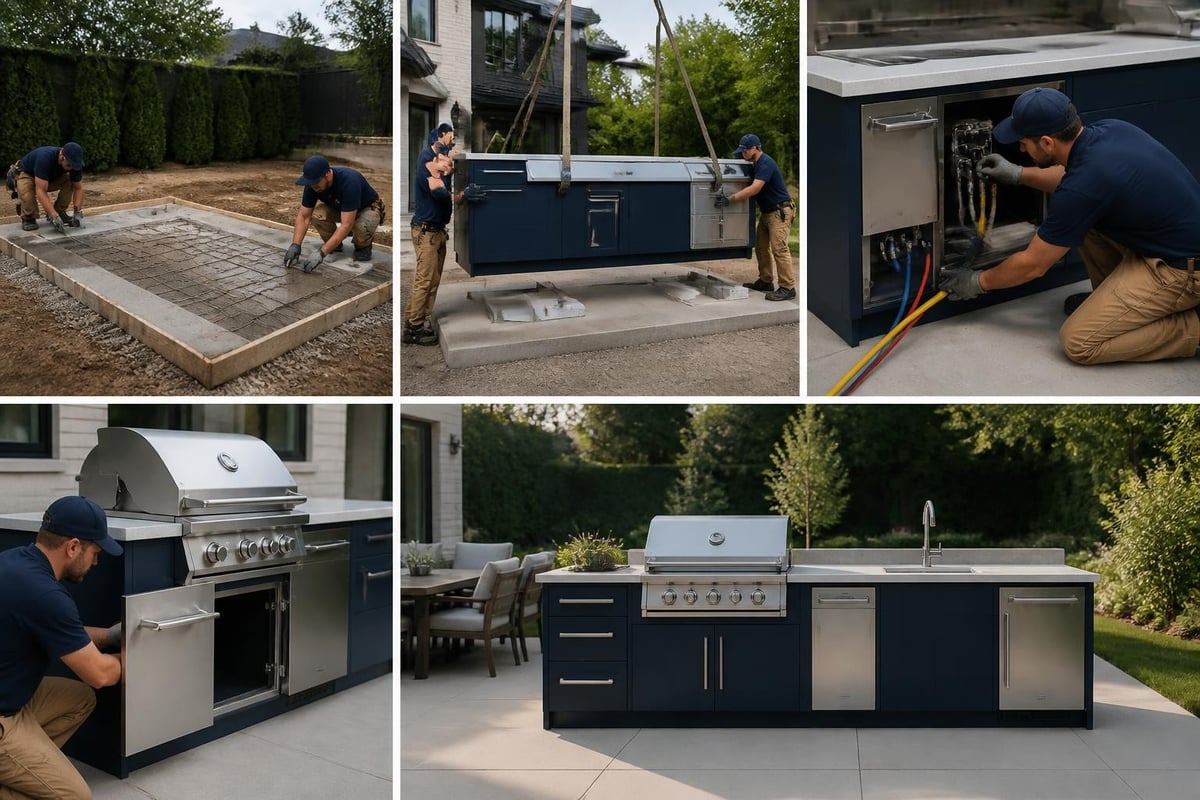
Modular construction tempts capable homeowners toward self-installation. However, the gas, electrical, and plumbing connections require certified professionals under UK building regulations. Most manufacturers mandate professional installation to validate warranty coverage, and insurance considerations further support this approach.
Reputable specialists complete typical prefabricated outdoor kitchen installations within 1-3 days, depending on configuration complexity. This investment ensures compliance, performance optimisation, and recourse should issues arise. For detailed guidance, curated brands typically provide installation networks or approved contractor lists.
Prefabricated outdoor kitchens span a considerable price spectrum, from entry-level systems around £3,500 to luxury installations exceeding £25,000. Understanding the cost drivers enables informed decision-making aligned with both budget parameters and quality expectations.
Base pricing typically covers the structural components: cabinetry, worksurfaces, and framework. Appliances represent additional investment, with quality differentials significantly impacting long-term satisfaction. A premium gas grill might cost £2,000-£8,000 versus £400-£800 for budget alternatives, yet the performance gap justifies the differential for serious outdoor cooks.
Finishing details, custom modifications, and premium materials escalate costs but deliver corresponding aesthetic and functional returns. Drawer systems, integrated lighting, and specialised storage solutions transform basic functionality into refined luxury.
| System Level | Typical Investment | Characteristics |
|---|---|---|
| Entry | £3,500 - £7,000 | Basic configuration, standard materials, limited appliances |
| Mid-Range | £7,000 - £15,000 | Enhanced finishes, quality appliances, modular expansion capability |
| Premium | £15,000 - £25,000+ | Designer aesthetics, professional-grade equipment, bespoke elements |
Well-executed outdoor kitchens deliver measurable property value increases, particularly in premium postcodes where outdoor entertaining constitutes standard lifestyle expectation. Estate agents report 3-8% value enhancement for properties featuring quality outdoor cooking facilities, with the upper range applying to comprehensively designed outdoor rooms incorporating heating, lighting, and architectural weather protection.
The investment appeal strengthens when outdoor kitchens form part of cohesive landscape design. Properties marketed by professionals such as experienced realtors demonstrate that integrated outdoor living spaces significantly enhance buyer appeal and support premium pricing strategies.
Prefabricated outdoor kitchens require systematic maintenance to preserve performance and appearance across British seasonal extremes. Establishing routine care protocols prevents degradation whilst identifying developing issues before they escalate.
Daily maintenance after use includes:
Quarterly deep cleaning addresses hidden areas, drainage channels, and connection points. Stainless steel benefits from specialised cleaners applied along grain direction, whilst powder-coated surfaces require only mild detergent solution. Avoid abrasive materials that compromise protective finishes.
Despite year-round design capability, some homeowners prefer winterising outdoor kitchens during December through February. This process involves disconnecting water supplies, draining all lines, and protecting appliances with breathable covers that prevent condensation whilst blocking debris.
Gas connections should remain professionally inspected annually, with regulators, hoses, and fittings replaced according to manufacturer schedules. Electrical circuits benefit from RCD protection, with outdoor sockets meeting IP65 weatherproof ratings minimum.
For properties undergoing broader seasonal maintenance, coordinating outdoor kitchen care with roof inspection and repair services ensures comprehensive property protection before winter weather arrives.
Modern prefabricated outdoor kitchens offer surprising personalisation potential through modular architecture and accessory integration. Understanding these customisation opportunities allows specification that genuinely reflects individual requirements rather than accepting compromise.
The inherent flexibility of quality modular systems enables future expansion as needs evolve. Initial installations might feature core cooking and preparation zones, with refrigeration, pizza ovens, or bar sections added subsequently. This phased approach distributes investment whilst maintaining design coherence.
Modular architecture also facilitates relocation. Unlike poured concrete or masonry construction, prefabricated units can accompany homeowners through property moves, protecting investment value and allowing beloved outdoor kitchens to remain part of family life.
Backsplashes, lighting schemes, and accessory choices inject personality into standardised frameworks. LED strip lighting beneath worksurfaces and within cabinets enhances evening usability whilst creating ambiance. Magnetic knife strips, utensil rails, and integrated herb planters merge functionality with character.
Some manufacturers offer powder coating in custom RAL colours, enabling precise aesthetic coordination with existing architectural elements. Worksurface edge profiles, door handle styles, and plinth details provide further specification opportunities for clients seeking distinctive outdoor kitchens.
The decision process benefits from structured evaluation across multiple dimensions, ensuring the selected system aligns with cooking preferences, spatial constraints, aesthetic aspirations, and budget realities.
Technical assessment:
Aesthetic evaluation:
Experienced outdoor living specialists offer invaluable guidance through specification and installation processes. Their familiarity with product ranges, installation challenges, and performance characteristics prevents costly misspecifications. For complex installations integrating multiple brands and systems, professional consultation becomes essential rather than optional.
Visiting showrooms allows hands-on assessment of build quality, finish options, and spatial requirements difficult to appreciate through online research alone. Appointment-based consultations enable focused discussion without time pressure, ensuring thorough exploration of possibilities.
The outdoor kitchen sector continues evolving rapidly, with 2026 bringing several notable developments influencing both product design and installation approaches.
Smart controls increasingly feature in premium prefabricated outdoor kitchens, offering smartphone connectivity for temperature monitoring, lighting control, and appliance operation. WiFi-enabled grills send alerts when target temperatures achieve, whilst app-based recipe guidance walks users through complex cooking procedures.
Voice assistant integration allows hands-free operation during food preparation, controlling music, lighting, and appliance settings through natural language commands. These features transition outdoor kitchens from cooking spaces into genuine smart home extensions.
Environmental consciousness shapes material selection and operational efficiency. Recycled stainless steel content increases across premium brands, whilst powder coating formulations eliminate volatile organic compounds. LED lighting has become universal, reducing energy consumption by 80% versus halogen predecessors.
Induction hobs appear in cutting-edge outdoor kitchens, offering precise temperature control and enhanced safety through cool-touch surfaces. Though requiring robust electrical infrastructure, induction technology delivers professional cooking performance with minimal environmental impact.
As outdoor living expands into urban contexts, prefabricated outdoor kitchens adapt to smaller footprints. Balcony-scale units measuring under 2 metres incorporate essential functionality into remarkably compact formats, proving that effective outdoor cooking requires space efficiency rather than sprawling layouts.
Vertical storage optimisation, fold-down worksurfaces, and multi-function appliances characterise these space-conscious designs. The trend demonstrates that prefabricated outdoor kitchens suit diverse property types, from country estates to London townhouse terraces.
Prefabricated outdoor kitchens represent sophisticated engineering merged with refined design, offering British homeowners professional cooking capability combined with installation efficiency and long-term durability. By understanding the material options, configuration possibilities, and selection criteria outlined above, you're equipped to specify an outdoor kitchen that genuinely enhances your property and lifestyle. Cotswold Cooking Company specialises in guiding discerning clients through this journey, from initial concept through to completed installation, ensuring your outdoor kitchen reflects both functional requirements and aesthetic aspirations whilst delivering the performance and longevity premium outdoor living demands.

Comments
Leave a comment