


A timber pergola represents one of the most enduring and elegant additions to any outdoor living space, combining architectural presence with natural beauty. Whether you're creating a sheltered dining area adjacent to your outdoor kitchen or establishing a distinctive focal point within your garden, the choice of timber species, construction method, and ongoing maintenance will determine both the aesthetic impact and longevity of your investment. For discerning homeowners seeking to elevate their outdoor environments, understanding the nuances of timber pergola design proves essential to achieving a refined, functional space that complements contemporary outdoor living expectations.
The fundamental appeal of a timber pergola lies in its ability to merge structural integrity with organic warmth. Unlike aluminium or steel alternatives, timber offers unparalleled versatility in finish, texture, and integration with existing garden architecture. When properly specified and maintained, a well-constructed timber pergola can serve as the architectural backbone of your outdoor entertaining area for decades.
Choosing the appropriate timber species represents perhaps the most critical decision in your pergola project. Each species offers distinct characteristics in terms of durability, appearance, and maintenance requirements.
Oak stands as the premium choice for discerning property owners, offering exceptional structural strength and a rich grain pattern that develops character over time. English oak, in particular, carries historical resonance within the Cotswolds and broader British landscape, making it an ideal choice for properties seeking to honour regional heritage whilst achieving contemporary functionality.
Western Red Cedar provides natural resistance to decay and insect damage, requiring minimal chemical treatment whilst offering a distinctive aromatic quality. Its stability across temperature fluctuations makes it particularly suitable for the British climate, where seasonal variation demands resilient materials.
| Timber Species | Durability Rating | Maintenance Level | Aesthetic Character | Typical Lifespan |
|---|---|---|---|---|
| English Oak | Exceptional | Moderate | Rich grain, ages to silver-grey | 50+ years |
| Western Red Cedar | Excellent | Low | Fine texture, warm tones | 30-40 years |
| Iroko | Outstanding | Low | Close grain, golden-brown | 40+ years |
| Douglas Fir | Good | Moderate-High | Straight grain, reddish tones | 25-35 years |
Iroko, often termed African teak, delivers remarkable weather resistance and dimensional stability, making it increasingly popular for high-specification outdoor projects. Its natural oil content provides inherent protection against moisture ingress and fungal attack.
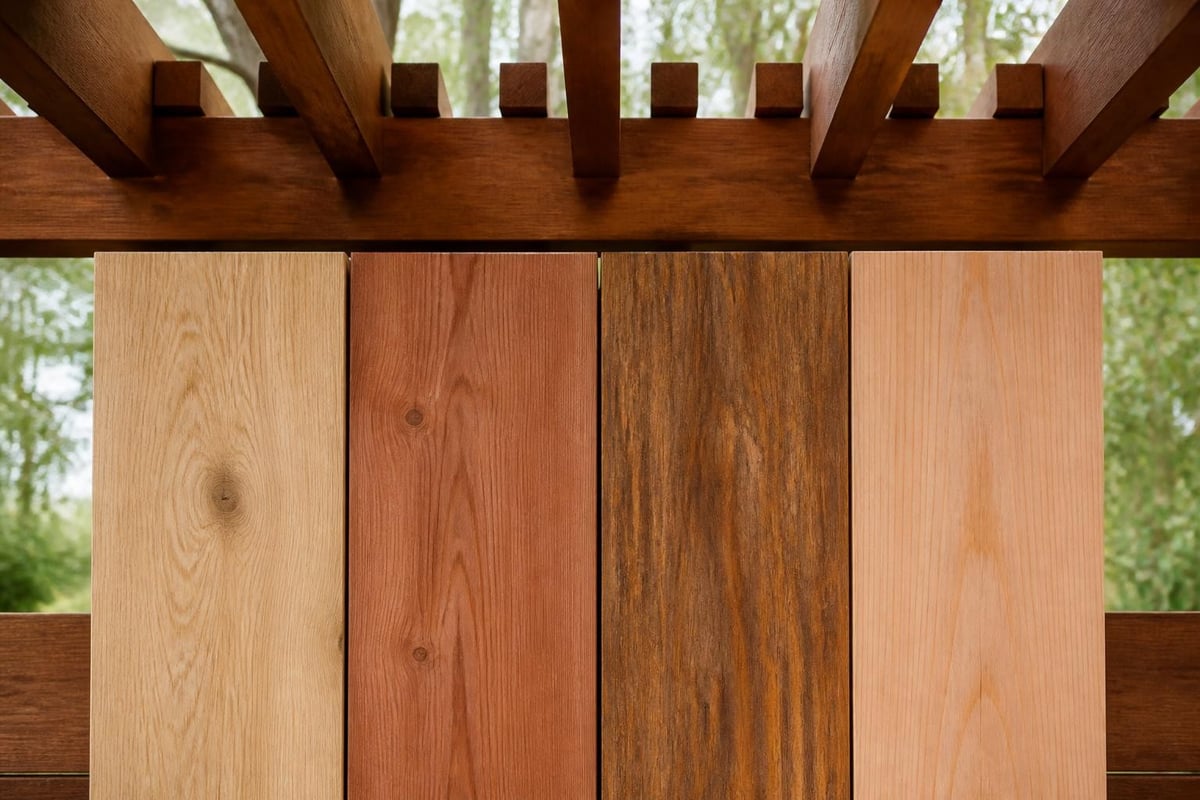
The architectural expression of your timber pergola should harmonise with both your property's existing character and the functional requirements of your outdoor space. Traditional post-and-beam configurations offer timeless appeal, whilst more contemporary interpretations might incorporate slimmer profiles, integrated lighting channels, or hybrid timber-metal connections.
For those developing comprehensive outdoor cooking areas, the pergola orientation becomes crucial. Positioning the structure to provide afternoon shade over dining zones whilst maintaining morning sun exposure creates optimal conditions for year-round use. The typical span between posts ranges from 2.4 to 4 metres, with larger spans requiring engineered timber sections or laminated beams to prevent excessive deflection.
The British climate presents particular challenges for timber structures, with seasonal moisture variation, UV exposure, and biological threats requiring considered protection strategies. Unlike indoor timber applications, outdoor pergolas must withstand driving rain, prolonged damp periods, and temperature fluctuations that can promote decay if inadequately addressed.
Modern timber treatments extend far beyond traditional creosote applications, with contemporary options offering superior protection whilst maintaining aesthetic refinement. The selection between preservative treatments, oils, stains, and paint systems depends upon your desired finish and maintenance commitment.
Microporous stains allow timber to breathe whilst providing UV protection and moisture resistance, making them particularly suitable for oak and iroko where natural grain character should remain visible. These products require reapplication every 3-5 years depending upon exposure levels, with south-facing elevations typically demanding more frequent attention.
Natural oil finishes penetrate deeply into timber fibres, enhancing the natural colour whilst providing water-repellent properties. Products containing UV inhibitors significantly reduce the silvering effect that untreated timber develops, particularly valuable for those preferring to maintain the original timber tone.
For comprehensive guidance on protective treatments, waterproofing approaches offer valuable insights into modern material options and application techniques.
Proper detailing proves as important as timber selection in ensuring pergola longevity. Water management represents the primary concern, with design details that shed water away from vulnerable junctions and end-grain surfaces dramatically extending structural life.
The integration of weatherproofing solutions into initial design proves far more cost-effective than retrofitting protection measures after construction completion.
Maintaining a timber pergola demands consistent attention rather than intensive intervention. Establishing a structured maintenance schedule protects your investment whilst ensuring the structure continues to enhance your outdoor environment year after year.
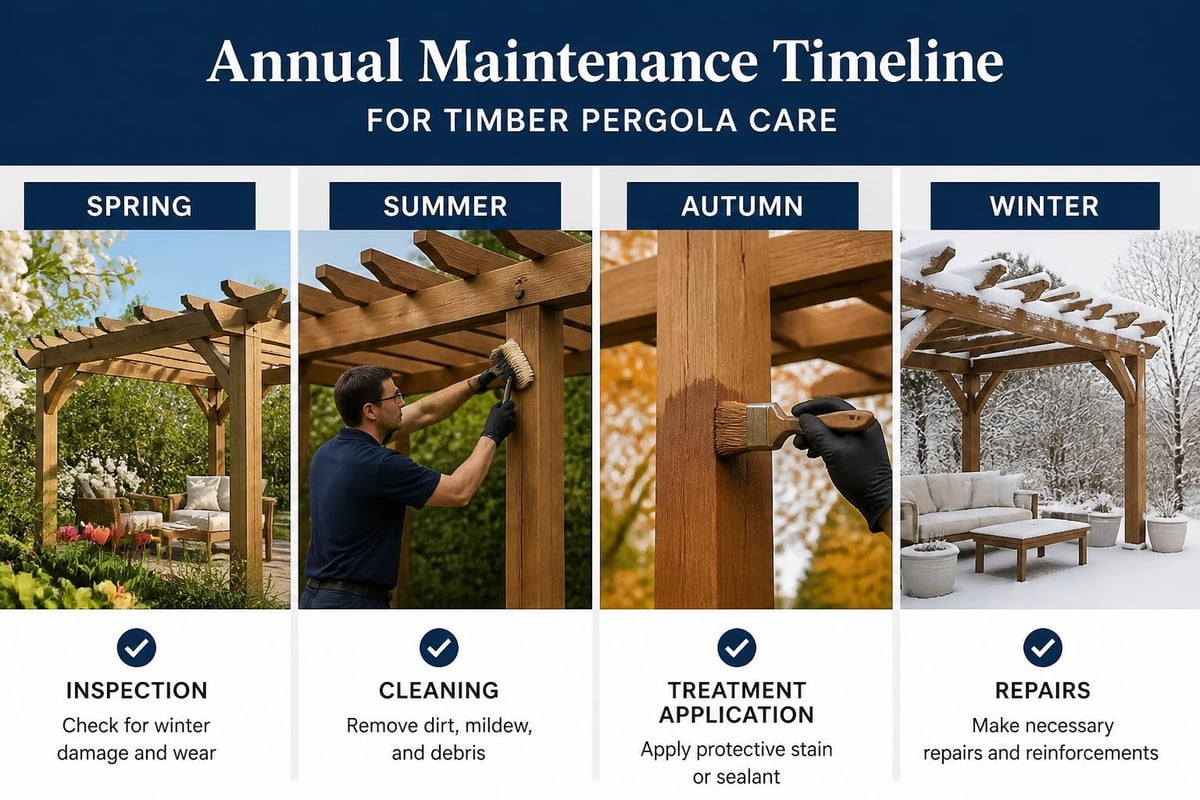
Spring inspection should focus on identifying winter damage, checking for loose connections, and assessing timber condition following the wet season. This timing allows repairs to be completed before the outdoor entertaining season commences.
Remove accumulated debris from beam junctions and rafter connections, as organic material retention promotes moisture accumulation and fungal growth. A soft brush combined with low-pressure water removes surface dirt without damaging timber fibres, as detailed in professional cleaning guidance.
| Maintenance Task | Frequency | Timing | Typical Duration |
|---|---|---|---|
| Visual structural inspection | Quarterly | Year-round | 30 minutes |
| Debris removal and cleaning | Twice yearly | Spring, Autumn | 2-3 hours |
| Treatment reapplication | Every 3-5 years | Late Spring | 1-2 days |
| Hardware tightening | Annually | Spring | 1 hour |
| End-grain sealing | As required | Summer | 30 minutes |
Summer treatment application takes advantage of warm, dry conditions that allow optimal penetration and curing of protective finishes. Following manufacturer recommendations regarding application conditions ensures maximum product performance.
Autumn preparation involves removing climbing plant growth that might retain moisture against timber surfaces during winter months. Whilst pergolas provide excellent support for climbing plants, species should be selected for compatibility with maintenance schedules.
Recognising early signs of deterioration allows prompt intervention before minor issues develop into structural concerns. Surface checking-fine cracks along the grain-occurs naturally as timber seasons and rarely indicates structural compromise. However, deeper splits or separation at joints warrant professional assessment.
Fungal growth typically manifests as surface discolouration rather than structural decay in properly treated timber. Regular application of fungicidal treatments, combined with improved air circulation and drainage, typically resolves these aesthetic concerns. For detailed maintenance protocols, comprehensive maintenance guides provide season-specific advice.
Modern timber pergolas extend beyond simple shade structures to become integral components of sophisticated outdoor living environments. When thoughtfully designed, they define distinct functional zones whilst maintaining visual and physical connection across the broader garden landscape.
The relationship between your timber pergola and adjacent outdoor kitchen determines the functionality and atmosphere of your entire outdoor entertaining space. Positioning the pergola to provide shelter over dining areas whilst allowing cooking zones to remain open creates optimal working conditions whilst protecting guests from weather exposure.
For those investing in luxury outdoor furniture, the pergola provides essential protection that extends furniture lifespan and allows specification of more refined upholstery options than would survive in fully exposed locations.
Timber selection should complement rather than match other outdoor elements. Where outdoor kitchen cabinetry features contemporary finishes, a contrasting timber pergola provides textural interest and prevents monotony. Conversely, properties featuring traditional stonework benefit from timber species that echo historical building practices.
Contemporary timber pergolas frequently accommodate integrated systems that enhance functionality without compromising aesthetic purity. Recessed LED lighting within beam channels creates atmospheric evening illumination, whilst structured cabling routes support outdoor audio systems and heating elements.
The Tarasola Technic bioclimatic pergola represents the pinnacle of adaptable outdoor architecture, combining automated louvred roofing with refined aesthetics that complement traditional timber construction. For those seeking weather protection without permanent enclosure, Tarasola's innovative design delivers architectural sophistication alongside practical versatility, allowing dining spaces to transition seamlessly between open-air and sheltered configurations.
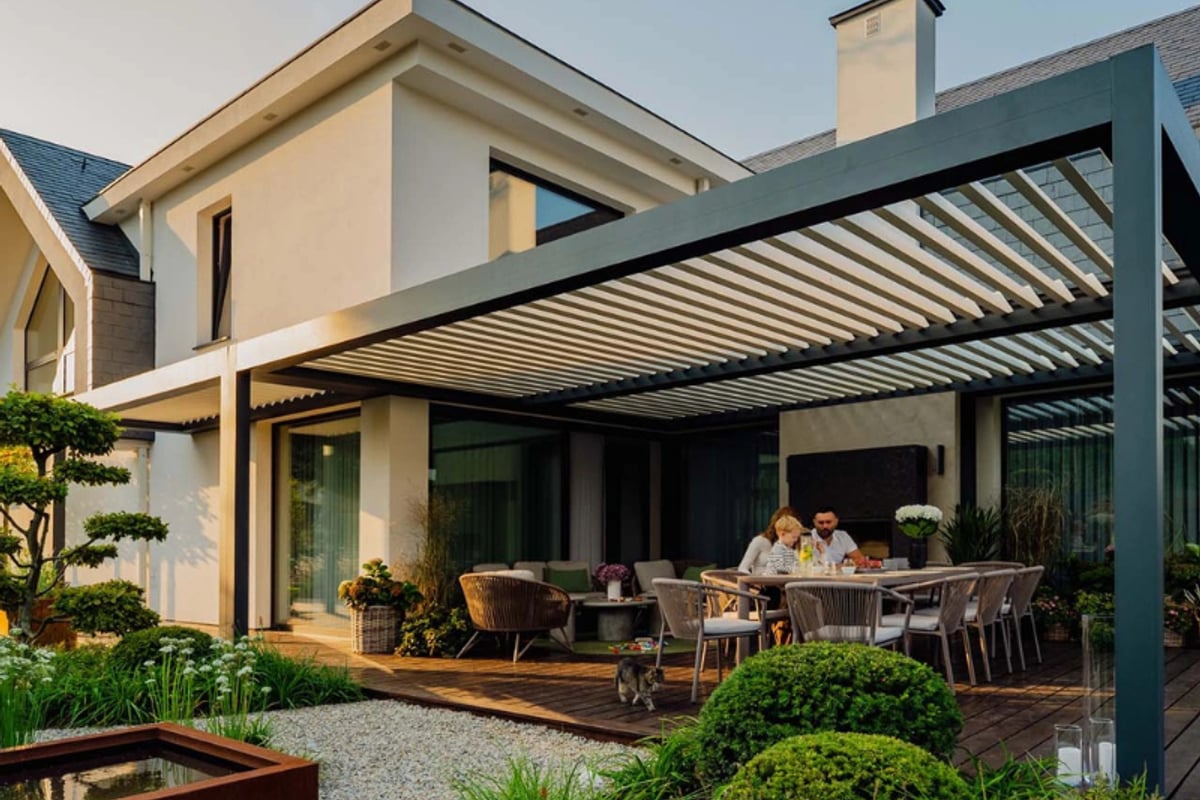
Heating integration extends pergola usability well beyond summer months, with infrared panels, concealed gas heaters, or fire features creating comfortable temperatures during cooler evenings. When combined with partial glazing or retractable screens, timber pergolas support year-round outdoor dining that rivals interior comfort levels.
Successful timber pergola design responds to the architectural language of the host property whilst establishing its own distinctive character. The relationship between building and garden structure should feel intentional rather than arbitrary, with material choices, proportions, and detailing supporting visual cohesion.
Properties within conservation areas or those featuring historical architecture require particularly sensitive pergola design that respects established proportions and materials. Traditional green oak frames, incorporating historic joinery techniques such as mortise-and-tenon connections with oak pegs, achieve authenticity that honours craftsmanship traditions.
Beam profiles should reflect the scale and rhythm of existing architectural elements. Properties featuring substantial stone walls and generous proportions demand correspondingly robust pergola sections, whilst more delicate Georgian or Victorian structures suit refined timber dimensions.
Modern properties with clean lines and minimal ornamentation provide opportunities for pergola designs that explore timber's structural and aesthetic potential without historical constraint. Slender profiles, precise joinery, and sophisticated finishing techniques create structures that feel architectural rather than garden-scaled.
Charred timber finishes-employing the Japanese shou sugi ban technique-deliver dramatic visual impact whilst providing exceptional weather resistance. The carbonised surface repels moisture and insects naturally, offering contemporary aesthetic appeal alongside practical benefits that reduce ongoing maintenance requirements.
Understanding the financial implications of timber pergola installation requires consideration of initial construction costs, ongoing maintenance expenses, and the value addition to your property. Quality timber structures represent significant investments that deliver returns through enhanced outdoor living capability and increased property desirability.
Entry-level timber pergolas utilising pressure-treated softwood construction typically commence around £2,500-4,000 for modest freestanding structures. These provide functional shade and plant support but require vigilant maintenance and generally offer 15-25 year service lives.
Mid-specification projects incorporating hardwood posts with engineered beams, integrated lighting, and professional installation typically range from £6,000-12,000. These structures deliver superior longevity and aesthetic refinement suitable for properties where outdoor living represents a central lifestyle component.
Premium installations featuring green oak frames, bespoke joinery, integrated roofing systems, and comprehensive finishing can extend from £15,000-35,000 or beyond for substantial structures incorporating outdoor dining spaces and cooking zones. When evaluating whether to build or purchase a pergola, professional installation typically adds 40-60% to material costs but ensures structural integrity and appropriate detailing.
| Specification Level | Material Cost | Installation Cost | Expected Lifespan | Maintenance Cost (Annual) |
|---|---|---|---|---|
| Entry (Treated Softwood) | £1,500-2,500 | £1,000-1,500 | 15-25 years | £150-250 |
| Mid (Select Hardwood) | £4,000-7,000 | £2,000-5,000 | 30-40 years | £200-350 |
| Premium (Oak/Bespoke) | £10,000-25,000 | £5,000-10,000 | 50+ years | £300-500 |
Well-designed timber pergolas contribute measurably to property value, particularly within markets where outdoor living capabilities influence purchasing decisions. Estate agents consistently report that comprehensive outdoor entertaining facilities-including quality pergolas integrated with outdoor kitchens-appeal strongly to buyers seeking lifestyle properties.
Beyond financial returns, the qualitative benefits of expanded living space, enhanced garden aesthetics, and increased outdoor comfort represent significant value additions that improve daily living experience. For families who entertain regularly or work from home, the additional usable space proves particularly valuable.
The decision between self-build and professional installation depends upon technical capability, available time, and the complexity of your intended design. Whilst basic pergola construction falls within the capability of competent DIY enthusiasts, more sophisticated designs incorporating complex joinery, integrated systems, or substantial dimensions warrant professional expertise.
For those considering self-build approaches, detailed construction guides provide step-by-step instructions covering material selection through to final assembly. Essential requirements include accurate marking out to ensure posts remain perpendicular and aligned, proper foundation preparation to prevent settlement, and appropriate joinery techniques to create rigid, durable connections.
Basic tools-including spirit levels, post-hole diggers, circular saw, drill, and adjustable square-suffice for straightforward designs. More ambitious projects might require specialised equipment such as mortising machines, beam clamps, or scaffolding for safe working at height.
Planning permission typically isn't required for pergolas under 2.5 metres height positioned more than 2 metres from boundaries, though it's essential to verify local authority requirements before commencing construction. Building regulations rarely apply to open pergola structures, though enclosed designs with substantial roofing might trigger compliance requirements.
Professional installers bring technical expertise that ensures structural integrity, appropriate material specification, and finishing standards that maximise longevity. Their experience with local soil conditions, typical weather exposure patterns, and optimal construction techniques proves particularly valuable for substantial or complex installations.
Many specialists offer comprehensive design services that integrate pergola structures with broader garden planning, outdoor kitchen layouts, and landscape architecture. This holistic approach ensures visual cohesion and functional efficiency that piecemeal development rarely achieves.
Professional installation typically includes material warranties, structural guarantees, and ongoing maintenance support that provides peace of mind alongside quality assurance. For those developing luxury outdoor kitchens, coordinating pergola installation with kitchen fabrication ensures seamless integration and optimal spatial planning.
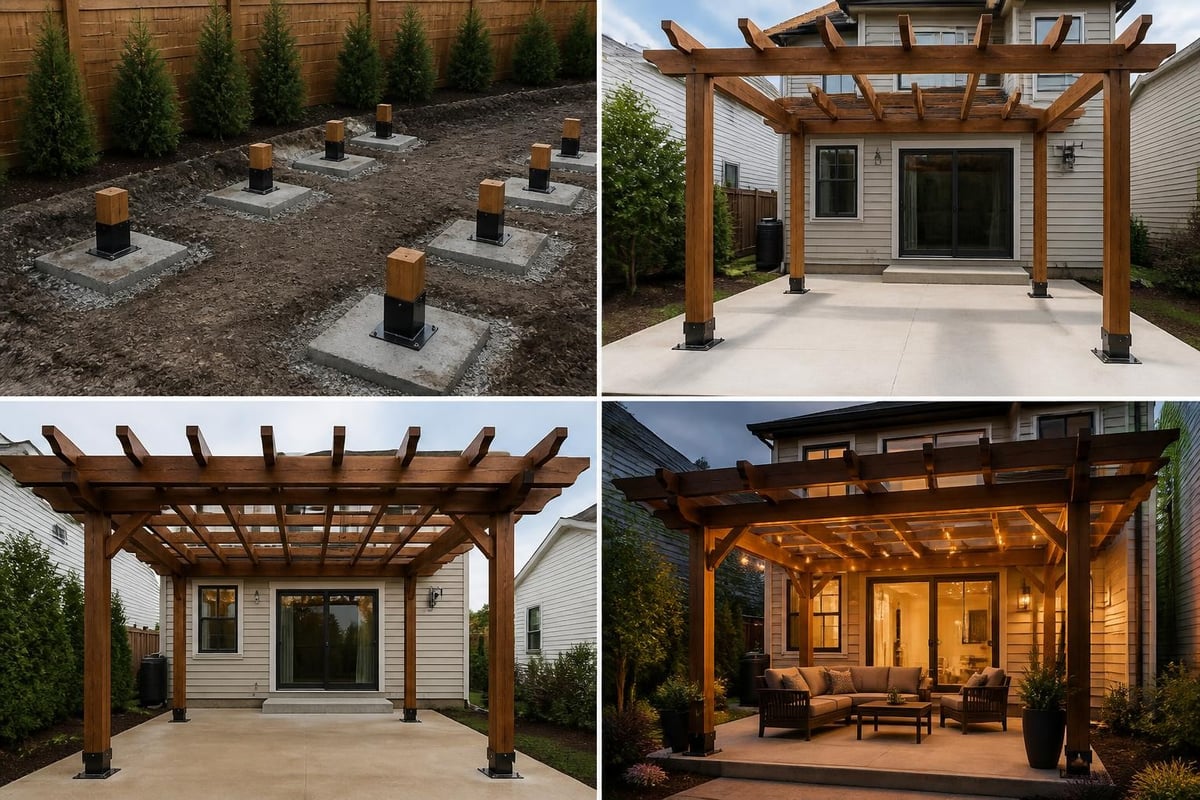
Once your timber pergola structure stands complete, carefully selected accessories transform it from architectural framework into fully functional outdoor room. The range of enhancement options allows progressive development as budget permits and requirements evolve.
Strategic planting softens structural lines whilst providing additional shade and seasonal interest. Wisteria delivers spectacular spring flowering and dense summer foliage, though its vigorous growth requires annual pruning to prevent structural loading. Climbing roses offer romantic appeal with manageable growth habits, whilst star jasmine provides evergreen coverage with fragrant summer blooms.
Consider plant selection carefully relative to maintenance commitment and structural capacity. Heavy climbers such as mature wisteria can exert considerable weight on rafters and require robust original construction to accommodate future loading.
Retractable canvas canopies provide adjustable shade control, allowing configuration to suit prevailing conditions. Modern systems incorporate wind sensors and automated operation for convenience, though manual options offer reliability at lower cost.
Polycarbonate or glass roofing panels inserted between rafters deliver weather protection whilst maintaining light transmission. These hybrid approaches suit those seeking shelter from rain without the enclosed feeling of solid roofing. For comprehensive weatherproofing options, exploring various protection methods reveals solutions suited to different budgets and aesthetic preferences.
Thoughtfully designed lighting extends pergola usability into evening hours whilst creating atmospheric effects that enhance outdoor entertaining. LED strip lighting concealed within beam profiles provides subtle ambient illumination, whilst pendant fixtures suspended from rafters offer task lighting over dining areas.
Solar-powered options eliminate electrical installation requirements, though mains-powered systems deliver superior brightness and reliability. Warm colour temperatures (2700-3000K) create inviting atmospheres that complement natural timber tones and outdoor dining settings.
Maximising your timber pergola's utility across the British calendar requires thoughtful accessorising and operational adaptability. Whilst summer use proves straightforward, extending functionality into spring, autumn, and even winter months demands additional considerations.
Contemporary outdoor heaters transform pergolas into year-round spaces, with options ranging from freestanding patio heaters through to integrated ceiling-mounted infrared panels. Gas-fired mushroom heaters provide instant warmth and portability, whilst electric infrared systems deliver more focused, wind-resistant heating with minimal visual impact.
For those committed to extensive cold-weather usage, fire pits or outdoor fireplaces create focal points that combine heating functionality with dramatic visual appeal. Positioning these elements requires careful consideration of smoke dispersal, structural clearances, and user circulation patterns.
Side screens-whether fixed glazed panels, retractable fabric systems, or sliding timber shutters-provide wind protection that significantly improves comfort during breezy conditions. Partial enclosure maintains the outdoor character whilst creating sheltered microclimates suitable for dining when fully exposed locations would prove uncomfortable.
Drainage management becomes critical for pergolas incorporating solid or partially solid roofing. Concealed guttering maintains clean lines whilst channelling water away from entertaining areas and building foundations. Consider integrating rainwater harvesting systems to capture roof runoff for garden irrigation, adding environmental credentials to your outdoor space.
Truly distinguished timber pergolas transcend standard configurations to become bespoke architectural statements that reflect individual requirements and aesthetic preferences. Custom design allows optimisation of spatial relationships, material selection, and integrated features that prefabricated solutions cannot accommodate.
Carved beam ends, chamfered edges, and shaped rafter profiles introduce decorative elements that elevate simple structures into refined garden architecture. Traditional details such as lamb's tongue stops on chamfers or ogee-profiled corbels reference historical joinery whilst remaining appropriate within contemporary contexts.
Innovative joinery expressions-whether exposed steel connection plates, contrasting timber species at junctions, or laser-cut metal brackets-allow creative interpretation that distinguishes your structure. These details require skilled fabrication and typically add 15-30% to baseline construction costs, but deliver significant aesthetic impact.
Modern outdoor living demands seamless integration of utilities, entertainment systems, and comfort features. Structured pre-planning allows conduits, fixings, and service routes to be incorporated during construction rather than retrofitted awkwardly.
For comprehensive outdoor entertaining environments, coordinating pergola features with your outdoor kitchen specification ensures cohesive functionality. Working with specialists who understand both architectural and culinary requirements delivers spaces that perform beautifully across all functions.
Responsible timber pergola development requires consideration of environmental impacts throughout material sourcing, construction, use phase, and eventual disposal or recycling. Sustainable approaches need not compromise aesthetic quality or structural performance when properly implemented.
FSC (Forest Stewardship Council) or PEFC (Programme for the Endorsement of Forest Certification) certification provides assurance that timber originates from responsibly managed forests where harvesting rates don't exceed regeneration capacity. British-grown timber species, particularly oak and sweet chestnut, offer minimal transport impacts alongside support for domestic forestry sectors.
Reclaimed timber from agricultural buildings, industrial structures, or salvaged railway sleepers provides characterful alternatives with negligible environmental burden. These materials require careful inspection and preparation but deliver distinctive aesthetics unachievable with new timber.
Traditional timber treatments frequently contained harmful biocides or heavy metals that posed environmental risks during application and throughout the structure's service life. Modern water-based preservatives, natural oil finishes, and heat-treatment processes deliver effective protection with dramatically reduced ecological impact.
Heat-treated timber-subjected to controlled high-temperature processing that modifies cellular structure-achieves enhanced durability without chemical intervention. This approach suits environmentally conscious projects where natural protection methods align with broader sustainability objectives.
Well-maintained timber pergolas routinely exceed 40-50 year service lives, but eventual replacement or removal becomes necessary. Untreated or naturally treated timber can be composted or used as biomass fuel, whilst chemically treated material requires disposal as controlled waste.
Design for disassembly-using mechanical fixings rather than adhesives and maintaining component modularity-facilitates eventual deconstruction and allows valuable materials to be reclaimed for alternative uses. This circular approach minimises waste whilst preserving embodied energy invested in original processing and fabrication.
Timber pergola design optimally responds to local climate patterns, soil conditions, and architectural vernacular that vary significantly across British regions. Understanding these geographical influences ensures your structure performs appropriately within its specific context.
The Cotswolds' distinctive limestone architecture and rolling landscape provides particular context for timber pergola design. Structures that complement honey-coloured stone walls through weathered oak construction or painted finishes in heritage colours achieve visual harmony that feels rooted in place.
Clay-rich soils common throughout the region require substantial foundations with adequate depth and drainage to prevent frost heave or seasonal movement. Professional soil surveys prove valuable for substantial installations where settlement could compromise structural integrity.
Properties in coastal locations face accelerated weathering from salt-laden winds that penetrate timber and corrode fixings. Marine-grade stainless steel fastenings, frequent protective treatment reapplication, and robust timber species selection become essential in these demanding environments.
Northern regions experience extended periods of below-freezing temperatures that can promote frost damage in inadequately treated timber. End-grain sealing and comprehensive moisture barriers prove particularly important where freeze-thaw cycles occur regularly throughout winter months.
Selecting, installing, and maintaining a timber pergola demands careful consideration of species characteristics, construction quality, protective treatments, and ongoing care protocols. When properly executed, these elegant structures enhance outdoor living spaces whilst developing character that deepens over decades.
For those seeking to create exceptional outdoor environments where timber pergolas integrate seamlessly with luxury cooking facilities and refined entertaining spaces, Cotswold Cooking Company provides expert consultation spanning architectural pergola systems through to comprehensive outdoor kitchen design. Their curated portfolio of premium brands and bespoke design capability ensures your outdoor living vision achieves reality with craftsmanship and attention to detail that honours both Cotswold heritage and contemporary performance expectations.

Leave a comment